
Translated material
Language preservation
Three poets passed away at once: Shamshad Abdullaev, Vladimir Mikushevich and Arkady Shtypel. There is something in common in their poems, despite seemingly different poetic traditions
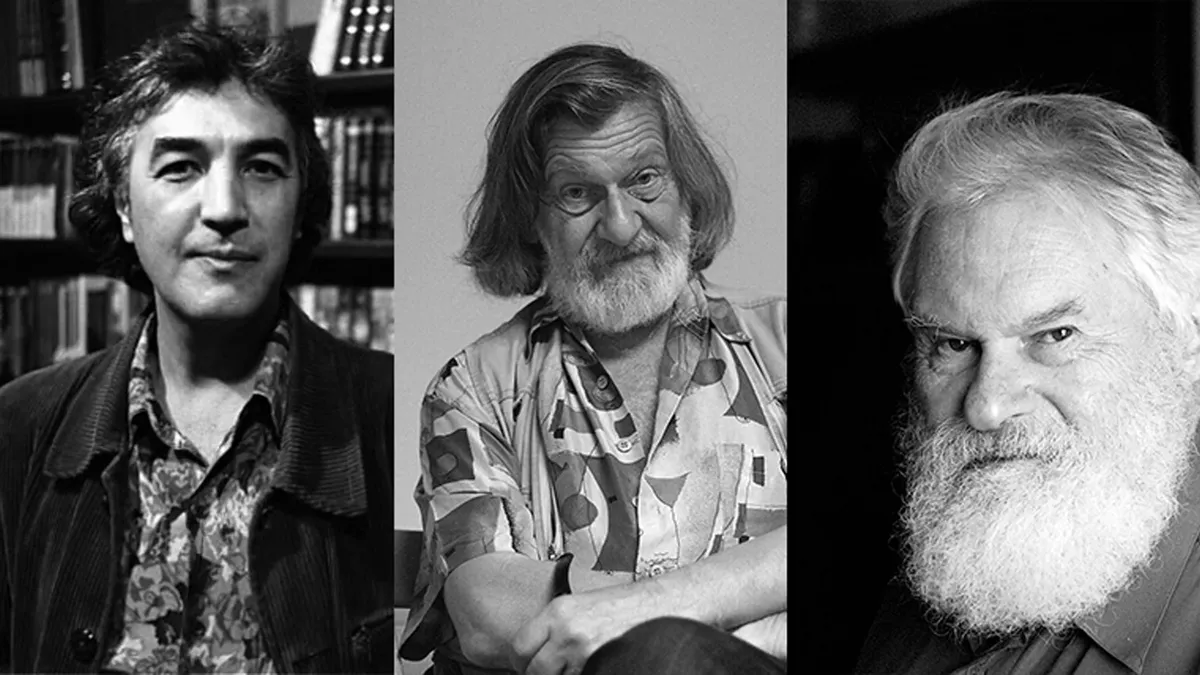
Shamshat Abdullaev, Arkady Shtypel, Vladimir Mikushevich. Photo: piotrovsky.store, Wikipedia, seance.ru
Three poets, whose heyday began in the nineties, have left. And it’s hard not to see a sad pattern in this: now it seems that the last attempt to maintain a cultural space based on one language has failed. What unites these authors, despite all their individual dissimilarity, is more than it might seem: all three were oppositional - albeit in different senses of the word - and were not published in Soviet times, and subsequently they were also not favored by the authorities and did not enter the literary mainstream . But something else is perhaps more important: all three, each in their own way, tried to preserve the poetic language - the same one that united the splitting post-Soviet cultural space.
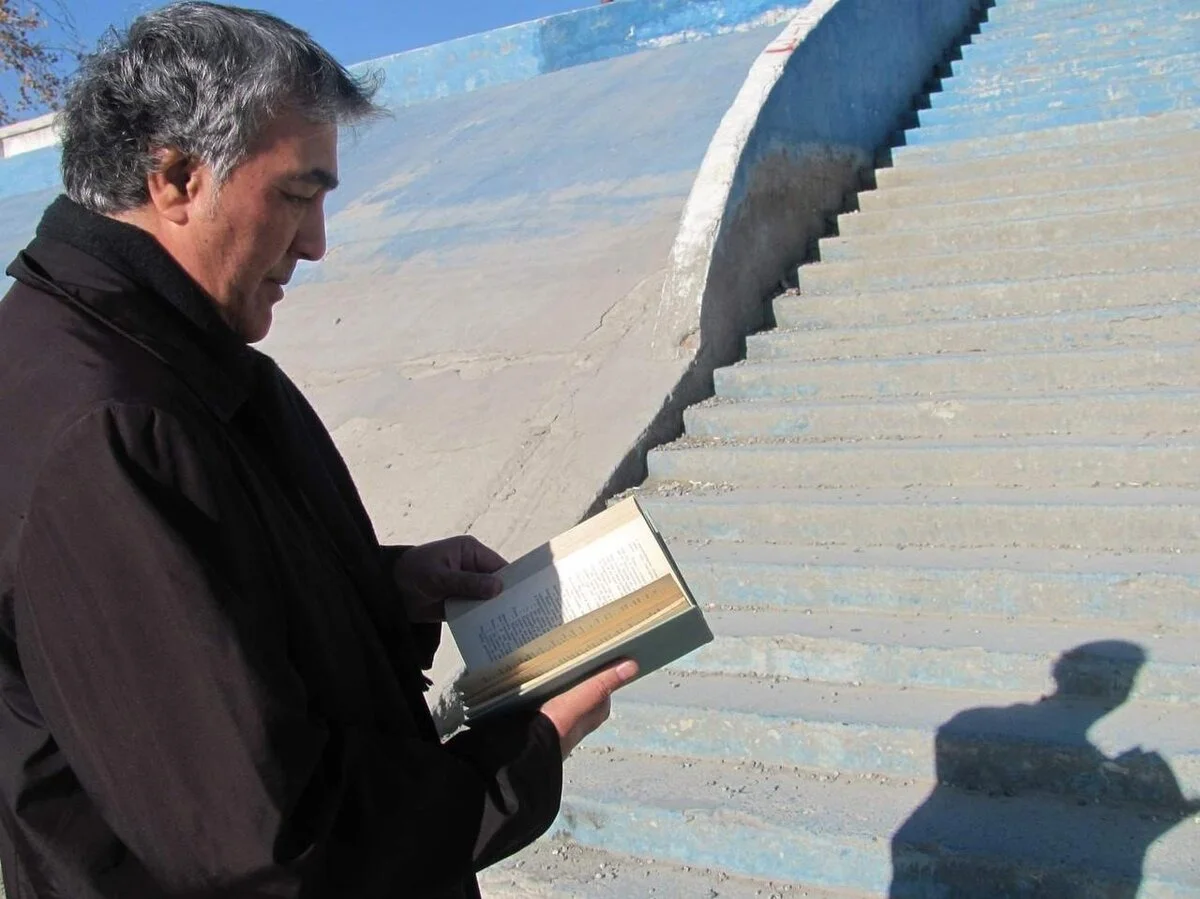
Shamshad Abdullayev was born in Fergana, a city that would later serve as his archetype in urban landscapes. His life passed along the outskirts: between Fergana and Almaty, the highest official position was the head of the poetry department of the magazine “Star of the East”. After his departure, a special meaning is seen in the fact that Abdullaev seemed to occupy the position of a distracted observer who is trying to understand history while it is still happening. He was never at the epicenter of historical events, although, as I will try to show, history remained one of his main themes.
Abdullaev's fate was not simple. In fact, he could not publish in Soviet times, and even having received high recognition - the Andrei Bely Prize for the poetry collection “Rupture” - Abdullaev faced dissatisfaction with the new Uzbek culture, which demanded a return to the national language (in a sad irony, its representatives were in many ways the same people who carried out Soviet cultural policy). This conflict cost Abdullaev his position as editor of the Eastern Star and reflected his difficult position among poets and writers. The Russian-speaking audience in Uzbekistan was decreasing every year, and he himself did not want to move to Russia.
Abdullaev perceived the Russian language not as belonging to Russian literature, but as common to the post-Soviet space, a kind of koine, and the poet consistently took this language out of context.
And in this, by the way, he inherited the traditions of Central Asian literatures, which were written in Farsi. The fact that Abdullaev used Russian as a poetic language made it possible to decolonize the language in his own way, leaving behind it the status of a cultural, but not a political language, which could be read in Uzbekistan, Russia, and Ukraine.
Abdullaev’s poetic optics can also be called decolonial because he worked with themes and images traditionally close to Central Asia, but tried to look at them with different eyes. The (post)Soviet Central Asian space was mythologized in the poetic world: a deep past was guessed behind almost every detail it described, while completely losing its exoticism.
Years later, it seems that Abdullaev’s poetry can still be read as an attempt to preserve a single Russian-speaking space - or at least that part of it that belongs to Uzbekistan. This cultural multi-layeredness, where medieval Uzbek culture juxtaposes with (post-)Soviet Central Asia, creates a special space where it is not so easy to determine the time and place of Abdullaev’s poems. Behind the Fergana landscapes there appear many other views of the classical and modern East. The Sovietization of Central Asia, which took place, among other things, under the loud (and generally imperialist) slogan “From nomadism to socialism,” seemed to be the end of history for Abdullaev, where, as if in a freeze frame, time stood still .
Critics say that Abdullaev deliberately avoided both Russian and Soviet poetic traditions. In poetry, this was manifested in the installation of free verse with a complex syntax, which not so much rejected the cultural heritage as melted it beyond recognition: in it, if desired, one can hear many different poetic voices.
Abdullaev’s poems have another important feature that makes them similar to cinema: sometimes there is a feeling that we are looking at a separate frame from a huge film, mounted in the most bizarre way. Syntax for Abdullaev is montage, and if we continue the cinematic metaphor, some poems are built on montage within the frame, as if without splices, while others are edited in a modernist way, following the author’s view rather than the usual logical and temporal connections.
Probably, only time will tell whether the attempt of Abdullaev and other poets of the “Fergana school” to create a new cultural identity achieved its goal, but this attempt was bold and consistent.
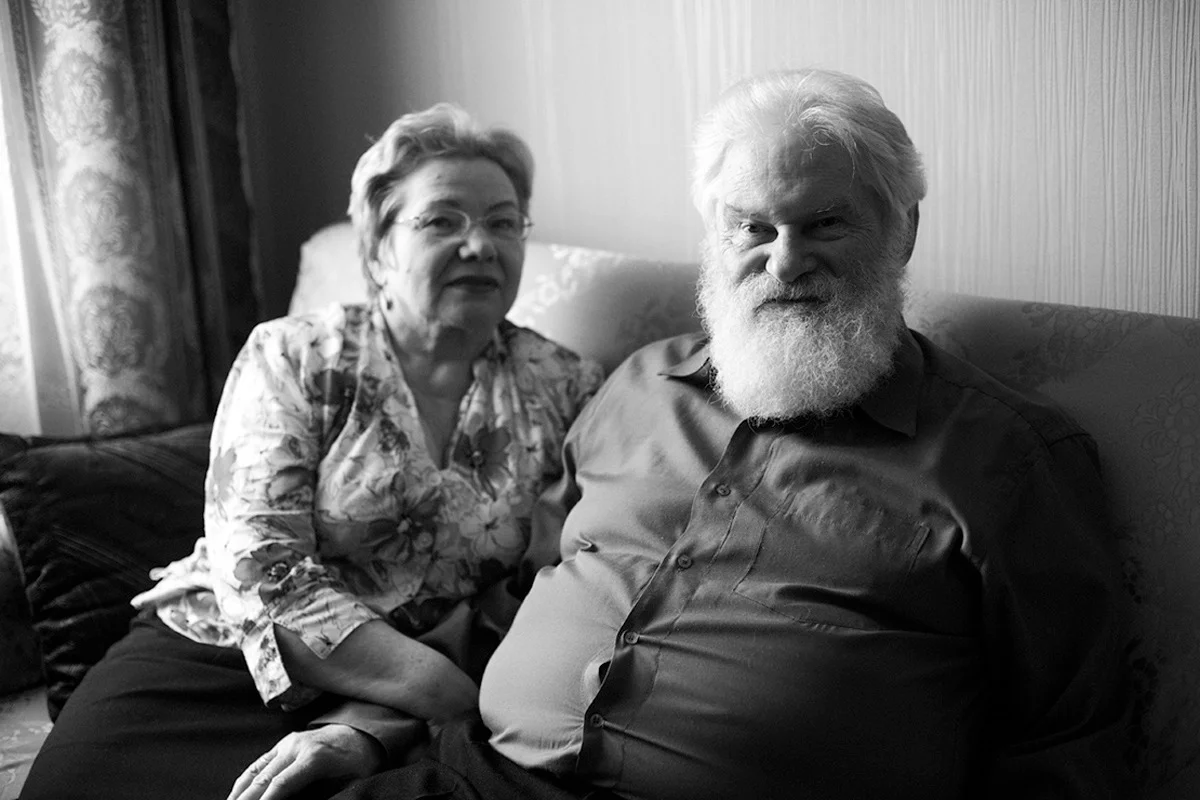
Vladimir Mikushevich was born on July 5, 1936 in Moscow, and, in his own words, began translating at the age of 13. His relations with the Soviet authorities were not easy - he was not allowed to publish his poems - and he quickly went into the element of poetic translation, where he pulled out an infrequent lucky ticket: to work with texts that were close in spirit (although the censors were confused by unclear religious motives). The inability to publish himself seems to have played a role in his translation method - not so much to speak in other people's voices, but to give the poets his own, unique one. Soviet cultural policy forgave the selectivity of authors, religiosity, and unusual approach - for the sake of the highest quality of the Russian poetic language and enormous efficiency.
At the end of perestroika, Mikushevich published the first book of his poems, followed by several more (including prose), but his work still remained in the shadow of a truly colossal translation project, which became possible after the abolition of censorship. Novalis, Rainer, Maria Rilke, Gottfried Benn, Ernst Jünger - this is not even close to a complete list of those whom he translated in the first quarter of the new century.
Mikushevich was often reproached for losing the author's individuality in his translations, but now it seems that this assessment is short-sighted.
Mikushevich was a traditionalist in the normal sense of the word, and by translating, he immersed the writers and poets with whom he worked into the veritable linguistic abyss of Russian literature.
This reliance on tradition is truly felt in any translation: medieval authors, romantics, modernists suddenly acquire massive Russian roots - like the great Armenian poet Grigor Narekatsi. This method, as it becomes clear today, was conservative only in the sense that it allowed for the preservation of as much culture as possible. Another thing is clear: Mikushevich worked in a vanishing genre, translating as many and such different poets as only he could. His translations are not only recognizable, they themselves have become part of Russian literature, in dialogue with which many other translators work, agreeing or arguing.
Mikushevich's translations have another amazing quality: due to the layers and collisions of cultural layers, they can be read almost as philosophical texts, which really give new meanings to both the originals and the translations (which sometimes one would like to call re-interpretations). Something similar happened to Rilke, who—here I would like to use the metaphor of the great Austrian himself—had to “ripen” to new Russian translations. The sense of distance was important to Mikushevich, only to reduce this distance. He placed each of the authors he translated into the corresponding Russian context—Russian corresponded to German romanticism, Pasternak and Tsvetaeva corresponded to Rilke—and thus the translator seemed to immediately inscribe them into a certain poetic tradition. Implicit hints and references to Russian poetry bring Mikushevich’s translations closer to the “melted” poetic voices in Abdullaev’s poems.
Mikushevich was a talented and unusual literary critic who himself composed academic commentaries on the authors he translated. Shortly before his death, he published an almost thousand-page volume of cultural essays, Smart Power: Experiments in the Study of Creativity. It can be called an “attempt at saving”: in these texts, changing times and countries, Mikushevich came to the conclusion about the unity and integrity of human culture, the purpose of which he saw in increasing meanings. Mikushevich left precisely in that era when these meanings came under the heaviest blow.
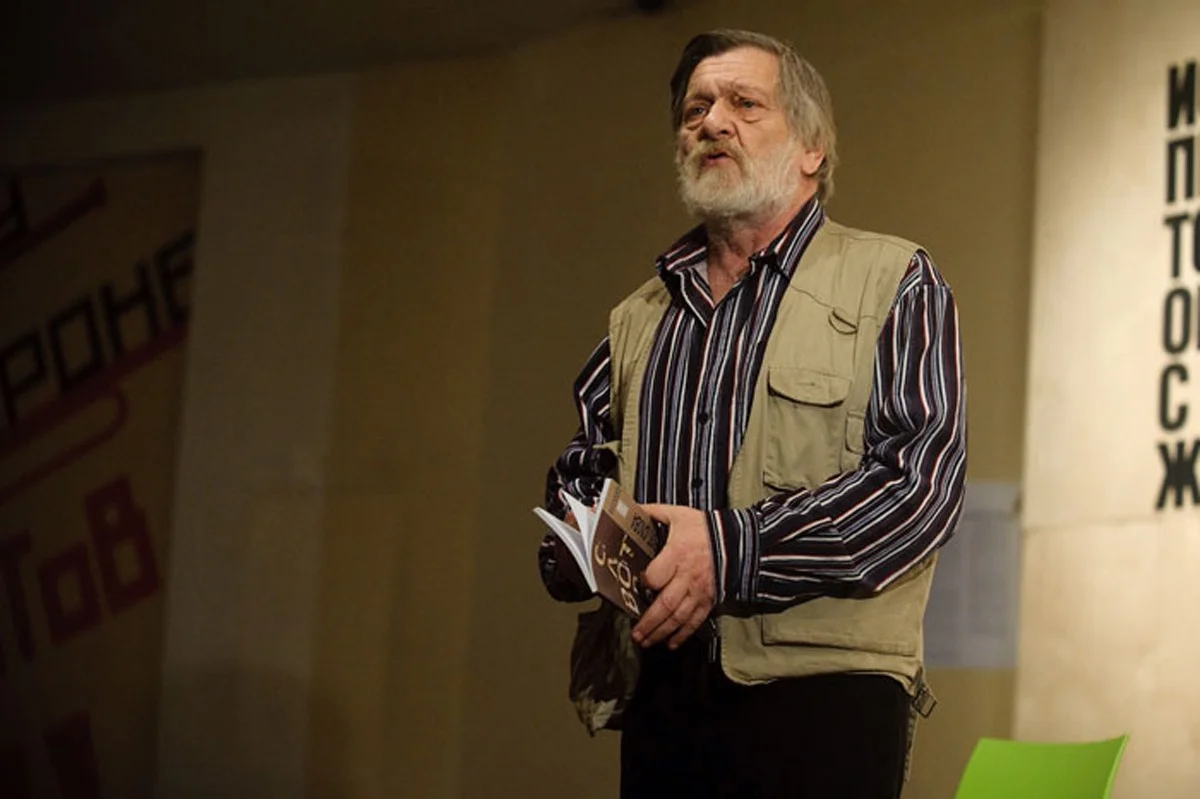
Arkady Shtypel was born in Uzbekistan. He was expelled from the university because of an attempt to distribute a literary manifesto against socialist realism - and, moreover, accused of denigrating Soviet ideology and Ukrainian nationalism, lived most of his life in Moscow, and died in Odessa. If Abdullaev tried to preserve Russian as a language of understanding and cultural communication in Uzbekistan, then Shtypel performed a similar task with Ukrainian in Russia.
Now the space of his life seems doubly non-random: after the change of “place of residence” of the Soviet era, it seemed as if the collection (and preservation) of culture came - first of all, where, Shtypel himself felt, it was under the threat of war. In his poems, he comprehended the collapse of the empire in some not at all obvious details. Of course, with such attitudes, Shtypel could not publish until the end of the eighties (or rather, even the beginning of the nineties) - just like Abdullaev and Mikushevich.
And not even a complete list of Shtypel’s professions testifies to historical vicissitudes: acoustic engineer, radiologist, mathematics teacher, installer, photographer, watchman, private shuttle entrepreneur. The word from the nineties seems especially important now because culture—the dimension in which the poet lived—is also moving “shuttlewise.”
To talk about his poems is to talk about a unique attempt to combine Russian and Ukrainian futurism with modern poetic practices.
Hence his very special work with poetic language, when Ukrainian meters meet Russian syllabonics and disrupt the rhythm. It seems that this double Russian-Ukrainian optics sharpened Shtypel’s attention to detail, from which he develops a poetic image. He translated a lot from Russian into Ukrainian, and now this also seems to be an attempt to hold on to the torn fabric of cultural meanings. From futurism, perhaps, Shtypel inherited the complexity of describing seemingly simple things: as a poet, he trusted language and watched (or listened: one of his books is subtitled “Poems for the Voice”) where it would lead.
Abdullaev decolonized Russian, Mikushevich saved himself in translations, Shtypel recreated Russian-Ukrainian poetic connections. Many years of “internal emigration” and the practice of “writing to the table” made all three observant, prone to reflection on the “lyrical self”. It is no coincidence that they were not innovators, did not invent something new, but, having received creative freedom, tried to update tradition - in the normal sense of the word.
Max Volodin