
Translated material
The prosecutor comes for the "ex"
Who and what is threatened by the abolition of the statute of limitations in relation to “acts of corruption”
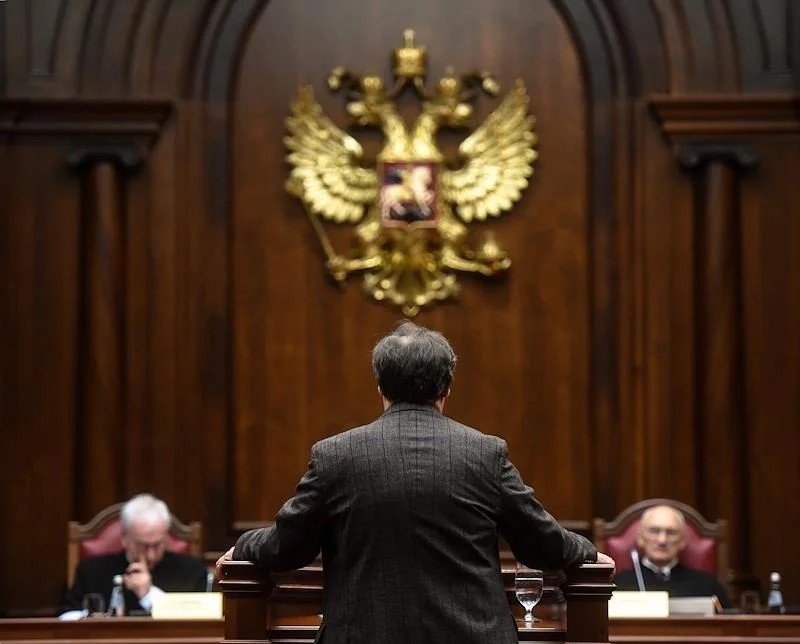
By resolution No. 49-P of October 31, 2024, the Constitutional Court actually abolished the statute of limitations for “acts of corruption.”
This ruling would deserve applause if not for the actual timing and context. The Prosecutor General's Office has recently pushed for claims for confiscation of property from owners it considers unscrupulous on various grounds. Including against persons suspected of corruption, there were one such lawsuit each in 2019 and 2020, three in 2022, and six in 2023. As a rule, the requirements arise from events that took place 20 or even 30 years ago.
The reason for Resolution No. 49-P was a request from the Krasnodar Regional Court, which encountered difficulties in considering the appeal of the claim that the Prosecutor General’s Office brought under the law “On control over the compliance of the expenses of persons holding public positions and other persons with their income” dated December 3, 2012 No. 230-FZ to the ex-management of the Pokrovsky agricultural concern (Andrey Korovayko, Arkady Chebanov and others).
According to the prosecutor's office, Korovayko's business was based on funds obtained through corruption while working in the office of the plenipotentiary representative of the Southern Federal District in 2001-2004. The court of first instance decided to transfer into state ownership shares and shares in the authorized capitals of 22 companies worth over 9 billion rubles. The defendants, for their part, referred to the expiration of the statute of limitations, which, as a general rule, cannot exceed three, and in some cases (for example, in cases of terrorist actions) - ten years.
Resolution No. 49-P on 52 pages contains many lengthy but general discussions regarding the horrors of corruption. She
“has a destructive, depressing effect on the sphere of implementation of public power, undermines its legitimacy... is a significant obstacle to the legal, democratic and socio-economic development of the country. This is all the more relevant for the Russian Federation, whose socio-economic, political and legal systems have gone through a very difficult period of transformation since the early nineties of the last century.”
These words would have been “golden” if law enforcement agencies had started fighting corruption a little earlier.
The Constitutional Court here actually admits that the state, starting from the “most difficult period of transformation in the 90s,” was powerless against corruption, leaving us to guess why the Prosecutor General’s Office suddenly realized it now.
Here's more from the Constitutional Court ruling:
“The statute of limitations (in corruption cases) can be perceived by citizens as the state’s refusal to protect the constitutional system... This actually rehabilitates illegally acquired capital... undermines citizens’ faith in the rule of law, goodness and justice...” (“In the morning I spread a sandwich and immediately think: what about the people? ").

The Constitutional Court is trying to adhere to the law “On Control of Compliance...”, explaining that the mechanism of the claim within its framework is neither civil nor administrative law, and the legislation does not establish a statute of limitations for it at all. This contradicts the position of the same court, which, in decisions dated April 27, 2001 No. 7-P, dated July 14, 2005 No. 9-P and dated June 24, 2009 No. 11-P, stated that the existence of periods during which in relationships adverse consequences for individuals may occur with the state is a necessary condition for the application of these consequences.
Resolution No. 9-P directly points to the presumption of bad faith: it is not the prosecutor’s office that must prove that the property was acquired with funds exceeding the income of officials, but, on the contrary, they must prove the presence of relevant and legal income:
“Persons who commit acts of corruption take measures to conceal... both the violations themselves and the property acquired through their commission. They obstruct the conduct of inspection activities and use their power, official immunities and influence (corruption ties) to do this.”
But such actions already fall under the Criminal Code, where the presumption of innocence applies. Understanding this, the Constitutional Court clarifies that a claim under the Law “On Compliance...” can be filed in the absence of a criminal case, including due to the statute of limitations of the crime, including for actions committed before it came into force on January 1, 2013.
Resolution No. 49-P disavows the position of the Supreme Court of the Russian Federation on the applicability of the institution of limitation of actions, which was formulated “ in the rulings of June 25, 2024 and July 23, 2024, adopted after the Krasnodar Regional Court sent a request to the Constitutional Court .” That is, after the appointment of the president’s classmate Irina Podnosova as chairman of the RF Armed Forces. Any lawyer will read this passage as a direct attack, but we will not guess about its political background.
Discussing the mechanism of Federal Law-230 “On Control of Compliance...”, the Constitutional Court stipulates that its position on the statute of limitations does not apply to claims for confiscation of property on other grounds, in particular, the cancellation of privatization transactions. However, having said “a”, the Constitutional Court will most likely say “b”, especially since the resolution slips into terms that are not defined in the law, such as “acts of a corrupt nature.”
In this broad sense, almost all transactions on the privatization of state property that were lobbied at the federal and regional political level are “corrupt.”
The Constitutional Court stipulates that the seizure of suspicious property from officials within the framework of Federal Law 230 should not affect third parties to whom it was resold, unless they are associated with the defendants or dummy ones. But here we need to go down to the level of practice of courts of general jurisdiction: no one there will deal with bona fide or dishonest purchasers.
This is exactly what happened following the claim of the Prosecutor General’s Office against the ex-head of the Serpukhov region, Alexander Shestun, when, along with his house, the property of numerous third parties was seized , including those who had never even known him. Even then, five years ago, we predicted that this would create a precedent that would be dangerous for all officials - well, perhaps not for all - that is, selective enforcement.
It’s not so safe to get involved with the current ones, or maybe it’s the former ones. In the same Krasnodar Territory, huge agricultural lands were acquired in a similar way by officials of a much higher level than the former federal inspector. But didn’t they build their palaces underground or drive expensive cars outside their fenced estates? “Where have you been these 30 years?”...