
Translated material
Trump - victory night
Electoral journey of Pavel Palazhchenko to the USA. Scene Nine: MAGA
On the eve of the elections, almost all observers predicted that on the morning of November 6 it would be impossible to name the winner of the presidential race. The gap between the candidates in both the national count and the swing states was minimal, and it was expected that by the morning it was unlikely that enough votes would be counted to determine the trends that would lead major news outlets and television networks to declare the winner first in individual states and then around the country.
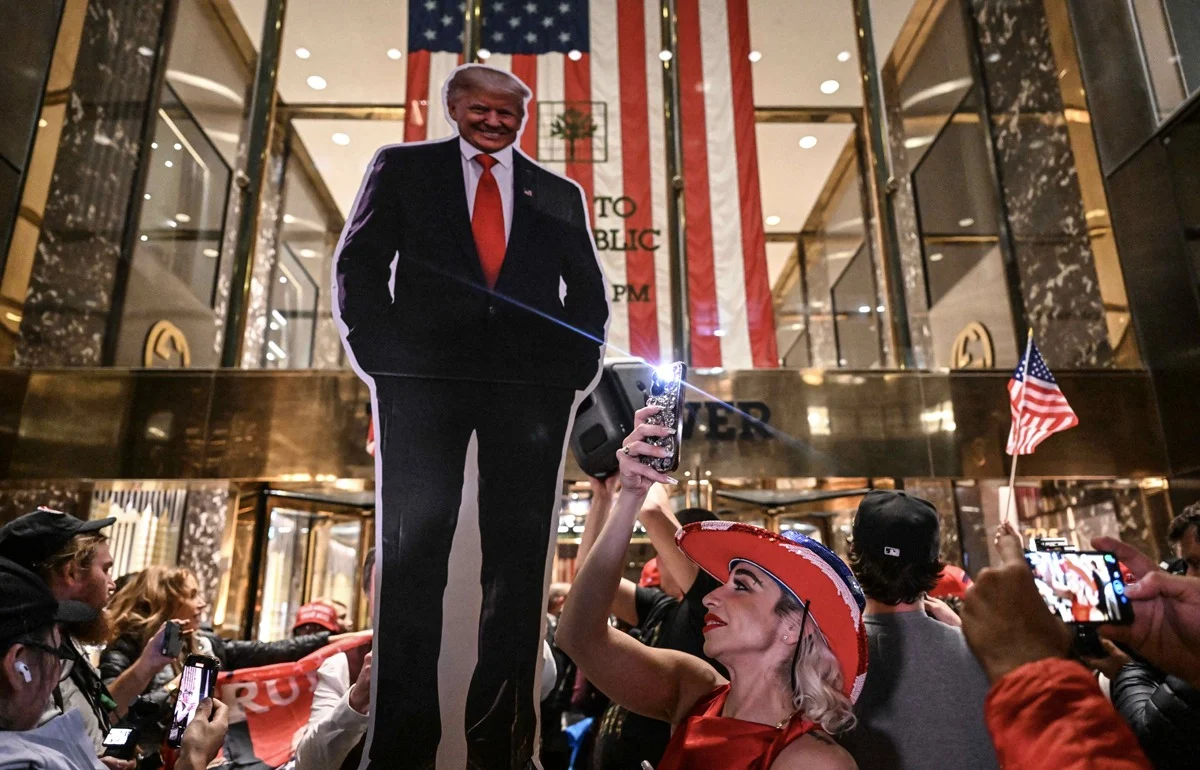
But this forecast, which almost everyone made with confidence, turned out to be wrong. At 3:30 a.m., when the Associated Press announced Donald Trump's victory based on preliminary vote counts in the key state of Pennsylvania, it became clear that nothing could stand in the way of his path to a second presidency. At Mar-a-Lago, where Trump supporters have gathered, they are celebrating, as future Vice President J.D. Vance said, “the greatest political comeback in American history .” "
People who went to bed confident that everything would be decided later will wake up to the news of a landslide victory for the former president and the Republican Party. Republicans have regained their majority in the Senate and are likely to retain control of the House of Representatives.
I could be wrong, but I don't expect this result to be actively contested by Democrats. There will be no mass riots, for which the police and various services in Washington were preparing. Yesterday, finding myself in the center of the American capital during the day, I saw glass display cases covered with wooden shields in the first floors of many buildings and police fences on the approaches to the White House and other official institutions. I think they will be sorted out soon. Half of the country will rejoice, the other will be upset, but life will go on as usual.
The flow of political commentary will be so powerful that it will be difficult for even the most insatiable consumers to comprehend. Commentators - both more or less objective and adherents of one of the parties (and in the USA there are always two of them: the division into two political parties is stable and no one has been able to shake it for a long time) - will look for the reasons for the victory of the Republicans and the defeat of the Democrats and talk about political consequences of the elections. There will be a lot of talk about candidates for positions in the Trump administration.
There are probably many contenders for them, but their names are mostly unknown. During Trump's first presidency, the composition of the administration was not stable; the break with many former comrades was dramatic, and some of them later became his sworn enemies.
In a recent interview, Trump said his "biggest mistake was appointing some bad or disloyal people." Now unconditional loyalty will be the main criterion for personnel decisions.
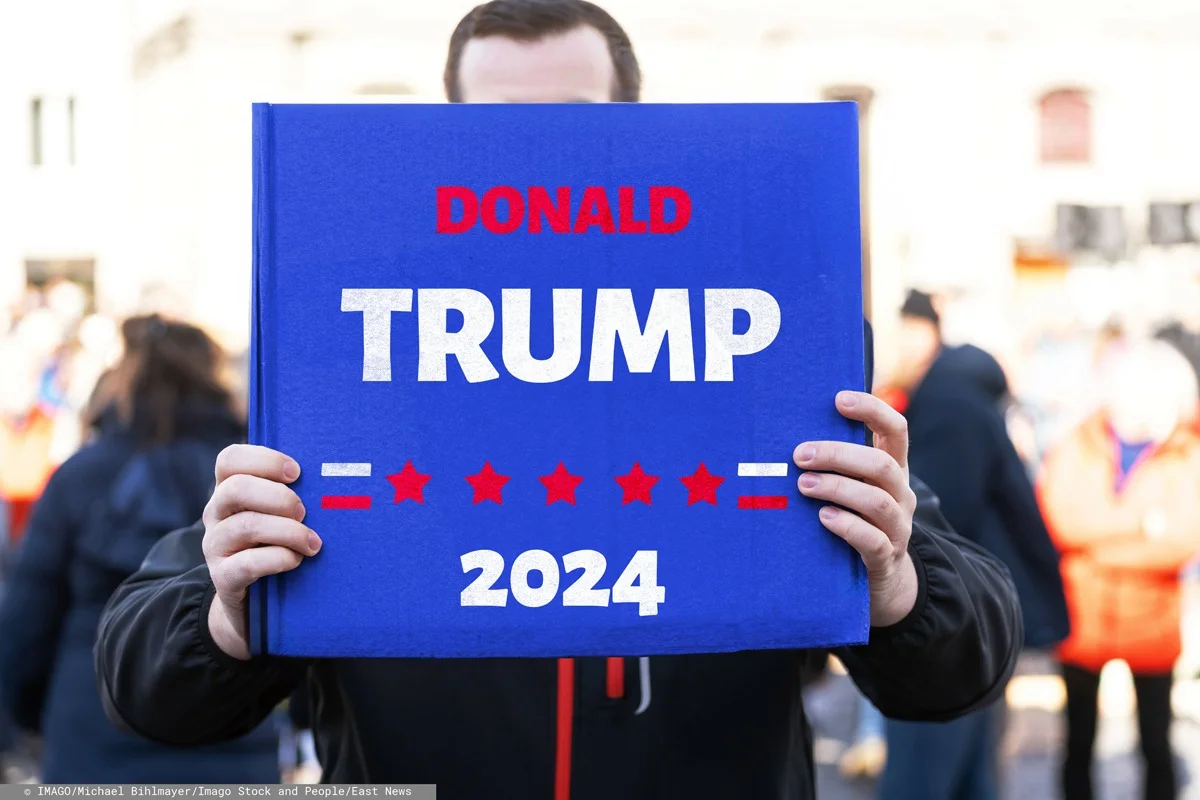
It is more difficult to talk about political decisions. Trump's speeches contained more furious, sometimes obscene rhetoric than clear guidelines that would allow one to imagine the steps he would take. It has become a common phrase that opponents take Trump literally, but not seriously, and supporters - seriously, but not literally. We have already been frightened by fascism, supporters say, we have been frightened by the collapse of democratic institutions, the collapse of the decision-making system, and the like. But in 2016, Trump was elected, they continue, and none of this happened, the country lived well for four years, and if it weren’t for Covid—it’s certainly not Trump’s fault—everything would have been great. Therefore, there will be no concentration camps where migrants expelled from the country will be rounded up, no dismissal of tens of thousands of civil servants, no punishment of women for abortion, no mass imprisonment of the president’s political opponents, and even less so! - their executions. All this was in Trump's speeches and interviews. But this won't happen.
We'll see what happens. Trump will fulfill some of his promises, or, in any case, will be able to say that he has fulfilled them; will forget about some.
This has happened before, and this applies not only to Trump, but to almost any American and not only American politician. No one is usually punished for this.
Why did the Democrats lose? This is the second topic of the upcoming newspaper and television debates. I think the leitmotif of the answers to this question will be the following thesis: the American elite lost. Political, bureaucratic, university, media elite. She has become disconnected from the people, is mired in far-fetched problems (among which ecology, social justice, business responsibility, gender and feminist issues are often mentioned), is arrogant towards ordinary people, does not know and does not want to know what worries them. She dragged America into “forever wars” (a phrase from Trump, who presented himself as a “peace candidate”). There is a lot of truth in this criticism. And they attribute it, first of all, to the Democrats, whose agenda largely coincides with these articles of accusation, although, especially on the last point, one could recall that these wars began and continued with the full bipartisan support of Congress and the media of all directions. But foreign policy hardly played a big role in the choice of the American voter.
Still, the elite is a rather vague concept. It was the Republicans and their leader who won, who found a new “core composition” of his team, which I already wrote about: these are the formerly apolitical residents of the American outback, disappointed with the fruits of globalization and deindustrialization, plus traditional wealthy conservative Republicans - that is, of course, the elite, or rather the other elite the part that did not change their party, although Trump sometimes made them shudder.
But it was the Democrats who lost. They will have to figure out their mistakes for a long time, and it is difficult to say what conclusions they will draw from the upcoming “debriefing.”
I will not immediately name and rank the reasons for the defeat of the Democrats. But two of them must be mentioned. The Democrats and, in particular, President Biden have neglected the problem of migration, especially illegal migration. This problem is fundamentally very contradictory. It was not me who said for the first time that, objectively, all developed countries need immigration, and the time will soon come when competition for immigrants will begin. But allowing complete chaos at the borders, turning a blind eye to the crowds of people crossing them every day in the hundreds and thousands, meant practically giving Trump an ace in the electoral hand, with which he beat all other cards (by the way, trump in English is “ace”). It would seem that this is not difficult to guess, but neither the president nor numerous expert consultants to the Democrats paid adequate attention to this problem. There is negligence.
The second reason is inflation, which was especially high in the first two years of Biden's presidency. In my notes, I wrote that after Covid it was inevitable and was actually global in nature (in Russia we know this from our own experience) and that the economic results of the last four years cannot be called a failure - inflation and unemployment were suppressed, the recession predicted by most economists did not happen.
But inflation hits everyone, and in the United States, for reasons that are complex and not entirely clear, even inflation of less than ten percent is perceived as almost a tragedy. And people blamed it on the president’s party.
These days we will read and hear a lot more reasoning and forecasts, including about the foreign policy consequences of the choice that the Americans made, and since I will remain here for a few more days, I will write about it. For now, I shared only my first impressions and assumptions.