
Translated material
Basque from Maryino
One lawyer, two names and three mistakes by Pablo Gonzalez. A spy detective story with a finale at Vnukovo-2 airport
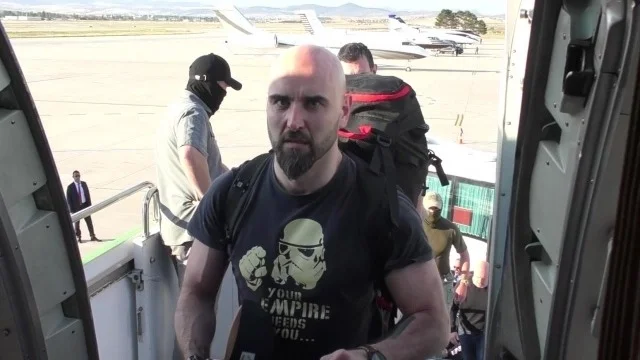
August 1, 2024. Pavel Rubtsov (Pablo Gonzalez) boards a plane at Ankara airport during a prisoner exchange. Photo: TsOS FSB of the Russian Federation
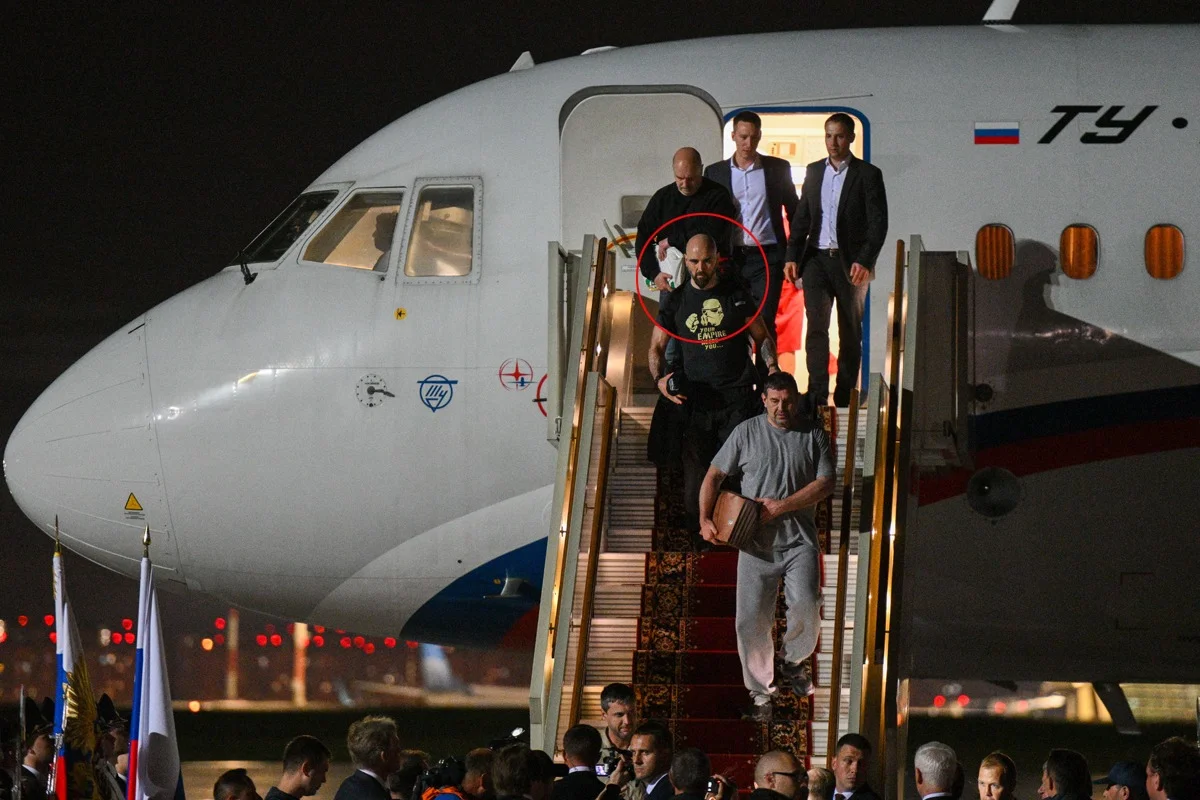
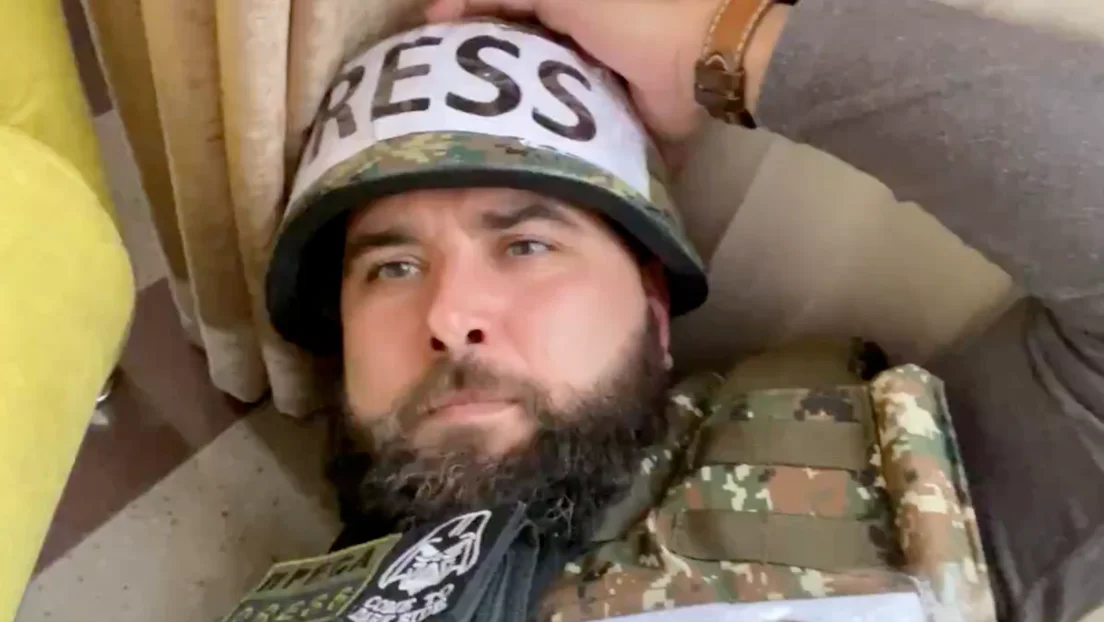
“The Empire needs you” - this slogan from the movie “Star Wars” was written on the T-shirt of journalist Pavel Rubtsov as he walked down the plane at Vnukovo-2 airport on the evening of August 1, 2024. On the red carpet, the newly exchanged Russian intelligence officers were greeted personally by a military band and Vladimir Putin.
Putin and Rubtsov did not know each other before. This was noticeable by the way they quickly shook hands, and the man, who looked like John Travolta's character from the spy thriller From Paris with Love, disappeared among his president's retinue.
This meeting and this handshake were considered by all European media, whose journalists were previously familiar with war reporter Pavel Rubtsov, to be the final point in his indictment. After spending two and a half years in a Polish prison on charges of espionage, Rubtsov returned home. There was no longer any doubt: the bald man with a beard a la Travolta was a “Russian agent.”
Two surnames
Until February 28, 2022, journalist Pavel Rubtsov was known in Spain as Pablo Gonzalez Yagüe, who worked as a freelancer and freelance writer for the San Sebastian-registered newspaper Gara, whose name translates as “We Are.” The publication has far-left nationalist views and was previously closely linked to ETA, the Basque terrorist group. After ETA announced the complete dissolution of its paramilitary structures and the cessation of political activities on May 2, 2018, the Gara newspaper turned into a marginal militant leaflet of fans of separatism, it had practically no money or readers.
The leaders of the Russian opposition - Zhanna Nemtsova, Ilya Yashin * and Vladimir Kara-Murza *, whom the cheerful and sociable “Spanish reporter” Pablo Gonzalez desperately tried to get acquainted with (and met), will at some point be surprised that an unknown publication is so interested in the life of the Russian political diaspora abroad, that it spares no expense on the numerous business trips of its freelance correspondent around the world and buys him the best technique. But this suspicion at that moment did not develop into a stable feeling of “I’m being watched.”
Gonzalez was like everyone else: he drank, joked, took Yashin to football, told “front-line stories”, spoke a lot and well in Russian. Almost yours.
Pavel Rubtsov, whose grandfather moved to Russia during the Spanish Civil War, was born on April 28, 1982 in Moscow. When he was little, his parents separated, and he went with his mother to Bilbao, where he received a Spanish passport and a new name absolutely legally. Pablo Gonzalez Yagüe also received his education in his new homeland, choosing military journalism for its adventurism and wide communication opportunities. During his reporting career, he managed to collaborate with the Spanish ElPúblico, the EFE agency, the laSexta TV channel, the Voice of America**, DW**, the Basque publications Naiz and, finally, Gara.
Journalist Sean Walker from The Guardian, who is familiar with Gonzalez, who devoted a large-scale investigation to Pablo’s story, recalls that Gonzalez never hid his Russian origin and was known to everyone as “Russian Pavel.” Sean Walker's doubts were not dispelled even when Richard Moore, head of the British foreign intelligence service MI6, said that Gonzalez was only “masquerading as a Spanish journalist.” Sean Walker wrote a whole book about the “illegal immigrants” of the special services, but he could not even think that a real “illegal immigrant” lived and worked next to him.
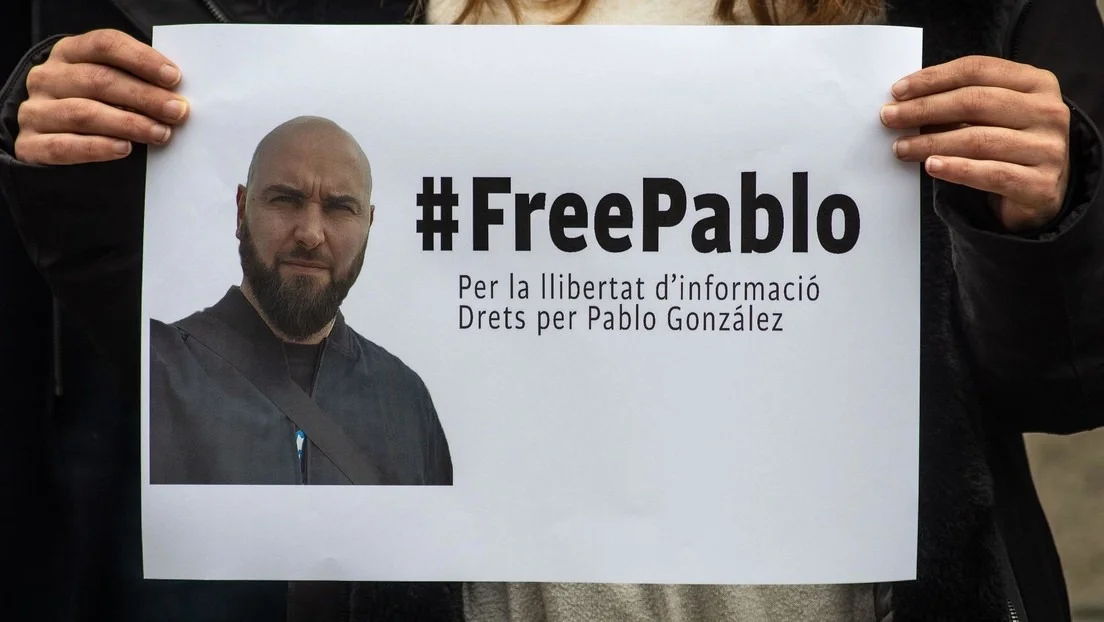
Spanish journalists also had doubts about the fairness of the charges against Gonzalez. After “agent Rubtsov” was arrested on February 28, 2022 in the Polish city of Przemysl on suspicion of “participation in the activities of a foreign intelligence service” and he faced up to 10 years in prison, several journalistic unions in Europe and Spain carried out the #freePablo campaign for a long time. demanding the release of his colleague.
After the handshake at Vnukovo airport and the publication in several European media of documents allegedly seized by the special services from Rubtsov-Gonzalez, speeches in his defense stopped. During an investigation by the Internal Security Agency (ABW, Warsaw Secret Service), it turned out that back in the 2010s, the journalist infiltrated Zhanna Nemtsova’s circle in order to allegedly monitor her and a number of other representatives of the Russian opposition who were in exile.
First, he gained access to the laptop with documents and letters from the murdered Boris Nemtsov, asking for his daughter Zhanna’s computer “because his was broken.”
Gonzalez's main job, as stated in the investigation materials published by the world's media, is to "identify and point out 'interesting' people and places."
The certificates found on Gonzalez's laptop allegedly contained details of his meetings with Zhanna Nemtsova, Ilya Yashin, Vladimir Kara-Murza, Ukrainian politicians and journalists, Bellingcat investigators** and many others who could be of interest to the Kremlin.
A journalist for the Spanish newspaper El Mundo, Esteban Urreistieta, who gained access to documents from Polish law enforcement agencies, claims that Gonzalez allegedly followed Alexei Navalny during his trips for treatment to Spain and Switzerland in 2017 and took photographs of the hospital building.
Was Gonzalez really such a professional intelligence officer for so long that no one aroused suspicion? Why was he arrested only when he found himself in Poland near a military airfield? What did you screw up on? Many people still ask these questions. And there are answers to them.
Three mistakes by Gonzalez. Error one - CIA
Spying on Russian opposition leaders abroad is not a crime; there is no such article. In the end, Gonzalez-Rubtsov could always explain his increased interest in Nemtsova, Yashin, Kara-Murza and Belarusian politicians living in Poland by his work on another article or book. Gonzalez was caught not for appropriating a laptop with letters from Boris Nemtsov and not for a photo of a clinic in Barcelona where Navalny had surgery.
At some point, he crossed the line himself, deciding to compile psychological profiles of foreign journalists and military experts who, in his opinion, could potentially work or were already working for the CIA.
Guardian columnist Sean Walker recalls that in late 2017, Gonzalez signed up for a five-day training course run by the investigative group Bellingcat. The course allowed Gonzalez to meet many of the people working on Bellingcat investigations, including the group's founder, Eliot Higgins.
Some other participants might also be of interest to Russian intelligence: they included journalists from leading publications, as well as a top executive from a technology company that would later sign a contract with the US State Department worth hundreds of millions of dollars. Rubtsov decided to act.
He started with Ukrainian and Belarusian politicians. Journalist Gonzalez came to a meeting with Ukrainian MP Vladimir Aryev in 2015, waving a bottle of wine as a gift. “He said it was from his home region,” Ariev recalled . “I had never met a journalist who brought a gift to a meeting before, but I thought it was probably some kind of Basque tradition.” But then Arev realized that the journalist was simply trying to compile his “psychological profile.”
About the same thing happened when Gonzalez met Pavel Latushko, one of the leaders of the Belarusian opposition in exile and the sworn enemy of President Alexander Lukashenko. And then the fun began. It is difficult to say whether Gonzalez was asked about this in Moscow, but he himself compiled more and more messages.
“He is an American who lived in Armenia and then returned to the United States of America. He is young, he has anti-Russian sentiments, and in the future, if not now, he will cooperate with American intelligence services,” Gonzalez allegedly writes to the Center in one of his later published reports on contacts with American reporter Justin Tomczyk, who was “a student at the summer school of journalism in Prague.” At a dinner at school, Gonzalez, as Western intelligence agencies claim, allegedly asked Tomczyk to introduce him to several people from his circle, most of all he was interested in Andrew Losen, who works for the OSCE, and his colleague Matthew Schaaf, who collaborated with the Freedom House office** on Ukraine.
Naturally, no one will officially confirm that Gonzalez’s American acquaintances worked for the CIA, but after meetings with “new friends” initiated by a journalist from the Basque Country, they began to follow him.
“Pablo often exaggerated the importance of some of the materials he prepared, he became lazier and at the same time more persistent in recognizing his work,” says a source for the Spanish publication El Mundo, who studied the investigation materials and documents likely seized from Gonzalez during his arrest. , which the Polish intelligence services decided to provide to the media. There, in particular, there were interviews with soldiers of the US and Canadian armies at a military training ground in Lvov, as well as reports about the types of maneuvers practiced during military exercises. Gonzalez also compiled several reports on the work of American intelligence officers in Eastern Europe and the countries of the former USSR. His archives allegedly contained profiles of individuals whom he identified as CIA employees working in Georgia, and notes proposing political scenarios that needed to be implemented to return the former Soviet republics to the Kremlin’s political orbit. Gonzalez subsequently refused to comment on these materials.
Sean Walker's source in Warsaw, who studied all of Gonzalez's correspondence with Moscow, believes
that Pavel Rubtsov “was not very professional, made many mistakes, and it was clear that he was rather lazy in carrying out his tasks. I didn't get the impression that he was an incredibly well-trained operative."
If the CIA is behind the arrest of Gonzalez, which is almost openly talked about in Spain today, it is understandable why the Spanish-Russian journalist was eventually arrested in Warsaw (it’s not like he should be imprisoned in Madrid). A search of his computer allegedly revealed reports on power plants and Poland's security infrastructure, which led to him being charged with espionage under Article 130 of the country's Criminal Code.
When the decision on the exchange between Moscow and Washington was reached, Poland was again asked to accommodate. Polish Deputy Foreign Minister Andrzej Szejna would later say that the decision to release Pablo Gonzalez from prison was made “because of Poland’s loyalty to the United States and NATO.” And this is extremely important. Washington insisted on the exchange of the one whose arrest he initiated.
“We benefited from the fact that we are a loyal member of NATO, a loyal ally of the United States, and I believe that this in itself is a value,” admitted Andrzej Szein. After the exchange, the Polish prosecutor's office closed the Gonzalez case.
Three mistakes by Gonzalez. Mistake two - Basque from Maryino
Pablo Gonzalez received this nickname among political emigration. It seems that he was “in the right place,” often drunk and constantly cheerful, bald and overweight, a lover of jokes, Pavel Rubtsov could be rude and indelicate, but many attributed his faulty manners to the psychological characteristics of a war reporter.
His professional affiliation, which I wrote about, played against Gonzalez. The ETA-affiliated Basque publication Gara is a poor cover.
No regional publication in Spain would ever pay such attention to the Russian opposition and pay its freelance correspondent the money that it seems to have always had. But there were always few of them.
From the published correspondence of Gonzalez, it is known that he allegedly repeatedly asked the Center to increase his salary. In a document dated 2017, he reports that he earns 3,100 euros per month. “I have been receiving this salary since 2010,” Gonzalez allegedly writes and asks for 4,300 euros a month, justifying this with high inflation. He also demanded that his work be counted as length of service for further registration of a pension. It is unknown how much, how and where Gonzalez ultimately received his “fees”, but he traveled very actively - to Madrid, Berlin, Warsaw, Strasbourg, where Navalny was speaking at that moment, to Georgia, Ukraine, Karabakh, Transnistria. He always had the latest MacBook, equipment, and an expensive camera with him.
“Over time, Pablo became more reckless, neglecting certain recommendations (...) such as destroying the files he stored on his devices,” a Spanish intelligence source says today. A note dated 2018 was found on his computer in which Gonzalez allegedly wrote to his “handler” that he had “destroyed the electronic devices as ordered,” breaking them into pieces and throwing them into the ocean. Polish intelligence services established that the note was drawn up later than the expected date of destruction - in 2019. Either Gonzalez destroyed something else or did not destroy anything at all, sparing laptops, phones, iPads, memory cards, an external hard drive and some “radio and electronic devices that can be used to establish underground communication channels” seized during the arrest .
When Polish (and possibly US) intelligence agencies later open Gonzalez's 512 gigabyte hard drive, they will allegedly find data on CIA agents, as well as reports from 2016 to 2021 on the activities of the Russian opposition, photographs of their meeting places and passwords from the Wi-Fi of these places. Having learned that all these materials were being studied by Polish military counterintelligence, Pablo Gonzalez, who is in a maximum security prison in Rzeszow, immediately refused to give any testimony.
The desire to save money on Apple technology ultimately played a cruel joke on the “Basque from Maryin”. In fact, he kept all the grounds for accusing him of espionage on his own laptop.
Three mistakes by Gonzalez. Mistake three - lawyer
If during the arrest of Gonzalez in Poland, the Spanish media refused to believe in the version about his cooperation with the Russian intelligence services, then after the appearance of his lawyer on the scene, their ardor cooled down a little. Unexpectedly for everyone, the lawyer for “freedom of speech” was the notorious Gonzalo Boyer, who had previously defended the former head of Catalonia Carles Puigdemont in the case of the “Russian trace” of his struggle for the independence of the region (“Novaya” spoke in detail about the connections of Puigdemont and Boyer with Kremlin politicians).
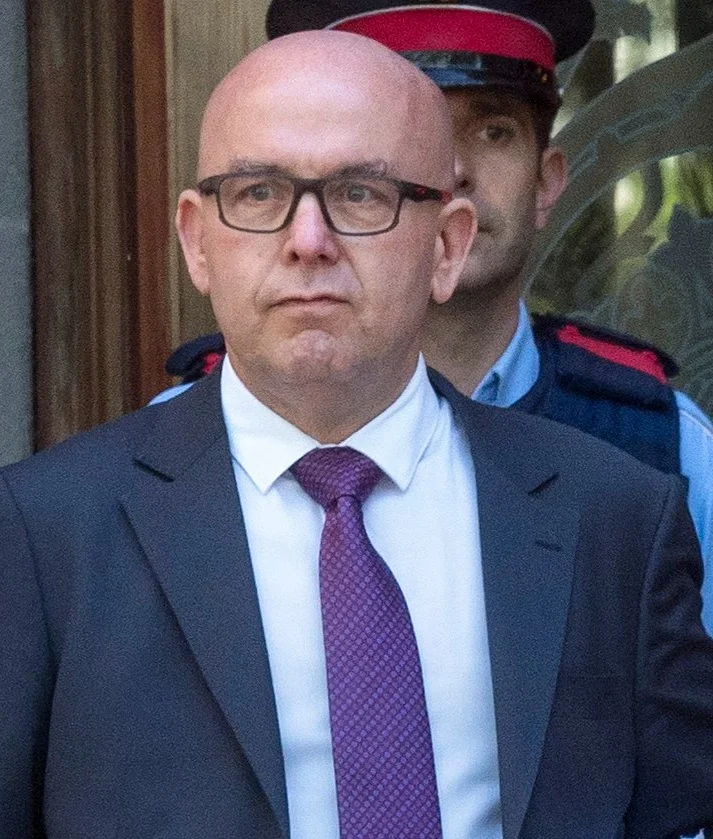
Gonzalo Boye was previously convicted of collaborating with the Basque group ETA in the kidnapping of businessman Emiliano Revilla. It was in prison that Boyer studied law. Boyer is currently under investigation by the National Court of Justice for his involvement in the laundering of 4 million euros received from a drug cartel led by Spanish drug lord Jose Ramon Prado Bugallo, better known as “Sito Minyanco”. Prosecutors are seeking more than nine years in prison for Gonzalo Boye.
In the case of Puigdemont's connections with the Kremlin, which is being conducted by Judge Joaquin Aguirre, the name of Boyer, who was recently visiting Moscow, appears too often so as not to suspect his new client.
After Carles Puigdemont left Spain and fought for the independence of Catalonia from the Belgian Waterloo, Boyer began to be jokingly referred to as a lawyer who advises his clients to quickly flee the country and not return. Recently, commenting on the “Rubtsov case” on television, his lawyer said that “Gonzalez will not return to Spain to his wife and family members.” He left behind a wife and three children in the Basque Country.
The Spanish authorities comment on the history of the “Basque from Maryino” very sparingly. True, Spanish Defense Minister Margarita Robles officially stated that “the country’s National Intelligence (CNI) investigated the activities of Gonzalez before his arrest in Poland. CNI agents visited his relatives and friends to find out more about his life and professional career.” CNI agents provided their report to the leadership of the Spanish Ministry of Defense, which is a NATO member. Then Gonzalez was allowed to travel to Poland immediately after the outbreak of hostilities in February 2022. There the mousetrap slammed shut. What else is there to comment on?
Only one question remains open. But what is the “Center”, where did Gonzalez-Rubtsov write his reports, from whom did he ask for money and to whom did he propose to annex the former republics of the USSR? The intelligence services of Spain, Poland, and the USA have all the addresses, passwords, and locations. But after the “exchange of prisoners,” no one will give this information to journalists. Case closed.
But the Spanish prosecutor's office has opened a new case about alleged Russian interference in the process of “independence of Catalonia” with the participation of Carles Puigdemont. Judge Hoacin Agirre is sure that the former head of the region can be accused of contacts with the special services of Russia. The case was sent to the Supreme Court.