
Translated material
Dirt in the queen's face
Like during the flood in Valencia, the Spaniards, Ukrainians and Russians realized that they could only rely on themselves. Report by Irina Kravtsova
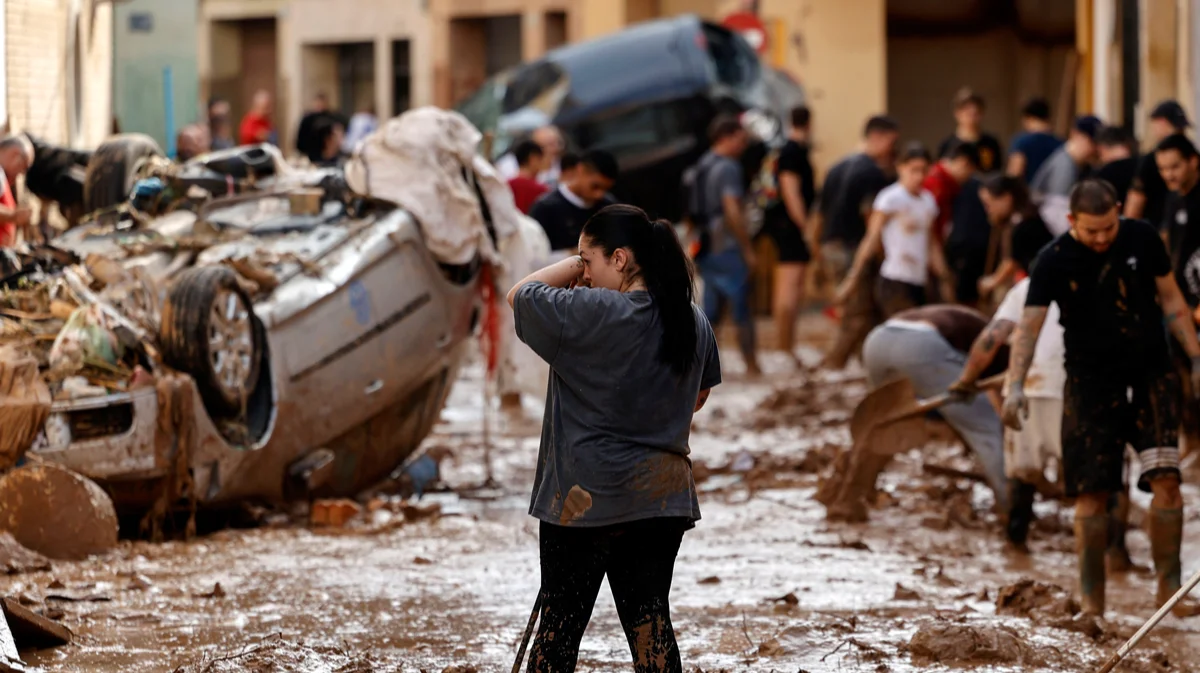
Local residents clean up the streets after flooding in Paiporta, Valencia, Spain, November 1, 2024. Photo: Biel Alino / EPA-EFE
On October 29, extreme rainfall occurred in the vicinity of Valencia: in just eight hours, the region received a year's worth of rainfall. The severe flooding killed at least 217 people. Dozens of people are still missing to this day. Residents of Spain accuse the authorities of being four hours late in notifying them of the disaster, depriving hundreds of people of the opportunity to escape. And the fact is that instead of helping people, officials only cared about their ratings, essentially leaving them alone with the consequences of the flood.
New Europe special correspondent Irina Kravtsova went to the affected cities to find out how the Spaniards, Ukrainians and Russians who fled the war survived this disaster together.
"Te amo"
On the evening of October 29, pharmacist Silvia from Benetuser (a municipality located half an hour south of Valencia) was at work. A petite young girl with dark curly hair stood behind the cash register and waited for the end of the working day. At about seven o'clock in the evening, when it was already dark outside, she noticed rapid streams of water running behind the glass doors of her pharmacy, although there was no rain that day. The girl decided to wait it out. But soon the light went out in the pharmacy and in general on the entire street. She tried to call her family, but the call did not go through - the mobile connection also disappeared. Then Sylvia took off her white robe, put on her backpack and went outside, hoping to somehow get home. Her nine-month-old son was waiting for her there.
She took a step beyond the threshold and felt that her jeans were wet to the knees. Sylvia started walking, but the water was rising so quickly that after just a few steps she stopped feeling the ground under her feet. She was caught in the current. In this dense clay slurry, chairs, glass, shelves, televisions, dishes, refrigerators, irons and children's toys were carried at a speed of about 30 kilometers per hour. Miraculously, she managed to swim to a perpendicular street, where the current was a little calmer. There was not a soul around - there was no one to save her. She caught herself on a pole and, in complete despair, bursting into tears, recorded a voice message to her husband. After almost every phrase, repeating: “Te amo, te amo, te amo” (I love you). “I don’t know if my message will reach you, but I want you to know that you are the person I love more than anyone in this world. I love you very much. This is true.
You are the best thing that happened to me. I love you. Please take care of our boy. So that he remembers the mother he had. Please.
Let him and I only manage to be together for eight months and 29 days. Tell him that he is the best thing in my life. I'm drowning. I can't do it anymore. And I don't know what to do. I'm very scared. I love you and our son. Let him remember his mother. Please. I love you, my brother, my parents, my grandmother. Tell everyone that I really love them very much.”
At the time when Sylvia was recording this voice message, Polina and Vladimir Timofeev, whose five-story house was very close, on the same street, were in their apartment on the second floor. Several years ago, the couple moved to Benetuser from Mariupol. The Spanish government had not sent out any warnings about the danger by that time. Therefore, when the water had already flooded the city, Polina (formerly a flight attendant, and now HR manager in an international company) calmly tried on outfits at home, ordered from an online store. At 19:50 she went to the elevator to go down to the parking lot to get her things and then go to the dance, but her neighbors ran out to her “in just their shorts” shouting: “Don’t call the elevator - there’s a flood outside!” Polina returned to the apartment, she and her husband went out onto the balcony and began to watch in horror the elements, which at that time were already carrying not only furniture and household utensils, but also motorcycles down the street.
Only then did they receive a warning on their phones: “Heavy rains are expected. Please do not leave the premises unless absolutely necessary.”
At nine o'clock in the evening, Vladimir heard a quiet female voice from his balcony on the second floor, which barely audibly asked: “Help.” He and other neighbors, who were also standing on the balconies, turned their lanterns down and saw a woman in the stream of water. It was Sylvia. She was holding on to the bars of the windows on the lower floor of the Timofeevs' house. By that time, she had already spent about an hour and a half in the icy water.
“We met her eyes,” says Polina. “She didn’t understand why everyone was silently shining at her and not even saying anything. I read the helpless look in her gaze: “Do you see me?”
"I see you!" - Polina shouted and ran and took the sheet out to the balcony. Vladimir threw it to the girl, she grabbed it, but slipped and went under the water. Soon she emerged near the next window and again grabbed the bars, which were even further from the entrance door. Another neighbor also threw her a sheet, but the second time Sylvia was afraid to even grab it.
Polina tried to call 112 but the call did not go through. Then Vladimir ran into the already flooded entrance and swam to the glass door. I tried to knock out the glass with my fist, but it turned out that it was triplex ( an extremely impact-resistant material that is difficult to break. - Author's note ). Timofeev “floated” to the apartment to get the hammer, returned and continued. He was joined by another neighbor - a young man from Ukraine, who moved into this house literally the day before the flood.
Together, in ten minutes, the men broke the glass, and then, holding onto the door frame so that they themselves would not be carried out into the stream, they managed to drag Sylvia into the entrance “and tow her to the second floor.”
“I was afraid that she would cling to me in a panic and drown me, but by that time she obviously no longer had the strength to do this. She didn't even say anything. We were terrified and also did everything in silence,” recalls Vladimir. - Only when she was safe and finally stood with her feet on the floor, she quietly said: “Gracias” (thank you). After that, I went to wash off in my shower, and our neighbors invited her over.
DANA
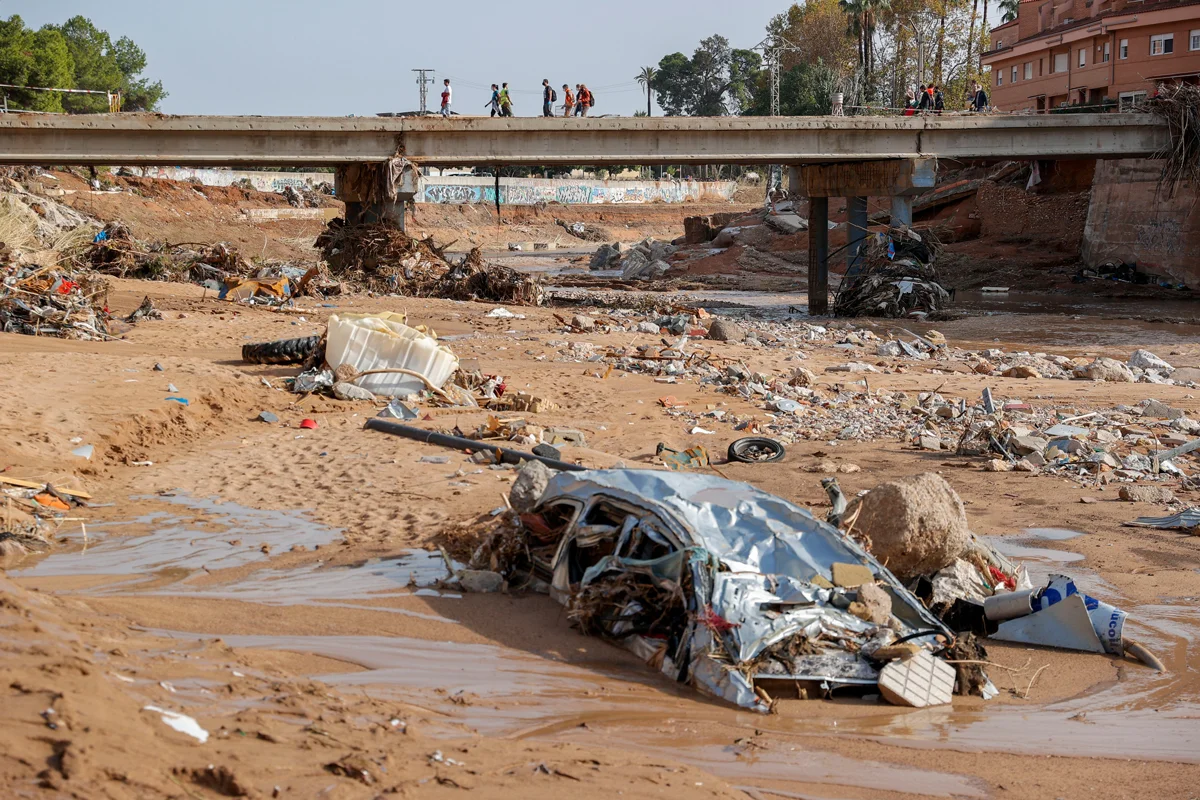
Most of Spain's Mediterranean coastal towns lie along the beds of seasonal rainwater streams. During heavy rains, rainwater from the surrounding mountains collects in the usually dry canyons, and they turn into torrential torrents, destroying everything in their path. This is a fairly typical climatic phenomenon for the Mediterranean autumn (it is called the term DANA), rarely leading to such catastrophic consequences.
The epicenter of the current tragedy was the nearest suburbs of Valencia, especially the town of Paiporta. The city of Valencia itself was virtually undamaged due to the fact that the bed of the Turia River, which once flowed through the entire center, was moved outside the city limits in the 1960s, and a park was laid out in the place of the old bed. The reason for the transfer was the catastrophic flood of 1957.
Kristina S. emigrated from Russia immediately after the start of the war. In the spring of 2024, she bought an apartment in Paiport, in a house near the Poio River bed. True, only one name remains of the river there: it dried up long ago and was a park area with well-trodden paths where people walked their dogs.
At two o'clock in the afternoon on October 29, Christina went out onto the balcony and saw: in the place of what had been a “park” in the morning, there was now a “full-flowing large river”, the current was carrying a bunch of garbage, armchairs, chairs, trees and household items. At 18:30 this “river” had already overflowed its banks and began to flood Paiporta. The Spanish government sent notices warning people not to leave their homes to residents of Paiporta only at 20:12, when it was already impossible to leave the house, people on the ground floors and parking lots were flooded.
“I saw from the balcony that when the water was just starting to leave the canyon, people ran into their cars, thinking that they would have time to get away from the water,” says Christina. “They didn’t expect it to arrive so quickly.” They soon found themselves trapped in their cars. I know about one young family from our city: a woman and a three-month-old child died in a car, and the man managed to get out through the window and escaped.
Christina herself did not initially calculate the scale of the disaster. At 6:50 p.m., when the flood was already beginning, she ran to the storage room in the parking lot to get her things.
“When I ran there and started raking things up, the water was just coming in, and after 15 minutes it was already pouring from the ceiling,” the girl recalls. — I ran to the exit. In order to get to my entrance, I had to go around the house. The water was up to my knees, but I couldn’t walk, because under my feet there was a slurry in which it was unclear what was in it, and I simply had no idea what I was about to step on. An elderly Spanish man of about seventy approached me and led me by the hand to the entrance. I wouldn't have gotten there without him.
Christina reiterates that it was the lack of timely notifications from the government that led to people “absolutely not calculating the level of danger.”
— My friend lives in the neighboring town of Masanasa. DANA came there too. When their city was just beginning to be flooded, he stood on the balcony and saw his grandfather and granddaughter playing on the playground. When the water ran across the site, the girl stood up on the bench. Grandfather was next to her. Obviously, they decided that they had to wait it out and the water would go away. But not even ten minutes had passed before there was so much water that the current picked up the child and carried him along with the mountain of garbage. The man managed to grab the pole, and a second later the girl was carried away. A friend says that the women from the balconies screamed so heart-rendingly when they saw this... He himself could not watch all this and went into the room.
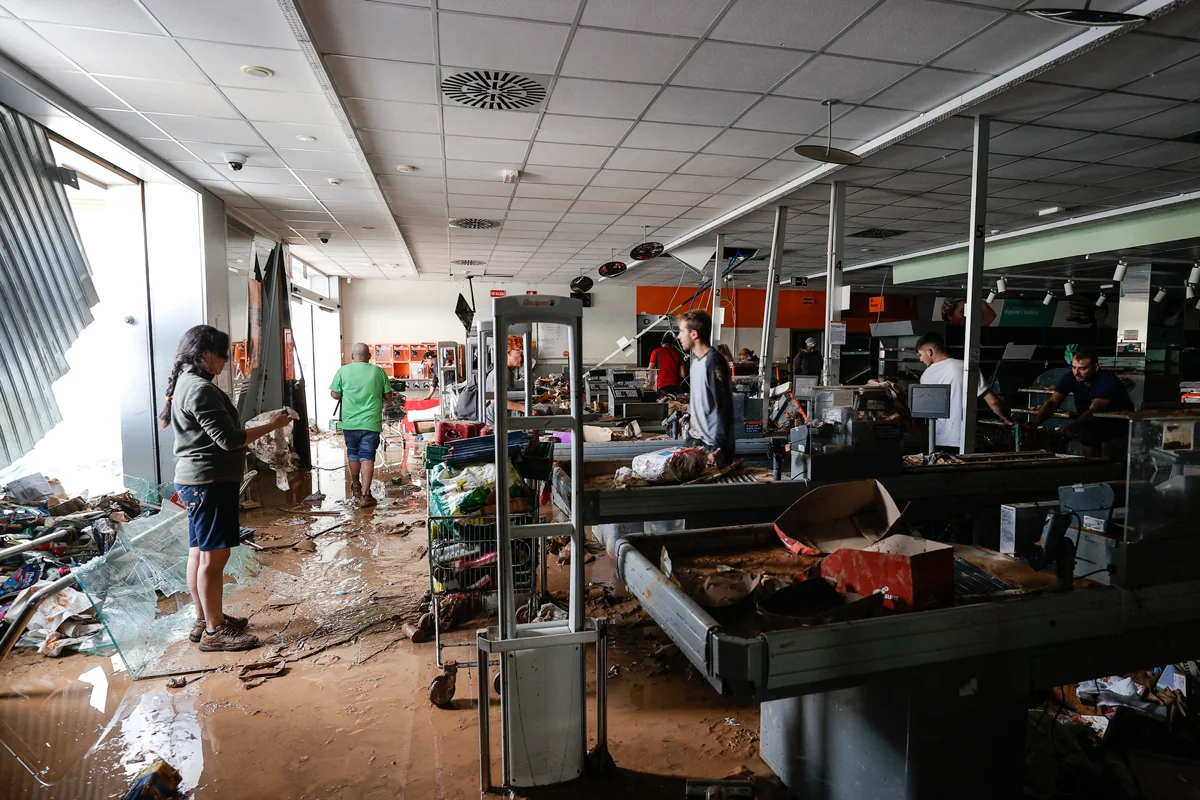
The water from Paiporta and surrounding towns began to gradually drain that same night. So, at around two o’clock in the morning, those who had been watching the disaster from their balconies all this time began to go to bed. Many people set alarm clocks to wake up every hour and left their phone and documents near their pillow. The morning after the flood, residents of Paiporta were allowed to take any food for free from the Lidl supermarket, which was flooded and without electricity.
— Drinking water was taken away immediately. I took several small juice packs. I saw a homeless man leaving the store with a pack of beer and a whole leg of jamon. So happy. You had to see it,” Christina recalls, smiling.
“Send me these troops here!”
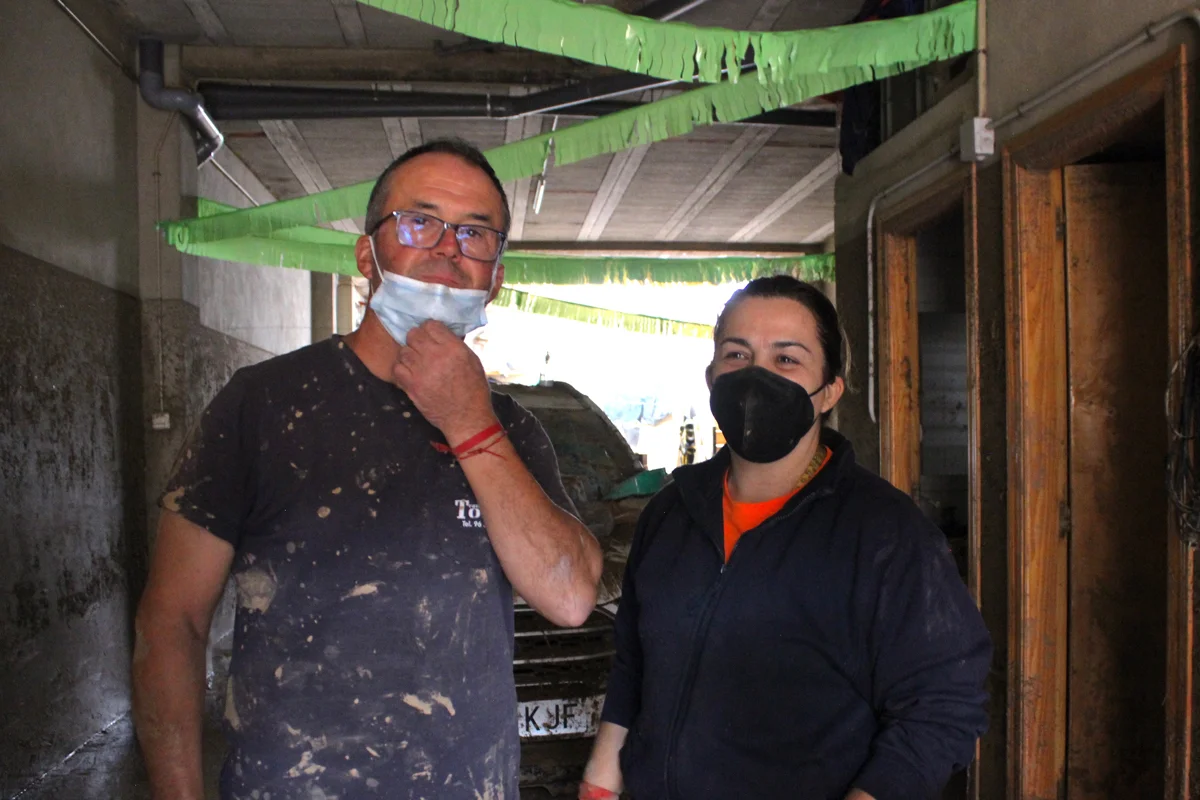
Sunday, November 3, was the fifth day in a row that Javier and Maria Jose from Paiporta tried to get rid of water in their garage. They are in sportswear, tired and exhausted. No one in their family died, but everyone is very depressed and scared.
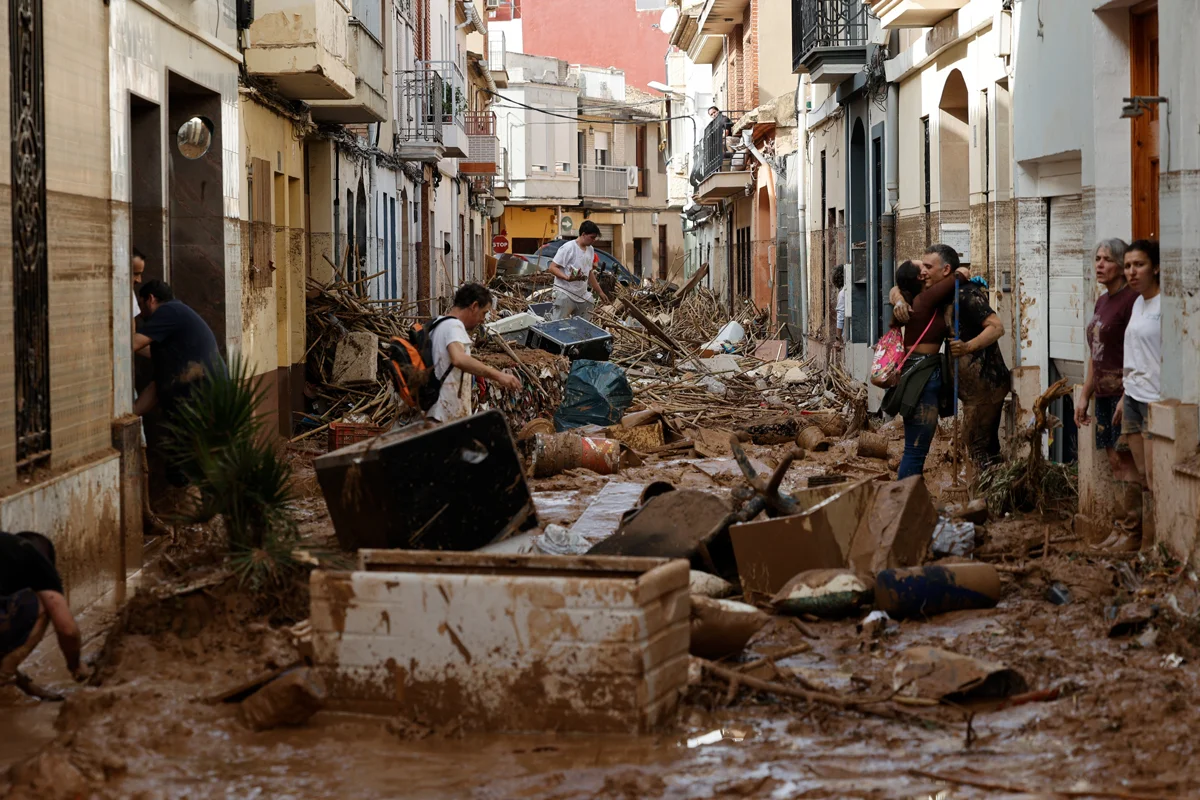
All of Paiporta is now brown from the mud and silt brought by the water. In the center of the narrow streets, cars, household appliances, furniture, dishes and children's toys are still piled one on top of the other (for some reason, in the midst of garbage and dirt, they are especially striking). There is still brown sludge under my feet—somewhere up to my ankles, more often down to the middle of my calf. Residents of Paiporta and volunteers unanimously herd it into manholes, put it in buckets and carry it to the river to pour it out. On the fifth day, all the basements and cars had not yet been examined, and there was an unpleasant smell in the city. Many around are wearing gloves and respirators.
- Not a single government body supported us, not one! Neither the federal government, nor the regional, nor the local city administration,” Maria says very emotionally. - How do I feel? Terrible helplessness. We were able to clear the water from the house solely thanks to volunteers. Recently it was Spain Day. A parade of military equipment was held in Madrid. And when a real disaster happened, where are they all? Why do they march in parades, but cannot help the people at the right time? Send me these troops here! However, the fact that the government failed did not surprise me. Politicians in Spain are like that - they can’t cope with anything.
All residents of the affected suburbs of Valencia say that “the state was late” in sending out notification of the danger by an average of four hours. In Spanish cities they are now even painting graffiti on the walls: there is a picture of a hand above the water, and in the palm there is a phone with a danger notification.
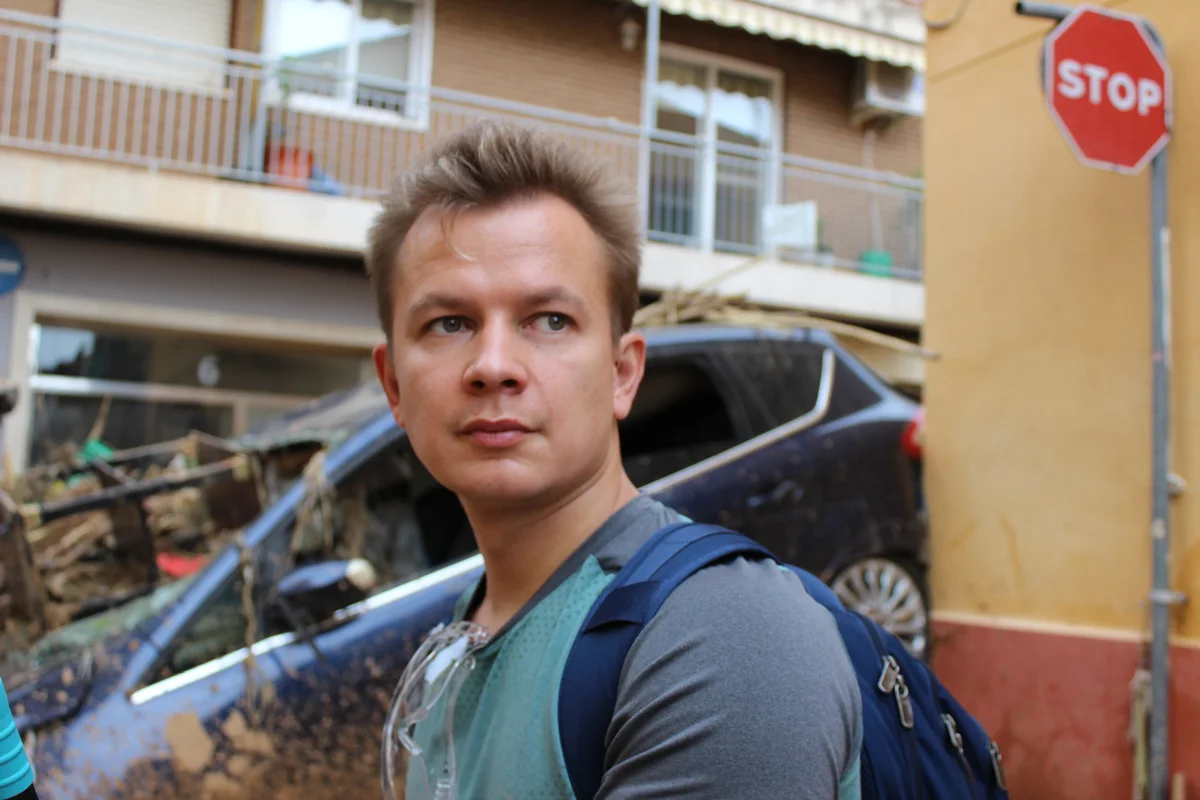
Lawyer Vladislav Feklin emigrated to Valencia in 2023. On Sunday, November 3, he helps residents of neighboring Paiporta cope with the consequences of the flood: wearing rubber boots and sportswear, he uses a mop to push clay slurry down manholes and clear roads.
“In the first few days after the disaster, people from the affected cities had no communication. News appeared in official sources about 50 dead, but the scale of what happened was still not clear to us at the time,” he says. — The roads leading to the flooded settlements were closed, none of the volunteers went there because they thought it was dangerous. And the victims without communication could not even ask for help. When people began to massively buy drinking water in supermarkets, we joked at the language school that the Spaniards were alarmists... But it turned out that they were not alarmists. Over the next days, as Valencians began walking to their families in the flooded villages, it became clear that a terrible disaster had occurred - and a massive underestimation of the danger by the authorities. Information began to appear that the death toll was much higher.
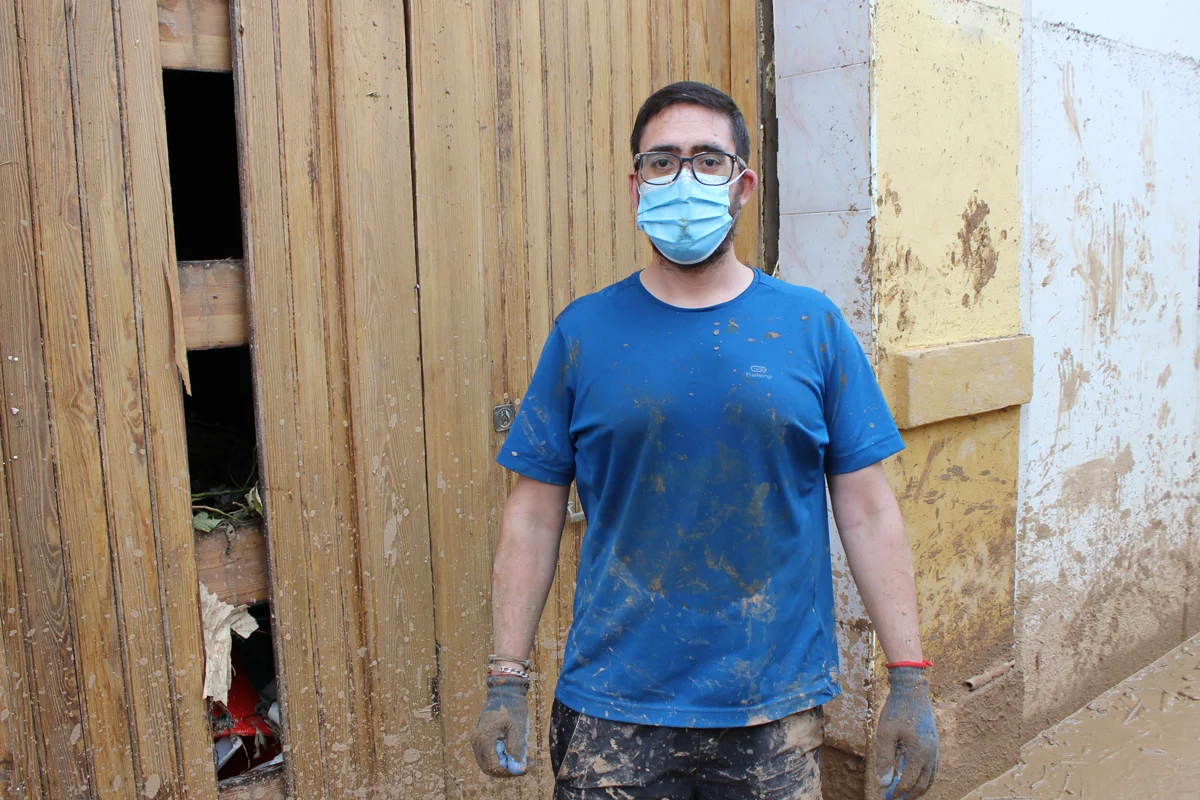
“It’s one thing that the government was unforgivably late in sending out notifications about the danger. But no less monstrous is the disgusting fuss the politicians made the next day, when they should have helped us at least cope with the consequences, says 39-year-old Luis Rodenas. He, too, stands with a mop, covered in mud, and helps his family and neighbors clean the street of clay slurry.
“They didn’t want to help us,” Louis says excitedly. — The government of our region is right-wing, and the government of the state is left-wing. For both of them, only their rating and PR were important.
While they were discussing which of them should help us, both of them were inactive. No one took responsibility - no one at all. We were left with the consequences of the disaster alone. If they had agreed at least on Wednesday ( the day after the flood - author's note ), it would have been easier for us.
Provinces in Spain have significant autonomy. In accordance with the constitution, eliminating the consequences of emergencies that occur in the region falls on the province of this region. On the evening of October 29, when DANA had already reached the suburbs of Valencia, the head of the Valencian province, Carlos Mason, designated the “second” level of emergency. Which meant he could request some help from the Spanish government, but he would not hand over control of the emergency response in his region to them.
“In the following days, instead of helping us, they butted heads with each other,” says Luis Rodenas.
The fact is that Carlos Mason is a member of the right-wing party Partido Popular (People's Party), and Spanish Prime Minister Pedro Sánchez is a member of the Socialist Workers' Party (PSOE). These are the main competing parties in Spain. In recent years, Pedro Sanchez has had scandal after scandal: either his wife was caught stealing, or he is participating in the creation of a bill to amnesty terrorists from the Basque Country, which causes dissatisfaction among the electorate.
“He’s losing ratings, losing votes,” says Feklin. “And then Mason has a huge disaster in the region, which he does not have the equipment and resources to eliminate. On top of that, Mason also dissolved the department responsible for fighting emergencies in 2023. To ask for Sanchez's help in the face of such broad autonomy would mean that he himself had failed. On this basis, a dispute arose between them. The Mason publicly tells the government: recognize this as a national disaster, but you yourself say on television that this is the largest flood since the beginning of the 21st century on the European coast. And they answer: we will definitely recognize it and immediately begin to actively help, only you officially request help. If Mason requests help, then Sanchez will take control of the leadership, he really has federal resources, he is really capable of eliminating the consequences of the disaster, but, of course, he will then promote himself on this. Moreover, he will not only score points himself, but his party will too. If he takes and provides these resources to the Mason without an official request, then the Mason will then promote himself by solving the problem. And Partido Popular is considering the possibility of winning the parliamentary elections. And from October 31 to this day they have been butting.
“My grandmother was born in this city, she lived on this street, my mother was born here,” says Luis Rodenas, almost crying. — My parents worked a lot. As a child, I often visited my grandmother: on Balmes Street, where we are now, I learned to ride a bicycle... Therefore, I am not going to leave here anywhere. This is the place where I spent my whole life. But I think that all our politicians are scum. They do nothing. They preferred to engage in politics, not people.
Volunteers
The inhabitants of Valencia mostly learned shocking details about what happened in the injured suburbs. Then thousands of people began to independently create chats, cooperate and collect water, hot food, clothes and necessary things for the injured in flooded regions. On Friday on November 1, it was officially announced that from seven o’clock in the morning of Saturday for volunteers, buses would be launched by them, on which they will be able to get to flooded areas to help rake blockages.
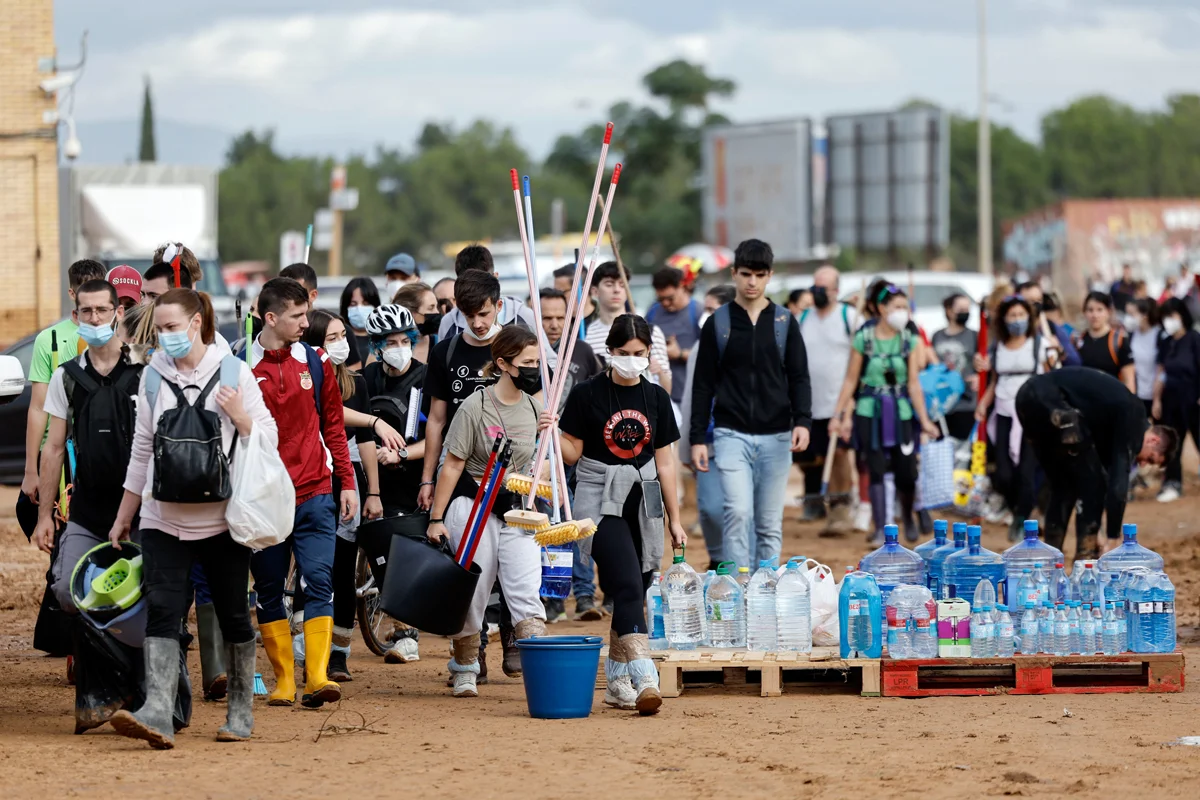
“At 6:40 a.m., about 15 thousand people in rubber boots, with brooms and mop,” says Vladislav Feklin, already gathered in the queue for buses. - By 11 o’clock in the morning, their number reached tens of thousands.
For conventional cars, the track was closed in directions to flooded cities, so, together with hundreds of other volunteers, Feklin went to the injured pipe on foot.
“I have never witnessed such a mass cooperation before,” he adds. - On Saturday, every eighth resident of Valencia was on the analysis of the rubble.
Natalya Sh. Prior to emigration to Valencia, she worked in the Russian charitable foundation, which is engaged in helping children with cancer. Last year, she entered the magistracy of the University of Valencia to become a moderator to resolve conflicts among the vulnerable segments of the population, including among migrants. Her circle of communication in Valencia is mainly the Spaniards. From them, she learned about the scale of the disaster (many of them live in the suburbs) and immediately joined the collection of humanitarian aid.
“This week I felt a very strong disappointment,” says Natalia. “You left in search of peace and because you could not come to terms with what your country is doing.” And then again you find yourself in the center of grief, suffering and complete inability and unwillingness of the state to help people. After all, you expect that in Europe and especially in such a socially developed and protected state as Spain, which speaks very loudly about its left-wing ideas, about how important a person is, how they help the poor, everything will really be humanly. But in fact, only volunteers helped people. From the state, there was no help either after a day or after three.
Natalia admits that these days she even wanted to go home.
- You were looking for the world, but there is no world anywhere, there is no justice either. But people have two advantages here, ”she says. - The Spaniards can calmly say that they are unhappy, and they have the opportunity to influence this in the next elections. Will they influence this? I'm not sure. I communicate with many young Spaniards. They say: all the same, they will decide everything for us. We do not influence anything.
I say to my friend: “So, maybe this is because you don’t go to the polls?” He replies: "And what to go to them if they still decide for us all the same?" And he is 40 years old, young, adequate, understanding everything. Somewhere I already heard it all ...
King and Queen
Everyone in the affected cities understand that the flood was the result of global warming.
- Every year in our region it becomes hotter and dry, there are less and less rains - we have almost no more. They do not go even when we receive notifications that there will be precipitation today, ”says Maria Jose.
What to do with this information - no one knows.
- Spain is a small country. She does not affect anything. Russia, the USA, China are large, they affect climatic changes, so let them deal with them, ”says 67-year-old Luis Antonio.
Louis is a saxophonist. He is almost in tears near the Banda Primitiva music school, which he created 35 years ago and all these years was its president. In the evening of October 29, the school building flooded. For the fifth day, he, along with his sons, is trying to drive out water and dirt from there.
- The authorities abandoned us. Instead of us, they chose their ambitions, ”he says with despair.
The 56-year-old computer science teacher Sari Volgado from the next street also feels abandoned. Sari and his family have been disassembling the rubble in the flooded house of his parents for the fifth day, although she lives in a high -rise building near the River River and her apartment was not injured. On the evening of October 29, she looked out the window and saw how the water in the morning of a dry river was carrying cars. She immediately called her parents and asked to “keep calm” and stay at home.
“Not the government warned them, but I,” Sari says indignantly. - Although since even the cars have already suffered, then obviously they could have time to react by that time.
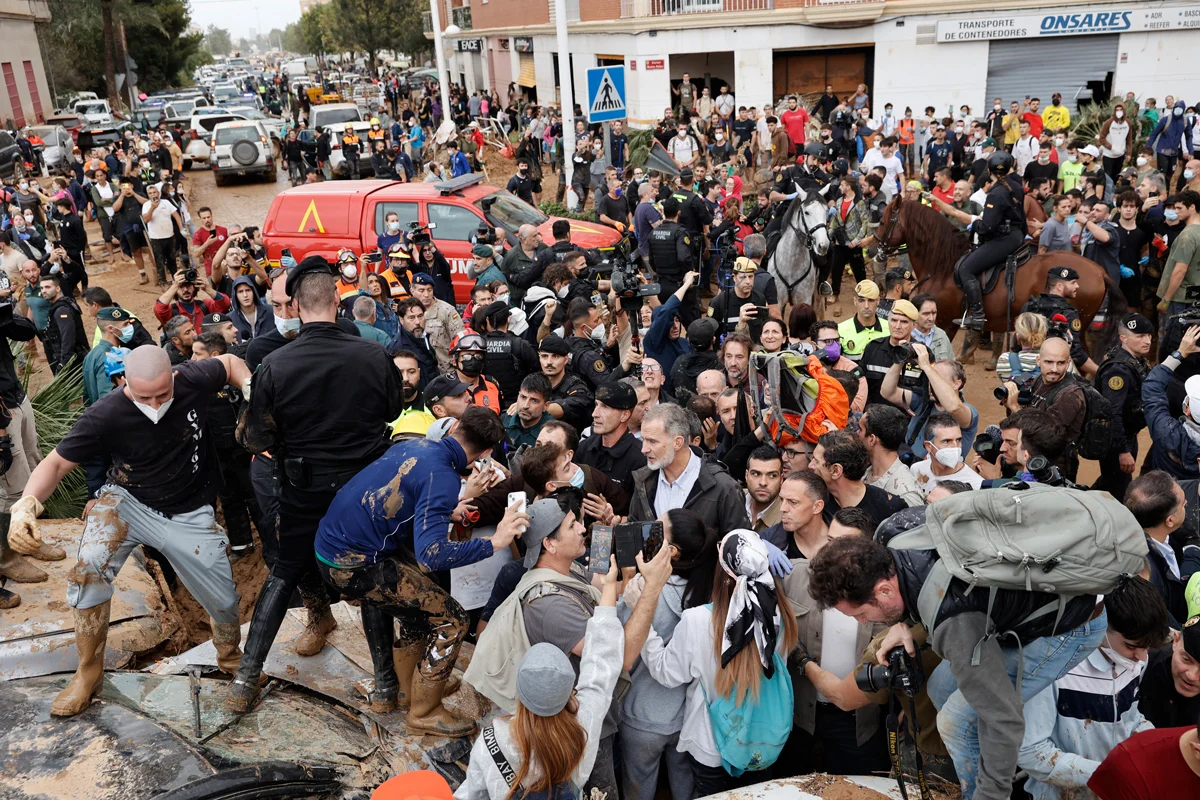
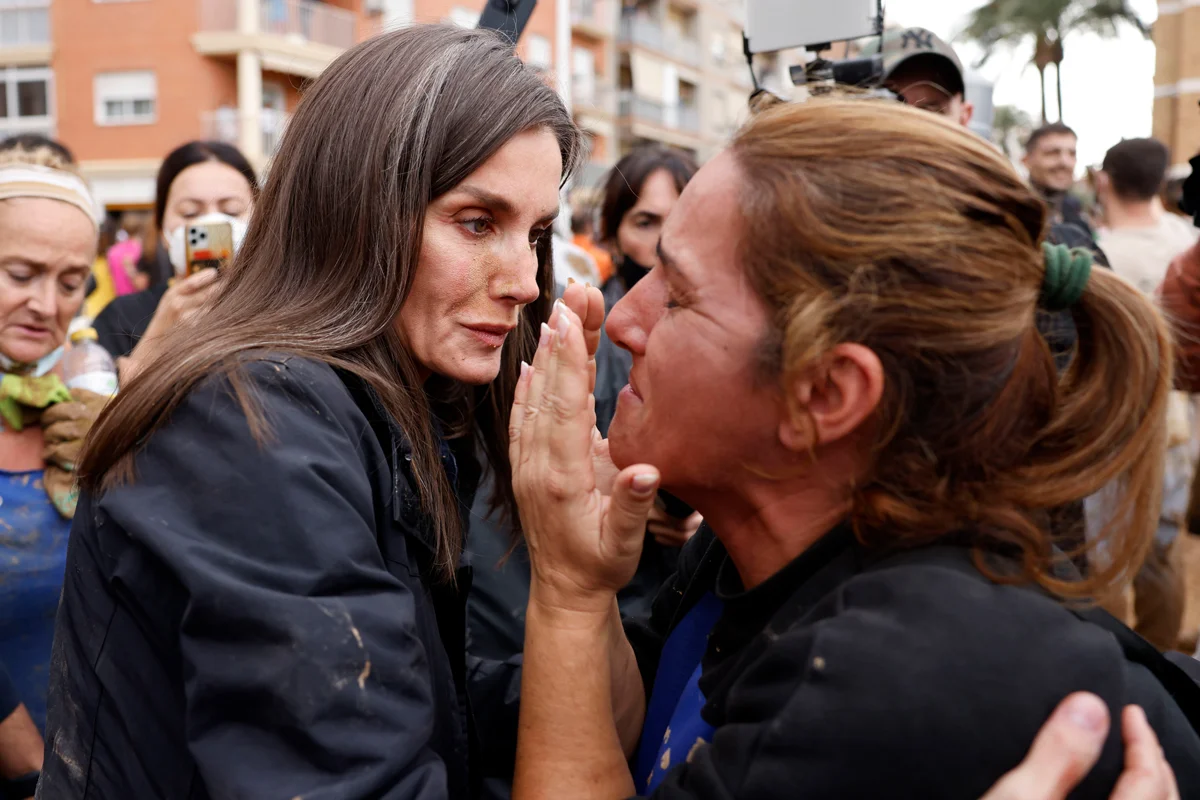
On the same day, while Volgado and her neighbors exclusively cleared the houses and streets on their own, firefighters and military arrived in the city. They freed the only street at the entrance from the slurry and rubble. At noon, politicians appeared on this street. King Philip VI with queen Leticia, as well as Prime Minister Pedro Sanchez and the head of the region Valencia Carlos Mason, came out of them. They were immediately closely surrounded by the inhabitants of the pipe, crushed from head to toe. They picked up the mop, shovels and brooms and began to shout out obscene abuse of politicians, mainly to Pedro Sanchez. Most often he was called "Puta!" (bastard). He suffered this only for a couple of minutes, and then got into the car and retreated. The inhabitants of the pipe threw mud on his car, but it also went to the royal persons. The man threw a lump of dirt right in the face of the queen of Leticia. She stepped aside, she was sympathetically acquired by women from the seagers. The queen wept and threw a couple of phrases with them. Enraged inhabitants of the Pizor chanted: "Killers!", "Scum!" - And they demanded the resignation of the governments of the country and the region (Mason and Sanchez). People shouted to them: "Get failed!"
According to official figures, at least 60 people were killed in the Pipport.
Young men approached the king and expressed right in the face that the authorities were too late to send notifications of the danger of floods and did not help them cope with the consequences. The king nodded in understanding in response and answered something quietly.
On that day, the royal couple also planned visits to other injured cities, but after a visit to the PIIPPORT, they, noticeably hungry, canceled the original plans. When the royal motorcade left the PIIPPORT, annoyed local women hit several hands on their hands. None of the inhabitants, after meeting with politicians, however, was detained.