
Translated material
“This is Bibi’s tactic: manage everything yourself.”
Why the Israeli Prime Minister fired the Defense Minister and how this led to protests
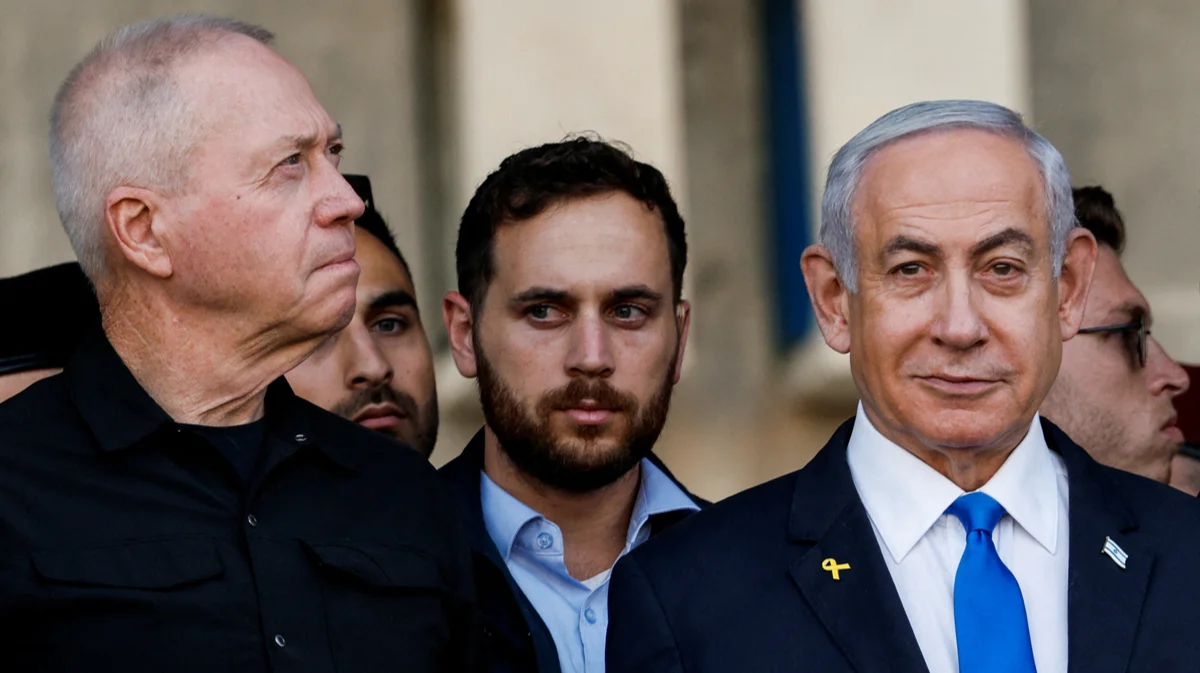
Israeli Prime Minister Benjamin Netanyahu and Israeli Defense Minister Yoav Gallant at an army base near Mitzpe Ramon, Israel, October 31, 2024. Photo: Amir Cohen / Reuters / Scanpix / LETA
On Wednesday, November 6, it became known about the resignation of Israeli Defense Minister Yoav Galant. He was fired from his post by Prime Minister Benjamin Netanyahu, despite the obvious successes of the Israel Defense Forces during the year of war. Israel Katz, who previously headed the Foreign Ministry, became the new Minister of Defense, and yesterday’s minister without portfolio Gideon Saar, who was previously in opposition to Netanyahu’s party, was promoted to the position of chief diplomat. What this means and how it will affect the course of the war that Israel is forced to fight, explains Ze'ev Hanin, a professor in the department of political science and director of the post-Soviet conflict studies program at the Center for Strategic Studies at Bar-Ilan University.
— After the resignation of Defense Minister Yoav Galant, both some Israeli experts and people who took to the streets in protest uttered the words “military coup.” Can you call it that?
— After all, the Minister of Defense is a civilian figure. And, from a purely formal point of view, the prime minister can fire any member of his cabinet. True, the “Movement for Purity of Power” is going to file an appeal with the Supreme Court of Justice of Israel, which deals with the compliance of certain government decisions with Israeli constitutional norms. But in this case, the court will only be able to say that some procedural issues have not been fulfilled.
— It is clear that from the point of view of the law, he has the right to fire...
“And from a logical point of view, what happened was terrible.” But this fits perfectly into the logic of the processes that have been going on since January last year. So the dismissal of Galant from the post of Minister of Defense is rather a dramatic, but still a political move, which, among others, according to a number of opinions, indicates that quite far-reaching attempts are continuing to rebuild the country’s political system in favor of certain power circles.
“Galant himself named his demand to create a commission to investigate the causes of the October 7 tragedy as one of the reasons for his resignation. Isn’t such an investigation already underway in Israel? We constantly learn about new facts, right?
— Galant spoke on television ten minutes after Benjamin Netanyahu announced his dismissal. The Prime Minister’s version is as follows: at the beginning of the war, everything was fine with them, they understood each other, but over time, Mr. Galant stopped following the “policy of the party and government.” That is, roughly speaking, he moved into the internal opposition. Naturally, the Prime Minister cannot tolerate this.
The Galant version is different. We are not talking about his professional qualities related to army management. The Minister of Defense is not a commander; in Israel, the commander is the military-political cabinet, and operational management is carried out by the General Staff. The Minister of Defense is the person who ensures the activities of the army and participates in the development of military and military-political strategies.
Netanyahu claims that Galant did not follow the strategy that was developed by the democratically elected government under his, Netanyahu's, sensitive leadership. Despite the fact that certain achievements of this government cannot be denied, half of the hostages are still in captivity, the war is in its second year, inflation is galloping, the country’s credit rating is plummeting, and the reason for all this is not only the war. In addition, reservists are called up again and again, military personnel have their active duty periods extended, and all this against the backdrop of attempts to completely exempt entire categories of the population from conscription.
— The military achievements are obvious, but this is the result of the actions not so much of the cabinet, but of the army, and therefore of Galant?
— Yes, these are the achievements of the military leadership, soldiers, fighters and commanders and, of course, the Ministry of Defense, which ensures their work. But if you follow the processes in our country, you know: like a failure, Netanyahu did not know, he was not informed, he was set up, he is silent. And as for the achievements, all the merits belong to him personally.
No one denies his personal merits, although not everyone is sure that they outweigh his personal responsibility for the disaster of October 7 and other failures. This kind of manipulation is beyond the scope of good taste.
Netanyahu wanted to fire Galant even before the start of the war, in the spring of 2023. After Galant spoke out against legal reform, saying that it splits society, causes enormous damage to the army, and could motivate the enemy to attack Israel. This is exactly what happened. As you understand, Netanyahu could not tolerate such a person for long. Then he fired Galant, but half a million people came out to the “Tel Aviv Maidan”, Kaplan Street, and Netanyahu returned Galant. And now it seemed to him that the situation was suitable.

“Now people have also taken to the streets.
- Yes, but not so much. Many of those who went to Kaplan then are fighting now. And some of those who guarantee the survival of the ruling coalition do not join any army.
“This is another reason for the resignation, which Galant himself said: he demanded the adoption of a law according to which ultra-Orthodox religious Jews, who are exempt from military service, should also serve.
- Bibi ( Netanyahu - Ed. ) is trying to convince everyone that Galant is preventing him from effectively continuing military operations and ending them with a complete victory for Israel. Galant replies: the disagreements between the Prime Minister and me are not operational and military. As a matter of fact, Reserve General Galant was the Deputy Chief of the General Staff and probably understands no less about the war than Netanyahu, who completed his military service with the rank of major. With all due respect, of course, to his special forces past.
The disagreements between them are value-based and military-political. And there are serious disagreements on three issues. One of them is indeed the law on the conscription of the ultra-Orthodox. The army needs people. The concept of a small but smart army has collapsed, now we need a big and smart army. To do this, the IDF must have a choice of whom to draft. There is such a point of view: the army itself does not want to recruit ultra-Orthodox people into service because it cannot provide them with the required lifestyle - the level of kashrut and so on. But the army is still not a picnic and not a five-star hotel. Quite Orthodox Jews also serve there, among them there are religious authorities of a very high level, and the service does not bother them.
In Israel they are now cutting everything: the budgets of hospitals, universities, and so on. But the ultra-Orthodox continue to receive funding for religious schools, for their autonomous social system, and so on. The previous government promoted legislation to subsidize nurseries for children with both parents working. The idea was to encourage people to enter the labor market. But the ultra-Orthodox demand that their families be provided with subsidies even in cases where only a woman works. Because most of their men are in yeshivas and kollels (religious schools for family men), and as long as they devote all their time to studying religious texts, they are exempt from conscription. They cannot work at the same time, otherwise they must immediately be drafted into the army. They live on donations and social benefits from the state, while many work in “black” jobs. And this also irritates Israelis who serve in the army or work and pay taxes, that is, bear the full civil and economic burden.
All these issues have been discussed for years, but the war has given them a fundamentally different context. So, the army sent out three thousand subpoenas to the ultra-Orthodox, and seven hundred people came according to these subpoenas. The rest simply ignored it. And Galant’s idea apparently became the last straw for the ultra-Orthodox ministers.
He demanded that seven thousand subpoenas be sent out, and proposed that the provision on desertion be applied to those who did not appear on the subpoena. For example, deprive them of the opportunity to leave the country.
“Somehow this is reminiscent of the measures that are used during mobilization in Russia, although I understand that wars are very different.
- Well, what should we do? It is not a fact that the people who receive the summons will then be called up, but they must come to the IDF and announce: I am here. And it’s not at all a fact that all draft dodgers will be caught and put in prison; this is still not the same country. And not everyone who appeared on the summons was eventually called up. But in any case, the army must make a decision: who it needs for the combat units, who for the rear, who for the civil service, medical, fire, police and others, and who gets released on the spot. This is decided by the IDF, not the heads of the ultra-Orthodox communities. There just needs to be an understanding that those who serve and pay taxes have more rights than those who physically can serve, but fundamentally refuse to do so. In the old days, they didn’t pay attention to such things: a small country, a small smart army. But today, during the war, not showing up when summoned is simply a slap in the face to society as a whole.
“The third and probably most important thing that Galant spoke about as the reason for his dismissal was his demand to free the hostages at any cost.
— There is no such thing as “any price.” But Galant is one of those who believes that the war cannot end without the release of the hostages, and for this it is necessary to make significant concessions.

— Does this also not suit Netanyahu?
“Bibi himself doesn’t say this out loud, but among his supporters there are those who hint: let’s consider all the remaining hostages “conditionally dead,” and if someone manages to be freed, then this is an unexpected and pleasant bonus.
Indeed, Galant demanded the creation of a commission to investigate the causes of October 7. Moreover, he is ready to be the first to come to this commission as a defendant. He believes that everyone should be checked: what they did not do to prevent the tragedy. None of these demands from Galant suit Netanyahu. But he refrained from speaking on this topic, realizing that if you throw a pebble from a mountain, there will be a rockfall, and then his entire government could collapse.
Netanyahu managed to drag Gideon Saar and his four Knesset members to his side, they strengthened the coalition. Sa'ar, who was first promoted to minister without portfolio and now to foreign minister, used to be one of Netanyahu's harshest critics, but now sees no prospects in being in the opposition now.
— What consequences could a sudden change in the Israeli Minister of Defense have? The new minister, Israel Katz, who was replaced by Saar at the Foreign Ministry, has even less military experience than Netanyahu, and completed his service with the rank of captain. Maybe the foreign minister's experience will help him negotiate with Israel's allies?
— Katz was, to put it mildly, a more than mediocre foreign minister. This is a man who completely quarreled with the professional apparatus of his department and ruined relations with many of our allies, especially in Eastern Europe. He managed the Ministry of Finance in approximately the same way. Katz achieved his greatest successes when he was Minister of Transport. He really managed to knock out quite substantial budgets for the renovation of transport infrastructure, the airport, and highways, all thanks to his connections with the Prime Minister. But this is Bibi’s standard tactic: appoint an obedient confidant to the position so that he can manage everything himself.
— If Katz, as you say, has ruined relations with Israel’s allies, how will he build them as Minister of Defense?
“He will hold ceremonial meetings at which everyone will understand: this person does not make decisions himself, all questions must be addressed to the prime minister. Katz was the Minister of Foreign Affairs. And who at this time closed issues with the Americans, with the Europeans? Netanyahu's special representatives.
— How will Galant’s resignation affect the three problems that Galant spoke about? What will happen to conscription, to the commission of inquiry, and most importantly, to the hostages?
“I’m afraid that as long as this government is in power, there won’t be any special breakthroughs.”
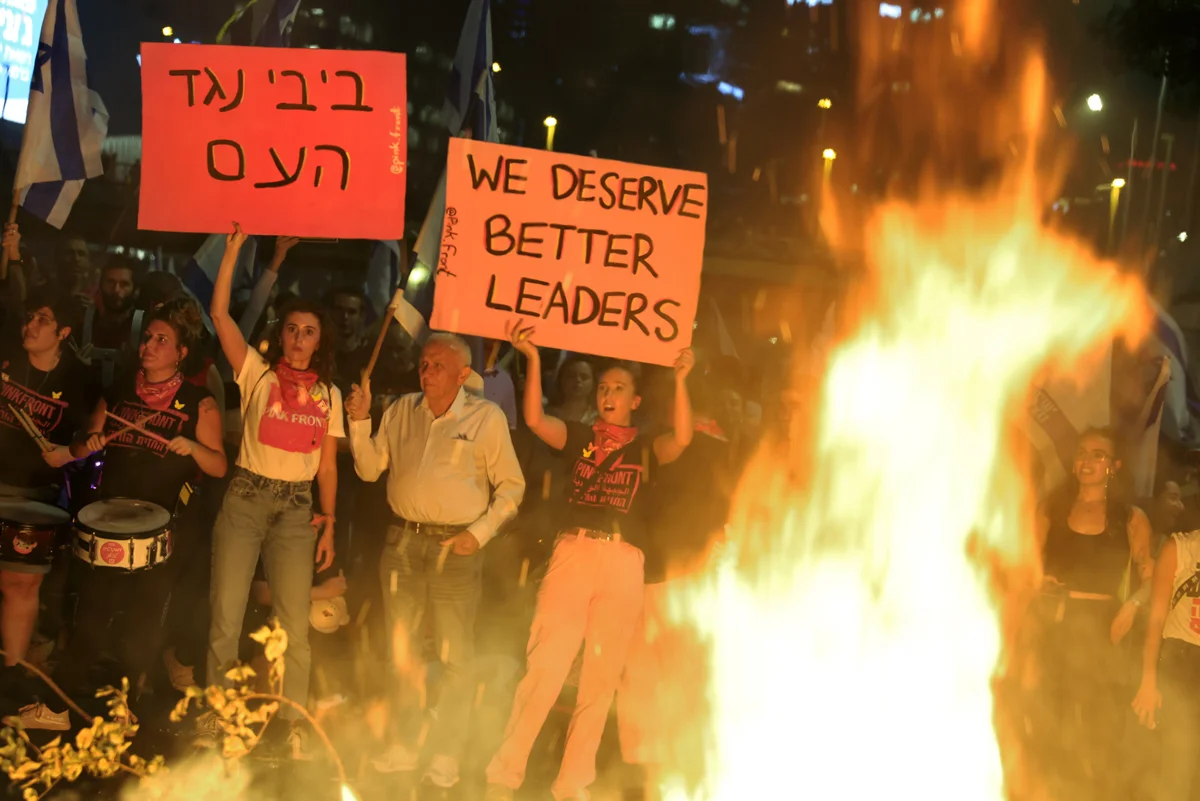
— And yet: can the hostages really be recognized as “conditionally dead” and no longer be attempted to be released?
- I'm afraid that this might happen. Although this, of course, contradicts what society demands. But the most active part of society is now at the front.
- I can’t agree with you, because I saw footage from the streets of Israel, there are crowds of people there, they are already burning bonfires...
- This is true.
“Israel is a democratic country, the government cannot help but respond to such protests. After all, Netanyahu was already forced to reinstate Galant once?
— Now approximately 50 thousand people have come out in Jerusalem and Tel Aviv. It used to be half a million, and it really couldn't be ignored. And 50 thousand - they can be declared traitors, collaborating with the enemy during the war.
—Are you sure you haven’t confused Israel with another country to the north?
“Unfortunately, our prime minister has an extremely cynical position. He would like to remain in power, preferably forever.
— Your government will not eventually be swept away by the relatives of the hostages and those who support them? Or those who support Galant?
— There has not been and will not be a military coup in Israel. The option of re-elections would be possible, but they will delay as best they can until 2026, when elections should already take place within the period specified by law. But people are already so disappointed that they are worried that the authorities might plan to postpone the elections under the pretext of war, as they did in Ukraine.
— It was impossible to hold elections in Ukraine because part of the country is occupied and millions of voters are scattered around the world. Where do Israel have the prerequisites for canceling elections?
— In Ukraine there is still a law according to which elections are not held under martial law. And in Israel, elections have never been cancelled. They also took place during the Yom Kippur War, no matter how difficult it was. Municipal elections in Israel, although they were postponed from October 2023 to February 2024, still took place in the midst of war. And they were much more difficult to conduct than elections to the Knesset based on party lists. However, now we can expect any surprises.
— How will this situation affect Netanyahu’s political future? There are less than two years left until the Knesset elections.
“He is confident that if he gathers enough strength around himself, he will be taken into account both within the country and abroad. Moreover, Trump won in the United States, and Netanyahu is sure that they are friends.
- Really? They have a rather complicated relationship. How will this affect the course of the war waged by Israel?
- They are such friends. When necessary, they demonstrated a seamless relationship, and it happened that Trump allowed himself to make rather harsh statements about the Israeli prime minister. In Jerusalem they want to believe that by the end of November 5 everything will be reset. But one way or another, in the United States both Republicans and Democrats are, in principle, on the side of Israel and support its right to self-defense. Only Democrats add “however”, and Republicans simply support. So far, I think, relations with America as our main ally will not fundamentally change.
As far as influence on the war is concerned, conflicts will probably flare up from time to time between the new Minister of Defense and the Chief of the General Staff. But this will serve to entertain the public, and decisions will still be made by Netanyahu together with those close to him.