
Translated material
Why are they voting for Trump?
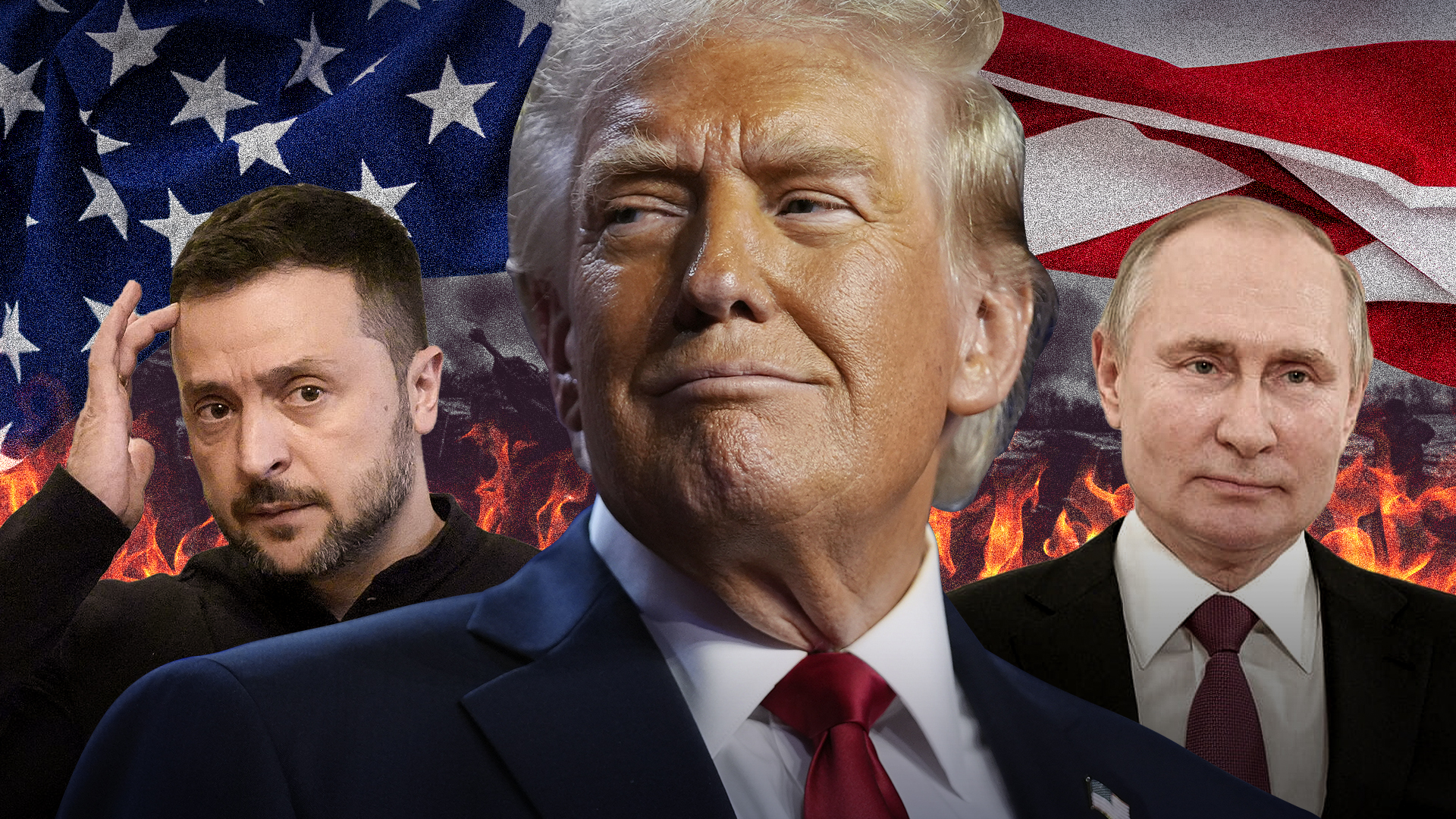
Mumin Shakirov and his guests sum up the 45th week
Trump's second coming to the White House. He promised to stop wars and lift drilling bans. Will there be world peace and oil at $50 a barrel?
Wartime reform. In Ukraine, they are discussing the restructuring of the Armed Forces of Ukraine. Can this be done in the middle of hostilities?
Day of National Disunion. Russian marches are now led by religious processions, and the wearing of hijabs is banned in schools. Does the Kremlin have a national policy?
Mumin Shakirov sums up the week with New York writer Alexander Genis , Radio Liberty economic commentator Maxim Blunt , Sistema project investigative journalist Elizaveta Surnacheva , Israeli military observer Igal Levin , Free Russia Foundation President Natalya Arno and human rights activist and Human Rights Watch employee Tanya Lokshina .
Video version of the program
Trump's second coming to the White House
Mumin Shakirov: Eight years ago, State Duma deputies rejoiced at the coming to power of Donald Trump in the White House. This event was celebrated especially vigorously in the LDPR party.
Vladimir Zhirinovsky, leader of the LDPR party: For the victory of Donald Trump, for the new domestic policy of the United States, for foreign policy, for quickly improving relations between Russia and the United States of America! For Donald Trump, for his victory!
Mumin Shakirov: Following the deputies, the whole country - almost blindly - welcomed the election of Trump as President of the United States.
RTVI broadcast: A man whom most Russian politicians have never even met managed to win the sympathy of almost the entire country with just compliments to Vladimir Putin and a promise to improve bilateral relations.
Mumin Shakirov: In 2016, Putin immediately congratulated Trump on his election as US President and spoke with cautious optimism about the future warming of relations with Washington.
Vladimir Putin: We heard pre-election statements by another candidate for President of the United States, which were aimed at restoring relations between Russia and the United States. We understand and are aware that this will not be an easy path, given the degradation in which, unfortunately, relations between the United States and Russia are.
Mumin Shakirov: But peace and harmony did not happen between Moscow and Washington, as the Kremlin hoped for. Putin and Trump met several times at the G20 summit, and there were also personal meetings, one of which took place in Helsinki in July 2018. It was then that a scandal broke out: Trump questioned the conclusions of US intelligence agencies regarding Moscow’s interference in the American elections. Meetings were meetings, but in fact, during his presidency, Trump carried out a tough economic policy against Moscow, including signing a defense budget with sanctions against Nord Stream 2 and Turkish Stream, and was the first to supply lethal weapons to Ukraine, including Javelin missile systems.
Alexandra Filippenko, American political scientist: President Trump often expressed admiration for Putin’s leadership style and spoke positively about him during both the election campaign and his first presidency, believing that improving Russian-American relations would benefit the United States. And there were meetings with Vladimir Putin, for example the 2018 Helsinki summit. At a joint press conference, Trump sided with Putin, who denied interference in the American elections. But American intelligence agencies actually found traces of this interference. With all this external splendor, sanctions and all sorts of diplomatic actions were observed on the part of the American administration. And as for arms control agreements, on the contrary, they negotiated the extension of START. But during Trump’s presidency, there were no incredible bilateral agreements between Moscow and Washington. There was personal acceptance and some kind of friendly relations, even admiration for Donald Trump. Therefore, Donald Trump’s previous presidency cannot be called successful for Moscow, except psychologically.
Mumin Shakirov: It is impossible not to mention the military clash in Syria, when American military aircraft destroyed detachments of the so-called Wagner PMC.
Broadcast of Radio Liberty Ukraine: Syria, the night of February 7-8, battle in the province of Deir ez-Zor near the village of Hisham. According to the US military, a battalion of pro-Assad forces is attacking the positions of the anti-ISIS coalition. Supporters of the regime use tanks, artillery, missile systems and mortars. After the Russians respond to the Americans’ request that their military is not there, coalition forces shoot at a convoy of F-15 fighters, attack drones, an AC-130 attack aircraft, Apache combat helicopters, and B-52 strategic bombers. Having lost approximately a hundred fighters, the attackers retreat to the western bank of the Euphrates River.
Mumin Shakirov: Now Donald Trump will cross the threshold of the White House for the second time. After a short pause, Putin nevertheless congratulated Trump on his victory, and did so in Valdai.
Vladimir Putin: What was said regarding the desire to restore relations with Russia and help end the Ukrainian crisis, in my opinion, deserves attention at a minimum. And I take this opportunity to congratulate him on his election as President of the United States of America! I have already said that we will work with any head of state who the American people have confidence in.
Who do Russian emigrants vote for?
Mumin Shakirov: Freezing the conflict along the front line and Ukraine’s refusal to join NATO for 20 years, the introduction of peacekeeping forces and stopping financial assistance to Kiev are just some of the expectations and fears from Donald Trump. At the same time, Trump himself, in a speech to his supporters on election night, said that he plans to “stop the wars.” How exactly, he has not yet explained.
Alexander Genis believes that his former compatriots in America are voting for Trump.
Trump is retribution for the mistakes of the Democrats
Alexander Genis: This is all connected with the mistakes of the Democratic Party, which ceded power to the left progressive wing and infuriated many Americans, including emigrants from Russia... We are already supporters of the “strong hand”. It seemed and seems to them that Trump is the embodiment of strength, a leader who can restore order, put in place all those who prevent Americans from living the way they want. And he will not listen to the elite. After all, the whole point is that Washington irritates Americans terribly. He has always irritated them because Americans do not trust their federal power and tolerate it through force. But in recent years, leftist sentiments and leftist movements have led America to a crisis, which has now erupted. Trump is payback for the Democrats' mistakes. I would say briefly: the mistakes of the Democrats are that they replaced meritocracy with a percentage norm. They evaluate people not by their abilities and capabilities, but by the color of their skin, sexual orientation, and so on. This is what all of America is protesting against. And of course, emigrants from Russia, who easily forgive Trump everything else.
Mumin Shakirov: Which of the things that Trump promised and promises will not be fulfilled under any circumstances?
Alexander Genis: How, for example, is he going to deport 12 million people? I have now seen the figure and 20 million. I don't think Trump can imagine that either. And, as they explained to me, he only tells everyone this in order to please the public, but in reality none of this will happen. Some criminals will be deported, but no one will put 12 million people on trains and send them abroad. Maybe he will finally build a wall. Last time he promised that the Mexicans would pay for the wall, this time the Americans would pay for the wall... I would like to know how Trump is going to end the war in 24 hours. They've already passed.
Mumin Shakirov: Putin congratulated Trump on his victory in the US presidential election. Are you encouraged by the fact that these two leaders can agree on something?
Alexander Genis: No, it’s not encouraging. I think Putin believes that it’s easy to fool Trump and thus win this game against him. It’s interesting that supporters of the newly elected president say: Trump’s unpredictability is his main weapon. Putin doesn't know what Trump will do. But Trump, in my opinion, does not know what he will do.
Mumin Shakirov: Putin was asked who he would prefer to see as the next president of the United States, he named Biden. Maybe it was diplomatic rhetoric, or maybe, indeed, Biden is more understandable to him than Trump... Fighting off accusations of friendship with Putin, Trump has repeatedly stated that his sanctions policy towards Moscow was unprecedented. By the way, he was the first to supply Ukraine with lethal weapons, including Javelin. Will he be consistent on this issue?
Alexander Genis: No, it won’t. Trump did everything he could to get his Republican Party to delay aid to the Ukrainians for many months in Congress. His vice president said that there was no need to help Ukraine under any circumstances, and protested against this in Congress. The question is also what will happen in Congress, the Senate, what his political and military advisers will tell him. Another thing is that he doesn’t listen to anyone, he has stated more than once that “my advisers tell me to behave in moderation, not to swear, not to call my rivals names, I won’t do any of this, because that’s how people like me.” And he’s probably right, judging by the election results.
Mumin Shakirov: Does America miss a “strong hand” and does Trump personify this hand?
Alexander Genis: I don’t think so. America doesn't miss the Republicans because Trump is not a Republican. Trump is an opportunist. Republicans are conservatives who have a clear position in all respects, which I largely share. And conservatives voted against Trump - his former generals, his former aides who call him a "fascist", former presidents like Cheney, who was a conservative mainstay, and his daughter, who was always a staunch Republican. That is, the Republicans are also against Trump. It's not that America yearns for a "steady hand." America is tired of the madness imposed by the left wing, the Democrats.
What will happen to the US economy?
Mumin Shakirov: What to expect from the old new US President is still unclear in the economic sense. The Republican promised the oil and gas industry unfettered access to drilling on water and land owned by the state, and campaigned with the slogan “storms, baby, storms.” Maxim Blunt spoke about the worst-case scenarios for Trump's economic policies for Russia and China.
For Russia, a long-term fall in oil prices will be a serious, painful blow, because the Russian economy has practically no margin of safety after the start of the war.
Maxim Blunt: Since the American economy remains the main one, a trade war with China, the other main economy in the world, could really turn into serious problems for the American one. And this could trigger a crisis far more devastating than anything we have seen so far. Donald Trump really promises to lift the restrictions that are still in effect in the United States. This does not mean that Donald Trump is able to reduce the cost of oil produced in the United States. Arab oil companies can take advantage of this, regularly clearing the market of so-called “independent” oil exporters whose oil costs more than in Saudi Arabia or in the surrounding Arab countries. The Soviet Union fell under this distribution at one time, the next iteration was around 2008, in 1414 we observed a similar picture. The years 14–15, when oil prices fell sharply, were marked by the massive bankruptcy of American shale companies. If this trend continues and intensifies, Saudi Arabia will most likely actually start a trade war, and this will lead to a sharp drop, a prolonged period of low oil prices. Companies will withstand a short-term decline, refinance, and so on, and if oil prices are lower than the cost of production in the USA or in the North Sea for Norwegian companies, this will really knock them out of the market for some time. For Russia, a long-term fall in oil prices will be a serious, painful blow, because the Russian economy has practically no margin of safety after the start of the war. It is extremely sensitive to oil prices, that is, to the receipt of foreign exchange earnings, which allows saturating both the domestic consumer market and providing the military-industrial complex with the necessary components. For Russia, already 50 dollars, which Oleg Deripaska wrote about, is a problematic oil price. In principle, everything depends not so much on what specific price it is, but on when this price occurs. The Russian economy is now developing towards a serious crisis; the military-industrial complex occupies an increasingly larger share of the economy. Imports help compensate for problems in civilian production. The longer this trend continues, the higher the limit will be at which the Russian economy will be overtaken (not so much by the economy as by the consumer market) by a serious crisis that will hit the well-being of Russians.
What terms of the truce did the Kremlin dictate?
Mumin Shakirov: This week, the Sistema investigative project posted a document online that tells us how the Kremlin saw the so-called “truce” at the very beginning of the military operation against Ukraine. And what are the very goals of the “SVO” that Putin and Russian officials keep talking about?
Russia offered Ukraine a neutral status, as the expert put it, more like neutralization than neutrality
Elizaveta Surnacheva : The document is the proposals made by the Russian delegation to the Ukrainian side at the first stages of negotiations in early March 2022. This is not even an agreement yet; the Ukrainians did not agree to anything that was written there. What is striking about it, first of all, is that it is all constructed and written as if Ukraine were an aggressor country, it attacked, it has already lost on the battlefield. And now Ukraine is generously offered some conditions of surrender: reduce the army to a minimum, language laws, and not join any military alliances. The document covers all spheres of life - foreign policy, weapons, a little economic, language policy, the status of Crimea and unrecognized territories. There are, I think, six pages in total, on which 18 different articles are written.
Mumin Shakirov: What remains for Ukraine then?
Elizaveta Surnacheva: Russia offered Ukraine a neutral status, as the expert put it, more like neutralization than neutrality. A weak army - five times smaller than what they had before 22. The laws they should change. And non-entry into any alliances, including military ones. What did Russia offer in response with this treaty? Essentially, that “we are simply not advancing further with our troops, our troops will remain standing where they have advanced.” Donbass is generally leaving... At that time it was registered as an independent territory. Crimea and Sevastopol are ceded to Russia, and in the rest of the territory, where the Russian army has managed to advance, the troops will remain stationed until all the conditions specified in this agreement are met. As of early March, the Russians were stationed near Kyiv and in the Chernigov region.
Mumin Shakirov: What is the value of this document, given that the situation at the front has changed dramatically?
Elizaveta Surnacheva: Of course, now everything is completely different, and not only at the front, but also in the political sense. Now Ukraine is no longer discussing its neutrality, integration into NATO is being discussed, not even membership or some kind of limited membership, even if this is not accepted, but rather a movement there - a movement towards more understandable security guarantees. And of course, no such agreement will be accepted now. That is, we do not discuss it as possible parameters of something real at this moment. Moreover, Russia annexed four regions, in addition to Crimea and Sevastopol. Kherson, Zaporozhye, Donetsk and Lugansk regions were written into their Constitution.
Mumin Shakirov: On paper.
Elizaveta Surnacheva: Yes. But after this, such a contract format cannot even be considered in principle. It is still important for us to see this document, to read it in its entirety on all points. Because we still, more than 2.5 years after the start of the full-scale invasion, do not really understand what exactly Russia was trying to achieve. The Russian authorities, Putin personally and Peskov, Lavrov very often use the formulation that Russia will achieve all the goals of the “NWO”. And until now we did not know what “targets of a special military operation” were. And here we see what Russia really wanted to achieve at the very beginning.
Is the plan to freeze the war realistic?
Mumin Shakirov: Freezing the war along the contact line and introducing NATO troops into Ukraine is what is being discussed after Trump’s victory. Let's discuss this topic with Igal Levin, who is in touch with me.
The war freeze plan is what Trump will eventually want to offer to both Zelensky and Putin
Yigal Levin: Indeed, such information is circulating in the Trump team. The war freeze plan is what Trump will eventually want to propose to both Zelensky and Putin. Putin says: “No, we don’t agree.” To put it in their language: “The goals of the SVO must be achieved.” This is, at a minimum, the capture of both Kherson and Zaporozhye. Trump says, "Okay." Ukraine says: “No, we continue further.” Moreover, in Ukraine there is a powerful military base that will not agree to such things. It’s hard for me to imagine that in Ukraine the army will voluntarily surrender Kherson or Zaporozhye. Russia has been unable to capture tiny, small towns such as Volchansk for six months now... By the way, Kherson is located across the river, it needs to be crossed, where bridges have been destroyed and so on. Therefore, Ukraine does not agree. So what next? Continuation of the conflict, continuation of the war. All these freezing recipes are considered from the point of view of how to force Kyiv. But they absolutely ignore Moscow, Putin and his wishes. Putin is now in such a spirit, that is, he is dizzy with success. It seems to him that everything is fine, all the hardships and some dangerous moments have passed and he can continue to fight. It would seem that there are no alarm bells and we can continue to wage war.
Mumin Shakirov: Before his resignation, General Valery Zaluzhny said that the Armed Forces of Ukraine would be able to resist the Russian army if they invent new methods of warfare, since the numerical superiority in people and weapons will always be in favor of Russia. Does the Israeli army, in which you served, have such know-how if it were to face such a strong rival as Russia?
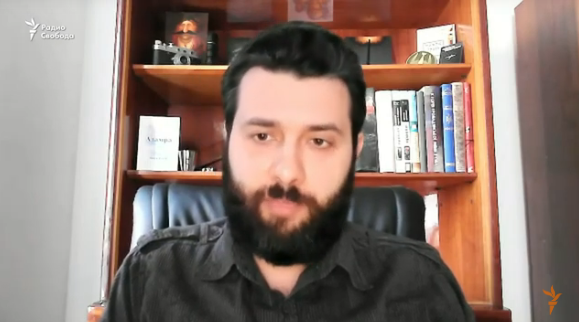
Yigal Levin: There is no know-how here. There is an age-old classic recipe. This is the recipe that, say, small Finland resorted to in its war against the Soviet Union, which ultimately survived. This is, firstly, the people's army, the mobilization of the entire population, absolutely everyone, from young to old, including the involvement of women. And this is not only the specificity of Israel. In Finland, too, hundreds of thousands of women were recruited into paramilitary service. Already in 1940, at the beginning of the “Winter War,” it was possible to release hundreds of thousands of men for the front. The second is concentration of effort. There is more enemy globally. But specifically at the tactical level, you concentrate your efforts to achieve numerical superiority. Israel succeeded. And Zaluzhny in his texts also says that drones, which swarm in the sky in huge numbers, do not allow concentration of efforts. We need to find a solution to this issue - in matters of reconnaissance: how to concentrate forces so that the enemy does not know it, so to speak, he will not bombard you with Iskanders when you are just starting to concentrate your forces. This is a debatable question to which Ukraine needs to find answers. We see that Ukraine, when it has the capabilities, people and equipment, knows how to surprise, knows how to concentrate forces. The Kursk operation is just that. Ukraine managed to concentrate certain forces, break through the front and occupy thousands of square kilometers in the Kursk region.
Mumin Shakirov: How do you see the reform of the Ukrainian army, which could take place after the conflict was frozen?
Yigal Levin: The army is an organism that you cannot change at the snap of your fingers. Any army is the most conservative institution in any state. She is reluctant to undertake reforms when there is no fighting, and even more so when there is fighting. You can't just pull people from the front who are being held by the front. Therefore, some things can be changed, of course, but structural things cannot. And this is one of the difficulties, one of the challenges for the Ukrainian army. I am in touch with many Ukrainian officers, they are smart and understand the problems. But they don't know how to solve them. There are literally military operations going on here, they have to wear down the enemy, retreat, losing territory, inflicting fire damage, and take up reforms. It is impossible to do both.
Nationalism and xenophobia in Russia
Mumin Shakirov: The holiday of the October Revolution in Soviet Moscow was celebrated widely: with parades, processions, obligatory ceremonial speeches from the stands and concerts. The Soviet Union unexpectedly collapsed for everyone, the communists lost power, and parades and processions in honor of Lenin became history. In 1995, for exactly one year, Boris Yeltsin decided to make November 7 the Day of Military Glory, and a year later he renamed it again, this time to the Day of Accord and Reconciliation. But they never came. Russians got used to the day off, but still didn’t understand what we were celebrating. Putin has already made the next changes. The Day of Harmony and Reconciliation was changed to the Day of National Unity, and the date was moved to November 4. The meaningful void of this weekend of the first cold week of November was filled by Russian nationalists. They decided to hold their marches throughout Russia on this day; the largest march took place in Moscow. It is clear that friendship between peoples in Russia cannot be built on such slogans. The “Russian marches” were given a long life after their xenophobic slogans gradually developed into anti-Putin ones. And the Kremlin began to imprison nationalist leaders.
Dmitry Demushkin, Russian nationalist: All noticeable and significant nationalist leaders today are either in prison, or were forced to leave the territory of the Russian Federation, or are under great pressure. All nationalist structures are banned and virtually destroyed today.
Mumin Shakirov: Soon the Kremlin banned nationalist marches. Putin took away their right to the Russian idea, started a war with Ukraine and declared himself the main defender of Russians, wherever they are. And marches in Russia now take place under an updated brand. This year, the celebration of National Unity Day was dedicated to the Russian-Ukrainian war, which has been going on for three years. Religious processions were held in different cities. Oleg Gazmanov, before appearing in front of Russian nationalists, cut off the labels of the Italian company Prada from his clothes.
Oleg Gazmanov: Today is also a difficult time. This has been the case in Russia since ancient times: the higher the pressure, the stronger the concrete.
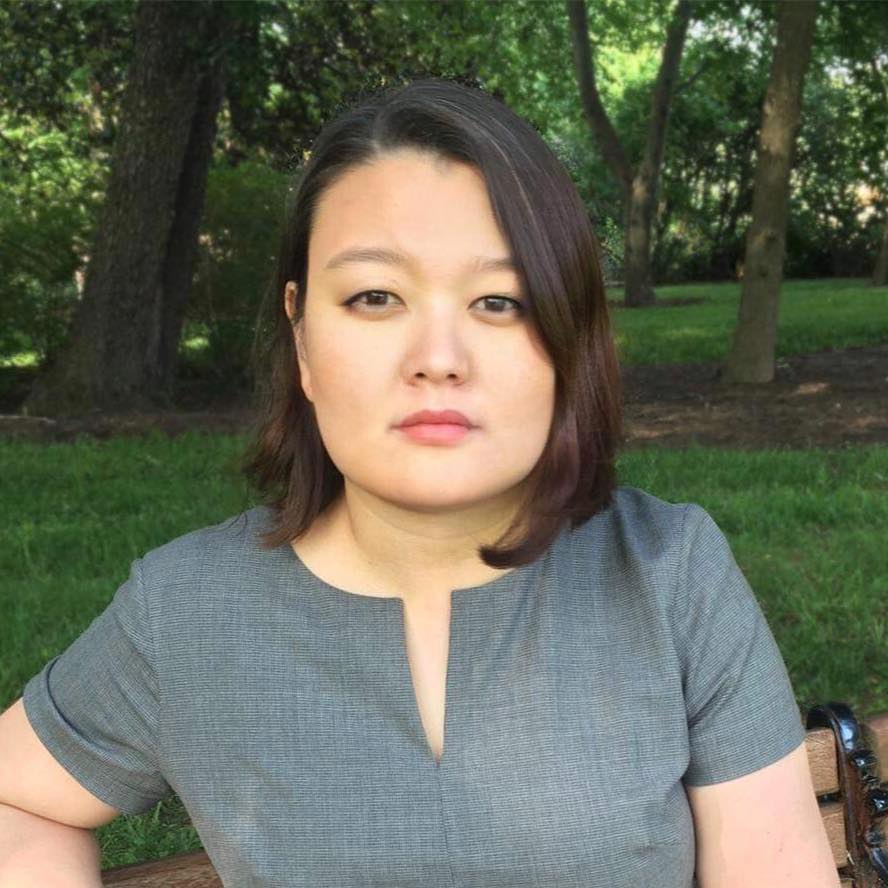
Mumin Shakirov: The problem of multiculturalism in Russia has not gone away; more than ten million Muslims and other peoples who do not profess Orthodoxy live in the country. Not only migrants from Central Asia, but also indigenous residents of Russia, representing ethnic minorities, face these monstrous phenomena. I talked about this with Natalya Arno , who was born in the Republic of Buryatia.
Racism has especially worsened under the Putin regime; it is based on fear, on everything bad, on hatred of each other, on atomization
Natalya, have you encountered everyday racism towards yourself?
Natalya Arno: Of course, and a lot. And my son. I was afraid to let my child go on the metro in Moscow. Among other things, he was defended by my Russian friends and friends of other nationalities. In Buryatia, I encountered racism in both directions. But I remember more cases of friendship, mixed marriages, and something else like that. Of course, racism is very strong. I think that racism has especially worsened under the Putin regime; it is based on fear, on everything bad, on hatred of each other, on atomization.
Mumin Shakirov: How did you react to this - sharply or tried to avoid the conflict?
Natalya Arno: If it was simply because a person is not educated enough, his ideas are based on stereotypes (for example, when he sees me, he might say “Chinese” or “Vietnamese”), I could correct it, I could joke. But this can be dangerous... I remember a whole carriage of football fans after the match, and I was the only girl there of non-Slavic appearance... There were many cases in the subway when I had to protect Asian guys, because there were really difficult cases. I moved to Moscow in 1999, it was an atmosphere of hatred. My son had a difficult situation in schools. But it wasn’t that there were all Russians, there were both Chechens and Armenians... Someone helped and said that this couldn’t be done. And some of those nationalities were beaten or humiliated based on their identity. I see my task and the task of my foundation in ensuring that there is democracy in Russia, and from this everything will go further. After democratization, the first step is decentralization, local self-government, rights for the regions, rights for everyone. Then everything can be built on this.
Is there racism in Russia?
Mumin Shakirov: The scandal with hijabs does not subside. In schools in the Vladimir region it was banned from wearing this Muslim headdress. Previously, temporary bans were introduced in Dagestan and Karachay-Cherkessia . How bans on wearing the hijab are related to the desire to remain in power. Let's discuss this with Tanya Lokshina . Is the initiative to ban the wearing of hijabs in schools and universities in certain Russian regions an explosive point of conflict or a local story that should not be emphasized?
This group of people is trying with all their might to remain in power, because they understand: if they do not hold on, then prison awaits them, the Hague Tribunal
Tatyana Lokshina: Putin and the Kremlin set themselves one main, comprehensive task - to stay in power. Everything else doesn't matter much. The question is not whether this will be a truly multinational, multi-religious country, where all its citizens are equally respected, regardless of what ethnic group a person belongs to, what religion a person professes. The important thing is that this group of people is trying with all their might to remain in power, because they understand: if they do not hold on, then prison, the Hague Tribunal, awaits them. They say some words about a multinational, multi-religious country. To be honest, the words are pretty empty. The territory is of such a colossal size, and it is clear that it is inhabited not only by ethnic Russians, there are different ethnic groups, different confessions, this is all quite obvious. But the main goal is to stay in power, everything else is not so important.
Mumin Shakirov: How is this problem dealt with in other North Caucasian regions, where the federal government has more leverage?
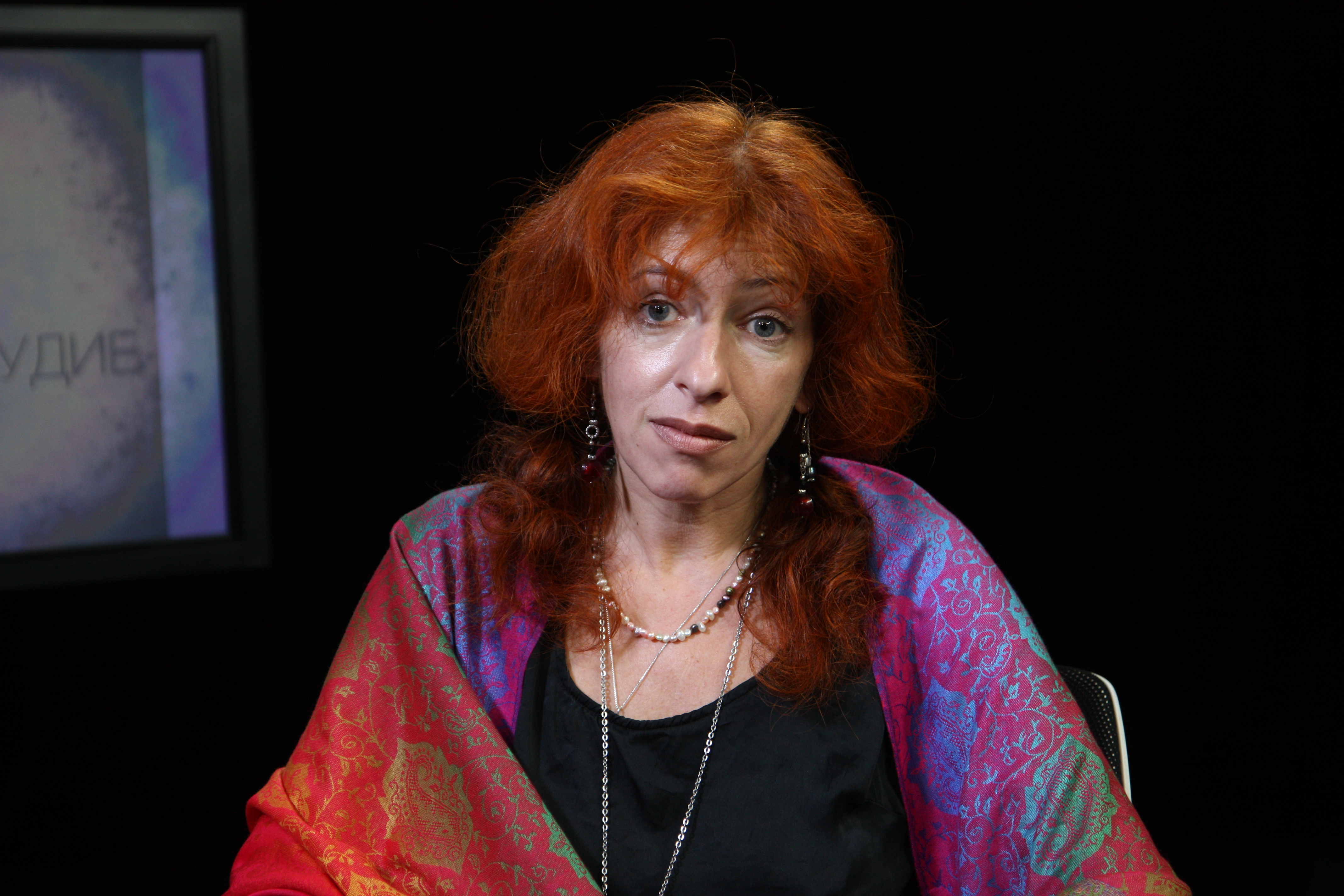
Tatyana Lokshina: The history of hijabs has long been a point of conflict in a number of regions. There is no ban at the federal level, of course, but such initiatives certainly occur in some regions, unfortunately. The official position of the organization Human Rights Watch, which I represent, on this issue is very simple: a woman cannot be forced to wear a hijab, but she cannot be denied the right to wear a hijab and cover her head if she wants to. Nothing could be simpler. When Kadyrov in the Chechen Republic under his jurisdiction forced women, including by inciting the security forces under his control, to cover their heads and follow a certain, as he put it, traditional dress code, then this, of course, was a violation both from the point of view of international law and from the point of view of Russian legislation. He had no such powers. Women, so that they behave obediently, are fired at, excuse me, with paintball guns, not by some idiots, not by some vigilantes, that would be bad, but this is a slightly separate issue, namely, law enforcement officers, officials. Women who went out onto the city streets with their heads uncovered were dragged across the street by a group of security forces in uniform and thrown into a trash can in public. This all happened in Chechnya. On the other hand, in neighboring Dagestan there was a real problem when the authorities were trying to fight the Salafis, against what they called radical Islam, girls were sent home from schools if the girls came with their heads covered. What does this lead to? This leads to the fact that parents who put a hijab on their child simply do not take the child to school. And the child will not receive an education. Well, maybe they will send him to some purely religious school, where the child will not receive a secular education. Nowadays, the education system in Russia is structured in such a way that you can find different forms of so-called home schooling. Some homeschooling is extremely educationally effective, thank goodness. This is a lifesaver for those parents who simply do not want their children to become victims of Kremlin propaganda at school. The way history and geography are taught now according to the new curriculum is simply a real disaster, it is monstrous. “Lessons about important things” and so on. But this is not the topic of your program. It’s just that some parents don’t want their children to be subjected to continuous propaganda, to come under such pressure, and take them out of schools. If girls are not allowed to wear a hijab or headscarf to school, some parents will take them out of schools. They will find some opportunities to enroll children in home schooling, but will not teach the children.
Mumin Shakirov: Is there state racism in Russia or just everyday racism?
Tatyana Lokshina: There is state racism in Russia. This is monstrously expressed in the ugly official anti-migrant rhetoric, in legislation, and in policies towards LGBT people. Now an LGBT person and anyone who supports them is simply considered an extremist, and much more. This is not just everyday history, this is state policy. When anti-Semitic actions took place in the North Caucasus, including the blatant seizure of the airport in Makhachkala, I was asked a lot, and your colleagues from Radio Liberty asked: anti-Semitism in the North Caucasus - how serious is this problem? Is it true that it is much more serious there than in the rest of Russia? And then I endlessly repeated that, of course, there is anti-Semitism in the North Caucasus, to be honest, there is, of course, everyday anti-Semitism. It exists throughout all of Russia; it can probably be assumed that in the North Caucasus its level is somewhat higher, in particular because the majority of Jews left the North Caucasus, and local people do not particularly encounter them. The worst thing is just the basic concept of xenophobia, what people are afraid of - they are afraid of the alien and the incomprehensible. The worst thing is what we don't see. Because if there are a lot of Jews living around you, you constantly interact with them, then you at least understand what it is. If they hardly live around you, then you cease to understand what kind of people they are and whether they are people at all.