
Translated material
(Non-)Accession Movement
The Kremlin is trying to win African votes with forums about the “fight against neocolonialism.” Guests come to Russia and support the “ideological struggle”, but this does not go beyond words
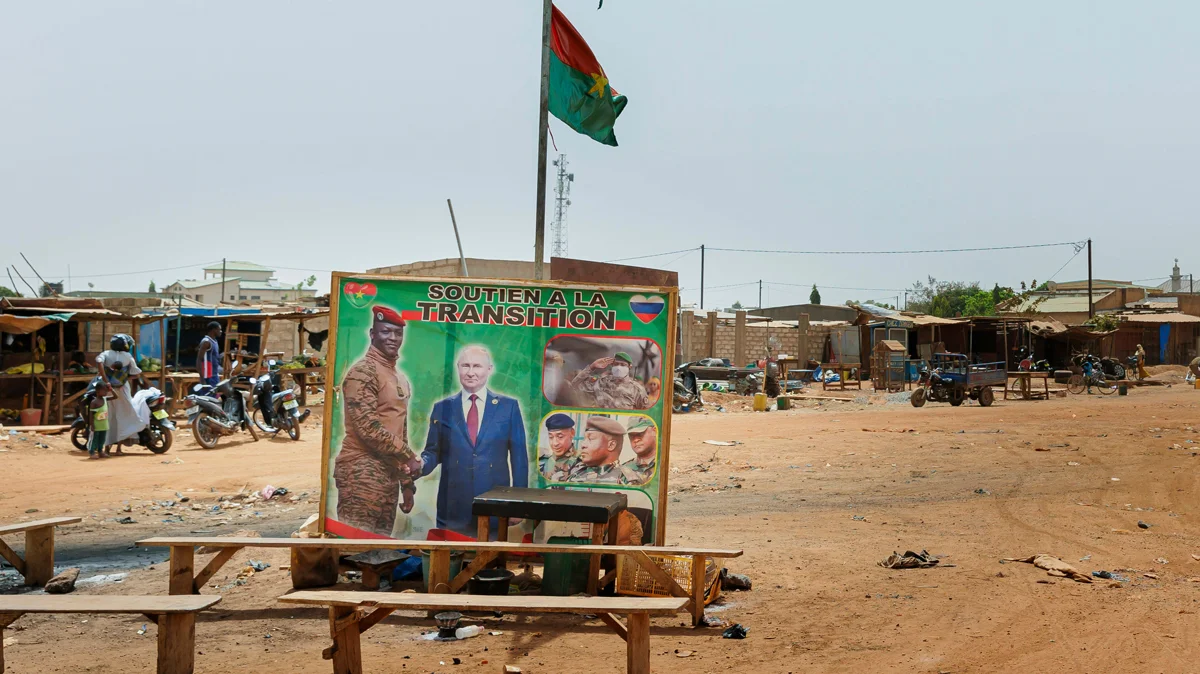
The new president who came to power as a result of the coup, Ibrahim Traore, promotes friendship with Russia, Burkina Faso, Ouagadougou, March 5, 2024. Photo: Ute Grabowsky / photothek.de / picture alliance / Scanpix / LETA
The Russian authorities again - less than three weeks after the Kazan BRICS summit - gathered in one place those whom they would like to see as allies in the fight against the West and its “neo-colonialism”. On November 9–10, the first ministerial conference “Russia - Africa” was held in Sochi, which brought together representatives of all 54 countries of the continent, including 45 ministers.
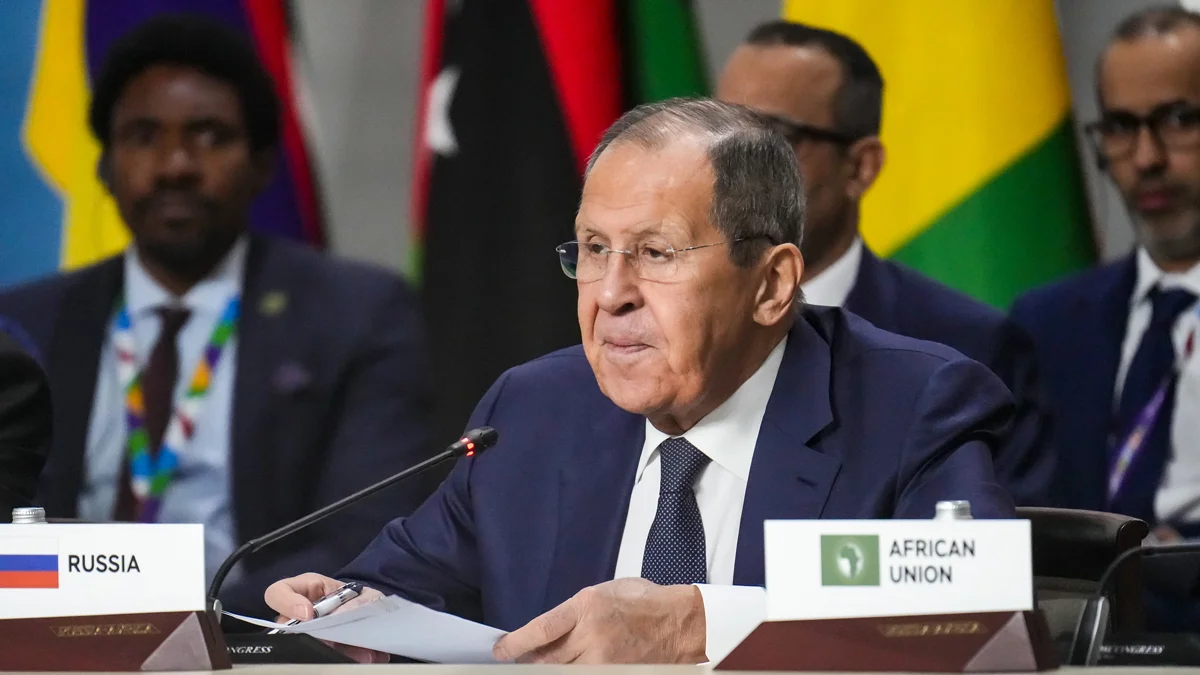
During a marathon of meetings and negotiations, representatives of Zimbabwe called on Russia to cooperate in digitalization, members of the Ugandan delegation expressed a desire to adopt Russia’s educational system, and the ministers of Burkina Faso talked about the prospects for joint construction of communication satellites with Roscosmos. For their part, Russian diplomats led by Sergei Lavrov these days never tired of reminding that the Kremlin’s relations with African countries have never been so active. Novaya Gazeta Europe looked into what Russia has achieved in reality, not in words, on the continent and what place its main geopolitical rivals occupy there.
On November 10, 65 olive trees were planted on the square near the Olympic Park station in the village of Sirius, Krasnodar Territory, equal to the number of states and regional associations in Africa. The ceremony was timed to coincide with the Russia-Africa ministerial conference that ended that day.
“Oliva is a long-liver, just like the time-tested traditionally friendly relations between Russia and Africa. They are known for their resilience and ability to survive any cataclysm, just like the Russian and African peoples, in their struggle for sovereignty, freedom and equality, withstand any pressure,” Deputy Foreign Minister Mikhail Bogdanov explained the symbolism of what is happening.
The conference itself took place on November 9–10 in Sochi and became the first ministerial meeting, which, as planned, should take place between the Russia-Africa summits, which take place every three years. The first such summit was held back in 2019, and was attended by representatives of all 54 countries of the continent, including heads of 43 states. The second, held in St. Petersburg in July 2023 - that is, after Russia’s full-scale invasion of Ukraine - turned out to be much less representative: 49 delegations and 17 heads of state. Now, at the first ministerial meeting, representatives of all 54 states again gathered, including 45 ministers.
There have been a lot of solemn statements from Russian officials about mutual understanding between Russia and Africa over these couple of days, which is not surprising. Against the background of destroyed relations with the West, the importance of such events for the Kremlin has increased significantly. Firstly, meetings with representatives of the countries of the so-called Global South interfere with the attempts of the West and Kyiv to unite them around themselves, gaining, if not support, then at least a neutral attitude towards their policies. Secondly, multilateral forums give Moscow the opportunity to show that there is no question of any isolation.
Thirdly, such events help the Kremlin promote the narrative about the “heavy legacy of colonialism” and the “uncleanliness” of the Western world, which “does not disdain any methods” to preserve the previous unipolar system.
And if you listen to the speeches at the summit and read the final declaration, it may indeed seem that Russia has found in African countries, if not allies, then at least an understanding of its views on the world and international relations.
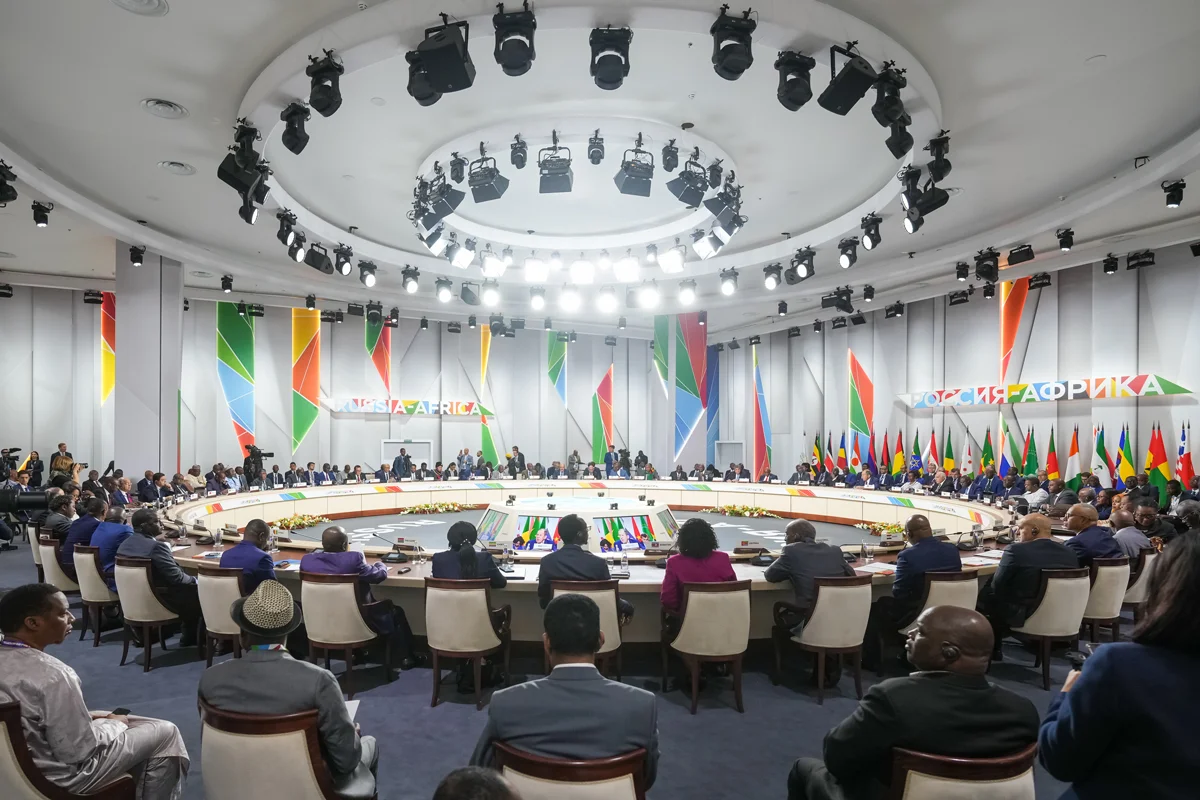
Even at the St. Petersburg summit in 2023, many guests supported Vladimir Putin’s rhetoric and in their speeches complained about “all-out pressure from the West.” At least, they did not argue with a similar message from Sergei Lavrov at the ministerial conference in Sochi. “Many people said that Russia is in diplomatic isolation. And now everyone saw that almost half of the world had gathered in Kazan,” Congolese Foreign Minister Jean-Claude Gacosso supported the Russian side in his speech, mentioning the recent BRICS summit.
But in reality it turns out that while the Kremlin is interested primarily in political partnership, the African countries themselves are much more focused on economic partnership. Russia, as the summits and ministerial conference have shown, does not have enough resources to interest the countries of the continent enough to win this competition from China, Europe and the United States.
Offensive along the ideological front
The Kremlin has indeed hit, as the last two years have shown, a pain point for many African states, which have accumulated many grievances against the West. For example, of a historical nature: demands for reparations for the era of slavery and colonialism are being heard more and more often. Or those related to modern times: African leaders have long been talking about the underrepresentation of the continent in international bodies such as the UN Security Council .
Russia is quite successfully taking advantage of this discontent, as confirmed by Western experts , high-ranking American military officials, and sociologists.
As Gallup reported , Russia's approval ratings in Africa, which had fallen sharply since the invasion began in February 2022, rose again in 2023: from 34% to 42%. And this is a record result since 2012. But the popularity of the United States, on the contrary, has decreased, although it still remains higher than Russia: 59% in 2022 and 56% in 2023.
Russia is promoting its agenda in Africa in a variety of ways, but Moscow’s rise in popularity is largely due to its active use of disinformation campaigns.
The Africa Center for Strategic Studies estimates that in 2023, Russia was behind at least 80 such campaigns out of 189 detected.
The Kremlin's attempts to influence public opinion have been recorded in no less than 22 countries. Tens of thousands of deliberately false messages on social networks and articles in the media reached an audience of millions of people.
For example, the center's analysts reported that disinformation networks associated with the Wagner PMC twice tried to spread false rumors about a coup in Niger. And when the coup eventually took place in July 2023, bots and paid activists supported the putschists and tried to “present the events as an anti-French uprising and a surge in African countries’ support for the Russian vision of world order.”
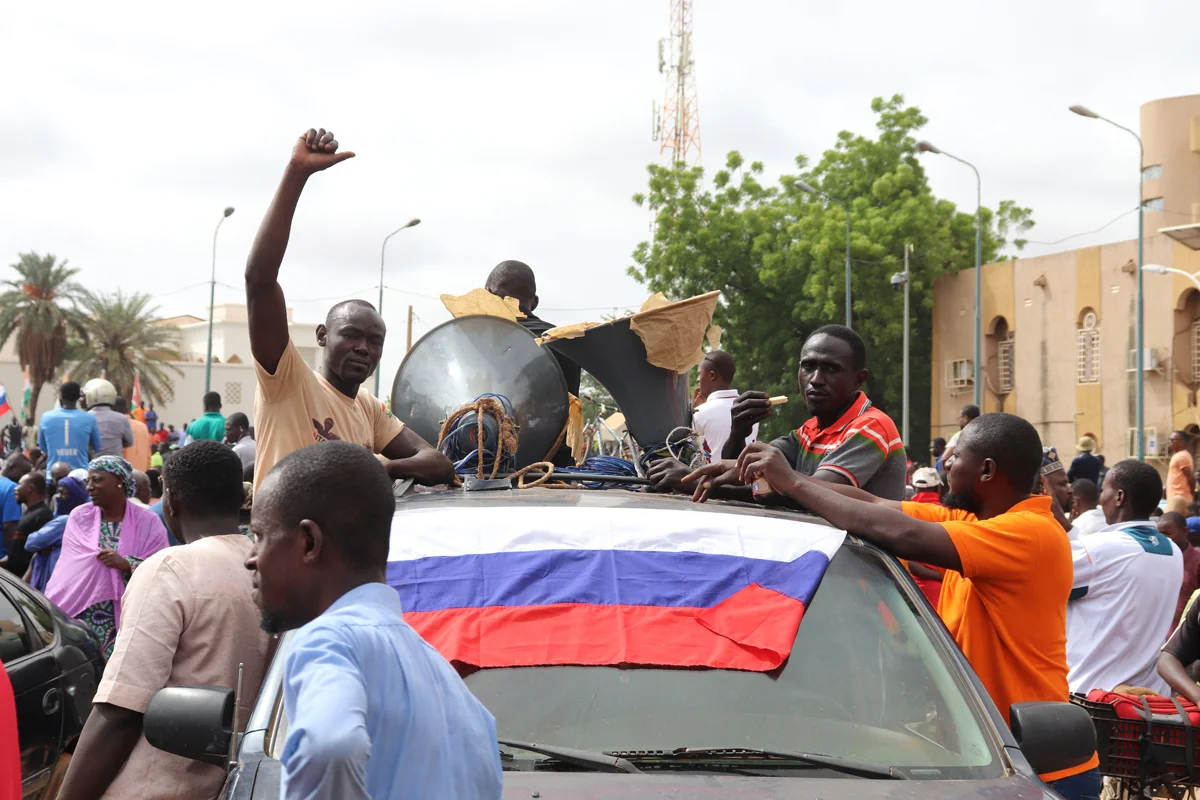
Recent examples reported in Western media include Russian-linked activists and media outlets spreading rumors that scientists in Burkina Faso, with the support of the Bill and Melinda Gates Foundation, are creating genetically modified mosquitoes are not actually trying to fight malaria. , but, on the contrary, contribute to the spread of this disease, and at the same time dengue fever. Conspiracy myths are common among poor and underserved social groups in Africa.
However, Moscow does not use disinformation methods everywhere on the continent - mainly in the countries of Tropical Africa. As analysts of the American center Atlantic Council noted , in other states - for example, South Africa, balancing between Russia, China and the West - Moscow mainly relies on traditional diplomacy, which does not imply any backroom deals with shadowy para-state structures, like the Wagner PMC.
Rossotrudnichestvo also plays its role in fueling anti-Western sentiments in Africa, opening more and more new Russian houses. According to the website of this government agency, they are now open in ten African countries:
Egypt, Zambia, Congo, Morocco, Syria, Tanzania, Tunisia, Ethiopia and South Africa. There are also so-called partner Russian houses, which are opened by local public organizations in agreement with Rossotrudnichestvo. In July, plans were announced to open such centers in Algeria, Iraq, Mali and Niger, among others.
The Kremlin narratives are promoted by the Russian Orthodox Church , the RT television channel , and private companies. For example, the consulting Bureau Legint, which, as Insider recently found out , is backed by people from the GRU and career officers of the Fifth Service of the FSB. There are also very exotic examples of pushing the Russian agenda - for example, through computer games , in which it is possible to put an end to “Western neo-colonialism” on the virtual African continent with the help of virtual Russia.
Partners in regime and weapons
An equally important card in the Kremlin’s deck of methods is forceful support for African regimes, which began with the participation of Yevgeny Prigozhin’s Wagner PMC in the Syrian conflict, and then spread to Tropical Africa. In 2022, it was reported that Wagner and Prigozhin’s political strategists were operating in at least 25 African countries.
Such cooperation was never particularly advertised and was carried out in a gray zone. After Prigozhin’s death in August 2023, the Kremlin decided that the masks could be dropped. A new unit appeared in the structure of the Ministry of Defense - the Afrika Korps, which, in fact, took over the previous tasks of the Wagnerites. According to analysts from the European Council on Foreign Relations (ECFR), in 2024, about 1 thousand corps fighters are in Mali, about 2 thousand in the Central African Republic, about a hundred in Burkina Faso and some more in Niger and Sudan.
The series of coups that have occurred since 2020 in West and Central Africa - Gabon, Niger, Burkina Faso, Sudan, Guinea, Chad, Mali - has helped strengthen Moscow’s position. However, the opposite is also true: Moscow, to one degree or another, contributed to the success of the putschists and to their subsequent retention in power.
Officially, the Russian authorities described these processes as the countries’ desire to “end the remnants of dependence on the former colonial power, ensure nationally oriented development, and increase efforts in countering the terrorist threat.”
The putschists, indeed, began to fight decisively against the “remnants of dependence.” Thus, last year, at the request of the Niger authorities, the French military contingent, which had been helping to contain the threat from Islamists for ten years, was withdrawn from the country. And this year the same fate befell the American military: their withdrawal from Niger was completed in September. The air base, where the American military had previously been located, was occupied by the Russian Afrika Korps.
The regimes whose survival Moscow is helping are happy with this cooperation: unlike their Western partners, the Russians do not make any demands regarding the observance of human rights and the use of supplied weapons. And in general, they seem to act faster and more efficiently. “One call to Moscow, and as you speak, the cargo is already being loaded onto the plane,” an unnamed West African official was quoted as saying in the ECFR story .
According to the Stockholm International Peace Research Institute (SIPRI), Russia remained the largest arms supplier to Africa (24%) between 2019 and 2023, ahead of the US (16%), China (13%) and France (10%). Key buyers are Algeria, Egypt, Sudan, Angola, Nigeria, Mali. By the summer of 2019, Russia had entered into some form of military cooperation agreement with 21 African countries, and in February of this year, 43 such agreements were already reported .
However, the prospects of the Russian Federation in the African arms market are not clear-cut. Firstly, against the backdrop of the needs of the Ukrainian front,it is becoming increasingly difficult for the Russian military-industrial complex to satisfy the demands of external partners. Secondly, the latter are unlikely to have missed the real level of effectiveness of Russian weapons, which manifested itself on the battlefield. Thirdly, disappointment may also arise in connection with the actual activities of the Russian military on African soil.
According to the organization ACLED , which compiles lists of victims of conflicts around the world, since the beginning of 2016, more than 26 thousand people - soldiers, militias and civilians - have died in the internal conflict in Burkina Faso. Moreover, more than 15.5 thousand of them died after Ibrahim Traore seized power in September 2022, who, according to him , feels “at home, like in a family” in Russia. The same applies, for example, to Mali, where security problems are only getting worse, and Russian mercenaries have already become victims of conflicts.
Therefore, some American experts advise Washington to simply wait until even “the most self-interested African leaders understand that Russian patronage is worsening their position in the long run.”
Not up to the economy
Nevertheless, so far Russia’s military activity in Africa is at a high level and also brings economic dividends to Moscow. For example, during the time of the Wagner PMC, suspicious companies were created in the countries where fighters were based, which received the right to extract minerals, such as diamonds and gold. Now, after replacing Wagner with the Afrika Korps of the Ministry of Defense, friendly leaders at the official level began to call on Moscow to develop African mineral resources even more often than before.
However, such high-profile news most often remains at the level of talk: there is no talk of Russia’s economic expansion on the African continent. In 2022, Russia's share of foreign direct investment in Africa was less than 1% - and there is nothing to indicate significant growth since then.
The trade turnover between Russia and Africa is not very impressive either. In 2018 , it was estimated at $20.4 billion, in 2022 - at 18 billion, in 2023 - at 25 billion, and in the first six months of 2024 - at 14 billion. For comparison: Russia’s trade turnover with one Only Kazakhstan in 2023 was comparable in dollar terms - 26 billion.
Meanwhile, China imported and exported goods worth $282 billion into Africa in 2023. The indicators of the European Union as a whole are even higher . India, the USA and Türkiye are also active on the continent.
But what unites Russia and its export competitors is a trade imbalance. In the case of Russia in 2023, $21.2 billion out of $25 billion was exported to Africa, and only a small part came from imports. At the same time, supplies were not distinguished by a wide diversification of destinations: Egypt alone accounts for a third of the total trade turnover with Africa. There is also no variety of nomenclature . About 22% of Russian exports are oil and petroleum products, another 25% are grain crops.
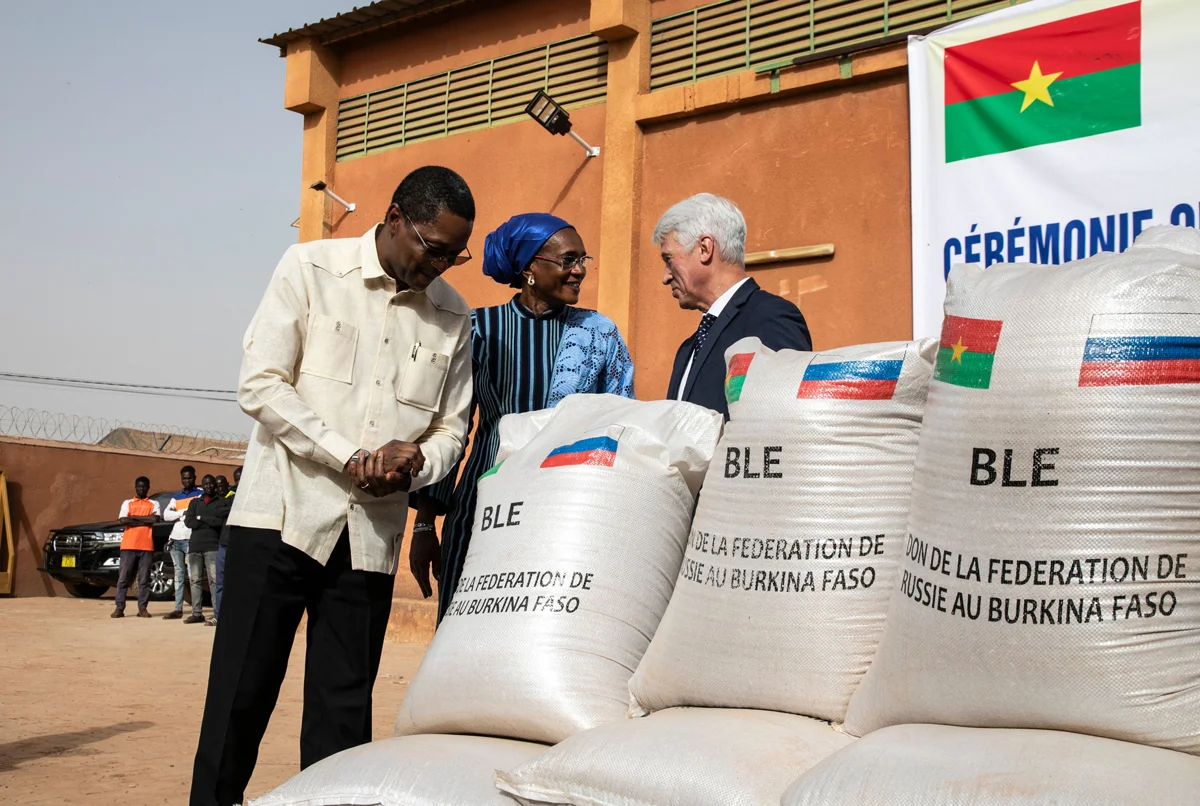
However, the last point cannot always be confidently written in the “examples of cooperation” column. Africa is highly dependent on grain supplies - both from the Russian Federation (for example, Benin - 99.8%) and from Ukraine (Tunisia receives 48.6% from there). The invasion of Ukraine provoked an immediate increase in prices by about 30%. A further intensification of the food crisis was avoided thanks to the grain deal signed in Turkey in July 2022, which allowed Ukraine to export goods through the Black Sea. But a year later, Russia withdrew from the deal, which at least upset its African partners.
At the summit in St. Petersburg in 2023, leaders of different countries on the continent spoke about this more than once, and when Putin promised to give 25-50 thousand tons of grain to several of the poorest countries on the continent, the South African president openly made it clear that the guests do not need handouts. However, by February 2024, everything promised was delivered, and the Russian authorities called this a humanitarian action unique in its scale.
In October of this year, the topic of a grain corridor in the Black Sea unexpectedly arose again: the Kremlin said that on the sidelines of the BRICS summit, Turkish President Recep Tayyip Erdogan conveyed to Putin “proposals for continuing contacts related to shipping in the Black Sea.” But the idea did not arouse much enthusiasm. On November 5, Sergei Lavrov said that the initiative was still being studied by “competent departments.”
Competitors in the fight for Africa
Obviously, for Russia the political dimension of relations with African countries is currently much more important than the economic one. Pro-government experts do not even hide this, finding “positive signs” in such a imbalance. At the 2023 summit, they note, there were no numerous bravura statements about multi-billion dollar contracts, since "the parties focused on the formation of political mechanisms for the development of trade and economic relations, and the business began to evaluate its capabilities much more realistically."
Meanwhile, Russia's competitors to miss their own on the continent, whose GDP should not grow above the average ID level this year.
For example, it was the trade and economic aspect that was in the spotlight at the September Forum of Cooperation of the countries of Africa and China, where 53 delegations came.
African countries were promised 360 billion yuan ($ 51 billion) until 2027. Money will go in ten areas - from industrial cooperation and new infrastructure projects to the revival of rural areas and exchange in the field of professional education. And this is a significant change in Beijing’s strategy, which previously concentrated exclusively on infrastructure megaproects: the construction of highways, ports, airports, power plants, and the mining industry.
The EU conduct the same summites: at a meeting in February 2022, more than 150 billion euros were allocated for the development of African infrastructure, medicine and education. And also the USA: in December 2022, Africa was promised $ 55 billion in the form of assistance and investment in 2022–2025. At the same time, Brussels and Washington are in obviously worst conditions than Beijing and Moscow, since they cause cooperation with the issues of "strengthening democracy and basic values."
But the need to change this approach is discussed in the United States. In the spring, the Politico publication in the article under the heading quoted the unnamed representative of the Pentagon, who noted: “Office of closed doors, officials admit more and more that it would be unreasonable to completely leave countries experiencing problems with democracy, because this leaves a huge abyss for other less scrupulous competitors.” As an example, Nigeria, which received weapons from the United States for many years, but in 2015 she was denied supplies due to accusations of violating the human rights army, after which the country switched to Russian and Indian products.
Now, after the victory of the Republican Donald Trump in the US presidential election, experts expect to reduce gratuitous American assistance to African countries, but at the same time a “pragmatic, oriented to investment ” approach to the continent.
Handwriting diplomacy
As for the preferences of the African leaders themselves, then Russia, and China, and the West today is unlikely to count on the fact that in the unfolding Cold War 2.0, African countries are mostly occupied by a certain side.
The principle that African leaders prefer to adhere to, in 2022, was precisely formulated by the then head of the Ministry of Foreign Affairs of South Africa, Pandor. “What I do not like is when they tell me: choose this or that,” she said.
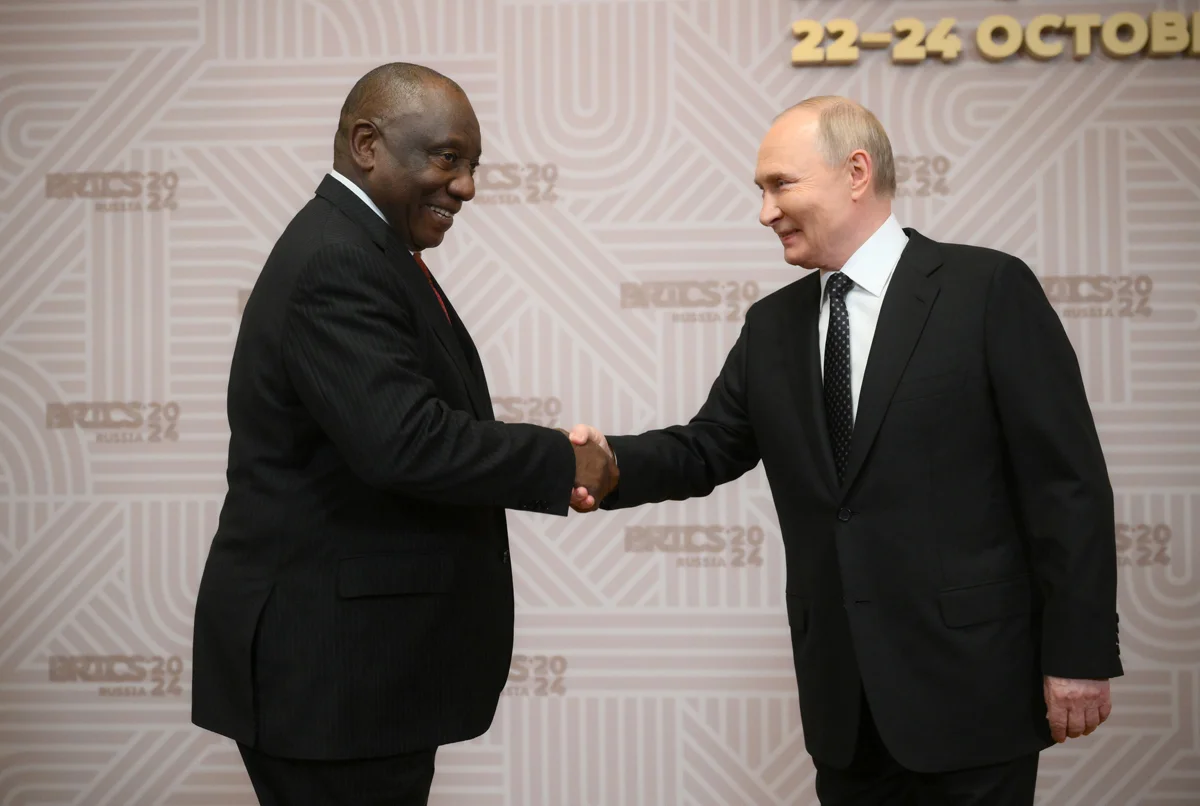
And now, in 2024, South Africa shows a sample of diplomatic maneuvering: a few days after the President Cyril Ramafos called Russia “a very valuable ally and friend” at the BRICS summit, the Minister of the Interior South Africa Leon Schraiber was described as a “valuable ally and friend” Ukraine.
The behavior of President Kenya William Ruto is also significant. Meeting in 2023 in Berlin with the Chancellor of Germany Olaf Sholts, he harshly criticized Moscow for her "unrefined aggression." And after a couple of months, taking Sergei Lavrov in his own way, he called Russia a friend and called for "resolving the conflict with a respectable way for both sides." Being a visit to the United States in 2024, he also categorically opposed the geopolitical choice for Kenya: with the West or with the East.
So, despite the signs of obvious political solidarity and conversations about “Western neocolonialism”, African leaders do not forget about what is their real interests, especially when they relate to the economy.
However, some of the African countries will probably remain sincere and one hundred percent allies of Russia in the fight against the West. For example, as Novyevropa already wrote , the most faithful ally of the Kremlin is the Eritrea’s sanctions that have long been previously lined with all sides, which has been unexpectedly led by the dictator Isamyas Afevorka. This country with a population of about 6 million people always voted at the UN General Assembly against resolutions with criticism of Russian aggression against Ukraine.
Or the equatorial Guinea, under the leadership of Theodor Obiang Ngema Mbasogo, who in 1979 came to power as a result of a military coup, and remained there. He already proposed to spend the third Sipopo city in his city of Sipopo in 2026. And he cited an argument that could not kill little: the equatorial Guinea is not a member of the International Criminal Court (MUS). And this means that, unlike the situation with the BRICS summit in South Africa, where Vladimir Putin did not fly due to the Order issued by the Mus for his arrest, the Russian leader can visit Sipopo-nothing will prevent his visit here.