
Translated material
What goes around
You can now watch one of the main political films of the year, “The Seed of the Sacred Fig,” online. This is an Iranian thriller about the everyday life of an executioner and street protests in Tehran

Still from the film “The Seed of the Sacred Fig.” Photo: trigon film
Director Mohammad Rasoulof was forced to flee the country immediately after filming - from yet another arrest in a political case. The film, which has angered Iranian authorities, is about a mature man who receives a prestigious post in Tehran's revolutionary court. When his service pistol goes missing in his apartment, he begins to suspect first his two opposition-minded daughters, and then his wife, with whom he lived for more than 20 years. Fear for the future, panic over street protests and paranoia from long life under a reactionary regime are gradually turning a caring father into a domestic tyrant - all this against the backdrop of the Iranian protests of the past two years. Film critic Oleg Tundra tells the story of the creation of this film, almost impossible in Iranian realities, reflects on the fate of the director and his attempts to describe the events of the present using fiction.
The appearance of "The Seed of the Sacred Fig" at this year's Cannes Film Festival was one of the most high-profile and sudden events. Filming ended only in March 2024 (while the festival takes place in May), post-production took place outside Iran, and director Mohammed Rasoulof received a prison sentence and two hours of deliberation to decide whether to stay in Iran or leave countries forever without things. He crossed the Iranian border with a guide on foot; he prefers not to go into details. It took him a month to escape from Iran to Europe with all the necessary documents.
It's not often that a feature film can become such a prominent international political occasion in real time. At the Cannes Film Festival, The Seed competed in the main competition and won five awards, including the Special Jury Prize and the FIPRESCI Film Critics Award.
What confused the Iranian authorities about the “Seed of the Sacred Fig”? This is an intimate and very inexpensive film (as Rasoulof himself jokes, “on a student’s budget”) about the meat grinder of power and the interference of the political in the personal. The main character Iman, the father of two growing daughters, receives a long-awaited promotion in the revolutionary court, for which he is entitled to a higher status and a spacious apartment in an elite quarter. There are also restrictions for his family - his wife Najmeh and daughters Rezvan and Sana.
They need to carefully monitor conversations with acquaintances, behave carefully on social networks (or better yet, simply be absent there) and not be noticed in any anti-government protests.
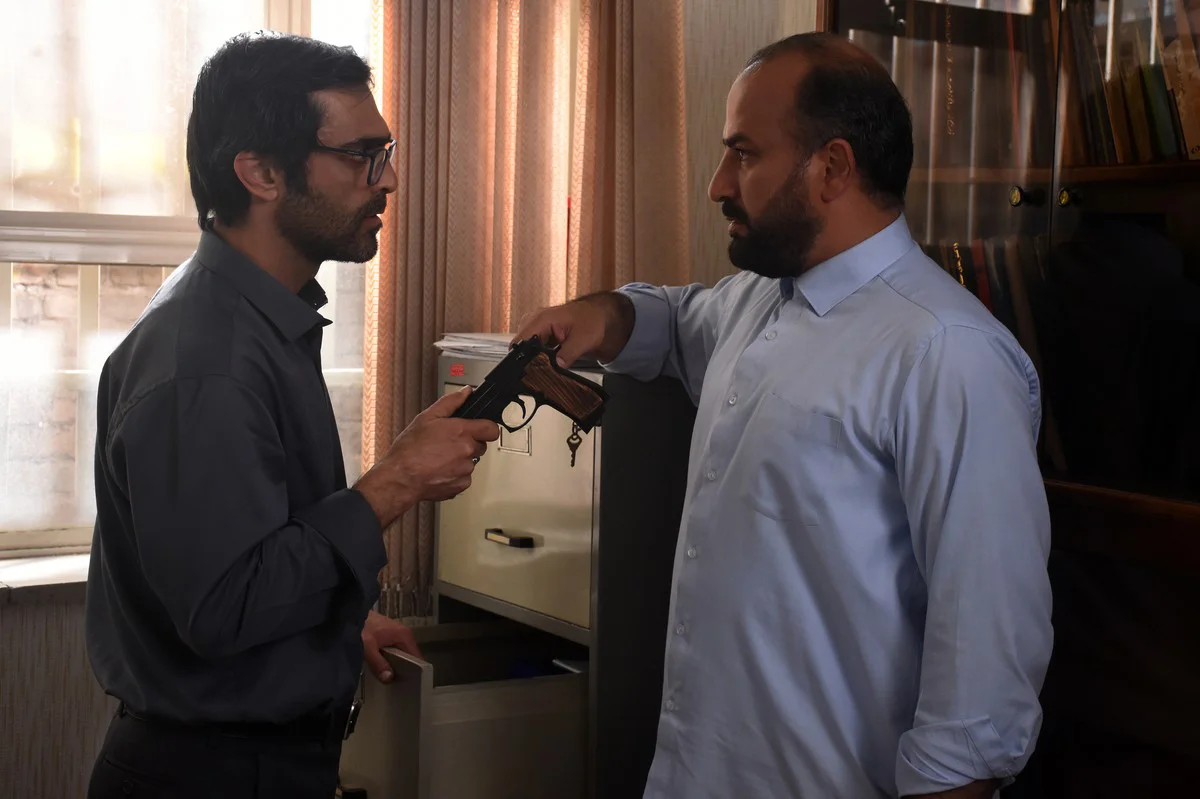
At this time, Tehran is being overwhelmed by a mass youth movement against the authorities - after the sudden death of a 22-year-old girl, Mahsa Amini, in a police station. The revolutionary court where Iman works turns into a frenzied printer of endless political cases against protesters with a death sentence. Conscientious Iman hesitates and shares with his senior colleague his doubts about the need to sign fabricated deeds, to which he receives a cautious warning: ostracism, unemployment and complete loss of well-being are the least that can happen to him if he refuses to follow orders.
At this time, contradictions begin to emerge within the family. Daughters Rezvan and Sana read about street protests on social networks and begin asking unpleasant questions at the table about the impunity of the authorities. The girls are not very aware of their father’s secret government work and have no idea what he does in his service. The mother is trying to balance between her husband and daughters: not to aggravate her husband’s stress and to calm down her daughters who are rebelling at home (for now). Two events change the family's fate. The eldest daughter's friend is wounded in the face by shrapnel during street riots, and then her father's service pistol goes missing in the apartment (which is a malfeasance). Careful inquiries at home do not bring results, and Iman decides to take extreme measures.
Director Rasoulof has three stints in prison, during one of which he met young Iranian protesters (they later helped him leave), and during another he met another disgraced Iranian director, Jafar Panahi. Both were released under house arrest at the height of youth protests, when prisons were so overcrowded that the entire penitentiary system was converted to mass imprisonment of young demonstrators. Rasoulof’s last problems with the law before “Semenya” were due to the fact that he spoke out against police brutality, even before the rallies in defense of Mahsa Amini.
During one of his prison terms, Rasoulof found the idea for the “Seed”. One of the jailers gave him a ballpoint pen and then shared: “Every day when I enter prison, I look at this door and wonder when I will finally hang myself. All my children ask me every day: “What are you doing there? What do you do at work all day?” This short conversation became the idea for a new script, which Rasoulof filmed mostly in one apartment and during several short trips - in complete secrecy: only the main film crew knew about the film.
With a bitter grin, Rasoulof calls himself and his colleagues “film gangsters”: “During filming, we often repeated the same joke among ourselves: even selling cocaine would be easier for us than making a movie.”
Already at the final editing, the film included documentary recordings of Iranian eyewitnesses from protest arrests: recordings from mobile phones, inexpensive cameras, made by people trembling with fear. Beating peaceful protesters to death, dragging them out of cars, public torture in front of the crowd - those few documentary minutes that were added to the artistic reconstruction of modern Iran so that the world audience understood the context where this film, dangerous for the creators, appeared. Unlike Rasoulof and the younger actresses, the actress who plays the mother (Soheila Golestani) still lives in Iran and is under enormous pressure: due to the release and success of the film and her participation in anti-hijab protests.
One might fear that such a detective story about the making of a film would eclipse the film itself in terms of its power of statement: the techniques of guerrilla cinema (as one might unhesitatingly call The Seed of the Sacred Fig) often trump its artistic merits. In Rasoulof's smoldering detective story, the first half of the film is much inferior to the second: especially for those viewers who know about political persecution first-hand and not from international news. For any Russian viewer immersed in the opposition agenda, Rasoulof's exposition, where he carefully outlines the realities of the bailiff and his family, may seem too detailed, tedious and illustrative. The main characters' lines are precise, the narration is consistent, and the camera works head-on.
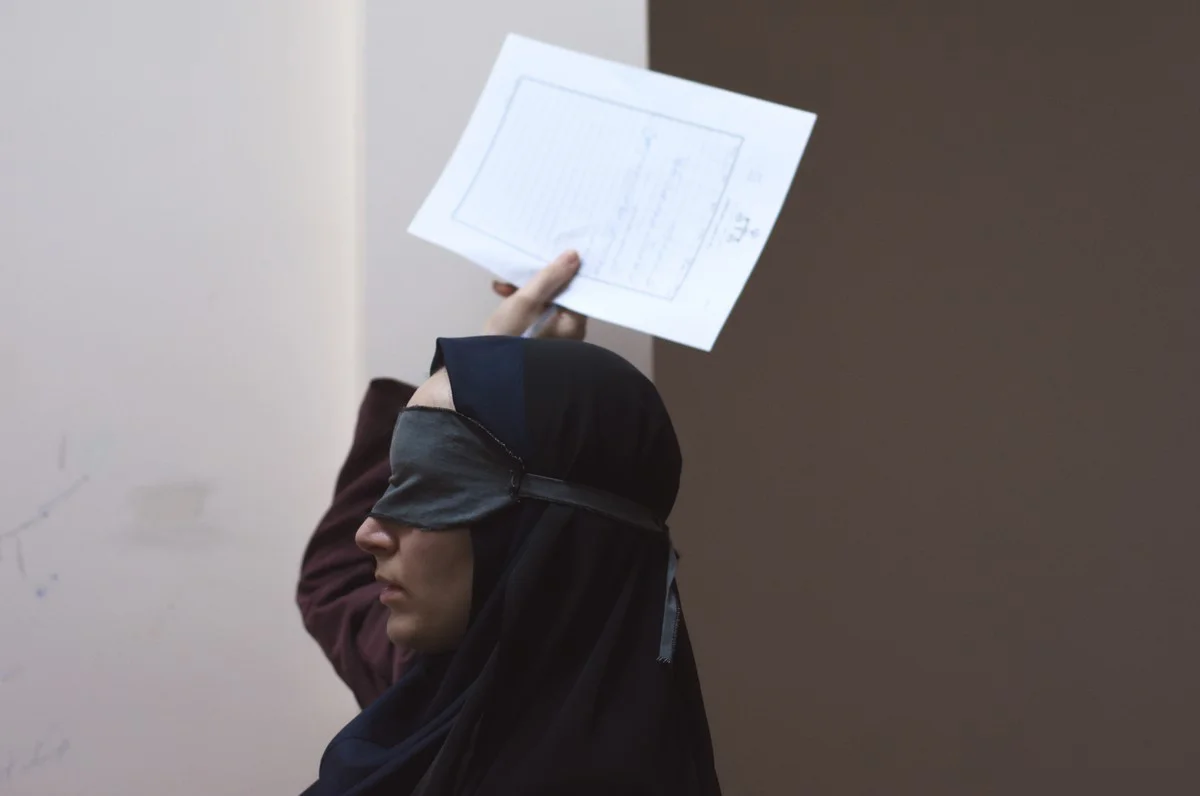
But halfway through, when the viewer is ready to despair of being shown a clear illustration of life in a police state, the ill-fated pistol goes missing, changing both the dynamics of the film and its genre. A social drama turns into an existential thriller, family members become hostages, and the search for the culprit turns into a small holy war. The main character, who was born and raised in a country where walls have ears and no one can be trusted, is alienated from his nominal family and merged with the body that truly nourishes him and gives him security (unlike his objecting wife and daughters) - the Islamic Republic of Iran, who promised a gun, a salary, an apartment, subject to strict obedience. Being the children of an executioner without knowing that you are the children of an executioner is a slippery, chilling and dark feeling, to which the camera also connects in the second, genre part of the film. More and more darkness, emptiness, silences appear in the frame, words sound less frequently and have a different weight. Instead of talkative anxiety, there is almost silent paralysis, and the whole world with its ideas about good and evil shrinks into a monster in your house and a gun that, sooner or later, must fire.