
Translated material
Life in the colony, black colonies and conditions of detention
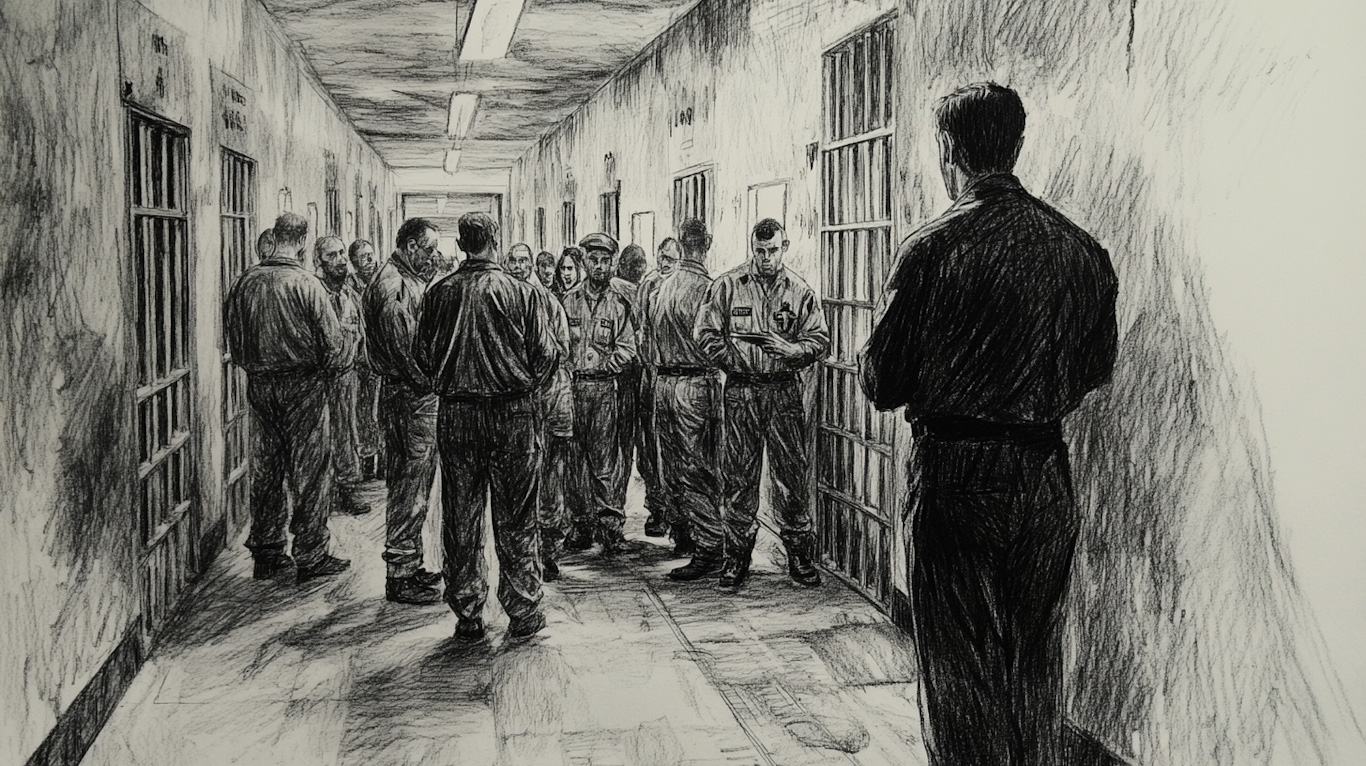
how the “black” colonies in Russia work and what happens in them
As of autumn 2023, there were about 266 thousand prisoners in Russian correctional colonies. Most of them are forced to serve their sentences in “red” zones, that is, in zones more or less controlled by the administration, often facing torture and abuse by employees. However, to this day, “black” colonies also remain in Russia, where prisoners find themselves at the mercy of “supervisors” and other representatives of the criminal hierarchy, who may have connections with people in different government agencies.
Since 2022, a criminal case has been ongoing in Russia regarding just such “black” zones located in the Republic of Tyva. Dozens of people pass through it, one of them, whose name we cannot name, provided the investigation with a handwritten story, which probably became part of the pre-trial agreement he concluded. The editors of Cherta were given a copy of the translation of the document embedded in the materials of the criminal case, provided to the editors by two different people at once. this translation of the document from Tuvan to Russian, stored in the case materials. It details how the violent prison economy works and why a person trapped in it should not expect help from the state. We are publishing, with minor editing, excerpts from the document with expert comments.
“Phones and illegal substances were passed through holes in the walls.”
“... In 2017 I studied in Krasnoyarsk. My technical school did not have a dormitory, so I rented housing. My relative T. constantly came to see me, we communicated well. He transported hashish from Tuva to Krasnoyarsk and paid the rent for my apartment, and upon arrival [in Krasnoyarsk] he lived with me.
In November I took time off from school and went to Tyva. [When] I went back to Krasnoyarsk, T. passed on narcotic substances through me. On the way, traffic police officers stopped us at a checkpoint and searched all the passengers [of the minibus]. They found drugs in my bag.
A criminal case was opened against me under Part 2 of Art. 2 28 (transportation of narcotic drugs on a large scale) and released to Krasnoyarsk on bail. [At the same time] I didn’t use drugs myself, I only tried it a couple of times during my school years. In March 2018, I was sentenced to 3 years probation.
All summer I studied and worked in Krasnoyarsk, I didn’t tell my parents anything. In October of the same year, T. called me and said that he had sent a parcel [to Krasnoyarsk], asking me to pick it up. Then [I] lived in the same apartment with my friend A. and my minor brother M.
The next day the driver called and told us to pick up the package - my minor brother M went after it. He disappeared for the whole day... It turned out that T. again sent us drugs ( after which all three were detained by the police - “ Devil”) . I was again involved in a criminal case. The [police] officer told me that if I take [all the blame] on myself, it will be easier. If all three are involved [as defendants], then [everyone] will be worse off.
I agreed and gave the appropriate testimony. My friend and brother were released, and a criminal case was opened against me under Part 2 of Art. 228 according to Part 3 of Art. 30 (attempted sale of drugs on a large scale)... In the winter of 2019, the Ermakovsky District Court sentenced me to 3 years and 6 months. From the Minusinsk prison in the summer of 2019, I was transferred to my native Tuva in a pre-trial detention center...
I stayed there for 4 days, and then we, 8 people [prisoners], were transferred to IK-4 in the city of Shagonar... The first time I got to the colony, I was excited, it was a little strange. When I arrived at the quarantine, I noticed that everything was there. Telephones and illegal substances were passed through holes made in the walls. From SAM squads Detachments that contain prisoners who have committed violations during their imprisonment. prisoners often went [to quarantine]… Neighbors said that you need to be aware of everything, not be stupid, remember everything…”.
***
As experts explain in a conversation with Chertaya, the very beginning of the story shows that the author of the document ended up in a “black” colony. According to the rules, a new arrival in quarantine should not communicate with prisoners already assigned to units.
“Quarantine is a room into which all new arrivals end up,” Anna Karetnikova, a former analyst at the Federal Penitentiary Service in Moscow, tells Cherta. “This is a place of a kind of filtration, where operatives take a closer look at them. There they are asked questions to understand whether they can be admitted into the general population or should be kept separately. Well, this also has a medical function - the doctor must make sure that new prisoners do not have infectious diseases, and they will not infect the entire colony when they leave the detachment.”
As Ekaterina Petrova, a researcher of the Russian penitentiary system, adds ( name changed at her request ), at this stage physical force can be used on prisoners: “If this is a “red” colony, then this is how the power of the staff can be shown to newcomers. In a “black” colony, on the contrary, [representatives of the criminal community] can meet newcomers who are in quarantine.”
“What can be done and what could not be done”
“...We left quarantine for the zone in two weeks. I was met by fellow countrymen from “ Khem ooldary A group of prisoners from six districts of Tyva, through which the Yenisei River flows; translated from Tuvan, their self-name means “river” .” When you leave quarantine, you first go “to chifir” to the first detachment. When we arrived, there were a lot of people there. In the large room , which probably means a recreation room or an educational room, it was much better than in some free houses. There were sofas, a refrigerator, a TV, wardrobes and much more.
There were a lot of questions [to us], first they asked if anyone had “bad” articles, and these were 131st ( rape ), 132nd ( violent acts of a sexual nature ), 134th ( sexual intercourse and other acts of a sexual nature with a person under the age of sixteen ) and 228, if a huckster ( that is, the manufacture or sale of narcotic drugs on a particularly large scale ).
[They asked] where [he was from], why [he received a sentence], whether he ran away from prison during his prison life, whether he was involved in organizing transfers to the colony and whether he provided other assistance to the prison community . I said that during prison life I had not moved in freedom, and I had never known the watchers and elders before. And even now I don’t know by sight that during quarantine I was only studying [who is who].
The person in charge of zone A. immediately said what could be done and what could not be done . Charge transfers and parcels You cannot transfer anything from the zone on your own , you cannot communicate with employees, since there are certain people who communicate with them. You can’t move around alone in the zone, you can’t fight and you can’t steal either. Applications for parole or transfer to a penal colony cannot be written without the consent of those in charge...
For example, [in the colony] there was a former minister of agriculture [of the Republic], before going on parole, he replenished the common fund with a large amount, bought a TV for the zone and a lot of other good things...
During the conversation with the convicts, I explained the circumstances of my case “from start to finish.” When everyone left, the person in charge of zone A. left me and started calling someone on the phone and asking about me. After the conversation, he hung up and said that without the permission of those watching, I transported and sold narcotic substances beyond the Sayan Mountains, that is, in the Krasnoyarsk Territory . Therefore, I have to give a certain amount of money to the common fund every month.”
***
“There is no way to refuse the ritual of such an acquaintance,” Anna Karetnikova tells Cherta. “Upon arrival, you must tell [representatives of the criminal hierarchy] who you are in life, whether there are any “shoals” behind you. [During this ritual] they decide which caste you belong to in this crazy caste society.”
At the same time, the prisoner is told how much he must pay into the prison common fund. The decision about this is made by the so-called observers. “These are people who, from the side of the criminal world, have divided spheres of influence,” Ekaterina Petrova continues in a conversation with Chertaya, “if this is a “black” colony, then those in charge exercise power over the prisoners: they take tribute from them, manage them, resolve conflicts. At the same time, they negotiate with the administration and staff of the colony.”
“No matter how funny it may seem, the system of observers practically repeats the structure of the FSIN system itself,” adds Anna Karetnikova. — From the state side there is the head of the detachment, the head of the colony, the head of the Federal Penitentiary Service. It’s the same here: looking after the squad, the zone, the region.”
“It’s better to die yourself than to disgrace your name”
“...What the person in charge of the zone says is the law, and no one can break it. My heart began to worry, where will I get money for two years? Moreover, parents have no money at all.
From the moment I came out of quarantine, every month I gave 5 thousand or bought them tea and cigarettes. In addition to the main common fund, there was also a district common fund and a squad common fund. I also needed to buy cigarettes, tea and food myself. We had to find 9–10 thousand a month. I asked my parents, friends, and helped T., who sent me a parcel. They didn't know where I was putting the money. It was impossible to talk about this [with anyone] because newly arrived people are forbidden to talk [with anyone] alone.
In addition to money, every year during the growing season, each person convicted under Article 228 had to provide [prisoners] through their relatives with a certain amount of narcotic drugs...
In the summer of the same year, as an example, prisoners doing chores such as cleaning were beaten and thrown out of the “people” to “orderlies. ” They have a low status in the prison hierarchy due to the fact that they formally cooperate with the administration and do the dirty work of the convict from the Slavs Ilya, because he stopped giving money to the common fund. After that I started to take it even more seriously. He brought money, cigarettes and tea in a timely manner.
We have such sayings: “It is better to die yourself than to disgrace your name,” “Take care of your honor from a young age,” and therefore I was very worried that I could let my father down...”
***
“You can’t refuse to pay,” explains Ekaterina Petrova, “if you couldn’t somehow protect yourself from the very beginning, then they won’t get rid of you. You will either pay or work [for the criminal community] all the time.”
At the same time, adds Anna Karetnikova, it is impossible to turn to employees for help in such a situation: “But how? Say: “Dear employees, are they asking me for money?” And what would they do then? Nothing. Well, besides, it’s a shame to address employees “badly.” In such communities one cannot wash dirty linen in public. This is a very relict society that is based on violence and authority.”
According to her, in an area where crime is strong, a place in the prison hierarchy is also important in freedom. “When the author of the text is afraid of “shaming the family,” this is not a figure of speech,” explains Karetnikova. — It was in a large city that you spent time in a detention center, they released you, and you don’t tell anyone about what your “suit” was. And in rural areas, which are seriously influenced by criminal communities, this, unfortunately, plays a role in “peaceful” life.”
“People themselves ordered food from relatives”
“... When I got to the zone, I noticed that there was no rise or rebound. There was no daily routine; almost everyone had a telephone. The convicts did not wear uniforms, they only wore civilian clothes. Those in charge of the zone walked around wearing headphones, “ strictors People who are sentenced to serve their sentences in a maximum security colony ” constantly came out into the zone with the rest of the prisoners [which shouldn’t happen]…
Uniformed employees could only be seen twice a day: for morning inspection and for evening inspection. Sometimes it seemed like I was in a small village. No one stayed in the dining room for a long time; they visited and immediately left. Nobody really ate there.
Probably due to the fact that there were many convicts in the zone, there was not enough food. People themselves ordered food and meat from relatives, and cooked at home [in the detachment’s premises]. The delivery was organized together with the supply manager 3 times a week: on Mondays, Wednesdays and Fridays.
There’s not even anywhere to work in the zone, there’s no “wetting”, the “sewing” sometimes works, sometimes it doesn’t work. The convicts made their own handicrafts... The [prisoners] did the repairs themselves, ordered paints and painted them..."
***
The picture described in the document is quite consistent with other stories about “black” zones, Ekaterina Petrova, a researcher of the Russian penitentiary system, tells Chert. Anna Karetnikova believes that this contributes to the spread of the prison subculture: “As you know, in the red zones the “developers” rape people with mops, but in the “black” zones this is the situation. There is no work, there is nothing, there is devastation - people are sitting, they have nothing to do. So, in order not to go crazy, they live there such a life [based on concepts and the prison hierarchy].”
“If I want to leave, then the only way for me is to go to the bathhouse with the roosters”
“...For nine months I threw [money] into the common fund. Then the coronavirus appeared, it became difficult to find money in freedom, and they stopped accepting packages. The parents had no money - the mother works alone, the father raises livestock. T., because of whom I was convicted, stopped bringing parcels and constantly talked about his problems.
Thus, I could not bring money to the common fund. I listened constantly from those watching then... I was in a large room all the time, calling all possible relatives and trying to find money. I couldn’t explain that getting money has become much more difficult. Those watching said that these were my problems... Either they said that I would live among the orderlies, or they said that I would live in a bathhouse with roosters...
They gave me three days to resolve the issue. If I don’t find [the money], then behind the chief they will discuss my future life... Money has become the most important thing in life: both in freedom and in prison... Two days later, “Sayin Erler” came to the room, the elder told them that if I don’t If I can find money, I must do everything “with my hands and feet” for a good life in the zone...
There were a lot of thoughts in my head: how can I survive another 2 years and where to look for money. And at this time they told me that there would be no need to throw away money, just work “with your hands and feet.” And out of stupidity, without understanding what the “trasoviki” were doing, I joined them.
But even if I had not agreed then, I would have been assigned to “orderlies” or to the “roosters.” “Orders” and even more so “roosters” (especially the latter) are at the bottom of the prison hierarchy, do dirty work, and can be subjected to humiliation and violence — in the case of “roosters,” sexualized. In particular, “roosters” cannot communicate with other prisoners, eat food with them; violation of this prohibition in some conditions can become a reason for their murder , as was the case with Ilya. Not everything in this life is so simple, and I understood all the secret moments of the life of “Saiyn Erler” when I joined them.
All telephones and other prohibited items that entered the zone passed through “Sayin Erler”. [They] did not leave the duty room, they helped the employees, and they knew that every “Sayin er” brought prohibited items into the zone. “Sayin erler” walked to the duty room together with the convicts heading to the medical unit. If the supervisor of the zone went to the duty room for negotiations, “Sayin er” was always with him to convey a message from the supervisor to the employees, since the supervisors could not communicate directly with the employees.
At first, I tried to agree that I would pay by any means [instead of being “Sayin er”], but I was not allowed. “You have seen everything and know that there is no turning back,” they told me, adding that if I want to leave, then [the only way for me] is to go to the bathhouse with the roosters.
***
As Anna Karetnikova says, the term “Saiyn er” is the most incomprehensible in the text. Judging by the functions of these people described in the text, this is an analogue of “trasoviki” (this word is also mentioned in the translation text). The main function of these people is communication between cameras. They may accompany prisoners when in contact with management to prevent unauthorized negotiations between prisoners and staff.
“In Moscow pre-trial detention centers, it’s basically the same,” states Karetnikova. — In such “black-black” cells, in “black” buildings, the prisoner cannot appeal to the administration. If a person needs to be taken to the doctor, then a spy always goes with him, who makes sure that he does not pass a note or complain.”
Also, such representatives of the criminal hierarchy can literally censor the correspondence of cellmates: letters can be read, they can even prohibit filing an appeal, a former analyst of the Federal Penitentiary Service for Moscow gives an example.
Ekaterina Petrova adds that it is impossible to refuse to work as a “trasovik” or, in any case, extremely difficult: “If the power of representatives of the prison hierarchy is as strong as described in the text, then, of course, they will demand loyalty from you. In any case, they won’t leave you just like that: they will want either money or services from you.”
“The employee always knows”
“...I’ll tell you how phones and other prohibited items get into the zone. A car arrives three times a week to deliver groceries: on Mondays, Wednesdays and Fridays.
Convicts from the settlement colony “charge” this car-each time in different places. It happens [hid forbidden things] in the cabin, it happens - in the back, in products. If you count in two years, how much this “Gazelle” brought prohibited items, it will turn out two times more than the Gazelle itself.
When the car arrives, the Sayyn Er is always unloading in the machines. Then he goes [with brought things] to a large room to the look. There they already distribute all this among convicts.
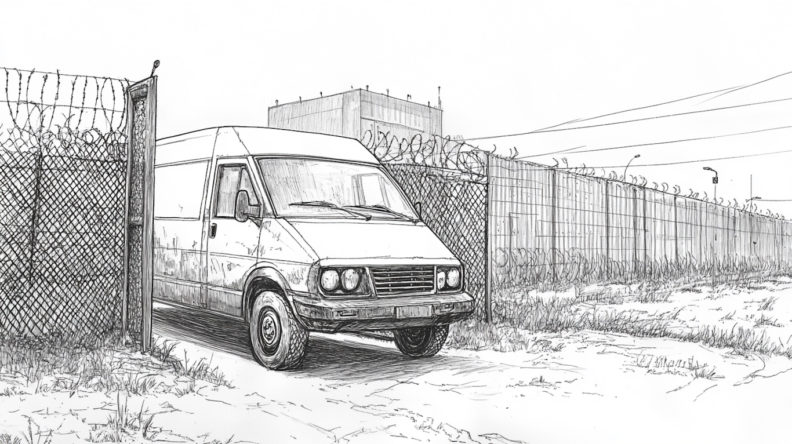
Before “charging” the importing machine, first you need to pay the employees of money .. money gives either looking behind the zone or looking after the settlement. If you do not agree, then upon arrival, employees seize everything. The employee who is driving always knows that [is in the car].
In May 2020, alcohol was not missed with importing, and the look instructed not to unload the products into the dining room. Two hours later, the head of the colony called the look at the duty officer, could not agree. Then, right with us, the boss called the watchman for the manager, that is, for all the institutions of the Federal Penitentiary Service in the Republic and said that his “brothers” were not allowing food to the zone. We were taken out and they remained to speak alone [with the leadership of the colony]. After that case of the senior of Sayyn Erler , a chamber -type premises were closed for 6 months in PCT - more stringent conditions of detention, for prisoners who committed misconduct . Apparently, when they brought us out, they agreed on this ... "
***
Ekaterina Petrova notes that the situation described in the text is quite characteristic. In the event of a direct conflict of “thieves” with the administration, liability (including the need to go to the penalty area or chamber -type premises) lies precisely on the representative of the criminal hierarchy. Even in the case of a rebellion, ordinary prisoners will receive less punishment.
At the same time, the interlocutors of the editorial office noted, the third -party observer should not surprise conflicts with the administration around the extension of prohibited objects in the colony. Although corrupt employees, up to the leaders of the colonies, receive their share, such clashes, as well as the seizure of already paid “prolos”, happen regularly.
“Employees must conduct searches, because in their orders that regulate their activities, it is written that it is necessary to conduct so many planned searches, so many unscheduled searches,” explains Anna Karenikova. “They need to find something and report, so you cannot find less phones than last year for a similar period.”
"Once on the zone, they get access to money"
“... I’ll write how the casino works,-every month (1st and 10th), looking behind the casino holds [card] games with chips. Each [organizer] has its own players. Those who wish convicts from among “thieves” also play. Calculation - 5 days. They play by bringing cash into the zone, or by translation by [the short number of “Sberra”] “900”.
Games can stretch for two and even three days. There are convicts who are calculated not only in cash, but also by cattle. In large games, the total bank reaches 300-400 thousand rubles. Money from the games played in the casino is distributed by a look at the casino, looking behind the zone and “plowman”.
After a long discussion, money from the games held is transferred to the “thieves” common fund and transferred to the viewing detachments. The remaining money is sent to the look at the department at large. If this is cash, they are taken out of the zone.
A car or other property entered in a casino, the look after the zone leaves himself. When a look behind the zone A., having served seven years, went out [to freedom], his UAZ Hunter car drove up to the zone. From the “thieves” there was rumor that this Hunter was introduced in the casino. These watching are those who are well settled. Getting into the zone, [they get access to money] and go out, having a car and cattle ... ".
***
Ekaterina Petrova says that during the research she heard from prisoners that they play cards for money, although this is directly prohibited by the Executive Code. Anna Karetnikova adds that the game for money is one of the main ways to replenish the prison common fund. According to her, the money received in this way is also used to corrupt employees and ensure the “pronounces”: “Well, for themselves, probably, these“ officials ”of the dark side of the forces leave something, if at all the bright side is in prison.”
"The loss of money was discussed for several days for chifir"
“... In the spring of 2021, my close friend E., with whom I grew up together, in a state of intoxication, hit a person to death and was convicted of five years. After quarantine, he was determined in “Hem Ooldars” (to “river”). As I already said, those who look after the zone always ask from the quarantine about life before being condemned, evaluate their financial situation and immediately attract wealthy people to themselves.
My friend E. was just from a wealthy family, before entering the zone, he served a contract in a 55 motorized rifle brigade, his car was his own. He told everyone about this, and they immediately placed him to him. They said, they say, until the end of the term will be among the “lads”.
Those who looked behind the zone told my friend that, upon the release of the viewing second detachment, he would appoint E. During the residence in the detachment, my friend gave access to his banking card to the look behind the zone, and he tied his card to his SIM card. At the end of November 2021, was the birthday of the Watching and one of the elders in Hem Oldar. They celebrated all night. In the morning, looking behind the zone, he gave his phone for storage [to another person], and he went to bed. Waking up at lunch, he noticed that the card was blocked.
He said E. to call the bank and figure it out. My friend did just that - they told him that he needed to come to the bank with a passport. He asked his parents to go to the bank and find out what happened. It turned out that on the night of the celebration from the card to an incomprehensible account, they tried to withdraw 80 thousand rubles, so they blocked the card ... On what account they tried to withdraw money, they did not say in the bank.
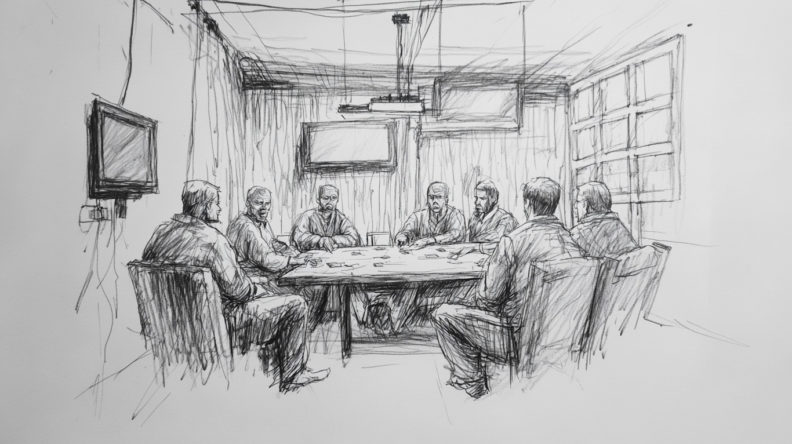
The rest of the money in the account was the mother of E. transferred to the look. In the day, misunderstandings began. The watchman said that there were 200 thousand rubles on the card, and that with this money he was going to buy a car to those who are free to follow [looking] ... They discussed this money for several days for chifir, but all without results. The watchman accused many. As a result, he stopped at [himself] E. and accused him that it was his relatives who themselves cashed the money and blocked the score.
Referring to the status of the watchman, he began to threaten us all: what would report to everything that look at the manager, that they will declare us “rats”. [After that] they haunted E. and as a result they took away his car that remained at large. We could not convince the watchman that first we need to find out where the money disappeared. He said that he was not going to wait for E. to find out to find out where they had gone ... People came to E. and took a car from his parents.
The watchman promised Father E. the horse, but he did not give it, and left E. the car. To the same people who run at large in the needs of the zone, he presented the VAZ 2114 bought for money won in the casino ... "
***
“It seems to many prisoners that the“ black ”colony is more fair, that those who look establish a more honest order,” the researcher Petrov shares the experience of observations.
Karetnikova calls this a romantication that can cost a prisoner dearly: “In fact, this is a rather soulless caste world, he is aimed at subordinating you and extorting money from you. In general, no one in general has any special “Robbud” urge. It would seem that in the “Black Colony” you can complain to the thief, which many naive prisoners hope, but the feedback there, as in the FSIN system, has been lost. As a rule, no thief will deal with your problems. They mainly care about how you obey the official system, even if it creates stupidity and muck. ”
"I am not the first and not the last"
“... All the summer of 2021 I ran with pronounces. Watchmen stopped negotiations with the colony staff - they transmitted messages only through me. Employees also began to get used to passing messages through me. Watchmen stopped leaving the large room. When the employees asked to convey something, I passed on something. When I could not, I told them so, then they themselves came in and conducted conversations with to ...
I freed myself in the spring of 2022. There is even a photograph from my wires, the photo was taken on K. when I returned home, they threw off the photo in VKontakte ...
After liberation, I never went to the colony and did not meet with anyone from that environment. I left everything in the zone. He registered in the employment center, was noted by supervision and helped his father in the pasture. My parents do not know until today how I was serving a sentence in IK-4 ...
I completely described what I saw with my own eyes over my term, without inventing anything at all, as I was honestly wrote ... Once in my life stumbled, I had to go through all the difficulties of prison life, collecting money in the common fund, which I did not have . I suffered for the whole term because of this. I then tried not to shame my name.
If I knew that all these actions are falling under the article [282.2 of the Criminal Code of the Russian Federation], I would be better to be daytime and soap the floors. Or if I were with money, I would immediately leave for parole or in a colony-settlement. I am not the first and not the last one who in this way suffered in prison. There are many such people in Tuva. To be honest, I don't even know the meaning of these three letters AUE. In life, I have never seen a thief or a tramp and did not communicate all the more ... ".
"One of the extremes of the FSIN"
“The realities described in the document are represented in“ black ”zones. In cases that I know, these realities are not recorded in such quantities, but in general it is imaginable, the invited researcher of Yale University Kirill Titaev, who has extensive experience in field work in Eastern Siberia, says in an interview with the “line”.
According to him, this document could be drawn up by a person who "at least a little knows the realities of Tuva and more or less represents the realities of the" black zones "." With several reservations there are signals that show that it was written, rather, a native speaker of the [Tuvan] language. This makes the assumption unlikely that the document was falsified by the employees of the metropolitan IC and the FSB or was written by one of the defendants in the case under their dictation.
Titaev suggests that this document relatively adequately reflects what the prisoner in the colony can really face, where the positions of criminal authorities are strong. “In sociology, there is such a term“ selection of extreme cases ”. This is a typical extreme case. That is, perhaps with a couple of reservations, we see one of the extremes that the Russian FSIN can fall into, ”he says.
According to him, sociologists of Russian law enforcement have “two basic” hypotheses, why “black” colonies still exist. The first of them is historical. It assumes that this phenomenon is explained by the “track effect” when the practices of the interaction of the administration and professional criminals were inherited by some modern colonies from Soviet times.
The second hypothesis is geographical. Many colonies are located in small cities and villages, where they are one of the main employers. As a result, the children of employees who have worked in the zone all their lives then go to the same FSIN institution.
“In this case, the interpenetration of cultures necessarily occurs,” says Kirill Titaev, “that is, the person who became the head of the colony, having passed such a career track, will certainly respect the thieves' hierarchy. And for him, this hierarchy will be close, understandable, transparent and so on. What explains his tolerance and even respect for violence. This is an artifact that the colony officers live in such conditions, observing their own kind and prisoners from among professional criminals or convicts for grave violence. ”
"How should he know what should be wrong?"
In the summer of 2022, it became known that 15 members of the extremist organization of AUE were detained in the Republic of Tuva (two years before that, the Russian Supreme Court recognized this movement extremist, despite the expert doubts that such a movement exists at all).
The arrests of 2022 became the beginning of a large criminal case, which the SK employees were conducted with the operational support of the FSB. By February 2024, more than 50 defendants in Tuvan business became known .
“I remember I still worked when they were brought to us, in the 7th insulator in Moscow,” Anna Karetnikova, Ex-Analytic Uffer, recalls in a conversation with the “line”. -They were completely simple, some for some reason did not talk to women, only with men. They were so unhappy, completely did not understand what was happening. Rural residents, only very criminalized, many, probably, in addition to their will, are involved in all this. It was evident that for them it was just such a normal way of life. ”
Among the defendants delivered to Moscow was the author of the text, transferred to the “line”. Following the results of the events described in the document, he was accused of organizing and financing the activities of the Auie cell. The author of the text concluded a pre -trial agreement, during which he spoke about the orders reigning in a correctional colony.
As noted in the verdict (the copy is at the disposal of the editorial office), the author of the diary “repented of the deed, fully complied with the conditions for the pre -trial agreement on cooperation [with the investigation], actively contributed to the disclosure and investigation of crimes , the exposure of the accomplices of the crime.” Despite all this, the man received 4 years 8 months of the real term.
Some defendants in the case of the Tuvan “Auie cell” have already received much long time: this was reported about sentences at 7 and 15 years . However, the experts surveyed by the editors doubt that the fight against the movement, the existence of which is doubtful, is effective for eradicating the phenomenon of the “black” colonies.
“The question arises, what [the convicted person arriving in such a colony] had to do? - is indignant in a conversation with the "line" of Karetnikov. - Here is this kid [the author of the diary] in the colony, how should he know that [in the zone] should be wrong? Everyone lives there. What was he supposed to do? Say: “No, I am non -conformist, give me the rules of the internal routine, will I live on them?” It is not so necessary to deal with this - it is necessary to figure out that in the republic with corruption, what is happening in the region, what is with the leadership of the Federal Penitentiary Service. ”
As Kirill Titaev adds, "the fight against the promotion of the criminal subculture in various forms is an occupation, of course, worthy and useful." However, he insists, "at the moment when we put a false hypothesis under this struggle, it usually becomes less effective."
“The affirmation of the existence of AUE is, in fact, the assertion of the existence of the organization,” he says. - That is, the subcultures are solid and organized. Let me give you an example: football fans - the subculture is whole and organized. The idea of Aue assumes that the criminal world is arranged in the same way, but the studies say that this is not so. And the transmitted document shows this well. We see how much ethnocultural specificity exists in these matters. ”
When law enforcement agencies begin to investigate not the activities of a particular look or “thief in law”, but to look for traces of a single all-Russian movement, this negatively affects the fight against abuse. “We begin to work less effectively, because we are distracted by the search for a non -existent one,” Titaev states.
"Political began to extort money too"
Despite the fact that the share of “black” colonies (as well as individual buildings, detachments or cameras) has significantly decreased in recent years, the interlocutors of the editorial office believe that they still exist.
“Well, of course, such an example in Russia is not one,” says Kirill Titaev. - We had about 1000 colonies before the war, and researchers try to see a more or less average temperature in the hospital. We can build the distribution of these colonies according to the role that criminal authorities play there, and what practices are common there. ”
As Anna Karetnikova notes, she was “a little surprised by the scale described in the document of abuse, but otherwise it“ 60–70%”corresponds to what she saw in“ black ”colonies and pre -trial detention centers:“ I was called from such colonies and something like that In general, they described. "
This creates a special danger to people who fall into such places of imprisonment, without representing a prison order, adds Karetnikov: “The conditional student of the Hipster, who was grabbed with hash, is not at all ready for these realities, moreover, he is a great chance Immediately end up in the “rooster”, where he will be subjected to secrecalized violence. It is enough for someone to divorce him and it turned out that he, say, had oral sex with a girl. This is a very private situation, I often came across her. ”
Более того, говорит она, сейчас поступают данные, что с тюремной субкультурой сталкиваются и заключенные, осужденные по политическим статьям: «У политических стали тоже деньги вымогать. Раньше их пытались изолировать [от общения с профессиональными уголовниками], когда их было меньше, они были подконтрольными, к ним присматривались, про них докладывали в УФСИН. Сейчас их стало столько, что это невозможно».