
Translated material
“I marry those who are in Russia”
Navalnaya, Yashin and Kara-Murza led several thousand Russians to an anti-war march in Berlin. This is what came out of it. Meduza report
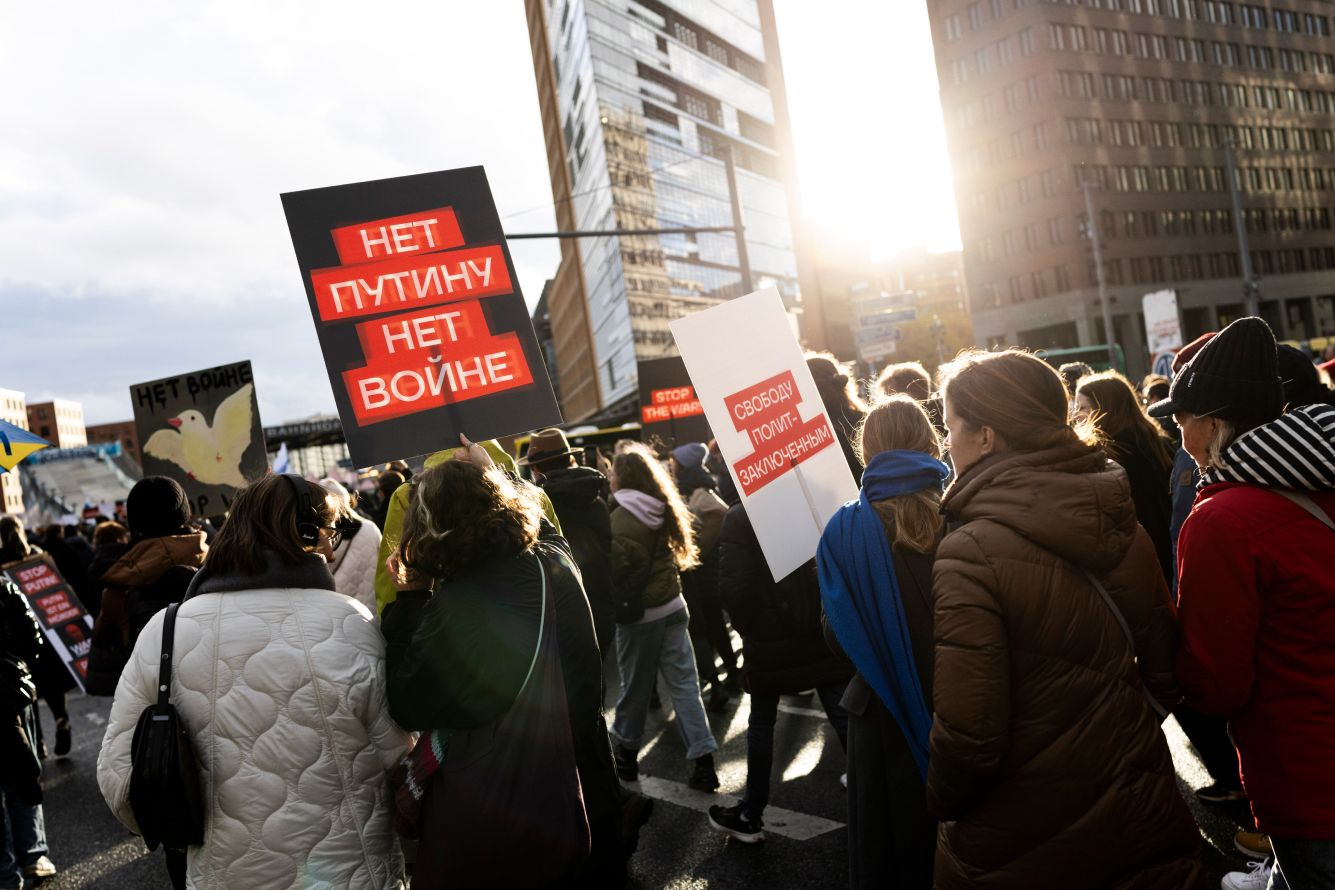
On the afternoon of November 17, an anti-war march took place in the center of Berlin - it was organized by Yulia Navalnaya, Ilya Yashin and Vladimir Kara-Murza. The rally attracted several thousand participants and became the largest for the Russian opposition in a long time. Meduza special correspondent Kristina Safonova tells how it happened.
There is swearing in this report. If this is unacceptable to you, please do not read it.
The small Henriette Hertz Park in Berlin is crowded. An anti-war march organized by Ilya Yashin, Vladimir Kara-Murza and Yulia Navalnaya begins here. Politicians made three demands: to deprive Putin of his presidential powers and try him as a war criminal, to withdraw Russian troops from Ukraine, and to immediately release all political prisoners “in Putin’s dungeons.” According to German police estimates , about two thousand people gathered at the start of the rally.
Along the park there are several stands, on them are the names and photographs of political prisoners remaining in Russia: Alexey Gorinov , Olga Smirnova , Viktor Shchur , Galina Dovgopola , Zarema Musayeva , Irina Navalnaya , Zarifa Sautieva , Azat Miftakhov . And also Liliya Chanysheva, Sasha Skochilenko and Vladimir Kara-Murza himself - these three were released in August 2024 as part of an exchange .
The protesters also brought posters and leaflets demanding the release of all Russian political prisoners. They also include those who are not listed on the stands, for example, co-chairman of the movement to protect the rights of voters “Voice” Grigory Melkonyants and journalist Antonina Favorskaya .
A man's voice comes from the speakers installed on the white truck:
“I would learn Russian just to chant loudly: “Putin...”
- Shit! - some respond.
The person addressing the crowd is Andrey Zaitsev. He is the former head of the public organization Center for Youth Initiatives and a former member of the pro-Kremlin Nashi movement, who left his native Bryansk for Germany eight years ago as a refugee. Zaitsev explains to Meduza that he is “forced” to help the march organizers.
“I used to actively participate in organizing actions, but I do not support this action. Because of this, the tricolor,” he says, pointing to the Russian flag in the hands of one of the protesters. “My relatives are being killed with this flag.” Half of my family lives in Ukraine, half lives in Russia. This war is personal for me. So I couldn’t help but come.”
The discussion around the Russian flag began at the end of October, immediately after Yashin, Kara-Murza and Navalnaya announced plans to hold a march in Berlin. The video with their joint appeal used footage from the “Peace March” held in Moscow in 2014 - the participants of that action protested against the invasion of eastern Ukraine, including under the Russian tricolor. Some commentators took this video as a call to take Russian flags to the streets of Berlin - and immediately criticized the organizers.
“It seems to me that the discussion about flags clearly obscures the essence of the action that we want to hold in Berlin,” Ilya Yashin wrote on his Facebook page. “And I encourage everyone to focus on the main thing.” This action is not about flags, but about solidarity with political prisoners, about rejection of aggressive war and resistance to Putin’s policies.”
Vladimir Kara-Murza spoke in a similar vein: “This march is not about symbolism. <…> This action is about showing that there are many of us. We, anti-war Russians, we, Russians who support the democratic European future of our country.” The politician added that there is no single position on the flag among the organizers, and he himself believes that the participants of the action should have the opportunity to come out with the flags they want. Yulia Navalnaya did not answer Meduza’s questions before the start of the march (her press secretary Kira Yarmysh suggested asking them at the end of the rally, but Meduza was unable to do so).
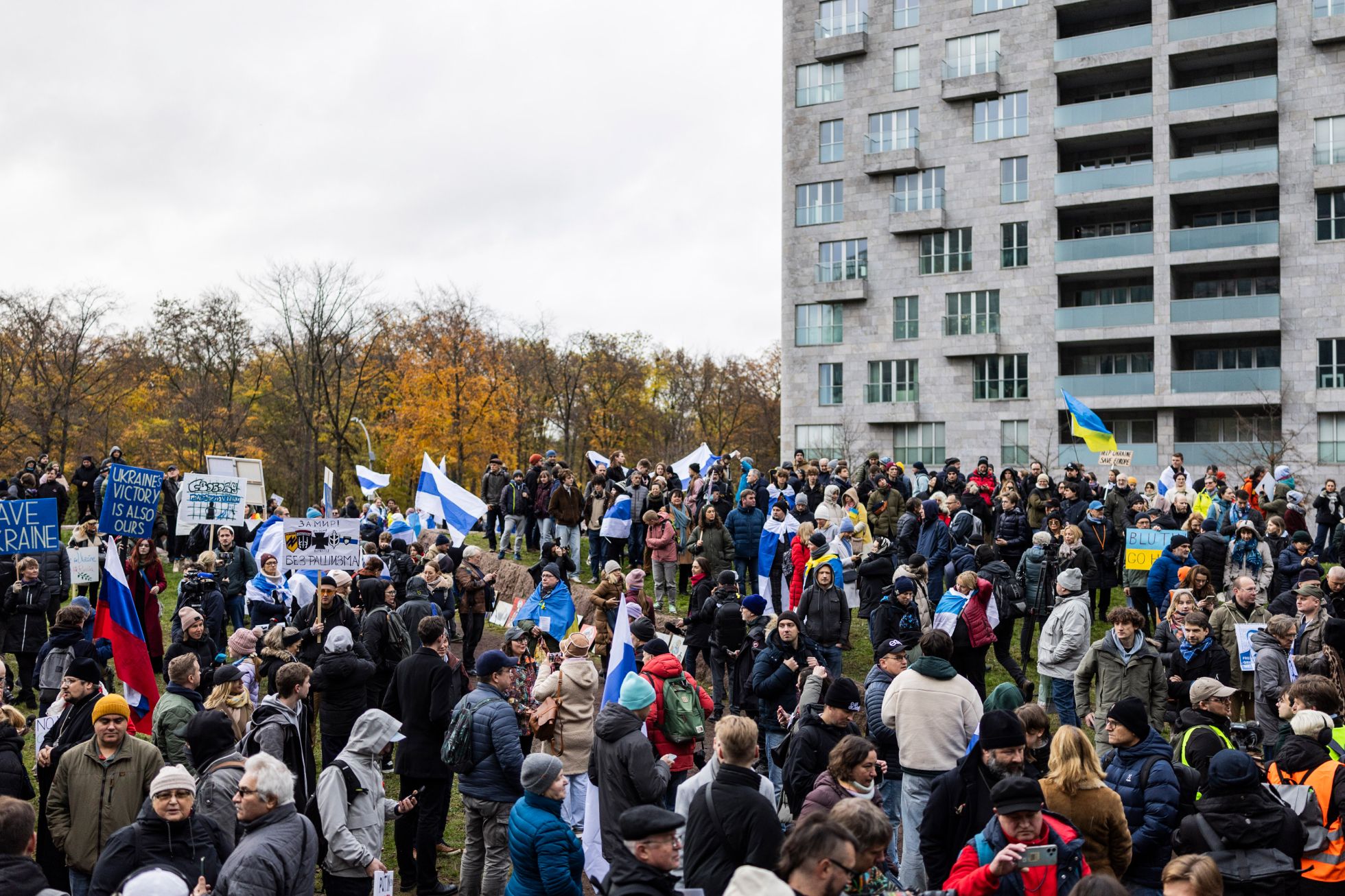
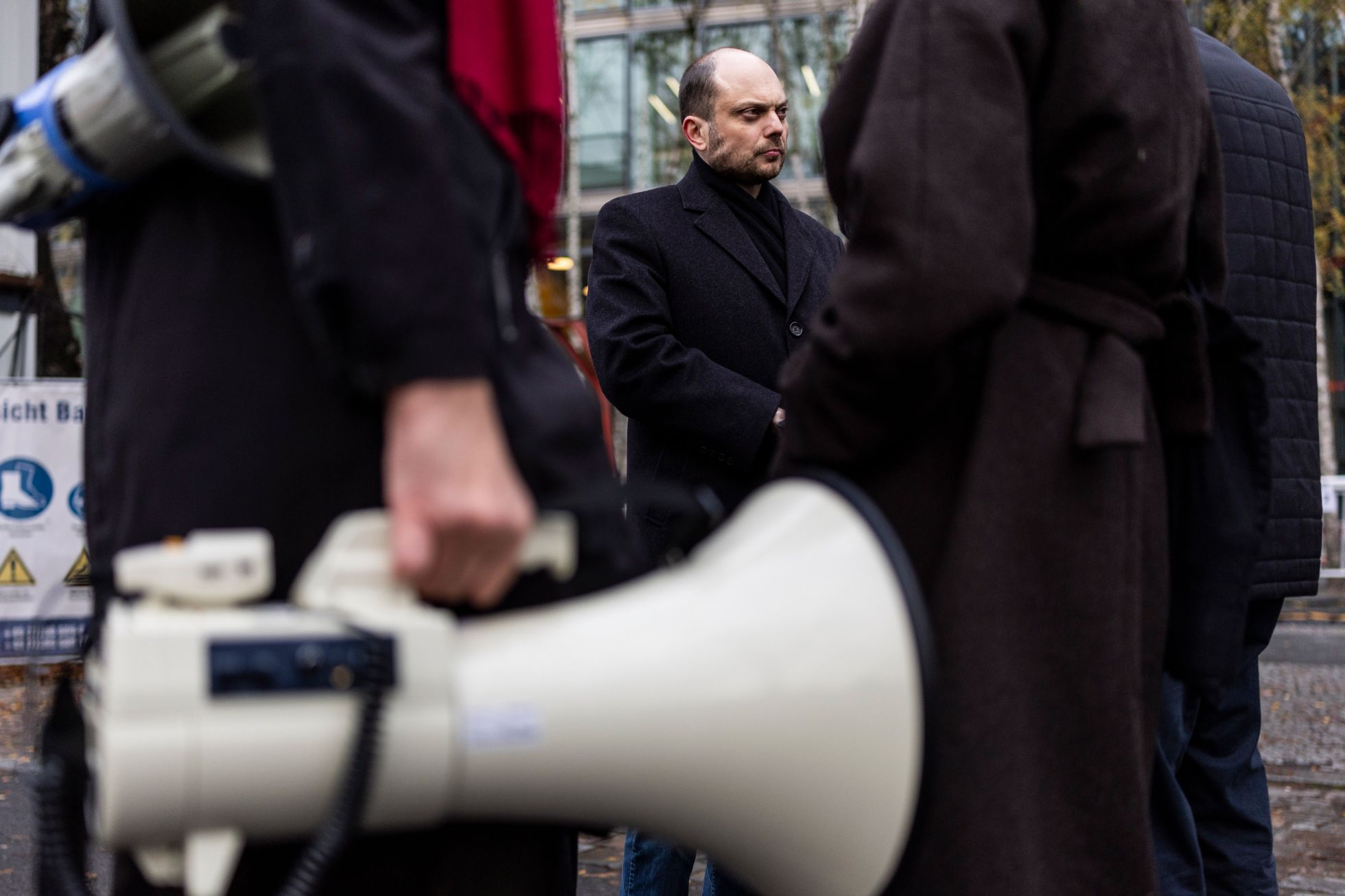
As a result, many came to the Berlin march with white-blue-white flags - one of the symbols of the Russian anti-war movement. Ukrainian flags also flash frequently. The Russian tricolor in the hands of one of the protesters, pointed out by Andrei Zaitsev, looks lonely.
“This is the flag of my country. I’m here for my country, I’m against Putin,” explains student and activist Luka Andreev, who holds the tricolor. “It seems to me that people who want to remove this red stripe want to erase the history of our country.” Yes, this is blood, but this is the blood of our ancestors who fought for this country. And it would be wrong to simply get rid of the three-hundred-year history of this flag.”
Andreev came to the rally specifically from Tallinn - he moved there a year before the war. “I want to finally look at the faces of my compatriots,” he says. “It really hurts me to be in exile. I madly love my country, my people. I don’t agree with the white-blue-white flag... But nevertheless, these are my compatriots.”
When Luka joins a small group of supporters of the youth movement “Spring”, banned in Russia (another Russian flag is visible there), several protesters at once cannot hide their indignation. “Take away your fascist tricolor!” - shouts a tall man with glasses and a beret. “People are embarrassed enough to come out with this stinking bloody rag here in the center of Berlin,” he continues. “I haven’t seen it [the Russian flag] for two and a half years in Berlin. And now they have come in large numbers and, under the guise of opposition, are organizing little Moscow here.”
The screams attract the attention of the police. Several employees come closer, but their intervention is not required. A voice from the speakers—now female—asks those gathered to line up and begin the procession.
* * *
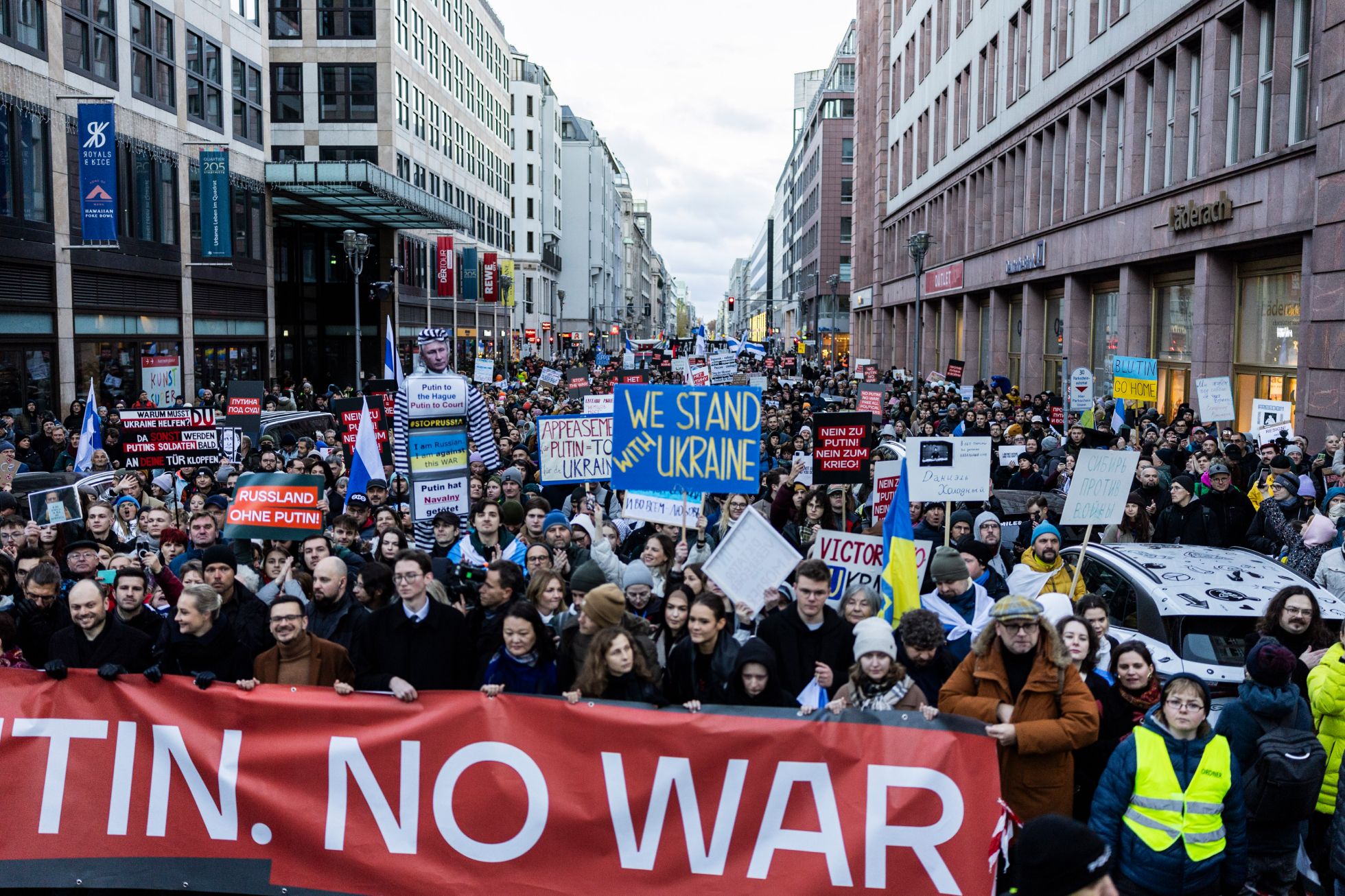
The convoy, separated by several trucks, moves slowly, stopping from time to time. At the head are the organizers of the procession, Yulia Navalnaya, Ilya Yashin and Vladimir Kara-Murza. And also - the wife of politician Evgenia Kara-Murza, FBK employees Kira Yarmysh and Ruslan Shaveddinov, Pussy Riot member Maria Alekhina and Kevin Leake, released as part of a prisoner exchange.
“We came from Poland, we left at five in the morning,” Irina, a participant in the procession, tells Meduza. She has not lived in Russia for more than 20 years, but still follows what is happening in the country. “The war greatly affected my life and the lives of my loved ones,” says Irina. “I’m going [to the rally today] for those who are now in Russia and are afraid of terror. I know there are a lot of them. And if they don't mind, I want to represent them here. I believe that this is an unjust war and it must be stopped immediately."
Irina holds a white-blue-white flag in her hands. She explains that she took it from a friend to hold: “Associated with Russia without violence.” The Russian tricolor, which is almost never seen at the rally, evokes “very mixed feelings” in Irina - after all, it is under it that “Russia’s aggression against Ukraine is now taking place.” “On the other hand, I liked the idea that the flag does not belong to Putin and his gang,” she adds. “Although I don’t yet look in the direction [where there are tricolors]. This is quite a heavy moral burden.”
At this time, the following are heard from loudspeakers and speakers: “Russia will be free!”, “One-two-three, Putin, go away!”, “No to war!”, “Freedom for political prisoners!”, “Navalny is a hero of Russia!”
Not all protesters take up the slogans.
“Putin is a killer, but the Russians are not? Aren't Russians murderers? Only Putin is a murderer, that’s all?” - a man literally wearing a tin foil hat addresses the protesters. He introduces himself to the Meduza correspondent as Vadim - and explains that he was inspired to create the headdress by teachers from the Voronezh region, who fell for the prank of the Belarusian actionist Vladislav Bokhan and made hats to “demonstrate readiness for protection from radiation from NATO satellites.” Vadim claims that he himself comes from Ukraine and in 2014 participated in mass protests on the Kiev Maidan, and therefore the lack of resistance within Russia outrages him.
“One cop runs and 40 [protesters] run away. Do you know what we did at that moment when we wanted changes? They came at us with machine guns and shot, but we had sticks. I had a helmet from a motorcycle!” - he says. And hearing the slogan “Peace for Ukraine, freedom for Russia!” addresses those passing by:
“Why don’t you make your own freedom?” Should Ukraine give you freedom or you?
- We will definitely manage. Thank you for believing in us! - a participant in the procession answers him. Vadim is not convinced by her words; he is sure that what is happening is useless.
Diana has a completely different attitude towards the march - after Russia annexed Crimea at the beginning of 2014, she was forced to leave Ukraine for Germany. “I really, really want this war to finally end. And I really liked that one of the points of today’s rally was the withdrawal of Russian forces from Ukraine. “I’m here today with the Ukrainian flag to show that we, Ukrainians, are also very interested in resolving this issue,” says Diana.
Unlike Vadim, she does not blame Russians for the fact that there are no mass anti-war actions within the country: “This is life-threatening.”
The war, Diana emphasizes, “split her family”: some relatives still live in Crimea. “I really hope that someday this will all end. I don’t know how quickly it will be, but I hope it will be soon enough, because I haven’t seen my whole family for a very long time and I would really like to see them again.”
* * *
The procession stops at the surviving fragments of the Berlin Wall. Ilya Yashin takes the microphone.
“We are here to say: Putin is a war criminal!” His place is not in the Kremlin, but in prison! Putin on trial!
- Putin on trial! - the crowd picks up.
“We are here,” the politician continues, “to express solidarity with the people who are in prison.” To demand their freedom. Freedom for political prisoners!
- Freedom for political prisoners! - the crowd chants.
Yashin continues with new slogans: “Russia is us!” and “Navalny is a hero of Russia!”
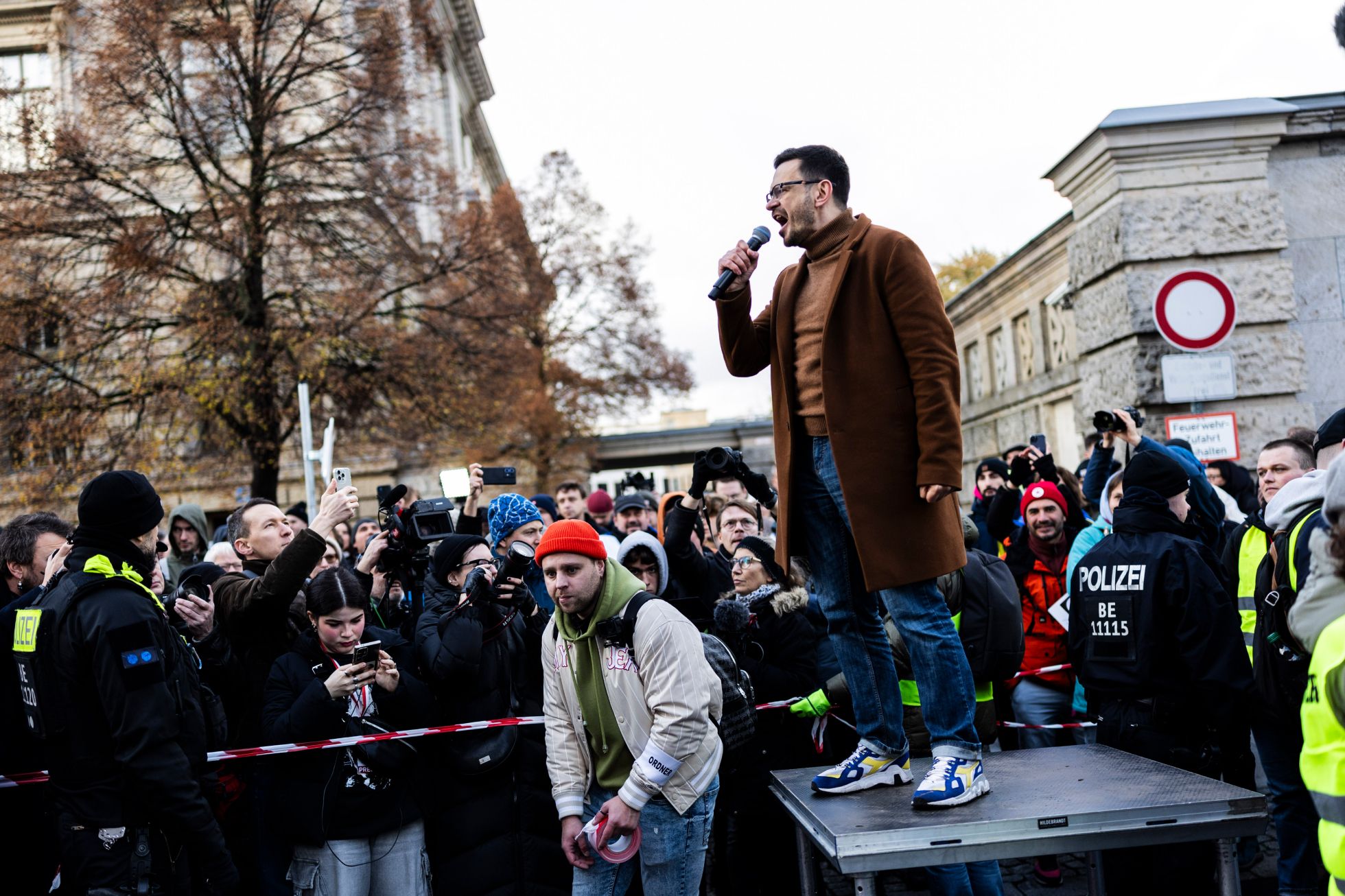
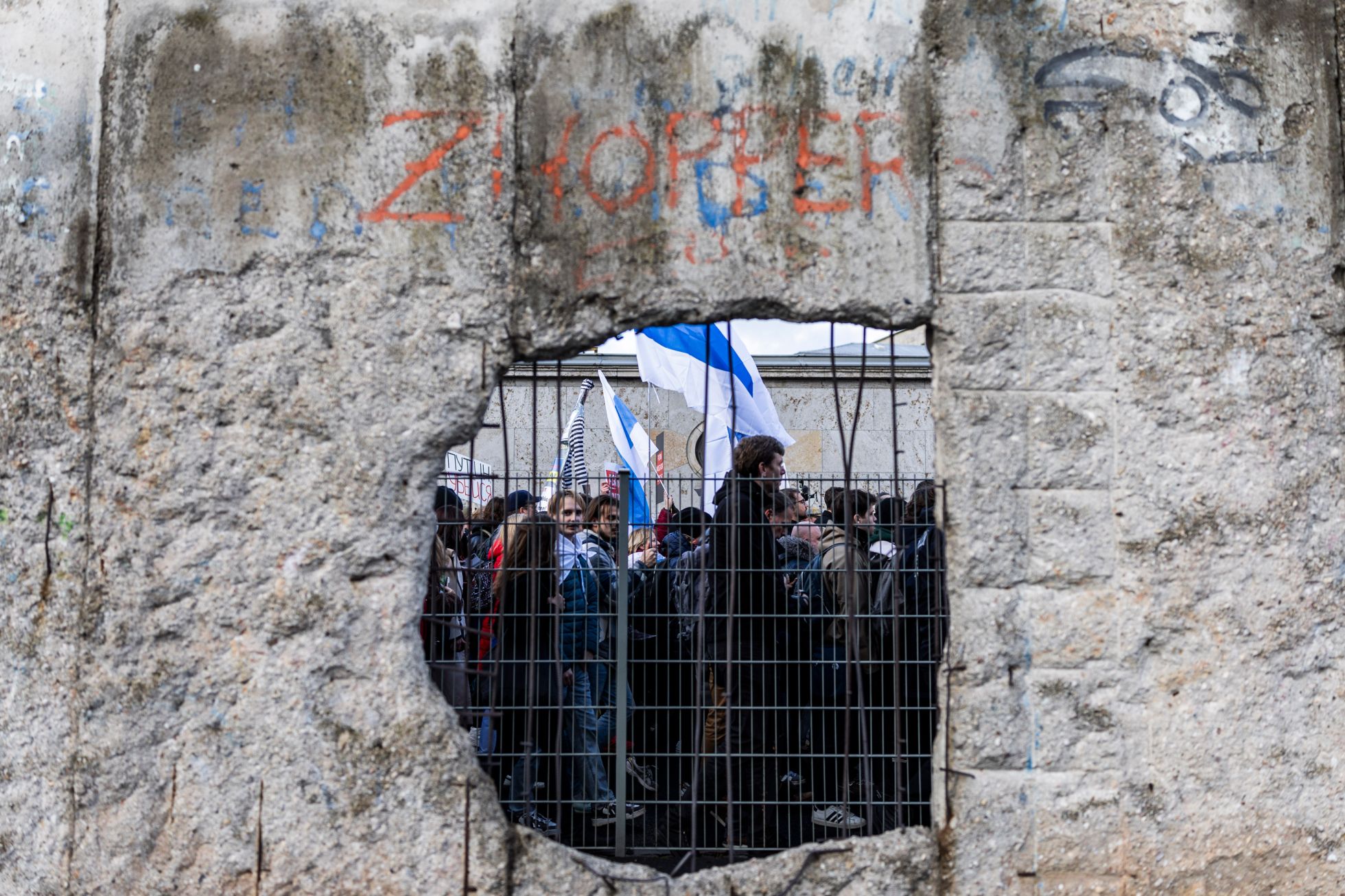
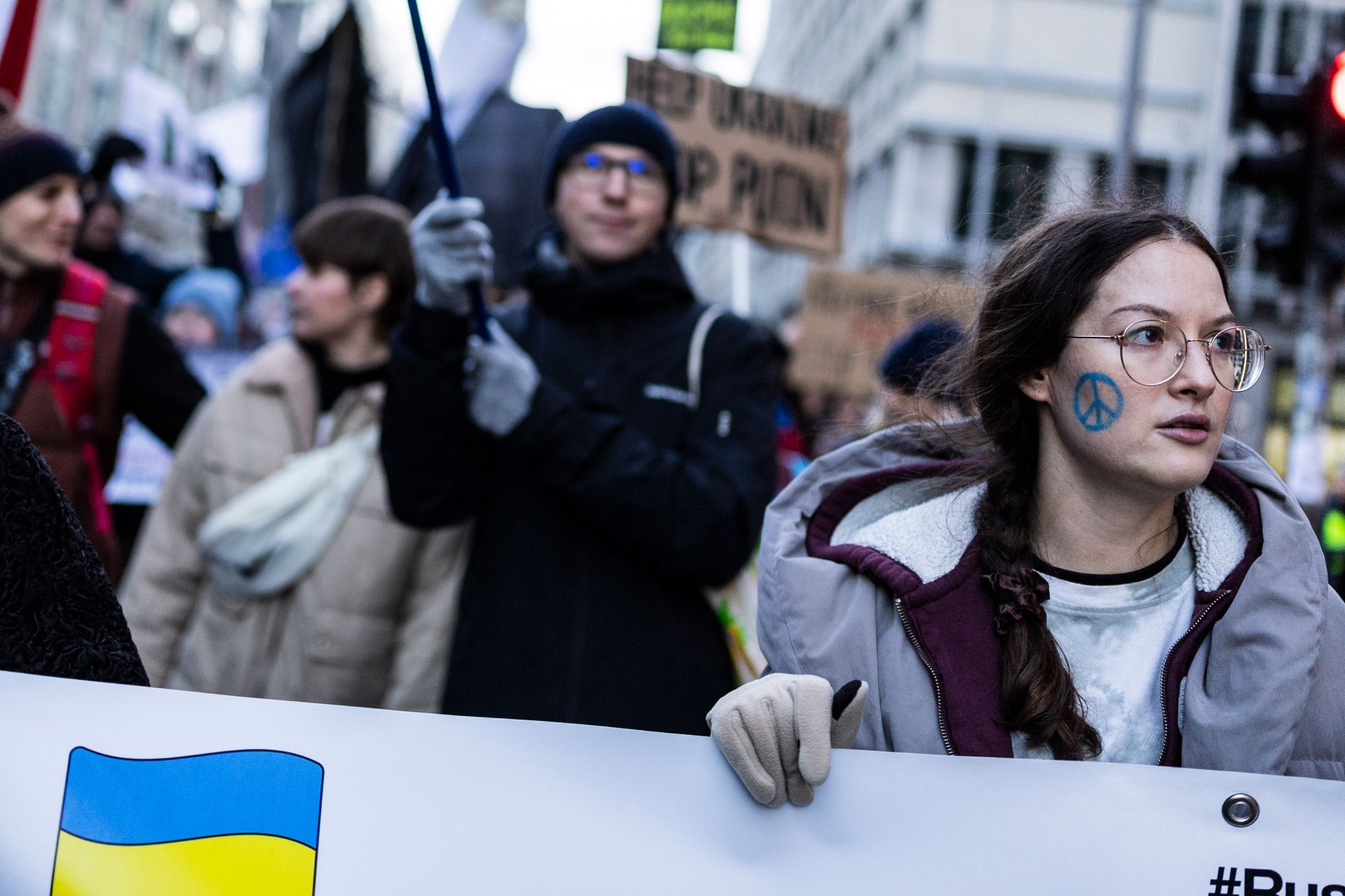
Instead of posters, some participants in the procession are holding Alexei Navalny’s memoirs “Patriot” . Some carry a book, raising it high in the air. Others hold her close to their body. Ivan from St. Petersburg also came to the event with a book. He moved to Germany after the start of the war, and recently received German citizenship (while retaining Russian citizenship).
Ivan says that he began supporting Navalny and FBK long before February 2022. The investigation of Maxim Katz, who accused the organization of “laundering the reputation” of the former owners of Probusinessbank Alexander Zheleznyak and Sergei Leontyev, did not change his attitude towards the opposition team. “For myself personally, I didn’t see anything reliable there [in Katz’s investigation],” explains Ivan. “In my opinion, this is just an attempt to pull the blanket over ourselves, to attract the attention of the press, supporters, and possibly some kind of material support.”
He stipulates that he does not follow the disputes in the opposition attentively. And he adds that he doesn’t make forecasts about the future of Russia either. But at the same time he believes that changes in the country “will still come.” “The most important thing is to stop the war, stop the bloodshed,” says the St. Petersburg resident. “I believe and hope, but I don’t know when it will happen.” Today’s event, I think, is a contribution to the advent of this wonderful future.”
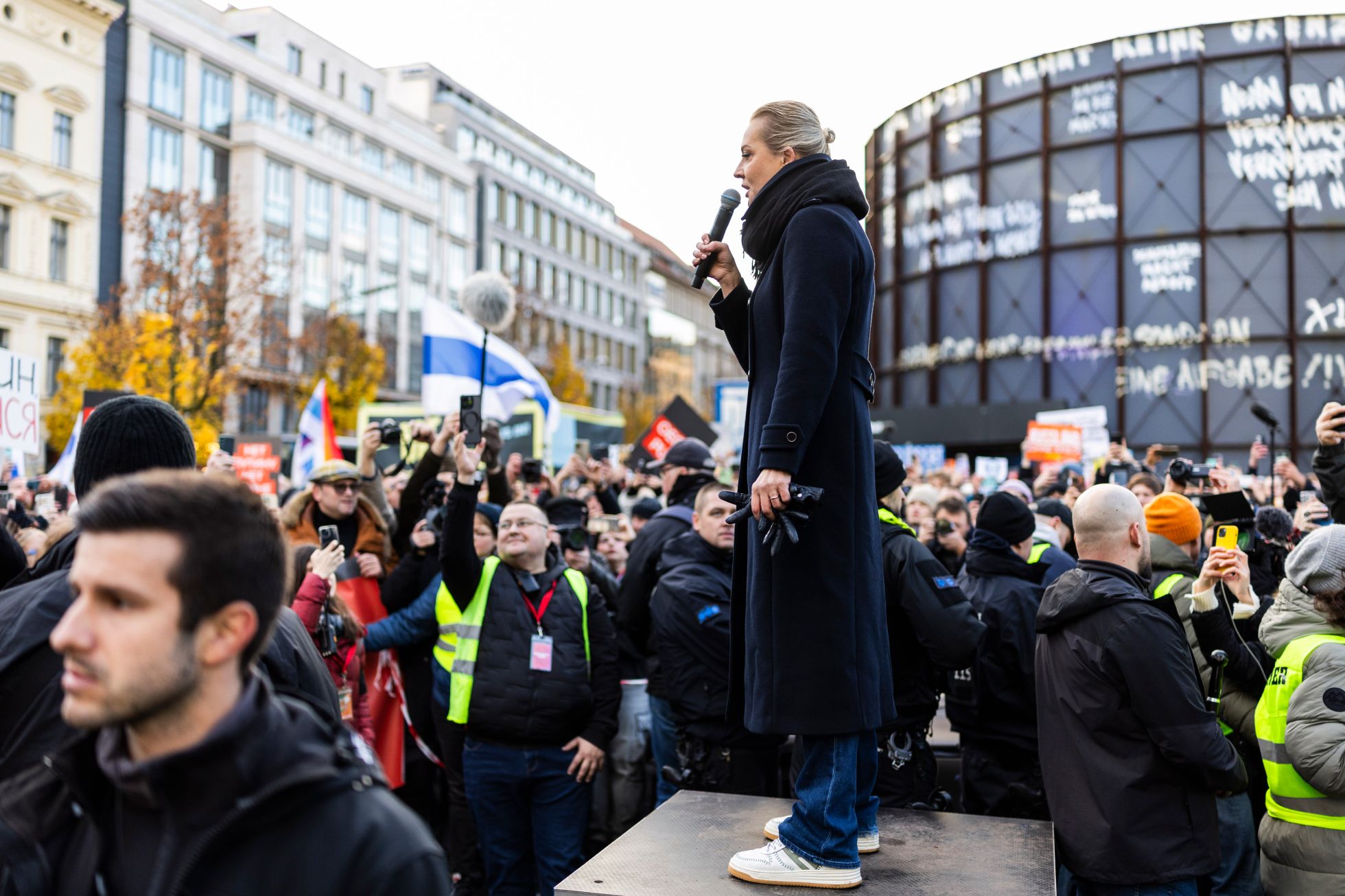
When the column reaches Checkpoint Charlie , another point of contact between East and West Berlin, Yulia Navalnaya addresses the protesters. Without a stage, she, like everyone else, has to perform by climbing onto a small metal table. “This is my first time speaking on the table, but if you have to climb on the table and say that Putin is a murderer, then I will climb on the table and say that Putin is a murderer,” she says. Those gathered echoed: “Putin is a murderer!”
The next speaker is Vladimir Kara-Murza. The politician (and historian by training) reminds those gathered about the demonstration on Red Square in August 1968.
“When Soviet tanks entered Prague, Kremlin propaganda also pretended that they had the support of the entire people. And then seven people went to Red Square to protest against this war. And the Prague newspapers wrote: “Now we have at least seven reasons why we can never hate Russians again,” says Kara-Murza. Those who came to today’s rally, he adds, give “thousands and thousands of such reasons” (according to various estimates, from two to five thousand people took part in the procession).
Among the protesters is another former political prisoner, released as part of a summer exchange. Former director of Open Russia Andrei Pivovarov says that he learned about the march from social networks. “I now live in Berlin and, naturally, I didn’t see the opportunity for myself not to come,” says the politician. — This is my first rally in three and a half years. I walk down the street and meet people from Moscow, St. Petersburg, Yekaterinburg, Vladimir. These are the people who once came to me, I came to them. These are like-minded people, and that's great. It’s nice that people came!”
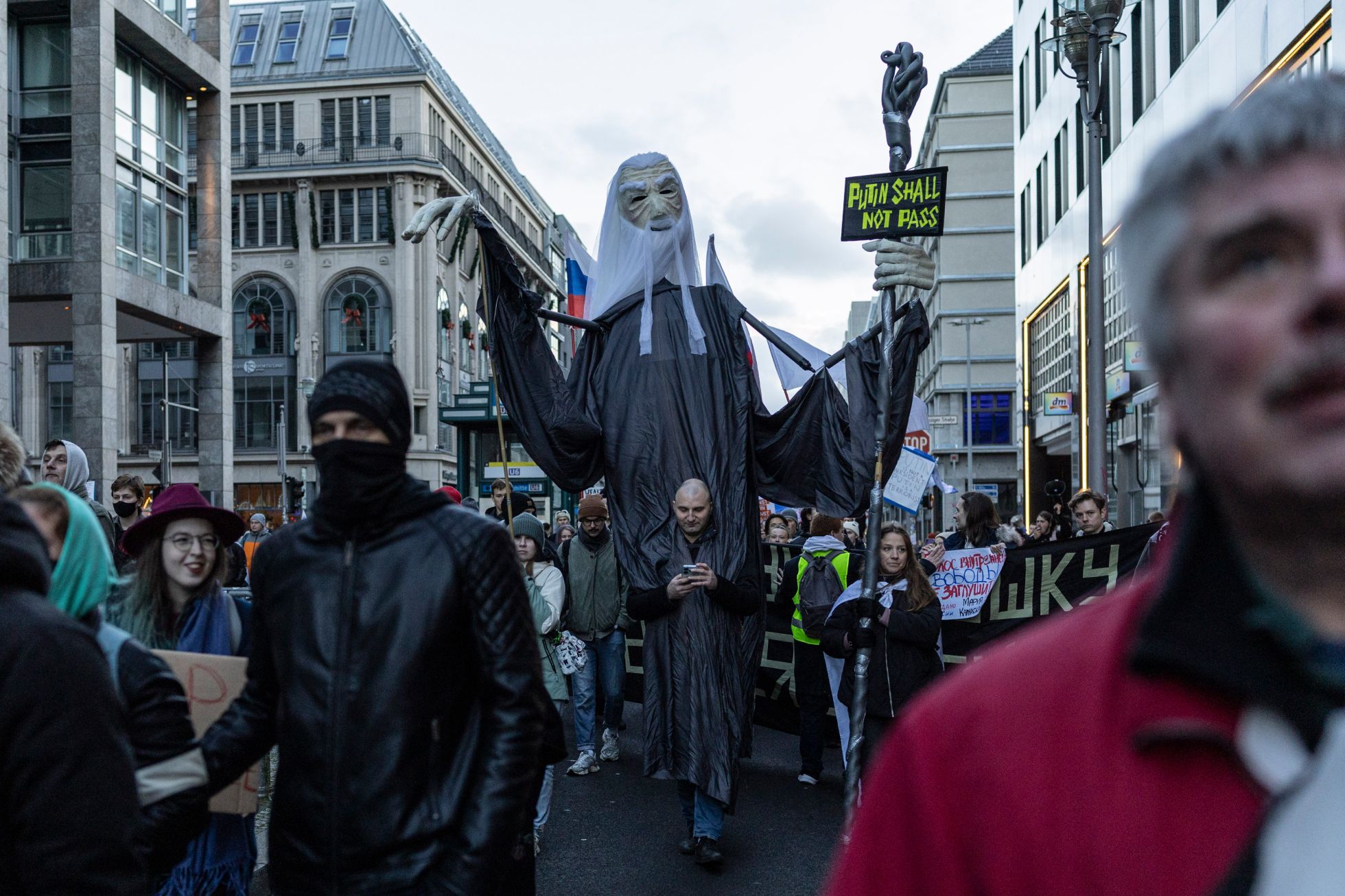
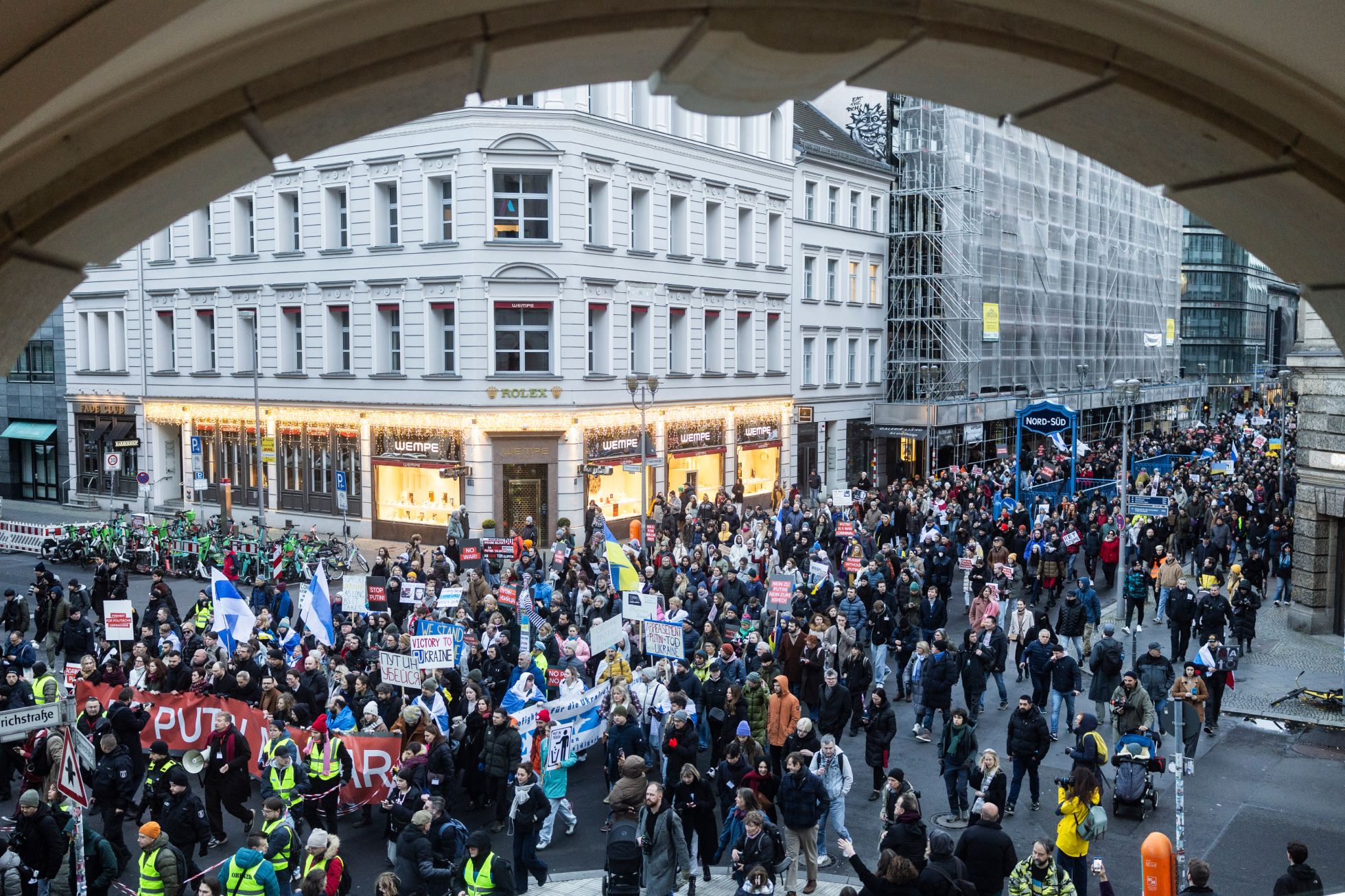
Once free, Pivovarov recalls, he felt the “unity” of the opposition forces. “And when the - let's say in Russian - fights began, I understand that it is unlikely that we can be united by joint projects. Twitter has already divided everyone into blacks and whites,” he explains. “So there is a huge disappointment.” Probably everyone is talking about this. It also seems to me that we have lost the trust of a huge number of people in Russia. They live under pressure, in war, and their like-minded people, being safe, are engaged in buying bots and investigating. This is the most unpleasant thing for me."
Despite this, Pivovarov “doesn’t give up”, plans to work with Russians “inside the country” and emphasizes: “I’m really making plans so that returning home takes place not in the long term, but in the short term.”
* * *
FBK employee Ruslan Shaveddinov speaks from an improvised stage about the protesters: they have different views, but, he is sure, they are all united by their rejection of war.
Supporters of a wide variety of political forces actually take part in the procession. For example, very close to each other are young people campaigning for support of the Russian Volunteer Corps ( a group that is participating in the war on the side of Ukraine and whose leaders, according to numerous testimonies, adhere to far-right and neo-Nazi views), and a column of anti-fascists.
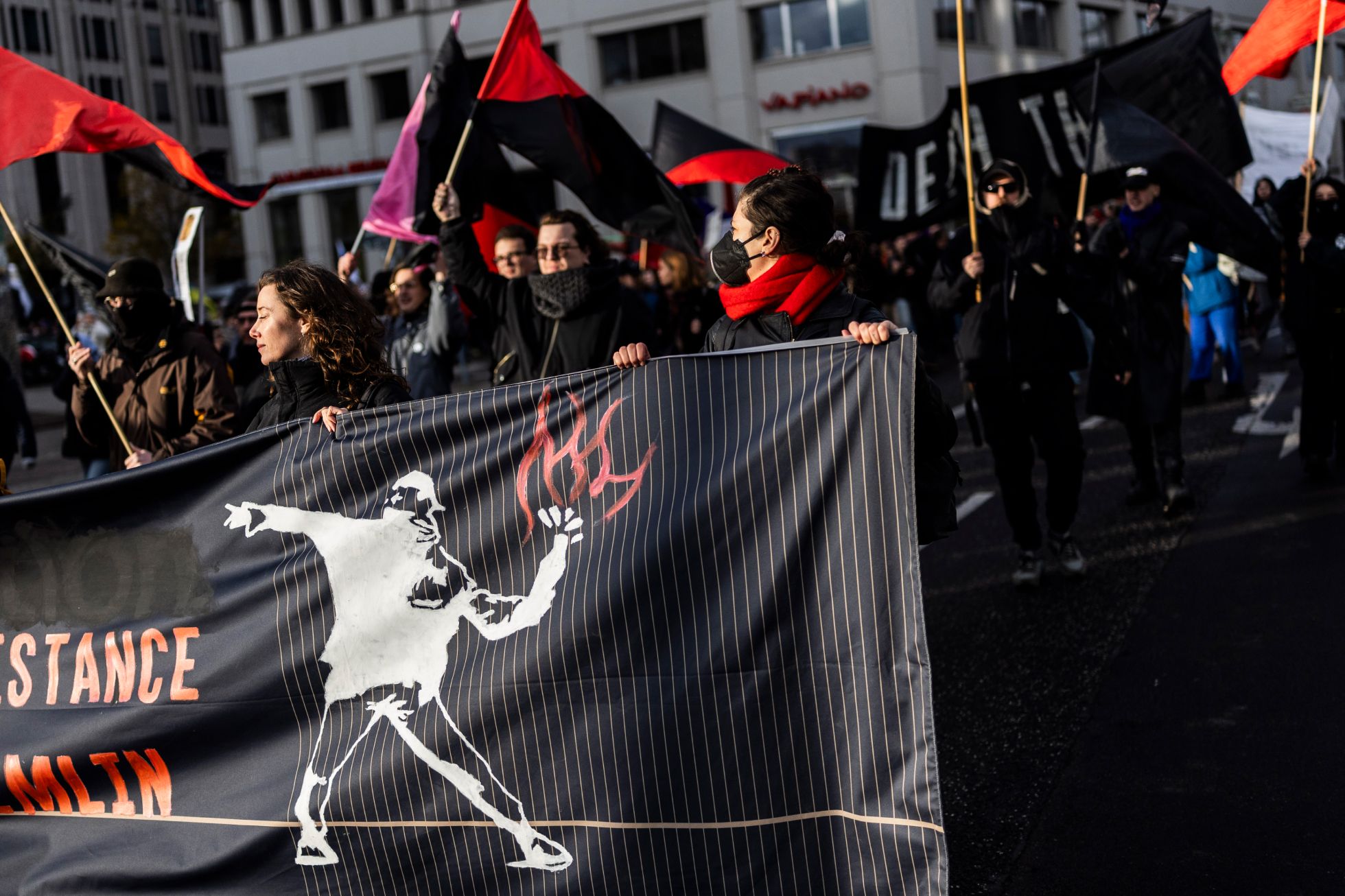
“We decided to participate in the march, although we do not agree with the liberal theses and agenda,” a girl with a red and black anarcho-communist flag tells Meduza.
The interlocutor, who requested anonymity, explains that, in contrast to the officially formulated demands of the organizers, participants in the anti-fascist column advocate that Western countries provide Ukraine with more weapons: ““No to war” is a pacifist slogan, it does not work in the event of the occupation of Russia, because more lands will be captured further. And there will be peace negotiations on the terms of the occupation of part of Ukrainian territory. Therefore, we must first help Ukraine win.”
“Alert, alert, anti-fascist!” - shouts one of the participants in the antifa column, noticing the representatives of the RDK. However, there are no clashes, and the protesters are approaching the Russian Embassy building - the end point of the procession.
Student from Tallinn Luka Andreev, who came to the rally with a Russian flag, approaches the embassy without it. He tells Meduza that at the beginning of the march he stood behind Yashin, Kara-Murza and Navalnaya. He managed to walk like this for about ten minutes, after which one of the assistant organizers of the action, project coordinator of the Free Russia Foundation Anton Mikhalchuk, forcibly took the flag from him.
Luka believes that the organizers did not like the fact that “Russian tricolors spoiled the picture for them.” There were two more Russian flags at the rally, but they were carried at the end of the column - and no one demanded that they be removed.
Andreev tried to find out about the reasons for what happened from Yashin, whom the activist, in his own words, considers a patriot: “He is a man, he stayed in Russia when everyone was leaving [after the start of the war].” However, the politician left his question unanswered, suspecting that Andreev was an employee of Sota .
Anton Mikhalchuk refused to talk to a Meduza correspondent during the protest and accused her of unethical behavior because the journalist “asked questions while being recorded on a voice recorder.”
* * *
Near the fence of the Russian embassy, Yashin, Kara-Murza and Navalnaya take turns thanking the participants in the procession - and soon leave. Some protesters remain for some time in the alley across the road, where two spontaneous memorials are located - in memory of the victims of the war in Ukraine and in memory of Alexei Navalny, who died in a Russian prison.
A young man, wrapped in a white-blue-white flag, begins to play the guitar. There are yellow and blue balloons tied to the amplifier. “Please don’t die, or I’ll have to too...” he sings one of Zemfira’s most popular songs.
“I hugged everyone,” a girl in a poncho made from the Russian and Ukrainian flags shares her emotions from the action. — With Ukrainians, with Belarusians, with Russians. This procession unites us all so much. Isn’t it?”
Kristina Safonova , Berlin