
Translated material
How was Navalny killed?
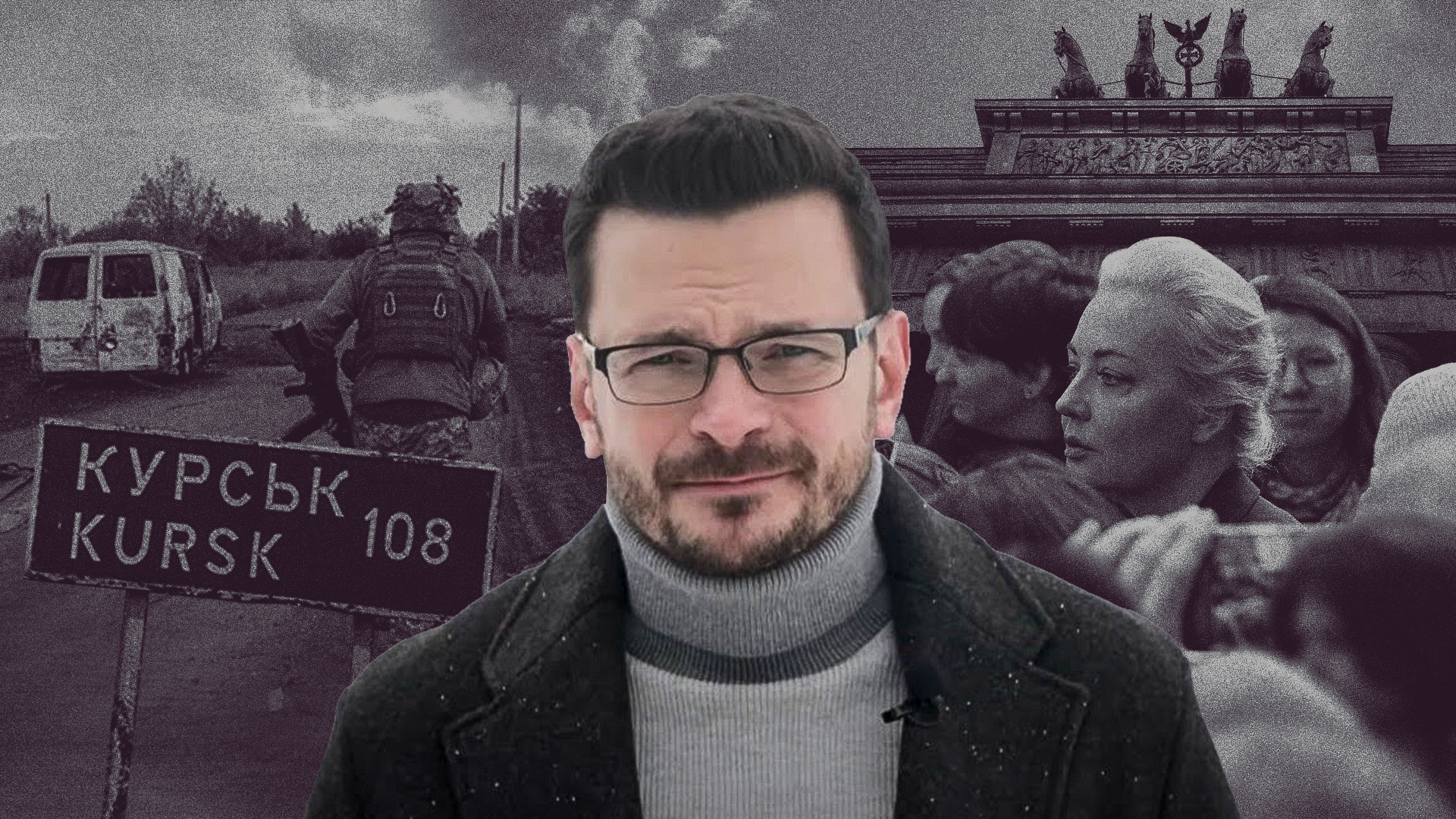
Mumin Shakirov and his guests summarize the results of the 46th week of 2024
Why is the Russian prison worse than in the war? Who killed Navalny? Is it possible to rescue political prisoners from Russia?
Mumin Shakirov sums up the results of the week with politician Ilya Yashin , ex-manager of the company "Yukos" Vladimir Pereverzin , the founder of the Rus sitting movement Olga Romanova and the ex-deputy of the State Duma of the United Russia faction Robert Schlegel .
Video version of the program
Will Yashin return to Russia?
Mumin Shakirov: Today I am starting a program in Berlin on November 17-a large action of Russian oppositionists with the participation of Ilya Yashin, Vladimir Kara-Murza and Julia Navalny. After the murder of Alexei Navalny in prison, forces resisting the Kremlin, were scattered for a long time: a series of loud scandals and tough accusations against each other. As a result, the Russian opposition in exile, conditionally, was divided into two parties, I want to joke - into the Bolsheviks and Mensheviks. The intrigue, whether Julia will raise the Navalny fallen banner of Alexei and will be engaged in politics, destroyed. Yes, it will be. Last week, the forum was held by Julia Navalny . And this week - a rally, it is anti -war, and anti -Putin, and a sign of solidarity with the remaining Russians. Among the requirements of Yashin, Kara-Murza and Navalny-to judge Putin as a war criminal, the withdrawal of troops from Ukraine and the immediate liberation of all political prisoners. Critics object: what is the point of demanding this from the Party Party, which has not been ignored by the protests of Russians for several years, do they concern the elections or give a vacation mobilized in the 21st year? Isn't it better to demand from the European authorities to increase pressure on Putin? But most of all the issues caused a decision to go to a rally under Russian flags, which in the minds of Europeans and, especially Ukrainians, became symbols of Russian aggression towards Ukraine. How do those who left before the 22nd year have been living in Berlin in Berlin? Did they understand the Putin electorate? Is there any hope that those who are from outside will be able to once return and change something there? What role of emigration and personally do they take them away?
My guest is Ilya Yashin . Are you a reset, politician, political emigrant, public figure, publicist? The last time you and I saw, you were a municipal deputy in Moscow.
Ilya Yashin: Boris Nemtsov once said: "My profession is Boris Nemtsov." I now have a profession - Ilya Yashin.
Mumin Shakirov: What will be the script of the rally? How do you see this?
Ilya Yashin: We refused the rally format, and, it seems to me, this is correct, because the idea is to indicate the movement forward. We want to spend the march, because there is symbolism in this. The Russian opposition today, unfortunately, is not one, different groups often conflict among themselves. And representatives of these groups will gather on the march, probably form their columns. But what is important, it will be a movement in one direction. We want not to crowd around the microphone, not to determine who will act as the first, who is the last, but to create an anti -war movement. And before my eyes, when we came up with this march, there was a march of Nemtsov, which we traditionally spent in Moscow while we had such an opportunity. There, too, there were no performances at the microphone, but different people came and went in the same direction.
Today we must focus on what unites us, and not on what polarizes us
Mumin Shakirov: You were already beaten when Russian flags appeared on the announcement or in the photo, causing wild irritation both among Ukrainians and individual Russian opponents of the regime. Russian flag - what is it for you today?
Ilya Yashin: I was surprised that such discussions arose. The photograph you are talking about is from the world march in Moscow 2014. It was 10 years ago, when almost 50 thousand people came to Moscow streets, boulevards to express their protest against the annexation of Crimea, invasion of Donbass, Putin's aggressive policy. Indeed, this march took place under Russian tricolors, under the Ukrainian banners that were mixed. And we were all proud of this march. The Ukrainian Rada was welcoming, because the march personnel were shown on a large screen in Kyiv. Therefore, I was surprised that the photographs from that demonstration caused such a painful reaction. But still, this march is not about flags. We will discuss this tomorrow, and today we must focus on what unites us, and not on what is polaring us.
Mumin Shakirov: Coat of arms, anthem, everything that is associated with modern Russia, with Putin, is it inviolable or is it also a question of discussion?
Ilya Yashin: This is definitely not the subject of discussion for today. It seems strange to me to discuss the coats of arms, flags in the situation where the war continues, hundreds, thousands of political prisoners remain in prisons and when Putin has been in power for 25 years. We will talk about this in the future. Today you definitely need to talk about something else. Therefore, we go to this demonstration with completely different topics. We are leaving the demand to bring Russian troops from Ukraine, to resign Putin and put him on a bench of the defendants as a military criminal. And we go out with the demand to free the political prisoners. We are talking about this, not about paraphernalia.
Mumin Shakirov: And yet you, together with colleagues, are discussing the future and many other plans.
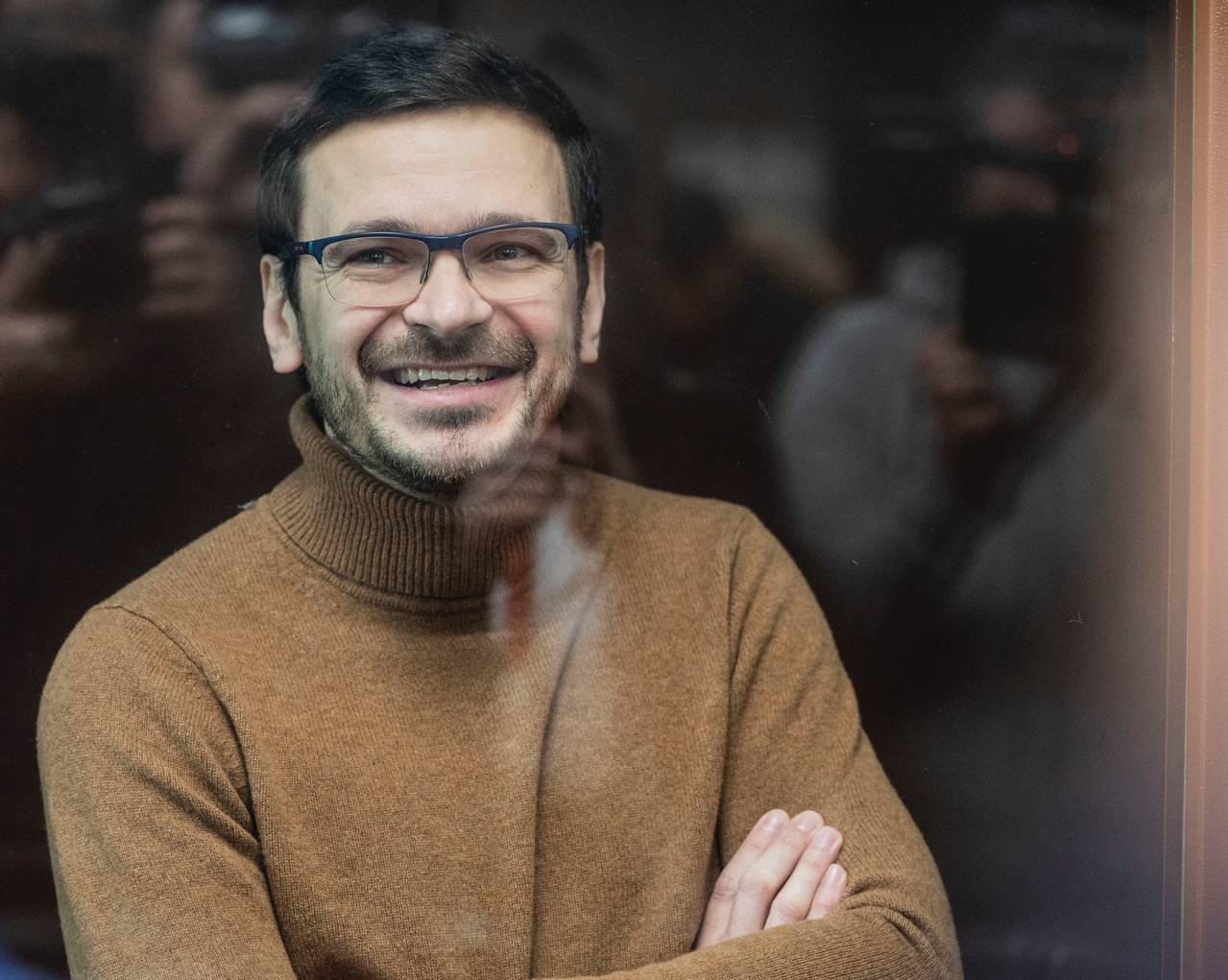
Ilya Yashin: Of course. We want to have the image of the future Russia before our eyes, the reform program, so that in a situation when a window of opportunities opens, we have an answer to all important questions for society. It is necessary that we have a clear, clear alternative, not only slogans, so that people understand what Russia we want to build.
Mumin Shakirov: What is it like to build the future, perfectly realizing that today Putin has concreted Russia so much that there are no cracks? What do you feel?
Ilya Yashin: It happens. And the Soviet regime seemed concreted, and then fell apart in three days. And tsarist Russia, it seemed, would be forever, for centuries. And the autocracy seemed to always exist in Russia. And then all this quickly crumbled - and the king renounced the throne. Such modes as Putinsky can fall apart as cards of a house on the same day. And despite the external strength, I see many contradictions within the regime. Remember, less than a year and a half ago, this regime almost crumbled simply because one of the Putin militants - Prigozhin - took and deployed a column for Moscow. And the situation did not reach the peak only because at the last moment the fires shook, he was frightened by his own insolence. I see how Putin is afraid of the militaristic part of society, how social problems grow in society. We cannot predict when the changes begin, but we must be ready for them.
Mumin Shakirov: Many of those with whom I talk, they say that the “expiration date” of political emigrants is about 10 years, and they can repeat the fate of white emigration. Are you psychologically ready for the fact that you will not return to Russia in Russia in the next decades in the sun in another profession?
Ilya Yashin: I don’t reason like that and I don’t even feel like an emigrant. I am a guest here, I am forced to and are not going to take root in Germany or in some other European country. All my thoughts about Russia. And, of course, I plan to return to Russia, I want to live in Russia, work in Russia, I want to create the future of my country with my own hands. I am looking for political opportunities for this to come true.
Mumin Shakirov: You were forcibly taken out of Russia. Do you have the opportunity to return?
Ilya Yashin: Unfortunately, there is no. And this is not even my personal safety. I can’t return to Russia because they made it clear to me: if I buy a ticket to Moscow, then there will be no more exchanges, and Alexei Gorinov, for example, will remain in prison and die there, Maria Ponomarenko will remain in prison. I was put in such conditions when I can’t do what I consider correct and necessary.
Mumin Shakirov: The number of levers of influence on the internal situation in Russia among Russian political emigrants is minimal. How and how can you specifically help Gorinov, wife Berkovich and other political prisoners?
Ilya Yashin: In our power to stimulate new exchanges. This, in fact, is what we do. We have a lot of meetings with Western officials, politicians at the highest level often. And we explain why this is important. We are trying to cause empathy among those people who can make exchange decisions in the West. We explain the importance of making decisions on exchange, because it is a story about the value of human life. If you have the opportunity to save human lives, pull out of the innocent prison, this must be done. And at meetings with officials, with politicians, we tell in which people are sitting, we explain how important it is for Russian and Western society to show an example of the fact that politicians save human lives. And I hope that new exchanges are still happening.
Mumin Shakirov: But in order for this to happen, an exchange fund is needed, and it probably depends on American and European partners. Do you do some work with them to understand who can be exchanged for?
Ilya Yashin: We understand that the exchange fund exists. In prisons and European countries and in the United States there are people who are of interest to Russian special services: agents, spies, hackers. People who help to circumvent sanctions and have fallen under criminal prosecution. And by the way, Putin, commenting on the exchange on August 1 , said that he was interested in the return of all special services in Western prisons, returning them home. Therefore, in general, there is a subject for conversation.
How was Navalny killed?
All processes taking place in society in prison take hypertrophied and grotesque forms
Mumin Shakirov: Vladimir Pereverzin spent seven years in prison. He changed three prisons and two colonies. He went to desperate measures - he tried to inflict injuries for himself, since the jailers and the colony administration arranged endless provocations, just not to let him out at parole. As a result, the 11-year term was reduced and Vladimir was released two and a half years earlier. He wrote the book "hostage: History of the Yukos manager", in the summer of the 2024th the book was published in English. Foreigners want to know what the ominous phenomenon of the Russian prison, in which the chief Putin’s opponent Alexei Navalny died, and thousands of prisoners seek to leave for war with Ukraine.
Vladimir Pereverzin: I always said that a prison is a micromel of society. All processes taking place in society in prison take hypertrophied and grotesque forms. And at some point I realized that the prison is not a micromel of society, but the prison was actually scaled. That is, in fact, all of Russia is a model of prison.
Mumin Shakirov: Where is more justice - in prison or abroad?
Vladimir Pereverzin: I mentioned in my book that I saw much more justice from the so -called criminals.
Mumin Shakirov: That is, there is more honest relations?
Vladimir Pereverzin: Yes. The man honestly killed and robbed, so to speak, without hiding his intentions. I do not justify him in any way, but he says: "Yes, I am a bandit, a criminal." And what is the judge who pronounced the verdict of the guidedly innocent, fulfilling the instructions from the presidential administration, better than this killer? .. He is a hundred times worse. In this context, the judge himself is the criminal, passing out obviously unlawful sentences. They do not take into account any arguments of the defense. We see a lot of sentences that simply ignore everything.
Mumin Shakirov: They often write and say that there are many innocent in Russian prisons. What percentage of really criminals and those who were imprisoned by politics, by order and so on?
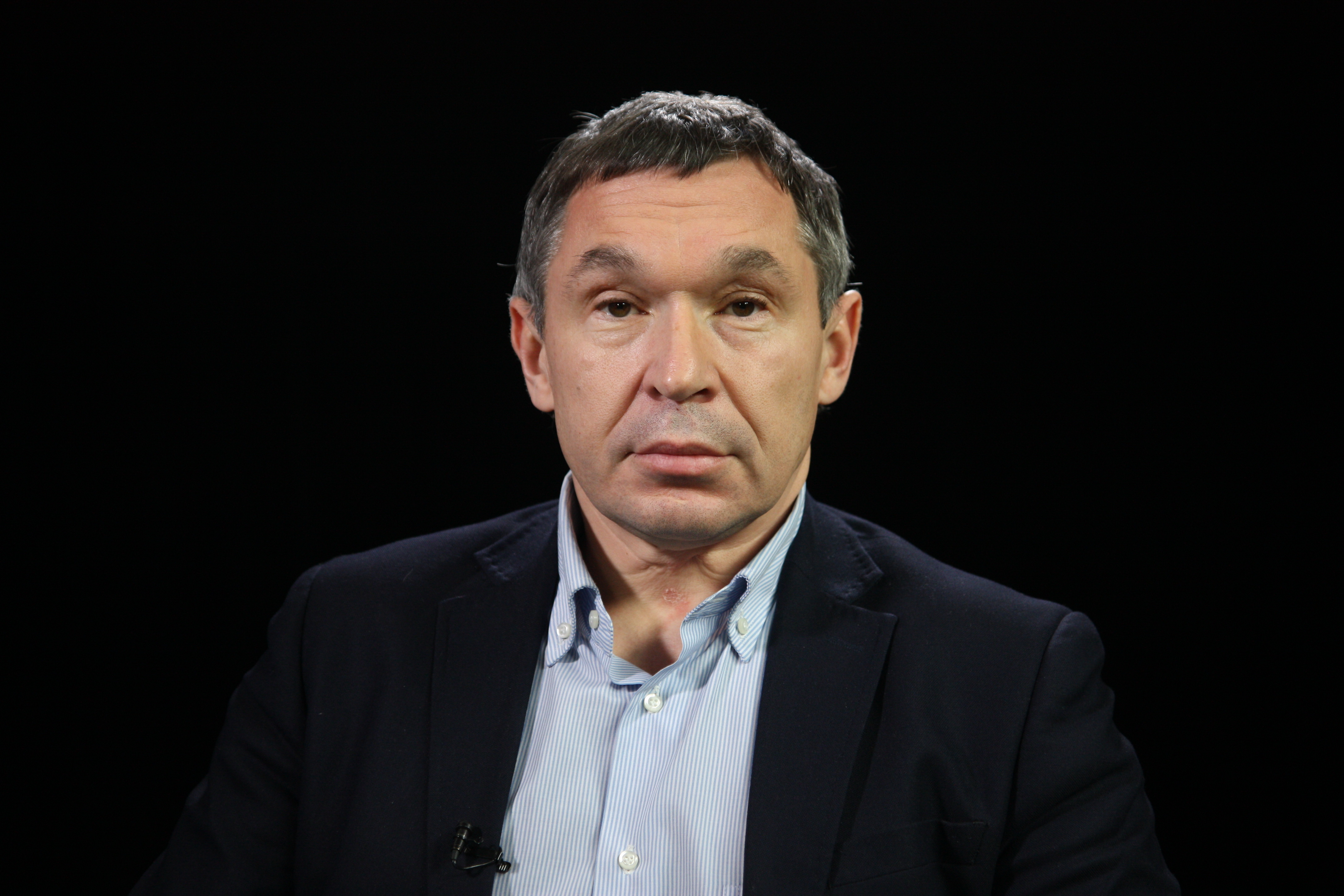
Vladimir Pereverzin: I think that really innocent interest is 10-15. There you can also qualify the articles incorrectly. Typically, the investigating authorities in order to curry up, can weight them. It is more interesting for them to plant a person than to free. There are stars, rewards, medals depend on labor productivity. And the work of the investigating authorities is estimated by the number of convicted and planted.
Mumin Shakirov: Who killed Navalny? This was done by the prisoner, or, as Sergei Dovlatov says, spin, jailer? It is believed that the jailers will not take on a "wet business" because they can answer for this, they can be removed, this is entrusted only to prisoners. Your version?
Vladimir Pereverzin: I think Alexei Navalny was still killed by the jailers. He did not sit in the total mass, was isolated from prisoners. He was in a maximum security colony in Melekhovo (I served there for three years). Almost no one saw him from the prisoners ... If Navalny was killed, this does not mean that someone went and put the knife in the back. You can kill slowly. He was not provided with medical care, they did not feed, did not let him sleep. That is, in principle, it was a murder stretched in time.
Mumin Shakirov: Will we ever find out the details of this?
Vladimir Pereverzin: I hope yes.
Mumin Shakirov: Does someone talk?
Vladimir Pereverzin: I think that someone will talk in order to somehow rehabilitate themselves. Lustration is necessary. A blatant example. Who is Academician Vavilov - everyone knows. And the investigator grip , who interrogated him and forced him to admit? .. We will lower how he forced him to admit. The grip died in the 92nd year in Moscow, living in a departmental house on Tverskaya Street, receiving a decent pension, being probably a well-deserved employee of the NKVD. He was buried, of course, in the Donskoy cemetery with all honors. Honored man.
Mumin Shakirov: Do you mean that the killers of Navalny may well survive until old age in respect and highlights, at least among their employees?
Vladimir Pereverzin: Yes. I carefully monitored, he was guarded by the same guards who and me. I watched the video when he was imposed in the Melekhovo colony, when he was made by a malicious violator of the regime to transfer him to a special regime to the HARP. And there the faces of the employees are familiar to me well. So they are also proud of the same. They will recall: "We pressed Navalny." They also remember me.
Mumin Shakirov: Did you consider yourself in prison political prisoner or just prisoners?
Vladimir Pereverzin: I considered myself innocent.
Mumin Shakirov: What gave you strength while in prison, not to break?
Vladimir Pereverzin: Probably a certain naivety. Because I always hoped for justice, for the fact that they would free me. And until the last day of the sentence, he hoped to be released, because my innocence was so obvious. I thought: who needed me there, I was never a shareholder of Yukos, some assets-millions, billions-I never had ... Maybe the judge will let me go. At the time of the sentence, I have already served almost three years. It would seem that not to let go. But it’s easier for them to plant. They have a different mentality. It’s easier to do something bad, and then no one will say: "Why did you do something good?"
Mumin Shakirov: Does Russian political emigrants have a future? They will be able to create something that can influence the inner life of Russia?
Vladimir Pereverzin: I think not.
Mumin Shakirov: Why then, in your opinion, are they going?
Vladimir Pereverzin: What to do? Nobody can return to Russia. People are not integrated into the German economy. They need to do something, they need to work somewhere. Again, we focused on our problems, and well Schulman said that our bump is not the most bitter, because there is erytrea, there is Iran, there is Syria. Other countries suffer no less. And in principle, no one was waiting for us here.
Mumin Shakirov: Under what conditions can you return to Russia? Or did you forever say goodbye to your historical homeland?
Vladimir Pereverzin: I would not have guessed, I would return to Russia. I want rehabilitation, apologies, to be punished, they condemned investigators who were fabricated in order to condemn the judge who obviously an obviously unlawful sentence. By the way, who now works as a lawyer.
Mumin Shakirov: How will power change in Russia, in your opinion?
Vladimir Pereverzin: There will be no violent overthrow, there will be no revolution. Power can only be replaced by a natural way when the current president dies.
Mumin Shakirov: With modern medicine, will he live for a long time?
Vladimir Pereverzin: Who knows? .. It happens that medicine is powerless.
In the Russian prison worse than in the war?
Mumin Shakirov: Olga Romanova has been living in Berlin for seven years. She left after the persecution by the FSIN, as she has long been engaged in legal assistance to prisoners in the Rus Sitting Foundation, which she organized. Romanova is sure that any political prisoners or dissidents from Russia will live a happier life than investigators and prosecutors.
Olga Romanova: The slogan in Berlin - to send Putin on trial - to whom?
Mumin Shakirov: Don't you like him?
Olga Romanova: No, I don't like him. I don't like the absence of the Germans, the lack of a German agenda ...
Mumin Shakirov: What do you mean by this?
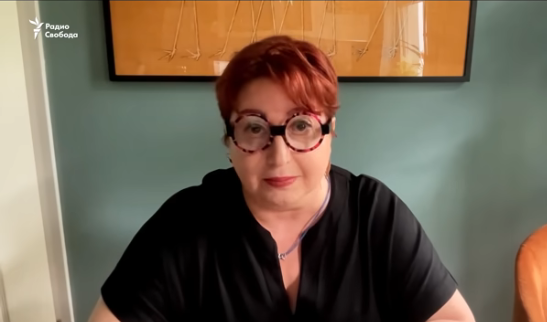
Olga Romanova: In Berlin and in general in Germany, a public action cannot be a shocking air. К людям, выходящим на улицы с демонстрацией чего-то, с требованием чего-то, принято прислушиваться. То есть власти будут смотреть, чего мы хотим. Чего хочет большая организованная толпа русских? Путина в отставку? You are crazy! Это не к нам. Вы ошиблись адресом. Вы ошиблись дверью. Еще хотите, чтобы Путин вывел войска? Это вообще не к нам. Политзаключенные? Мы приняли участие – отдали Красикова, о чем страшно жалеем. Дальше-то вы чего от нас хотите?
Мумин Шакиров: Юлия Навальная – одна из заявителей этого митинга, этого шествия антивоенного. Может ли она стать объединяющей фигурой? Вы на нее возлагаете какие-то надежды?
Ольга Романова: Конечно, я возлагаю надежды на Юлю, на много кого еще – и на Яшина, и на Кара-Мурзу. Я на всех возлагаю надежды. I really like her. Но я ее не очень хорошо понимаю. Зачем оппозиции объединяться? Всем так надо объединиться. To what?
Мумин Шакиров: Каков "срок годности" российской оппозиции или российских политэмигрантов?
Ольга Романова: Десяток лет.
Мумин Шакиров: Растворятся потом?
Ольга Романова: Растворятся. В любом случае надо жить. Кто останется в повесточке? Мы с вами останемся, потому что работа такая. Люди, у которых работа другая, будут больше встраиваться в текущую жизнь, конечно, в эту жизнь.
Мумин Шакиров: Нынешняя путинская эмиграция повторит судьбу белой эмиграции?
Olga Romanova: I think yes. Я надеюсь, без таких трагедий.
Мумин Шакиров: Вы рассказывали много раз, что вы читаете чаты, где обмениваются информацией вдовы так называемых "героев" так называемого "СВО". Что там поменялось? Они до сих пор считают своих мужей героями, получив большие деньги и компенсации за их гибель, или как-то поменялась уже их психология?
Ольга Романова: Все ушло в какую-то мантру. Они просто знают, что говорить, что "я вдова героя, специальная военная операция" и так далее. Это выучено. Они больше ничего не ждут особо.
В тюрьме перестали пытать тех, кто может быть товаром военного назначения
Мумин Шакиров: Деньги закончились или еще есть?
Ольга Романова: Они заканчиваются быстро, конечно. Тем более что я-то сижу в чатах с вдовами и с женами заключенных, если они еще живы, быстро выясняется, что денег нет. Это были деньги Пригожина, понятно, что бюджетные, от Путина, они были "быстрые". Потом началась вербовка Минобороны. И быстро выяснилось, что те, кто завербовался с Минобороны, не военнослужащие и не ЧВК, добровольцы. У добровольцев есть статус. И довольно быстро отменили статус добровольца. Они теперь просто подписывают согласие. Поэтому им никаких денег вообще не светит. Они получают какие-то очень небольшие деньги – 40–50 тысяч рублей в месяц, а потом ранение им лечат. Если они отправляются лечиться дальше в Россию, то уже все сам. Поэтому денег особо нет. Ни пенсии детям – ничего этого не положено. Единственное, что все это мелкий шрифт. И уже полтора года все это происходит. Полтора года как заключенные не добровольцы, а уж тем более не военнослужащие, но мелкий шрифт пока не доходит. В тюрьме изменилась ситуация. В тюрьме перестали пытать тех, кто может быть товаром военного назначения. Там уже люди чувствуют себя более-менее безопасно. Тех, кто в любую секунду может отправиться, берегут. Я разговаривала со свежеосвобожденными, в том числе с немцами, и один из них сидел в колонии вместе с Навальным. Из Мелехово, из ИК-6 были обращения родственников иностранных граждан, сидящих там в большом числе. Там сидят и выходцы из стран Африки, и выходцы из стран Центральной Азии, много кто. Даже, по-моему, один американец есть за наркотики, неполитический. Было обращение четырех родителей граждан Кыргызстана, сидевших там, которых завербовал "Вагнер", в итоге они не стали обращаться, они ушли на войну. А сейчас, собственно, почему мы видим тюремные бунты и почему в них участвуют только выходцы из стран Центральной Азии? Прежде всего потому, что борьба с тюремными джамаатами. Им запрещают молиться, запрещают Коран и перестали брать на войну. Мне кажется, что это связано с " Крокус Сити Холлом ". Они на всякий случай перестраховываются: как бы нам не взять ИГИЛ на войну. И вот это все обрушилось сейчас на них – все эти пытки отложенные...
Мумин Шакиров: Они там не перестреляли "своих"?
Olga Romanova: Yes.
Мумин Шакиров: Выходцы из Средней Азии хотят воевать?
Ольга Романова: Они хотят уйти из тюрьмы, они не хотят воевать. Сейчас все обрушилось на мусульман. И они получают все за всех. Конечно, это самое страшное место на земле, особенно если на тебя это все обрушивается.
Мумин Шакиров: Российская оппозиция говорит о России светлого будущего, а это реформа пенитенциарной системы, силовых структур и так далее. Вы лично какое-то участие в этом принимаете? Вам это интересно как человеку, который глубоко вовлечен в этот предмет? Или вы за этим просто наблюдаете?
Ольга Романова: Я, конечно, соображаю, у меня есть какие-то свои мысли по поводу переустройства российской пенитенциарной системы, я все время этим занимаюсь. Тем более что российская пенитенциарная система перестраивается гораздо быстрее, чем ты успеваешь об этом подумать. Она идет сейчас совершенно удивительными темпами в такой ад... Заключенные будут всегда, по крайней мере при моей жизни. Тюрьма – это не самый лучший способ исправления человека, может быть, даже один из худших. И об этом думать надо. Здесь дело даже не в тюрьме, дело в том, что мы должны делать с этими тысячами, сотнями тысяч людей, которые потом вернутся с войны. Это будут и заключенные с постпенитенциарным синдромом. Мне понравилось, как не так давно вырвалось слово у уполномоченного по правам человека Красноярского края на заседании правительства. Они закрывали очередную серию лагерей и тюрем, потому что все ушли на фронт. И этот человек сказал: "Хорошо, война закончится. А куда мы будем девать людей, вернувшихся с войны?" И ведь он прав.
Из комиссаров "Наших" – на марш в Берлине
Мумин Шакиров: Роберт Шлегель не похож на моих предыдущих героев. Долгое время он был винтиком в политической машине Владимира Путина. Работал, или лучше сказать, служил комиссаром молодежного одиозного движения "Наши", депутатом Госдумы от "Единой России": писал памфлеты про Навального, голосовал и за аннексию Крыма, и за "закон Димы Яковлева", который запретил усыновление российских сирот американцами. В 2016 году покинул Россию, ушел из публичной политики. А в 2022-м вполне однозначно высказался против войны, а Яшина и Навального назвал героями. И он тоже идет на митинг российской оппозиции 17 ноября в Берлине.
Вы ровесник Ильи Яшина. Он пошел одним путем, вы – совершенно другим. Когда вы были во власти, депутатом Госдумы, все у вас было, и служебная машина...
Роберт Шлегель: Служебное такси.
Мумин Шакиров: Служебная квартира была…
Роберт Шлегель: Служебная квартира, да.
Мумин Шакиров: А Яшин в это время бегал по площадям, его били полицейские, ломали ему руки. Вы, глядя на него, видели, что он ваш враг? Или вы относились к нему с уважением, как к политическому оппоненту, у которого свое видение мира?
Роберт Шлегель: Я никогда не относился к Илье как к врагу.
Мумин Шакиров: Как к кому? Его идеи были вам понятны?
Роберт Шлегель: Абсолютно. Они мне были понятны тогда и понятны сейчас. Больше того, я понимаю, что ему это не нужно. Я отношусь к нему с большим уважением...
Мумин Шакиров: Тогда или только сейчас?
Роберт Шлегель: И тогда, и сейчас. Мы с ним были знакомы. Человек, настолько преданный своим собственным убеждением, чтобы рисковать своей жизнью, достоин глубокого уважения. Может быть, с материальной точки зрения... Про квартиру, машину и так далее – это одна ситуация, но я тоже к этому очень спокойно отношусь. Для меня никогда это не было самоцелью. Я не заработал каких-то денег и живу себе жизнью обывателя. It doesn't bother me. Мой основной внутренний конфликт был связан с тем, что я принадлежал и сейчас принадлежу к людям с другими взглядами, и перебороть это, убедить себя в том, что на самом деле все хорошо, у меня лично не получилось.
Мумин Шакиров: Кара-Мурза Владимир, тоже ваш ровесник плюс-минус.
Роберт Шлегель: Владимир Кара-Мурза, да... Ходорковский, Гудков, много разных людей в этом в спектре. Должны ли они были быть в парламенте? Undoubtedly.
Путин прекрасно понимает социологию, что общество ждет, и старается нивелировать какие-то перегибы, события, наказывать виновных
Мумин Шакиров: В чем феномен путинской власти и самого Путина, что он четверть века держит Россию за горло?
Роберт Шлегель: Путин в разные периоды времени был разным, и можно отследить, как он менялся. И Россия была разной, и чаяния людей были тоже разными в разные периоды. Начало путинской власти – это после 90-х годов...
Мумин Шакиров: Экономические реформы.
Роберт Шлегель: Да, экономические реформы, какая-то стабильность. Потом был Медведев. После него уже совсем другая риторика. Соответственно, свобода в России схлопывалась не моментально, она имела некоторый тренд. Возможно ли, что это происходило не без того, чтобы он опирался на какую-то часть населения? Undoubtedly. Эта поддержка была неискренняя.
Мумин Шакиров: У населения?
Роберт Шлегель: Да. Путин прекрасно понимает социологию, что общество ждет, и старается нивелировать какие-то перегибы, события, наказывать виновных. И это все функционирует как некая система, в которой есть разные рычаги управления, в том числе силовые, безусловно, они являются главными и превалируют на данный момент. То есть любой человек или группа людей, пытающиеся выступать против, моментально сталкиваются с этим механизмом.
Мумин Шакиров: Вплоть до репрессий?
Роберт Шлегель: Безусловно.
Мумин Шакиров: Вы были комиссаром движения "Наши". Почему это движение велело долго жить?
Роберт Шлегель: В какой-то момент концепция поменялась. Пришли к выводу, что активные молодые люди, понимающие, как устроена уличная политика, или технологически разбирающиеся в механизмах выборов, в механизмах организации массовых мероприятий, представляют собой опасность. Поэтому было принято решение, что в таком виде это не будет существовать.
Мумин Шакиров: Какой опыт вы приобрели – положительный или отрицательный, будучи комиссаром "Наших"?
Роберт Шлегель: Опыт был разный. Это был и положительный, и отрицательный, но он действительно был стоящим.
Мумин Шакиров: Это был социальный лифт своего рода.
Роберт Шлегель: Это не был социальный лифт. Социальный лифт случился после. Это было просто интересно, весело, это были события, люди вокруг, то есть это немножко иначе воспринималось. Сейчас мы все смотрим на это с точки зрения того, как эти люди могли принять такое решение, что они участвуют в этом, что они наверняка циничные карьеристы и все остальное. This is not entirely true. Потому что, во-первых, знания о политике у меня были ограниченны. Во-вторых, у меня не было каких-то карьерных амбиций, то есть я не стремился стать депутатом. Я узнал о том, что я в списке партии на выборах, уже после того, как был в этот список включен. Но парадоксально другое: что многие люди, прошедшие через "Наших", получили хорошую прививку от участия в политической жизни.
Мумин Шакиров: Как сложится судьба российских политэмигрантов здесь, исходя из ваших наблюдений?
Роберт Шлегель: У ряда из этих людей есть возможность интегрироваться в европейскую политику, и они уже часть европейской политики. Тот же Илья, или Юлия Навальная, или, не знаю, Каспаров, Ходорковский, Гудков. Вопрос в том, кого они представляют и будут представлять. Есть примеры, когда люди, которые были избраны в одной стране, в силу политических обстоятельств и прочего уезжали в другую страну и там тоже были избраны. Они работали в основном, конечно, с диаспорой, то есть принадлежали к тому обществу, куда они эмигрировали. Но в этот момент они переставали иметь отношение к тому обществу, из которого вышли. И здесь есть некоторая вилка. Они должны понимать, к какому лагерю, к какой стране принадлежат, они борются за то, чтобы изменить ситуацию в России, вернуться, или они хотят интегрироваться в европейскую политику и здесь. But the most important thing is different. Я не верю в то, что какая-либо сложно устроенная и довольно крепкая система может быть побеждена или даже изменена одиночками или единоличными лидерами. Власть и политика – это всегда процесс некоторого диалога. Если люди, которые претендуют на власть в России, упорно не могут никаким образом даже между собой о чем-то договориться, не могут институционализировать самих себя, научиться внутри себя принимать какие-то решения, когда у них есть совершенно очевидный, четкий, понятный противник, враг, понятная цель, то на что они вообще могут рассчитывать? Мне кажется, это самая главная для них задача, от нее зависит ответ на вопрос, какая судьба их ждет.