
Translated material
“Hysterically jumping prices are annoying.” What and why is becoming more expensive in Russia
Real prices in Russia have increased significantly since February 2022, several times for some products and services. At the same time, pensions and salaries cannot keep up with such growth. However, there are groups of workers who have benefited from the current situation. “Things like this” open a series of publications about the new price reality of Russians and what will happen next with this.
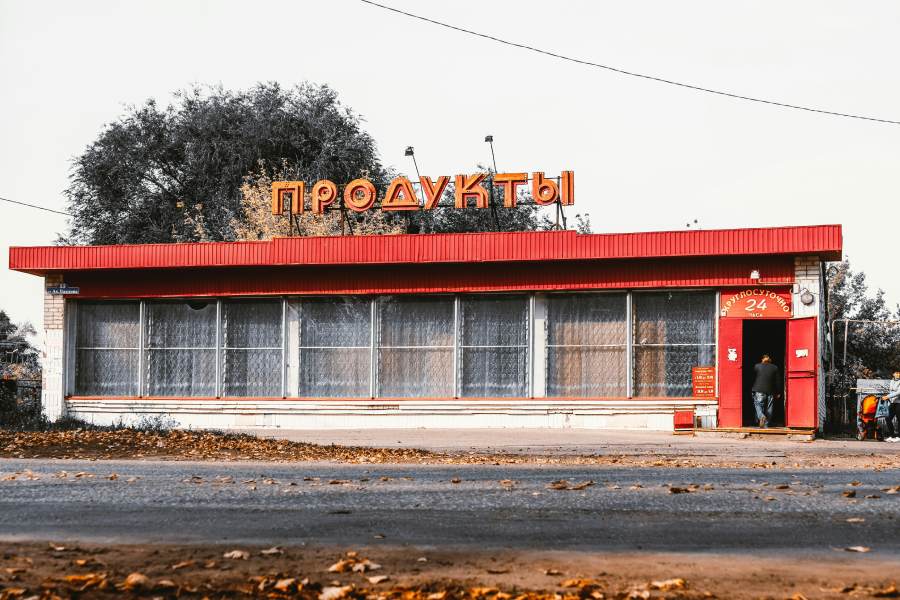 Photo: Slon v Kashe / Unsplash.com
The most pressing problem of society and the factor worrying Russians in the second half of 2024 was the rise in prices for food, basic necessities, travel, clothing and travel - this was stated by 52% of respondents.
Since the beginning of the “special military operation” in Ukraine, the rise in prices in Russia for goods and services has not stopped. Eggs , potatoes , butter and other basic products have risen in price significantly .
At the end of 2023, Rosstat announced inflation at 7.42%, although Russians for the same period estimated it twice as high - 14-17%. They explained their assumption by a noticeable increase in prices for almost all goods and services.
As Takie Dela calculated based on Rosstat data , the median increase in the price of one of the products in the Russian consumer basket for the period from 2021 to 2024 was 31%.
In 2024, Rosstat monitors prices for 567 items from the consumer basket, including goods and services that are popular and necessary for most Russians. These are those items on which Russians spend at least 0.1% of total spending, as well as those that the department considered significant.
The editors used data on prices for 476 items; the rest were unsuitable for analysis due to changes in Rosstat methodology. In addition, the editors divided the positions of the Rosstat list into 17 categories, which included food, clothing, expenses for children, housing and more.
Among the fixed expenses of Russians, banking services have increased in price the most from 2021 to 2024: the median price for this category increased by 56.33%. This is how the cost of loans manifested itself - in October 2024, the Central Bank set the key rate at a record level of 21%.
The main reason for the rise in prices is a “special military operation” in Ukraine, economist and former Central Bank employee Alexandra Prokopenko is sure: “Because of it, demand in the economy is skewed in favor of unproductive expenses, loans with a floating rate and payments to the population, because of it the economy sanctions are imposed that increase transaction costs, and all this translates into prices.”
Shrinkflation and long containment
Many experts treat Rosstat data on food prices with distrust, says independent retail expert, founder of the Product Media publication Mikhail Lachugin.
“Rosstat gives the average price for the category. That is, roughly speaking, on the shelf there is butter under its own brand for 100 rubles and several other items for 250–300 rubles, and Rosstat gives some kind of arithmetic average,” explains the expert. He adds:
“It feels like food prices have tripled since 2022,” says pensioner Irina Mayorova from Togliatti. — We constantly buy “Vkusnoteevo” butter - it is not the most expensive, but not the cheapest either. At the beginning of 2024, it increased in price at Magnit to 169 rubles per package of 180 grams. Now the same package costs 269 rubles. Moreover, before the war, at the same Magnit, this oil cost us 75 and 85 rubles, depending on the percentage of fat content. Now these prices are not even close.”
Irina notes that juices and juice-containing drinks have become more expensive: “For several summer months I was not in stores - I lived in the country, and in the fall I went to Magnit and saw that what cost about 90 rubles per liter at the beginning of 2024 is now costs about 200 rubles. And these are not natural juices, but nectars and other juice-containing drinks - “Favorite”, “My Family” and others.”
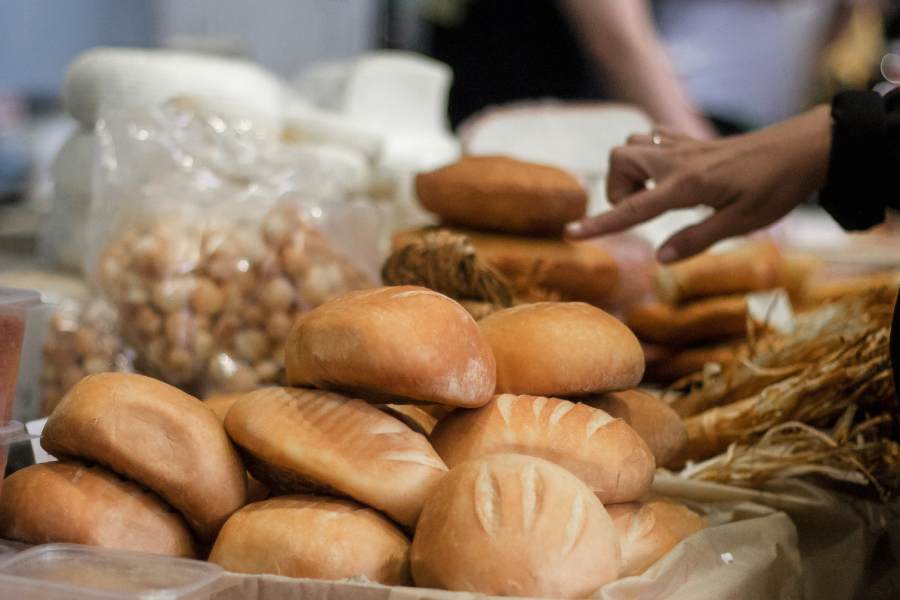 Photo: Laksrey / Unsplash.com
The growth of the average check in stores owned by the largest food retailers in Russia - Magnit and X5 Retail Group, for the first three quarters of 2024 compared to the same period in 2021 amounted to 25% and 24%, respectively, follows from the companies' reports . “I will carefully assume that the growth of the average bill reflects the real inflation that is on the shelves of retail chains,” argues Lachugin.
Since the end of 2023, the average bill at Magnit and Pyaterochka has been growing faster than food prices according to Rosstat, Takiye Dela calculated. “Retail chains held prices down for a long time when they were rising everywhere. And now sellers are chasing profits,” says economic commentator Alexander Kolyandr.
Also, the assessment of inflation based on the amount of the average bill can be influenced by the so-called shrinkflation - a decrease in the volume of product packaging, adds Lachugin:
“This is a policy to mitigate the effect of rising prices, but it is impossible to endlessly reduce the mass of goods. This, of course, is a response to the economic situation, and this also exists in the West, but not on such an insane scale as ours,” the expert clarifies.
27-year-old resident of Novosibirsk Valery Lipov says that he noticed an increase in costs, including due to shrink inflation: “But if manufacturers of packaged goods can reduce the volume and keep approximately the same price, then you cannot do the same with vegetables and fruits. As a result, one medium-sized bell pepper costs 100 rubles. Until 2022, I bought the same one for 80 rubles maximum.”
Since 2021, Valery’s income has increased by 50% - now he earns just over 50 thousand rubles per month. This year, the young man had to start saving on products, for example, replacing olive oil with sunflower oil:
“And of course, recently the prices for butter have increased very noticeably: previously you could focus on an option of around 120 rubles, but now it’s at least 180,” the Russian is indignant.
Pensioner Irina Mayorova from Tolyatti had to almost completely give up meat and replace hard cheeses with young ones, for example, feta cheese, which costs less. “My husband and I first switched to feta cheese, to young cheeses, which at first were cheaper, but now these cheeses are catching up with the rest in price: about 650–700 rubles per kilogram ,” shares Irina.
The total income of Tula resident Anna Nemova and her husband is about 100 thousand rubles per month. “Our expenses naturally increased due to the recent birth of a child. And I had to not give up something, but, on the contrary, add it to my diet. For example, beef - not only is it difficult to find in regular stores, but now it is also prohibitively expensive,” Anna worries.
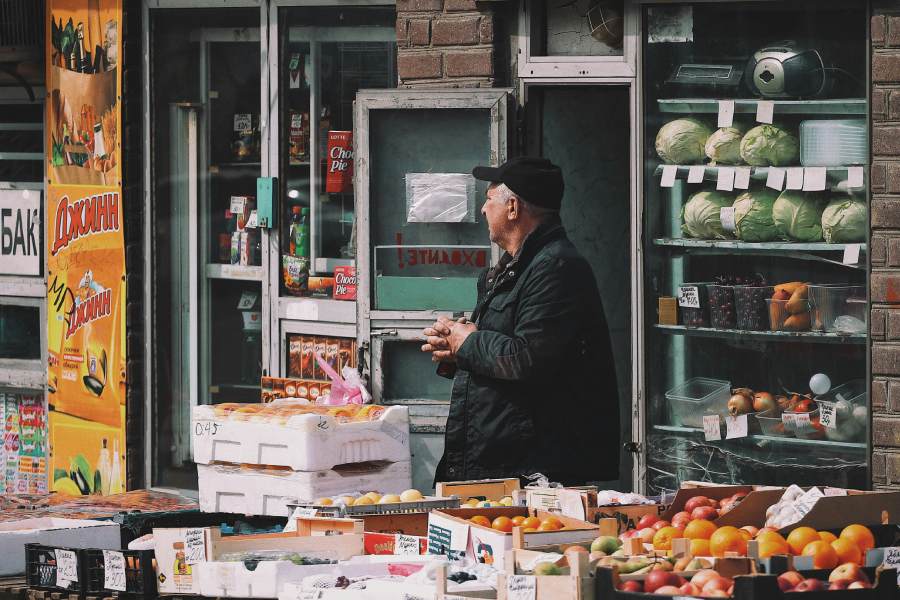 Photo: Pavel Anoshin / Unsplash.com
An even worse strategy for containing price increases than price inflation is changing the formulation of products and replacing expensive ingredients with cheap ones - this is also common in Russia, says expert Lachugin:
“There are a huge number of substitutes and simulators of real products on the shelves. This applies to milk and semi-finished meat products, such as cutlets. It can’t be said that the quality of goods used to be ideal, but now it’s just kind of terrible.”
Anna also noticed a deterioration in the quality of products in chain stores over the past three years: “We tried to buy cheap butter, and it felt like pure margarine. Although previously this oil was more or less normal in comparison with more expensive ones. Baby food has also become worse, such as porridge. Now it’s no longer porridge, but it’s unclear what.”
At the same time, observed inflation is always higher than real, and official price data reflect the real average picture, Kolyandr believes. “There is no such person in Russia whose personal inflation would coincide with official data, because everyone has their own spending structure, everyone has their own circumstances, place of residence, work,” explains the expert.
Like in the USSR
Speaking about rising prices, the authorities remind of the simultaneous increase in salaries of Russians. Thus, in October 2024, Vladimir Putin said that wage growth in Russia is outpacing inflation.
After the start of the “special military operation” in Ukraine, the incomes of Russians are indeed growing at a record pace, as follows from Rosstat data : the average nominal salary in 2024 is 48% higher than in 2021, Taki Dela calculated. But this amount of growth does not cover increased prices and does not apply to employees in all sectors of the economy. Kolyandr explains that wages are rising in industries related to government orders :
Over the past 25 years, Russia has recorded a minimum level of unemployment. This is explained by the increased need for personnel in the production of import-substituting goods and military products since 2022.
“In an ideal world, this problem could be solved by importing foreign labor. And we see that the number of migrants from Central Asian countries and Ukraine is decreasing,” says Kolyandr.
“There is another way to solve the problem: increase labor productivity by buying the conditional Ivan Ivanovich Pomidorov an electric drill instead of a manual one. But this is hampered by sanctions restricting the import of technology. The only thing left is to attract people by increasing salaries,” explains the expert.
As wages increase, people are willing to spend more, and this provokes an increase in prices. “In addition, there are people to whom no one would have given a loan until 2022. And now they, having got a job with a large salary or receiving military payments, have become good borrowers. So, these people are given loans, they spend more, which also provokes a general rise in prices,” adds Kolyandr.
The expert compares the current situation with the times of stagnation in the USSR, when people's lives improved due to state investments in heavy industry. “Then demand also grew, there was nothing to satisfy it, and goods began to disappear from the shelves. In the USSR there was no price inflation, there was supply inflation. Modern Russia has a market economy, and it reacts to such changes by increasing prices,” says Kolyandr.
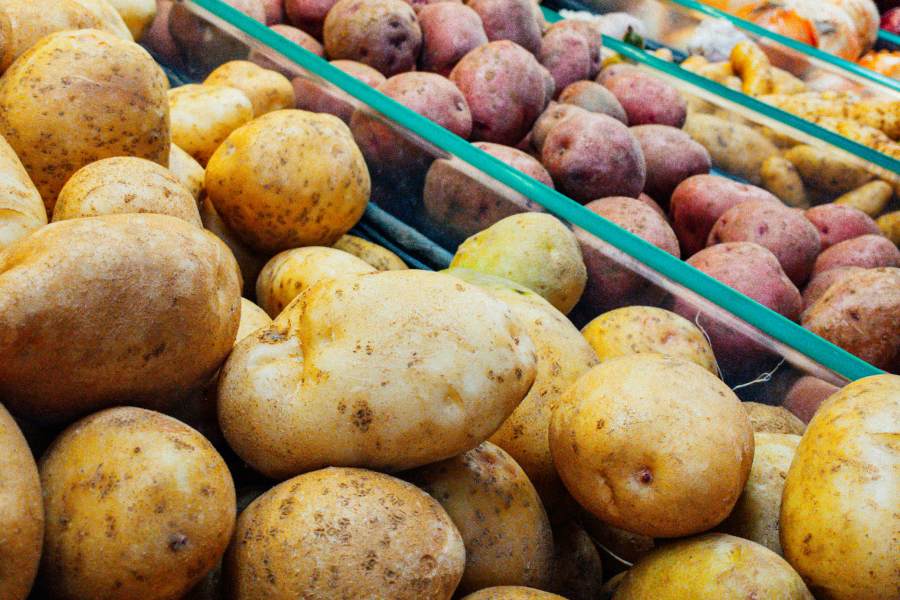 Photo: BEn Libby / Unsplash.com
Co-founder of the Higher School of Economics Igor Lipsits notes that Russians’ incomes are growing unevenly: fastest in the periphery, where there are many military-industrial enterprises. According to Rosstat , in 2021–2024, wages in manufacturing and IT increased by 61% and 60%, respectively.
In education over the same period, the growth was 36%, in medicine - 34%, in science - 37%, among public sector employees - 30%.
“That is, state employees who are not employed in the defense industry are suffering the most from rising prices. In addition, official data on salaries practically do not take into account small businesses, where there is often simply no increase at all. Therefore, the price increase is the same for everyone, but everyone receives different compensation. And average numbers only mask the real picture,” says Lipsitz.
In addition, there are about 40 million pensioners in Russia, of which more than 33 million are not working. According to Rosstat , in 2023–2024, the average size of pensions for non-working pensioners grew by only 4–7% compared to the same periods last year. “There is no money to increase their pension and there will be no money. Therefore, the worst situation now is for pensioners and families with small children who depend on benefits. They are now in the biggest trouble,” the economist is sure.
Nothing to save
However, even those whose salaries have increased well have noticed an increase in the price of food and essential products. According to calculations by “Takih Delo”, based on Rosstat data, price increases for at least 70 goods and services have outpaced wage increases. Among these items are 13 types of products. The data is limited to September 2024 and does not take into account sharp increases in prices, for example, for butter.
The prices for bananas have increased the most - by 76% - over the past three years; fresh tomatoes and canned tomatoes, as well as squid and grapes, have risen in price significantly. Lamb, eggs, rice, pears, garlic, curd cheeses, cookies and semi-finished poultry products added more than 50% to the price.
Each product has its own reasons for the rise in price, which need to be dealt with separately, says independent retail expert Mikhail Lachugin. Many prices depend on the cost of importing components and equipment, says Alexander Kolyandr:
“During a period of relatively high inflation, cheap products rise in price faster than expensive ones. Especially products with inflexible demand. That is, a person cannot refuse, for example, rice. There is nothing to replace it with, so the price of rice will rise faster.”
The rise in price of butter is associated with a shortage of vegetable fats, which are used in the production of its cheap analogues, an analyst of retail chains, who asked for anonymity, tells Takim Dela. The sharp increase in egg prices in 2023 was due to a shortage of imported eggs for incubation and bird flu quarantine at poultry farms, the expert believes.
Prices in Russia will continue to rise, while wage growth is already beginning to slow down, Kolyandr notes. Both the Ministry of Economic Development and the Central Bank expect a reduction in the rate of income growth in the coming years.
“We have not yet seen the full effect of wage increases on prices. It will be prolonged, that is, prices will continue to rise due to the increase that has already occurred. But further wage growth will slow down,” Lipsitz adds.
Now the authorities are trying to “persuad” large retail chains to keep prices down, but even if successful, this will not have a long-term effect, the economist believes. For example, the Federal Antimonopoly Service enters into agreements to curb prices for butter with manufacturers and stores.
“The Central Bank, in turn, is trying to ease the pressure of money on the market by raising the key rate. That is, to make it more profitable for people not to spend money, but to put it on deposit, explains Lipsits, but the majority of the country’s population does not have any deposits, they have nothing to save - they live from paycheck to paycheck. Therefore, prices will continue to rise.”