
Translated material
Charles the First
Aznavour is recognized as the best pop performer of the 20th century. And that's absolutely fair
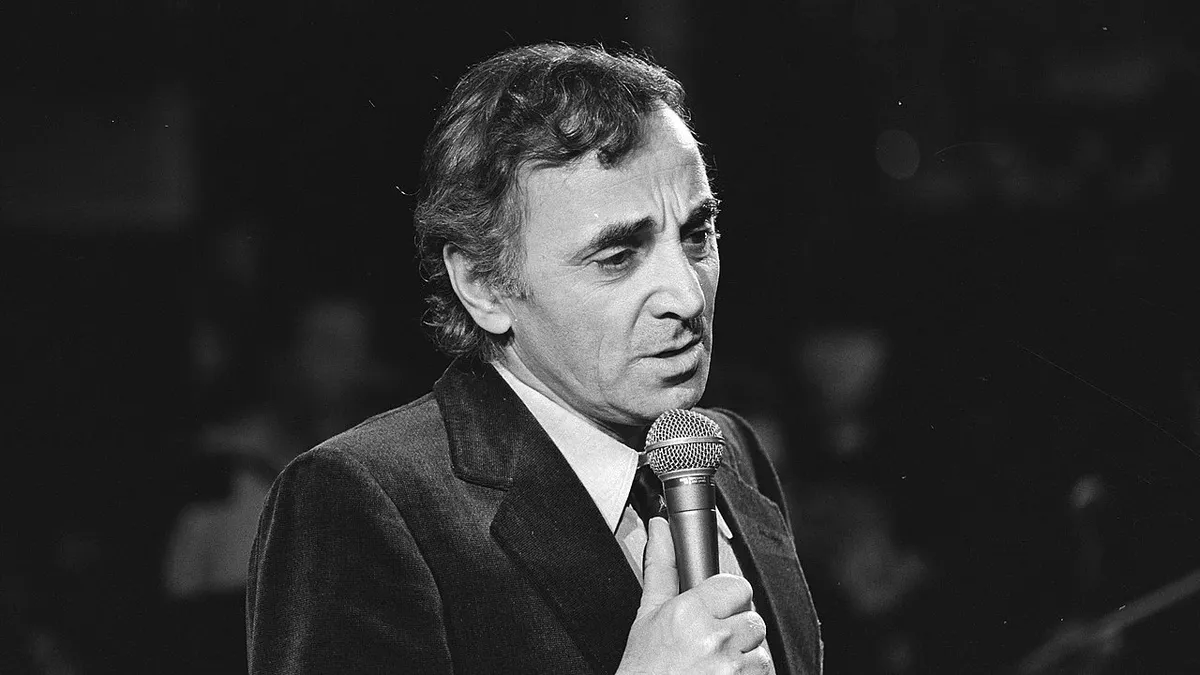
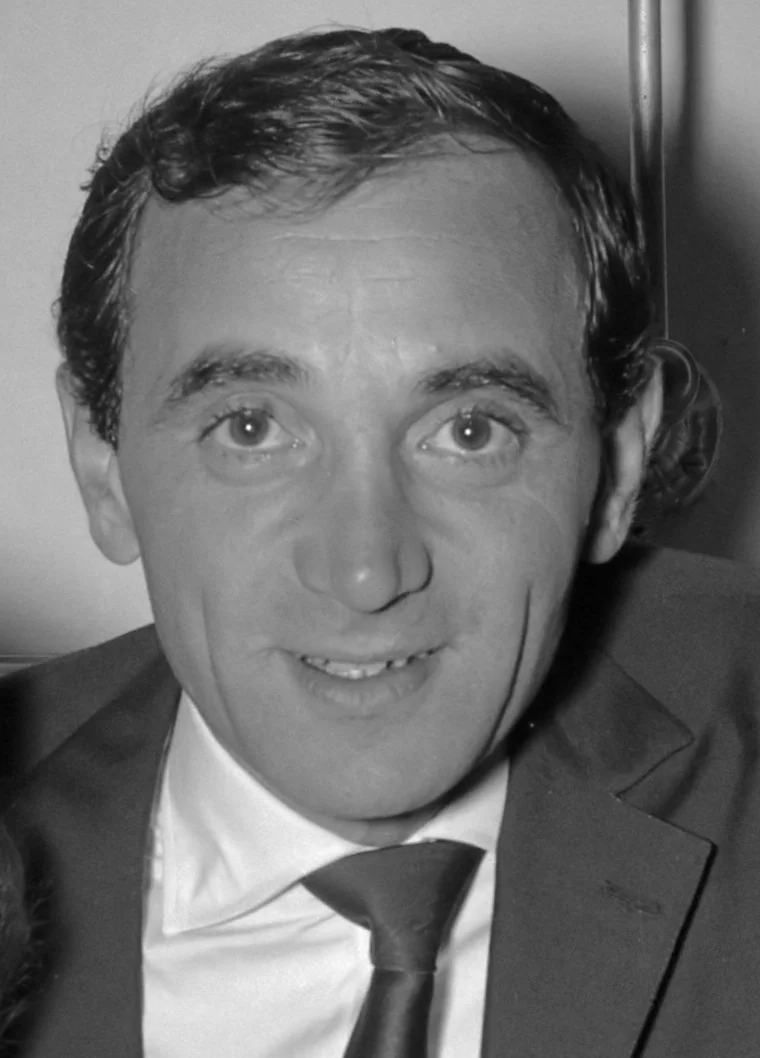
Charles Aznavour. Photo: Wikipedia
The great “little Armenian” Charles Aznavour (at birth – Shahnur Vakhinak Aznavuryan) would have celebrated his 100th birthday this year. He didn’t live long enough to see his centenary, having left this world six years ago, which had surprised and delighted him throughout his difficult life. Having survived poverty, war, and emigration, Aznavour quite early became known as a singer, poet, composer, actor, and at the end of his life also as a diplomat - the honorary ambassador of Armenia to UNESCO.
Aznavour has been called the "French Frank Sinatra" and the "deity of French pop music." Over the 94 years of his life, the musician wrote almost 1,300 songs, played 60 film roles and sold more than 200 million of his own albums. His songs were performed by Ray Charles, Bob Dylan, Liza Minnelli, Julio Iglesias. The master himself performed in a duet with Frank Sinatra, Celine Dion, Luciano Pavarotti, Placido Domingo, Patricia Kaas and other stars.
Despite all the merits, achievements, ranks and titles, Aznavour never felt like a genius or great. In his eighties, summing up the results in his memoirs, he timidly suggested: “I have lived a life that, perhaps, I repeat, may be worth telling about.” And here he ironically recalled his first creative impulses: “I wanted to sing. They told me that it was better to abstain, that I had no chance in this field, because with such a voice and with such an appearance - by the way, my own - it is impossible to appear on stage ... "
Appearance really became the reason for the fiasco that Charles suffered when he first performed on the French stage with a song of his own composition. He was booed, newspaper criticism was merciless towards him: “Is it possible to appear in public with such an appearance?” Years later, the singer would undergo plastic surgery, but even later he would realize that it was not his external characteristics that led him to success, but his talent and incredible strength of character.
From an early age, this little proud Armenian was not a person who gave up easily on his dreams. And Charles saw himself on stage.
Aznavour's father, Mamikon (Misha) Aznavuryan, was born in Tiflis. Mother, Knar Bogdasaryan, came from a merchant family originally from Izmit, Turkey. She lost all her relatives in the Armenian massacres in the territories of the Ottoman Empire.
“The boy who responded to the unpronounceable name Charles Aznavourian” (as the author himself calls himself in his memoirs), began his life and career from the very bottom, survived the German occupation of France, during which his mother transported weapons in a baby carriage for Resistance fighters. Later, all this was reflected in his songs. “He made the world sing about love in the language of the French.”
For conservative France, Aznavour has always been the son of an emigrant. The path of his fame is connected not only with the history of his talent, but also with the evolution of the attitude of French society towards migrants. Life experience was the guiding star of the young chansonnier.
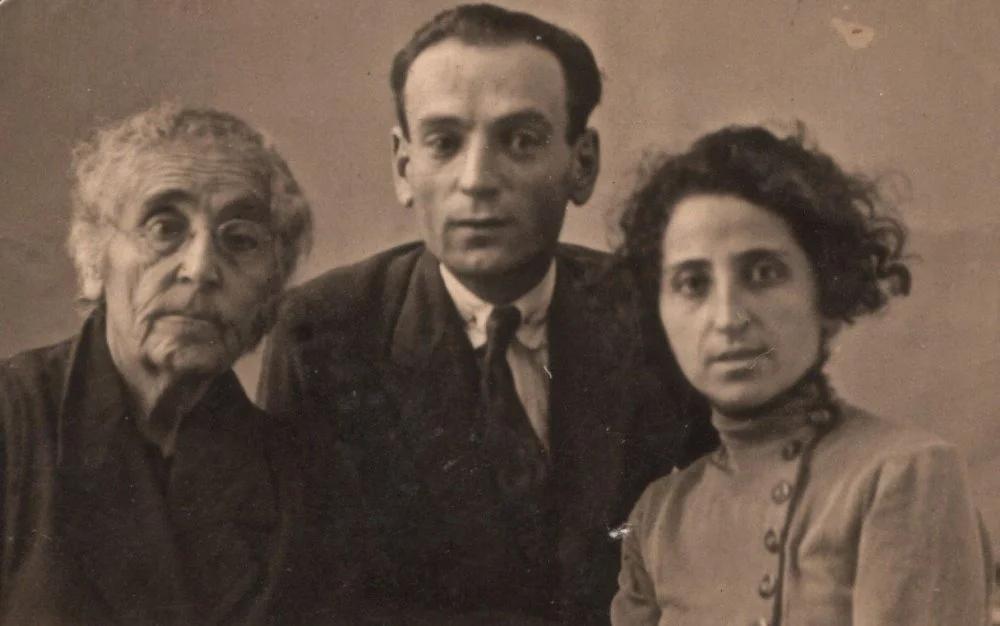
Aznavour's parents came to France in the early 1920s: after the revolution, they fled from Armenia to America, but along the way they stopped briefly in Paris, where they eventually stayed forever. Three years earlier, in 1923, the Aznavourians had a daughter, Aida, in Thessaloniki, and a year later, already in Paris, a son, Charles, who became the “only Frenchman” in the family: the parents and Aida had “Nansen passports” of stateless people - people without homeland and citizenship.
Charles's parents were involved in the arts: his father was an operetta artist, and his mother played in the so-called boulevard theaters for the general public. However, creativity did not bring the family the funds necessary for life, so the Aznavourians eventually abandoned attempts to break into bohemian circles. Charles's father and his companion opened a small restaurant "Caucasus" with dishes of Armenian and Russian cuisine on Rue de la Huchette in the 6th arrondissement of Paris on rue de la Huchette, where actors and musicians gathered before the Great Depression. The head of the family sometimes spoke to visitors, which added a special flavor to the establishment.
At the same time, with the light hand of Mamikon, the surname Aznavourian was shortened to the more familiar to the French ear - Aznavour. Here's how it happened. The ending of Aznavourian’s surname phonetically coincided with the French vous rien (“you are nothing”), which was used for their own purposes by unscrupulous competitors in the restaurant business.
Misha Aznavouryan found a simple and ingenious solution - he shortened his last name to Aznavour and gave his son one of the most memorable stage names in France with a slight touch of oriental tartness.
The Aznavourian family’s quiet life with little income ended when the father quit the restaurant business in the 1930s: his companion didn’t like the fact that Misha was giving free lunches to Russian and Armenian emigrants.
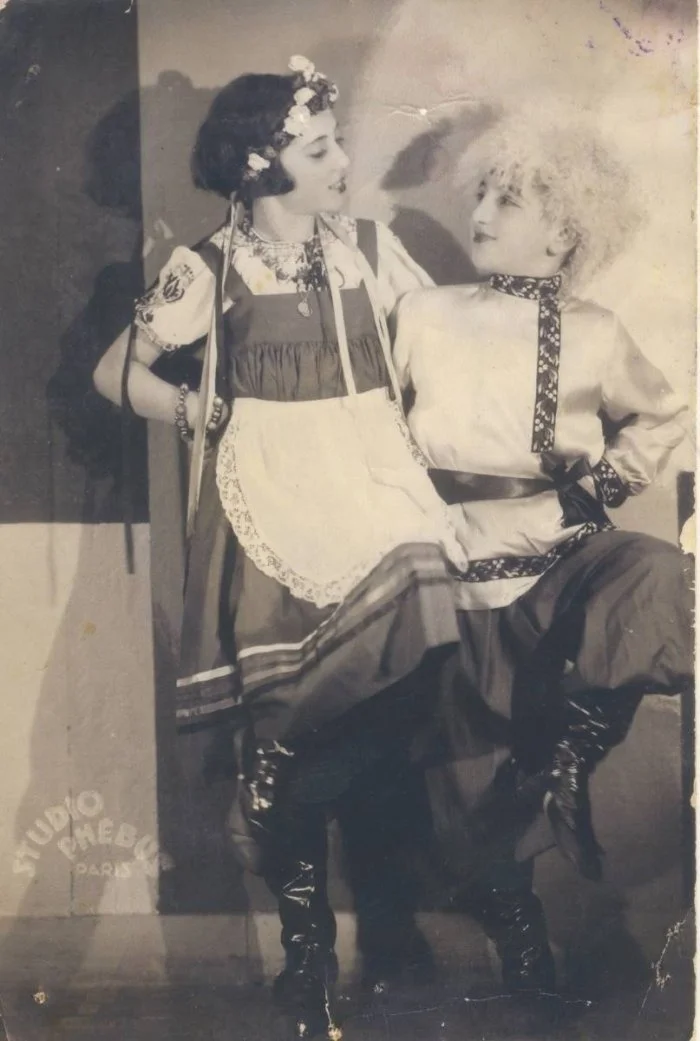
In difficult times for the family, five-year-old Charles and six-year-old Aida (they were inseparable as children) took their first steps on stage. Common dreams, performances in clubs and concert venues, ups and downs. Throughout her life, Aida collected and kept all of Charles’s notes, which became the basis of her book “Aparik” (“Brother”). “Aida is my memory,” Aznavour said about his sister. During World War II, during the German occupation of Paris, Charles and Aida sheltered Jews fleeing Nazi persecution. In 2017, for this feat they were awarded the Raoul Wallenberg Medal (Raoul Wallenberg was a Swedish diplomat who saved thousands of Jews in occupied Hungary. According to some reports, he died in a Soviet prison).
***
Young Charles's creative career rose to a new level after meeting the composer and pianist Pierre Roche. A fateful incident brought young people together in the early 40s in one of the nightclubs in Paris. Together they formed the duet “Roche and Aznavour”. It happened by chance: the female entertainer, instead of Rocha alone, announced a performance in tandem with Aznavour. The friends thought it was funny, they went on stage and performed several songs that Charles had previously written for other performers. Aznavour's voice and noticeable accent (which the singer later got rid of) were not always to the liking of the public, leading to shameful booing, so Roche most often sang, and Aznavour wrote music and poetry.
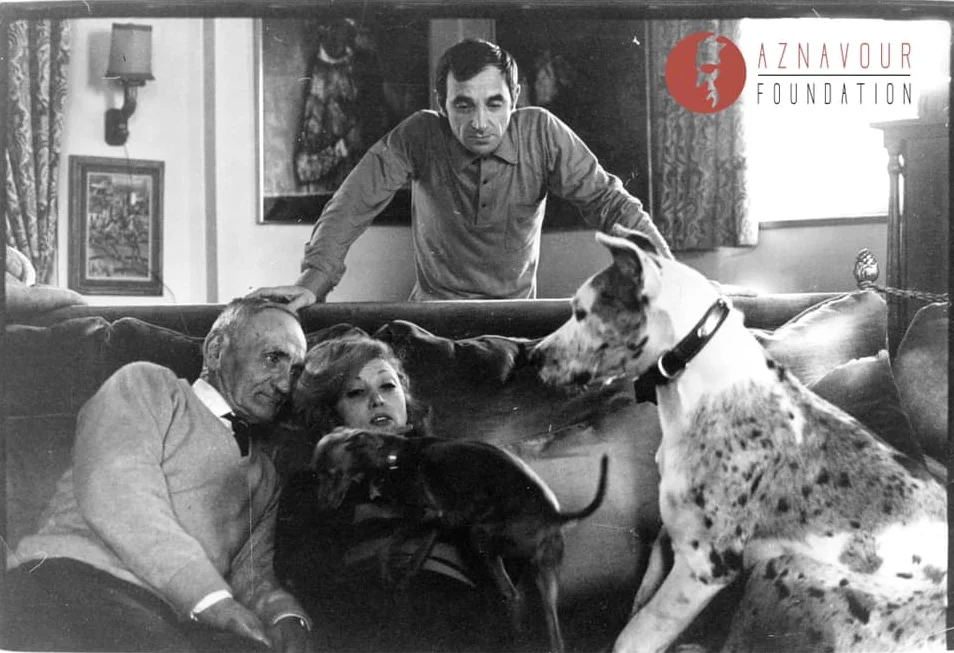
Soon the diva of the French chanson Edith Piaf drew the attention of the young performers. At that time, being very popular in Europe, she was preparing for a long tour in America. Charles and Pierre were taken under the singer's merciful wing, going with her on a grand tour of the United States in 1946.
After successful performances in the States and then in Canada as a warm-up act for Edith Piaf, Aznavour began to be recognized on the streets. Thus began Charles's career as a chansonnier. In 1950, the “little Armenian” had already set off on a free voyage. Despite all the difficulties of the relationship with the famous Piaf, for Charles she was a mentor and assistant exactly at the moment when he needed it most.
***
Despite the fact that Aznavour was born in Paris and spent his entire life outside his historical homeland, he always remembered Armenia. He dedicated his song “Ils sont Tombes” (“They have fallen”) to the Armenian genocide, releasing it in 1975 on the 60th anniversary of the massacre.
In 1988, after the earthquake in Spitak and Leninakan (Gyumri), the singer, together with his longtime friend impresario Levon Sayan, founded the Aznavour for Armenia charity association, which united 90 artists, and organized a collection of aid for the victims.
In an interview in 1988, Aznavour said: “In this situation, I think that my family is all Armenians... The destinies of all Armenians are intertwined here. They are all my brothers and sisters. Until now ( before the earthquake in Spitak and Leninakan (Gyumri) - A.D. ) I said that I am a Frenchman of Armenian origin. After the earthquake I realized that I was really Armenian. I received a blow to the head and reacted immediately, because I was used to acting quickly, and I put my name in the service of my nation."
The nation remembered and immortalized him. A square in Yerevan is named after Aznavour, and a monument to him was erected in Gyumri. In 2004, Aznavour was awarded the title of National Hero of Armenia, the highest state honor. And on December 26, 2008, Charles Aznavour became a citizen of his native country: President Serzh Sargsyan signed a decree granting citizenship to the eminent Frenchman.
The national theme was present in Charles’s mind all his life, even when his songs became the standard of Parisian taste for the French themselves. In his autobiography, Aznavour wrote: “Isn’t the time to reconcile our peoples, destroy false history textbooks, forever wash away the disgusting bloody stain, to get rid of the lies broadcast at the state level, and enter Europe bright and purified?” He said this, of course, about Armenia and Turkey.
***
Aznavour also loved to visit Russia. Aznavour’s song Les deux guiteres (“Two Guitars”) has a chorus in Russian: “Eh, once, and again, and many, many times.” However, he became known to Soviet and Russian listeners primarily for the song Une vie d'amour ("Eternal Love"), written in 1981.
In April 2018, on the threshold of his 94th birthday, Aznavour planned to give a concert in St. Petersburg. But during a rehearsal before the performance, he suffered a back injury and was taken to the hospital. Despite the force majeure, fans were in no hurry to hand over their tickets. The concert was postponed until next season. However, in the end it had to be canceled completely - on October 1 of the same year, Aznavour died at his home in the village of Mouriez in the French Alps.
Charles met death with his head held high. You can love life and be confident in it even at such an advanced age. The planning horizons of modern people somewhere pitifully lit up and went out.
Aznavour ended his memoirs, published long before his death, with the words:
“I have traveled the length and breadth of the world, having traveled around the world several times, constantly experiencing a thirst to see unknown countries, to learn everything new, to get acquainted with new peoples, languages, religions, ways of life. I learned tolerance and understanding, I learned not to judge, and especially not to lecture. Having seen so much, I nevertheless think that I have not seen anything yet, the thirst for discovery lives in me, it is insatiable.
The more I do
The more remains to be done.
The more I drink,
The less remains in the glass.
The more I say
The less remains to be said.
The longer I live,
The less time there is to live.
Everything has an end, but I can't bring myself to write this word. Let life itself do it for me..."
I would venture to suggest that Aznavour’s life gave him immortality.