
Translated material
Unprecedented endurance
French cognac producers not only put up with Armenian cognac, but also lose revenue in the EU trade war with China and fearfully await the arrival of Trump
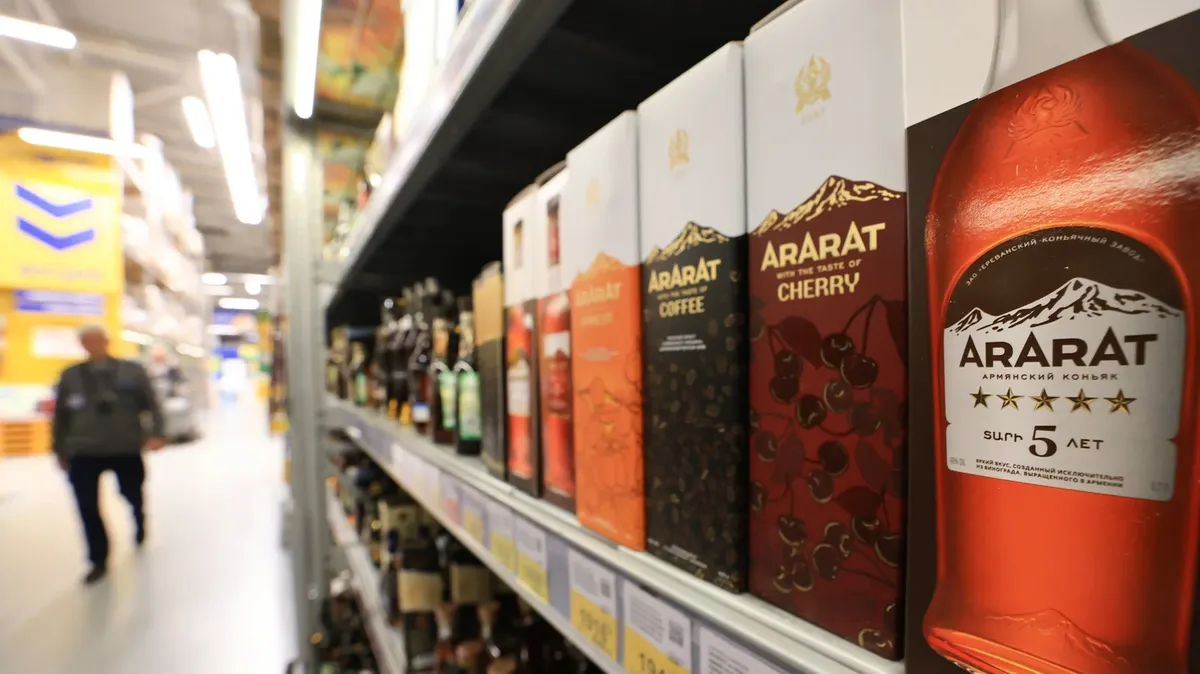
Photo: Alexander Ryumin / TASS
Armenian Prime Minister Nikol Pashinyan uttered a phrase about cognac that grated on the ears of old fans* of strong drinks in Russia, a country where other people’s intellectual property is not very respected. And where they not only refused to fulfill the French request to rename Russian “champagne” into sparkling wine, but on the contrary, they actually deprived the French of the right to use their own name. And then the head of the Armenian government asked his fellow citizens to respect the “intangible property of France” and to wean themselves from the phrase “Armenian cognac.” And he urged “even in families” to use the word “brandy.”
But despite the fact that Pashinyan, as the Russian propaganda press wrote, literally “undermined the foundations,” his statement did not cause either a storm of protest in Armenia or a storm of applause in France. Moreover, French cognac makers have more important problems right now: eliminating the consequences of the trade war with China and preparing for the return of Donald Trump to the White House.
Shall we raise a glass of Armenyac? No, it seems there will be a different name...
But first, let’s talk about how “Armenian cognac” is flowing into oblivion. Pashinyan’s words were spoken only in line with the comprehensive partnership agreement ** between Armenia and the European Union, which was concluded back in 2017 and came into force in March 2021.
The European Parliament resolution on this matter stated that the EU legislature “welcomes the agreement reached on the protection of trademarks, in particular the transitional provisions set out in Article 237 on cognac and champagne, which protects the interests of the European Union and also allows Armenia to enhance trade in all main sectors of its economy ."
The requirements for Yerevan regarding the renaming of cognac in this agreement are so mild that, theoretically, Armenian families, producers and families of producers can get used to the word “brandy” without being in too much of a hurry.
QUOTE FROM DOCUMENT
"1. During a transition period of 24 years, starting one year after the entry into force of this Agreement for Cognac , and during a transition period of three years after the entry into force of this Agreement for Champagne, protection in accordance with this Agreement of these geographical indications of the European Union will not prevent the use of these names on products originating in the Republic of Armenia and exported to third countries , if the laws of the relevant third country allow it, <...> provided that:(a) the name is marked exclusively in non-Latin characters; <…>
(c) nothing in the representation must be misleading as to the true origin of the product.
3. During a transition period of 13 years, starting from one year after the entry into force of this Agreement - for “Cognac” , and during a transition period of two years <...> - for “Champagne”, protection in accordance with this Agreement of these geographical indications of the European Union will not prevent the use of these names in the Republic of Armenia ( subject to the same conditions . - Ed. ).”
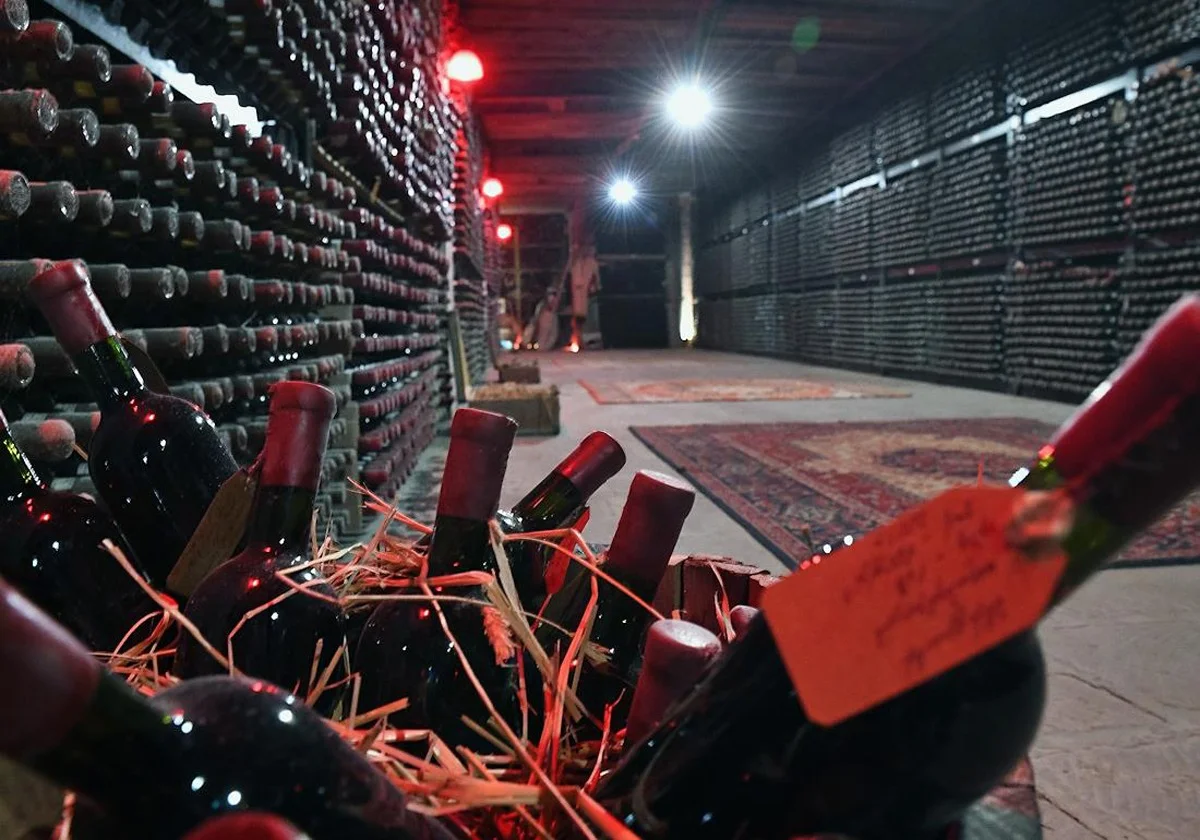
If we count the indicated dates from the date of entry into force of the agreement, it turns out that Armenian cognac producers were allowed to sell - but only outside the EU - a drink labeled “cognac” until 2046 and to produce and sell such bottles in Armenia until 2035 .
And only if the country does not fulfill these conditions will it have to answer to international trade arbitration.
However, if the European Union does not fulfill its obligations, then Armenia may refuse to fulfill the agreement. Among Brussels' obligations spelled out in the treaty are "measures to develop a new name and promote, advertise and market the new name in the domestic and traditional export markets."
“Financial and technical assistance of the European Union will be provided no later than 8 years from the date of entry into force of this Agreement,” the document says.
* * *
Quite acceptable conditions - even despite the fact that the word, of course, has taken root in the Armenian national memory: “cognac” began to be produced in Armenia at the end of the 19th century.
But the agreement has been signed, and now, in conditions when Yerevan is in an extremely difficult economic and geopolitical situation - especially after the last two wars in Nagorno-Karabakh - the country certainly does not need to “offend” one of its main, if not the main, international ally - France . Moreover, the requests of the French (you can’t even call them demands) are justified and explainable: at least from the point of view of legislative norms, at least from the point of view of “historical truth”. Cognac was invented in France at the beginning of the 17th century. Cognac is the name of a French city and administrative region in the Charente department, where world-famous brands appeared already in the eighteenth century.
But French legislators, who included provisions on cognac and champagne in the agreement between Yerevan and the EU, treated the “transition period” that was so long for Armenian producers with understanding.
QUOTE
From the report of the Foreign Affairs Committee of the French National Assembly (2019):
“The socio-economic aspects of this activity are very important for Armenia. There are 40,000 winemakers for the country's 3 million inhabitants. Armenian production of “kanyak” ( in the report: kagnac . - Ed. ) is mainly (93%) intended for export, mainly to Russia. “Cognac” and, to a lesser extent, “champagne” account for about 10% of the country’s total exports <…>. On the other hand, there is no need to emphasize the importance of the names “cognac” and “champagne” for our country. <…>. Thus, France and Armenia find themselves in a competitive situation, even despite the different economic weight and the presence of French interests on both sides, since the leading Armenian alcoholic drinks enterprise Yerevan Brandy Company is a subsidiary of Pernod Ricard. In quantitative terms, Armenia produced 30 million liters of cognac in 2017, compared to 200 million bottles of cognac in France. As for the Armenian production of “champagne”, it is insignificant. Since the prices are different, the gap in export earnings from these drinks is even greater: according to the WTO, in 2017, Armenian alcoholic drinks brought in 208 million dollars, and our cognac - more than 3 billion, and almost the same amount - our champagne.”
“For France, this agreement is of economic interest <…> . Armenia, in turn, can count on significant technical and financial assistance from the EU for the implementation of this agreement <…> . Prime Minister Nikol Pashinyan really needs this help to implement his reform agenda, particularly fighting corruption and ensuring good governance. This agreement should also help Armenia emerge from isolation by moving closer to the EU,” says the French Senate report .
* * *
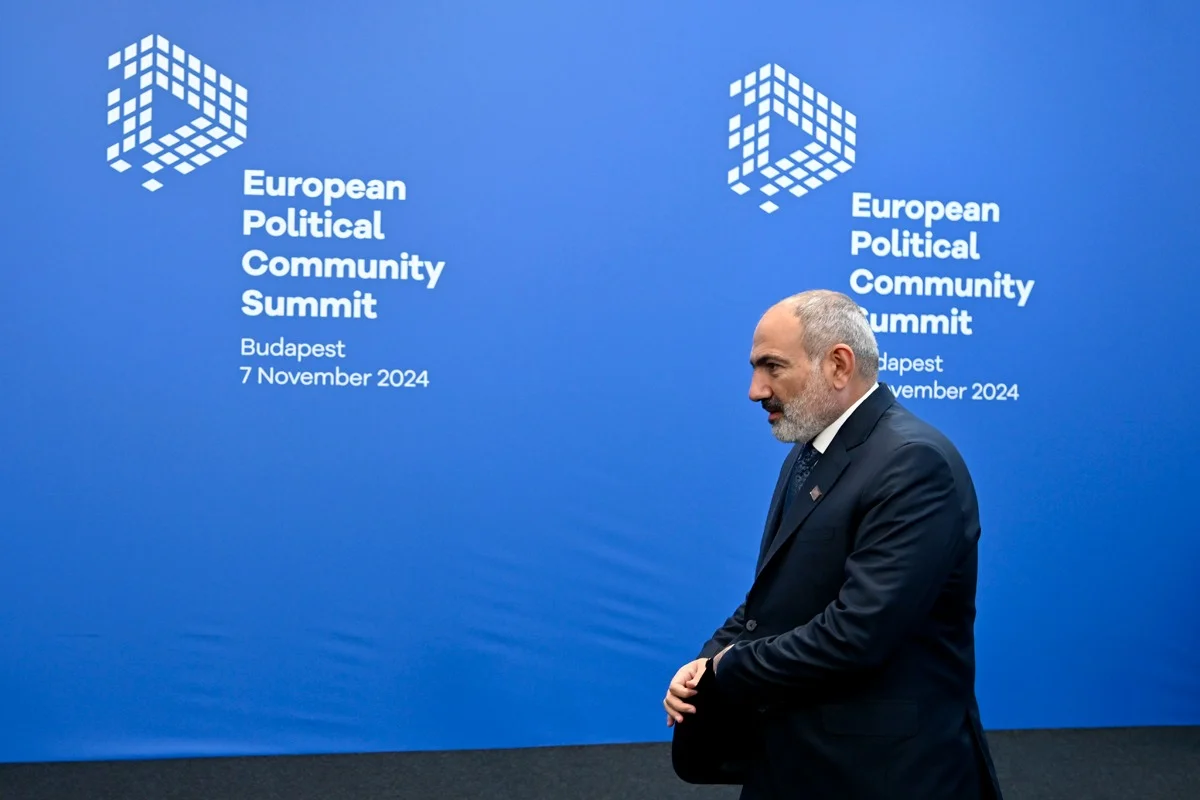
The Armenian authorities, who now regularly receive assistance from the European Union in general and from France in particular - including military and diplomatic - are meeting their partners halfway. The aforementioned call by Pashinyan not to use (the phrase) “Armenian cognac” “even in families” was made on October 31 . He then, judging by the words that you will read below, hinted that resolving this issue in a shorter time frame would only be a plus for the country. Quote: “Today, when we say that we have problems with exports in many areas, some of them are related to this phenomenon. <...> We should not <...> try to prove to someone that we created champagne, but must admit that this could not have happened, because champagne is not just sparkling wine, but sparkling wine made from grapes grown in Champagne region, the same with cognac. This applies to brandy made from grapes grown in the Cognac region. <…> We have programs with EU support in this area, and we must definitely implement them. Until we resolve these issues, we will not be able to have an economy that is integrated into a developed economy ... ”
The elite alcohol sector, in particular in France, has been going through hard times in the last couple of years - consumption was already declining due to rising inflation, and there are also problems with two countries that are the main consumers of French cognac - the USA and China.
In general, on the one hand, the possibility of a (friendly) gesture from Armenian friends to French partners cannot be ruled out: as they say, from our table to your table. That is, a little faster than stated in the documents. And on the other hand, taking into account the fact that about 85% of “Armenian cognac” is exported to Russia ( which at any moment - in retaliation for political intractability - can, using the “Onishchenko formula”, declare a complete ban on supplies - and “signals” this has been reported in recent months ), the idea of the need for a maximum “reorientation of export flows” lies on the surface. Cheaper, but high-quality Armenian brandy against the backdrop of a market crisis may well (according to the Armenian authorities) win the hearts and livers of both European lovers of strong drinks and, for example, Chinese (more on them below).
* * *
In early November, Armenian Minister of Economy Gevorg Papoyan stated (to quote the official Armpress agency) that “Armenian producers will not label their products with the name “Cognac”, which is a protected geographical indication of the EU, and instead “Armenian Brandy” will be registered as a geographical indication. indication ." The minister explained that in two weeks the EU support program will begin, within the framework of which it will provide support in several areas: establishing requirements for laboratory infrastructure to ensure high-quality control over produced cognac, developing procedures for testing and certification of products, monitoring the use of a new name, etc. d.
That is, the European Union (behind which the French profile looms) is starting a program to support the rebranding of the country ahead of the deadline specified in the agreement (March 1, 2029). After this, to paraphrase a football-political expression, it can be argued that now the toast is on the side of Armenia.
Actually, it was said by Nikol Pashinyan, and after him by Gevorg Papoyan.

Who hung the bell on the tiger's neck?
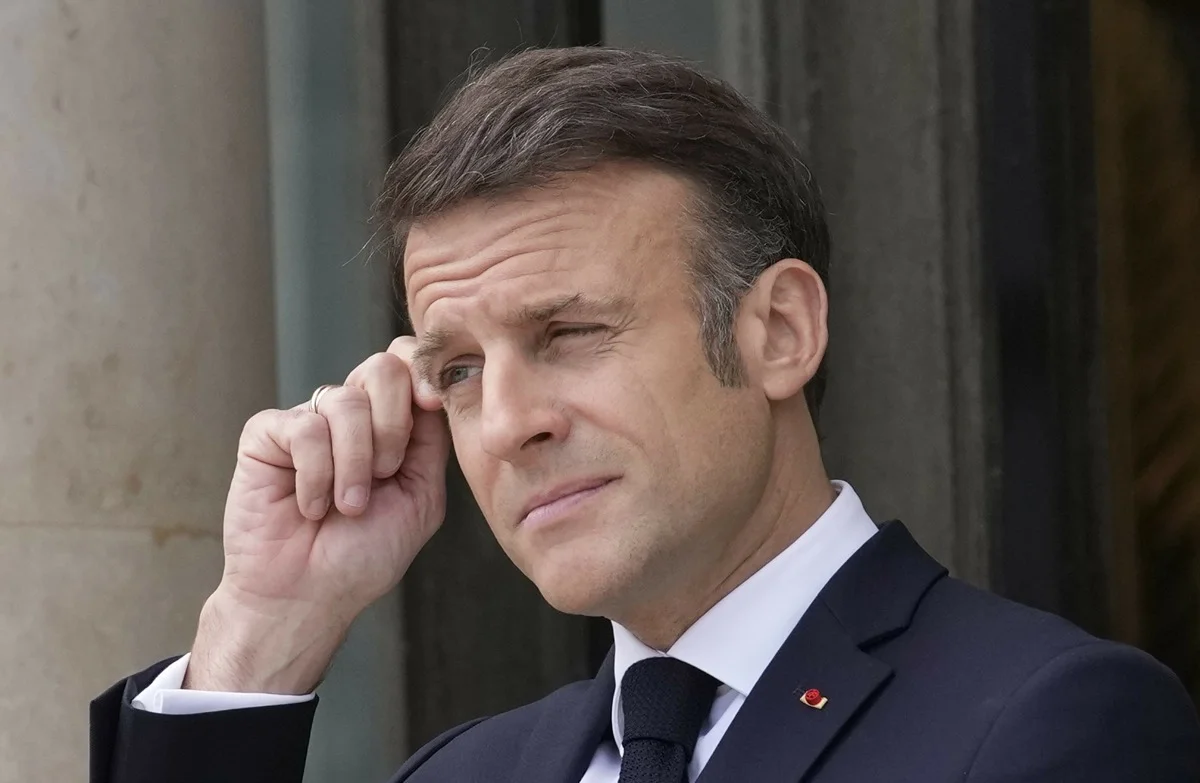
Leaving the Armenian toasters, let's move to the Elysee Palace - to the “state dinner in honor of Xi Jinping and his wife Peng Liyuan,” which took place on May 6. While discussing really important issues (before dinner) with the head of the People's Republic of China ( more about them here ), President Macron did not forget about the interests of French cognac makers.
The fact is that the cognac industry (72,500 jobs in France) is extremely dependent on exports, which make up 98% of its sales. And the main importers, by a large margin from others, are the USA (38%) and China (25%). But Beijing, in response to the checks launched by the European Union (not without the participation of Paris) on Chinese subsidies, primarily for electric cars, began an “investigation” in January 2024 into grape spirits imported from the European Union (that is, from France).
So at the dinner, held in the Festive Hall of the Elysee Palace, cognac was a “conspicuous element” on the tables, as the guests noted. Among them, by the way, there were people in whose business the sale of cognac plays an extremely important role: firstly, Alexandre Ricard, the general director of Pernod-Ricard (the second largest alcohol producer in the world, which also bought the Ararat brand a long time ago), secondly, the richest Frenchman, Bernard Arnault, for whom strong alcohol is enshrined in the name of the LVMH holding, where H is one of the world-famous cognacs.
In addition, “several bottles” of Charente cognac were among the Parisian gifts from the French President to the Chinese Chairman. And the next day, during a trip to the Pyrenees , to a place that is so dear to Emmanuel Macron due to the fact that he spent his childhood here with his grandmother, the President of the French Republic also presented Comrade Xi with Armagnac. To reinforce the hint.
Comrade Xi accepted the gifts, and also had dinner and lunch, but, as it turned out later, he still decided not to understand the “hint.” Well, or he thought that his hints were not understood in Paris.
Because in October, after the European Union decided to increase duties on Chinese electric cars by three and a half times (to 35.3%), the “old diseases” of French cognac spirits at Chinese customs immediately worsened.
* * *
By order of the Ministry of Commerce of the People's Republic of China, from October 11, 2024, suppliers of grape distillates, including cognac (which is 95% of all supplies), from the European Union must pay an additional “guarantee amount” at customs in the amount of 30.6 to 39% of the cost of the goods at the time of the “anti-dumping investigation” against their products***. Beijing justified this by saying that European producers of cognac spirits allegedly sell their products “at reduced prices,” which “causes damage” to Chinese producers.
Everything about this justification is perfect - both the “reduced prices” for French cognac and the “competitors” in the form of Chinese masters of brandy production.
In fact, the Chinese simply used the same language to attack French cognac that was used by the European Union to increase duties on electric cars.
In early November, French Minister of State for Foreign Trade Sophie Primas visited China. After what she called “extremely tough” negotiations with Chinese Minister of Commerce Wang Wentao, she said that for now the issue remained “clearly open” and did not rule out “retaliatory measures” from Paris. Adding that “there will be a tripartite discussion between cognac producers, the French state and the EU, specifically on this market.”
In addition, she stated that the issue of cognac "will probably be discussed by our two presidents" (i.e. Macron and Xi) at the G20 summit in Brazil (November 18-19), "as well as at the prime ministerial level" .
Meanwhile, the Chinese Commerce Minister stressed that “France, as an important EU member state, must play an active role in encouraging the European Commission to show sincerity” and “reach a solution acceptable to all.”
* * *
In France, the Bureau National Interprofessionale de Cognac (BNIC) considered its industry “sacrificed” by the government, which supported the introduction of additional EU duties on Chinese electric cars.
Before possible negotiations between Macron and Xi, on November 11, the Chinese Ministry of Commerce announced the temporary abolition of the giant deposit of 30.6-39% and its replacement with a “deposit or letter of guarantee” from the importer.
“...The Cognac Bureau” stated that it considers this news “rather positive”, but is waiting for new steps. And the Chinese ambassador to France, Lu Shaye, during negotiations with BNIC President Florent Morillon, said that after this sign of “good will”, “the decision is in the hands of the French government.” And he supported this call with a proverb: “He who hung a bell on the neck of a tiger must take it off.”
On November 12, industry representatives were received at the Élysée Palace in Paris by Emmanuel Macron, who “assured them of his full support in this difficult and unfair situation,” according to a joint press release from BNIC, the Bureau National Interprofessional de Armagnac (BNIA), the Federation of Exporters of Wines and Spirits (FEVS) and House of Wines and Spirits (MVS).
QUOTE
“...Since January 5, the entire industry has remained fully mobilized to warn that the Chinese investigation is not a legal issue, but a political one that can only be answered politically.Despite numerous efforts and high-level exchanges, a political settlement has still not been reached <…>, [although] in recent weeks there has been a positive development <…>.
Industry representatives told the President of the Republic that it is necessary to reaffirm this dynamic of openness in order to get the Chinese authorities to eliminate taxes that would otherwise have a devastating impact.
The President of the Republic assured the professionals of his full support <…> and of his personal participation in finding a positive solution.
The meeting participants welcome […] the strong commitment of the President of the Republic and remain fully mobilized until the matter is completed.”
* * *
In the meantime, the industry is in a fever.
On November 14, French luxury giant LVMH announced the replacement of the CEO and CFO of its wines and spirits division, Moët Hennessy.
And at the end of October, Remy Cointreau announced a reduction in its forecasts due to weak sales in the United States and a recession in China. Now she expects a two -digit decrease in annual turnover. “The company's portfolio is highly dependent on the success of cognac (almost two-thirds of its turnover) and the demand of the Chinese for this premium drink,” the France-Presse agency emphasized. Dependence on cognac sales in China makes “this period is even more complicated for us than for our competitors” (Pernod Ricard and LVMH), the financial director of the Luke Marotta group during the conference with investors and analysts admitted. To avoid a significant decrease in margin, the group announced "a plan to reduce costs by more than 50 million euros."
* * *
Against this background, analysts predict the exponential increase in cases of bingers among the top managers of the cognac industry ... The latter, of course, is an attempt at a joke, but the top-carriers really have why “drink bitter”, especially after the election in the United States ... taking into account the fact that they already They survived Donald Trump during the first period. The one, in the framework of a wider trade dispute between the USA and the EU, introduced 25% of the duties on French wines and alcohol, including cognac. Now, when Trump threatens to increase duties on European goods by 10–20%after his return to the White House, French brandies are waiting for the bad again.
“We just received a strong blow from China, and now also the United States. My main clients <...> - in China and the USA, and, of course, it will have consequences, ”said AFP Sabina de Vithas, the head of the family cognac farm in Sharant.
In September, against the backdrop of an increase in Chinese duties, about 1000 industry professionals (vineyards, manufacturers, merchants, equipment suppliers ...) entered the protest in cognac, which, according to France-Presse estimates, "became unprecedented mobilization over the past quarter century." The protesters drove 120 tractors to the suprefecture building, but the event then ended peacefully, although it was accompanied by drinking cognac alcohols.
* * *
Other unpleasant news is added to anxious uncertainty about further working conditions in the two main markets.
While the export of cognac was already reduced last year (according to France-Presse, to 165.3 million bottles versus 212.5 million in 2022), this year, production volumes will fall significantly (by 37%)- Due to adverse weather conditions.
* * *
A chance for a less expensive Armenian brandy?
“When China announces an investigation, this is the beginning of a ban on French cognac, an actual ban. This signals society in China that cognac is no longer in Favor, ”said Yan Ford, General Director of the Shanghai Nimbiley Alcohol Management, in an interview with South China Morning Post in January. “Therefore, if you have entertained a government official (in China) on a large banquet, now to drink a taboo or give cognac.”
As the well -known English -language analytical alcohol site notes in November, “Armenia is not part of the EU and, therefore, freed from (increased) tariffs. Having abandoned the use of the word "cognac", perhaps Armenian manufacturers will be able to use the void in the market formed in China, which may be extremely profitable in the coming years. "
Nevertheless, today such a revolutionary replacement in the cognac market seems unlikely. I would put a bottle of the Armenian brandy that he will not be able to at least significantly squeeze French cognac.
But I still will not increase the bet to the bottle of French cognac.