
Translated material
Perm "cultural revolution". Final
A brief history of the PERMM gallery, which was searched on November 21
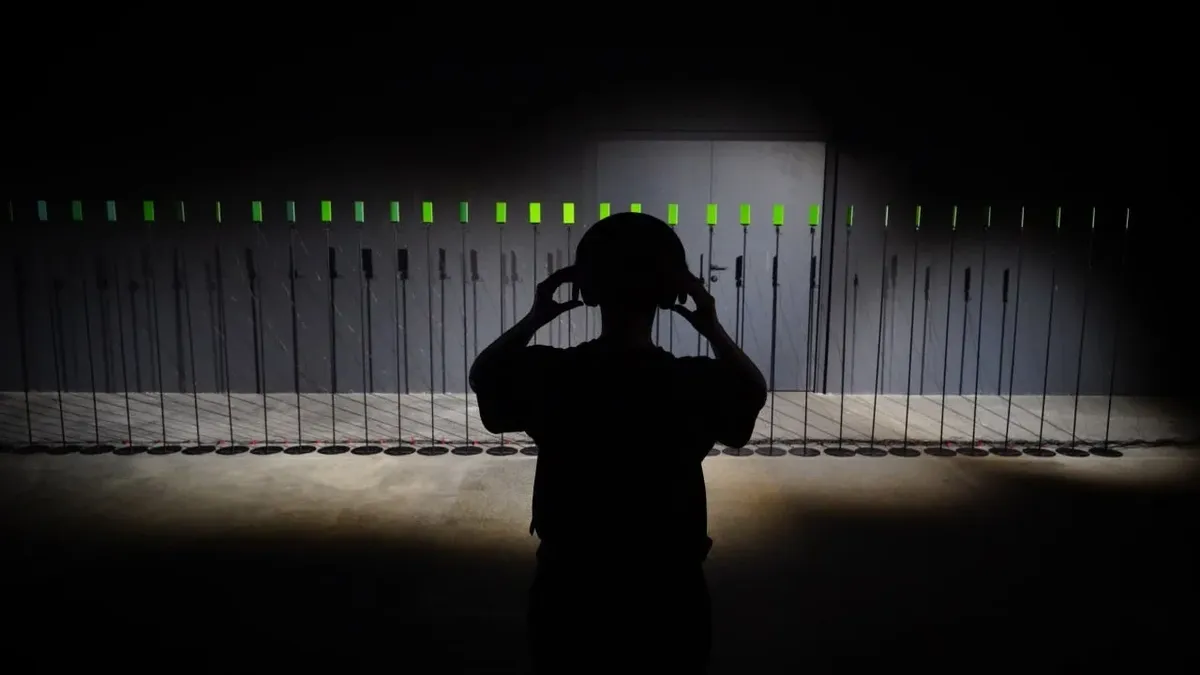
Photo: permm.ru
On November 21, searches took place in the Perm Museum of Contemporary Art PERMM. On the same day, security forces came to the home of museum director Naila Allahverdieva and “her commercial partners,” and a sign “The museum is temporarily closed for technical reasons” appeared on the official website. Today, the gallery is already operating as usual, and art figures continue to argue about why the search was carried out and what the consequences might be.
In March 2024, Allahverdieva, like many independent artists across the country, had already been searched - then it was connected with the criminal case of Pyotr Verzilov*, who is accused of treason. Against this background, the current visit of the security forces immediately began to be associated with the so-called case of Marat Gelman*, who is accused of “justifying terrorism.” Some even suggest that this case could provoke a new wave of repression against artists.
Marat Gelman, gallerist and founder of the PERMM Museum of Contemporary Art, was fired from his post as director of the museum back in 2013. To date, the Russian government has “awarded” Marat with several repressive statuses at once: in 2021, Gelman was recognized as a “foreign agent”, in 2022 he was put on the wanted list due to the case of “fakes about the Russian army” and most recently, on November 14, included in the list of “terrorists and extremists”. Judging by all this,
The statute of limitations for any public activity does not matter for the state: if Gelman’s latest status really became a reason for searches, then this is a very dubious reason, because the gallerist has not had anything to do with PERMM for 11 years.
In general, recently control over the Perm museum has become a favorite pastime of local law enforcement agencies. On October 31, it became known that the prosecutor’s office conducted an inspection of PERMM and found a conflict of interest in the actions of its management: allegedly, the director of the museum, Nailya Allahverdieva, entered into several agreements with a person who had a close relationship with her. After the inspection, the city prosecutor filed a lawsuit demanding that these transactions be declared invalid and more than 300 thousand rubles paid under them returned to the budget.
The prosecutor's office did not report on the specific agreements that provoked the proceedings. Then Nailya Allahverdieva claimed that she did not understand the essence of the charges brought against her: according to her, the museum did not officially receive any documents with claims from the prosecutor’s office.
But this story is also not the first time that the museum has been subject to inspections: even earlier, on May 3, the prosecutor’s office of the Leninsky district discovered there “violations of legislation on the protection and safety of cultural institutions intended for mass visits.” As a result, the prosecutor opened an administrative case against the director under Part 1 of Art. 20.35 Code of Administrative Offenses of the Russian Federation (“Violation of requirements for anti-terrorist protection of objects”). During the trial, Nailya Allahverdieva was found guilty and fined 30 thousand rubles.
In connection with all this, a logical question arises: are the new searches really connected with the “terrorist” activities of Marat Gelman? Or is it a combination of factors that matters? Be that as it may, it has long become clear that no matter what position the museum takes regarding the fighting in Ukraine, any mention of contemporary art, apparently, is very undesirable for the state today. And there can be any reason to shut down yet another overly freedom-loving cultural platform.
Perm “cultural revolution”: what was it
The Perm “cultural revolution” took place in 2008–2013 and became for the Kama region a time of an ambitious attempt to transform the cultural life of the region in the spirit of modern European standards. This cultural experiment is most often associated with several key figures for it: the governor of the Perm region Oleg Chirkunov, the region’s representative in the Federation Council Sergei Gordeev, the director of the Perm Museum of Contemporary Art Marat Gelman and the region’s Minister of Culture Boris Milgram.
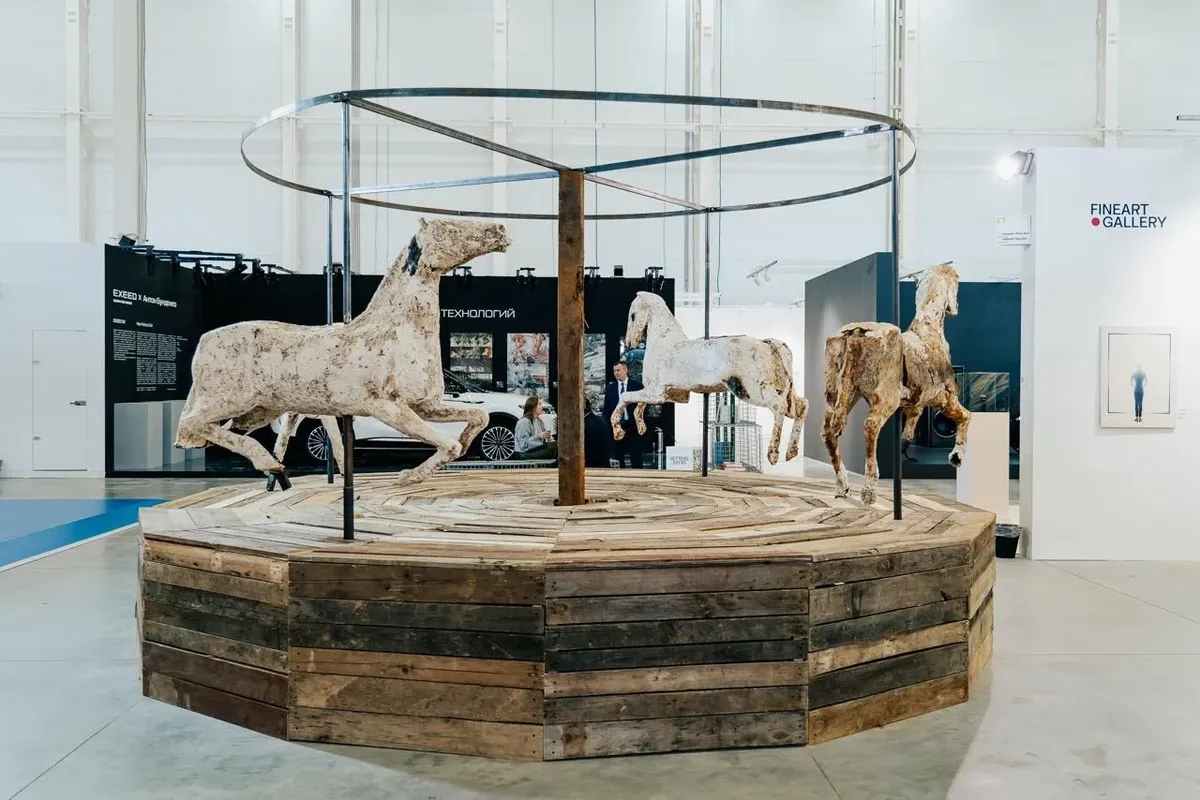
The first event of the “cultural revolution” was the exhibition “Russian Poor”. Its curator was Marat Gelman - and then, in 2008, this name was heard for the first time in Perm. The project was created by analogy with the Italian Arte Povera ("Poor Art") movement of the late 1960s. In the Russian interpretation, it became a collection of different artistic practices, united by the theme of national identity, with an emphasis on exhibits in the style of Russian folk crafts. Gelman adapted a Western phenomenon to the Russian context, transferred its ideas, and this could not but lead to a transformation of the original meanings.
The authors described “Russian Poor” as art “genuine, deep, leading away from superficial beauty to a real miracle.”
They tried to focus on the peculiarities of the Russian context and the importance of the work of Russian artists, creating the illusion of national identity. It sounds popular, but the exhibition was recognized among the artistic community and subsequently opened in Moscow and Milan. Inspired by the success, the organizers thought about creating a museum of contemporary art.
One of the main supporters of this idea was Sergei Gordeev, a developer and senator from the Perm region in 2007–2010. Gordeev supported the project financially, purchased part of Marat Gelman’s collection and transferred it to the new museum, which was called PERMM. Moreover, he also financed the reconstruction of the dilapidated River Station, built by the architect Alexander Grinberg back in 1940. The station became home to a new cultural institution, and in 2009 Gelman became its director.
The year 2010 became a particularly eventful period of the Perm “cultural revolution,” when the “Concept of Cultural Policy” was published - the first official document establishing new directions for the development of culture. The implementation of a public art program began, within the framework of which the “Little Red Men” of the art group Pprofessors, “The Gate” by Nikolai Polissky, etc. appeared. At the same time, the festival movement began to rapidly gain momentum in the region: numerous exhibitions, festivals, promotions, concerts were held, and new ones were opened theaters, installations appeared on the streets.
But in all this barrel of honey there was a fly in the ointment, which many locals did not like:
The “Perm Project” was financed by reducing the number of libraries, children's camps, and museums in the Perm region; additional funds were borrowed from the education sector.
The population perceived the cultural changes in the city differently: some saw what was happening as an innovative cultural policy vital for Russia’s advancement towards a civilized future, others saw it as the destruction of local identity.
In June 2011, the Perm intelligentsia organized a rally against the new cultural policy, which attracted about 500 people. In April 2012, rallies were held under the slogans: “Culture is us,” “Perm against PERMM,” “Hands off education!” Then inspections began, after a series of scandals, Marat Gelman was fired from his post as director of the museum (the gallery owner then cited censorship as the main reason for his dismissal). The human rights and music festival “Pilorama” also lost funding, and this was another blow to the cultural initiatives of the region.
With the arrival of the new governor Viktor Basargin, the cultural policy of Perm changed dramatically - this was the beginning of the end of the “cultural revolution”. One of the most striking episodes was the closing of the exhibition of Krasnoyarsk artist Vasily Slonov Welcome! Sochi 2014 right during the festival “White Nights in Perm - 2013”. The sarcastic exhibition ridiculed Soviet symbols and images of the upcoming Olympics, which displeased the authorities.
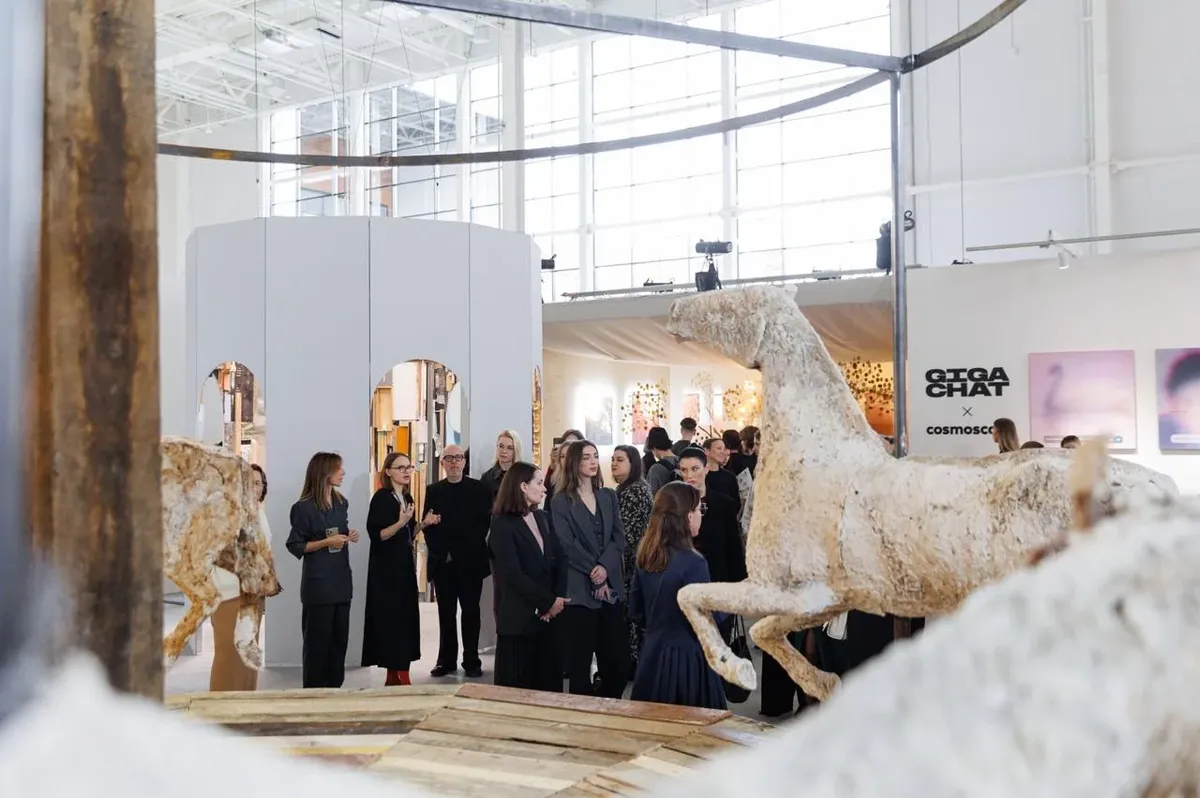
Nailya Allahverdieva is critical of the then Gelman concept of the museum - she calls the period of the 2010s anti-territorial: “PERMM built its strategy globally, in opposition to Perm, which was almost not reflected in the content of the museum. This strategy showed all its vulnerability at the very first change of regional power. We found ourselves in a situation where there was no support of any kind from the local elites, and this became an indicator that the concept of a regional museum should in no case be built on a modernist matrix.” Since 2014, Allahverdieva began a course of building relationships with the local context as opposed to Gelman’s globalism. Perhaps this is why on the official PERMM website the name of the former director is not even mentioned in the history of the museum.
And Gelman himself left Russia long before 2022 - for the sake of a cultural project in Budva. There he participated in the creation of the European cultural center Dukley European Art Community, and then the Montenegro European Art Community residence, which is still active. Now Gelman continues to work and support Russian authors: the project is focused on artists who were forced to leave Russia in recent years.
Juliet Sargsyan