
Translated material
1000 and one way to ban a book
The list of publications that threaten the national security of Belarus sets an example for censors in Russia
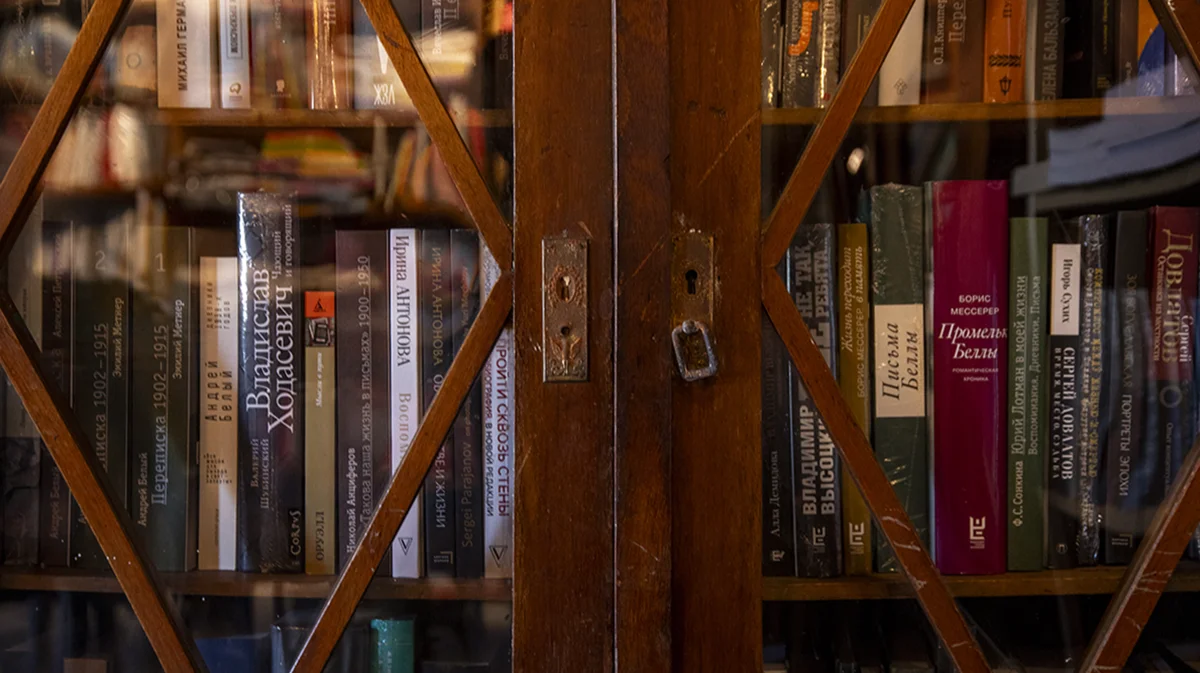
Books on a bookstore shelf. Photo: Dmitry Tsyganov
Over the weekend, two pieces of news emerged from the world of literary censorship.
The first is from Belarus, where the Ministry of Information published “a list of printed publications […] the distribution of which could harm the national interests of the Republic of Belarus.” There are 35 items on the list, which is why some of the media reported that Belarus banned 35 books; this is not entirely correct.
The list is compiled heterogeneously. Next to specific books, or rather, editions of books, for example, “Bitches. Sex, evolution and feminism in the lives of female animals / Lucy Cook; translation from English N. Yu. Isaeva. - Moscow: Eksmo, 2024. - 368 p.”, there are entire series without indicating the translator and publisher - “a series of books “Tokyo Ghoul” by Sui Ishida.” Let us note that “Tokyo Ghoul” clearly poses a greater danger to Belarus than, say, the Marquis de Sade: de Sade’s “120 Days of Sodom” is banned in the “Exclusive Classics” series, but not in the “World Literature” series; while as many as three (!) items on the list were spent on the “ghoul”: the original cycle is prohibited, its continuation is prohibited, and just in case, a specific art book is prohibited.
The second is from Russia, where a dispute continues between publishers of children's literature and activists from the Writers' Union of Russia. The Writers' Union of Russia (remember, its chairman Nikolai Ivanov is the former editor-in-chief of the newspaper "Soviet Warrior" and a retired tax police colonel who is under EU sanctions) decided to conduct an "examination" of children's literature in Russia. “Expertise” found that 60% of children’s books published in Russia “form negative attitudes in children’s behavior.”
After which the State Duma Committee on the Family asked the government to take action, and the publishers demanded to publish the materials of this “expertise.” The materials were never officially published; but in professional chats there was a link to a document that looked quite reliable.
This document is a table where researcher Tatyana Tsvetkova (candidate of pedagogical sciences, writing scientific articles with the methodological basis “thought is material”) puts comments next to each of the “researched” books. Precisely the ones being researched, not the “read” ones, because, as writer and book blogger Sergei Lebedenko noted , the researcher “didn’t read” some of the books, but “flipped through” and experienced “a feeling of disgust and disgust.”
From other examples of expert Tsvetkova’s analysis (spelling and punctuation preserved):
“It shows an attractive image of the place where grandfather ended up after his death. Death as such is not shown, only as a hint. I’ll stay there... What’s here is not important. And from there you can receive letters...” [About Benji Davis’ book “My Grandfather’s Island”]
“The book talks about different types of masochism. The book is for adults, but in the search it comes up as a book for children. So I bought it and studied it. The name alone is terrifying. The book is for the Club of Lovers of Books about Death (think about it! There is already such a club!)" [About the book by Lee Cowart - "Pain is so pleasant. The Science and Culture of Painful Pleasures"]
“The eighth book I’ve read. The most powerful impression! POISON!!!! It hits the emotions and feelings!!! And talented. I want to wash myself and beat someone. CHILDREN SHOULD BE ALLOWED!!! They cost 0+! I had to read it a second time - I couldn’t comprehend it the first time. Different types of death are described: animals, old people, children, unborn children. And the views of her arrival. Life is placed lower than death. I marked special places with stickers. The book will traumatize the psyche of not only a child, but also an adult! DANGEROUS!!! FOR LIFE!!!" [About the book by Elizabeth Larsen - “My Name is Death”]
Currently, the dispute has been resolved in favor of the publishers, and the Russian Book Union, together with the Writers' Union, have issued a conciliatory statement.
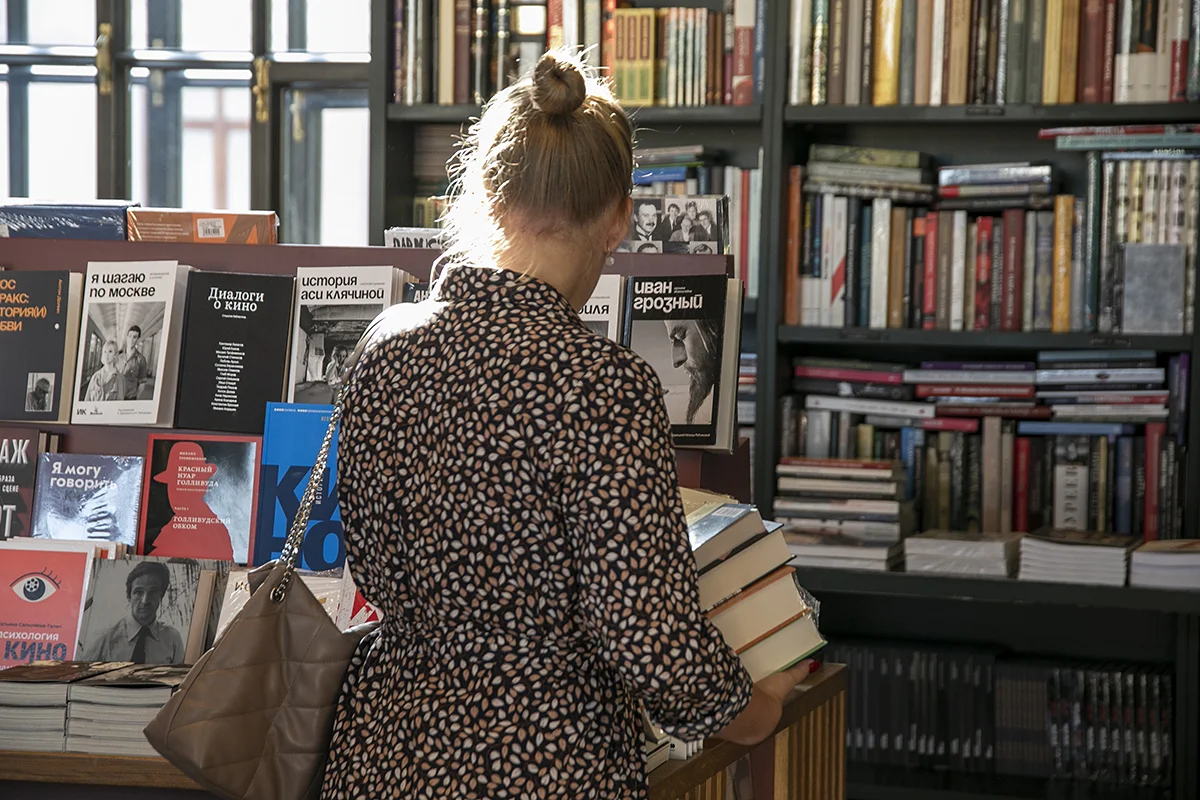
At the same time, the Russian Book Union, together with the Ministry of Digital Arts (which is responsible for printing), established their own expert center - a kind of preliminary censorship body that will be able to evaluate books published or planned for publication according to their degree of risk. And, accordingly, give recommendations: either make changes in a timely manner or withdraw from sale before the law enforcement agencies of the Russian Federation have questions in administrative or criminal cases about LGBT or childfree propaganda, drugs, distribution of pornography , threats to national security, and so on. .
And since law enforcement agencies, as is known, even in criminal cases rely on expertise of the level of Tatyana Tsvetkova, the fears of publishing houses are not unfounded.
Today in the Russian Federation there is legislation according to which any book can be banned. The state has enough ways to do this.
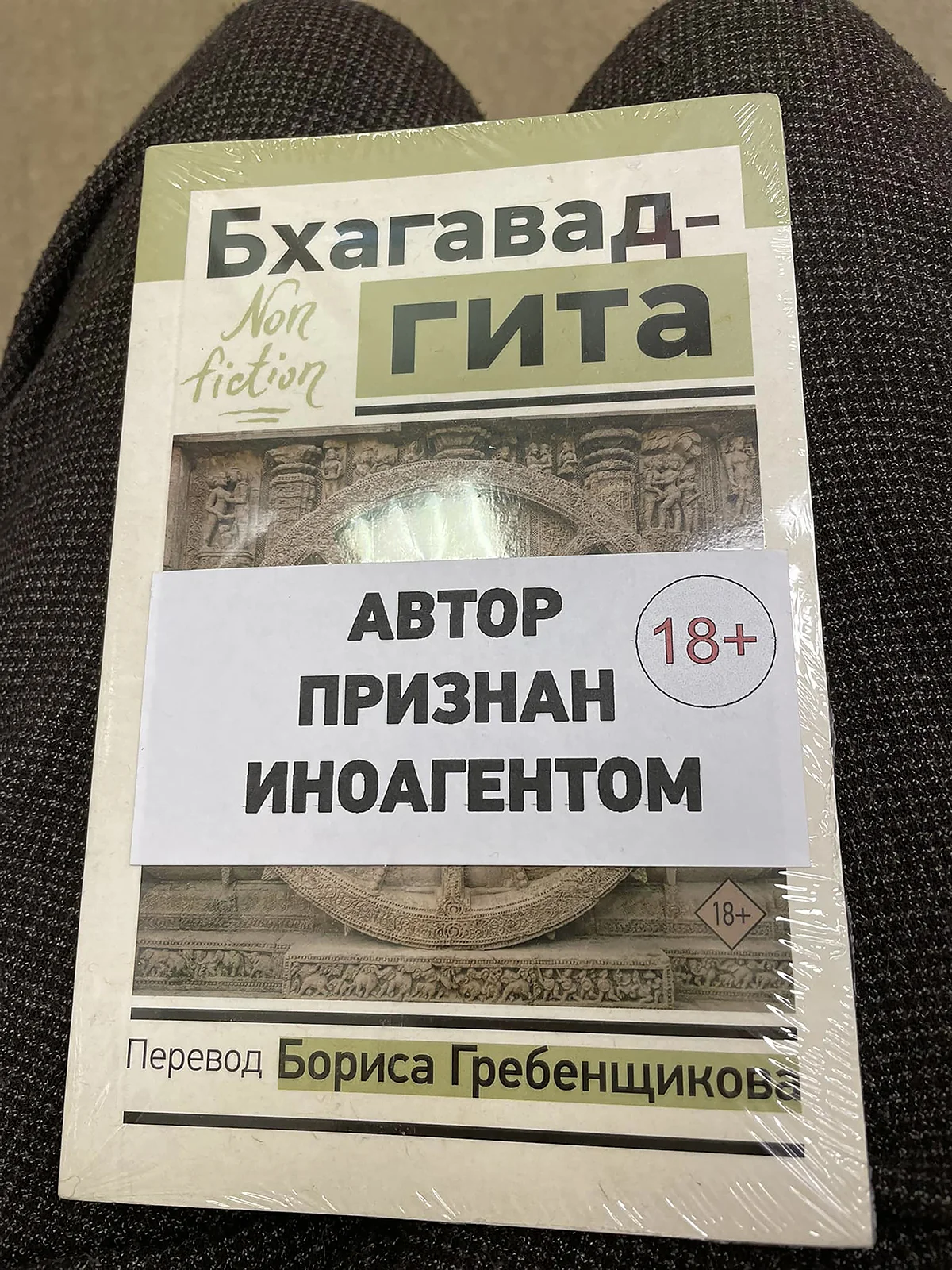
You can find in a book propaganda of something undesirable with the help of relevant experts, or you can declare the author (or translator, as was the case with Boris Grebenshchikov and the Bhagavad Gita translated by him) as a foreign agent or terrorist. The text can be included in the list of extremist materials. A paper book can be prohibited from being placed in visible places in bookstores and must be packaged in paper. It is possible (also a promising direction) to introduce restrictions on the electronic sale of “unreliable” books: for example, books labeled 18+ can be sold only upon presentation of a passport (or books by foreign agents - in order to rewrite everyone who dares to read enemies of the people).
But a unified register of banned books, as in Belarus now, does not yet exist in Russia.
The Russian publishing market is much larger and more diverse than the Belarusian one, and the lobbying opportunities for publishing houses here are much higher. Censorship in Russia continues to be of a hybrid nature: theoretically, anything can be banned, but no one knows exactly what and when. This is why situations arise when book services and stores label as “foreign agents” those who have not yet been declared by them. As well as institutions like their “own” expert councils, which can both warn and help with counter-expertise.
At the same time, the very wording “a list of printed publications <...> the distribution of which can harm national interests” looks like a teaser for a new season of repressive measures in Russia. Why get so sophisticated when you can simply compile a single list and include both individual works and authors (for example, “all books by B. Akunin”), and cycles (beware, Tokyo Ghoul)?
This innovation will be welcomed both by censors who want more prohibitions, and by censored people who want more clear rules of the game in the market. Readers are left with the preserved “Flibusta” - our main stronghold of press freedom in 2024.