
Translated material
Not right wrong
Putin's Russia calls itself "conservative" and opposed to the left-liberal West. But it has nothing to do with “real” conservatism
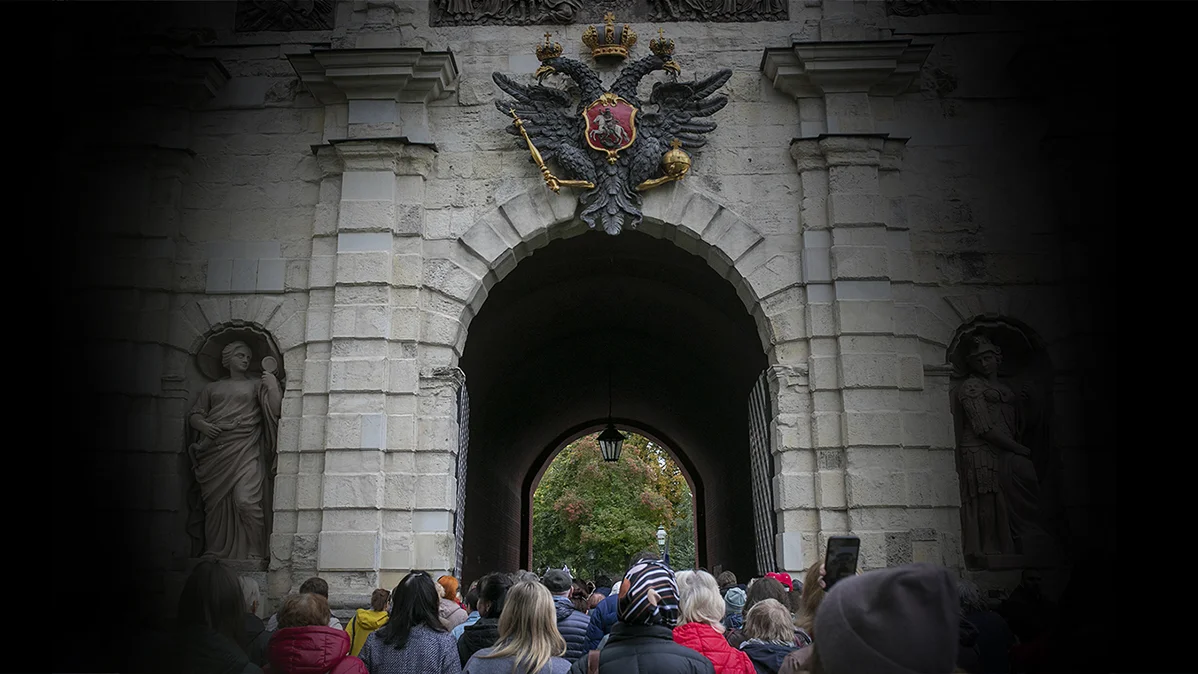
Mass events in the Peter and Paul Fortress regarding referendums on the annexation by Russia of the occupied territories of Ukraine, St. Petersburg, September 2022. Photo: Dmitry Tsyganov
The phrase “traditional values” in Russian now has a mockingly frivolous connotation. Independent media usually refer to it in quotation marks. This is understandable: the Russian Federation, as a young state, was initially doomed to have a difficult relationship with the tradition that it inherited from both the autocratic monarchy and the socialist dictatorship.
In 1991, Russia did not decide which traditional values it would become a successor to. Instead, the problem of heritage was first ignored and then only used by political strategists to justify any savagery with the “great past.” And today, Russian traditionalism is associated with “nuclear Orthodoxy”, the Temple of the Armed Forces with portraits of Putin and Stalin and radical anti-Westernism - and is opposed to “destructive liberalism”, from which the Russian authorities now promise residents of Europe and North America refuge. But did Russia have a chance for normal traditionalism? And why would his Putin variation, which the Kremlin is actively promoting abroad, cause bewilderment among real conservatives? Andrey Sapozhnikov reconstructs a brief history of new Russian conservative thought.
Traditions did not fit into the market: 1990s
In the early years of the young country's existence, the issue of relationships with the past was not a priority concern of the authorities. Reformers relied on market individualism of citizens—sovereign consumers. Such an approach, in the spirit of Margaret Thatcher’s statement “there is no such thing as society,” can be afforded in a state with strong political institutions and social harmony. The new Russia was not like that. Its appearance was soon outlined by Orthodox bandits, National Bolsheviks, Red Browns, Eurasians and conservative liberals from the Democratic Choice of Russia party - and they all had equal rights to the title of traditionalists.
The problem of inheriting tradition and defining a new national identity remained hanging in the air. Like the Kommersant newspaper, which to this day bears the phrase “not published from 1917 to 1990 due to circumstances beyond the editor’s control,” the Kremlin disavowed the inconvenient past as not its responsibility and concentrated on economic reforms.
Party functionaries and security officers remained in government, and Yeltsin did not even kick the latter out of the Lubyanka and protected them from an angry crowd in August 1991.
Attempts by individual politicians like Galina Starovoytova to promote lustration bills did not meet with support, and most of the authorities’ contacts with the past were of a purely ceremonial nature - such as the reburial of the remains of the royal family.
From the point of view of classical Western conservatism, such uncertainty meant causing the country a severe birth trauma.
The classics of European traditionalism of different eras, from Edmund Burke (XVIII century, Great Britain) to Gustave Le Bon (XIX - XX, France) and Roger Scruton (XX - XXI, Great Britain), always emphasized their difference from liberals by refusing to perceive the state as a “night watchman” " That is, as a service whose functions do not go beyond the protection of individual rights and property and which intervenes only in case of danger.
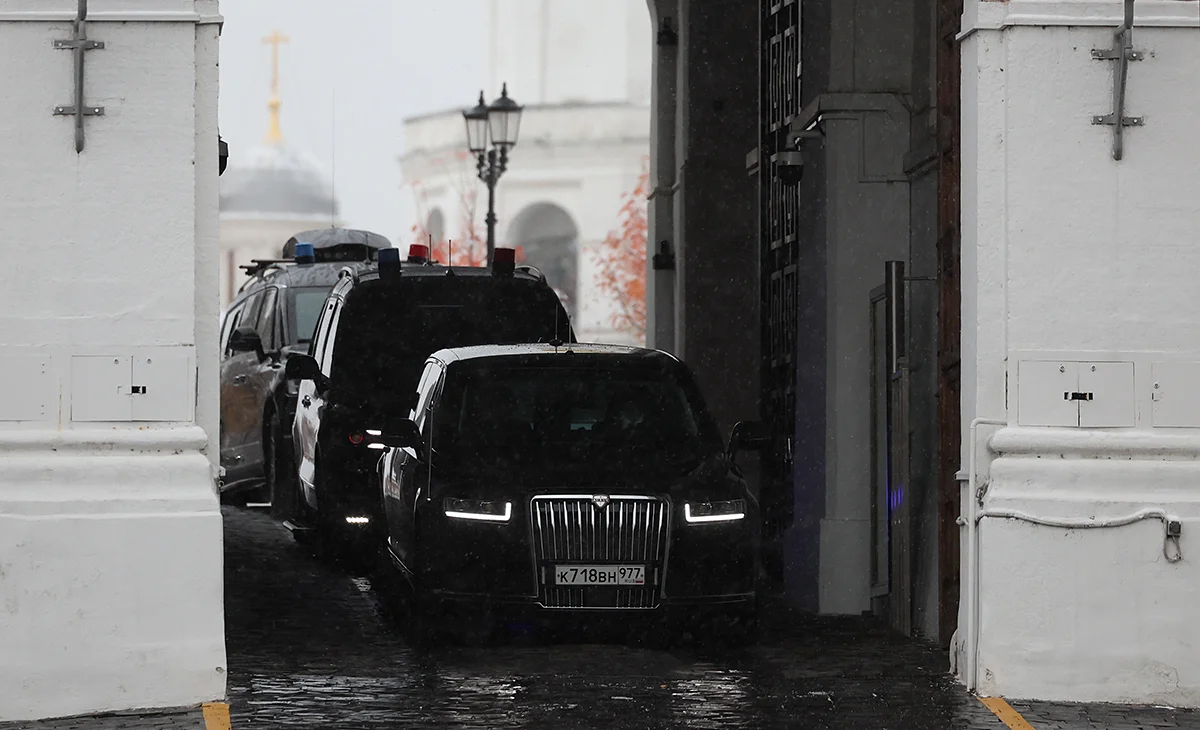
For a European conservative, the state is an entity strictly accountable and limited in powers, but inseparable from society. The state is the embodiment of society's need for coordination. And this coordination is carried out not through utopian-experimental theories, but in accordance with already existing customs and habits. The “intuitive wisdom” that permeates families, religious groups, good neighborly communities and other “little platoons” (introduced into the political lexicon by Burke) that make up civil society, which “hires” its rulers to ensure stable development. With the expectation that the government will work according to the principle of “nobility obliges” (from the French expression noblesse oblige). Obliges to behave with dignity and awareness of one’s responsibility to people and traditions that unite generations and form the foundation of society.
In other words, this is a political model that is infinitely far from post-Soviet Russia. The Kremlin, in principle, has never considered the territory under its control as a space of customs and traditions worthy of preservation, protection or coordination. As well as numerous red-brown movements, like the NBP or RNU, that hastened to occupy the traditionalist niche, advocating revolutionary experimental transformations (imperial foreign policy or national dictatorship, for example).
It is possible that in the 1990s the authorities never initiated a public discussion on the conventional topic “Where did we come from? Who are we? Where are we going?" because it would simply threaten their position. Boris Yeltsin was not Vaclav Havel or Lech Walesa; his career - and that of most people around him - began not with the surrender of a party card, but with its active use in the status of a high-ranking official.
If collective reflection had led the country to the understanding that Soviet apparatchiks should be prohibited from participating in political life, Yeltsin himself would have been dealt a blow
(who, it is believed , for this reason, did not support Starovoitova’s lustration law, from whom the president asked: “Will you put me on this list too?”).
His first term was spent in the confusion of shock therapy and the struggle for power, and the second was completely marked by local neo-Soviet revenge, as a result of which the security officer Yevgeny Primakov became prime minister. All these factors did not contribute to constructive conversations about collective memory and values, without which traditionalist rule is simply impossible. The very concept of “traditionalism” implies reliance on, in fact, traditions, which in the Russian Federation were already being replaced in the 1990s by a hodgepodge of political technology clichés and populism .
But have any changes occurred with the coming to power of Vladimir Putin - who, probably more actively than all previous rulers of Russia and the USSR, speaks about “traditional values” and, now in his fifth presidential term, justifies any repressive and military campaigns by fighting for them?
Conservatism as a defensive reaction: 2000–2022
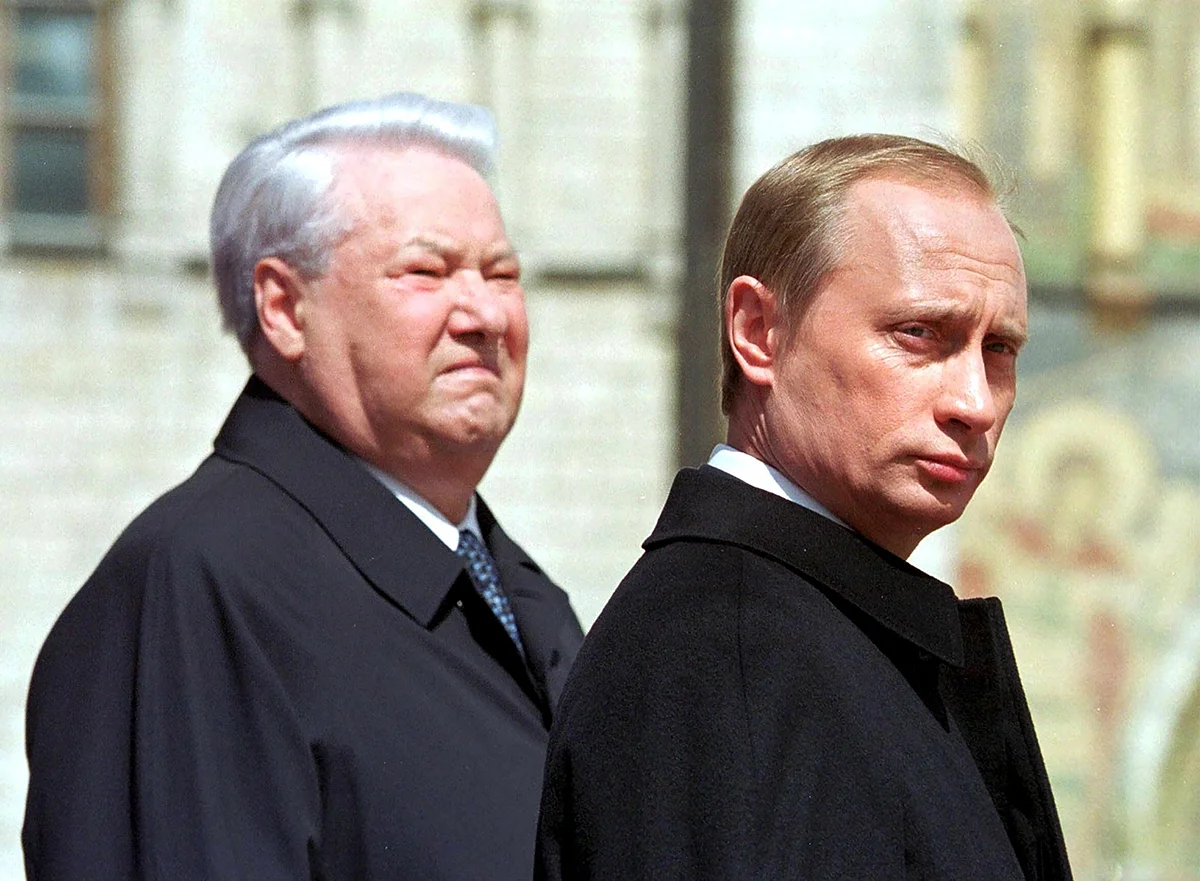
When did Putinism's love affair with “conservatism” begin? The floor can be given to former British Prime Minister Tony Blair, who in the early 2000swas perhaps the main supporter of allowing the new Russian president to the “main table” of world politics. “The first Putin I met was a Western-oriented politician who wanted to build good relations with us... But then, it seems to me, he encountered problems in reforming Russia and decided to consolidate power in a more authoritarian manner and become a Russian nationalist,” - Blair reasoned already in 2022, after the start of a full-scale war in Ukraine.
For Putin’s first two terms, great-power escapades like the Munich speech were indeed rather exceptions. Appeals to tradition and nationalism acquired a systematic character only after the “castling”. The new course towards conservatism was widely discussed in 2013, when, during the announcement of his address to the Federal Assembly, the president began to accuse the West of moral relativism and called for the protection of “traditional values” and spiritual life. “Of course, this is a conservative position,” Putin then summed up his passage mixed with quotes from Nikolai Berdyaev.
This position was not conservative, but defensive. It was occupied by a man whose rating was then consistently falling , whose return to the presidential post was accompanied by mass protests, who was turned away by the middle class and who found it difficult to offer Russians an image of the future that would be at least as good as Medvedev’s modernization. All that remained was the image of the past—and the key word here is “image,” because Putin’s “conservatism” will never go beyond rhetorical abstractions.
The “Lost Decade” in the Russian Federation 2012–2022, which symbolically began with Berdyaev’s quote uttered during that very message “the meaning of conservatism is not that it prevents movement forward and upward, but that it prevents movement backward and downward,” completely This statement was contradicted. The quote, by the way, is taken from the book “Philosophy of Inequality” and continues like this:
“The meaning of conservatism is in the obstacles it puts to the manifestations of bestial-chaotic elements in human societies.”
This saying is quite in the spirit of Burke. It criticizes radical transformations: a traditionalist considers it dangerous to abandon reliance on established life practices in favor of revolutionary theories that periodically tempt society. New York Times columnist Bret Stephens noted in 2020 that while revolutionaries view the state as a Lego brick structure that can be easily reassembled, traditionalists see it as a tapestry that needs to be passed down from generation to generation and carefully darned from time to time. so that one thread does not unravel the entire pattern.
The paradox of Putin’s “conservatism” is that it is permissible for him not just to destroy a Lego tower, but also to replace all its parts with Mega Bloks. The conservative position in the early 2010s could be expressed in two ways: either by accepting the conditional neoliberalism of the 1990s and its further modifications (up to Medvedev’s, which in this regard was even more conservative than Putin’s, since it adhered to a more moderate external and internal course) as a new but working state tradition - or by initiating that very discussion about relations with the Soviet and imperial past (which could end, for example, with a consensus around the inheritance of the political tradition of the Russian Republic, which arose as a result of the February Revolution).
But Putin preferred the destruction of those few institutions that emerged in the 1990s and their replacement with something red and brown: openness and international integration were replaced by neo-imperial policies, carried out through soldiers with Kolovrat and hammers and sickles on their chevrons, and relative freedom of speech was supplanted censorship and propaganda. The state undertook to reshape cultural and social life in accordance with its ideas about “traditional values.”
A destructive shelter from destructive neoliberalism: 2022–…
Their list was approved by presidential decree in 2022:
“Life, dignity, human rights and freedoms, patriotism, citizenship, service to the Fatherland and responsibility for its destiny, high moral ideals, strong family, creative work, priority of the spiritual over the material, humanism, mercy, justice, collectivism, mutual assistance and mutual respect, historical memory and continuity of generations, the unity of the peoples of Russia.”
What does this list have in common with the everyday life of a dictatorship, where a 67-year-old pediatrician can go to jail for five and a half years for denunciation of “fakes about the army”, where people almost don’t go to churches, where for every 10 marriages there are 8 divorces, where one from the republics tortures gays and declares “blood feud” at the government level, where a ballistic missile strike on a neighboring country is considered acceptable, and so on?
The very fact of the existence of such a list under the signature of the president already refutes his “conservative bias” : after all, we repeat, the source of traditional values should be civil society and its “small platoons”, and not the presidential administration. And “small platoons” do not exist in modern Russia, because its leadership, in a completely Soviet spirit, views any civil association, from a trade union to a charitable foundation , as a hostile element that must either be nationalized or destroyed through unwanted and foreign agency labels. Without the “little platoons” praised by Burke and Tocqueville, talking about normal traditionalism makes no sense.
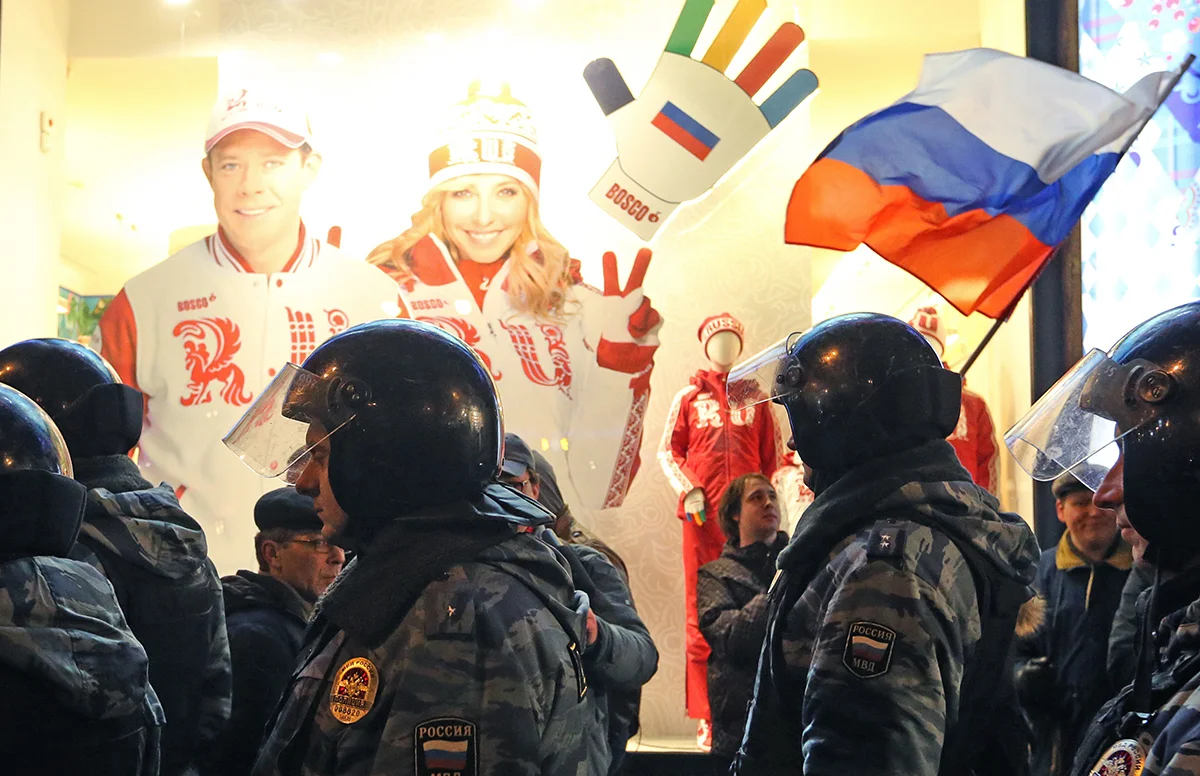
But Putin continues it - and especially actively since 2022, contrasting Russia as a storehouse of tradition with Western progressivism. This approach was most openly manifested in the August decree on granting residence permits in the Russian Federation to residents of countries
“imposing destructive neoliberal ideological guidelines that contradict traditional Russian spiritual and moral values.”
Since the beginning of the war in Ukraine, Putin’s “conservatism” has generally acquired an “export” character, because it is important for the Kremlin to convince the foreign public that the Russian Federation is truly a reserve of traditionalism and Christian morality. It is important because this framing of the issue, in the eyes of the ill-informed Western right, turns the invasion of Ukraine from an act of barbarity and a flagrant violation of international norms into a holy war of genuine values against “liberal fascism.” Which, in turn, could radically affect support for Ukraine and sanctions pressure on Russia.
The fact that the Russian authorities generally manage to impose such a picture of the world on someone through manipulation and propaganda indicates a global crisis of conservatism. Over the past decades, it has really changed beyond recognition , first acquiring the prefix neo- and becoming a doctrine justifying surveillance of citizens and military invasions, and then completely turning into the alarmist concept of “Rivers of Blood” * , speaking not “for”, but “against”. Against migrants, LGBT, abortion and the “new ethics” - and in 2024, it has become the norm to classify as conservative any political force that portrays an irreconcilable fight against the listed “woke-symptoms”.

Conservatism, of course, by definition has some flexibility. Firstly, it varies from country to country due to traditional differences. Secondly, it can have different “degrees of conservation”: journalist David Brooks, for example, considers American conservatism to be a “steroid-fueled, adrenaline-fueled Burkeanism” that places greater emphasis on social mobility rather than on the stability of communities, as in the UK.
Because of this relativity, it is difficult to establish universal criteria by which one political regime could be called more committed to traditional values than another. Such an assessment requires immersion in the national context. One can look instead at “illiberalism,” falsely understood as synonymous with conservatism. Recent years have seen a surge in the phenomenon of right-wing populism—the demonization of liberals as “radical left-wing nutcases” provides accessible political capital and justifies abuses on the right. To the point that even well-known American conservatives, who do not want to openly criticize the Russian “anti-woke crusader,” are beginning to show delicacy in the issue of condemning the actions of Putin’s Russia.
This understanding of conservatism, which spread in the West with the escalation of the so-called “culture war” in the 2010s, opened the way for wolves in sheep’s clothing. To the applause of the public, while fighting the queer community and “LGBT propaganda”, they do not forget to eliminate the institutions of civil society, its rights and freedoms - for traditionalism, completely sacred and untouchable, but hindering quasi-conservative dictatorships like Russia or Iran.
“The cost of ill-conceived social natural science is sometimes simply incalculable. It destroys not only the material, but also the spiritual foundations of human existence. It leaves behind moral ruins, in the place of which it will be impossible to build anything at all for a long time,” Putin noted in 2021. It's a pity that, as the last twenty-four have shown, he had absolutely no idea what he was talking about.
* “Rivers of Blood” is the code name for a controversial speech delivered in 1968 at a meeting of the Conservative Association in Birmingham by Enoch Powell, an influential parliamentarian from the Conservative Party of Great Britain. Powell spoke with fierce criticism of immigration to the UK citizens of the Commonwealth countries of Nations, called for stopping the flow of migrants and contributing to the outflow of already arriving: “When I look into the future, I am overwhelmed with bad forebodings; Like a Roman, I see the Tiber River, which foams in blood. " The speech cost Powell of a ministerial office in the shadow office and provoked the broadest public outcry, becoming an early example of "rude" conservatism.