
Translated material
Who said "wow"?
Quadrobers and other subcultures today are a derivative of social networks, not an ideological rebellion
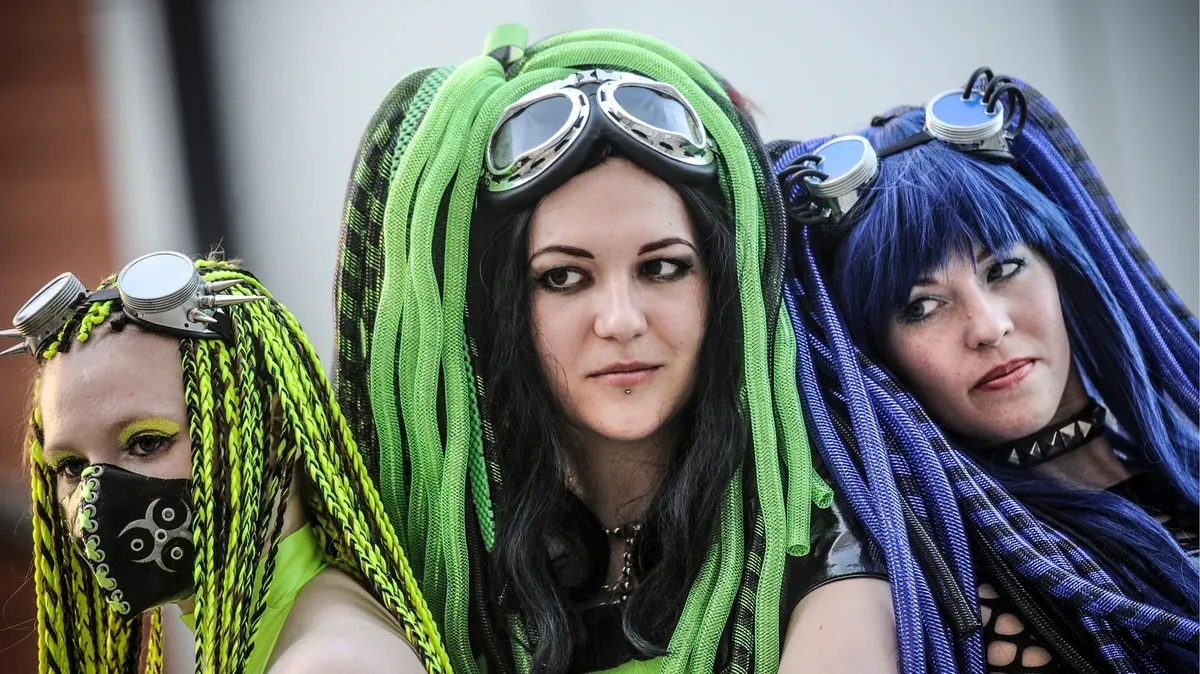
Photo: Evgeny Kurskov / TASS
As soon as the word “subculture” appears in a discussion, its participants suddenly find themselves in semantically disputed territory, the boundaries of which may have once been outlined, but since then so much water has flown under the bridge that from an internationally recognized landlocked state it turned into an island with an unclear identity - and gradually sinking under water.
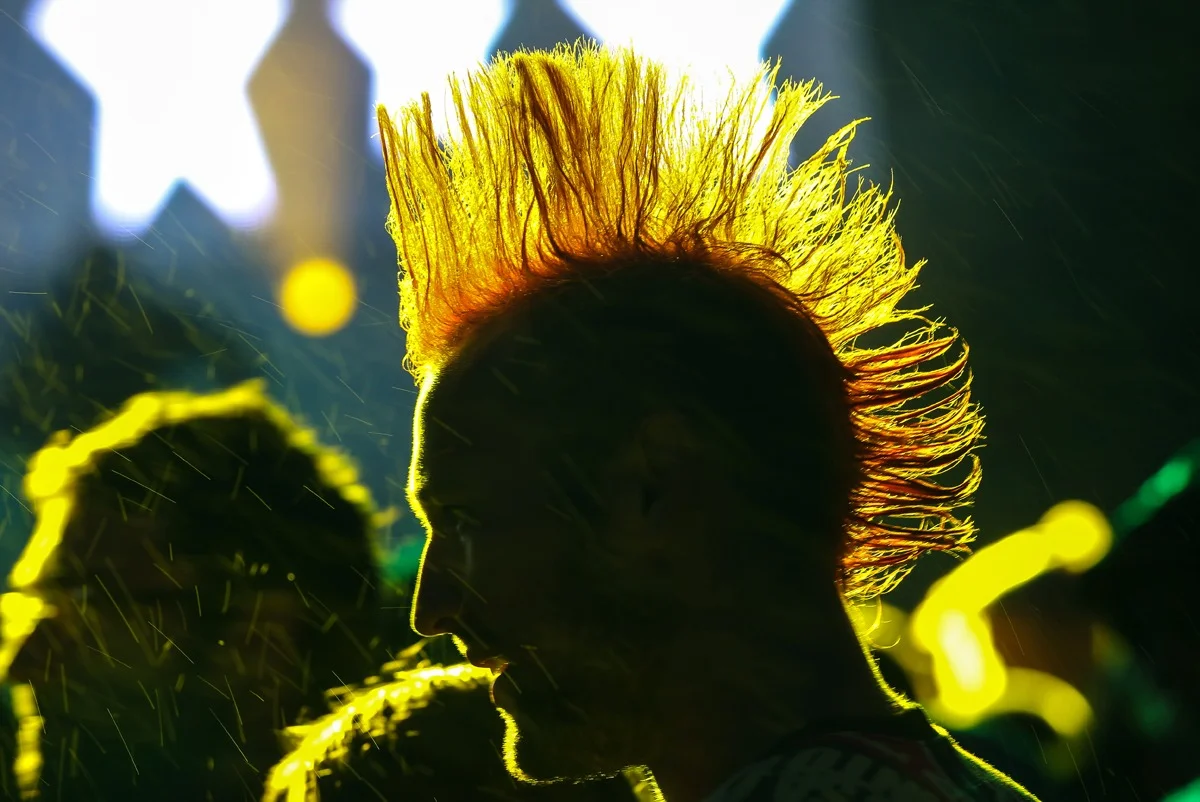
In 2017, Elena Omelchenko, a professor at the Department of Sociology at the National Research University Higher School of Economics, told Kommersant that the Center for Youth Research, which she heads, is trying to find an alternative to the term “subculture”, because this phenomenon has a class origin from the mid-20th century, and its classic representatives like punks and skinheads have long since “gone into the marginal sector.” “Today we... live in a different society, where there are no more classes and the youth scene has become much more complex,” she said.
According to Omelchenko, at first, by the end of the 1980s, classic subcultures were replaced by “buffer” ones like ravers, who are more open to new followers and focused on consumption. And in the 2010s, the concept of subcultures is experiencing an identity crisis, since from now on it is being eroded by “solidarities” - connections between like-minded people on a deeper level, which puts first place not the difference between “one’s own” in appearance, but “agreement with one or another value vector "
This, for example, can bring a punk closer to a radical vegan or straight edger - and each of them will call himself an anarchist.
Despite the “buffer” and “solidarized” extensions of the term “subculture”, everything described above - from ravers to punks - is directly related to it. Because the commercialization of the 1980s did not displace the key component for subcultures from these movements—the value component. Indeed, this term began to lose its relevance only in the late 2010s, when young people began to reshape old subcultures in their own way and discarded their values and ideas as rudiments.
It seems to me that the definition of subculture given by professor-anthropologist from the University of Arizona, High Ren, is very accurate. He identifies five of its elements: style (clothing, music, colors), promotion of a particular way of life, prudence of supporters (through an assessment of the risks and costs associated with adherence to a subculture), as well as their subjectivity (through the acceptance of media discourses and representations of their subculture) and intellectuality — independent determination of what should be considered reasonable. Ren generally believes that subcultures have important political significance in the “neoliberal historical situation” - because neoliberalism implies that government minimizes interference in society and delegates the functions of managing the social order to grassroots structures. Including groups formed around subcultures.
That's why The Washington Post in 1991 called the United States a “land of subcultures,” where personality is shaped not by class, profession or place of birth, but by personal hobbies. For example, nudism - the article talks about an American who founded one of the main nudist organizations in the states, which he runs from a separate office, publishes a small magazine for it and communicates by fax with “fellow nudists” from all over the country. This is what conservative thinkers like Alexis de Tocqueville and Edmund Burke called the “art of association,” or little platoons, which create a supranational social fabric by concentrating people around their interests.
A subculture is necessarily something about values, ideas and meanings, about a lifestyle that sets it apart from the background of the dominant culture,
most often - about the appearance and clothing that distinguishes her followers (in the case of nudists, the lack thereof) and, of course, about seriousness and involvement. Because compliance with subcultural canons requires, at a minimum, a revision of one’s appearance and behavior, and ideally, familiarization with the philosophical side of the issue. You can't become a punk just by adding The Clash album to your Spotify library. More precisely, it was impossible until recently .
An exemplary in form - although, of course, sharply negative - youth subculture in Russia were the NS skinheads of the late 1990s - early 2000s, described “from the inside” by neo-Nazi Roman Nifontov in the scandalous book “Skins: Rus' Awakens” (included in the list extremist materials). It was a social structure united by a characteristic style (combat boots, bomber jackets, shaved heads) and a special way of life, which boiled down to hatred both towards representatives of other subcultures (rappers, hippies, National Bolsheviks) and towards entire nations, and under this hatred a kind of ideological base.
It was reflected and replicated in the press of individual cells of the subculture, whose representatives took it extremely seriously. They also had a “normal life” - with family, work and civic obligations, but the NS culture and its inherent worldview strongly influenced this normality and required a separate, “parallel life” for themselves, which took place in their free time from work in the Moscow region trains and underground gyms - and step by step she turned shaven-headed young people from skinheads into prisoners in Russian prisons. But it was their responsible choice, which was preceded by a definition of what should be considered “reasonable,” albeit an extremely perverted one.
A striking example of a more “buffer” subculture is goths and emo, who made their presence known en masse in Russia and the West in the second half of the 2000s. Their “buffer” character is well illustrated by a scene from the American animated series “South Park”: there a group of goth schoolchildren perform at a talent show with the gothic rock song “Talent Show Sucks”, in which they sing about how goths will never participate in talent show. The performers leave the stage with the words: “We showed them,” and hope for first place.

Actually, the “buffering” is manifested in the playful nature of what is happening. A representative of such a subculture plays a role that allows him to feel like he belongs to a subculture of a community where a single model of behavior is accepted, where the same musical groups and books are revered and discussed, and so on. But this, as a rule, does not go to extremes. Most post-Soviet emos did not follow the example of the main character of Valeria Gai Germanika’s sensational series “School” at one time, but simply listened to the group Tokio Hotel, dramatized the experiences of adolescence and dressed brightly.
Continuing the analogies with Russian television projects, it is also worth recalling the character Dasha Vasnetsova from the sitcom “Daddy’s Daughters.” Stylistically and behaviorally, she always strived to be an “orthodox” goth, but as soon as she fell in love with a not-too-gothic (that is, ordinary) guy in one of the episodes, she completely revised her style and behavior. Which is perfectly normal for postmodern subcultures, whose representatives, as sociologist David Muggleton wrote in his book Inside Subculture: The Postmodern Meaning of Style , exhibit “fragmented, heterogeneous and individualistic stylistic identification.” In, again, a neoliberal situation typical of enterprising, creative individuals.
And this does not mean at all that “buffer” subcultures are superficial - they still require significant involvement from their adherents, it’s just that we are talking here more about some kind of “conscious fashion” than about consolidated movements like hippies or NS skinheads.
The “buffer” stage of the 2000s was a kind of middle ground between the American hippies of the 1960s, who ran away from their parents to indulge in unprotected sex in rural Colorado communes, and what is commonly understood as subcultures today. And by the way, what is this?
As a person who grew up in the late 2010s and early 2020s, in different countries on different continents, I disagree with Elena Omelchenko, who in 2017 spoke about the “complication of the youth scene.” Such processes, in my opinion, really took place, in particular, in the “advanced crowd” of Moscow in the 2017–2020s around such a phenomenon as the “new Russian wave.” But still, this is the same niche, “marginal sector”, favored by a narrow circle of countercultural snobs. The mainstream, on the contrary, in the second half of the 2010s rapidly plunged into simplification and primitiveness.
This seems to me to be the result of a confluence of two circumstances. Firstly, by the 2010s, classical subcultures had already “run out of steam” and ceased to integrate into the fundamentally new context of a comprehensive cyberculture. It is worth noting here that “system-forming” subcultures like hippies and punks received a colossal impetus and intellectual basis from the student protests of the 1960s - and nothing equivalent to “ideologically powerful” has happened in youth culture anywhere in the world since then.
As for cyberculture, by the second half of the 2010s, social networks began to occupy a dominant position in its architecture. And this “by default” is a total oversaturation of information, short-termism, superficiality and displacement of a person from real life. That is, things are incompatible with the traditional understanding of subculture as a relatively stable social structure or “small squad”.
If you remove ideology, intellectuality and subjectivity from a subculture, only aesthetics will remain. It is into this – or rather into them, into “aesthetics” – that the phenomenon of subculture has degenerated. One of the first to notice this process back in 2014 was The Guardian journalist Alexis Petridis, who noted in his article that young people had stopped openly expressing their tastes through behavior, clothing and music. All the differences remain only in social media.
This is also true as of 2024. It is characteristic that in Europe the only quasi-subculture whose representative on the street can be identified by appearance is now “talakhon”. In Germany, this label is attached to young migrants from North Africa and the Middle East who wear fake luxury clothing, spit on the pavement, wave their fists in the air and do other strange things, inevitably recorded on camera and posted on TikTok - the most powerful in the context of pop culture. designing a social network - once TikTok algorithms “highlight” a certain trend, even such a meaningless and absurd one as “talakhon”, and it immediately acquires a name, public television begins to make reports about it, and from illustrating the imperfections of Germany’s integration policy, it rises to the rank of a subculture.
Social networks are like conveyors, generating new trends and symbols at breakneck speed, which is why not all of them have time to form into something sufficiently subculturally integral. And most youth trends since the early 2020s remain in the embryonic form of “aesthetics.”
For example, Old money, Cottagecore, Dark academia, Gothcore and other names invented by Generation Z for elements of old subcultures, in particular, preppies and goths, taken out of the cultural context (for which TikTok videos are too short to reflect).
When analyzing “aesthetics,” there is always a feeling that all this is not entirely serious - or is even ironic. One of the first popular Internet aesthetics back in the early 2010s was Seapunk, which mixed a cartoonishly nostalgic representation of 1990s web design with various sea imagery like dolphins and islands. He allegedly set the conceptual vector for all subsequent “aesthetics,” which are always so naively superficial that they seem like a joke. This, of course, strongly contrasts with the subcultural state of affairs in the 90s-2000s, when conventional rappers and metalheads were ready to fight with each other, defending their belonging to a special social group.
“Being part of a subculture used to be real work: it involved figuring out who to talk to or where to go, and maybe awkwardly hanging around in a record store, nightclub or street corner until you got hooked on what was going on. But the subculture could allow a conventional clubber or punk to live in a common social container with like-minded people from the moment he woke up until the moment he went to bed. This is precisely the type of real cultural community that has been replaced by an algorithmic fluidity in which nothing sticks around long enough to take root,” reflected Miriel Silkoff in a column for The New York Times, troubled by her twelve-year-old daughter’s fascination with “aesthetics.”
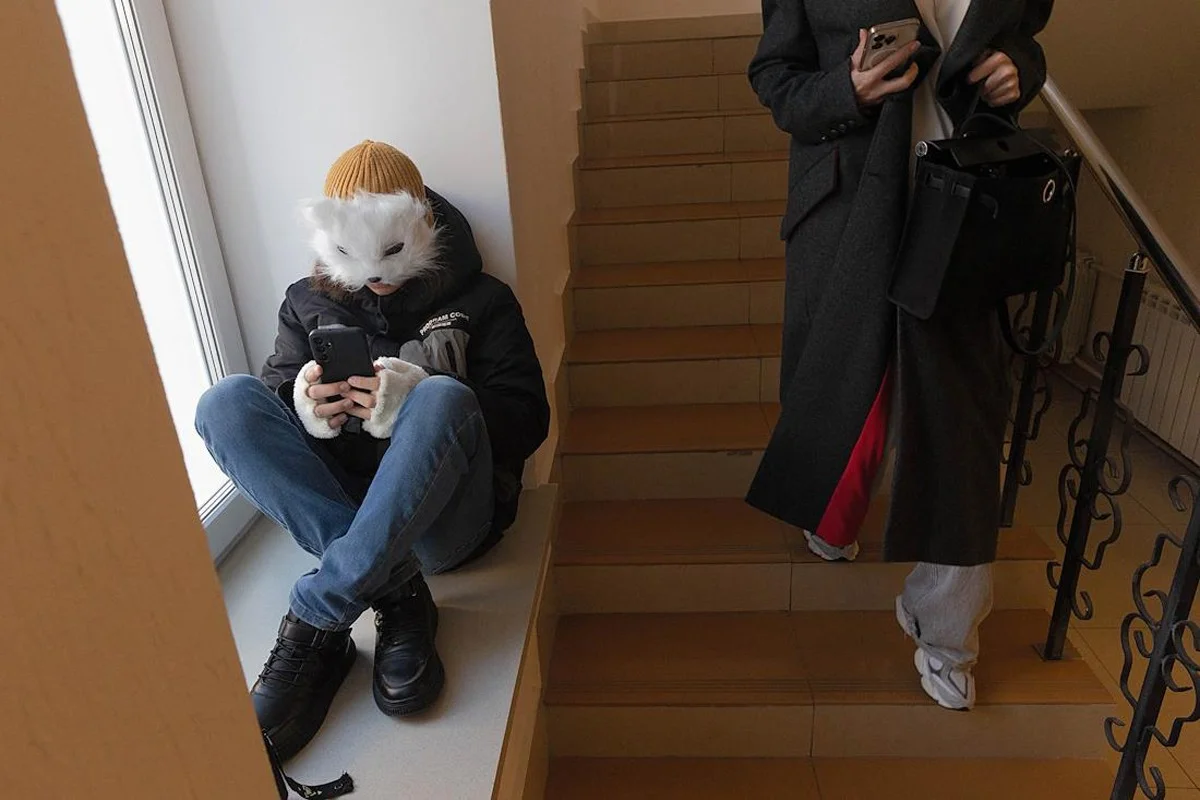
I agree with Miriel that the death of subcultures and the concentration of young people on completely absurd “aesthetics” like Peoplehood (“an aesthetic revolving around ordinary acts of kindness and intimacy that are present in everyday life”) is not the fault of young people, but a symptom of a general cultural crisis. In which teenage creative energy simply does not find any more worthwhile use.
In order for subcultures to appear in society, around which innovative musical genres, their own political philosophy and a unique style would be formed, there must also be a worthy dominant culture, from which its “subcultural” branches could build on and to which they would be opposed. In 2024, the mainstream is absurdism and digital noise, nihilism and a complete denial of modernity to any seriousness. Over the past decade, popular music (in the West, for example, the group 100 gecs, in Russia - almost any rapper, in particular Morgenshtern *) and fashion (in the West - Virgil Abloh, in Russia - Gosha Rubchinsky) have been extolling the state of digital disorientation and moral relativism .
There is such chaos in the world that it is pointless to waste energy and time trying to comprehend and change these processes, because you can simply indulge in a collective postmodern dance of death and try to monetize it through the TikTok or Instagram algorithms**. As soon as someone decides to slow down this dance and turn it from chaotic jerking into at least a “buffer” salsa, serious subcultures will again begin to appear in the world, innovative directions in mass culture will emerge - and a tangible counterculture will emerge. A completely different question is who will have the will and resources for such a “conservative turn”.