
Translated material
Doctor's lawyer
A Novaya columnist attended the trial of a Rwandan doctor who was sentenced to 27 years for participation in genocide.
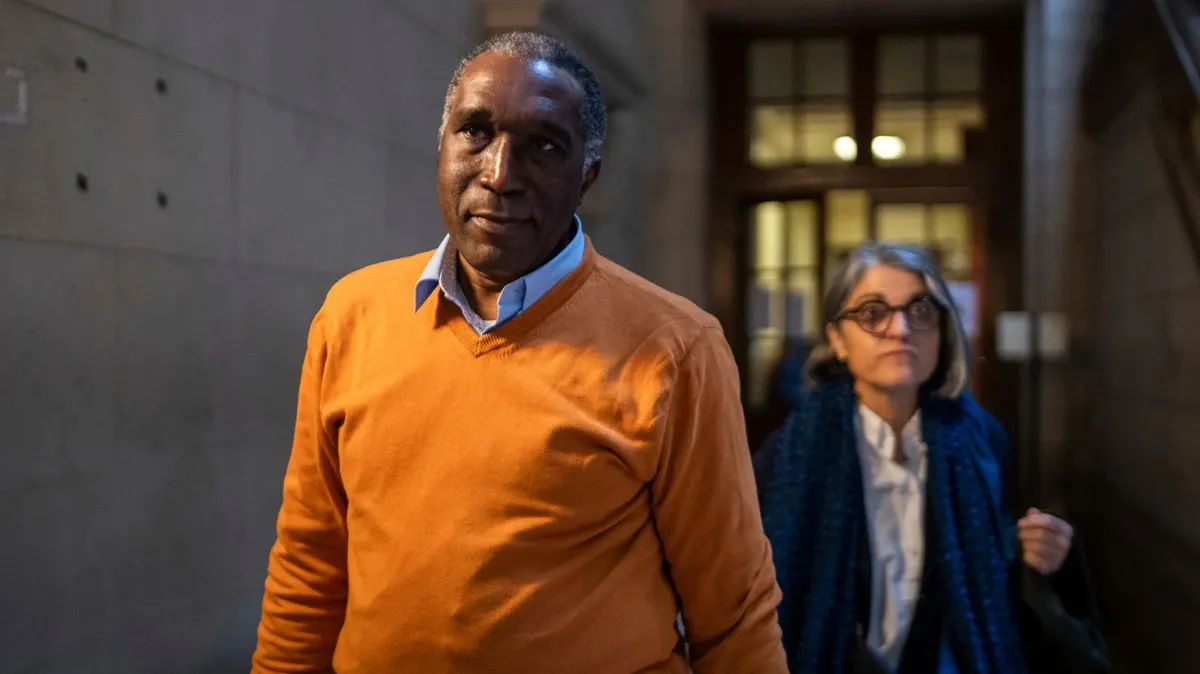
Eugene Rwamucho at the Paris Court, October 30, 2024. Photo: AP / TASS
It turned out that I had to talk one-on-one in Russian with a man accused of genocide and sentenced to 27 years in prison by a jury in Paris. This man, who does not deny that he participated in the burial of thousands of murdered Tutsis in Rwanda in 1994, even jokingly suggested that we were brothers. He is a very charming man - so much so that if you met him, you would never say that he could ever be involved in something like this. And the point is not necessarily that he is a hardened hypocrite - in the 30 years that have elapsed since the events, he simply could have become a different person. A dozen relatives and friends who came to support him at the meetings know him precisely and only as a kind family man and doctor. Watching them say goodbye in the courtroom was difficult. But he still suffered a heavy and well-deserved punishment. 30 years later, in a foreign country, 10 thousand kilometers from home.
"For hygienic reasons"
65-year-old Rwandan doctor Eugene Rwamucho received 27 years in prison.
What was he charged with? On May 14, 1994, at the height of the genocide, during which about a million Tutsi people were brutally killed from April to July, at the university in the Rwandan city of Butare, the doctor gave a speech in which, as he himself will say in court, there was nothing unusual - words “somewhat similar to lines from the Marseillaise.” Still, the trial is taking place in France, and it’s easier for the jury to understand.
The second and most terrible thing that the prosecutor’s office charged him with is that he, being at that time the director of the Butare University Center for Public Health, not only supervised the process of mass burials of the dead, but also personally finished off the wounded, and also ordered the burial of those still alive , and all this with the main goal of hiding traces of the crime... But all this is not true, Rwamucho himself has repeated more than once since October 1, when this trial began. In fact, he only helped bury people who had already died, and only for “hygienic reasons” - “so as not to add a sanitary crisis to the disaster,” as one of the doctor’s two lawyers, Philippe Meilak, said.
“There were mountains of corpses. They were attacked by stray dogs who tore them to pieces. The problem of the accumulation of dead had to be properly addressed,” testified on October 11, Jean Nepomucene Gahururu, who served as secretary general of the Rwandan Red Cross in 1994 and has now been called as a witness for the defense.
I first came to this court on the penultimate day, October 29, when the doctor’s lawyers spoke. It was already known that the day before, even the prosecutors themselves agreed that they had no evidence that the doctor killed anyone personally.
“The debate does not appear to have revealed any evidence that Mr. Rwamucho himself committed summary executions, torture or other inhumane acts,” said Nicolas Peron, one of two state prosecutors.
Therefore, charges of crimes against humanity were dropped, and prosecutors requested not a life sentence for the doctor, but 30 years in prison. However, is there a big difference when the accused is 65...
“So we are brothers...”
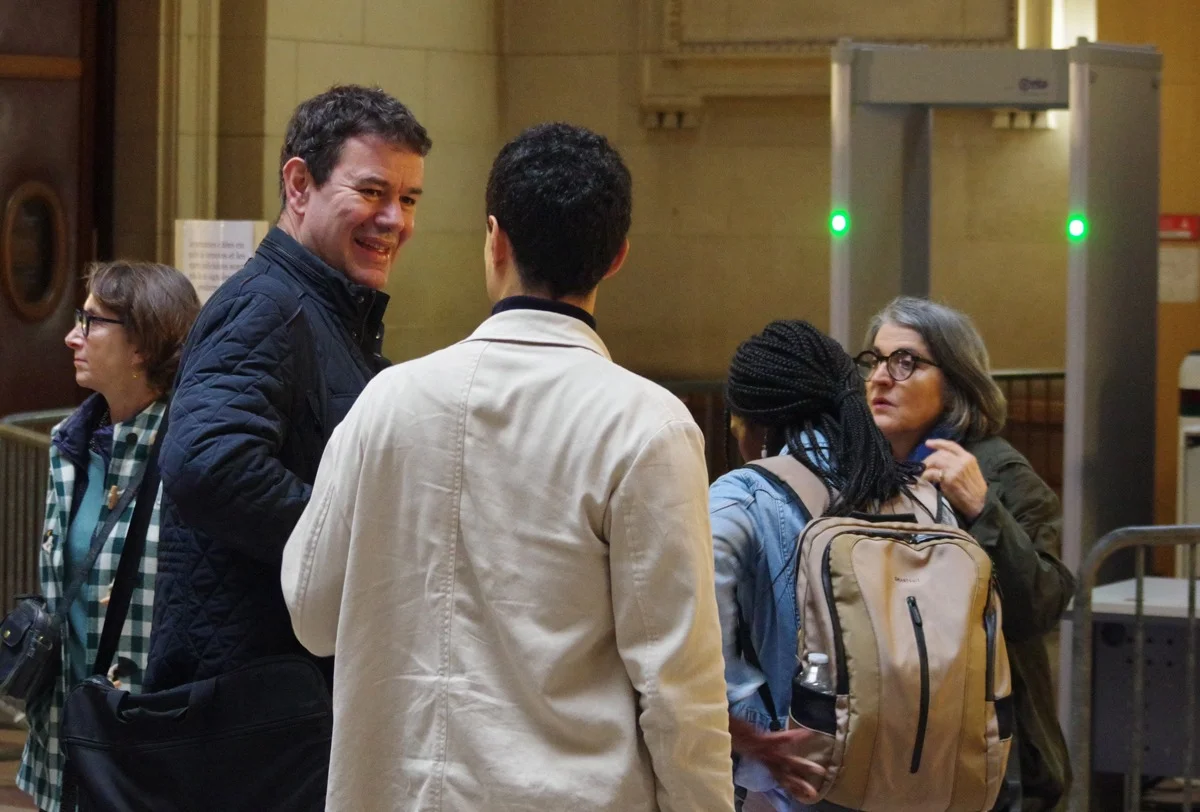
I did not seek a meeting with the accused; he himself approached me during a break on the penultimate day of the trial. The fact is that he and the women who rushed to hug him immediately noticed that I was filming them, even though I stood about ten meters away and “took” them with a quiet zoom gun, trying not to attract attention. One of the women insistently demanded that all photos with her participation be deleted, and since the good doctor himself, smiling sadly (what is there to be happy about when you are facing 30 years), immediately said: “I’ll be back now and let you take pictures of me,” then I succumbed to the demands. A minute later the doctor returned, but with a different proposal: “I’m not very well dressed today, let’s tomorrow, I’ll perform, I’ll dress much better...”
The next day the doctor actually spoke - with the last, extremely laconic word, but the rest was not confirmed - he was dressed the same as the day before: neat dark blue trousers, clean classic dark shoes. True, the sweater seemed to be different - not sand, but a little more orange. And the shirt is a slightly different shade, although also light. However, perhaps these were important nuances for him, especially on the fateful day.
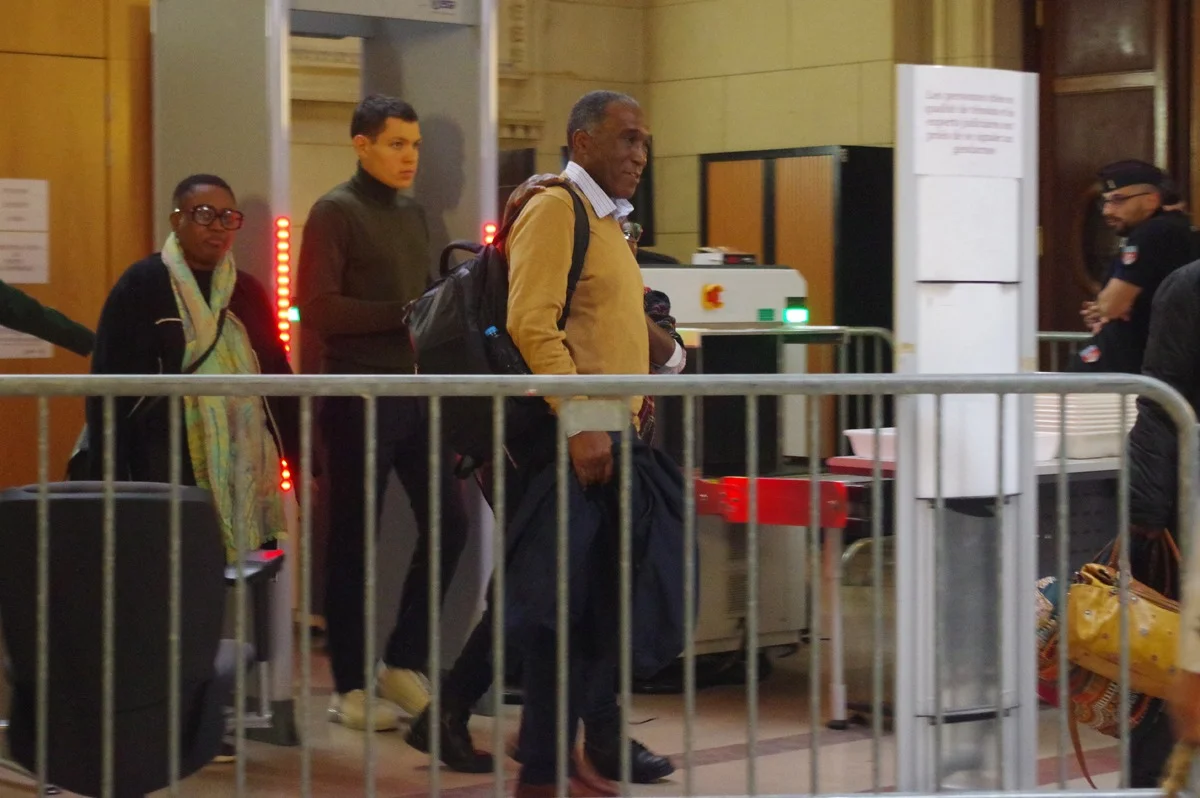
And on the eve of the fateful event, he asked what media I worked for and what my last name was.
- Safronov?! - He asked again, suddenly delighted, not because he could know my last name, but because he guessed what its origin might be. - Are you talking about pa-ryuski? So that means we are with you brothers! - he immediately switched to the language in which he studied medicine in Soviet Leningrad.
“I also speak Ukrainian,” I blurted out, not finding in myself, just like that, impromptu, the Christian ability to understand everything.
“Well, I’ve also been to Ukraine, then it was still possible,” he said with the same light accent, showing how closely he followed the development of language and events, because in Soviet Leningrad they clearly didn’t speak the same way as now only should be said: “in Ukraine”.
- Well, what would you like to ask? — the doctor asked after I cowardly rounded off the topic of “brotherhood.”
“I just wasn’t at the previous meetings.” What did the prosecution say, what facts did they bring against you and how do you deny them?
- I have no facts at all. As you understand*, I am accused of the fact that I studied in Russia when there was communism there, and that I am a Hutu from the west of the country - as if this is the only reason I am an extremist. That's all! Here are the facts. There are no other facts. One fact is that I am a hygienist, and during this... at this time... I just... how to say... there was a funeral of people... and that’s all... But I didn’t see anything.
-You didn’t see anything?!
- I'm not accused of anything. And no one blames me, no one.
- You say that you participated in people’s funerals... For how long? And how many were there?
- About one week. Because I am a hygienist... I advised. (...) That's all.
— Were these people killed during the genocide?
- Yes, yes.
— What month (1994) was this?
“They were killed in April, and the funeral was sometime in May. That's it. I can't say anything now.
- What city was this in?
— Butare. All.
— Was it hundreds of people or thousands?
- Let's do the rest with my lawyer.
— Have you already performed or not yet?
- Tomorrow.
— When is the verdict expected?
- Tomorrow.
- In the evening?
“In the evening,” a Rwandan woman (probably my wife) who approached us coldly confirmed in Russian, and they hugged and moved aside.
Last word. “I never ordered the finishing off of survivors”
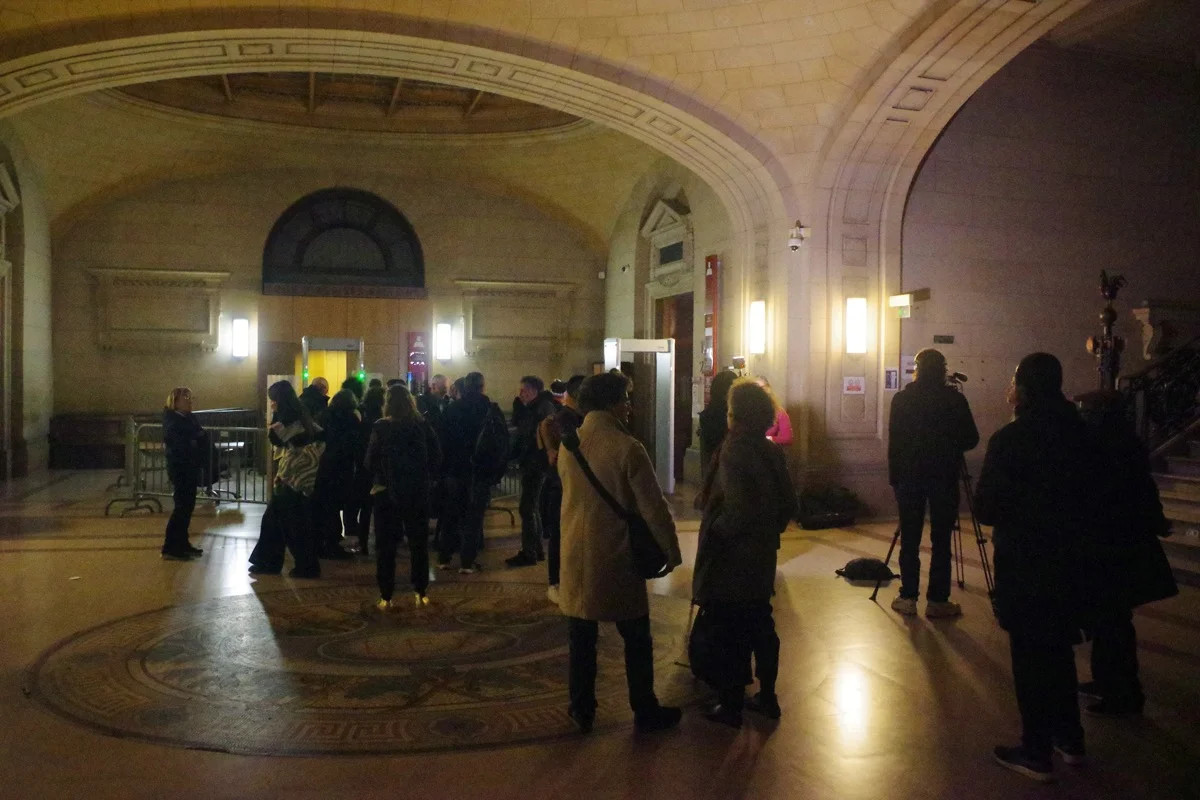
The next day, October 30, the meeting was scheduled for 9:30. The doctor and his Russian-speaking woman, as the day before, stood in a common line at the metal detector installed in front of the courtroom. Although the charges brought by the prosecutor's office can absolutely be called especially serious, no one deprived the accused of his freedom - until the sentencing. The doctor was sent home even on the penultimate day, when it became known that they had asked for 30 years for him. And this takes into account the open borders of the half-billion-strong European Union. The doctor was standing in line almost immediately behind me. But I didn’t want to shoot point-blank the man who was preparing to say his last word before being sentenced to life imprisonment, and then it was already technically impossible. I couldn’t bring myself to just talk to him, although my bad manners urged me to say “hello.” It seems he didn't have time to notice me. In the courtroom, I, like other journalists, looked at him from above, from the gallery reserved for us. The performance turned out to be difficult, especially its second, evening act.
It started a little late.
All the spectators, lawyers, prosecutors, plaintiffs and journalists were in the hall at 9:35, and the doctor had time to talk about something with his lawyer Meilyak for three minutes with a sad smile.
The judges and 11 jurors entered at 9:38. “Stand up, the trial is coming,” word to the accused. The doctor spent no more than three minutes on the most important word in his life. Perhaps that was the advice of the lawyers. He spoke not very loudly, with humility...
- Mr. Chairman, Madame and Monsieur the judges, Madame and Monsieur the jury! - Rvamucho began and paused. “I realized a lot of things during this process.” I know...I haven't always been at my best. But I assure you: I never ordered the finishing off of survivors, I never allowed survivors to be killed. In all the places where I was, in all the places where I arrived, (...) there were only dead. (...) I understand the suffering of all those who are looking for their own. But I don't know how to help them. (...) If I knew something... I don't know anything else. I can't help them. Thank you for listening to me. Thank you, Mr. Chairman, Madame and Monsieur Judges, Madame and Monsieur Jury.
After that, presiding judge Jean-Marc Lavergne announced: “The debate is therefore over,” and asked the jury to answer 11 questions, describing each in detail, as part of the charges brought by the prosecutor's office. Then he emphasized that jurors must make decisions “in harmony with their conscience,” guided by the main principle of “inner conviction.” He added: “We are retiring for a meeting and will not leave until we make a decision, no matter how long it takes... Monsieur Rwamucho, until that time you must not leave the Palace of Justice...”
After that, people who loved him approached the doctor - women, a man, another man... A dozen, no less. We hugged. Then the doctor looked up. He saw me standing in the first row of the gallery.
I expressed sympathy with my face and raised my shoulders - realizing that he was most likely guilty, I still felt sorry for him in his current state. He nodded, sighed and shrugged in response.
* * *
The journalists left the hall first, but the doctor did not show up to us. As the gendarmes explained, he was allowed to leave through another door - probably so as not to expose him to camera flashes.
When asked what time the verdict could be expected, the girl gendarme replied: “Probably not earlier than 20 o’clock.” That is, in 10 hours.
He knows about the genocide “from revelations in bed”...
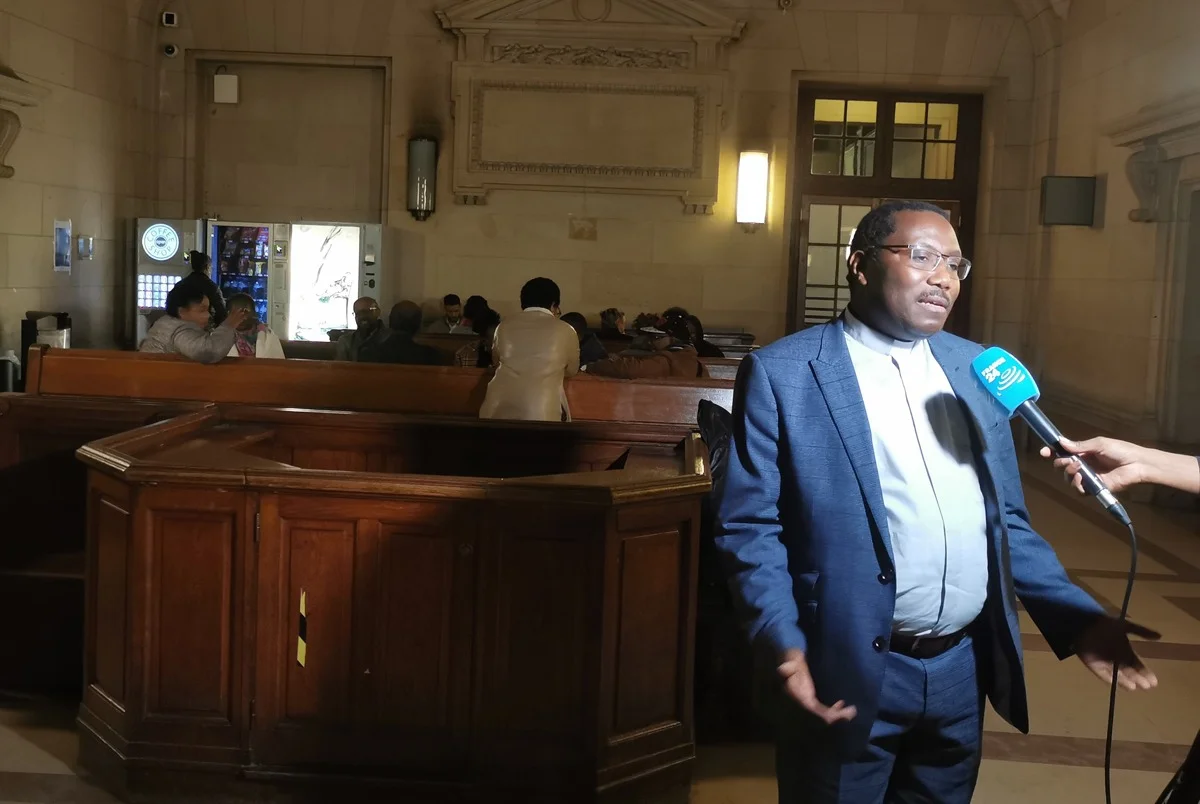
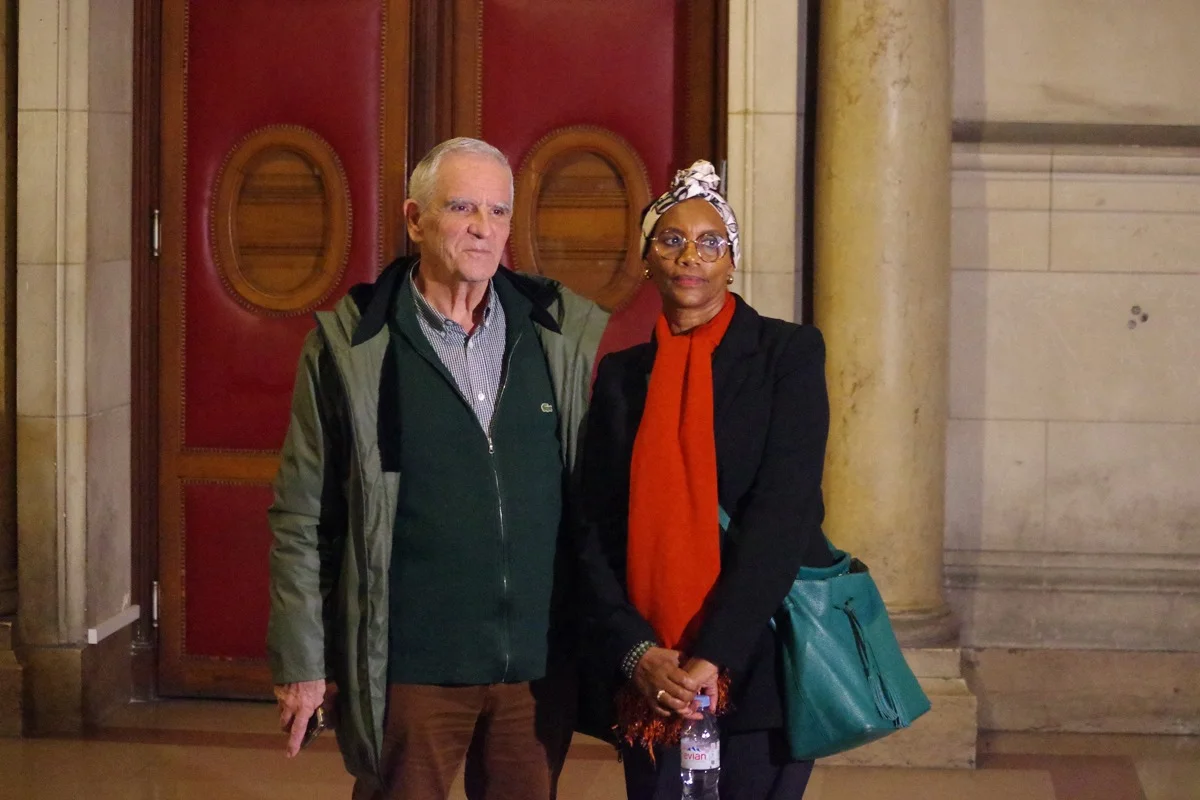
In the meantime, we wait. The larger party - the doctor’s close friends and his “fans” (including the “chairman of the government of Rwanda in exile”, priest Thomas Nahimana) - sit on the first floor of the palace, near the meeting room, and on the second floor - Alain Gautier, the creator and leader of the Collective civil plaintiffs for Rwanda (Collectif des parties civiles pour Rwanda), his wife, several journalists...
Gauthier tells me that it was his team that initiated the investigation into Eugene Rwamucho and, it turns out, brought him to trial. But the “genocidal Rvamucho” (Gautier calls him génocidaire in French) fell into his hands, one might say, by accident:
— In 2002, when we first created our association, I participated in a colloquium in the French Senate, organized by a group of negationists. I was a little shocked by the speeches I heard there, and at some point I asked a question. Someone asked: “Who is this white man who asks questions?” And then someone turned and said: “This white man only knows about Rwanda by confidences sur l'oreiller.” (* “According to revelations in bed” is a hint that Gaultier has a Rwandan wife. - *Ed. ). And I asked my neighbor, my friend: “Do you know this guy?” He says, “Yes, this is Dr. Rwamucho.” And that's how it opened. From that moment we began our search. We spent five years collecting evidence in Rwanda, we brought documents that related to him, and in 2007 we submitted an application to the prosecutor's office.
* * *
Since then there has been a long legal process, and this was caused by several circumstances, says Gauthier:
firstly, “French justice traditionally drags its feet”,
secondly, from 2006 to 2009, Rwanda broke off diplomatic relations with France**,
thirdly, until 2012, cases of the Rwandan genocide were considered more slowly, “until the Paris court created a unit for crimes against humanity.”
After the creation of the unit, the procedure became more streamlined:
“Every time we file a complaint, the prosecutor’s office appoints forensic investigators, who then travel on judicial investigative orders to Rwanda to look for both prosecution and defense witnesses. This often takes years... And when investigators believe that they have enough evidence, the prosecutor's office decides to either send the case to a jury trial or declare that there is no evidence of a crime. And this has already happened in several cases when we filed complaints. Since 2001, we have written approximately 35 complaints...
- And how many were tried?
“This is the eighth trial, but nine people were convicted, because once two were tried at the same time. So Rwamucho is the ninth.
At that time, the doctor had not yet been sentenced, but human rights activist Gauthier predicted everything in advance.
* * *
He told something else about the doctor, whom he had studied from every possible angle. And he attended all the hearings of his trial. He says: “After each meeting, we compiled a detailed report. You can find it on our website ."
Does this mean that Gauthier simply cannot forget the phrase that Rwamucho threw at him in the Senate more than twenty years ago? Only partly because the association brought “other genocides” to trial, as it was said.
— Rwamucho was arrested in France in 2010, but was soon released. Why then were they arrested and released quickly enough?
- He was then arrested at the cemetery*** when he participated in the funeral of one of his friends, who was a co-founder of the CDR - the most extremist party in Rwanda ( they buried Jean-Bosco Barayagwiza - among other things, the secretary of the executive committee of the notorious radio station Free Radio and Television of the Thousands hills" (RTLM). Barayagwiza, sentenced for participation in genocide by the International Criminal Tribunal for Rwanda (ICTR), died during serving his sentence in a Benin prison, but was buried in France - Ed . Law enforcement officers then hoped to arrest Kabuga, the financier of the genocide ( and the infamous radio - Ed. ), but they arrested Rwamucho.
And then there was a demand for his extradition from the Rwandan authorities. But the Court of Cassation (in France) has always refused extradition to Rwanda. So after three months, Rwamucho was released, and since then he has never been in custody again. He continued to live and work.
Although we exposed him at every job - at the Lille poison control center, at the Maubeuge hospital... And he lost his job every time. But he continued his quiet life. For 17 years...
— Rvamucho has been known to French justice only since 2007 thanks to your complaint. But back in 2000, when he first asked for a French residence permit, he was refused, as they say, citing suspicions of complicity in genocide. Are your suspicions confirmed? After all, he later received a residence permit...
— Yes, [in 2000] OFPRA ( French Office for the Protection of Refugees and Stateless Persons. - Ed. ) denied him political refugee status. But in that era, OFPRA was not yet obliged to communicate to justice the decisions it made. So no one knew then. And all this remained there...
( The day after the trial, I found in the Le Monde newspaper the wording with which OFPRA refused Rwamucho: “Determinedly incited and encouraged his compatriots to participate in the commission of genocide.” - Y.S. ).
— What was the most contradictory thing you heard at this trial, what struck you most in Rvamucho’s testimony?
- That he doesn't admit anything. He is accused of giving a speech at the university in Butare on May 14, 1994 in the presence of Prime Minister Jean Kambada and encouraging intellectuals, as the prime minister asked him, to “finally take part” in the genocide. He said that not only peasants can participate, we should even give weapons (to intellectuals). At the trial, Rwamucho defended himself, saying that this was not what he wanted to say...
— What evidence is there that he not only took part in the burials, but also killed someone? Or allowed him to kill?
- No, no one now says that he killed someone. Even state prosecutors dropped this charge. He also did not personally bury wounded people. But he was present at the time of such burial . This may be enough in legal terms to accuse him of not doing anything, although he could have prevented it.
- But is there confirmation that there were still living people there?
— There are witnesses (for the prosecution) who came and said that there were people there alive. But will the jury believe them... He says no. All the people whose burial I saw were dead by that time.
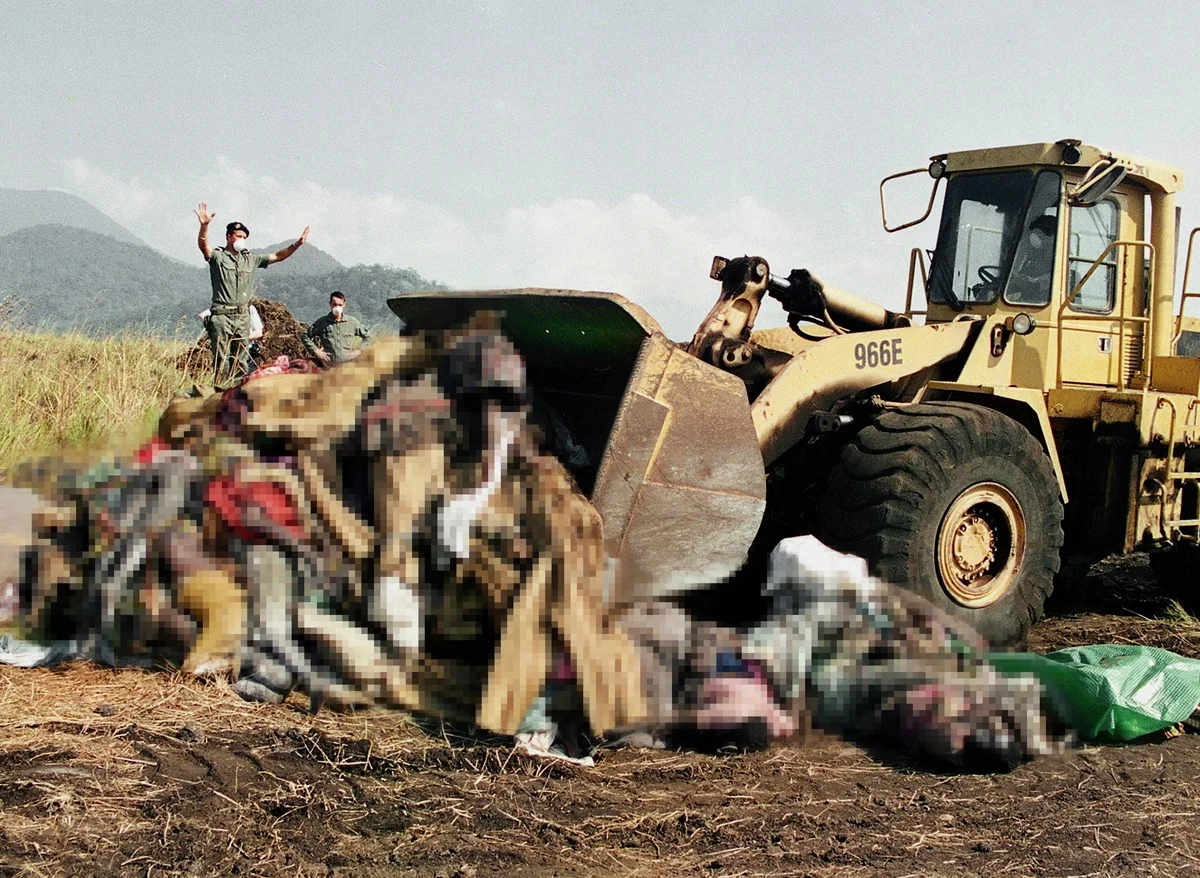
We don't have to believe him or not. This is his defense... But it is certain that people were alive - agonizing, in a coma, there were... And they were scooped up with an excavator .
* * *
Further, although Gauthier does not say that he considers the evidence against Rwamucho “fragile and insufficient,” as his lawyer said in court, he admits that there is not much evidence:
- The problem is that Rumucho is not at all known in the Butar. (...) So almost no one testifies that he was there. But there are such. There is a driver of a machine that put French investigators in ten places where Rumucho, according to the charges, [organized] the creation of mass graves. And the driver always testified: there was a river there. He himself does not deny that he was there, but he says that "for sanitary reasons."
We know very well the NDOR Ruandian commune, because we have already exposed the local duplicate, which in 1994 gathered all the tutsi on one hill, and then 25 thousand people were killed. Ruumucho, among other things, was present at the burial of the victims of this hill ... Ruanda tribunal sentenced the duplicate to 25 years in prison.
Sentence. "Shame on the French justice"?
... At half a hundred evening, Gothekonfidenly said: the sentence is scheduled for 20:15.
... we are in the hall. I look from the gallery at Eugene Rumucho, who, sitting in a tall blue chair and turning to his lawyers, talks about something quietly, with a smile. At 20:18, the hall and judges enter the hall one after another. Inexperienced jurors, apparently, do not know how to hide emotions. On the dead faces of most of them, the conviction is read at first sight.
The chairman of Lavern begins, one by one, again, to list all 11 questions raised before the jury, and report to which they answered “guilty” and which ones “no”. As a result, the answer is “guilty” to eight questions. After listing several dozen articles of the French Criminal Code and international legal documents ( including MOTR ), the chairman announces:
“The court and jury (...) sentenced the absolute majority of votes (...) to 27 years in prison ... The appeal is possible within 10 days ... Civil claims **** are scheduled for 15 hours on April 28, 2025."
* * *
In short, the court found Rumucho guilty:
in a complicity of genocide and participation in conspiracy to prepare a genocide,
complicity in crimes against humanity,
participation in conspiracy in order to prepare these crimes.
Moreover, he was justified on charges of the implementation of genocide and crimes against humanity.
Ruumly holds outwardly calmly - turns to face the hall, where his loved ones are sitting, putting his hands to his lips, as if in prayer, while two gendarmes already stood behind him, ready to take the defendant from this free world to another, which is even worse . He, seeing one of the gendarmes, for some reason tells him “thank you”, takes a black backpack and a paper bag with things brought with him, leaves ...
Then, talking in the corner of the hall with the gendarmes, he returns, says to his own: "Be strong."
"We are with you!" - One of his daughters answers him (according to AFP, I did not hear this).
20:51. Rwamuly presses his lawyer's hand. He is led.
We, spectators, leave the hall and find ourselves again.
Leaving this event, during which no one showed joy, I see how a beautiful black girl who comes out in front of me (perhaps she is “one of the daughters”) throws into the hall: “Shame on French justice! .. And he is there too It will remain strong ” - and leaves.
What does the radio think about this?
I would like to agree with her, but there are many indirect features indicating that Dr. Rvamucho is evil. I finally realize this gradually, plunging into the details of the court hearings.
At the hearing on October 11, the ex-prime minister of the “genocide” of the Provisional Government Rwanda Jean Kambanda was heard. He performed in a video conference from prison in Senegal, where he was serving a lifelong conclusion on the verdict of Mutr. Kambanda supported Rumucho, calling him a “courageous man” who “completed his work”.
In the course of the court he called his elder brother Ferdinand Nakhiman, the ex-Minister of Information, the founder of “Free Radio and Television of a Thousand Hills”.
Among the “close people of the Ruumucho”, the newspaper Le Monde also calls the Rwandian gynecologist doctor Muneman , who, in December 2023, was sentenced to 24 years in prison for participation in the genocide (he also appealed the sentence).
On October 26, the presiding judge Lavern asked a river to the question of the nature of his connections with Jean-Barosko Barayagviza, the founder of the Coalition in Defense of the Republic, the HUTU extremist party, the secretary of the executive committee of the RTLM radio station, "whose shareholder Rumucho was for commercial purposes." “Mr. Rwamucho continued to evade the answer, claiming that he became a victim of the“ political process, ”writes Monde.
And the performance of Dr. Rvamucho on May 14, 1994 at the University in Butar, as it turns out, was broadcast on the air of RTLM ...
When he himself compares his speech with the “Marseille” in court, he quotes such lines from the French anthem: “To weapons, citizens! Create your battalions. "
* * *
In front of the pits, dug excavators, the director of the university public health center Eugen Rumucho stood armed with a rifle issued by the authorities. He admits that he was with a weapon, but assures that "he never used it."
I recall Gauthier's words: "People are alive ... there were ... and they were scooped up by an excavator."
The court is not for everyone
The verdict is “unacceptable”, and he “is not at the height of the historical trial” - the lawyer of the convicted Fillipp Meylyak reacts, leaving the courtroom, announcing that he will appeal “the next morning”.
The court will probably figure it out. Perhaps, although it is unlikely, he will even find procedural violations ... Because there were already cases when people whose fault had no doubt could evade responsibility "for insufficiency of evidence."
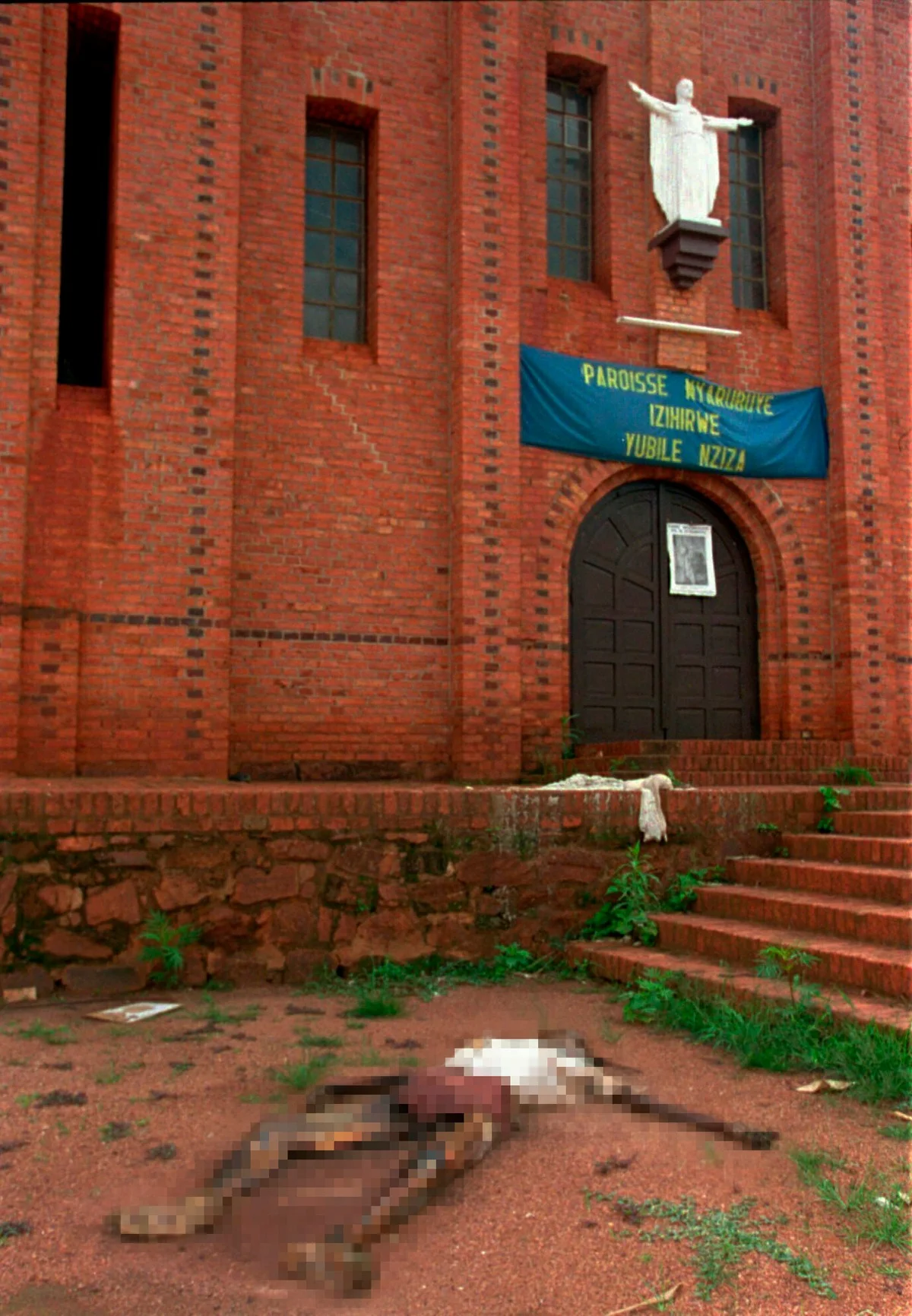
Alain Gauthier told how, at the very beginning of the work of their team, they were engaged in the opportunity of Priest Venkeliv Munyushaki from the Church of the Holy Family to Kigali. The minister of the Church was accused of giving people to the Tutsi genocideers. But after 25 years, French justice was forced to announce "the absence of a crime." At the same time, in Rwanda “Holy Father” ***** back in 2006 was sentenced to life.
Another “example” came by itself. According to Le Monde , every day of Dr. Rvamucho came to support at the hearing Kallikst Mbarushiman, a former executive secretary of the Democratic Forces for the liberation of Rwanda, the armed group of Hutu. Despite the fact that for many years he was under the investigation of the MUTR and the International Criminal Court, the charges made against him in France by a team of civilian plaintiffs in Rwanda were removed by decision of the Parisian Court of Crimes against humanity mentioned above. "For insufficient evidence." Mbarushimana has been living in France for 20 years in the status of a political refugee.
There are other “grounds” for non -conference of the perpetrators, says Gauthier.
For example, he cites the case of the widow of the Rwangian President Juvenal Khabyarimans, who was also arrested in France in 2010, but soon released. And today is silence. “I think that they will never judge her,” Gauthier predicts, explaining this to “political reasons.” Are these reasons to look for the responsibility of France itself for this genocide ? Responsibility that is recognized, but not completely, already President Macron.
On November 14, Alain Gauthier is waiting for a decision of the Paris administrative court in the lawsuit of the victims accusing the French state of “actual complicity” of genocide. It is also a complaint about the specific action (or, more precisely, inaction?) Of the French military, who, according to applicants, “consciously” from June 27 to 30, 1994 left about 2000 people of the Tutsi nation who were hidden on the hills of Bisesero. And thereby allowed the "genocideers" to deal with them.
A separate complaint regarding these “events in Bisessero” was filed to the Paris appeal, which must make a decision on December 11 .
With a high degree of probability, the plaintiffs will be refused.
* * *
It is possible that Dr. Rwamucho had never been convicted if he had not come to that “ill -fated” colloquium in the Senate and had not thrown an insulting replica to Alena Gauthier.
Until now, in France, according to media and human rights activists, at least a hundred Rwandian "genocideers" lives in no way. Even more of them in other mainly African countries.
* * *
Be that as it may, in addition to the sentenced MTR, nine people have already been convicted in France, and about 40 more cases of suspects living here are now “at the investigation stage”. Filiber Gakvevere, the president of the Association of the surviving victims of IBUKA, so said the Le Monde correspondent in Rwanda: “We need to go further, because there are still a lot of remaining things, and these matters are no less significant than the matter of rhhmucho.”
* * *
What other lesson can be extracted from the example of this doctor who has studied, so it turned out in Russia?
The fact that any ordinary performer, confident today, that he will not bear the punishment, because he was fulfilling the order and because it is “never reached” to him in view of the “insignificance of the deed” can be very mistaken?
And now I recall that in his last word, Dr. Rvamucho did not condemn the genocide. And he did not say that he sorry for tens of thousands of people killed only in his city. And the lawyers did not think to advise ...
This material was published in the second issue of Novaya Gazeta. Magazine". You can buy it in the online store of our partners.