
Translated material
Russian officials are actively looking for extremism in Stalker 2
Will they come up with a reason to block a Ukrainian game popular in the Russian Federation?
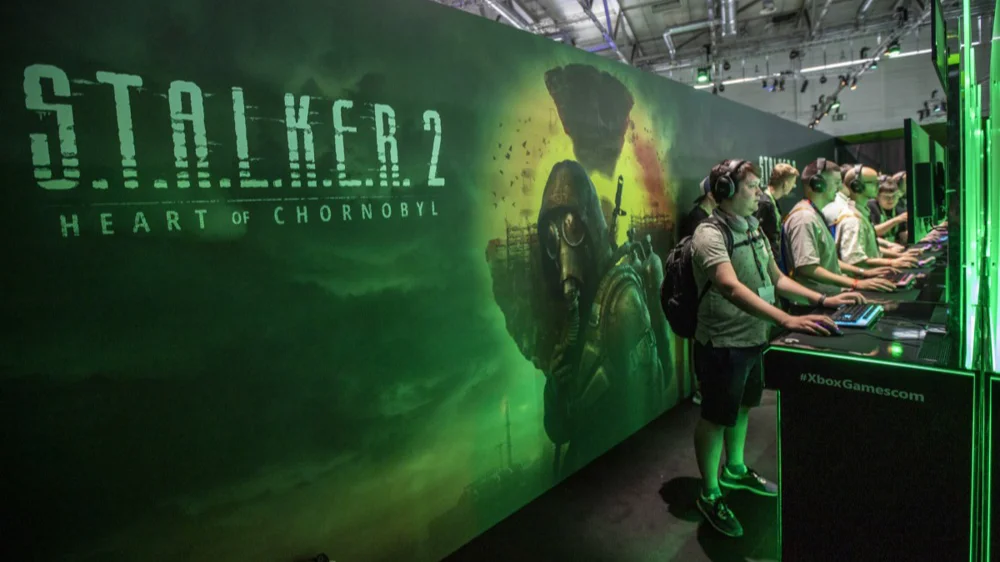
Gaming convention Gamescom 2023. Photo: Freidemann Vogel / EPA-EFE
On November 20, the game STALKER 2: Heart of Chornobyl was released - the second part of the world-famous franchise from the Ukrainian studio GSC Game World. She is incredibly popular in Russia too.
The war in Ukraine directly affected the release of Stalker: for example, immediately after the start of a full-scale invasion, development was suspended in order to focus on rescuing employees. The developers refused to sell the game in the Russian Federation. Shortly before the release of “Heart of Chernobyl,” officials, pro-state media and propagandists still became more active in Russia, proposing to completely ban the game. And at the same time, they began vying with each other to threaten to ban the game for “extremism” and “Russophobic” content. Whether it will be possible to find it is still an open question.
The creators of “Stalker” and the war in Ukraine
GSC Game World, which produces a series of games about the Chernobyl exclusion zone, was one of the first among the world's gaming companies to condemn the war. In addition, immediately after the start of the Russian invasion, GSC called for donations for the needs of the Armed Forces of Ukraine. Soon the studio publicly refused to sell the second part, STALKER 2: Heart of Chornobyl, in Russia.
What exactly did GSC decide?
Pre-sales of games on Steam opened in the summer of 2021. In March 2022, shortly after the Russian invasion began, GSC Game World actually left the Russian Federation. Thus, the developers canceled pre-orders of physical editions in Russia, saying that only those Russians who paid for the “digital” version will receive the game. Accordingly, the game is also not sold in Russian offline stores.
Access to the Ukrainian studio’s website was restricted in Russia almost instantly. The Prosecutor General's Office of the Russian Federation even decided to block the group of the VKontakte studio (more than 200 thousand people were subscribed). However, the developers did not plan to update it anyway.
GSC first announced specific plans to release a sequel to the game back in pre-war 2021. Initially, the second Stalker was supposed to be released on April 12, 2022, but at the beginning of the war the studio suspended work on the game. Management stated the need to focus on “employee survival due to the intrusion.” Work on the game continued only in May 2022.
Meanwhile, GSC donated to the “Come Back Alive” fund, which is considered undesirable in Russia (for transferring money from the Russian Federation there you can “receive” treason). To distance itself from the aggressor, the company even changed the name of the title: the spelling of the word “Chernobyl” (the main region of the game’s action) began to correspond to Ukrainian norms - Chornobyl. Russian bloggers in the Stalker universe have already come up with a mod that returns the Russian spelling of the city.
Stalker is a cult franchise in Russia, the sequel of which has often been called one of the most anticipated games in the country. That is why, when Ukrainian developers, against the backdrop of a full-scale war, abandoned voice acting in Russian, a wide discussion arose in the Russian gaming community. However, no one removed the subtitles.
The outrage on Russian-language sites was followed by action: a hacker (his name was unknown at first) stole the working version of the publication from the studio before its release and demanded that GSC return the localization, and at the same time apologize “for the unworthy attitude towards ordinary players” from Russia and Belarus. The developers did not comply with the requirements, and the game materials became publicly available. As a result, it turned out that behind the leak was supposedly (this is known only from his words ) a Ukrainian schoolboy who, as he himself said later, attacked GSC because of “Russophobia.”
“The key factor in this [in my attack on the developers of Stalker] was the attitude of the developers towards the Russian-speaking community, their Russophobia and blaming innocent people (meaning players) for the events after February 24,” the hacker said in an interview.
Extremism in the game before its release
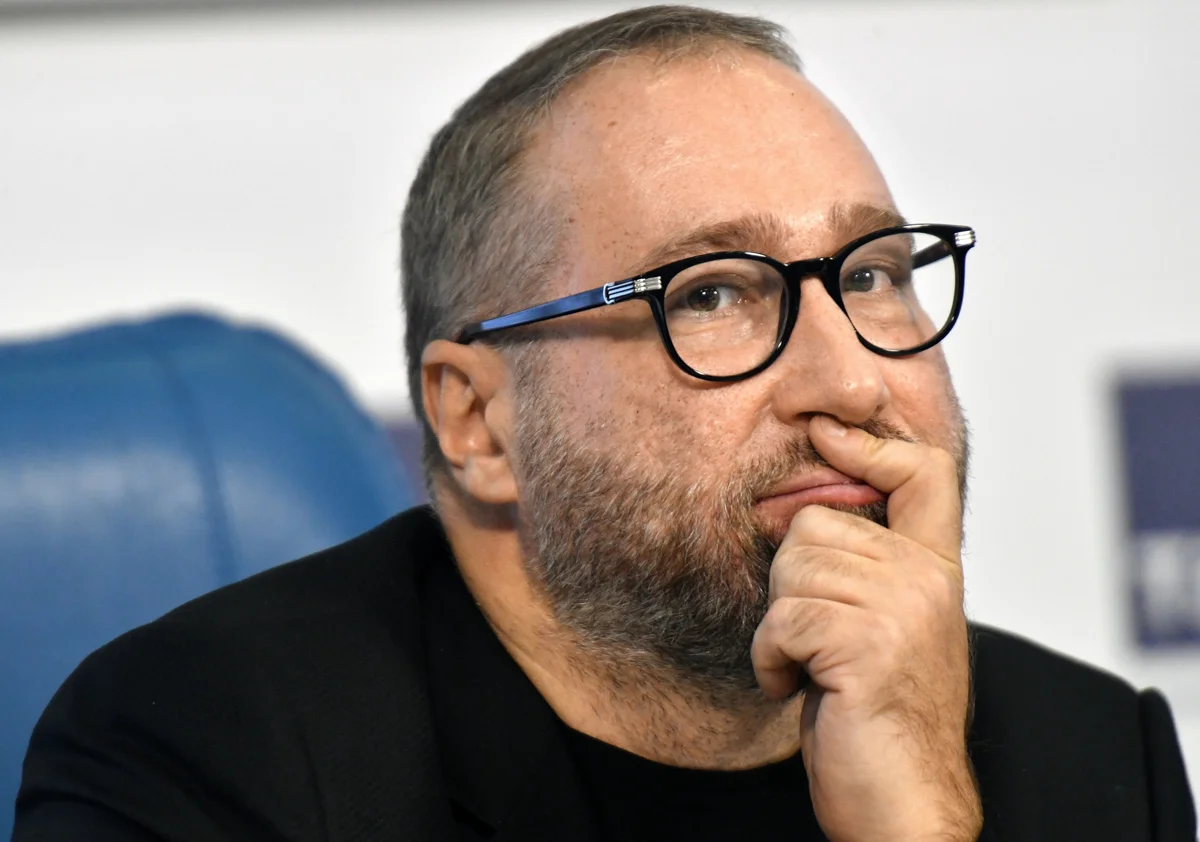
A week before the game's release, Russian authorities started talking about banning it. Then the first deputy chairman of the State Duma Committee on Information Policy, Anton Gorelkin, said that the game could contain “extremist content,” and lawyers interviewed by the media considered that the purchase of the game itself could be regarded as support for the Armed Forces of Ukraine. Some Russian gaming services have made a disclaimer on the products of the GSC studio - the marketplace team “does not recommend buying this game, the proceeds can go to support the Armed Forces of Ukraine.” After the release of the shooter, Deputy Gorelkin said that there is no extremism there. However, his controversial fellow MP Vitaly Milonov called for Stalker to be banned due to alleged “linguistic discrimination” and “manifestations of fascism.”
On the day the game was released, November 21, due to the attention of the authorities, explanatory materials and advice from lawyers began to appear in the media not to buy the new “Stalker” at all. It’s as if the state itself brought extremism into the game.
A correspondent for Novaya Gazeta Europe spent a little more than 10 hours in the game and states: the Russian state’s love of issuing fines and sentences for freedom of speech is unlikely to be fully manifested here. There are not very many dialogues in the second Stalker, as well as potentially dangerous topics for conversation. Conversations, if any, most often concern the in-game universe, including the “Zone” and quests. It would be a stretch for Russian authorities to cling to the presence of a manifestation of “A.U.E.” — the game has the largest group “Bandits” with the corresponding jargon and behavior. But no propaganda of the “A.U.” culture. E." (it is banned in Russia) in the game, of course, not.
Stalker players joke about the real time frame after a purchase on trading platforms. Reviews on the Steam service where the game is soldcontinue to be filled with jokes about going to jail after purchase and writing “disclaimers ” of liability after purchase (hinting that GSC may transfer the income to the Ukrainian Armed Forces). On the page with reviews there was even a humorous “appeal from the Prosecutor General’s Office” to the players - the author scares gamers with “treason” and offers to go “on tours around Ukraine” by signing a contract. Streamer Ilya Maddison also got involved in the politics surrounding the game. During the stream, he carved the letter Z on the bodies of the killed characters - this fragment of his broadcast went viral in the media, and the Twitch streaming platform banned him. Then the blogger even published a post in Ukrainian and urged people not to watch Russian streamers.
If there is no extremism, then you can invent it
At the same time, Russian “statists” continued to independently invent “extremism” in Stalker. Thus, the Tsargrad publication published fake news that the game allegedly contains derogatory statements towards Ukrainians. In the published fragment, where the phrase “Ukrainian fagots” is written on the wall, the editing is visible to the naked eye.
So far, the only specific complaint from Russia against the developers of Stalker looks controversial. Thus, the players paid attention to the song of the Ukrainian performer Kristina Solovy with the line: “The whole world has been united against the Rus, and soon there will be no Rus at all.” The Sport-Express publication (part of the National Media Group, headed by Alina Kabaeva) called the presence of the track in the game “Russophobic content.”
Solovyi released the song “Ukrainian Fierce” in March 2022: the performer dedicated her cover of Bella Ciao’s composition to “the heroes who fight for our land.” In "Stalker" the track is played on the radio. The New Europe correspondent was unable to find this track while playing the game, but various portals , publications and forums indicate that it really is there. True, the player can tune the radio in Stalker independently by switching frequencies. Receivers are scattered throughout the game world and are of no interest to the player, but only create an atmosphere. At the time of publication of this material, mainly Russian state publications write about this track.