Translated material
Hunting for extremists
For queer people, parties are not just leisure, but an important way of socialization and a space of safety. But now these are colossal risks
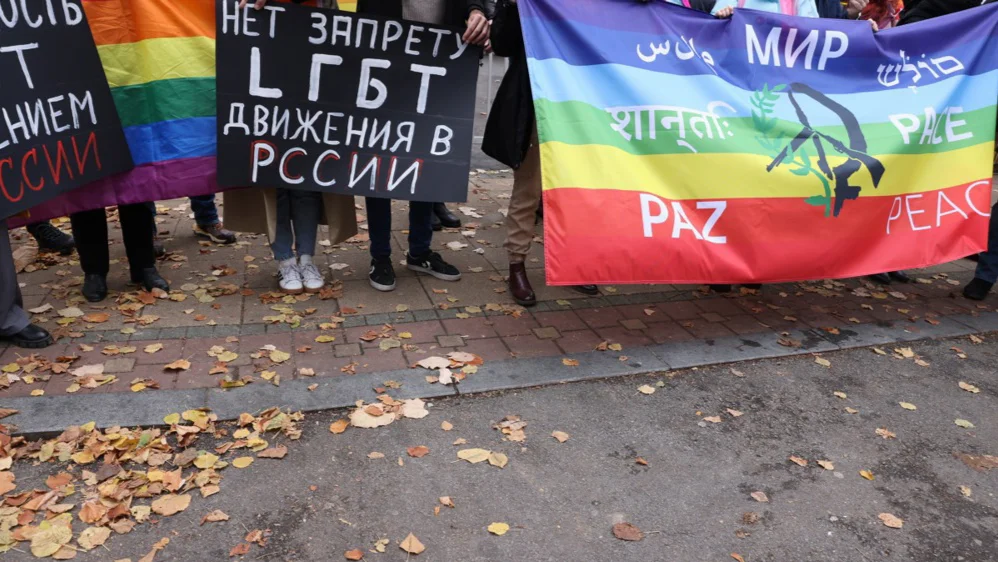
Protest in Belgrade against Russia's ban on the LGBT movement. Photo: Andrej Kukic / EPA-EFE
Russian security forces have gotten the hang of it. Searches at queer parties are being carried out more and more often: the last high-profile one took place in Voronezh, at the Zebra club, and again with serious consequences for the owners, who face prison sentences. Of course, one could advise Russian queer people: why go to clubs? Stay at home and no one will touch you. It might be wise to avoid attending such events for a while. But you should understand that gay clubs and bars are not just a fad, but an important part of the life of the LGBT community, especially in Russia.
Until recently, homophobia reigned in the vast majority of Western countries. Homosexuality was considered a crime, a disease, a perversion, and queer people were dismissed and despised. But queer people are not going away from this. On the contrary, they began to look for places where they could socialize without fear of violence and persecution. Such places became bars, which were organized in premises invisible to the police, usually in disadvantaged areas of cities. These establishments, of course, were not openly called gay bars, but had a reputation as places where queer people gathered.
Since then, the situation with the rights of queer people has improved significantly in many Western countries. Sodomy laws no longer exist, “treatment” for homosexuality is prohibited, and same-sex marriage is legal in some countries. However, clubs continue to play an important role. No one is immune from everyday homophobia - for example, sideways glances. And in such an establishment, men can calmly look at each other without fear that someone will take it as an insult. If a girl wants to kiss another girl, she will be much more comfortable doing it in a queer club. These are places where you can discuss your queer life with a friend without worrying about someone at the next table shouting insults. These spaces are free from stigma, shame and homophobia - all of which are already enough in the lives of queer people.
At the same time, Western researchers note that the popularity of queer bars and clubs among younger generations will soon noticeably decrease, if not already. This is due to the growing acceptance of the queer community, the integration of queer and straight cultures, and the rise of dating apps .
Perhaps this is so. But in Russia the situation is completely different: Russia is moving in the completely opposite direction in terms of queer rights. Gay clubs are one of the few places where the average queer Russian can feel like they belong to a community.
Especially now that Tinder is gone and Grindr has become dangerous to use. But, as recent events show, in reality even these places cannot be considered safe.
In modern Russia, queer clubs began to appear in large cities after the abolition of the article on sodomy in 1993. When the article was repealed, the security forces were very upset, having lost a legal instrument of persecution. But they quickly found a way out: they began to organize raids under the pretext of searching for drugs or expired alcohol licenses. You could burst into a club, pin people's faces to the floor, and then, having had enough of the power and laughing at the frightened queer clients, issue a fine to the establishment for violation. There have been many such raids on queer clubs in modern Russia. By the way, they were also held in establishments with a heterosexual audience - for example, in the Moscow club “Propaganda” in September 2017. But none of these raids resulted in criminal cases.
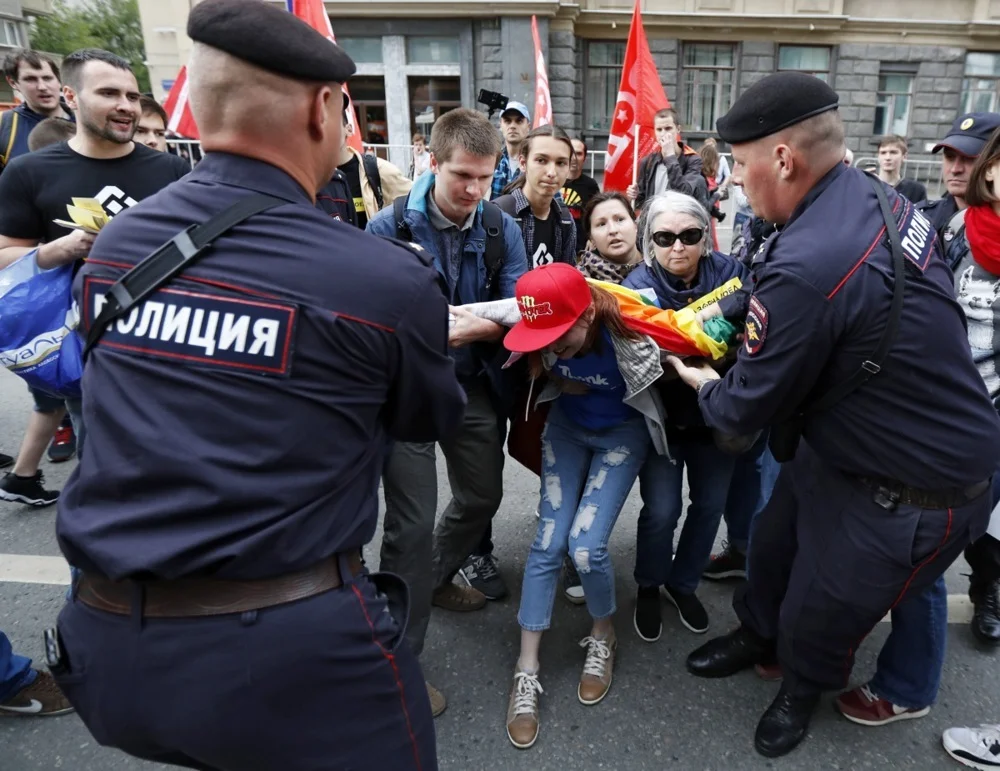
Everything changed with the recognition of the non-existent LGBT movement as an “extremist organization.” Now both visitors and party organizers can get a real deadline.
Yes, there are still gay clubs in Russia, and it will not be possible to close them all at once - just like opening criminal cases against all the owners. But this will happen gradually, because LGBT people are easy prey. Raids on nightclubs, including queer ones, will continue to be carried out - only now the security forces will do this with the understanding that they can not only give nightmares to visitors, but also bring a “trophy” - the head of an extremist cell (that is, the owner of the club). It would be a sin not to take advantage of this opportunity for promotion.
What to do in such a situation? Perhaps party organizers will look for new formats. Gather in apartments, go completely underground, or organize meetings in places with a “hetero” reputation, but known to everyone as “queer-friendly.”
It was the same in the USSR: there were no official gay clubs, but everyone knew where to go.
Organizing a raid into such a “mixed” place in order to find the leaders of a non-existent movement should theoretically be more difficult. Although we shouldn’t delude ourselves: we all remember Ivleeva’s “naked party,” which, while not being a queer party, still ended with fines for “LGBT propaganda.”
Modern Russian queer establishments are in a very difficult situation. The owners of these businesses need to realize that reality has changed. The strategy of accommodation and denial may work for a while, but neither guests nor owners are immune from serious trouble. Perhaps some have connections that help them stay afloat. But statements that the establishment is “outside politics” and “not part of the LGBT movement” will not help. Homophobia is too strong - both domestic and state. If the authorities need another show trial, public flogging, no one will be spared. After all, in modern Russia there is not only homophobia, but also general sexophobia.
At one time, in the 1960s, the New York police actively terrorized the Stonewall club. One day, in 1969, bar patrons, tired of police attacks, gave her a harsh rebuff. The riots of visitors to the Stonewall bar are considered to be the beginning of the movement for the liberation of queer people from public oppression. In Russian realities, unfortunately, this will definitely not happen in the near future.