
Translated material
Free swimming
“The Life of Anatoly Grebnev” - the opening film of the Winter Festival
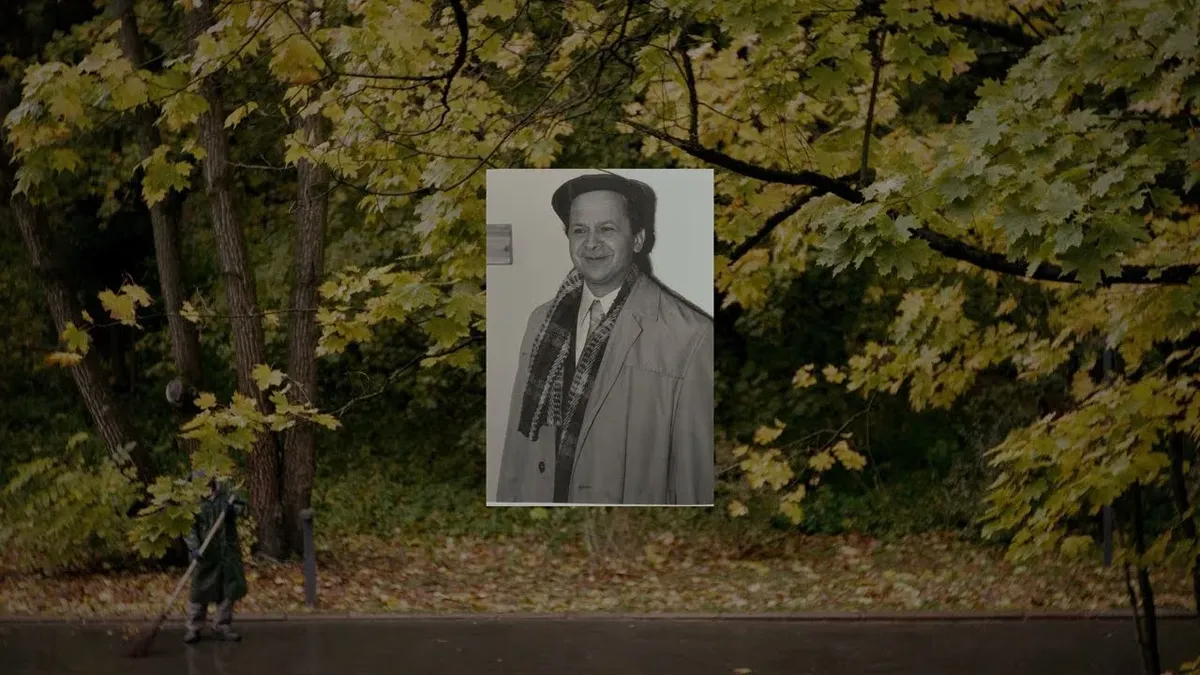
Still from the film “The Life of Anatoly Grebnev”
The 3rd Open Russian Auteur Film Festival starts in Moscow on December 1. The program includes more than 20 works by contemporary young directors.
The opening film “The Life of Anatoly Grebnev” is a lamp doc by Alexander Rodionov and Liza Kozlova, a conversation about the impossible and the possible. About us, in general.
If you read the announcements of the film, that’s all: “about the life and contribution of the legendary screenwriter to Russian cinema... he became one of the key figures in the history of Russian cinema... this year marks the 100th anniversary of his birth,” - you immediately want to yawn in anticipation of the next the usual “Datish” rehash of Wikipedia.
But in the movies everything is different. I watched the film, and it was as if I had entered the warm waters of a forgotten world.
With quiet, clean streets, as in the films of Khutsiev and Danelia, with an almost lost culture of gatherings in kitchens, at picnics with long, intense conversations on the merits.
This film is special because it was made by people close to the writer. Alexander Rodionov (“Free Swimming,” “Everyone Will Die, But I Will Stay,” “Patient Number One”), a talented author with his own intonation, is the direct heir, the grandson of Anatoly Grebnev. And it seems that for some reason he needs this film. How it happens when the camera and reflections in the frame help to penetrate into the essence of events, beyond the ceremonial façade of portrait photographs and interviews. Rodionov (in the cinematic world - Sandrik) - involves in this conversation his father - playwright Alexander Mindadze, his grandfather's cousin, the nanny who once lived in their apartment, and his sister - director Katya Shagalova.
It’s a pity not to hear from Anatoly Grebnev’s daughter, Elena Gremina, an excellent director and playwright. This is actually some kind of unique family; nature is infinitely generous with talents.
“The beginning of this story is familiar to you” - this is how the first film by Anatoly Grebnev and Yuli Karasik, “Wait for Letters,” began with the clatter of train wheels, starring the very young Seva Abdulov, whose round childish face resembled the soft, as if shaded features of the 38-year-old scriptwriter. Grebnev came to cinema late. Before that there was poetry (of course, “there was” is the wrong word: poetry disappeared into his films). Then - journalism. Hence the sharp, perceptive gaze. In the characters of his films, contemporaries recognized fellow students and neighbors: the tenacious pike-hairdresser Svetlana Vasilievna (Vera Alentova) and the weakling intellectual (Anatoly Papanov) in “Time of Desires,” the ambitious metropolitan director (Leonid Filatov), ready to turn the artist inside out with all his personal giblets, if only the performance would take shape in “Success”, a major functionary who “overlooked” his personal life behind papers and production problems, who became a stranger in the family (Mikhail Ulyanov in “Private Life”), the “right person” San Sanych (Alexander Kalyagin in “Prokhindiada...”).
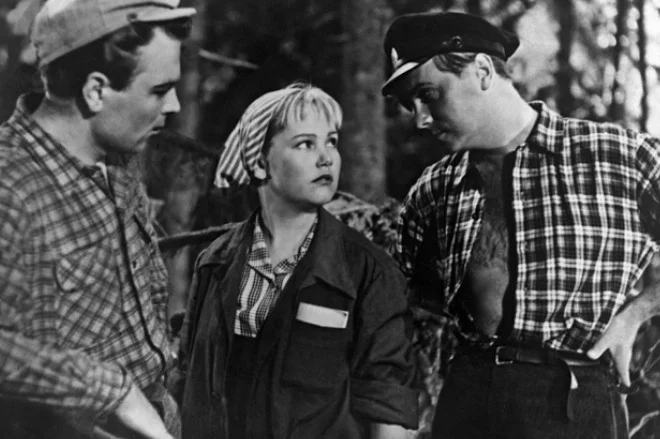
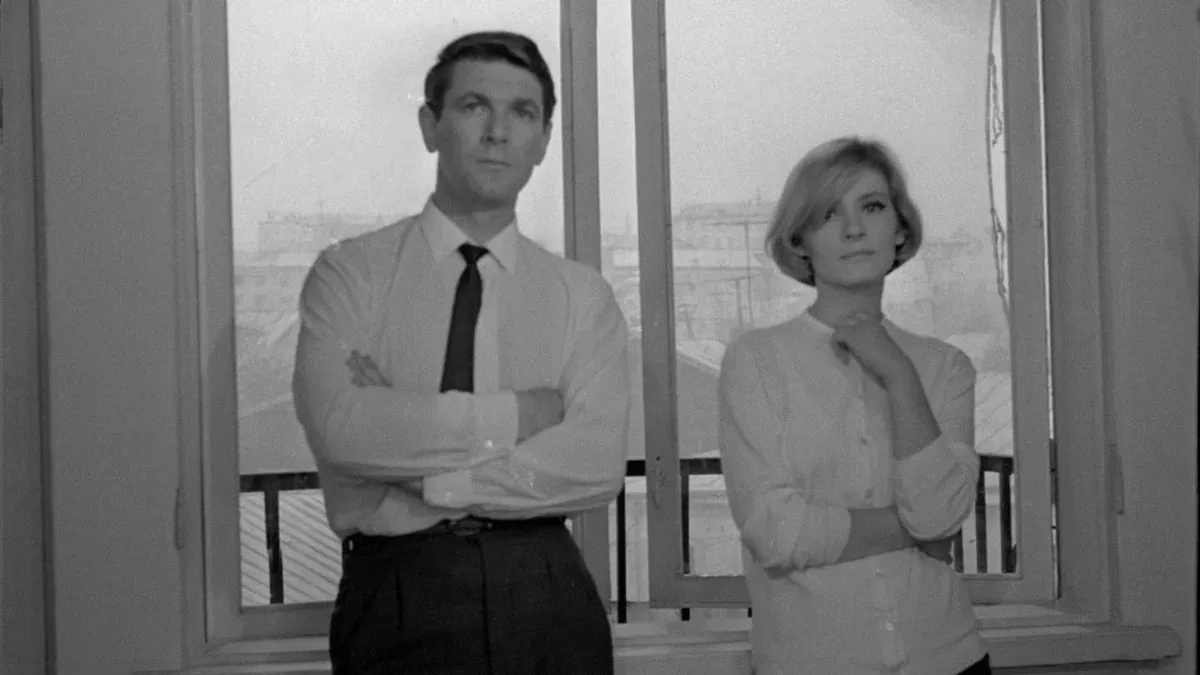
Based on Grebnev’s scripts, “July Rain” by Marlen Khutsiev, “Old Walls” by Viktor Tregubovich with a completely unrecognizable Lyudmila Gurchenko, Raizman’s latest films (“Private Life”, “Time of Desires”), “Success” by Khudyakov, the series “St. Petersburg Secrets”, “ Prokhindiada, or Running in Place" by Tregubovich, "Diary of a School Principal" by Boris Frumina with Oleg Borisov.
Over 40 years in the profession - 40 films. Films that comprehended and experienced modern times together with the viewer.
The son of a repressed man, he was never a dissident, but he composed films about moral dilemmas, as if he himself were dealing with his conscience, trying to “get to the very essence,” “to the foundations, to the roots, to the core.” Despite his outward gentleness, he was sincere. As his friends say, “a hard, soft man.” Decent, selfless, sometimes careless. Not too ambitious. "Private Lives" became an Oscar nominee? Well, this is just a nomination, there are not one - five films. I avoided pathos. Vizbor’s brilliant monologue in the kitchen in “July Rain” about people made of different materials: “There are ordinary clays and fireproof clays. There is reinforced concrete. There are also ceramic products. There are people covered with tiles. There are designs made from ready-made blocks.” But more and more people are made of “substitutes”. I would recommend studying Grebnev’s dialogues in film schools today.
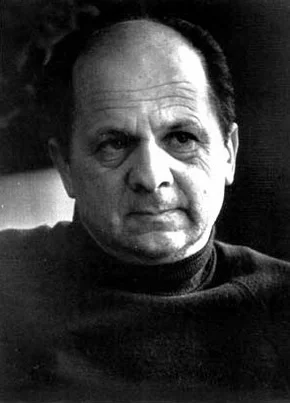
From the last of the old school screenwriters. When the script was not fodder for a “film plot” or “film fiction”, but a visual confession for cinema. When scripts were published as separate works and inspired film authors to undertake a non-trivial search. He said: “We have lost our profession.”
Why do I call this document an unusual anniversary piece?
It seems that people close to Grebnev are trying to collect the fragments of his fate for themselves, following the dying traces of life under flashes of unreliable memories.
We wander around the old, today almost disappeared pre-war Tbilisi. Yard Anatoly Borisovich and his future wife lived on different banks of the Kura. He walked to her along the arched Vorontsov Bridge, and there he declared his love. Alexander Mindadze, Grebnev’s son, remembers how as a child he slept on the veranda in this courtyard to the morning cries of “Matsoni!” My grandfather was taken from here. From such yards, a whole generation of young guys rushed to Moscow after the war: to study, to grab temporary air, to breathe hope: Okudzhava, Khutsiev, Kulidzhanov, Burakovsky, Primakov.
A room in a communal apartment, Zhavoronki near Moscow. House of Creativity in Peredelkino. Life and friendship seemed endless. The illusion of time that your opinion means something, the endless knocking of the typewriter and the clinking of glasses in the evenings, enemy voices.
And we walk through the times of Grebnev’s own life, as his heroes wander at dawn.
Before journalism and poetry, there was the boy Gustav (that’s how Grebnev was killed), “melting his forehead” against the window glass, waiting for his repressed father, who would never return.
Of course, his complex inner life will remain somewhere out there, outside the frame. And Sandrik Rodionov, the grandson of Anatoly Grebnev and the son of Alexander Mindadze, understands this very well. He himself writes texts for cinema “the old fashioned way” - with omissions, without looking back at the current commercial itch.
But he still embarks on this journey through the disappearing signs of the past. To hear the voice, the laughter of those who came before us, and maybe even for a moment to become them. So that the thread does not break.
And when he looks somewhere - I’m afraid to be mistaken, something like the former Tbilisi Palace of Culture, where young Gustav once studied - we hear Marika Kvaliashvidli passionately singing the composition “Woe to you, peace.” And the thread with the past closes. And the words of Anatoly Grebnev, written in 1966, are again knocking in our temples, as if he were addressing us today:
“I’m walking around Moscow. And we don't care about anything. We are in a fundamentally good mood. Why? But the summer rain has just passed... We are walking, we are walking, we are not wandering (as in Ilyich's Outpost), but we are walking around Moscow - cheerfully and impudently. And young Mikhalkov is impudent. We don’t care about anything—all your problems, difficulties, thoughts, war and peace, everything.”
MORE ABOUT CINEMA
Larisa Malyukova runs a telegram channel about cinema and more. Subscribe here .