
Translated material
November releases
Who can count on a pardon from Lukashenko
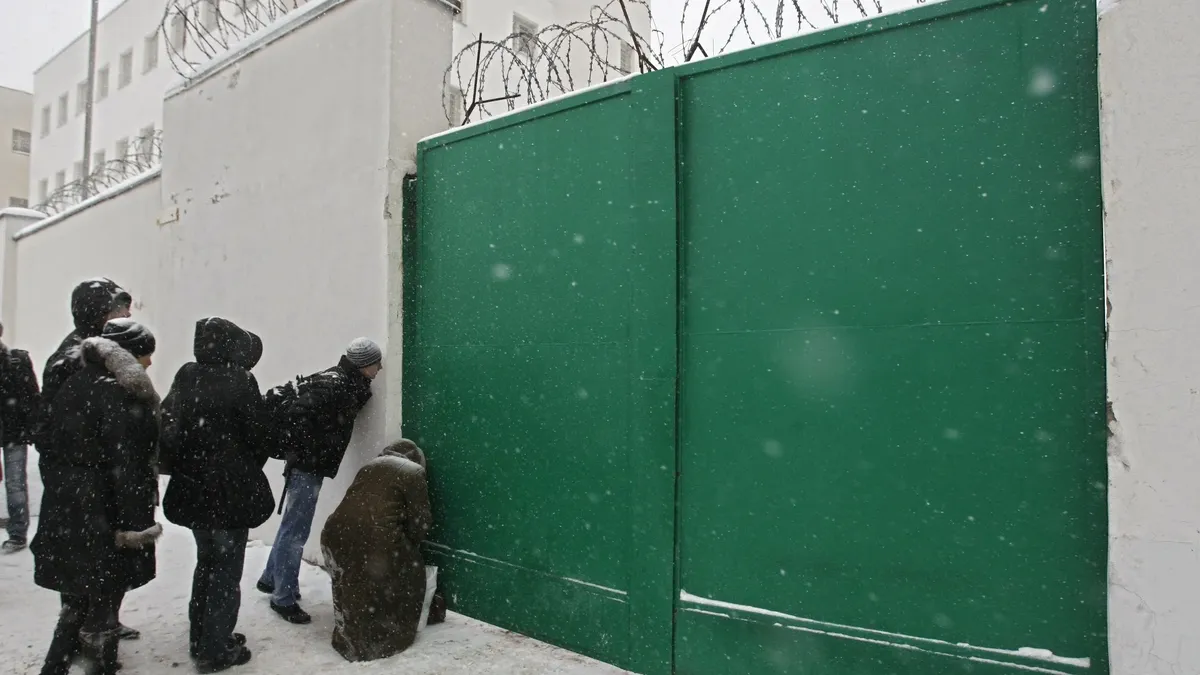
Photo: AP/East News
When political prisoners are released in Belarus, they are silent. Their relatives are silent, their lawyers are silent, journalists are silent. Because breaking the silence means attracting unnecessary attention. Those released begin to talk if they manage to leave. If they fail, or if they prefer to stay in Belarus, they continue to remain silent in the hope that they will not be imprisoned a second time.
The times when Belarusian political prisoners, upon release from prison, gave interviews and press conferences are long gone. Now we don’t always even know the names of those who are being released. The liberated people themselves prefer that no one remembers them.
In November, Alexander Lukashenko released a total of 63 people with two pardon decrees. On November 7, he pardoned 31 people, on November 20 - another 32. And so far only five names of those who were released are known. But based on these names and previous releases, one can already draw conclusions about whom he has mercy on and whom he is ready to rot, but not release.
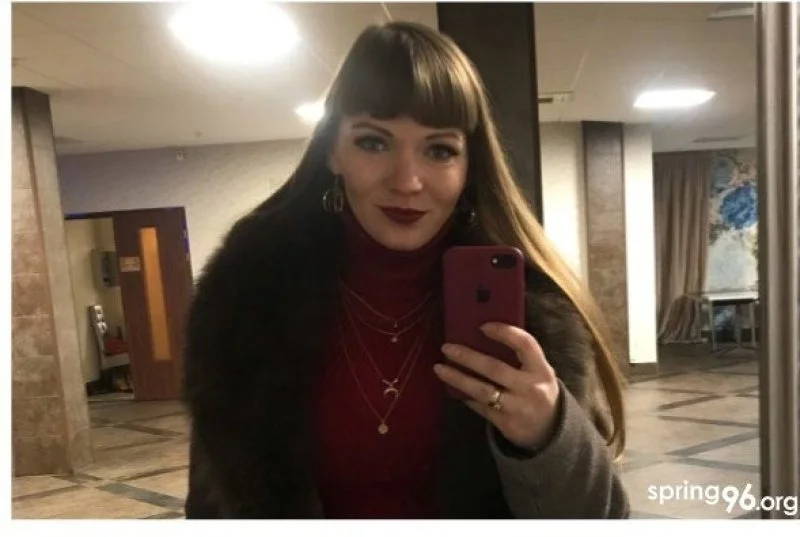
Among those released is Alevtina Gudkova, sentenced to one year in prison for participating in a protest in Brest on August 10, 2020. Just don’t think that Alevtina has been imprisoned since then. Belarusian security forces are still identifying and arresting those who protested four years ago from photographs and videos. The article of the charge is 342 of the Criminal Code of Belarus (“organizing actions that grossly violate public order”). For those who did not have time to delete comments on social networks, other articles are added: “insulting a government official,” “insulting Lukashenko,” “inciting social discord,” and so on. Alevtina Gudkova is a chemically pure case, she was detained in the spring of this year and convicted in August on a single article - 342, without impurities. Sentence: one year in prison. Ilya Tolstov from Dobrush was convicted under the same article in January (the sentence is unknown to human rights activists, but Article 342 provides for a maximum of three years in prison, and “first movers”, as a rule, are not given more than two).
Sergei Chizh, released on November 7, is a resident of Grodno. He was detained along with his wife Tatyana in November last year and charged under Article 367 of the Criminal Code of Belarus - “slander against Lukashenko.” They, like Alevtina Gudkova, were identified from photographs from a protest rally in Grodno: the husband and wife were carrying a homemade poster on which, according to the prosecution, text containing slanderous fabrications about Lukashenko was written in black and red. I think everyone remembers what they wrote on the posters during the days of the Belarusian protests; I won’t repeat it. They wrote what they thought about. From the moment of his arrest, Sergei Chizh was in a pre-trial detention center, and Tatyana was under recognizance not to leave. The court sentenced the husband to three years of restriction of freedom with a referral to an open correctional facility (that is, to “chemistry”), and Tatyana to the so-called home chemistry. This means that she is not allowed to leave the house, only to and from work, plus many more legal restrictions and constant police checks.
Another person released in November by a pardon decree is Khotimsk resident Andrei Korolev. Human rights activists do not know when he was detained, but he was tried in August under Article 367 of the Criminal Code of Belarus (“slander against Lukashenko”) and sentenced to two years in prison. The reason for the criminal case was a comment in a telegram chat. Mogilev resident Sergei Ilyin, who was also pardoned in November, was convicted under the “neighboring” article - 368 (“insulting Lukashenko”). And if we compare the articles and terms of those “freshly pardoned” with the articles, terms and personalities of those who were pardoned earlier, we can draw conclusions.
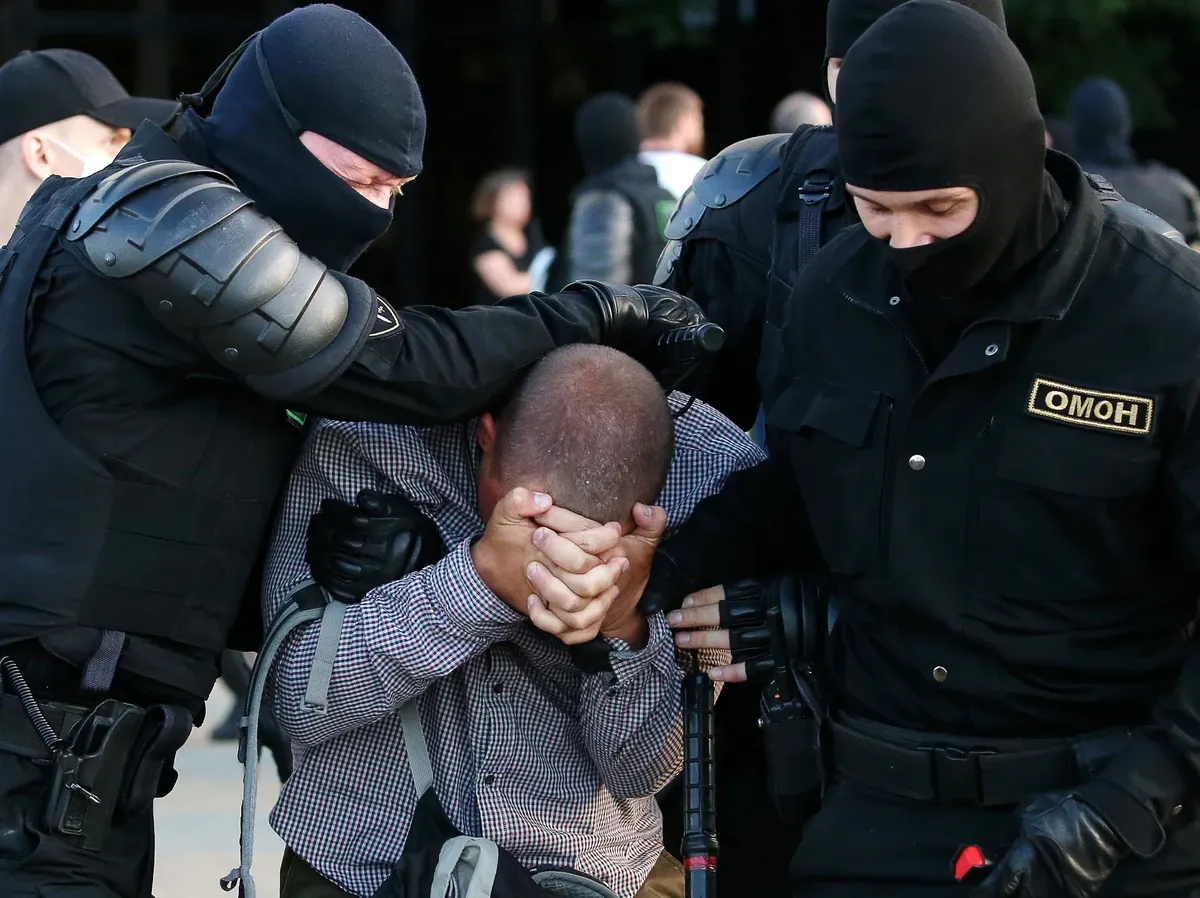
There are two criteria used for pardon. The first is a short period. The articles of the Belarusian Criminal Code under which those pardoned known to us were convicted are 342, 367, 368. Another is 369 (“insulting a representative of the authorities,” often used for those convicted for comments on social networks) and 370 (“outrage of state symbols” — for those who tore down the state red-green flag during marches). Under articles 342, 369, 370, the maximum penalty is three years in prison. Under articles 367 and 368 - five years, because they are about Lukashenko. But in any case, these are less serious articles. It is clear that we are talking about going out or commenting on social networks.
For comparison and comparison: Olga Stabrovskaya, who was released under the summer pardon decree, was sentenced to one year and three months in prison under Article 368; Alla Zueva - to two and a half years under articles 368 and 369, Irina Sankovskaya - to one and a half years under articles 368, 369 and 370; Olga Novikova - to three years under Article 342. We see the same articles and the same terms - up to three years. That is
Only those with short sentences can count on pardon. The exception is the first pardoned, 67-year-old Grigory Kostusev, the former leader of the Belarusian Popular Front, sentenced to ten years in prison.
Grigory Kostusev is seriously ill. He has cancer; in January he underwent another operation, after which he was returned to his cell the next day. In February, he wrote to his wife: “In six years it will be 50 years of our life together. I used to think about this date. I would like to gather a bunch of guests and celebrate in a big way. But now, unfortunately, views have become more pessimistic. There is less optimism, because living another six years looks like a difficult task.” On July 3 he was released. Other sick and elderly prisoners - with much shorter sentences - remain behind bars.
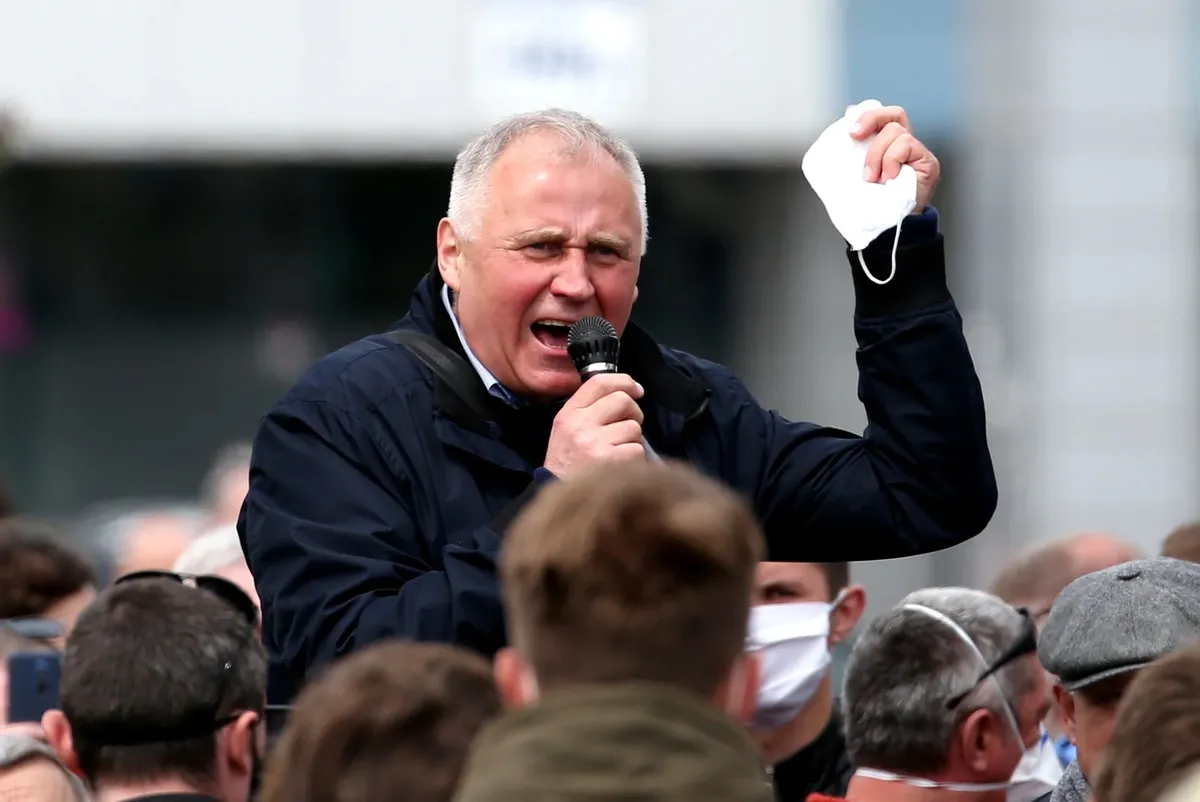
And the second, most important criterion (here, too, there is the only exception in the person of Kostusev): only those who have never had anything to do with resistance, opposition, or protests are released. Those who, until 2020, lived by the principle “I’m not interested in politics.” Those who never came to the attention of the special services, did not rock the boat, did not muddy the waters, did not trouble the people, did not throw stones in a glass house. And if, for example, the first criterion “moves” a little and a short term ceases to be a necessary condition for release, then, for example,
Maria Kolesnikova and Viktor Babariko have every chance of being released. And Nikolai Statkevich, Pavel Sevyarynets, Yevgeny Afnagel have zero chance.
For a year and a half, neither a lawyer nor relatives were allowed to see Maria Kolesnikova. But recently she was finally allowed to see her father. However, everyone already knew that Maria was alive: some women leaving the Gomel colony said that they saw her, others said that they heard her voice from the next cell when they were sitting in the punishment cell. The same fragmentary, incoherent, but important pieces of information leak from other colonies about political prisoners, deprived of visits and calls and held incommunicado. And only no one had heard anything about Statkevich. Formally, he is in Glubokoe colony No. 13. According to the meager information from there, he is either in a solitary cell in the PKT or in a punishment cell. But other prisoners also end up in punishment cells and PKT. But none of those who have left correctional colony No. 13 over the past almost two years have heard anything about Statkevich. No voices from the cell, no shadows, no gossip around the barracks.
The last post on Facebook* of Nikolai Statkevich’s wife Marina dated November 25:
“Meanwhile, 655 days of uncertainty and 1639 days behind bars. I have everything. There's nothing more to say."