
Translated material
Instead of a cross - a body microphone
A rapist, a robber, a drug dealer and a car thief helped extend Gorinov's sentence.
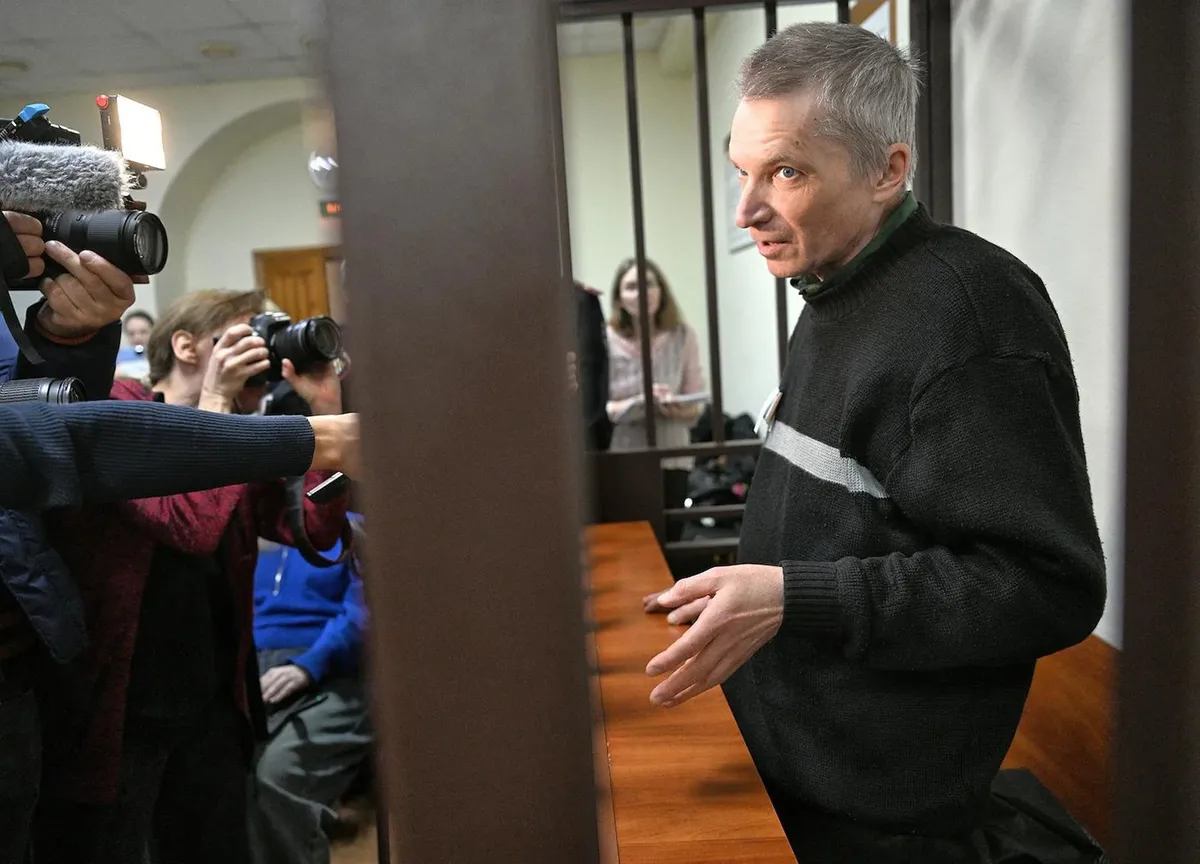
“We have never acted like this, <uncensored.>, anywhere, <non-censored.>, in any <non-censored> conflicts <non-censored.>.
- We are such angels.
- Of course, <uncensored.> we <uncensored> have such a <noncensored>, we have such a mentality, such a mentality, we <uncensored> always fight <noncensored.>, <noncensored.> on the battlefield <noncensored.> . What do you say? So what?
- I don’t think that’s true.
- Yes? Now the history of wars <uncensored.> here is <uncensored>, tell me where we <uncensored> at least once <uncensored> fought like this <uncensored>, well, where?”
This dialogue is one of the evidence in the criminal case against Alexey Gorinov. According to investigators, it illustrates how Gorinov implements his “criminal intent aimed at shaping the ideology of terrorism” among his cellmates. Gorinov’s remarks in it are easy to identify: they are devoid of obscene language. So judge for yourself who is convincing whom here.
We talked in detail about the new case of the former Moscow municipal deputy in the film “Citizen Gorinov: Wiretapping.” But the identities of the prosecution witnesses—the very ones whom Alexey allegedly subjected to a massive propaganda attack—remained behind the scenes: we did not want our work to be regarded as pressure on these same witnesses, under the pretext of which the trial could be closed.
Now the trial is in full swing, according to the plans of the judge of the 2nd Western District Military Court Vladimirov, who decided to consider the case on the merits in three days, tomorrow Gorinov may be sentenced. So we can talk about the witnesses, as well as the content of their conversations.
According to the indictment, they and the defendant “developed a relationship of trust.” Read more about them.
In December 2023, the seriously ill Gorinov was admitted to the prison tuberculosis hospital. They are treating. But instead of 21 days, they keep him there for 40. This has nothing to do with his well-being: for the entire “extra” half of the hospitalization period, Gorinov is the object of operational activities of the FSB.
The “office” has assistants: six convicts admitted to the same hospital. They are placed in pairs in Gorinov’s room, where the main development tool - a television - was prudently installed. According to the operas’ simple plan, prisoners will watch political talk shows and discuss what they see. And the prisoners wear body microphones.
The first two did not fulfill the instructions of the operatives - either they did not want to, or they could not. Their names and results of work are not even in the materials. But the next two pairs worked successfully, although it was difficult - in dozens of hours of negotiations, the transcript of which took almost 100 pages, they managed to extract the same amount from a deputy convicted of two phrases about what was happening in Ukraine -
just two sentences formed the “corpus delicti.” And even then not right away - in order to demonstrate it to the court, they had to involve experts from the Ministry of Justice, who, it seems, also sweated (about the examination - a little lower).
Now about trust relationships. Investigator SK Polezhaev repeats this formula from document to document. And you can sympathize with him. If he considers Gorinov’s communication with four prisoners to be confidential, Polezhaev shows signs of emotional deprivation, and he is not far from burnout.
Gorinov is correct and taciturn; almost all of his remarks in the 100-page transcript are short answers to questions asked by his interlocutors: “Perhaps,” “I don’t know,” “I understand,” “I don’t even want to argue.” The FSB was counting on the effect of a fellow traveler, on the mechanism of “frankness in the compartment”, on the fact that Gorinov, exhausted as a loner, would be glad to have any communication. But the level of reasoning of the interlocutors is such that one of them, for example, seriously describes life in the USA, retelling Hollywood films.
This is Andrey Gonyashev, sentenced to 16 years of strict regime for selling drugs and running a brothel. By the way, all four “hens” are second movers, the keeping of which together with the first mover Gorinov is strictly prohibited by law.
44-year-old Gonyashin is a Muscovite, has a secondary education, his first arrest happened in 1999 with a dose of heroin. In 2012, he allegedly beat up a boy on the street. They were detained for possession of seven Kalashnikov cartridges, then for selling heroin as part of a criminal group. There were conditions in his biography, an amnesty, short sentences, and in 2013 he was already given 16 strict sentences. In the colony he collaborated with the administration and received 45 awards. “Visits the library, gives preference to classical literature,” is stated in the characteristics of the FSIN.
A lover of the classics, Gonyashev swears so profusely that it is not always possible to understand what he wants to say: “They are Banderaists <uncensored>, a cult!”
In the protocol of the interview by FSB operative Kirillov, Gonyashev specifically indicated that while watching programs, Gorinov said that everyone on TV was lying.
His testimony coincides word for word with the testimony of Nikolai Medvedev, who was convicted of rape (his anamnesis also includes such non-standard criminal acts as the abduction of a German shepherd and a goat).
Apparently, working in pairs brought the witnesses so close together that they managed, while giving evidence separately, to repeat each other word for word (only the identifying data differed). Major Kirillov in vain sent the case only to the Investigative Committee, he should have sent it to the Guinness Book of Records. And the witnesses go to the research institute for experiments. Indeed, on the same day, March 10, 2023, he managed to get two more synchronized witnesses. The same phenomenon of word-for-word, down to the comma, coincidence is observed in the protocols of the surveys of Pavel Britikov and Alexei Myagky.
One is convicted of robbery, the other is convicted of causing grievous bodily harm. Britikov took five packages of diapers out of the store. Before this, he stole a TV from the apartment; he had previously been convicted of similar crimes. Education nine classes. Milky was previously convicted of theft. They told Opera Kirillov in two voices that Gorinov “initiatively focused” their attention on the events around Ukraine.
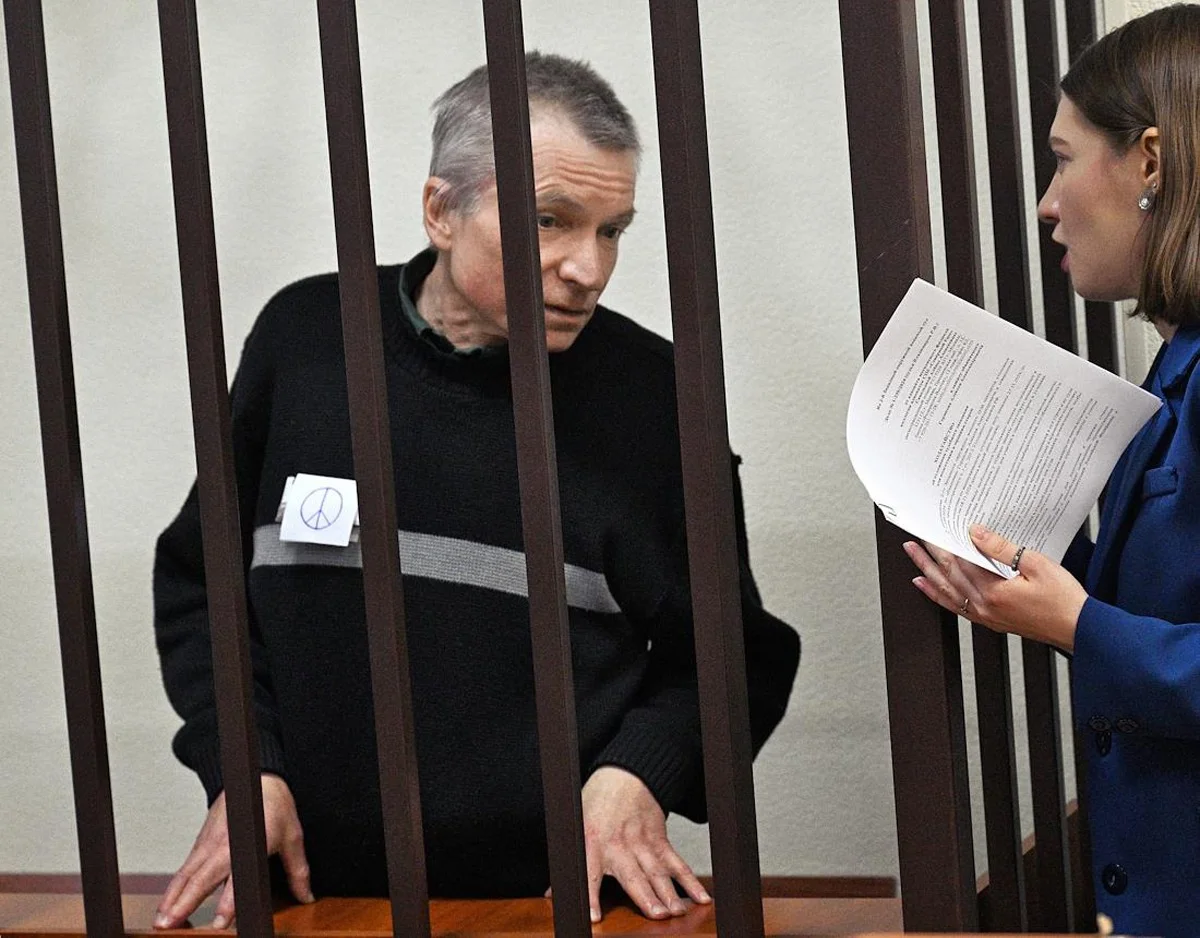
In fact - this is in the transcript - the “mother hens” themselves bring any conversation to Ukraine. There are also ordinary lies in the survey. Britikov and Myagky signed statements stating on their behalf that Gorinov described as acceptable the actions of the Azov * and Kraken * units in relation to the civilian population. What this means is unknown - there is no such conversation in the transcript. “Kraken” was once mentioned by one of the convicts; Gorinov did not support the topic. There was a dialogue regarding “Azov”, and it concerned who, in principle, is participating in the bloodshed on the part of Ukraine. Gorinov believes that it is the army, and his neighbors - that it is nationalist units.
According to a specialist’s certificate, Gorinov does not use any persuasion techniques.
He doesn’t try to convince anyone of anything, he just answers questions sparingly, without hiding his attitude towards television propaganda and military operations in general.
The second phrase, which helped initiate the case, concerns the Crimean Bridge and the attacks on it. However, according to the expert’s conclusion, there is no attempt to convince as such. Moreover, in the dialogue there are no words or statements at all that give an assessment of events. There is only a difficultly disputed assertion about the cause-and-effect relationship of the strike with the Russian-Ukrainian conflict as a whole.
Difficult does not mean impossible. The investigation first turned to Vladimir State University for a specialist opinion. It was given by Associate Professor of the Russian Language Department Alexander Malakhov and Senior Lecturer of the Clinical Psychology Department Tatyana Krylova. They stated that the transcript does not contain any signs of “provocation and an intention to arouse interest in conducting some kind of speech.” Then the materials are sent to the Yaroslavl forensic laboratory of the Ministry of Justice. Expert Elena Koneva, when asked about the linguistic and psychological signs of justifying the abstract ideology of violence in Gorinov’s speech, gives a specific answer - the allegedly convicted person justifies the activities of “Azov” and “Right Sector”* (about which she was not asked). The obvious and persistent questions about the military operations that Gorinov’s interlocutors addressed again and again did not bother her either.
At the same time, there are no traces in the case of what could have aroused interest in Gorinov from the FSB or the FSIN - no reports, for example, about his conversations in the cell - before the hospital, without microphones. He only talked to the mouse while sitting in solitary confinement. Then the question is: why did they send Medvedev, Britikov, Myagky and Gonyashin to him? Based on what data did the ORM begin?
And if there is no such data, then why were the actions of the four prisoners and those who equipped them with audio recording equipment not assessed as a provocation? Neither the investigation nor the court poses this question.
What about Gorinov’s interlocutors now? After participating in “operational activities,” they received a number of incentives; three (by coincidence, they were the most active in conversations with Gorinov) received the right to an additional transfer on January 31. Two - Britikov and Myagky - are now free.