
Translated material
The Kid Who Couldn't Lose
Famous football player and coach Roberto Mancini turns 60
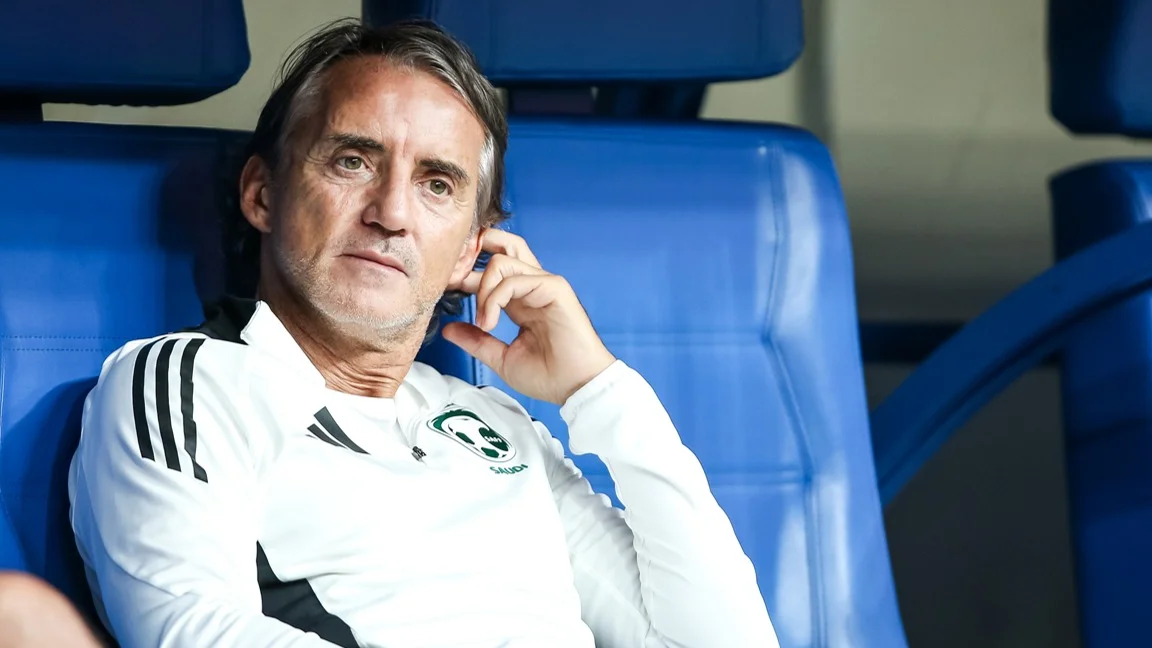
Roberto Mancini. Photo: Sha Kun / CFIDC / VCG / Visual China G
November 27 is the anniversary of Roberto Mancini, a wonderful football player and coach who won a total of 10 Italian Cups, took the FA Cup and Turkish Cup, six different Super Cups, and also led the Squadra Azzurra to victory at Euro 2020.
Of course, these are not all the trophies of the master, who won three Scudetto in a row with Inter and won the Premier League with Manchester City. And during his time as a player, the native of Yezi collected even more precious artifacts - cups, championships and personal ones.
Of course, the current generation of Russian fans probably remembers Mancini as the same coach who failed with Zenit in 2018. The Gazprom team did not make it into the top three, and Roberto’s Neva business trip, whose salary for 12 months was 4.5 million euros, ended by mutual agreement. However, there must have been at least one thing that Mancini the coach failed to do? Someone will grin and grumble: Mister made a big mistake with the Italian team, which did not make it to the 2022 World Cup in Qatar. Well, yes. However, a little earlier, the helmsman brought the national squad to the golden peak in the post-Covid Euro. The Blue Squadron had not seen such a continental triumph for more than half a century.
In that distant and victorious 1968, Robertik was four years old. And he was already hitting the ball well. By eight, he had already become the leader of the local team from his hometown of six thousand. There is a true legend about how a boy almost gave his entire family, who gathered in church on the day of his first communion, a heart attack. Right in the middle of the solemn ritual, my son ran to the stadium without any bows or explanations. His embarrassed and at the same time furious parents went to apologize to the padre for their son’s wild feint.
But the servant of God whispered to mom and dad that he personally asked Roberto to quickly leave the temple, since his football team was losing at that moment.
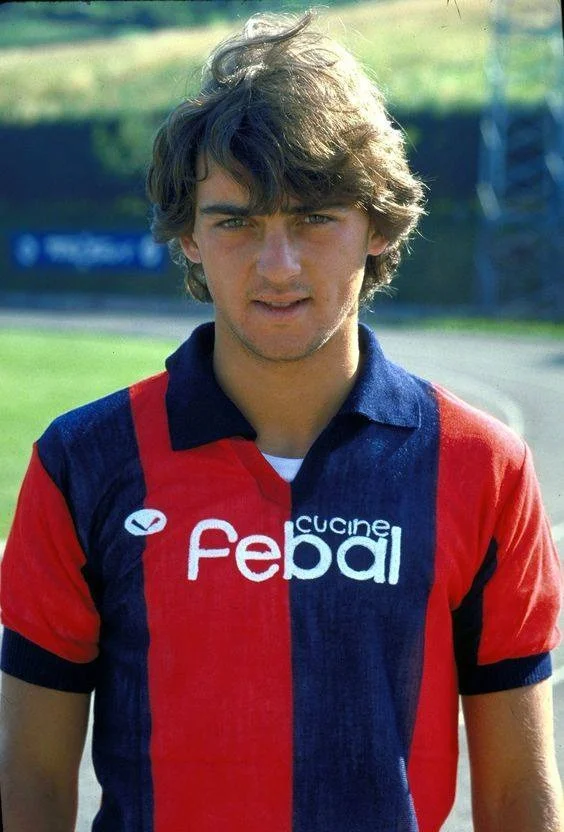
But at the age of 13, the nimble boy, on the contrary, ran home for a couple of days from the Bologna academy, where he really didn’t like everything. The Kid (that’s what he was called at the “red-blue” boarding school) showed his tough temperament from childhood. The coaches wanted to mold the reactive Mancini into a pure forward, but the guy constantly argued with them and expressed personal considerations regarding his position on the field. As a result, the teachers gave up, and Roberto happily turned into, as they say, a “classic ten,” that is, an anarchist attacker patrolling along the entire front of the attack.
True, he always worked for the team with all his might. “Goals are not my goal in itself. I want to become a perfect football player. I think it's important to chase the full-back when he starts to move forward. This way I will bring much more benefit to the team.” These are the words of Mancini himself, who, nevertheless, scored 204 goals in 738 matches during his career. But I remember him much more as a passer.
Roberto had amazing technique, which allowed him to provide his teammates with inventive and perfectly accurate passes. Assists, let me emphasize, assists.
In those ancient times, they were not counted (they were not included in the football player’s statistics), but Italian journalists somehow thoroughly estimated that, for example, the strongest of all Mancini’s teammates, Giuseppe Vialli, after his well-calibrated passes, sent more than 100 into the enemy net. "parcels". But the effective playmaker became famous not only for his assisting qualities.
Roberto was pathologically unable to accept defeat on the field. He always needed to be first. And therefore, right “in the course of the play”, slapping a companion who had done something wrong somewhere was in the order of things for him. The hot-tempered leader used his fists in all the professional teams where he played. Goalkeeper Gianluca Pagliuca once frankly admitted: “At Sampdoria, Roberto fought with Bellucci, Bertarelli, Buso, Verkhovod, Catanets, Corini, Maspero, Mikhailichenko... and me too.” And once the same Pagliuca barely pulled Mancini away from the referee, whose emotional wandering forward literally wanted to tear his head off.
However, it was the Kid's crazy obsession, along with his unconventional tricks, that helped his clubs win. He ignited himself and infected his associates with a big idea, including administrators (gave them advice on equipment), coaches (discussed tactics with them) and presidents (attended meetings of the board of directors, directly influenced transfers, indicating who should be bought, and himself sometimes I just personally negotiated with the right players).
Take Sampdoria for example. Who had heard of this run-of-the-mill team before Roberto Mancini joined it?
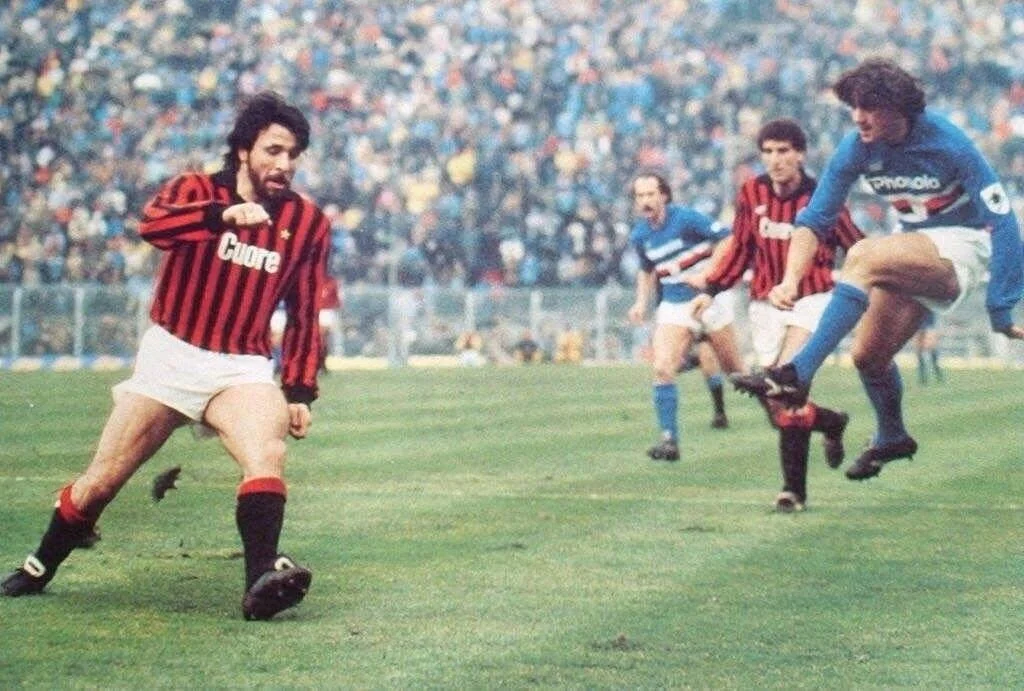
Over the 35 years of its existence, the “sailors” have not won a single prize. And with the elegant and fiery Mancini, over three five-year plans - four Italian Cups, the country's Super Cup, as well as a European trophy - the Cup Winners' Cup. And in 1991, for the first (and last for today) time, they won Serie A. Moreover, at the end of the 1989 season, the young captain gathered all the players and made a promise from everyone: no one would leave the team until Sampa won the championship. Nobody left. And they knocked it out! The coach of that golden brigade, Vuyadin Boshkov, later recalled:
“Mancini was incredibly tough and passionate. When he spoke in the locker room, even I fell silent. We were under his hypnosis, and without Roberto we would not have reached the prestigious title.”
In 1992, the Genoese even reached the final of the Champions Cup (the current Champions League). And they would have defeated Barcelona if Viali, whom Roberto brought one on one with the goalkeeper in the second half, had not missed.
And Lazio, which had been missing stars from the sky for a quarter of a century, did not miss a beat in inviting Mancini. With him, a sharp intellectual, the Biancocelesti won the championship, two national cups along with the Super Cup, and the 1999 Cup Winners' Cup with the UEFA Super Cup. Moreover, it was the 34-year-old veteran, who barely came on as a substitute, who prevented the capital’s Lokomotiv from reaching the final of the last Cup Winners’ Cup in history, giving an elusively clear back-heel pass to Boksic at the end of the match in Cherkizovo, who equalized the score (in Rome the teams achieved a goalless draw, and Lazio will advance through an away goal). The Swedish conductor of that wonderful Roman ensemble, Sven-Göran Eriksson, who left us in the summer, gave the following description of his charge:
Sven-Göran Eriksson:
“Roberto was a fantastic asset to football. He saw the clearing perfectly and had a brilliant premonition of the moment... He scored himself, intuitively distributed the finest passes and motivated his comrades, forcing them to give their best in any situation. Without exaggeration, a great master..."
And it is no coincidence that during one of the matches the late commentator Vladimir Maslachenko exclaimed: “Love Mancini! Admire Mancini!
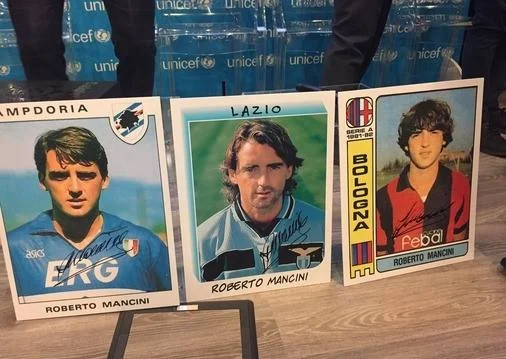
Unfortunately, the honest hooligan and the best football player in Italy in 1988 and 1991, according to the newspaper Guerin Sportivo, as well as the best player of the Serie A season (1997), did not have a beautiful romance with the national team. Mancini didn’t make it to the 1986 World Cup in Mexico because he went on a spree the day before, returned home at dawn and received a wolf ticket from Enzo Bearzot. At the 1990 home World Cup, by decision of coach Azeglio Vicini, he sat out the entire tournament in reserve. And Roberto did not go to the 1994 world forum in the USA, having quarreled with Arrigo Sacchi. And soon I completely stopped working with the national team. Nevertheless, he has two bronze medals (for the 1990 World Cup and Euro 1988) in his collection.
The hero, who had just said goodbye to the fans, immediately began collecting coaching trophies. Even without a mentor's license, he managed to win his favorite tournament with Fiorentina in 2001 - the Italian Cup. After 36 months, he repeated this success with Lazio, and then for the next two years he did not give up the shiny vase to Inter, which, under the management of Mancini, as mentioned above, also won three gold medals in Serie A in a row. Then the Italian moved to Foggy Albion and delighted the sheikhs who invested in Manchester City with his debut victory in the Premier League (the first championship title for the “citizens” in 44 years). And, of course, the FA Cup and Super Cup (where would we be without them?) the Sky Blues cheerfully added to the club museum.
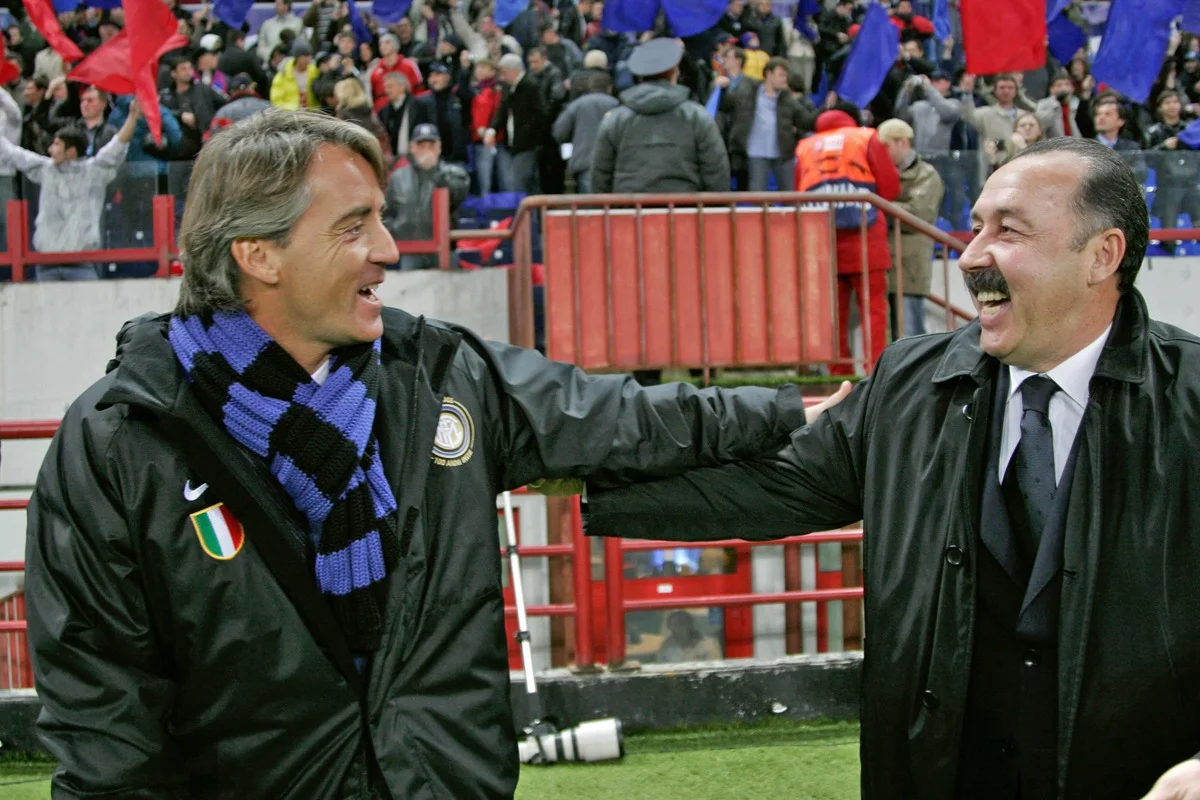
When a stylish coach (by the way, it was Mancini who came up with the idea of wearing a scarf in club colors to his teams’ matches, about which fans even composed a song: “He doesn’t take it off in the bathroom, or in bed, or in the hot summer”) was invited to head “ Squadro Azzurru,” many critics in the Apennines were against it, believing that the sensei’s great years were behind him. However, with him, no one could defeat Italy for 36 (!) months: 37 (!) matches without defeat is a world record. The result was victory at the Euro, where Donnarumma and the company “thank”, and in the group stage Turkey, Switzerland and Wales, in the playoffs they were defeated by the Austrians, Belgians and Spaniards, and in the decisive battle at Wembley they defeated the English on penalties. “We have created something extraordinary. This Italy will go down in the history books,” said Mancini, who was naturally recognized as the best coach of the year in all versions, after the victory.
Today the Knight and Grand Officer of the Order of Merit of the Italian Republic is resting in Sardinia after a short stint with the Saudi Arabian national team. But for some reason I am sure that he will soon return to active work and win a couple of Cups.