
Translated material
"Hippies with colored guitars have become old clowns"
Garik Sukachev gave an interview to Ksenia Sobchak. For some reason
AUDIO VERSION
This material has an audio version on Youtube. Read by Irina Petrovskaya.
Garik Sukachev gave an interview to Ksenia Sobchak. For some reason. Not in the sense of why Sobchak gave the interview. I don’t understand why I even agreed to this conversation. Meticulous viewers tried to count how many times during an hour and a half of communication he said “uh-huh,” but lost count. Somewhere in the middle of the interview, he himself let it slip: “I won’t answer you anything in particular. This is important to me."
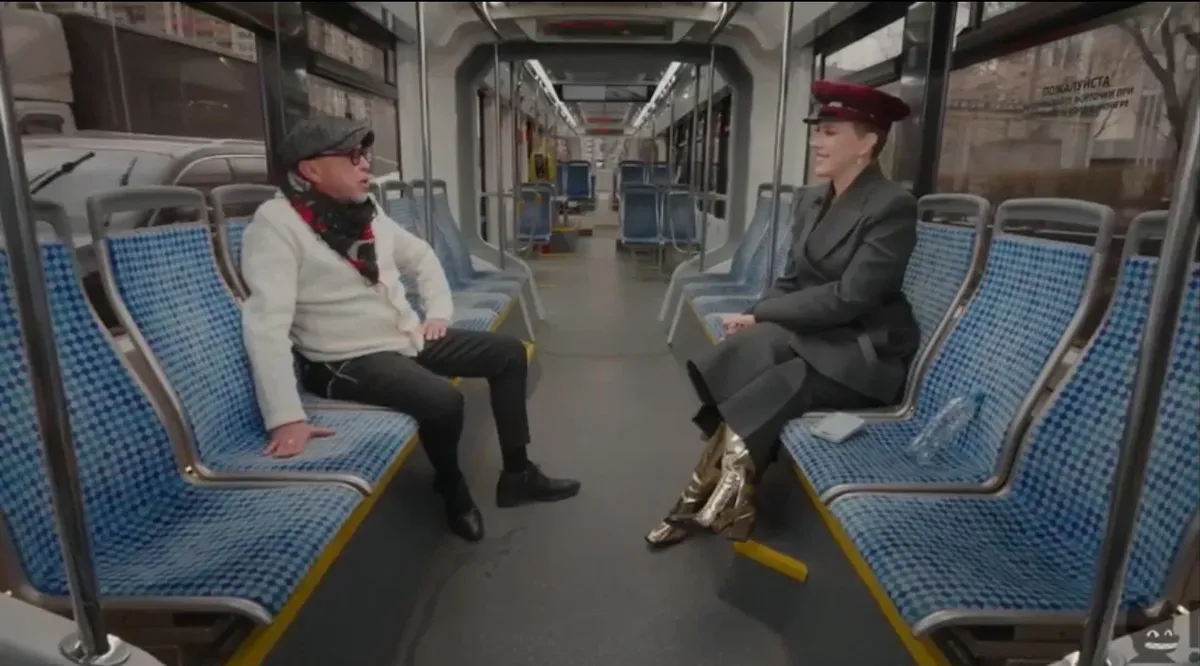
The interview is recorded in an empty tram, which moves in a circle, returning to the same point. Sometimes people are caught in the frame at stops waiting for a tram. But another one passes by, and there is some kind of ominous symbolism in this:
the idol of millions, the exponent of people's aspirations, the right guy turns out to be terribly far from the people.
In addition, at the very beginning of the “journey” he admits that the last time he rode a tram was when the fare cost three kopecks, that is, it turns out, in the late 80s of the last century.
Opposite Sukachev sits Ksenia Sobchak in a crimson cap and a strict suit, reminiscent of the military uniform of unknown troops. He himself sits ruffled, like a parrot from the old reprise by Gennady Khazanov, who shouted in a fit of truth-seeking: “They don’t give meat to tigers.” However, unlike Khazanov’s parrot, Sukachev avoids truth-seeking, trying to avoid any more or less slippery topics or mutter his “uh-huh.”
In the past he called himself Garik, now he prefers to be addressed by his first name and patronymic: Igor Ivanovich. Garik remembers that with nostalgia: “Garik is still that naughty. He was a nice guy and I love him."
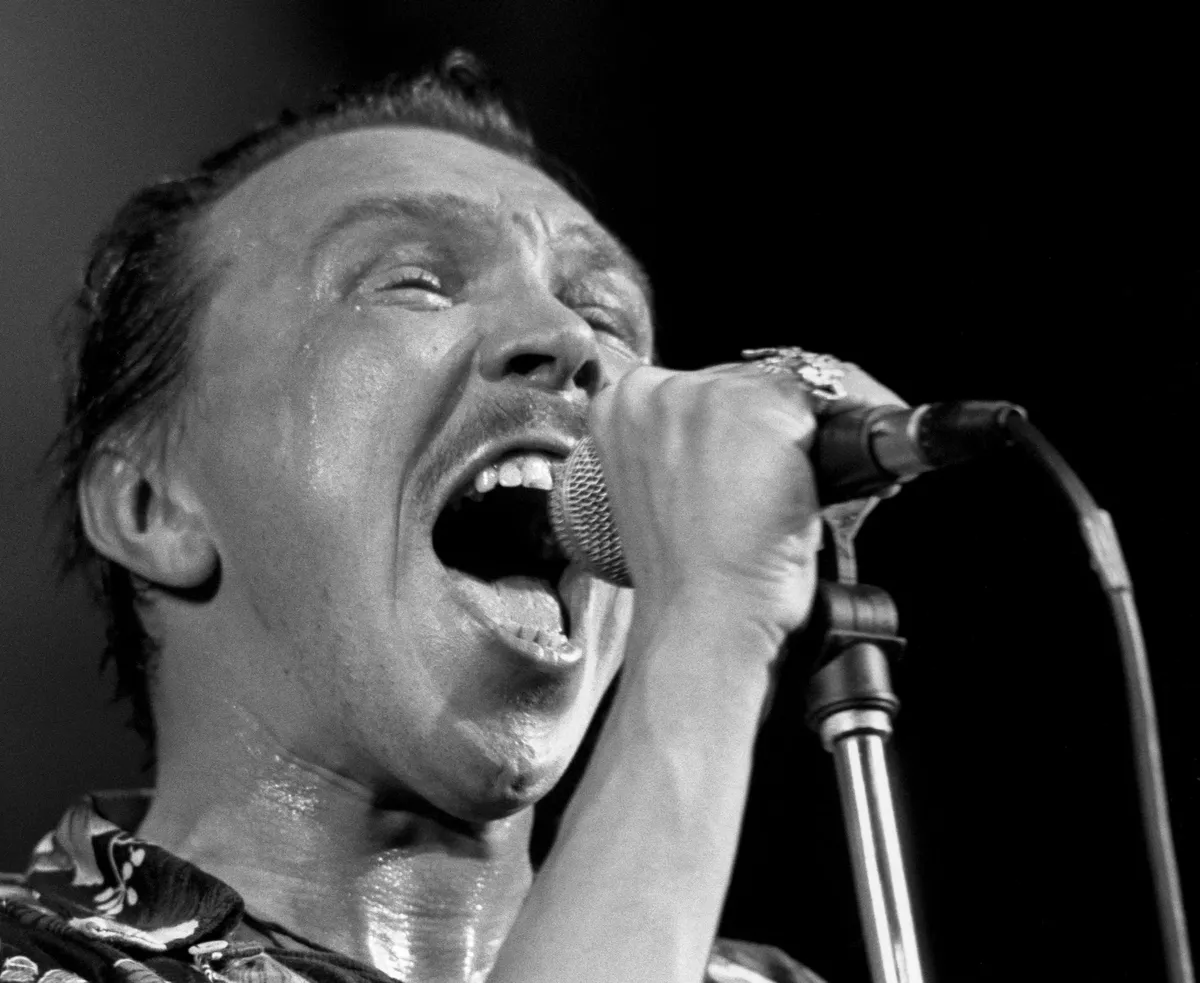
He, along with all the people (Sobchak cites opinion poll data), considers the singer Shaman to be a new idol and symbol of Russian rock. Old rock is dead, but Shaman is alive - a pale young man with a burning gaze, a blond beast in leather pants: “He is certainly a talented singer with a beautiful voice, he writes good music and simple, intelligible poetry.” Sobchak wonders if Sukachev understands why the song “I am Russian” united many? He understands: “Because here comes *** (he says so, but Sobchak does not correct him. - I.P.), there are some important things in these simple words - forward, we will not give up, harsh times have come, we will overcome everything ... Millions of people resonate with these words.” So he, Sukachev, is rooted in Russia, dreams that Russia will again become an empire and grow with “new lands.”
“All that remains is to ask, like Dud*: “If you met Putin, what would you tell him?” - asks Sobchak. It’s as if an inner light lights up in the former Garik: “It would be very interesting for me to see him.” - “What would you tell him?” - “Wow, Vladimir Vladimirovich! It's you! Af-fi-get!”
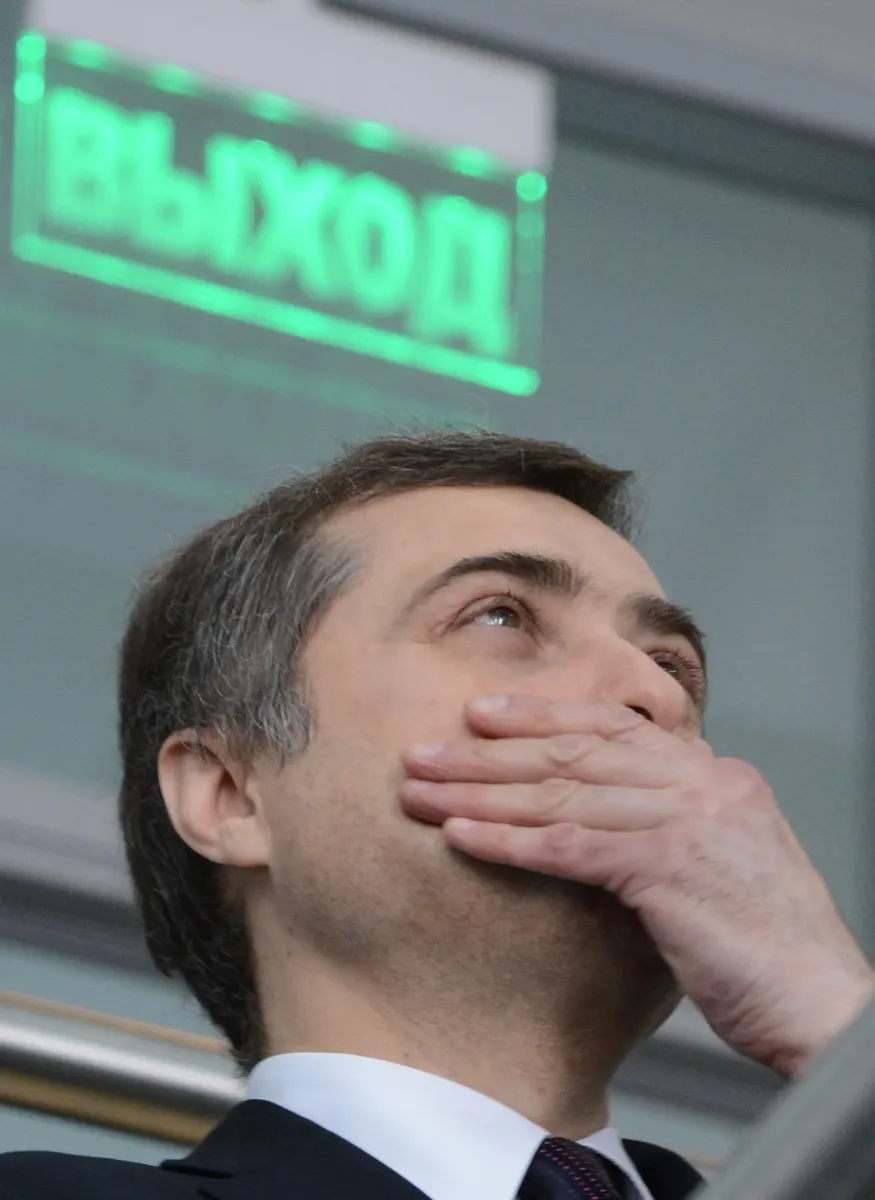
There are strange connections and seemingly random coincidences. A few days before the release of Sobchak’s interview with Sukachev, the second part of his film “Not/My Rock and Roll” was published by the famous music producer and journalist Mikhail Kozyrev*. “Rock Around the Kremlin” is the name of this second film, which tells how in the 2000s the authorities, represented by the then “gray eminence” Vladislav Surkov, tried to seduce, tame and put “protest music” and its most prominent representatives into the service of propaganda. The task turned out to be not so difficult. Surkov, says one of the characters in the film, entered the rock environment like a knife through butter.
“He’s smart, he’s brilliant, he’s a very intelligent person,” the rebel rockers excitedly admired their high patron, friendly calling him simply “Slava.”
They were not asked to sing for Putin, the main thing was not to sing against Putin. Now, having already found themselves outside of Russia, many of them repent: “It was flattering that we were invited to the Kremlin... He [“Slava”] did not ask for anything, did not call for anything. I asked how the authorities could help rockers in the era of pop dominance.”
Andrei Makarevich* recalls how, during the famous Paul McCartney concert on Red Square in 2003, a man in a perfect, formal suit suggested that he move to a more comfortable seat closer to the stage. Makarevich, of course, agreed. It soon became clear that this place was near Putin. The chronicle preserved touching footage: the president and the musician were talking in a friendly manner during the concert, exchanging impressions. “I liked it,” Makarevich says today. And then at rallies in support of Putin and Medvedev, he spoke without embarrassment: what’s the problem? A concert is like a concert. He and his colleagues also liked the friendly meeting with the new President Dmitry Medvedev in 2010 at a bar over beer. All so informal, in jeans and an open-necked shirt, a very happy Medvedev sits surrounded by the idols of his youth.
Now they understand that they were tamed and bought, and then they also really liked such warm communication with the head of state. In addition, the authorities helped rock musicians get on the coveted television and radio airwaves. Plus, she promised and paid high fees - what’s wrong with that? Who could have thought in those years how it would all end. Here it would be a sin not to quote Viktor Shenderovich’s remark*:
“And may the best of those who sang on Seliger and met with nice bosses forgive me, but what was it that you didn’t understand about them in the 2000s? How did you have to close your eyes so as not to see hell?
After February 2022, some rock musicians, having seen the light, left the country, moving, as they say now, to the side of the world. The other part, like Garik Sukachev, “rooted in Russia”, recorded the song “I Stay” - and now, without hiding, they faithfully serve the regime. Sukachev considers those who left to be traitors, and about the protest music of the late 90s and 2000s he says this: “Protest music is too strong a word. There was no protest music in its purest form... Rock is a lie. This has ceased to be disinterestedness. Everything has become commercial. I was completely disillusioned with the rock movement." And how do these statements differ from the bitter conclusions of Mikhail Kozyrev in the film “Not/My Rock and Roll”? Only the personality of the speaker. Uh-huh.
And more precisely than anyone else, the Rabfak group spoke out on this sad topic:
*But youth passed away like a drunken stupor,
And all the ideals burned to the ground.
Hippies with colored guitars
They became old jesters,
Betrayed All you need is love.
And no matter what they sing now,
It turns out: “God save the Tsar!”*
Cruel. Perhaps it is unfair to those who came to their senses and sang songs against the king. But nothing can be changed. In the final shots, the empty tram - with Garik and Ksenia suddenly disappearing from it - goes into nowhere. Into the darkness. Like protest music and burnt-out ideals.
AUDIO VERSION
This material has an audio version on Youtube. Read by Irina Petrovskaya.
Top 5 best episodes of the week on YouTube
Petrovskaya recommends
NO.Media from Russia. Citizen Gorinov: new case, torture, wiretapping and provocateurs
“Citizen Gorinov: a new case, torture, wiretapping and provocateurs.” In the new episode of the channel “NO. Media from Russia” Dmitry Muratov* talks about the first person sentenced to 7 years in prison for “fake news” (or rather, in just two phrases) - former municipal deputy Alexei Gorinov, the tortured conditions of his detention behind bars, and the second case under the article “for justification of terrorism,” hearings on which have just begun.
"Sheinkin40". MATCHBOARDS in Israel? Alexander Feklistov about emigration, happiness and work ban
“Matchmakers” in Israel?” The hero of the new episode of the Sheinkin 40 channel, the outstanding Russian artist Alexander Feklistov, tells hosts Mark Levy and Anton Privolnov about working in the television series Matchmakers, beloved by Russian-speaking viewers, the ban on working in Russia, leaving for emigration and creative plans for the future. “I live in Russia. I live in Catalonia,” he says at the end of the program.
“Iceberg: when you think you are Alla Pugacheva”
The performance is based on the play by Mikhail Durnenkov, which he wrote specifically for actress Yulia Aug. Her heroine, a fan of Diva Vera, thinks that she is Alla Pugacheva. After a severe shock caused by the news that her favorite has left Russia, Vera ends up in a psychiatric hospital.
"Media Honey". Vladimir Molchanov | Remember everything
The hero of the new YouTube channel “Media Honey” and the first author’s project of Nikita Arutyunov is the TV presenter of the famous program “Before and After Midnight”, writer and unique storyteller Vladimir Kirillovich Molchanov. The young interviewer is touchingly in awe of the master, it looks a little comical, but you can understand him: Molchanov is a real legend of TV and journalism. And besides, he rarely agrees to an interview. Lucky guy.
"Armen and Fedor." 10 women's books about man and humanity || Armen and Fedor and feminism
The author of the literary channel “Armen and Fedor” Armen Zakharyan, in a recent interview with Yuri Dud*, offered aliens, if they visit us, a list of books by ten authors that are required reading. Then viewers reproached the author for the fact that his list included only male writers. In this issue, the author recommends to aliens (and at the same time to earthlings) ten women's books about man and humanity.