
Translated material
"Bring the Boys Home"
The civil conflict in Vietnam in the mid-20th century grew into a confrontation between two systems: the USSR and China supported the socialists led by Ho Chi Minh, and the USA and Great Britain were forces loyal to the colonial French authorities. At first, the United States did not directly intervene in the conflict and provided the allies with financial and military assistance, but this was not enough, and in 1965 the United States decided to send its troops to Vietnam. The American military traveled to the other side of the world to confront the socialist threat, and the operation was supported by the people of the United States. However, thousands of soldiers died there, and quickly the public mood reversed, leading to the largest anti-war campaign in US history. "Cold" shows how it was.
The US lost the war in Vietnam. It was unpopular, and millions of Americans demanded it be ended much earlier. That's how it was
Help Kholod tell human stories
We put people at the center of our journalism and talk about people who face injustice, but do not lose spirit and continue to fight for their rights and freedoms. To continue covering people's stories, we need the support of readers - thanks to your donations, we continue to work, despite government pressure.
- Foreign card
- Map of the Russian Federation ↘︎
- Patreon ↘︎
- Translation
- Crypt
Monthly
One-time
5 €
- 10 €
- 20 €
30 €
5 €
- 10 €
- 20 €
- Other
- Bank of the Russian Federation
- Foreign bank
Card number:
5536 9138 6472 8742
Copied!
Recipient:
Taisiya Bekbulatova
Copied!
Recipient:
Projektas Šaltis
Copied!
Account number:
LT613500010016198323
Copied!
SWIFT BIC:
EVIULT2VXXX
Copied!
Bank:
Lietuvos Bankas (Bank of Lithuania)
Copied!
Comment - purpose of payment:
Parama įstatymų numatytais tikslais (be konkretaus tikslo)
Copied!
We ask you to provide a comment so that we can accurately determine the receipt of funds. The phrase is translated as follows: “Support for statutory purposes (without a specific purpose).”
Amount: €
Donate
By making a donation, you accept the privacy policy
The preconditions for the Vietnam War arose during World War II. The administration of the French colony, which was Vietnam at this time, allowed Japan to first occupy its territories, and at the end of the war transfer power in the region to puppet pro-Japanese governments. However, after the surrender of Japan in Vietnam, local communists led by Ho Chi Minh proclaimed a republic. France quickly regained control of the southern part of the country, but was unable to control the entire territory of the colony. Ho Chi Minh was supported by China and the USSR, and South Vietnam, which remained loyal to the French, was supported by the USA and Great Britain.
During a protracted confrontation, Ho Chi Minh's forces managed to defeat the French forces, who agreed to negotiate. In July 1954, the Geneva Agreements were signed , which provided for the temporary division of the country into two parts in the area of \u200b\u200bthe 17th parallel, and also obliged the parties to agree on holding general elections in both parts, which was supposed to end the confrontation and unite Vietnam.
However, the United States was afraid of the strengthening of socialist forces in Vietnam and did not sign the agreement in Geneva, and elections in the southern part of Vietnam were disrupted . Socialists led by Ho Chi Minh, taking advantage of the instability in the south, decided in 1959 to unify the republic by force.
At first, the United States did not dare to introduce a full-fledged military contingent into the country, limiting itself to the supply of weapons, trainers and financial assistance. The situation began to change under President John Kennedy - if in 1959 there were 760 American troops in Vietnam, then in 1964 there were already 23.3 thousand.
Fraudsters sell women a “miracle drug” for infertility . They artificially inflate their stomachs and pass it off as pregnancy. After “giving birth” with hallucinogens, they are given someone else’s child World 4 minute read
However, the US entry into the war occurred somewhat later: in August 1964, after supposedly two attacks by North Vietnamese boats on US ships, President Lyndon Johnson, who led the country after the assassination of Kennedy, initiated a military operation against the boats and oil storage facilities of the socialists, and then the US Congress almost unanimously (416 “yes” in the House of Representatives, 88 “yes” and 2 “against” in the Senate) adopted the Tonkin Resolution, which gave the right to send troops to Vietnam. The conscription began, and the US military contingent in the republic grew eightfold - to 184.3 thousand.
Anti-war protest
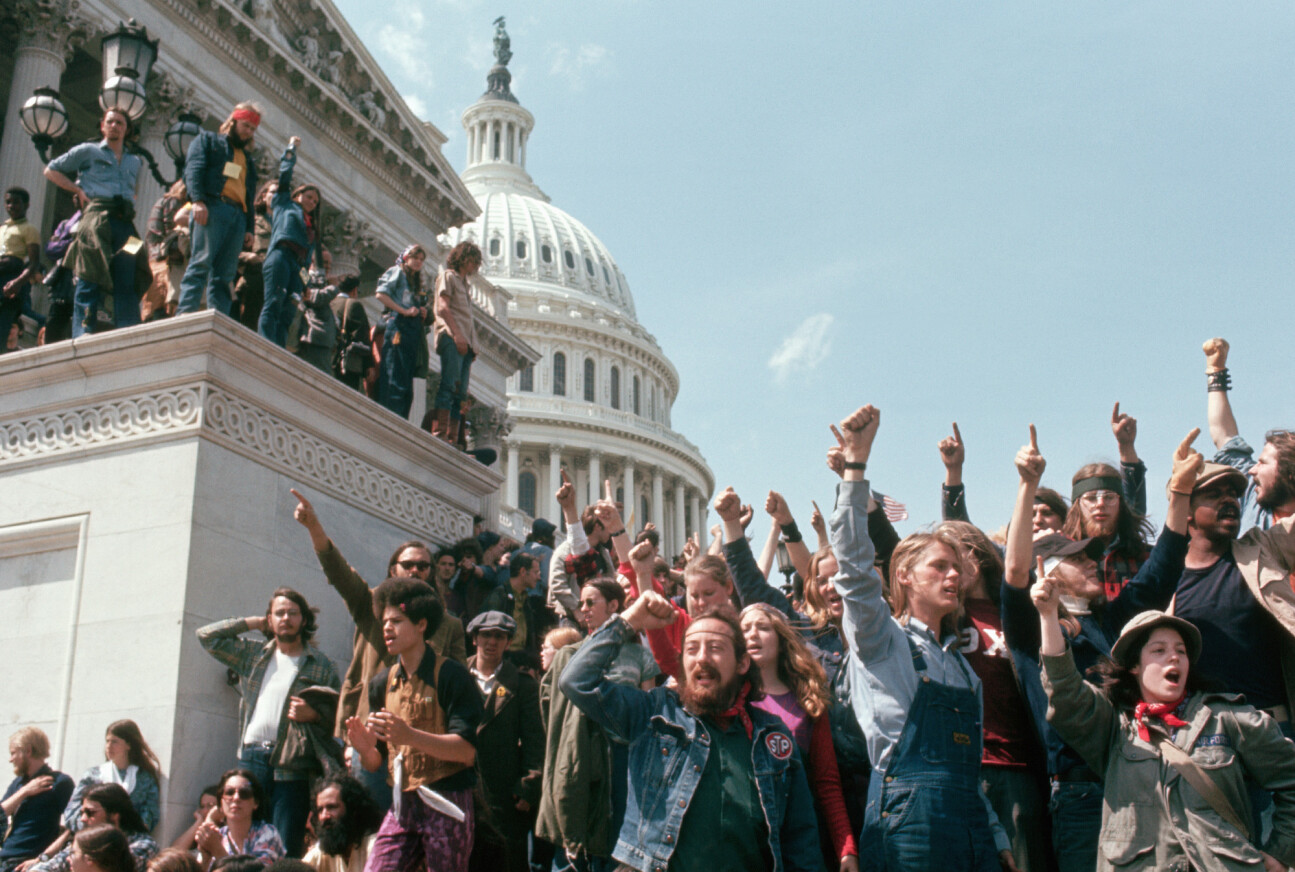
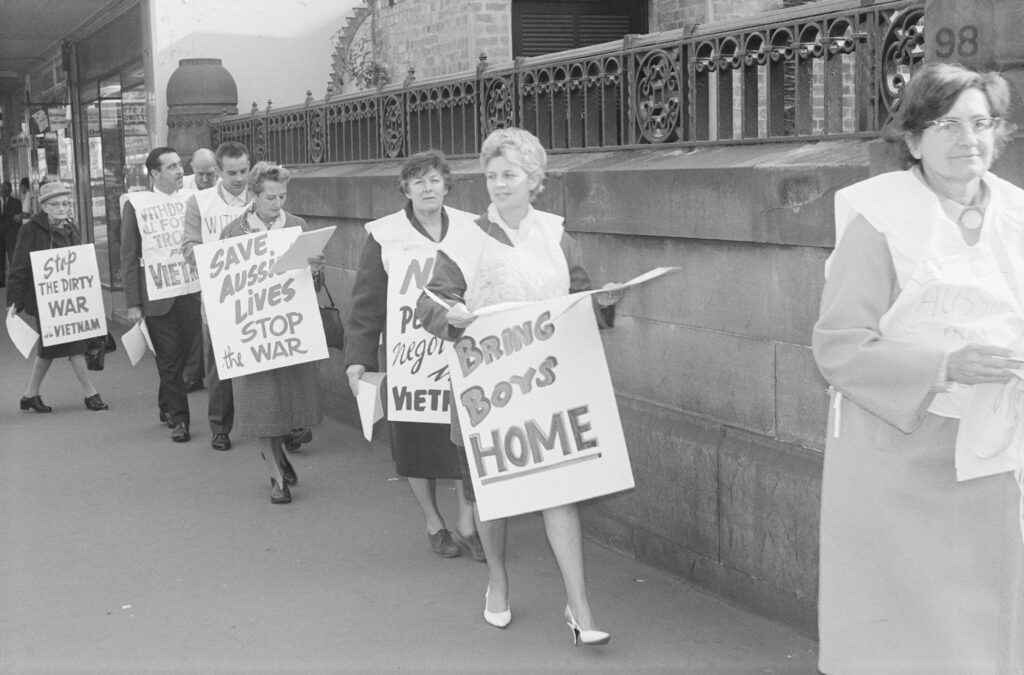
Despite the fact that President Johnson was supported by both parliament and the majority of Americans, US participation in the Vietnam War caused a negative reaction among part of the public. For example, in May 1964, students were already burning their draft cards, and after the adoption of the Tonkin Resolution, singer Joan Baez led an anti-war march in which 600 people took part.
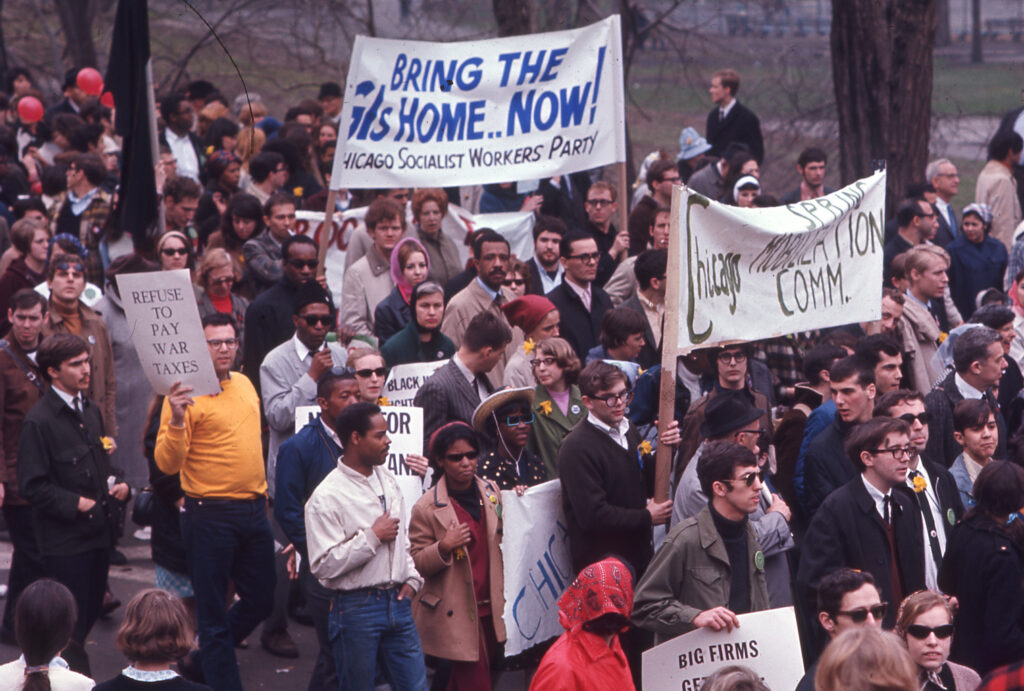
Religious communities such as the Quakers (a Protestant Christian movement that migrated to America after the English Revolution in the 17th century) organized protests against US involvement in the Vietnam War as early as the 1950s.
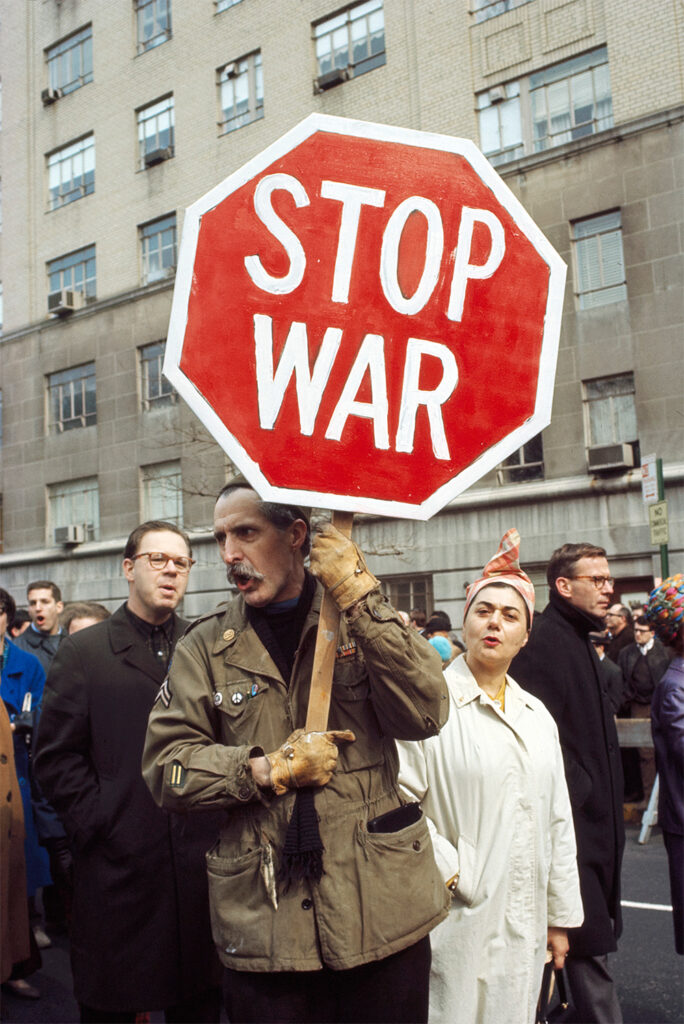
It even got to the point where several activists committed self-immolation. The first was 82-year-old activist and anti-fascist Alice Herz, who emigrated from Germany and survived the Holocaust. She carried out her action on March 16, 1965 - she died 10 days later.
31-year-old Quaker Norman Morrison burned himself to death in front of the Pentagon on November 2, 1965, and on November 9, 22-year-old Catholic Worker Roger Allen La Porte did the same. All of them repeated the act of Buddhist monk Thich Quang Duc, who publicly burned himself in 1963 due to South Vietnam's oppression of Buddhists.
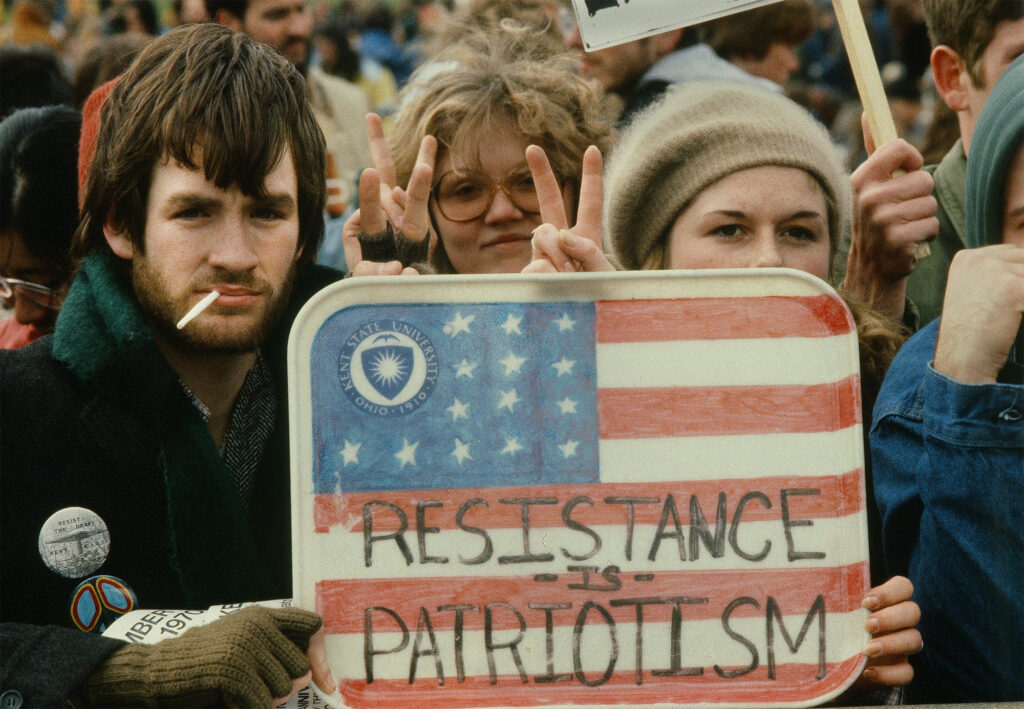
Students became the driving force behind the anti-war protest. They organized so-called sit-ins and teach-ins : the first, from the English sit-in, was a form of non-violent sit-in protest when students occupied buildings or public places, and the second, from the English teach-in, were informal lectures and meetings , which attracted thousands of students, where they freely discussed political topics and, in particular, opposed the war. The first such tie-in took place at the University of Michigan in 1965.
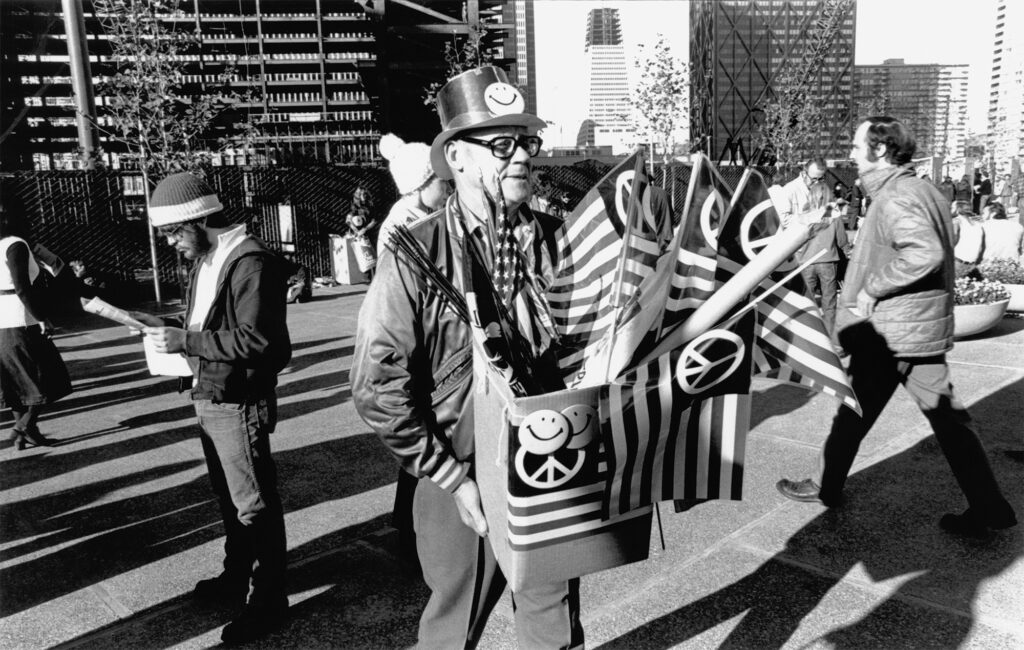
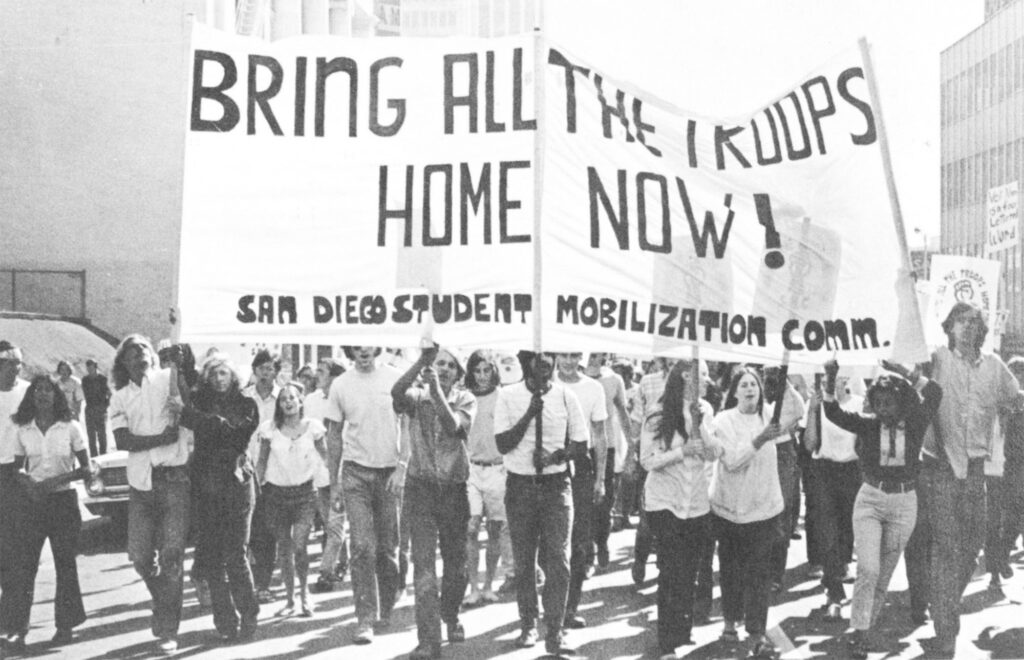
Over time, women, ethnic minorities, and members of the working and middle classes threatened by the draft joined the protests, and rallies began to take place in more and more cities: New York, San Diego, Berkeley and many others. So, in New York in 1966, rallies against the war already attracted more than 20 thousand people, and in 1967 - 400 thousand people.
We live on 160 thousand rubles a month. This is the money of my husband, an engineer, and I am a freelance artist. Trying to start a business from scratch and worried about retirement Society 8 min read
The voices of opinion leaders and well-known activists became increasingly louder. In 1967, black civil rights leader Martin Luther King declared that "if the American soul is poisoned, then the autopsy certificate should say 'Vietnam,'" and philosopher Noam Chomsky wrote an essay called "The Responsibility of Intellectuals" in which he blamed liberal minds and technical experts inventing pseudoscientific reasons for going to war.
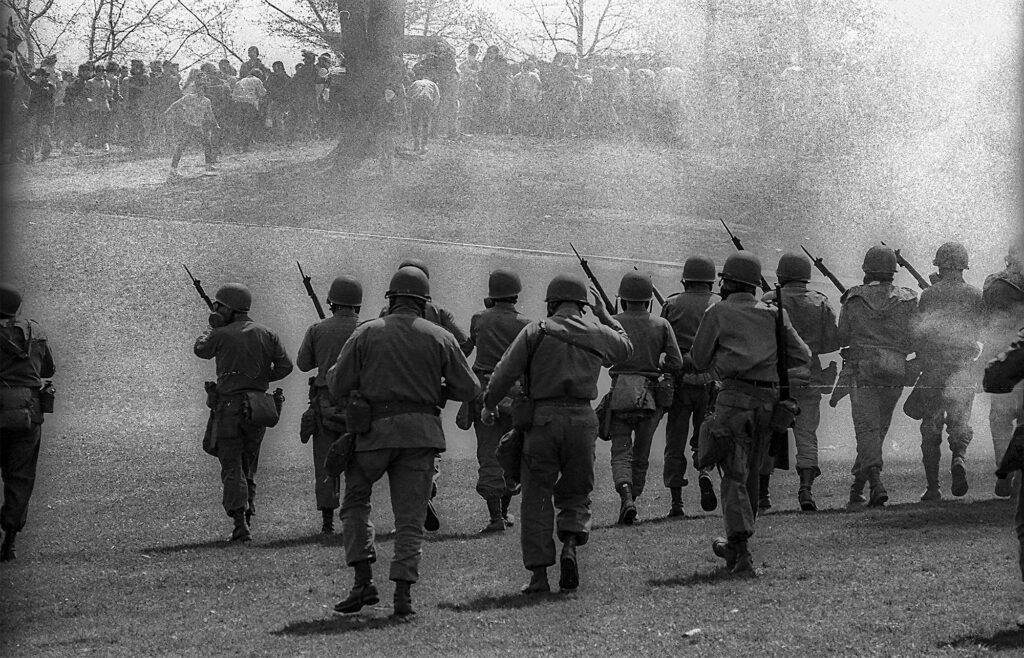
By the 1968 election, Americans had largely realized that Johnson's pro-war rhetoric, trumpeting military success, did not correspond to reality. The war collapsed his ratings, and the next election was won by Republican candidate Richard Nixon.
Peak
Nixon promised to end the military draft and the Vietnam War - he won under the slogans of “honorable peace” and de-escalation. The later announced "Vietnamization" referred to his administration's plan to radically improve the South Vietnamese army so that it could fight without American help, and "honorable peace" was a phrase from his presidential campaign in which he promised to end the war.
By the beginning of the Nixon administration, more than 36 thousand soldiers had died in Vietnam. However, the new administration did not keep its election promises, and it later became clear that Nixon had no intention of ending the war. During the presidential campaign, he secretly agreed with the South Vietnamese authorities that the peace treaties should not be respected and the war should be prolonged.
People quickly became disillusioned with the new president. Woodstock was held for the first time in August 1969. The music festival, which protested against the Vietnam War and for peace, became a landmark event.
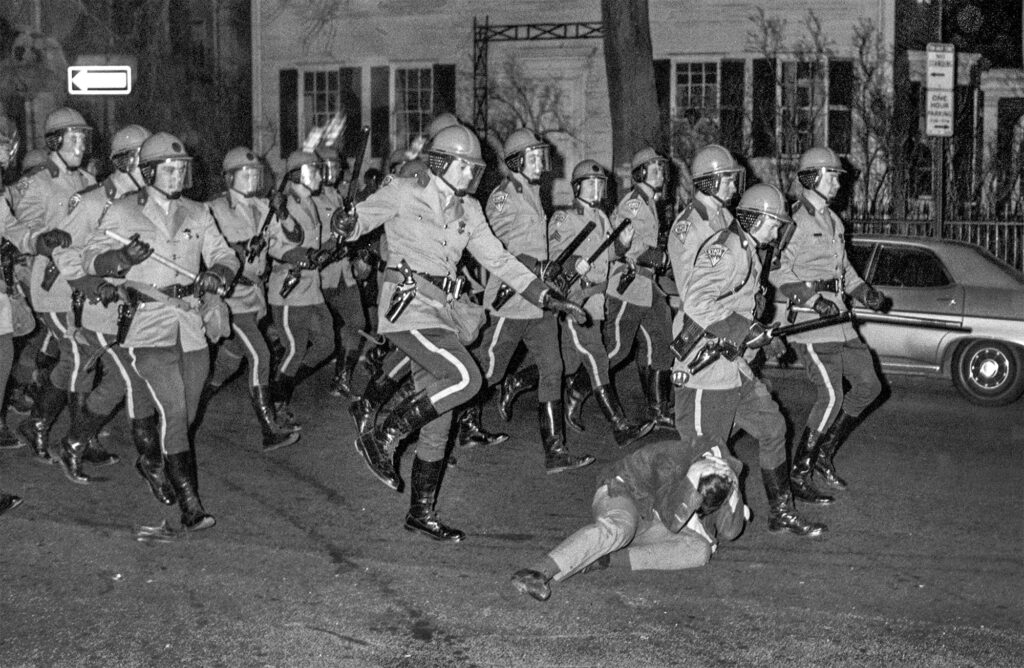
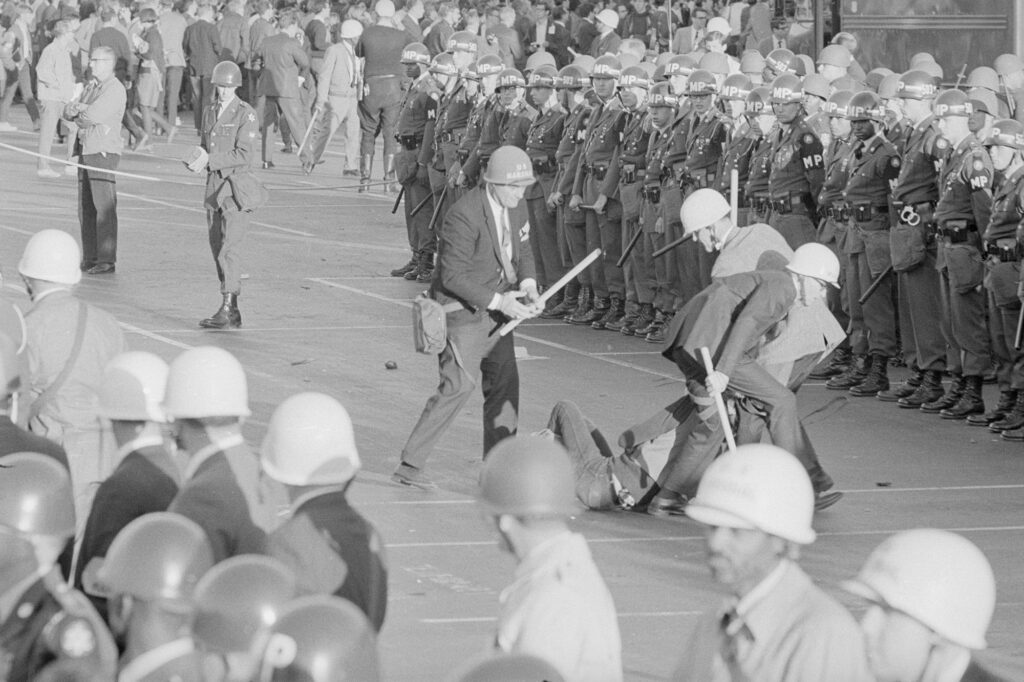
Nixon's rule in many ways felt like a continuation of Lyndon Johnson's work: promises of de-escalation, gradual troop withdrawal, and "Vietnamization" were not fulfilled, and American soldiers continued to die in Vietnam. The protest grew, and on October 15, 1969, a march was held in the United States, ending a large-scale tie-in, called the “national moratorium.” Speaking to reporters, Nixon said that “the law on the street is equal to anarchy” and “it will not affect him in any way.” However, there is evidence that Nixon was actually enraged by the protests, as the protesters questioned his campaign promises.
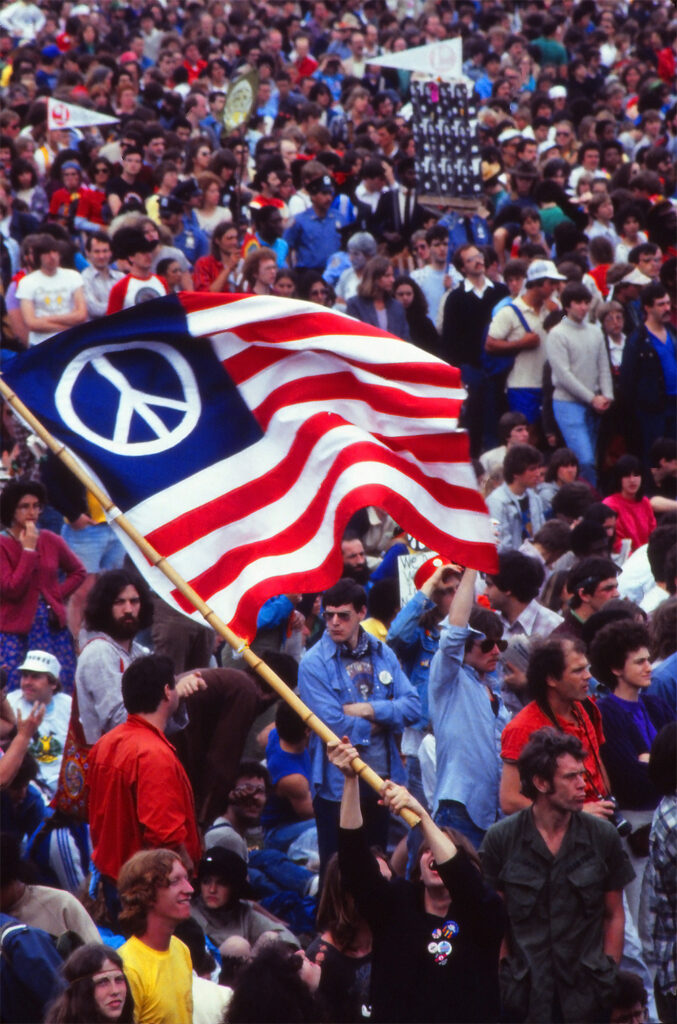
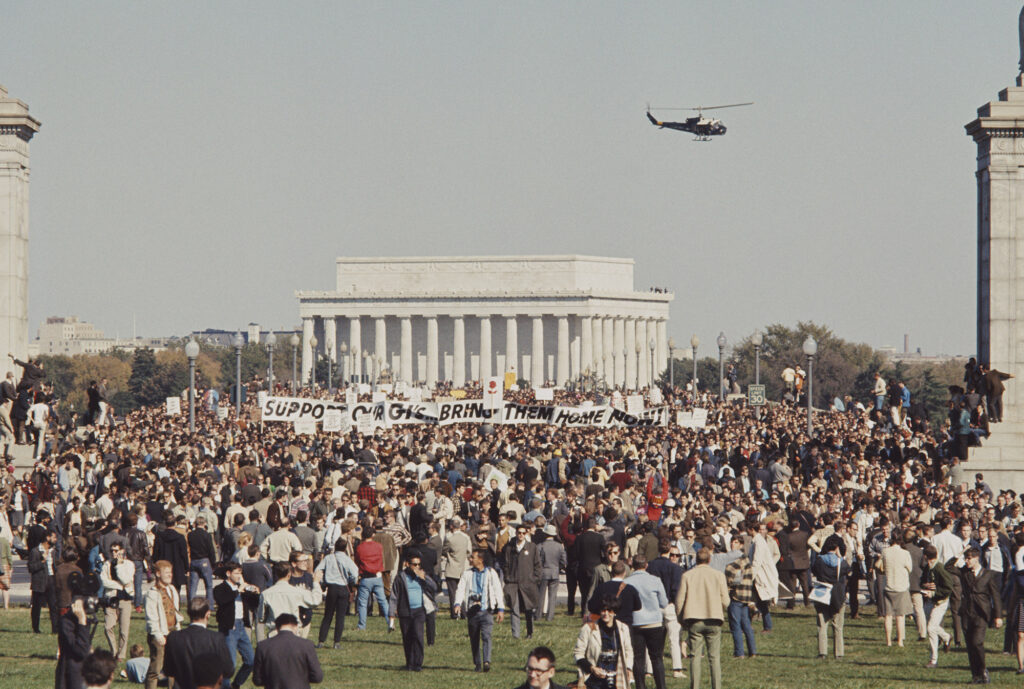
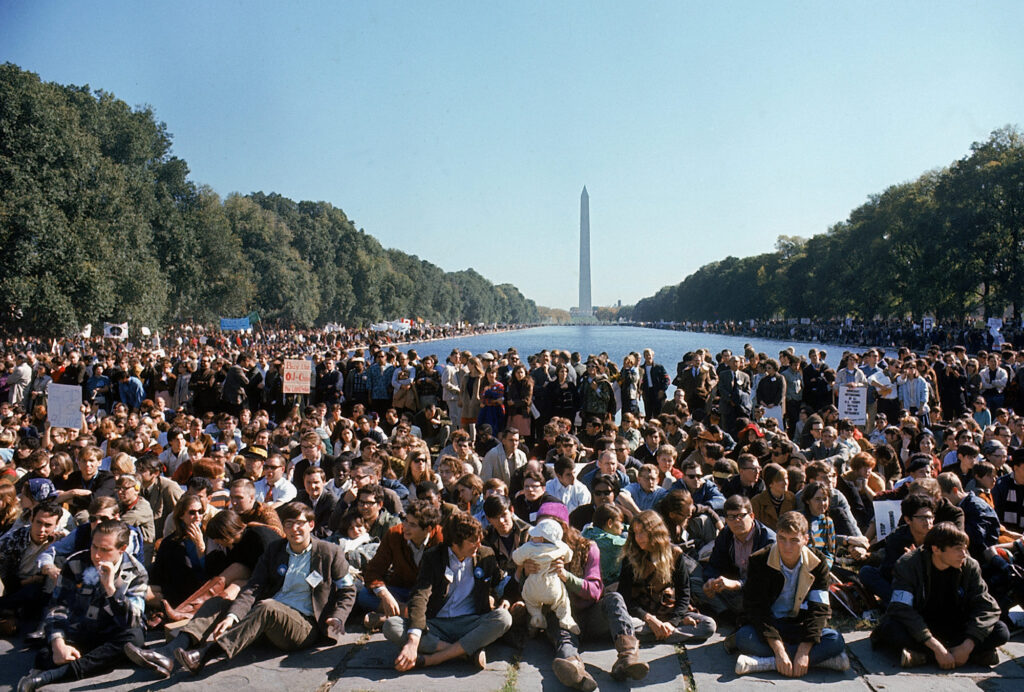
Protests against the Vietnam War continued until 1973: On January 20, approximately 100,000 protesters gathered at the Lincoln Memorial during President Nixon's second inauguration, which took place against the backdrop of renewed bombing in Vietnam. And later that year, the authorities finally withdrew their troops under the slogans of an “honorable peace.”
Consequences
On January 27, 1973, North Vietnam, South Vietnam, the Provisional Revolutionary Government created in South Vietnam in opposition to the current one, and the United States signed the Paris Agreements. According to the agreements, the last American troops were withdrawn from Vietnam on March 29, 1973. The heads of the US and North Vietnamese delegations, Henry Kissinger and Le Duc Tho, were awarded the Nobel Peace Prize.
Czech Velvet Student protests lifted the entire country and helped to bloodlessly defeat the Soviet Union. That's How It Was World 6 minute read
As a result of the war, 58,220 American military personnel were killed and more than 300 thousand were wounded. In total, during this time, about 1.9 million people were drafted into the army, and the costs of the war, in terms of modern dollar exchange rates, amounted to more than a trillion dollars.
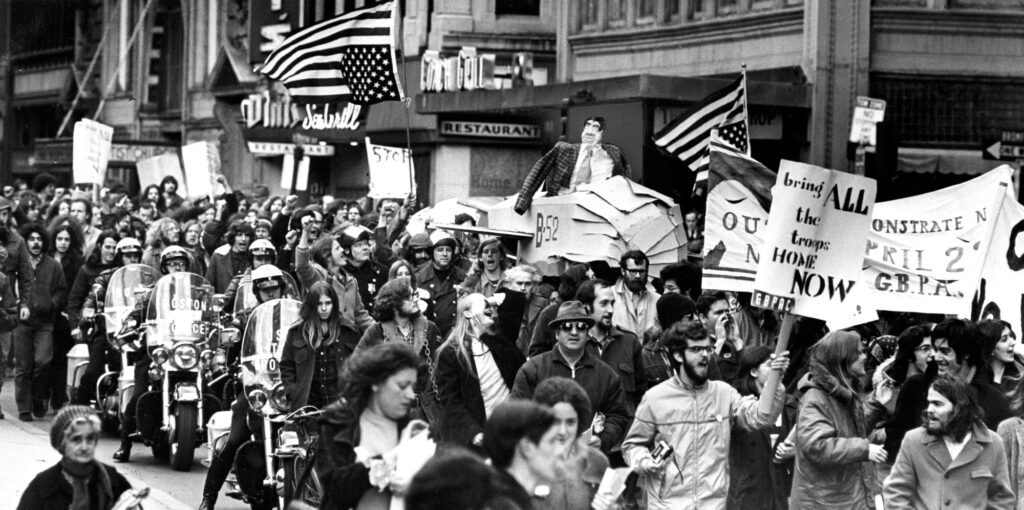
Moreover, the war actually ended only in 1975: peace agreements were not respected, and North Vietnamese troops continued to attack the South Vietnamese army. The war also spread to neighboring Cambodia and Laos. Convinced that the United States had indeed withdrawn from the country and had no intention of intervening in the conflict, North Vietnam took control of the South Vietnamese capital of Saigon on April 30, 1975. A year later, on July 2, 1976, Vietnam united into one socialist republic.
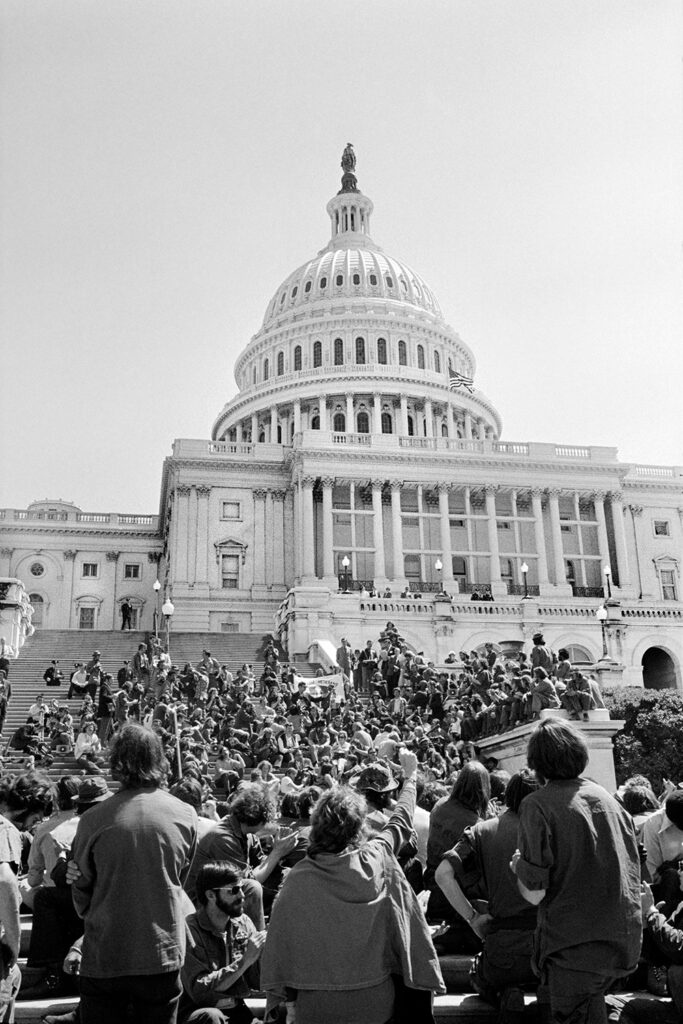
Cambodia and Laos also joined the socialist camp. Because of the fall of Saigon, thousands of military loyal to South Vietnam deserted the army, and citizens who feared Ho Chi Minh's rule fled the country. In Western culture, they became known as the "boat people" as they left the country via perilous routes by water. Residents remaining in Saigon who had previously collaborated with the South Vietnamese authorities were subject to reprisals and were sent either to “re-education camps” , where they were tortured, or to the so-called new economic zones .
Just a chill guy A new meme is going viral on social media. Users want to be as calm as a drawing of a dog in cuffed jeans
Internet and memes 7 min read
Operation Gusty Wind became a symbol of American defeat in an unpopular war. When it became clear that Saigon would fall, a pre-planned operation began to evacuate American civilians, mainly diplomatic personnel. Vietnamese refugees who feared reprisals from North Vietnam were also evacuated along with them.
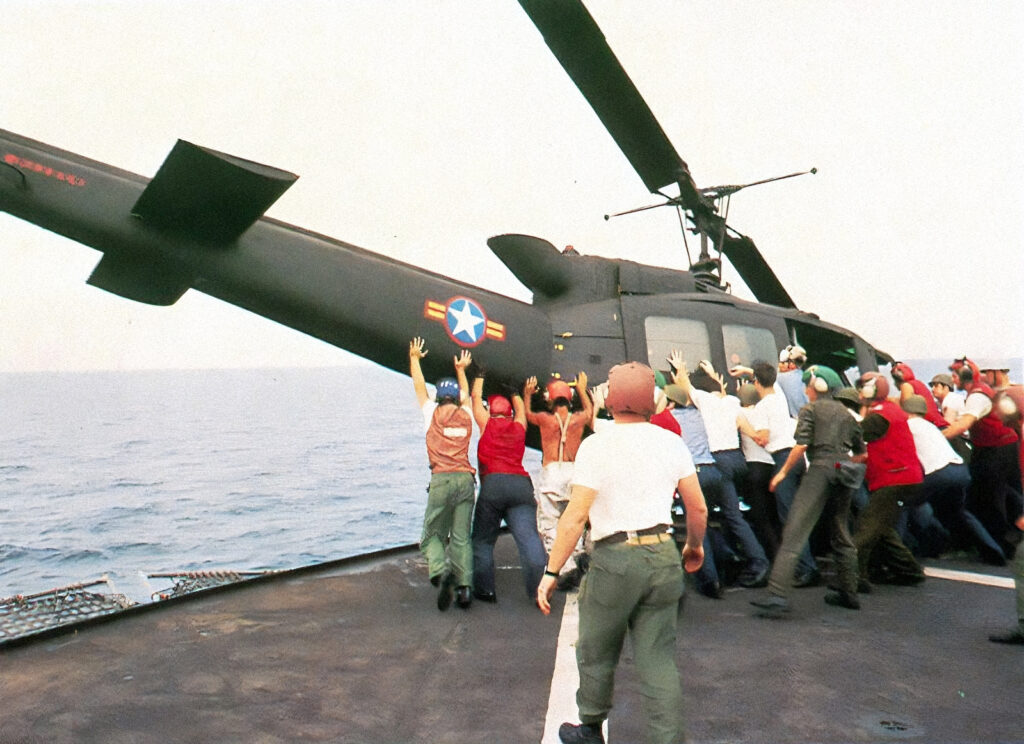
During this operation, the ships of the American fleet stood off the coast of South Vietnam and served as a landing site for helicopters that were engaged in evacuation. So, on April 29–30, 1975, the Americans managed to evacuate 1,737 US citizens and 5,595 citizens of other countries, mainly Vietnam. When helicopters carrying people boarded ships, they were thrown into the water to make room for the next helicopters. Despite the success of the operation, footage of soldiers throwing helicopters from ships into the water was widely circulated in the media - these images became a symbol of American defeat.
In order not to miss the main materials of “Cold”, subscribe to our social networks!


Kholod needs your help to continue working
We continue to work, resisting bans and repression, to preserve independent journalism for the Russia of the future. How do we do this? Thanks to the support of thousands of caring people.
What do we dream about?
About the simple and at the same time complex - the opportunity to work further. Life will change beyond recognition many times, but we, the editors of Kholod, want to stay close to you, our readers.
Support Kholod today so we can continue to do what we do best - be independent media. Thank you!
Author: “Cold” editors Photo: Wally McNamee / Corbis via Getty Images