
Translated material
Volkswagen against everyone
The “heir shareholders” of the automaker plan to close a third of the factories in Germany. Local authorities and the country's largest trade union are opposed. Who will win?
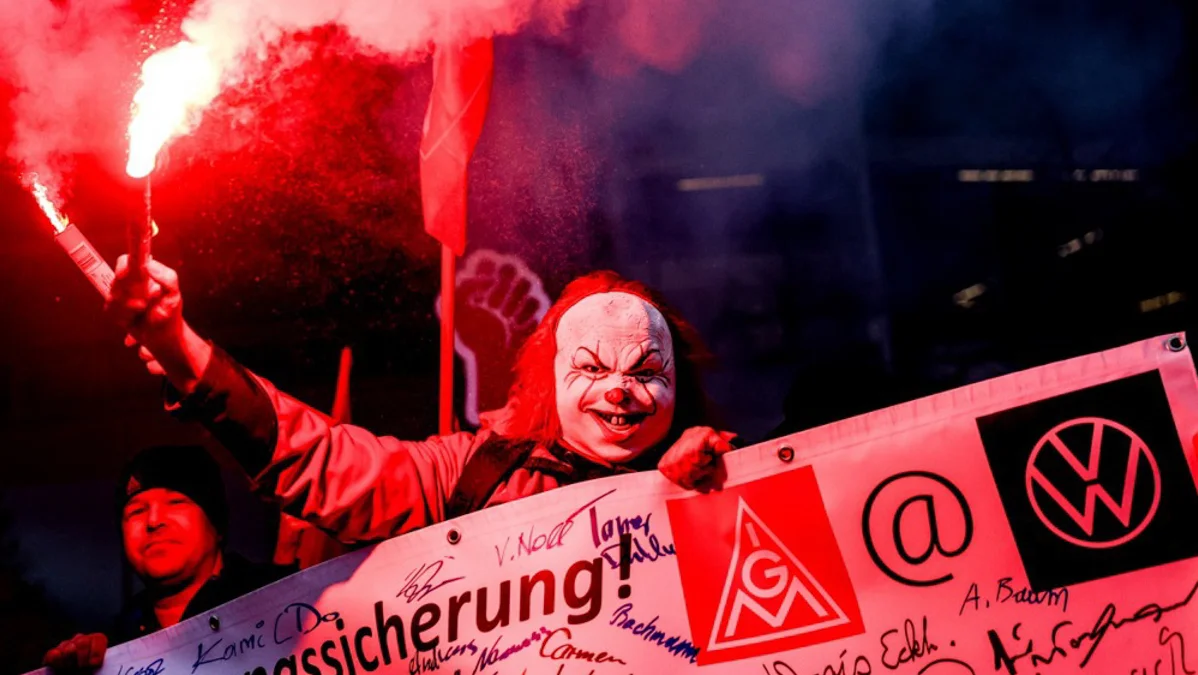
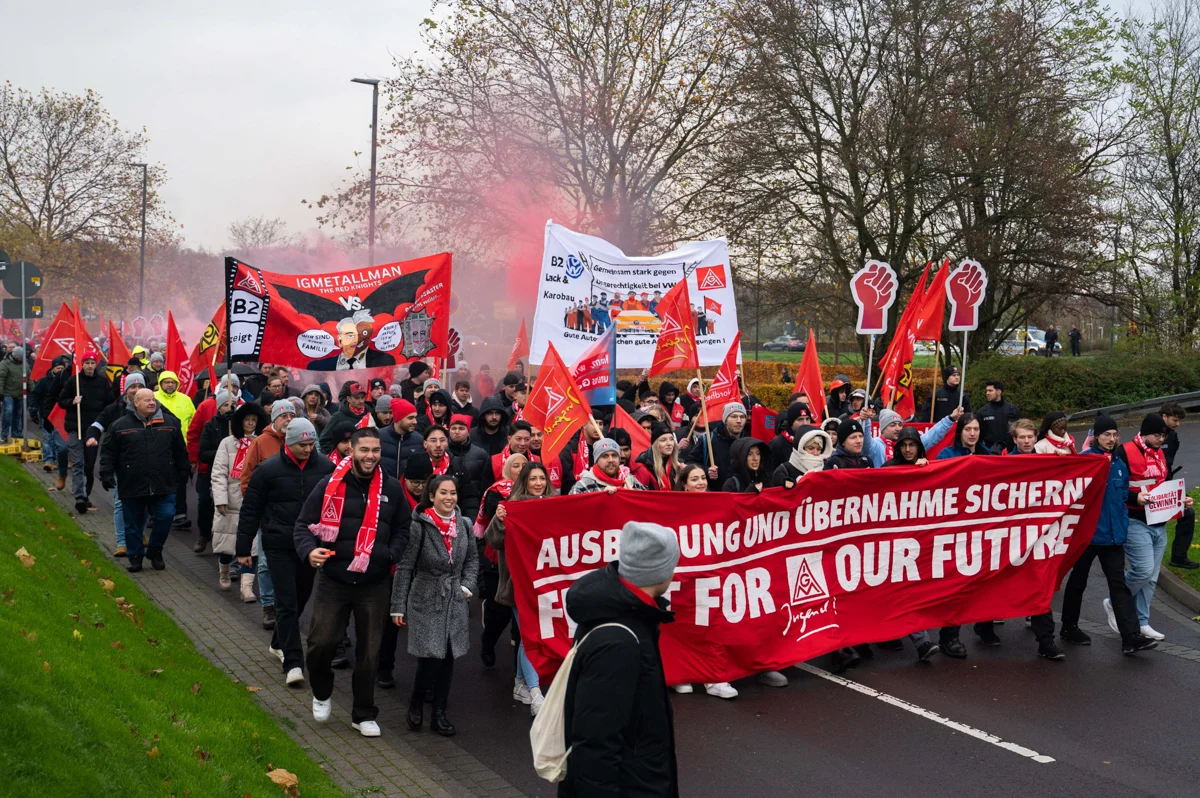
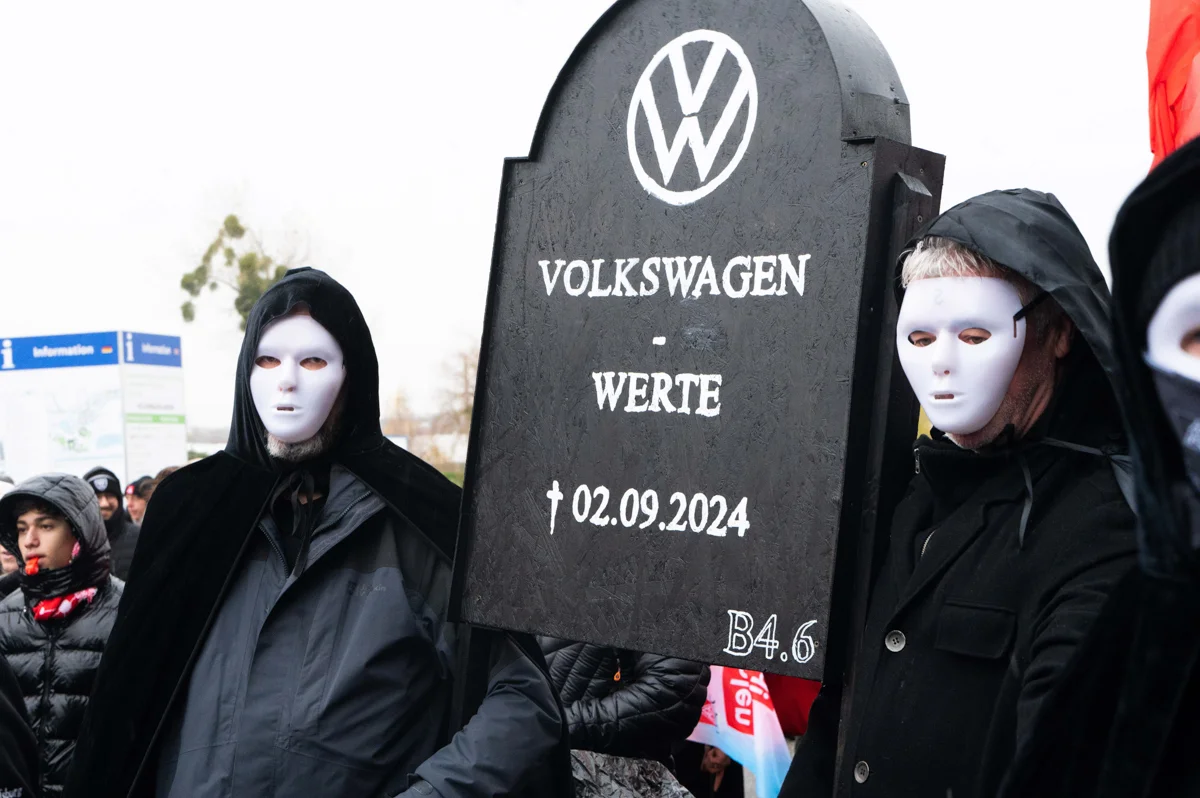
Protest in Wolfsburg in support of the third round of negotiations between IG Metall and Volkswagen. Photo: Filip Singer/EPA-EFE
This fall it became known that Europe's largest automaker, the Volkswagen Group, may close several of its factories in Germany. By November, the rumors were confirmed: at least three sites were under threat. In addition, the concern plans massive salary cuts and the abolition of a number of benefits for employees. All this will hit 120 thousand Germans and the economy of several federal states at once.
The main argument of the company's management is the need to save money. Top managers are concerned about falling sales and profits, and therefore insist on unprecedented cuts. However, Germany's largest trade union, IG Metall, as well as local authorities, are protesting against the planned closure of plants and are preparing for a large-scale strike at all of the automaker's production facilities, including those that are not going to be closed. What dictated the Volkswagen Group's decision to make cuts, why the union accuses the company of hiding part of the real state of affairs, and what their conflict will lead to in the midst of the election campaign for early elections to the Bundestag - independent journalist Pavel Kuznetsov looked into it especially for New Europe.
Precautionary Savings
On November 21, another round of negotiations took place between representatives of the Volkswagen Group automaker and the IG Metall trade union regarding the closure of several factories in Germany. It has not yet been announced which factories will close - there are only assumptions that these will be enterprises in two states: Saxony and Lower Saxony.
The company says it is seeking to cut costs as profits fall. Thus, due to a significant decline in sales in China, Volkswagen’s main sales market today, the group’s profit in the third quarter of 2024 decreased by almost 64% - to 1.5 billion euros. To save money, management is proposing to shut down several factories, cut wages by 7-10%, eliminate the newly established monthly bonus of 167 euros and "anniversary payments" for 25 and 35 years with the company, and halve the number of trainees.
At the same time, the concern canceled the job guarantees for its employees, fixed in the 1994 collective agreement. According to the agreement, the guarantees were supposed to last at least until 2029, and now the way to further staff cuts is open.
According to Arne Meiswinkel, who represents the concern in negotiations with the union,
“cuts are justified” and the removal of “anniversary payments” and bonuses should help “maintain the competitiveness” of the company and “ultimately ensure job sustainability.”
At the same time, Meiswinkel believes that Volkswagen will remain “an attractive employer on average in the industry.” Trade union negotiator Thorsten Gröger calls all these measures an attempt to “get into the pockets of the concern’s employees.”
If you look at the picture as a whole, in recent years the auto giant’s business has really been going well. In July 2022, then VW Group CEO Herbert Diess told workers at the Wolfsburg plant where the group is headquartered: “We are earning as much as ever, despite semiconductor shortages and supply chain disruptions,” so workers don’t have to worry about their future. According to public reporting, in 2023 the VW Group received 16.6 billion euros in net profit.
In this situation, IG Metall expects that company management will be able to develop alternative options to avoid closures and layoffs. Otherwise, the union will respond with a strike, which could spread to other enterprises of the concern.
Not only the workers and the trade union are opposed, but also the government of the federal state of Lower Saxony, which owns 20% of the concern's shares. Factory closures and massive layoffs will hit the economy and social sphere, since Volkswagen has remained the largest employer for many decades.
However, as a result of the meeting held on November 21, no solution was found, and therefore, immediately after its completion, the trade union collective bargaining commission unanimously voted for warning strikes from the beginning of December.
Popular, but not profitable
This crisis will be one of the largest in the last few decades for the world-famous German concern. Although the auto giant’s business has been going well recently, at the end of 2023 the concern set a course for cost reduction: by 2026 it was planned to save almost 11 billion euros. The management justified the need for austerity by the situation on the market: strong competition, falling sales, cancellation of subsidies.
In order to optimize costs, VW abandoned the construction of a research and development center in Wolfsburg worth 800 million euros. It was also proposed to reduce the overall production time, reduce the number of car model and trim options, and also invite a fifth of the administrative staff to retire early. However, in the end, the program was not successful enough, and the concern’s management reported “several billion euros behind schedule in savings.”
Today the Volkswagen Group is a huge corporation. It owns the Volkswagen brand itself, which is served by 49 factories around the world. Some produce cars, others produce components. Moreover, ten production facilities are based in Germany: three in Saxony, six in Lower Saxony, one in Hesse. But the VW Group also owns the brands Audi, Lamborghini, Ducati, Bentley, Porsche, Škoda, Scania, without which the European auto industry is impossible to imagine.
In the face of a global shortage of components in recent years, the concern has focused on producing the most expensive and profitable car models, which has brought it a significant increase in profits in recent years despite falling production and sales volumes.
The most profitable brands remain Porsche and Audi from the luxury segment. Money also comes from Bentley, Lamborghini, Ducati, together forming the Progressive brand group.
Budget and mass-market Volkswagen, Škoda, Seat, Supra are united into the Core group, which should ensure the concern's sales growth.
In this sense, Volkswagen still remains the “people's car.” For example, the Volkswagen Passat is the best-selling midsize vehicle in the world. Over 46 years, the concern has produced 30 million cars of this model. The concern's management now refers to the drop in sales in this group, but this drop has its own background, associated primarily with the mistakes of top management, and not with the level of expenses for line personnel.
"Dieselgate"
Ten years ago, the reputation of the famous German brand was almost destroyed by a scandal, today known as Dieselgate. Volkswagen has been trying to conquer the American market for many years, supplying the United States with fuel-efficient diesel cars such as the Golf, Passat, Jetta, Tiguan and Beetle (the famous Beetle). Things were looking up. The concern's diesel cars managed to meet very stringent environmental standards adopted in the United States, which allowed the company to receive subsidies for environmentally friendly cars and tax exemptions. And in 2009, the diesel Volkswagen Jetta received the Green Car of the Year award from Green Car Journal.
However, in 2013, when the International Council on Clean Transportation (ICCT) decided to test a number of diesel cars sold in the United States, it was found that in real-world driving conditions the Jetta exceeded emissions limits by 15 to 35 times, and the Passat by 5 to 20 times. After further investigation, it was discovered that specialists from the German concern equipped cars sold in the USA and Europe with special software that recognizes when the car is being tested and at that moment underestimates the amount of emissions.
The concern's management insisted that this was a technical failure. But in the end, VW still had to admit the manipulations. On September 18, 2015, the US Environmental Protection Agency served Volkswagen Group with a notice of violation of the Clean Air Act. Similar investigations began in several other countries, after which it became clear that in total we are talking about 11 million of these machines distributed around the world.
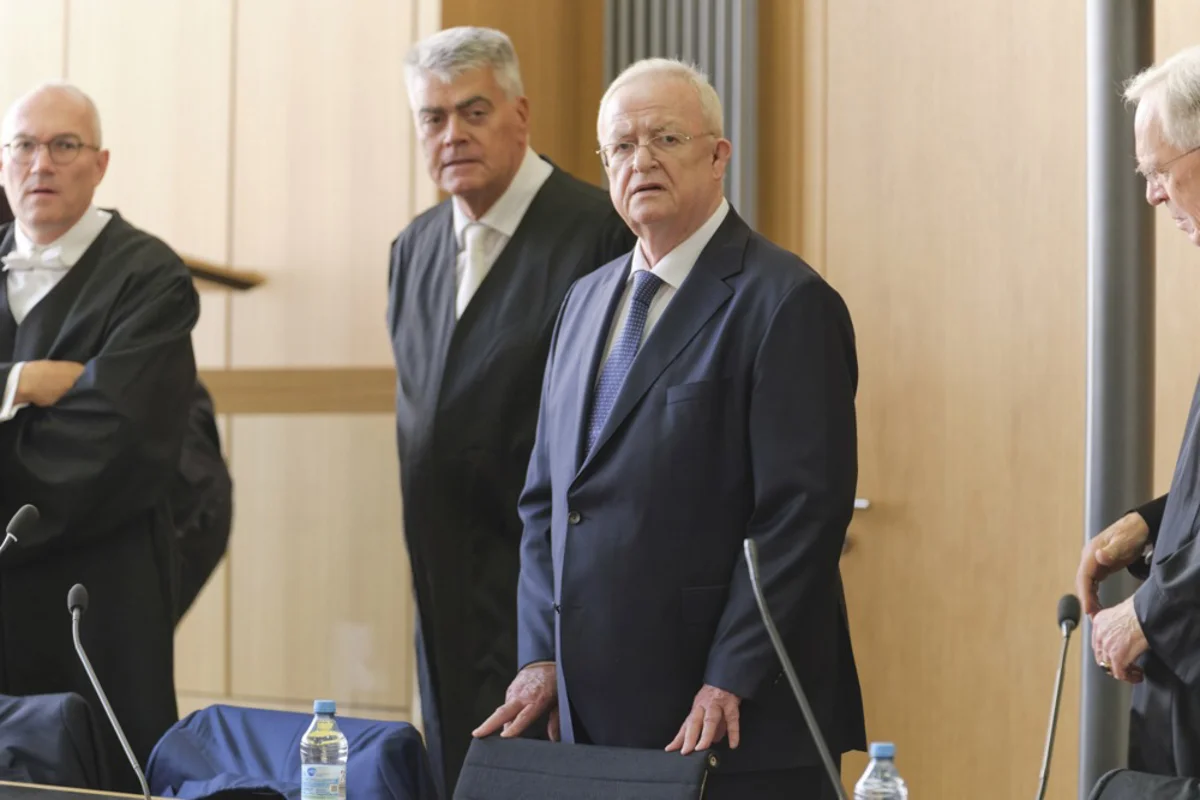
“Dieselgate” cast doubt not only on the concern’s reputation, but also on its future as a whole. The company's shares immediately plummeted by 22.78%, followed by a collapse in sales.
Over the next few years, Volkswagen was forced to pay multibillion-dollar compensation—the concern transferred almost $10 billion to American customers alone. According to Reuters, the scandal cost Volkswagen 31 billion euros in total. And at that time, the general director of the company, Martin Winterkorn, who immediately resigned, found himself involved in a criminal case that is still ongoing.
Volkswagen goes into the red
The next blow was the pandemic. Already in the first quarter of 2020, VW Group sales fell by 23%, especially in the Asia-Pacific region and Europe. In total, in 2020, the concern’s sales decreased by 15.2%, and this was more than the losses of other auto giants. For comparison, General Motors missed 11.8%, Toyota -10.5% , BMW - 8.4% .
Against the backdrop of the global crisis, the VW Group sold 600 thousand fewer cars than in the previous 2019, and it was not possible to restore pre-Covid results even now. As the operating director of the automaker, Arno Antlitz, said in September of this year, before the pandemic, Europeans bought 16 million cars a year, and during the lockdown and after this figure dropped to 12 million.
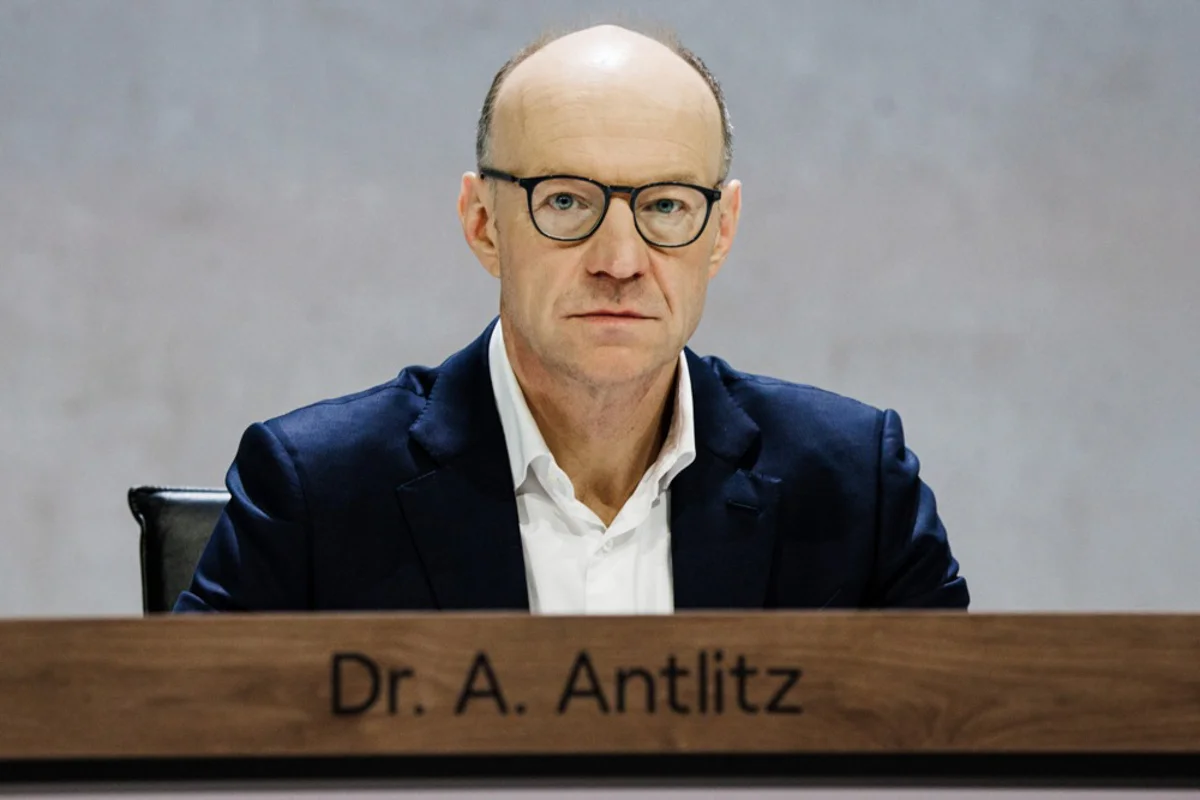
VW Group CEO Oliver Blume describes the situation as follows:
“The pie became smaller, but there were more guests at the table.” “For some time now we have been spending more money on the brand than we earn,”
— Arno Antlitz agrees with him.
In addition, the brand and the electric car market are not doing well. Volkswagen is being squeezed by the Chinese giant BYD and Elon Musk's Tesla. SAIC Motor (China), Hyundai (Korea) and others who are breathing in our backs also offer their cars.
Meanwhile, Volkswagen's electric vehicles, which could take the group ahead, are uncompetitive in China. Adding to the drama, at the end of 2023, the German government prematurely and without warning stopped paying subsidies for the purchase of electric vehicles, as a result of which the demand for them in Germany itself fell sharply.
“Electrification” of the automobile industry is generally a big problem for Germany and Europe. There are many reasons. The conservative German auto industry is built around the internal combustion engine, and the transition to electric vehicles requires a complete transformation of production lines and supply chains. This requires large investments. In addition, Europe depends on lithium, cobalt, and nickel, which are supplied to it by China and other countries. And the consumer himself is in no hurry to switch to electric cars: for now, electric cars are more expensive than their gasoline counterparts, and not all car enthusiasts find them convenient, since charging stations are still not available everywhere.
Now the management of the concern claims that austerity measures will ensure the VW Group sustainable development and competitiveness. However, this is not an obvious development. According to Manager Magazin, on the contrary, this could hit the research and development area hard, while the brand has problems with innovation.
Heirs
European automobile market analyst Matthias Schmidt believes that in fact the call to reduce production capacity in Germany and save money on this does not come from the new CEO of the concern, Oliver Brume. According to Schmidt, this is “not a situation where some uncontrollable CEO coming from an outside company is trying to impose cuts.” The initiative comes from the heirs of the family brand.
The company, which later became the Volkswagen Group, was founded by inventor Ferdinand Porsche as a family business. And his heirs still play an important role in managing the auto giant,
controlling more than 30% of its shares. In particular, the late Ferdinand Piëch, the grandson of Ferdinand Porsche, led the concern for nine years from 1993, after which he was chairman of its supervisory board until 2015. His cousin Wolfgang Porsche still heads the supervisory board of the Porsche SE holding.
The board of directors is forced to listen to the opinion of the Porsche and Piech clans, even though this threatens the company with a conflict with the union. In addition, the heirs have managed to get their way before. So, in September 2022, CEO Herbert Diess, who insisted that the group switch to electric vehicles, left his post. As insiders told reporters, family members sought his resignation. According to Tesla-affiliated publication Teslarati, Diess was "testing their patience " and they decided to "keep VW management on a short leash."
Today, members of the Piëch and Porsche families are interested in developing luxury brands that continue to make money. And they are trying to save money on the Volkswagen brand,
which provides hundreds of thousands of jobs, continues the tradition of "people's cars", but has remained unprofitable in recent years.
However, now the largest trade union in Germany, IG Metall, stands in the way of the heirs.
The union is ready to act
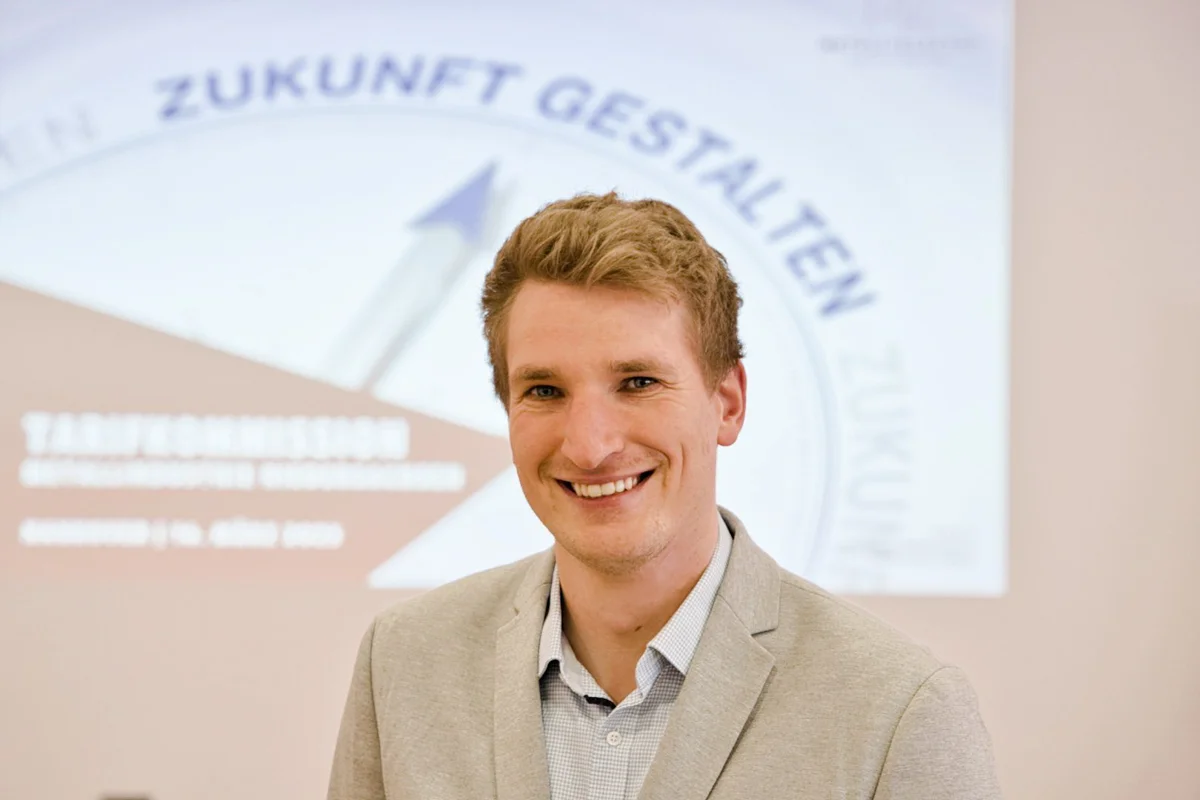
As IG Metall press secretary Jan Mentrup told Novaya Gazeta Europe, if the concern's management persists, strikes await them. We are talking about at least three factories, but, according to Yang, “if one of the enterprises is attacked, all the other factories and subsidiaries will support it in a conflict with the board.” This probably means that all enterprises of the concern where IG Metall has influence can join the strike.
“We are ready for conflict and capable of action, the Volkswagen board must clearly understand this,” says Mentrup. The union's position is that Volkswagen employees need job security and "radical cuts do not create a future." IG Metall is therefore demanding that VW Group management prove that things are as bad as they claim, and also explain how they plan to ensure a “sustainable future” for the company.
In addition, IG Metall is in constant dialogue with the state government of Lower Saxony, not only regarding Volkswagen, but also regarding the industry as a whole. “I know that the state is on our side in preserving German companies and jobs,” says Mentrup. This means that the state authorities, as a major shareholder, may also oppose the closure of factories.
German automakers do have many problems, but according to a spokeswoman for IG Metall, the main one lies in management: “Dieselgate, the belated transition to electric vehicles and the neglect of the hybrid sector are the responsibility of the board of directors and management, not German politicians or our colleagues from production.”
According to the union, labor costs account for about 15% of the group's total budget, and the main costs are related to the supply chain, especially in the battery sector, where cost reduction is primarily needed. “Throughout VW’s history, problems have been solved with employees, not in spite of them, and certainly not without their participation!” - says Mentrup.
“If the situation is so dramatic, then where is the contribution of shareholders?”
— the union representative asks a rhetorical question. The concern's plans do not mention adjusting the salaries of either top managers or board members. According to Mentrup, in 2023 shareholders received a hefty dividend of 4.5 billion euros, and the group itself “reports gigantic profits, and even the main Volkswagen brand continues to show positive results.”
Employee representatives are confident that “the automaker needs to boldly invest in the future, but not at the expense of the workforce.” However, the VW Group will clearly have to start this journey with a battle with the union, which could be costly. IG Metall's own budgetary reserves allow it to pay compensation to striking workers so that they are not left on the street while they defend their rights. Thus, the union can afford months of strikes, and losing this confrontation will cause great damage to its reputation.