
Translated material
The Wanderers have arrived
The exhibition “The Peredvizhniki” opened in the new building of the Tretyakov Gallery - the main one for the museum in 2024
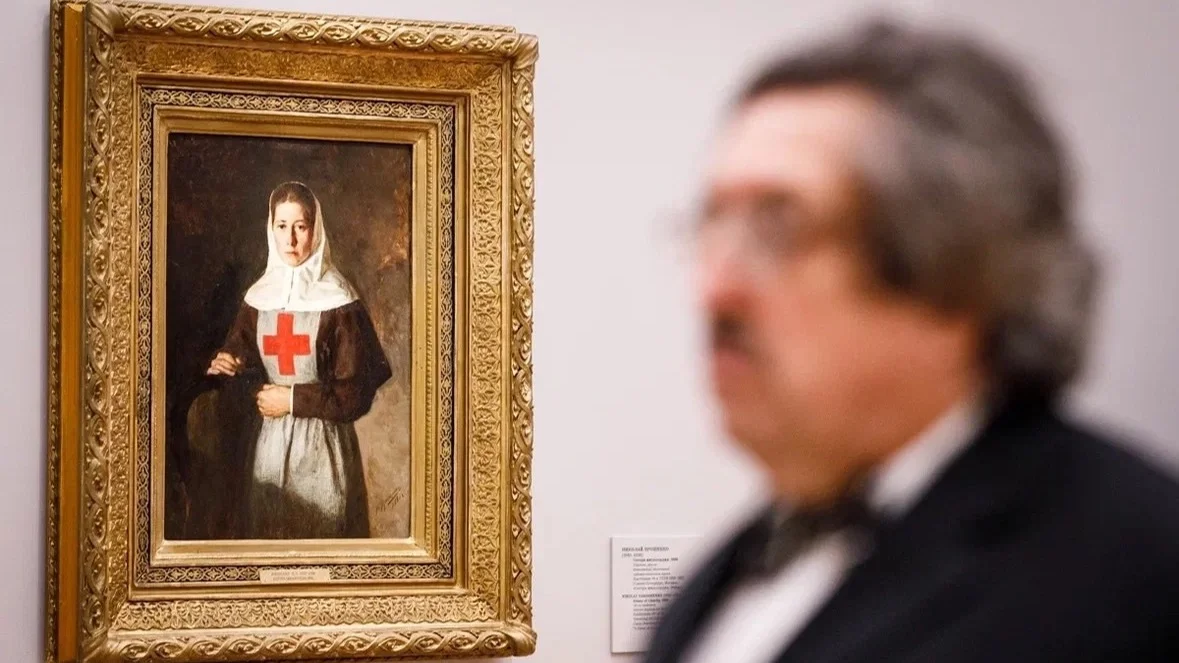
Exhibition "Peredvizhniki". Photo: Tretyakov Gallery / Ivan Novikov-Dvinsky
At the end of October, the exhibition “Peredvizhniki”, the main one for the museum in 2024, began work in the new building of the Tretyakov Gallery on Kadashevskaya embankment. The grandiose new building, the design of which appeared in the early 2000s (so long ago that few people remember the destruction of the historical buildings in its place), took 10 years to build and finally became available to visitors. And the choice of the theme of the exhibition for the opening of the new building turned out to be extremely symbolic: as you know, the history of the Tretyakov Gallery as a public museum began with the largest collection of paintings by the Itinerants, collected by Pavel Tretyakov, at the end of the 19th century. And now, 130 years later, the new building, located a few steps from the historical building, opens with an exhibition of paintings that are inextricably linked in the public consciousness with the name of the Tretyakov Gallery.
At the same time, despite the seeming obviousness and even banality of such a choice (what could be more textbook for a Russian person than the paintings of the Wanderers?), the exhibition is not without great ambitions: according to the organizers, this is the first large-scale project in 50 years dedicated to the heritage of the Wanderers as an integral movement. Of course, almost all the artists associated with this association did not leave the posters and were available to viewers in the same historical building of the Tretyakov Gallery, but trying to return to the roots and place these paintings together in one room is a non-trivial and somewhat risky decision. After all, whatever one may say, traditionally large exhibition projects that cause great excitement are usually associated with a rare combination of paintings by one or several artists in one space, for which they are brought from other cities and museums.
In the case of the exhibition of the Peredvizhniki, everything is different: out of 150 paintings available for inspection, 110 belong to the Tretyakov collection, and almost all of them could already be seen when viewing the permanent exhibition. Particularly thrifty art lovers may even wonder: why spend more (the price of a ticket to the exhibition is slightly higher than the price of a ticket to a historical building) if next April almost all of these paintings will return to Lavrushinsky Lane? But this is the concept of the exhibition: its task is not to show off something rare and hitherto unseen, but to invite visitors to reflect on what the paintings of the Wanderers mean to them and what place they occupy in Russian culture today. A somewhat similar effect was achieved by the exhibition of Ilya Repin at the New Tretyakov Gallery five years ago, when one of the main Russian artists opened up to many viewers in a new way. However, if at the Repin exhibition, in addition to well-known masterpieces, less replicated works were also presented, the ambition of the Peredvizhniki exhibition is even higher - to look with fresh eyes at paintings familiar from childhood.
It would not be an exaggeration to say that in the post-Soviet era the reputation of the Wanderers has undergone serious changes (and most likely not for the better). Raised by Soviet ideology to the banner of historically correct art, paintings by Savrasov, Surikov, Kramskoy, the same Repin and many others became part of the obligatory canon even for those who were never interested in painting (the genre of “essays based on paintings” instilled a minimal knowledge of these masterpieces in more than one generation of schoolchildren). At the same time, such an imposition affected the erased or even negative perception of the aesthetics of the Wanderers, especially in the expert community. Therefore it is not surprising that
In the last 50 years, the painting of the Itinerants has practically gone out of fashion, giving way to the art of Russian modernism and avant-garde.
One can argue how fair this is, but the exhibition at the Tretyakov Gallery clearly fits into the trend of rethinking the heritage of the Wanderers, which has developed in the last 5-10 years. Without revising the myth about these artists, formed among the Russian intelligentsia even before the revolution and then picked up and slightly modified during Soviet times, it is difficult to restore the reputation of this artistic movement unique to Russian culture. In a sense, the exhibition in the new Tretyakov building is an attempt to rearrange the emphasis in the canonical history of Russian fine art, which should lead to the “aesthetic rehabilitation” of the Wanderers.
The composition of the exhibition is arranged in a very intricate way and plays in its own way with the viewer’s perception: the first exhibit that visitors see are wooden sculptures by the contemporary artist Nikolai Polissky, representing figures of rooks (the same ones that arrived). However, the location of the birds somewhat apart from the famous painting by Savrasov does not allow us to perceive them as a deliberate rhyme between the art of the past and the present. Rather, these rooks find themselves in the role of visitors like us, who have flown into the first large-scale exhibition of the Itinerants in half a century. We've arrived and are ready to look at the pictures.
Immediately striking “hits” (“The Rooks Have Arrived” by Savrasov, “Hunters at a Rest” by Perov, “Peter I Interrogates Tsarevich Alexei” by Ge) can even cause some bewilderment: why show off so much right off the bat, you have to prepare! But if you pay attention to the accompanying materials, it will become clear: the exhibition opens with works presented at the very first exhibition of the Association of Itinerants, held at the end of 1871 in St. Petersburg. However, immediately after this part, the curators stop following the chronological principle, moving on to combining works based on genres, themes and problems. And from this hanging, the difference with the usual arrangement of these paintings in a permanent exhibition, where works are grouped by author, immediately becomes obvious: despite the understandable logic of this approach, this complicates the perception and understanding of art as a single process consisting of constant mutual influences and echoes.
One of the main compositional sections of the exhibition was the section “Between Reality and Metaphysics,” partly provocative in its title. The main aesthetic principles of the Itinerant artists are well known: the main subject of the image is social reality, such as it is; the main artistic method is realism; and finally, the main task of this aesthetics is to depict the “truth of life”, doing this without any illusions, that is, critically. All of these are truths, either learned from school or perceived intuitively. It would seem, what does metaphysics have to do with it? And yet, just as Russian literary realism of the second half of the 19th century was directly related to metaphysical questions and problems, so in the paintings of the Itinerants, images of the surrounding reality coexisted, and sometimes were intertwined with gospel motifs, historical allegories and the existential (and not just everyday) level of reality. The curators of the exhibition do not debunk the myth about the Wanderers as seekers of the truth of life, critically perceiving the reality around them, but complicate it, revealing, as a rule, aesthetic facets of the work of these artists that are usually hidden for the modern viewer.
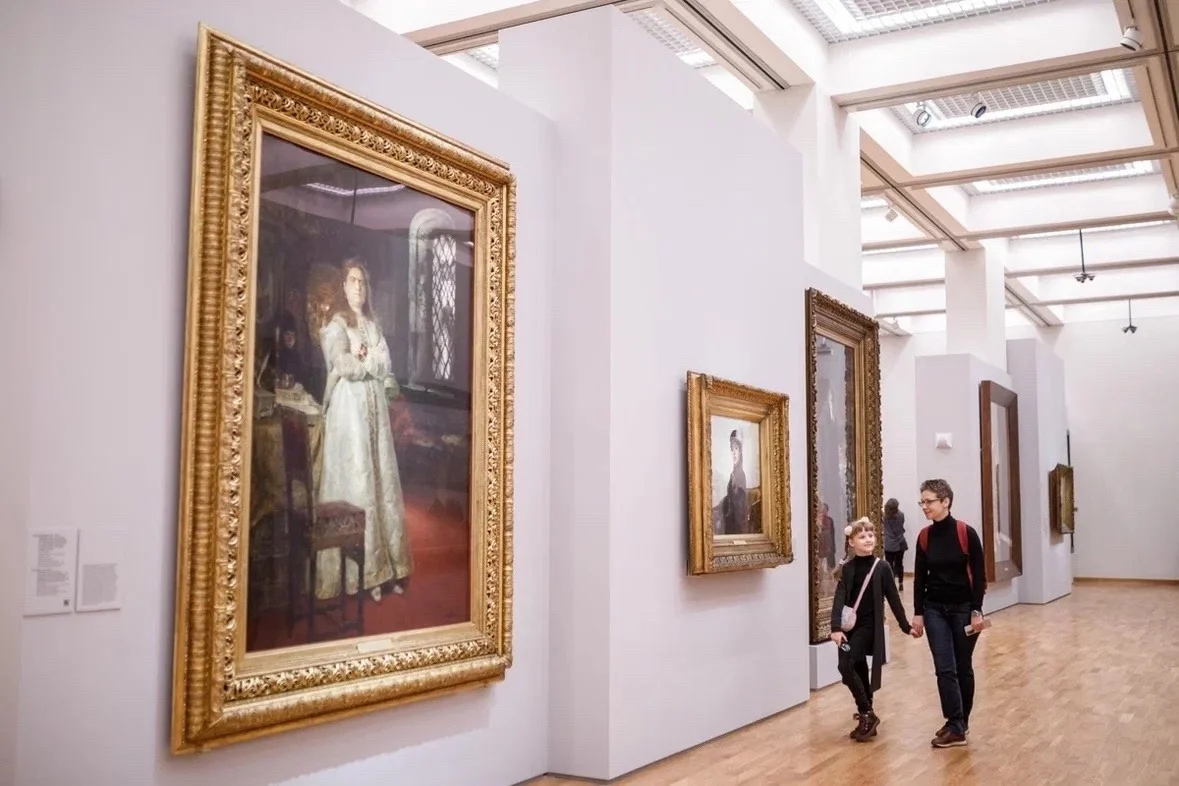
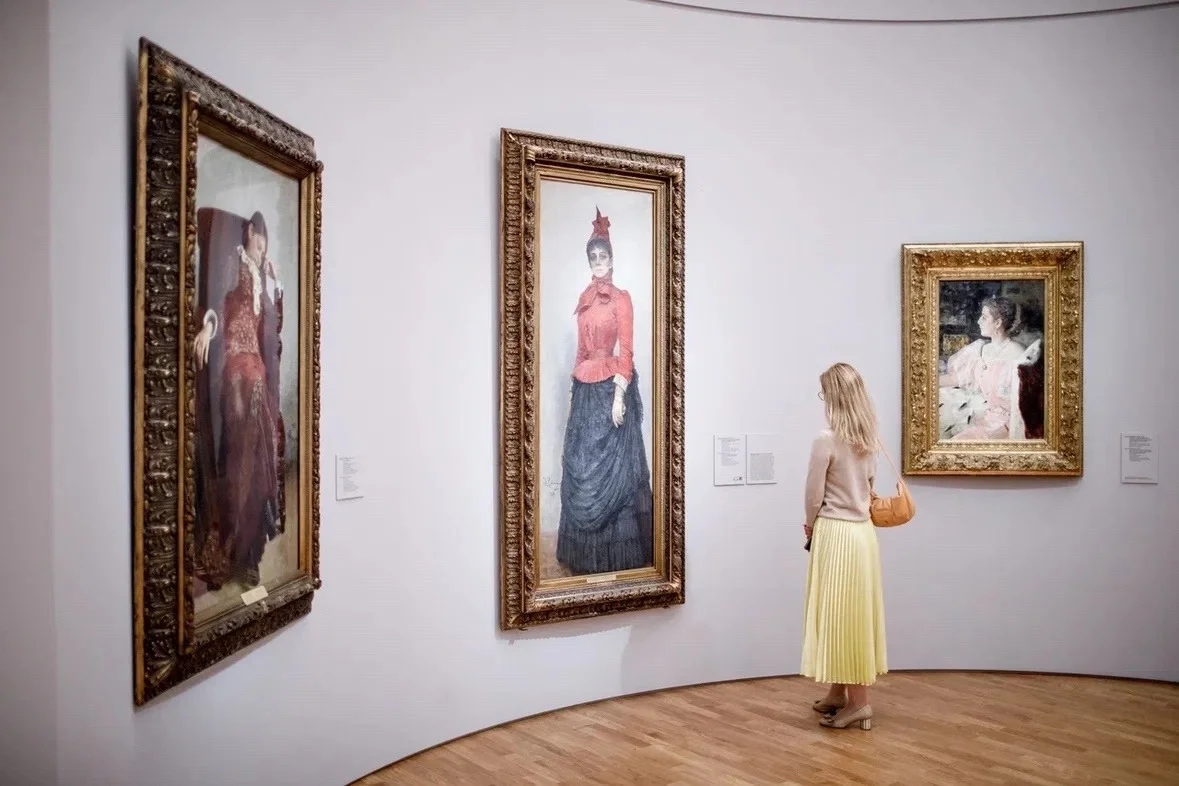
In addition to large conceptual sections, the exhibition also has narrower genre and thematic sections, in which paintings are grouped under such titles as “Portrait”, “Landscape”, “Women’s Question”, “World of Childhood”, etc. In each of these sections you can discover interesting rhymes between famous masterpieces and lesser-known works (including those few paintings that were brought from other cities and museums).
However, perhaps the most intriguing (and at the same time the most controversial) section of the exhibition is the final one - “Exit into the 20th century. The Wanderers are outside of Wandering." This section contains perhaps the most serious debate between the exhibition curators and the Soviet myth about the Wanderers.
If for official Soviet art criticism the painting of the Peredvizhniki was the source of socialist realist art, then in the final section of the Tretyakov exhibition the art of Russian modernism emerges from the Peredvizhniki movement.
As you know, a commonplace in any version of the history of art is that modernism was rather based on the aesthetics of the Wanderers. But by focusing on the work of those artists who, at the beginning of their creative career, participated in traveling exhibitions of the late 19th century and then broke with the partnership, the exhibition curators show how fruitful these “repulsions” could be for painting. Moreover, by the end of the exhibition, a simple but important fact becomes obvious: the Association of Traveling Exhibitions of Artists has become not just an aesthetic phenomenon in the history of Russian painting, but a unique artistic organization, a real democratic movement, the first to challenge official academic art and emerge from this clash winner. From this point of view, without the experience of the Peredvizhniki, the triumph of the “Mirskusnik” and all the other numerous artistic groups of the early twentieth century could not have happened.
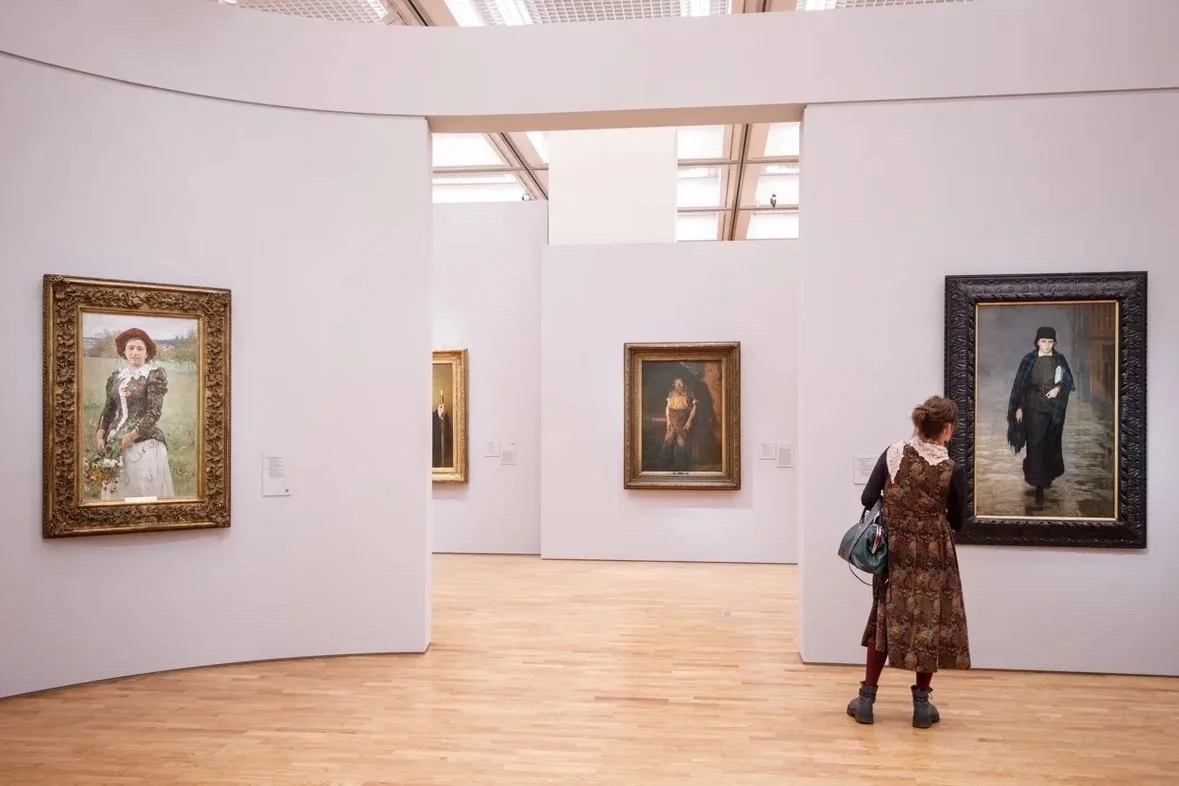
At the same time, the merging of the works of the “founding fathers” of the Wanderers society (Myasoedov, Perov, Kramskoy) with later innovative artists like Korovin, Golovin, Kuindzhi within the framework of the exhibition may seem too bold and unreasonable for some. So, surprisingly, even after more than 100 years, Korovin’s impressionistic painting “In the Garden. Gurzuf" you can hear the scathing definition of "daub". Whether this speaks of the invincible power of the aesthetic myth about the Wanderers as masters of “smooth painting,” “plausibility,” and “photographic precision,” with which the technique of impressionism can have nothing in common, is difficult to judge, but we will assume that another goal of this exhibition is show how Korovin’s “daub” came out of Savrasov’s “Rooks”.
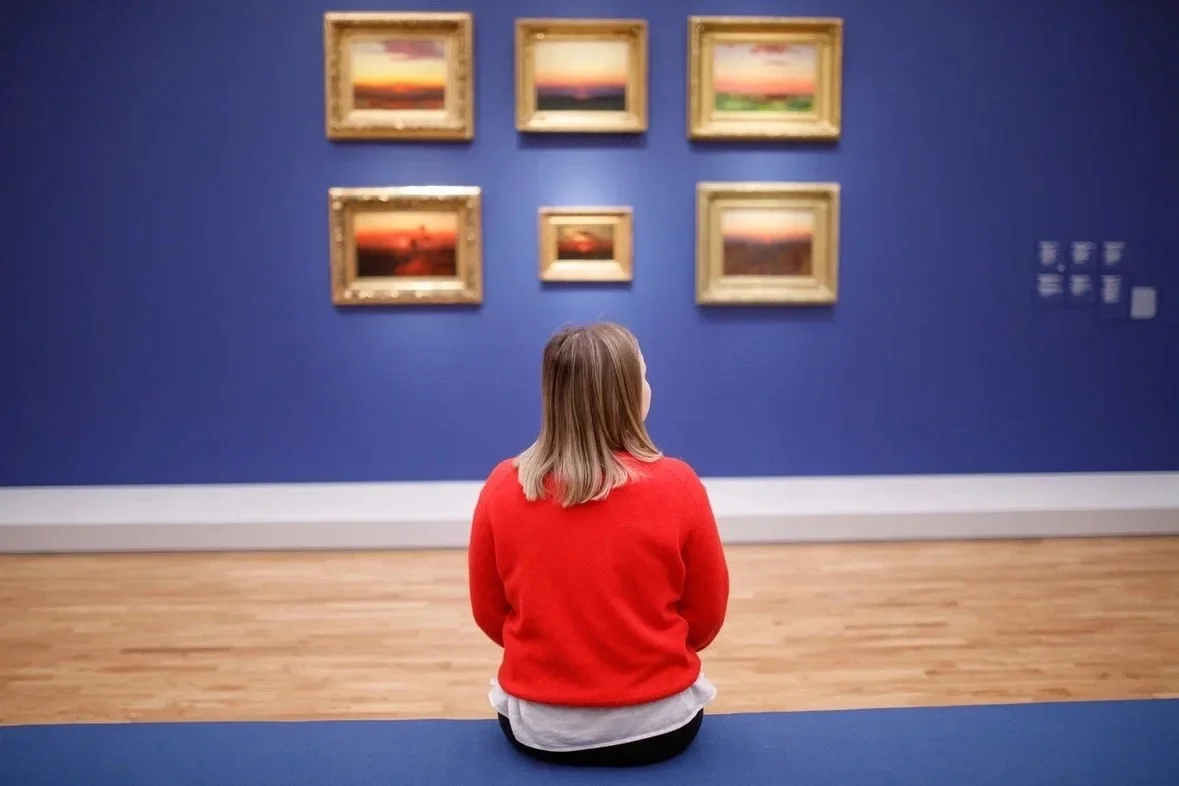
The final point of the exhibition composition is six paintings by Kuindzhi depicting a sunset, the direct symbolism of which, as in the case of the opening wooden “Rooks,” does not seem overly deliberate.
Six small minimalist works not only sum up the 50-year history of the Association of Traveling Exhibitions, but also make you pause in silence and think about both art and life.
The exhibition “The Peredvizhniki” in the Tretyakov Gallery will last until the beginning of April next year (when the rooks will definitely arrive), but even now we can say: the argument in favor of the “aesthetic rehabilitation” of the Peredvizhniki artists presented at the exhibition should be received positively by both the expert community and and the general public. However, in connection with this conceptually exciting exhibition, I would like to ask an important question: whether in the viewer’s consciousness the emphasis on the aesthetic merits of the paintings of the Wanderers will not replace the ethical dominant that was decisive for this movement from its very foundation and has been preserved for about a century and a half, despite all the ideological layers? And isn’t this ethical grain the most important thing in these paintings? It seems that, along with the “aesthetic rehabilitation” of the Peredvizhniki, it would not hurt us to remember what exactly they wanted to say with their masterpieces about the Russian people, Russian nature, Russian life and its meaning. And understanding why these paintings are real works of art should only help in reflecting on these issues.