
Translated material
To be announced
Can the government's removal of the "GULAG History Museum" hide the truth about the repressed? History of an unusual publication
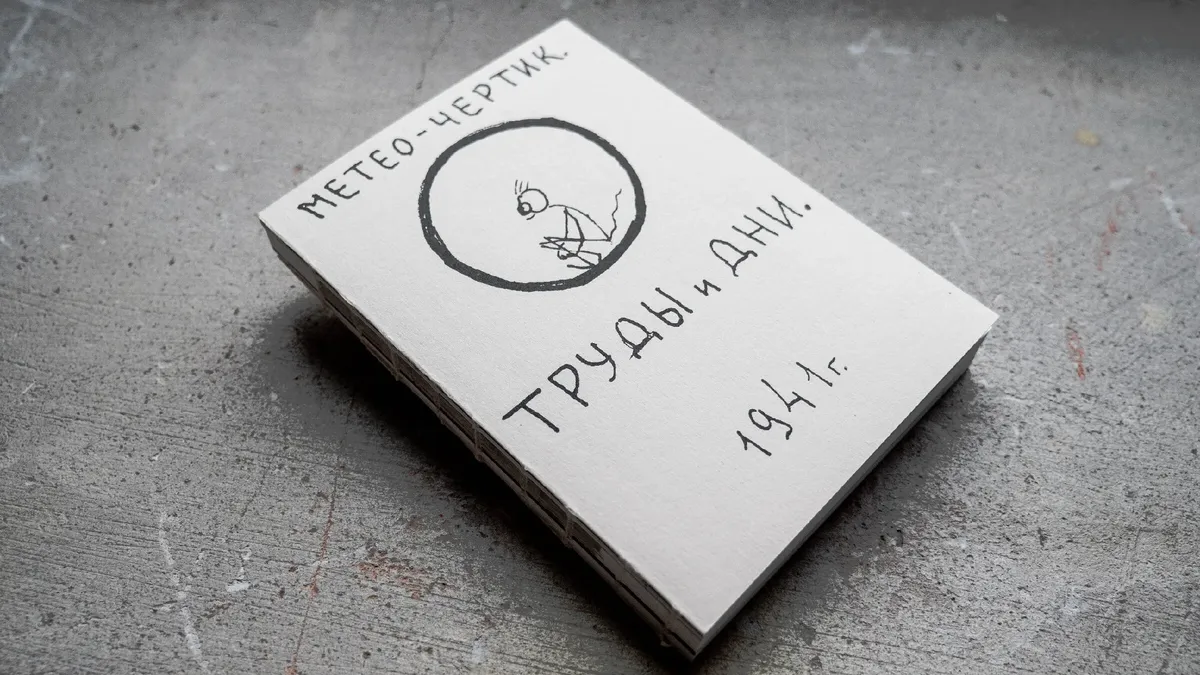
Cover of the book “Meteo-Chertik. Works and days. 1941"
I am writing on December 1, Zoya Eroshok’s birthday, once again amazed at her ability to humanize any journalistic material, her tenacity in the fight for the fate of her heroes and her ability to achieve results in the most hopeless situation. “Texts of words,” as she called her articles, consoled some readers, saved others, cured others from despondency, and pulled everyone into the funnel of love for talent and respect for “normal people.”
There is not enough space here to simply list all the names of her heroes, including Mikhail Gorbachev, Faina Ranevskaya, Oleg Dal, Alexander Sokurov, Yuliy Kim, Adam Michnik, Lyudmila Alekseeva, Doctor Lisa, a neighbor in her beloved Temryuk, and there are also three documentary stories - “Tunnel”, “Vagabonds”, “Weather Devil”.
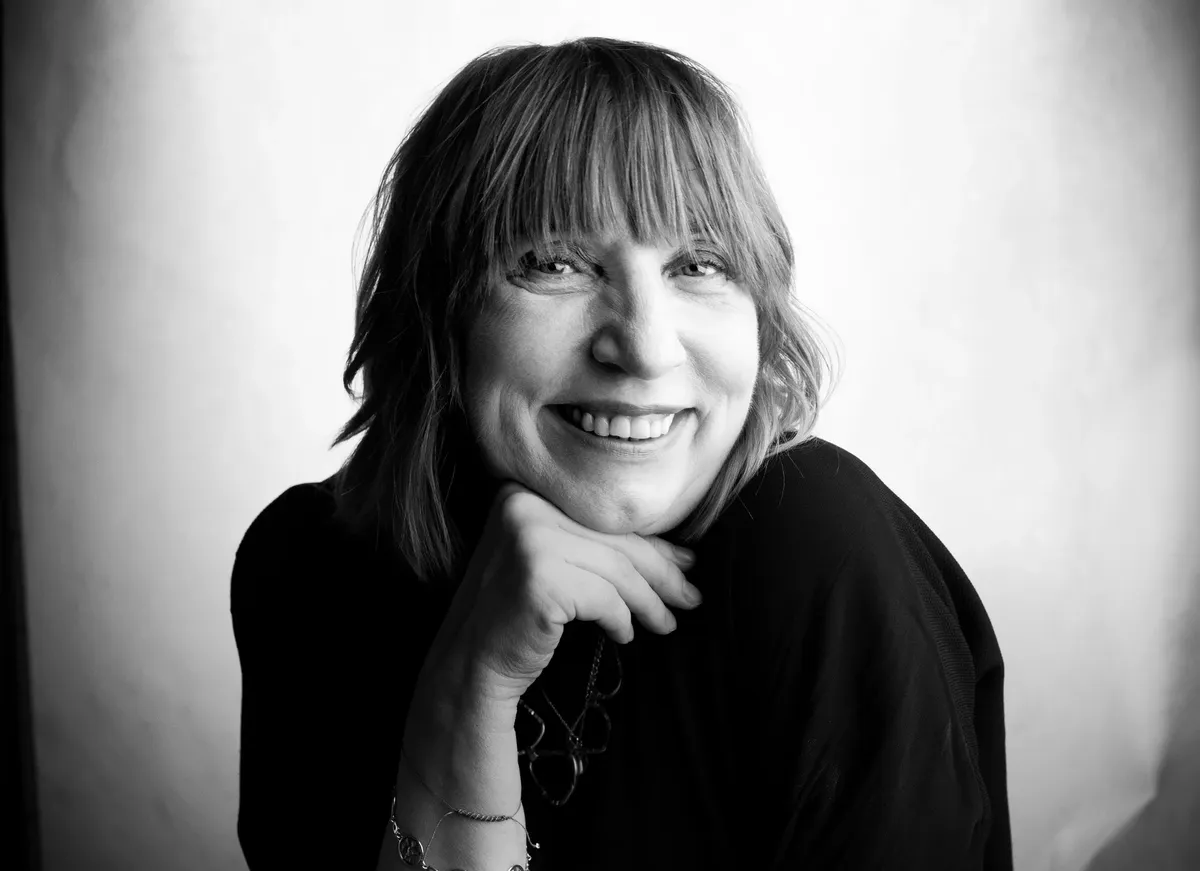
For “Meteo-Chertik. Works and days. 1941" Zoya Eroshok received the prestigious Alexander Pyatigorsky Prize in the category "Master of the Book Project". Zoya herself described how this project came about in the preface to “The Devil,” the handwritten diary of a Karlag prisoner.
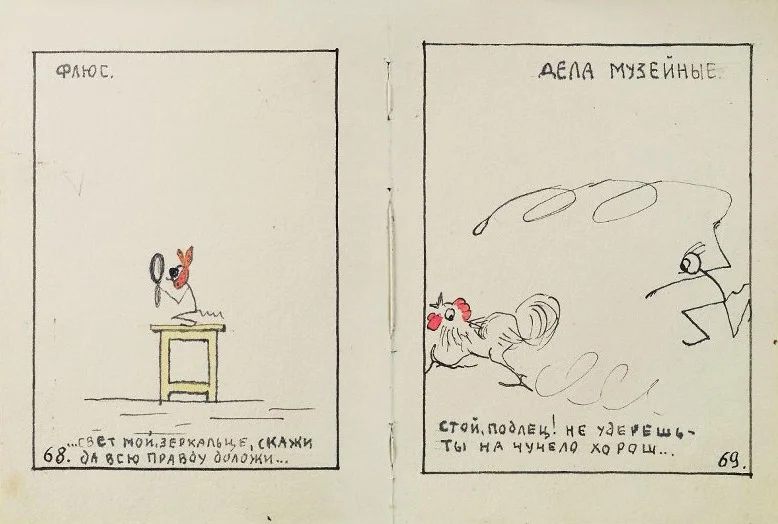
A small book with funny pictures and couplets about camp life in Karlag - the most terrible place on the map of Russia. If the authorities had found this sign of rebellion against the destruction of everything human in a person, the author would have been erased into camp dust.
But the little book survived to remind us in ominous times: fortitude is saving even in the kingdom of fear.
The comic strip with the devil, which began with a tender address to “my son Sashka, who is not with me,” turns into a stern anti-totalitarian document before the reader’s eyes. Therefore, today, when history is being rewritten, and people are again driven into fear, it’s time to recall the line of defense that one of the victims of the Gulag lawlessness personally built for herself.

And it was like this. In 2009, Zoya Eroshok writes in the preface to Meteo-Devil, “an Emergencies Ministry officer called the editorial office from the entrance and said that his mother had given me a letter and some kind of package. ...The package contained a booklet from the Gulag... Inna Nikolaevna Trufanova from the city of Verkhnyaya Pyshma wrote to me that her mother, Olga Aleksandrovna Zhurid, took this booklet out of Karlag in 1946. And all her life she took great care of her and spoke with tenderness: Olechkina...” No one knew who Olechka was until Zoya and her volunteer assistants—her friends, acquaintances, and readers were drawn into the search—restored her last name, digging through dozens of archives, raising the official authorities to their feet.
Olga Mikhailovna Ranitskaya (1905–1988). Repressed in 1937. Rehabilitated in 1955.
There are so many worries, hopes, fears and humiliations behind these numbers! In “Devil,” Olga Mikhailovna’s life before her arrest and after her release in 1946 is restored. Her relatives, communal neighbors, and witnesses of life in the settlement sent their memories of this unusual woman to the newspaper.
In addition to the camp diary, her poems were published - a consolation and outlet for her talented and active nature.

The stories of these persistent searches are captured in a series of articles “The Little Book”, published in special issues of Novaya Gazeta - “The Truth of the Gulag”. In 2017, “Meteo-devil. Works and Days" was published through the efforts of the Memory Fund, Novaya Gazeta, and the Gulag History Museum, Novaya's main ally in its adventurous quest.
And on November 14, 2024, the Gulag Museum was forced to suspend work due to the conclusion of the Center for Expertise, Research and Testing in Construction. The sudden discovery of a fire safety hazard due to a subway ventilation chamber on the museum grounds is a defiantly ridiculous pretext, and the suspension is indefinite.
The camera has always existed, the time to be afraid of it has arrived now - when the bloodthirstiness has become demonstrative, the nonsense of the regulations has been boldly emphasized. When Perm-36, the only museum in Russia that gave a three-dimensional idea of what everyday life was like, everyday suffering in the camps, was remade and taken over by the retouchers of history.
Now unthinkable are the times in which society, agitated by perestroika, heatedly discussed the approaches of Shalamov and Solzhenitsyn to the camp theme: Shalamov’s conviction in the meaninglessness of the camp experience, the impossibility of atonement for the experiences of prisoners and Solzhenitsyn’s confidence that the most truly human experience is the camp experience. But their mission was common:
testify instead of those who cannot testify themselves.

This has been the main task for the Gulag History Museum since its opening in 2001: to give an idea of how many people did not survive on this construction site of a communist paradise. Preserving the personal experiences of prisoners and their memory has become not just a job, but a matter of life for museum employees. Personal traumas and personal suffering were put together by museum workers into a picture of incredible trials, the horror of which made visitors think about our history, disastrous for both the country and the individual.
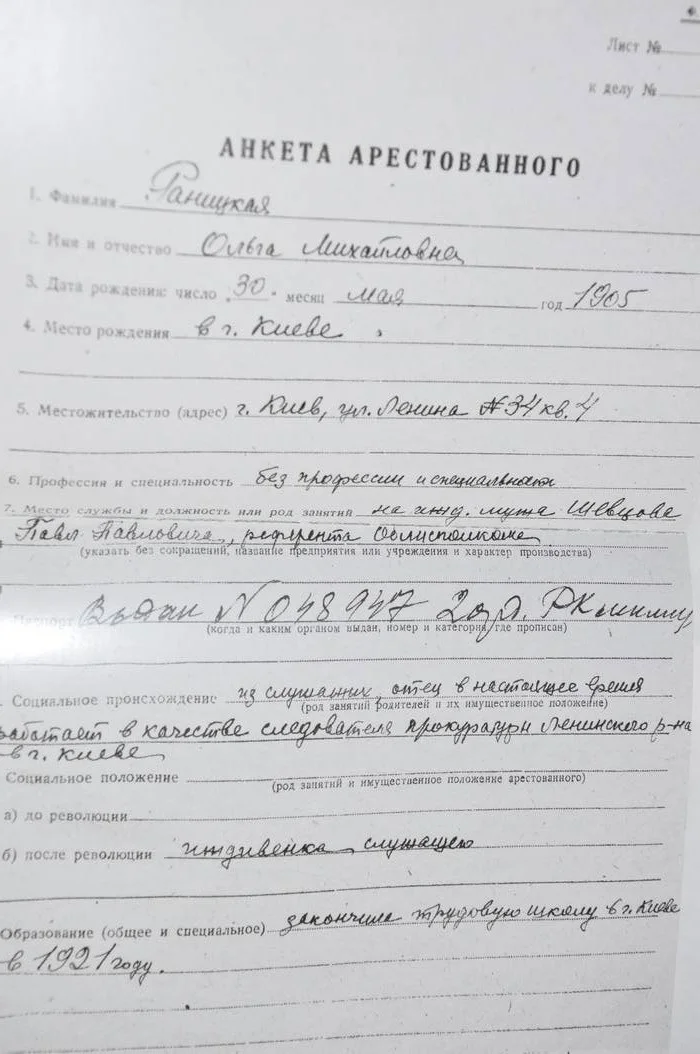
The arrestee's profile collected in the booklet, interrogation protocols, extracts from the minutes of the Special Meeting of the NKVD, a letter to Voroshilov, the decision of the Military Tribunal of the Kyiv Military District to reconsider the case - terrible signs of that time flicker in the current decisions about fakes invented by the authorities, extrajudicial killings fraught with prison terms, denunciations out of servility, self-interest and the anger of prospectors irradiated by propaganda.
One can experience despair without being in this insignificant state, which few works of literature about the Gulag strive to convey.
Olga Mikhailovna Ranitskaya, accused of spying for Poland due to a chance acquaintance with the secretary of the Polish consulate Milashevsky, survived. In addition to her fortitude, what saved her in Karlag was her work at the weather station, where the character in her diary was born - a masterfully drawn little devil. But the “enemies of the people” released from the camps did not have the right to return to their homes and remained in the settlement under the eternal threat of ending up in the camp again.
And this “eternal threat” of a broken life, again hanging over “normal” people, makes the little book, in which a quiet female voice sounds, a persistent warning about the danger of giving up. Our need is to pay attention to it, so as not to fall again into the trap from which we tried to escape thirty years ago. Not least thanks to books about the Gulag: “Steep Route” by Evgenia Ginzburg, “My Memories” by Ekaterina Olitskaya, “The Path” by Olga Adamova-Sliozberg, “Gray is the Color of Hope” by Irina Ratushinskaya, “How Much is a Man Worth” by Efrosinia Kersnovskaya.
In the wonderful memoirs of Eduard Nedirbaevich Aitakov, who together with his brother came to the editorial office of Novaya after the publication of the Little Book, there is an episode about life in the settlement with their mother, who was friends with Ranitskaya. “My brother and I caught jerboas, gophers, and hamsters. I’ll never forget: they’ll fall into a trap, and they’ll go “shhhhhhhhhhhhhhhhhhhhhhhhhhhhhhhhhhhhhhhhhhhhhhhhhhhhhhhhhhhhhhhhhhhhhhhhhhhhhhhhhhhhhhhhhhhhhtlyly, they want to scare us.” So they scare us with all their might and corrals, but, you see, it’s somehow embarrassing to be scared of small predators. Look at the cheerful little devil!”
