
Translated material
Enemy of my enemy
In Syria, the opposition captured Aleppo and Hama. Assad and his family fled to Russia. Who will take over power in a warring country?
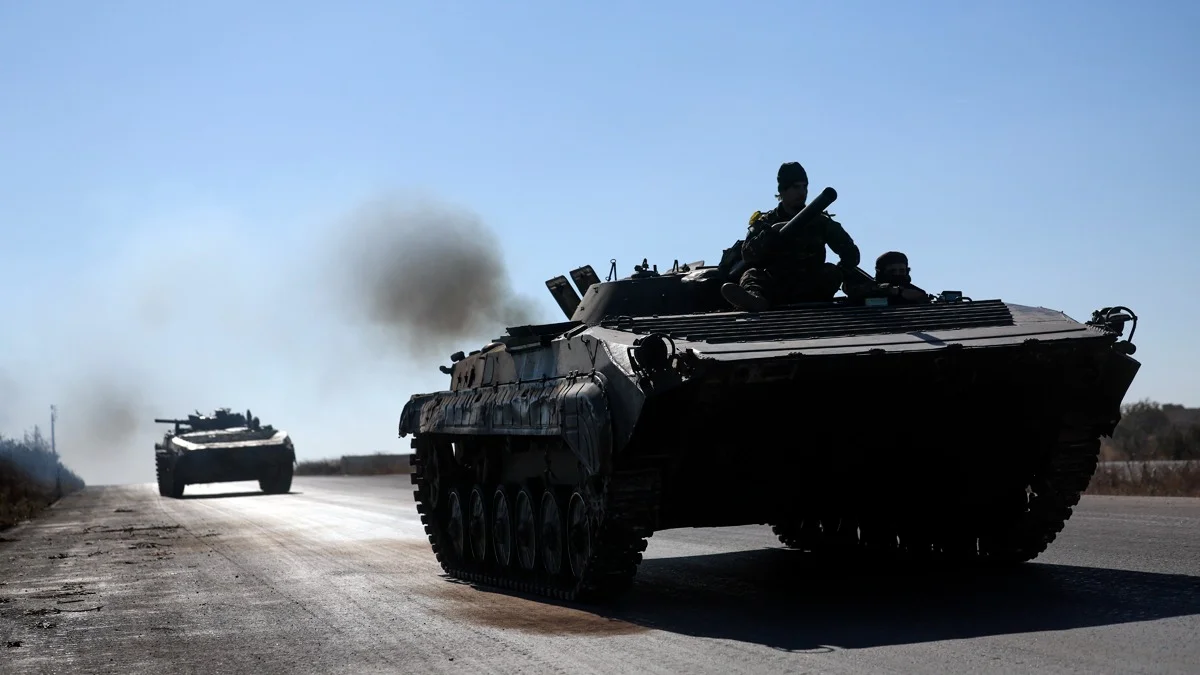
Syrian opposition. Photo: AP/TASS
Last week on Wednesday, Syrian opposition forces successfully captured Aleppo, a key city that has been a symbolic stronghold of President Bashar al-Assad's regime. Having encountered very weak resistance from the regular army, opposition fighters attacked the Russian base in Aleppo. Continuing their march unopposed, the opposition captured about 50 more cities south of Aleppo within a few days, including Hama, the capital of the province of the same name.
Early on Friday morning, Bashar al-Assad flew to Moscow with his entire family, his brothers and their families. The official media reported that he arrived on an official visit, but did not comment on the fact that, having left his homeland at the most difficult moment, Assad did not find any of the possible partners for negotiations in Russia. Vladimir Putin was in Kazakhstan at that moment, Andrei Belousov was in North Korea. The question is: who did Assad fly to and will he fly back? At least the footage shown by the official Syrian media looks like canned food, from which it is extremely difficult to understand where all this was filmed.
His departure from Syria underscores the deep vulnerability of the regime, which Assad has not demonstrated throughout the protracted, nearly 14-year civil war.
As opposition forces consolidate their control, the consequences for Assad become increasingly dire, especially given the changes in international politics in recent years.
But in order to understand what a delicate situation the Syrian dictator and his weakening allies are in, it is enough to outline the balance of power that has now developed in Syria and assess the interests of each side.
What are the forces supporting Assad? First of all, this is the regular Syrian Arab Army (SAA) and its allies such as the paramilitary National Defense Forces; then the Iranian brigades Fatemiyoun and Zaynabiyoun, as well as the paramilitary pro-Iranian Shiite group Hezbollah. In addition, the Russian Aerospace Forces, as well as Russian personnel, including the remnants of the Wagner group, still present in Syria, are of great importance for Assad’s positions.
Both Russia and Iran have their own goals in this war, and both countries use Syria and its regime only as a tool. Russia - in order to gain a foothold in the Middle East through Assad, including to stake out its military bases in the region. Iran is using Syria as a corridor to arm Hezbollah on Israel's borders. But it so happened that the two main (and only) allies of the Syrian regime, ready to fight with their hands (and not at the level of declarations) for Assad’s interests, have themselves been greatly weakened recently.
For Russia, after the start of the Northern Military District, of course, the Syrian front is far from being a priority. Consider the fact that after the dramatic events in the Kharkov direction, Lieutenant General Sergei Kisel was sent to command the Syrian group of the Russian army. However, after the failure in Aleppo, he was removed from this position.
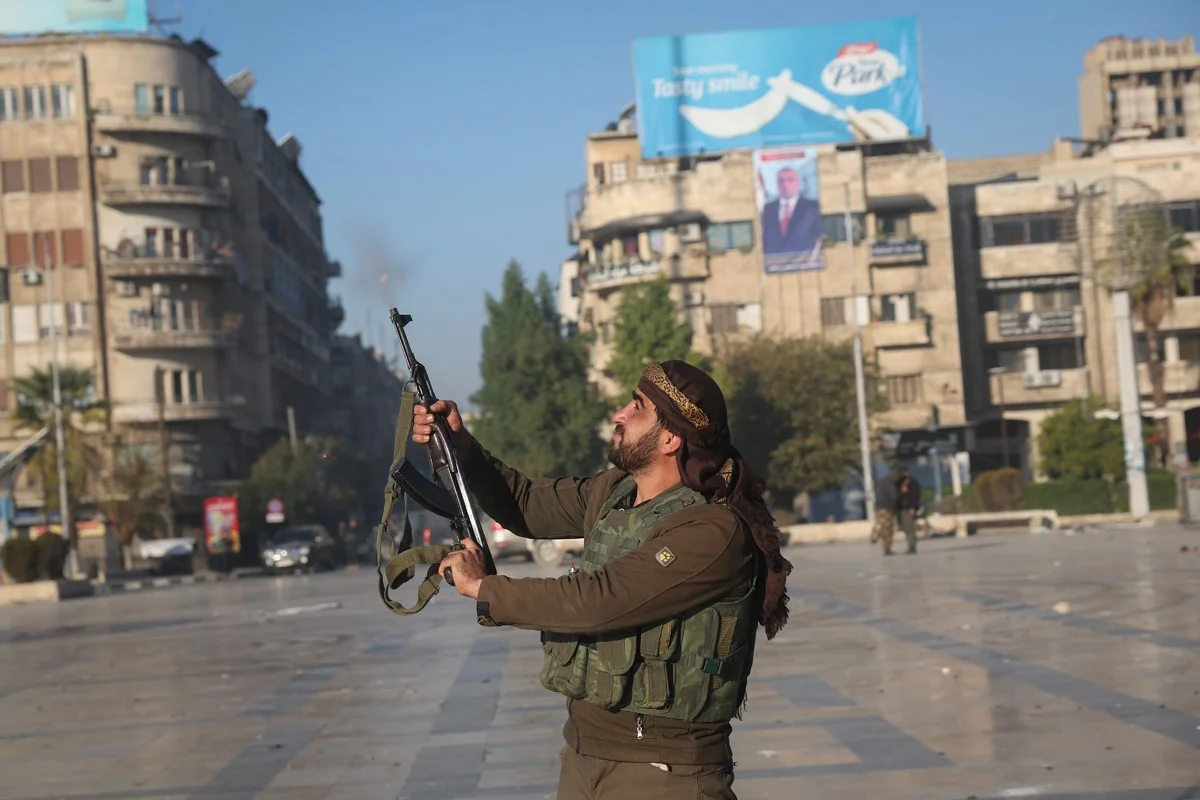
Well, the Iranian brigades and Hezbollah have been greatly reduced in recent months as a result of methodical Israeli attacks on the locations of their manpower and command, both in Lebanon and Syria, and in Iran itself. (And on Sunday, an American strike also hit a large party of Iranian militants who had barely crossed the border with Syria and were rushing to the aid of the regular Syrian army).
At one time, it was Russia’s intervention in the Syrian conflict that saved Assad: by September 2015, the preponderance of forces was on the side of the secular opposition (quite monolithic at that time), and if the regime had not received support, it would have collapsed. It is difficult to predict whether the opposition will be able to demonstrate the same capabilities now, at the end of 2024.
Today, the Syrian opposition consists of disparate rebel groups, often in conflict with each other.
There are secular ones among them, such as the Free Syrian Army (now transformed into the Syrian National Army) - a combat-ready and well-armed army operating under the patronage of Turkey from military personnel who deserted from Assad’s units.
There are also radical Islamist groups in the opposition, such as Hayat Tahrir al-Sham (banned in Russia and received terrorist status), Ahrar al-Sham (banned in Russia and received terrorist status), Jaysh al-Islam ( also banned in Russia and received terrorist status).
Yes, they are all united by the goal of overthrowing the Assad regime, but they differ greatly in their vision of the further post-war structure of Syria. And before you rejoice, following some observers, in the current successes of the Syrian opposition, try to imagine what it is like for the Christian population of the territories captured by the opposition now. “Christmas raids” took place in Christian areas - militants destroyed decorated Christmas trees, this “pagan symbol” of joy and hope. And Syria, let me remind you, is a secular country in which all peoples and religions coexisted normally before the start of the war.
And more interesting footage is being circulated these days on social networks: how the militants who captured Aleppo are destroying alcohol at the airport. Because it is haram.
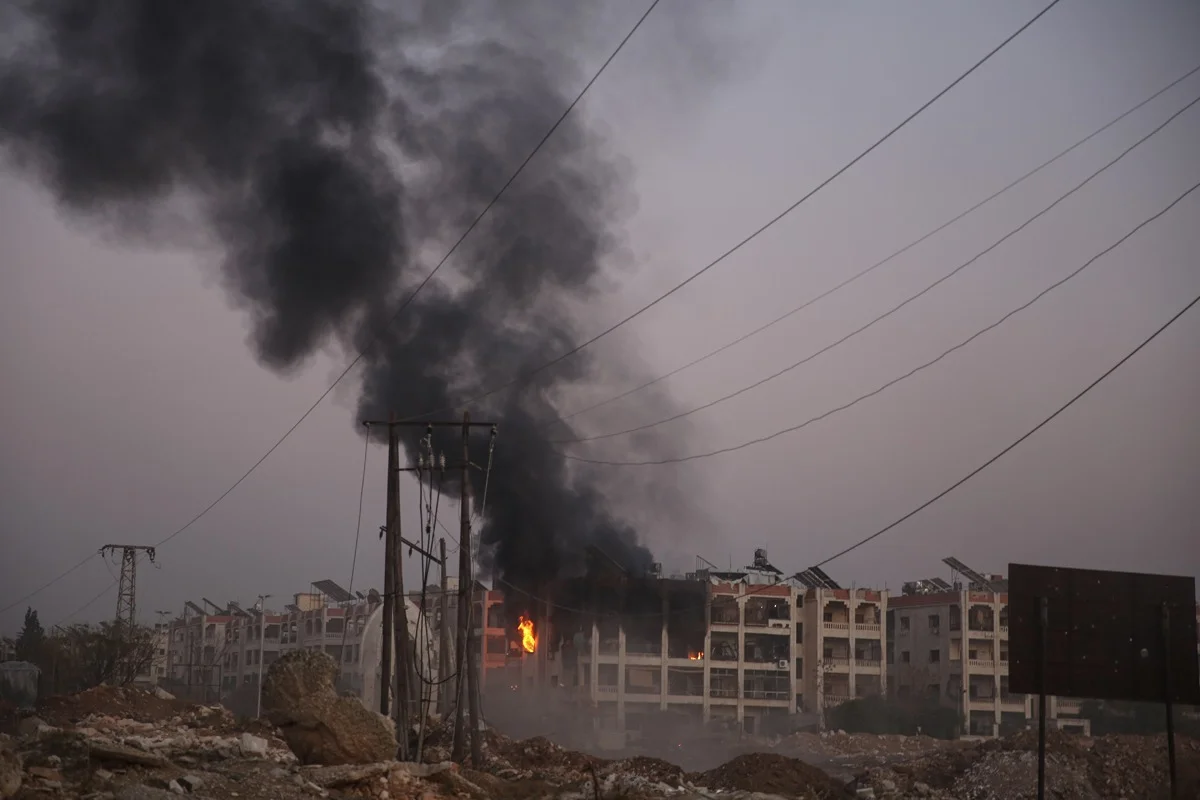
Still, these Islamist groups should not be confused with ISIS (a terrorist organization banned in Russia). Contrary to official assurances from Russian officials, ISIS has not been destroyed at all - it is still active in eastern Syria, conducting guerrilla attacks with the aim of destabilizing the region and restoring lost influence. Without showing much of itself in bloodless Syria, ISIS, thanks to social networks, is actively metastasizing throughout the world, and the terrorist attack in Crocus is a terrible illustration of this. At the same time, ISIS has no common interests or common ground with the Syrian opposition - both secular and Islamist - on the contrary, they are ardent opponents. Although they still have something in common: and this is a common enemy in the form of Kurdish groups.
Kurdish groups, led by the Syrian Democratic Forces and the People's Protection Units, operate in the north and east of Syria with the support of the United States and, in addition to the secondary goal of controlling (even not completely destroying) ISIS, they have another goal, the main one. Namely, the creation of Kurdish autonomy in northern Syria.
But this, in turn, is something Turkey cannot allow, because it will create additional headaches for it with its own Kurds, who also want autonomy and act using terrorist methods. Actually, this inspires Turkey to fully support the motley Syrian opposition. Well, and also the desire, taking advantage of the weakening of the neighbor, to return some northern Syrian territories to their “home harbor” - the same Idlib, for example.
And this is what the current situation in Syria looks like taking into account this situation. Aleppo, a once bustling metropolis and the most important economic center, and now a former symbol of the stability and inviolability of the Assad regime, has been captured. Although the opposition is slowing down its offensive in other areas, it is not showing any signs of “spontaneous” success. On the contrary, it shows ideological preparedness: calls to representatives of foreign missions (including the Russian military) are scattered across the social networks of captured cities: “Contact the indicated numbers, and we will provide you with evacuation. This is not a war with foreigners. This is our internal showdown."
Assad, meanwhile... fled. The fates of other representatives of the Syrian elite are unclear. The power vacuum is obvious - and those who want to appoint proteges will not keep themselves waiting.
Shadi SAFAR