
Translated material
And there is nowhere to talk...
The world of instant messengers is a mess. Everyone froze waiting for some universal offer to appear.
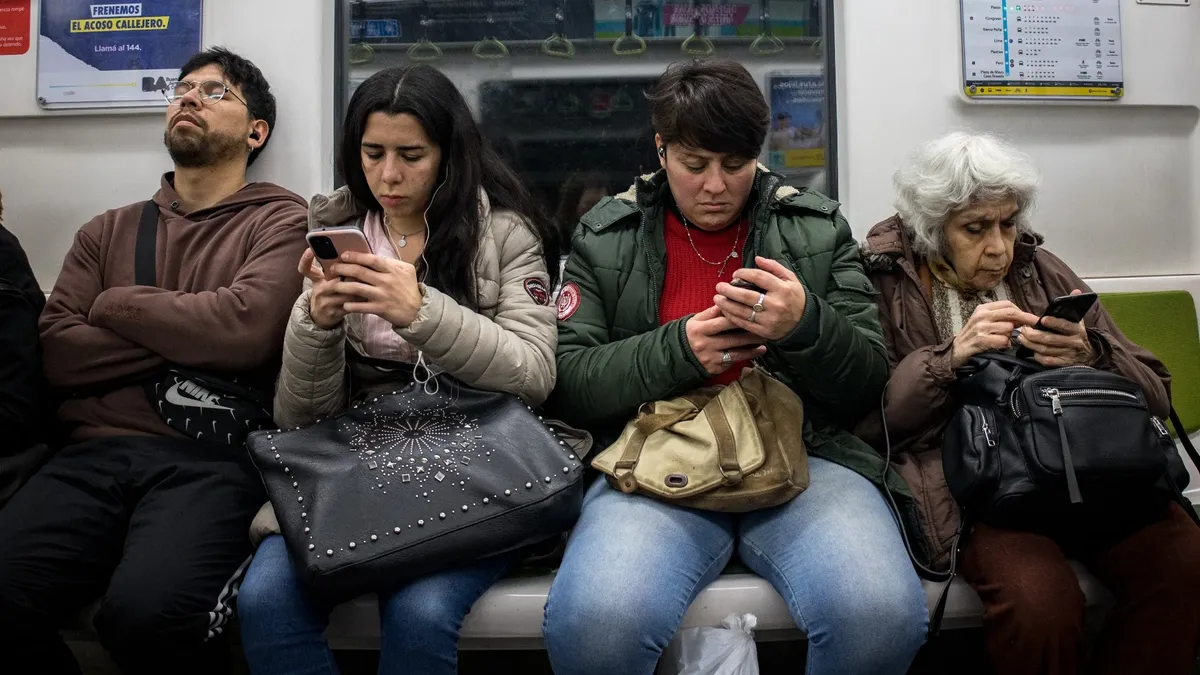
Photo: dpa/picture-alliance
The main means of our communication—messengers—is under threat. The news that we learn from the same place comes from different sides. Blocking, content deletion, encryption problems. Safe and convenient communication seems to be a myth, and there is no application that will provide us with the main thing: a comfortable environment for communications, which account for most of our lives.
In short, today the most secure means of communication is Apple’s iMessage, which is built into all iPhone models by default. The corporation fights to the last for users against its most powerful enemies - the FBI, NSA and the US Congress. To date, there is no evidence presented in criminal cases that the data was obtained with the help of the company.
But there's a problem: not everyone has an iPhone. This only works within the Apple ecosystem. And with all the technological advances - from encryption to stickers - this joy, alas, is not available to everyone and, accordingly, does not receive mass distribution.
At this point it is worth immersing yourself in history. After the appearance of ICQ (here the reader will most likely remember the characteristic sound), the industry began to think about the then fashionable word “interoperability” - the ability to send messages from one messenger to another. But everyone tried to go their own way, and therefore the initiatives failed. Everyone wanted to create their own protocol, fundamentally incompatible with competitors.
There was hope for the XMPP protocol. In theory, it is an open protocol that allows you to build an environment for everyone. You use it in your application - and everyone is happy, because the user can send a message from one messenger to another. And hope was very close: one of the largest instant messengers at that time, Google Talk, could do all this. But something went wrong.
The main breakthrough in communication was not in messaging, but in voice calls. Skype brought about the revolution by simplifying everything down to a green and red button.
These were the times when our grandmothers mastered Internet communication. Creating a user-friendly interface for the masses has already become a breakthrough.
And then Viber appeared. In general, not the most attractive and technologically advanced application gave rise to international calls and beautiful stickers.
Everything was fine until WhatsApp and Telegram arrived. The first one relied on transparent integration with a notebook, the second - in the first stages - with its own protocol and the identity of the creator. Pavel Durov, thanks to his brother and, of course, talented participants in the Olympiads, was able to compete with his competitor, who was later bought by Mark Zuckerberg.
So what do we have for today?
WhatsApp is part of a large corporation. And despite the emergence of channels, community and stories, it has weak social functions.
Telegram is a powerful platform with a large infrastructure. But trust in the creator is falling every day: after the arrest, the rules changed, and the company is increasingly beginning to provide data to government agencies.

There are exotics like Signal, but it would be naive to consider the audience that is encrypted from strangers to be mass.
We can recall other solutions, including open source and decentralized ones. But either the interface or the absence of those same notorious stickers still makes them just as exotic.
Attempts to create something new happen regularly, including in certain social groups. Thus, the Innotech XXI Foundation announced the creation of a messenger for Orthodox Christians, where the social part, apparently, will be carried out by the pages of churches.
It's sad to read this. Formally, creating a messenger “not for everyone” is not a problem today. There are many open source and enterprise solutions available. The only thing required is to change the logo and come up with a name. How to convey the product to the audience and get them to use it doesn’t matter. The fact that the analogues failed miserably is apparently of no interest to anyone.
A messenger, like a social network, should be for everyone and about everything. As much as we would like to create a separate product for cat lovers, their lives are a little more varied than discussing furry creatures.
There are friends with other interests, there is a family with separate concerns, there is a world around us that is not particularly concerned about our passions.
The fact that everyone is cooler is perfectly illustrated by the history of the Discord application. If initially it was a solution for gamers who need coordination in games, today it is a universal platform, a full-fledged competitor to corporate Slack. However, a threat hangs over him in the form of Roskomnadzor. If not today, then tomorrow they may be blocked, which for many users will be tantamount to turning into a pumpkin.
In general, no matter how you look at it, there is no happiness. And the problem is not in the transmission of messages. Chat today is available in any application - from games to banking clients. And there are no issues with the social part. Yes, in Russia, with its crippled media space, Telegram channels have become a phenomenon. But for the public distribution of ideas and memes, the world copes with the help of Instagram*, which, by the way, also has private correspondence functionality - advanced and built into the general Meta* infrastructure.
But there is no mass solution for free, convenient and safe communication. Apparently, because these factors are mutually exclusive. If you want convenience, go to big companies, but there are problems with freedom and security. If you want encryption, install Threema, but don’t forget to get a technical education first. This is difficult for the average user. If you want freedom, welcome to the world of open, decentralized solutions. But there are problems there too, at least with the design. All this looks, to put it mildly, simple.
The problems are not only internal. The main problem occurs at the registration stage, when you are asked to enter a phone number. If at the development stage synchronization with a notebook and searching for contacts were the key to success, today access to the most important things turns out to be tied to the operator. Lost your SIM card - goodbye to your native account. The latest story with Google, when due to an error with numbers, users cannot create an account, is proof of this.
Endless regulation, advertising, lack of security, excessive or, conversely, modest functionality, centralization and obvious holes in the architecture. An attempt to use several solutions, and as a result - pain from painful memories of where the correspondence took place.
Dreams about the BlackBerry communication hub - a long-defunct solution that united all instant messengers - are long gone. A complete communication mess.
At first glance, today there is no alternative. Violating others by insisting on a certain application will not work: you have to adapt to the masses, who, by the way, do not care about safety. Refusing communication is also not an option. We are social creatures. Tolerate, be afraid, spit at the screen?
If you don’t take into account crazy ideas like a messenger for Orthodox Christians, now is a great time for new tools to appear. Given that the industry typically responds to social and political challenges, something fresh is just around the corner. We can only hope that while some are crying, injecting themselves and eating cactus, others are working on development. And soon we will receive a new message. From the new messenger.