
Translated material
Our
About the unsteady boundaries of “I/we”, “us/alien”
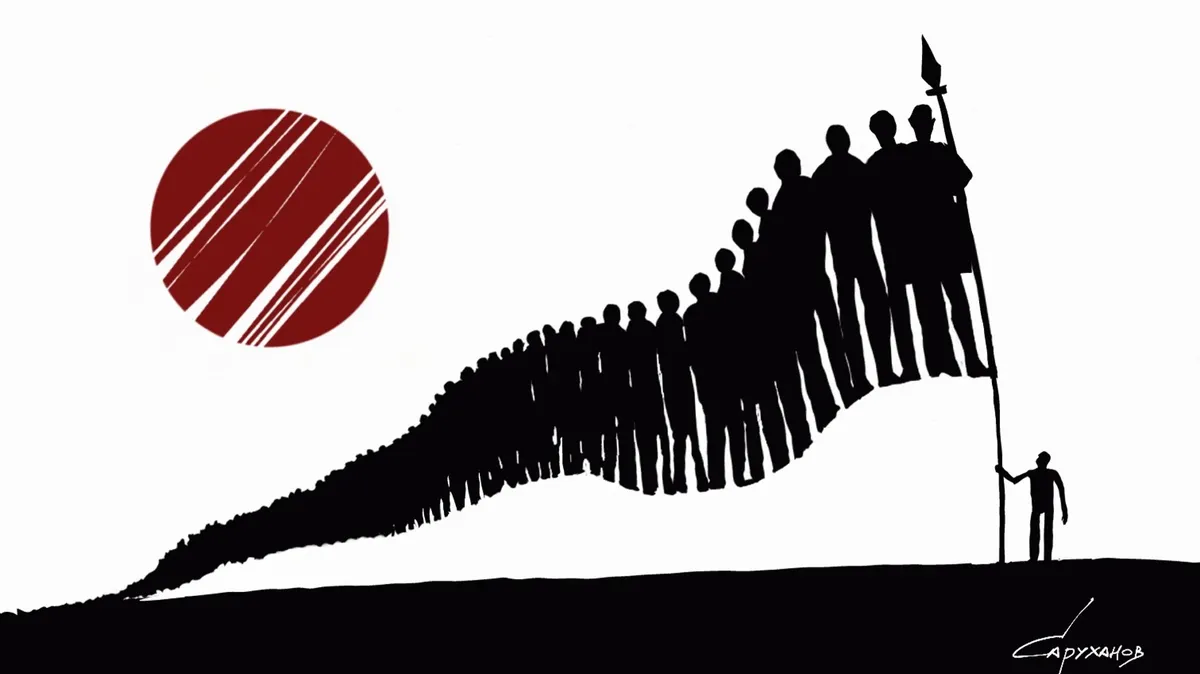
Petr Sarukhanov / Novaya Gazeta
“Still the same invincible melody, through so many processes, only in variations: after all, you and I are communists! And how could you be inclined to oppose us? Repent! After all, you and we together are us !
Historical understanding is slowly maturing in society. And when it’s ripe, it’s so simple. Neither in 1922, nor in 1924, nor in 1937 were the defendants able to strengthen their point of view so much as to shout with their heads raised at this bewitching, freezing melody:
“No, we are not revolutionaries with you !.. No, we are not Russians with you !.. No, we are not communists with you !”
(Solzhenitsyn, “The Gulag Archipelago”)
Solzhenitsyn’s quote is more than half a century old, it has already been included in school curricula, but its understanding has not matured. Moreover, the author himself, in his old age, agreed, it seems, to this corrupting “we”.
Sometimes I think: how nice it would be if rulers differed from their subjects in skin color or eye shape, or at least in noses, hair, whatever. And the riot police and the National Guard too. Like in China during the Yuan Dynasty - the Mongols are at the top, the indigenous population is below. And there is no patriotic sentiment - these are ours, how can you go against them, especially when an external enemy is on the doorstep.
Twelve years ago, Alexander Terekhov’s novel “The Germans” about Luzhkov’s Moscow was published. The main characters were officials of one of the capital's prefectures with names like Eberhard and Heribert, completely immersed in cuts and kickbacks. For greater clarity, one was even named Fritz. There was no explanation in the book why the Germans rule Moscow. While reading it, it felt like an alternate history type of motivation was about to emerge. But the author did without comment. The Germans - that's all.
The metaphor really did not require much explanation. They are not us, “Germans”, strangers.
But that's in the novel. And in life - Ivans, Peters, Akhmeds, Yakovs. To imagine them as “Krauts” requires mental effort. It’s difficult, it’s easier to continue calling them “we.”
But okay power. Many people cope with this at the very least. What if it’s a country, a people? And most importantly, where to draw the line? Let’s say that with aspens, birches, streets, buildings, everything is simple and clear: ours, mine. The same as with “Doctor Zhivago” or “Eugene Onegin”. The problem is that the authorities are not stupid. She is always looking for ways to squeeze under one brace with all of the above, to sell herself in one package with Levitan’s landscapes and the Church of the Intercession on the Nerl. What does it mean - “we are not Russians with you ”? What are you - against the Bronze Horseman, the Rasvumchorr plateau, the Amur tiger?
Let's not forget about the insidiousness of language. You say “our government”, “our army”, wanting to demonstrate that you humbly accept your share of responsibility for their behavior. But next to this civil statement, something emotional, warm, demanding love and acceptance immediately arises. From somewhere, a report by Alexander Nevzorov* “Ours” from 1991 immediately pops up - about the Vilnius riot police fighting “bourgeois nationalists” for our Soviet homeland, aka great Russia. The “Nashi” movement, cobbled together by Vladislav Surkov in the mid-2000s. “We don’t abandon our own.” "Our boys."
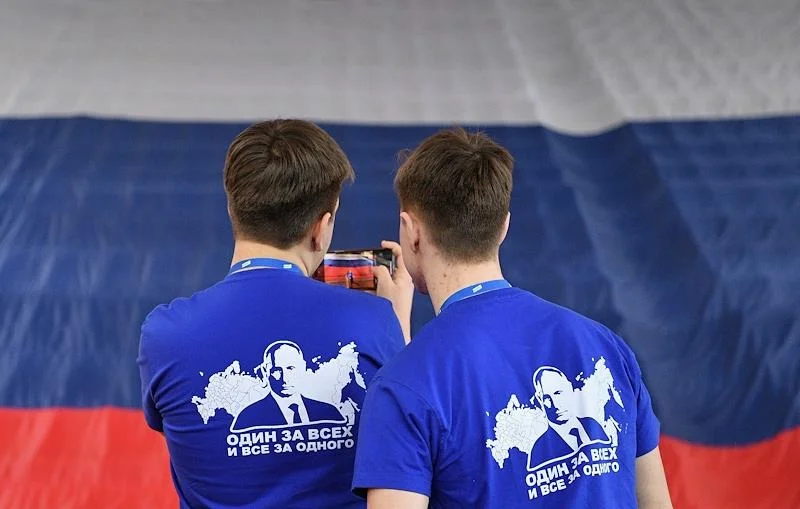
There is also such a strange inversion with possessive pronouns. According to the textbook definition, they indicate the person who owns the object/thing. That is, when a person says: “This is my country,” he formally declares his rights to this country, to participate in its affairs, to govern it.
But in fact, the opposite is true: he himself becomes her property. Your country, you say? Great. So go die for her.
All these linguistic subtleties have very practical consequences. How many times have I heard people resent the perestroika revelations: “So is this our life in vain?” The speakers could have been readers of samizdat, listeners of radio voices, who fought censorship during the Soviet years and donated money to help political prisoners. But suddenly, out of nowhere, these “we”, “ours” came out and turned them from winners into losers.
Using modern material, this is perfectly shown, for example, by Andrei Kolesnikov*, describing a conversation with a fellow traveler in Sapsan. Almost none of her colleagues, she says, share her horror at what is happening. The prevailing logic is “we can’t be bad.” And there are no arguments to convince us: they allowed themselves to be included in this “we” and now do not exist separately from it. Bound by one chain.
If this is conformism, then only partially. There is much that is understandable and universal in this behavior: the desire to lean against some kind of multitude and become part of it, the rejection of negativity about oneself and one’s group. A lot of education - environment, family, school history lessons, TV, patriotic videos on the Internet. Finally, life, language, which almost entirely consists of “ours” and “ours.”
Yulia Galyamina* once noted that the speeches of emigrant politicians scare away undecided Russians: “The neutral majority is afraid of this radical language. They think he is treacherous." And this is understandable -
“radical language” forces us to abandon the cozy world marked by familiar markers, to redraw the map, on which here are “ours” and here are “strangers.”
He proposes to reconsider many familiar concepts - even the very “betrayal” that Galyamin mentions.
For example, the Z-public has a favorite nickname - “collaborators”. The newest ideologists, of course, are lucky with the trail that has been trailing behind this word since the Second World War and the Vlasov era (remember the “spiritual Vlasovite” Solzhenitsyn). Well, what if we take as an example the whites who are waiting for intervention (that is, simply support from the Entente allies)? Emigrants hoping, say, for a new campaign by Pilsudski? Or is it better than the Red Terror, collectivization followed by a monstrous famine, Yezhovism?
Collaborator - translated means “employee”. Is it possible to cooperate with the enemy? And who, strictly speaking, is the enemy here? Is it possible to work against your country? Where does the country end and the regime begin? Can a patriot wish his country to fail? And if he believes that this will benefit her, will force her to change her mind and change - in short, what exactly is her strategic interest?
At the end of August 1991, my friend and I walked to Lubyanka, and I, pointing to the empty pedestal of the monument to Dzerzhinsky, said something youthfully beautiful about the irreversibility of change. “They will become irreversible when a monument to Penkovsky stands on this pedestal,” my friend objected.
Many years have passed. Russia is further from the Penkovsky monument than ever. But even in the most anti-Soviet periods of Russia’s modern history, the most radical people never even had such a thought, or at least they didn’t say it out loud. Who is the hero of Russia: Penkovsky or Konon Molodoy (the same one to whom his British contact was exchanged a few years after Penkovsky’s execution)? Penkovsky - or Rudolf Abel? Of course, Abel and Young. And Banionis in "Dead Season". They are scouts. Our scouts. And Penkovsky is their spy and traitor.
And this has always been the case, at any moment in post-Soviet Russian history, in all its twists and turns. Although, it would seem, Penkovsky brought forward the democratic revolution of August 21, “Children of the Arbat” in “Friendship of Peoples” and the “Vzglyad” program on central television as best he could. But Young and Abel are the opposite. But they worked for their homeland, and he was against it, and that’s all.
And how much resistance is there still, even among experts, to the idea of the participation of foreign intelligence services in financing - directly or indirectly - publishing houses that printed tamizdat, and in promoting “anti-Soviet” writers? Some kind of internal barrier, taboo - we don’t want to think or talk about it, it’s uncomfortable.
But if the Soviet government does not publish Mandelstam and Gumilyov, and thanks to the CIA you read them, then why not say thank you to the CIA? And in general: the enemy of my enemy is not my friend, but a fellow traveler. But the KGB is ours, and the CIA is not.
There was such a heroic American sailor Stephen Decatur. In 1816, at a gala banquet in his honor, he made a toast: “To our country! In relations with other countries, we wish her to always be right; but whether she’s right or wrong, this is our country.” Most likely, Decatur did not say this literally, but something close in meaning. In any case, his phrase went down in history in precisely this version.
It is curious that almost the entire subsequent history of this quote is the history of its criticism. Having learned from the newspapers about Decatur's toast, future US President John Quincy Adam wrote: “I cannot ask heaven to grant success even to my own country in a matter where it may be wrong.” At the end of the 19th century, the popular formula was corrected by Senator Carl Schurz: “If our country is right, we will support it in this rightness, if it is wrong, we need to correct it.” “If a flag has a stain on it, it should not be honored, even if it is our flag,” said Mark Twain. He was echoed by European intellectuals of various views, from the Catholic conservative Gilbert Keith Chesterton to the atheist socialist Bertrand Russell.
But despite centuries of critical reflection, this position retained its attractiveness both in the First World War and in the Second. Under the famous letter of 93 German scientists and writers dated October 1914 in defense of “the just cause of Germany in the difficult struggle for existence imposed on it” are the signatures of Wilhelm Roentgen, Max Planck, Paul Ehrlich, Gerhardt Hauptmann. And after February 24, many variations on Decatur’s theme appeared on social networks, including among major Russian humanities scholars.
This is not the influence of propaganda, this is instinct. It cannot be interrupted by counter-propaganda. Systematic work could probably weaken it a little, but what kind of government would refuse such a resource. To dream of a world in which there is no false patriotic rhetoric, the desire to merge with “one of our own,” and no distinction between country and political regime is a utopia. But in a dystopian era, building utopian universes is one of the few available therapies.