
Translated material
Inside Escalation
Russians are afraid of war in the West, and in the East, and in the South, and everywhere. And mentally we got used to it, hoping to survive and even win - no matter who
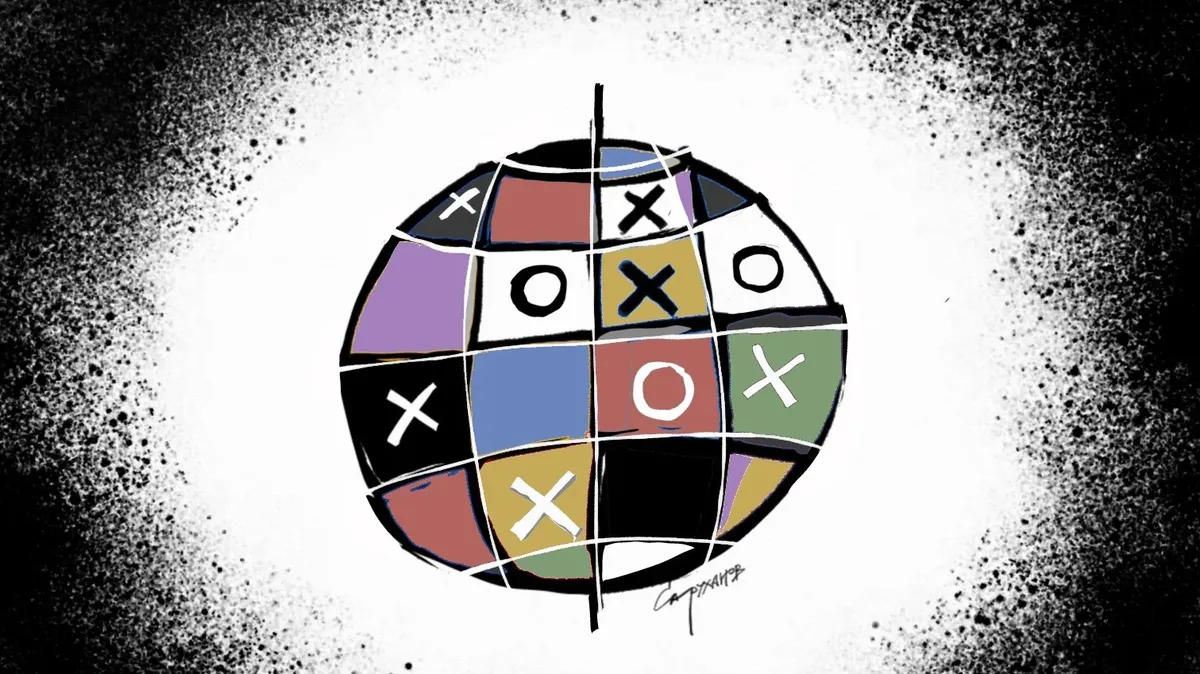
Illustration: Petr Sarukhanov / Novaya Gazeta
What has been happening in the world around us lately most closely resembles gray, viscous jelly with blood gravy. Events on the Ukrainian front have collapsed into the autumn-winter mudslide, Russia is slowly pressing here and there, and the enemy is snarling in response. Everything moves slowly in a macabre, deadly, drawn-out dance: suddenly drones, missiles and arrivals, seemingly on duty, but no less deadly, and then suddenly - massive, multidirectional, cruel and destructive. Everything lives according to some kind of somewhat routine schedule and according to some kind of scary programmed logic.
In both federal and telegram news, reports about frontline advances a kilometer to the right and a hundred meters to the left and about another destroyed house and new lives taken are interspersed with discussions about possible freezes and unfreezes, about options for a truce, for which no one seems to be ready and does not strive, but which everyone else so wants. And also that now everything is suspended in one and a half to two months of all sorts of behind-the-scenes seething, where each side is trying to stake out its position and outline its priorities to the maximum,
and then “Trump will come and restore order,” which everyone, either subconsciously or consciously, is really waiting for. If you look closely, they are waiting almost like Santa Claus.
And then, one day, the speed suddenly switches, the diverse West suddenly gives permission to use weapons that can fly where they could not before, in response, the previously accepted, but shelved until then, new domestic nuclear doctrine is activated, allowing you to shoot anywhere anything nuclear in approximately any case, and then something large and, according to stories and pictures, scary and shining called “Hazel” flies out from somewhere.
All interpreters and commentators, all tapes, broadcasts and interviews are exploding with talk of aggravation and growing tension, and the most used word in the news is “escalation”. The Russian president makes special appearances several times, smiles slyly and in some particularly excited patter talks about a miracle weapon that will now change everything and from which everyone should be terrified.
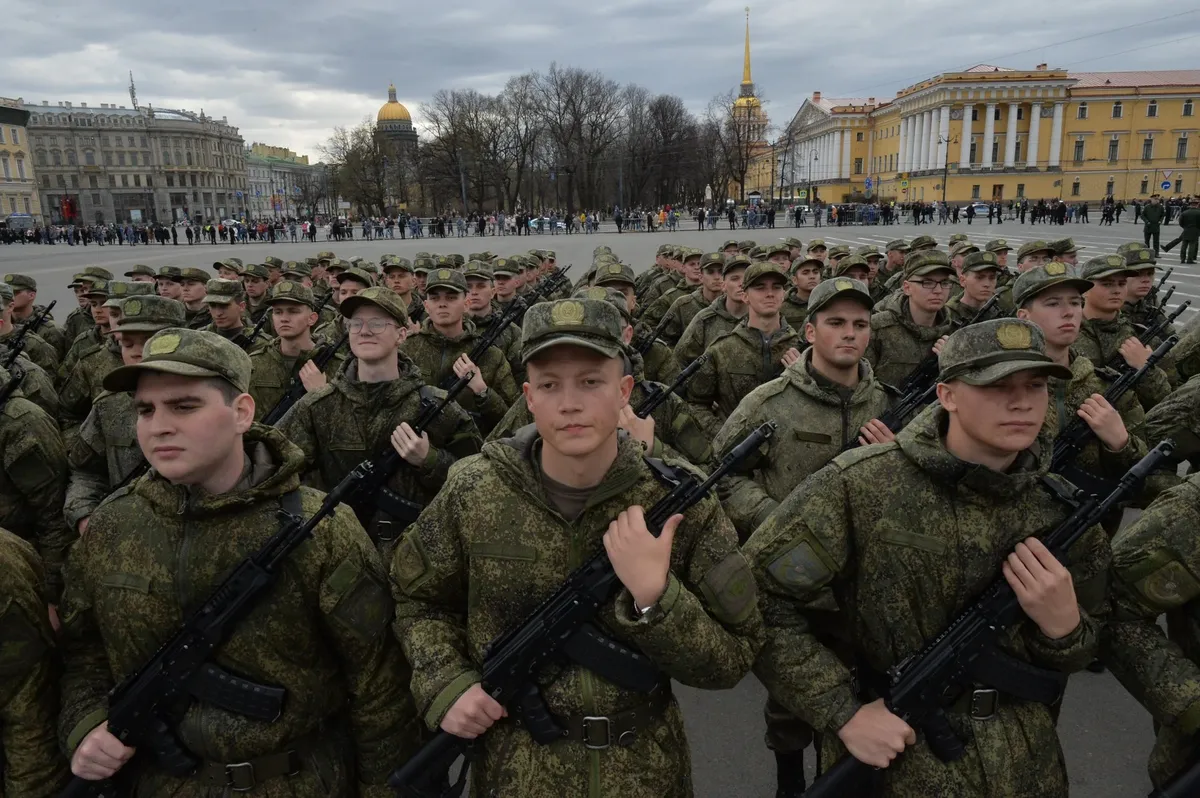
It is not very clear for whom exactly this one-time demonstration was given, given to us in a video with bright lights disintegrating into deadly parts and in stories about speed in swings and about equipment in warheads. But perhaps for everyone.
For the West to hold back its horses in helping Ukraine and in peacekeeping zeal and to tense up, since instead of the prohibited nuclear impact, something that is asymmetrically invented by all official parameters is conventional, but with massive use no less destructive, even if so far only in words.
For the Ukrainians to become even more tense in anticipation of arrivals on the infrastructure and everything around it, so that they do not rush to use the more powerful weapons provided, and in general, so that they are more afraid, although, it would seem, much more.
For the domestic audience , part of which really wants now and permanently to see and feel the strength, thunder and power of Russian weapons, spreading and hitting everything around, as well as for another part of Russians, who, hiding, lives in the hope that all this will end soon, that this terrible stage in the life of the country will pass: this must be shown that it will pass and will not end, that everything is serious and even more serious than that, that if it needs to be proven, then the whole world will be in ruins.
And also for the largest part of the country’s population, which lives as if nothing is happening, which only briefly glances at that part of the news that is about something military, but is mostly immersed in everyday life and ordinary life. For this part, the stories about the mysterious “Hazel Tree” should send a message that, on the one hand, everything is under control and the authorities are vigilant over everything and are fully armed, even if it is called so strangely (no, really, who would have thought of calling a formidable weapon not some kind of oak or teak, but named after a bush with, yes, tasty nuts, but from which mostly only baskets and village fences are woven and chess, pencil cases and pencils grind). And on the other hand, they apparently decided to remind this most numerous, but passive and detached from everything military and political part of society, that in addition to the North Military District, a real war could happen, so that, perhaps, they would not strain themselves unnecessarily, but they would also keep it in mind.
But no one has forgotten and always keeps it in their heads. When our “Laboratory of the Future”, together with the “Levada Center”*, was preparing the next regular survey about what Russians fear about the military at the moment, we spent a long time going through the options: what threat in what part of the world could frighten an ordinary resident of the country. And it turned out that in general, Russians are frightened by the possibility that Russia will be drawn into one or another war of one or another scale, in one or another part of the world. Only seven percent of respondents did not consider this a danger.
Otherwise, Russians fear war in the West, in the East, in the South, and everywhere else. Answering the question of what danger seems to them the greatest today, they clearly set their priorities in ascending order: the possibility of Russia's participation in a war in the East with the participation of China, Korea and other countries - six percent; the possibility of Russia's participation in a war in the Middle East with the participation of Israel, Iran and other countries - seven percent; the possibility of Russia's participation in a war in Europe with the participation of the USA, England, Germany and other countries - twenty-seven percent; the possibility of Russia's participation in a world war that will cover the entire globe is forty-four percent.
Let us leave aside such a striking and telling detail that almost thirty percent of those who answered somehow lost sight of the fact that Russia is already involved in military operations on the territory of, albeit Eastern, Europe, and that the United States is directly related to these military actions. and almost all European countries. Apparently, this part of the respondents is precisely under the magic of the term “NWO”, and represents the war in Europe as something similar to what they read about in history textbooks.
But the most important thing in the answers received is that
three-quarters of those surveyed are afraid of a war between almost everyone and everyone, including Russia itself, and, judging by the answers to subsequent questions, they see it in this action by no means in the last role.
In addition, an interesting detail is that most of all - both a big war in Europe and a global world war - are residents of Moscow and the North-West of the country who have higher education and incomes above average, occupy leadership positions anywhere or study somewhere and mainly using independent media platforms and social networks as a source of information. This is a convenient group for cross-checking because we have it right at hand and we could check the results obtained in the survey with first-hand information.
Indeed, literally as soon as I started talking to several Muscovites invited to coffee - mid-level managers - it started pouring out by itself, as soon as the proposal was made to discuss what was happening and could happen. There were harsh words about that very escalation, about the fact that the worst is ahead, and it is very possible, about the fact that “the game has gone big, and no one will retreat, which means some kind of catharsis is inevitable.”
I had to ask: do they think, do they feel this way because, in general, all this tension and foreboding hangs permanently on the news agenda, or because the “Hazel Tree” suddenly appeared, plus the circumstances accompanying it. The answers indicated both something like doom and some obvious neurosis: our interlocutors believe that everything has gone so far that there are simply no realistic options for someone somewhere to hit the brakes and the escalation to stop would grow. Everyone unanimously confirmed that they hope for this, but assume the most negative scenarios for the development of the situation. Inevitably I had to ask, what would happen next if everything went south, and in response everyone darkened their faces even more, shrugged their shoulders, quickly got ready and ended our meeting, which hinted that nothing good was expected here.
We asked our respondents about the same thing in another part of our large survey, posing the question point blank: if Russia finds itself drawn into some kind of big war, then how will it end. And in response they received both victorious hopes and the same neurosis.
Only one percent of respondents suggested that everything could end in Russia’s defeat; that a big war will drag on for a long time and no one will be able to gain the upper hand in it - nineteen percent; that everything will end in general destruction - twenty-eight percent; that Russia will defeat everyone - forty-two percent, and as many as ten percent found it difficult to answer. In the current circumstances, it is a fairly natural and understandable reaction to not have an answer to such a question.
But in general, in terms of the prospects for a big war, the picture, from the point of view of the Russians, emerges clear: in the first place is a general nightmare and horror (and this is what general destruction looks like, and an endless war, like the monstrous First and Second World Wars), in the second — victory for Russia, no matter over whom or how. It’s not entirely clear here in the “how” part. It can be assumed with a high degree of probability that most of those who chose the option of Russia’s victory had in mind something like “everything will end, and everything will be fine,” but not without, of course, showing off their patriotism, which is also refers to natural reactions to such a question.
As always, there are several interesting details that always appear, and especially when answering such questions charged with possible emotional reactions. Here is the predominance of the expectation of general destruction: among Muscovites - forty-two percent versus twenty-eight in the country as a whole; and just a significantly lower expectation of the same among young students - this option gained only eighteen percent among them; but the option of a protracted endless war without winners was chosen by twenty-eight percent of young people against the total nineteen, and employees think exactly the same. This hardly tells us anything specific, except that apocalyptic sentiments are characteristic of residents of large cities,
and it’s easier for young people to imagine something, albeit scary, but endless, like a TV series, than for adults to take and destroy their present and future with an instant throw from a nuclear sling.
Probably, we had asked these same questions to our respondents three years ago, in early December of twenty-one, when the tension of foreboding hung in the air in the same way, but when the conversation turned to what then seemed like an escalation into direct military action, everyone also became gloomy face, shrugged their shoulders and tried to dodge the discussion - then we would have received completely different answers, with an emphasis on the impossibility of thinking about the possibility of a great world war.
Today, in the gray viscous paste of news and weather this December, neither discussions in chats that were peaceful in the old days about the characteristics of multiple warhead carriers, nor notices on the entrance doors about the nearest bomb shelters, nor the willingness to assume the possibility of a world military confrontation, nor the assumption that in the near future everything will not end, but will develop into something not only monstrous, but also endless.
It is not known what is worse - the fact that the leadership of your country is ready at any moment to raise the stakes in the tension hanging over the world to a hitherto unprecedented level, or the mental readiness of fellow citizens living nearby to try to survive (and even win) in this so possible, with their own point of view, madness.