
Translated material
Tryn-grass and nuclear conflict
Polls by sociologists show that Russians are not particularly afraid of a world war, because they have been convinced that Russia always wins
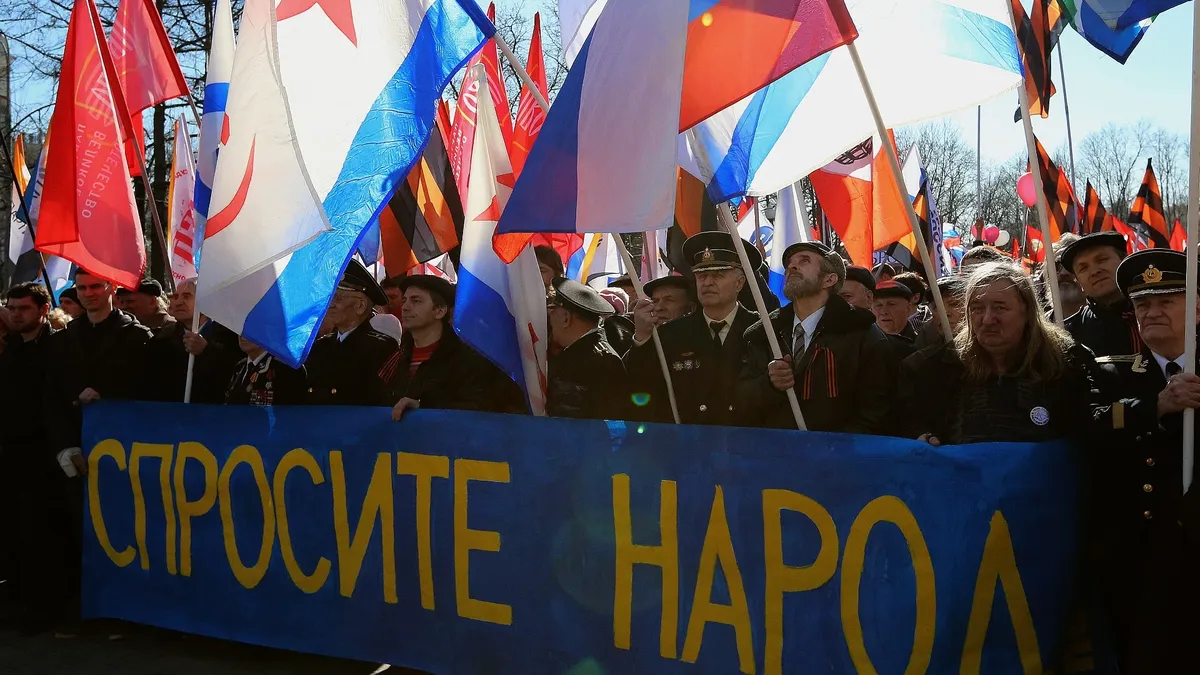
Photo: Sergey Fadeichev / ITAR-TASS
18+. THIS MATERIAL (INFORMATION) WAS PRODUCED, DISTRIBUTED AND/OR DIRECTED BY A FOREIGN AGENT OF THE LEVADA CENTER OR CONCERNING THE ACTIVITIES OF A FOREIGN AGENT OF THE LEVADA CENTER.
The Levada Center*, in a study conducted jointly with Novaya Gazeta’s Future Laboratory, asked Russians two questions about the “big war.” Russians constantly talk about the fear of a “real war”, a “big war”, a “world war”, a “thermonuclear war”. Questions were asked about her.
The first question is about fears regarding the possible involvement of Russia in a big war: WHAT DANGER SEEMS THE GREATEST TO YOU? Respondents were shown a sign on which the following answer options were offered:
SURVEY
There is a danger that Russia will be drawn into a war in Europe with the participation of the USA, Germany, England and others.
There is a danger that Russia will be drawn into a war in the Far East with the participation of China, Korea, etc.
There is a danger that Russia will be drawn into a war in the Middle East with the participation of Iran, Israel, etc.
The danger that Russia will be drawn into a world war that will engulf the entire globe
I don't see such dangers
There was only one answer to choose. The results are as follows.
One tenth of those surveyed were unable or unwilling to give an answer. (This is the usual level of difficulty for questions of this kind.) 7% percent said they did not see such dangers at all. Among the youngest and oldest, this answer was given more often—about one person out of ten. Among people critical of Putin’s performance as president, this answer was heard even more often: about 10% of those surveyed, and the overwhelming majority of them do not approve of his decision to start the SVO. They apparently believe that otherwise Russia has no reason to fight with anyone at all.
Six percent of respondents see the danger that Russia will be drawn into a war in the Far East with the participation of China, Korea, etc. It is characteristic that among those living in the North-Western District, only two people out of a hundred think about the military danger in this remote region, then as in the Far East - eight times more. Perhaps they understand the problems of the region better than in the rest of Russia. For example, how complicated everything is with the islands of the Kuril chain. We cannot give them away - after all, we conquered them. And without this, Japan will not sign a peace treaty.
Their close neighbors are the two Koreas, between which there was a war 70 years ago. The peace treaty has not yet been signed, the DPRK is constantly threatening South Korea and Japan.
Our country’s relations with the DPRK have always been friendly, but now they have become allied. The distant Northeast Military District in Ukraine has become a reality for the Far Easterners as well. From there, they say, they take contracts and transfer parts from there.
Big neighbor - China. Everywhere we call him “a friend of Russia.” But they usually add: “China will be friends with us as long as it benefits it.” We don’t like to talk about the fact that China is the second, if not the first, economy in the world, but we cannot remain silent about the fact that now, after the “turn to the East”, “everything is only Chinese”. Russia's dependence on China is visible in many ways. Meanwhile, China threatens to annex Taiwan by force. Which is fraught with a big war, because the United States is going to intervene to prevent this. In short, the region is complex and explosive, but most Russians don’t think about it.
They think little more about the Middle East than about the Far East. Seven percent of respondents expressed concern that Russia would be drawn into a war in the region involving Iran, Israel, etc. Russia and America are not at war with each other in this region, but support those who are in direct conflict (see. footnote 1).
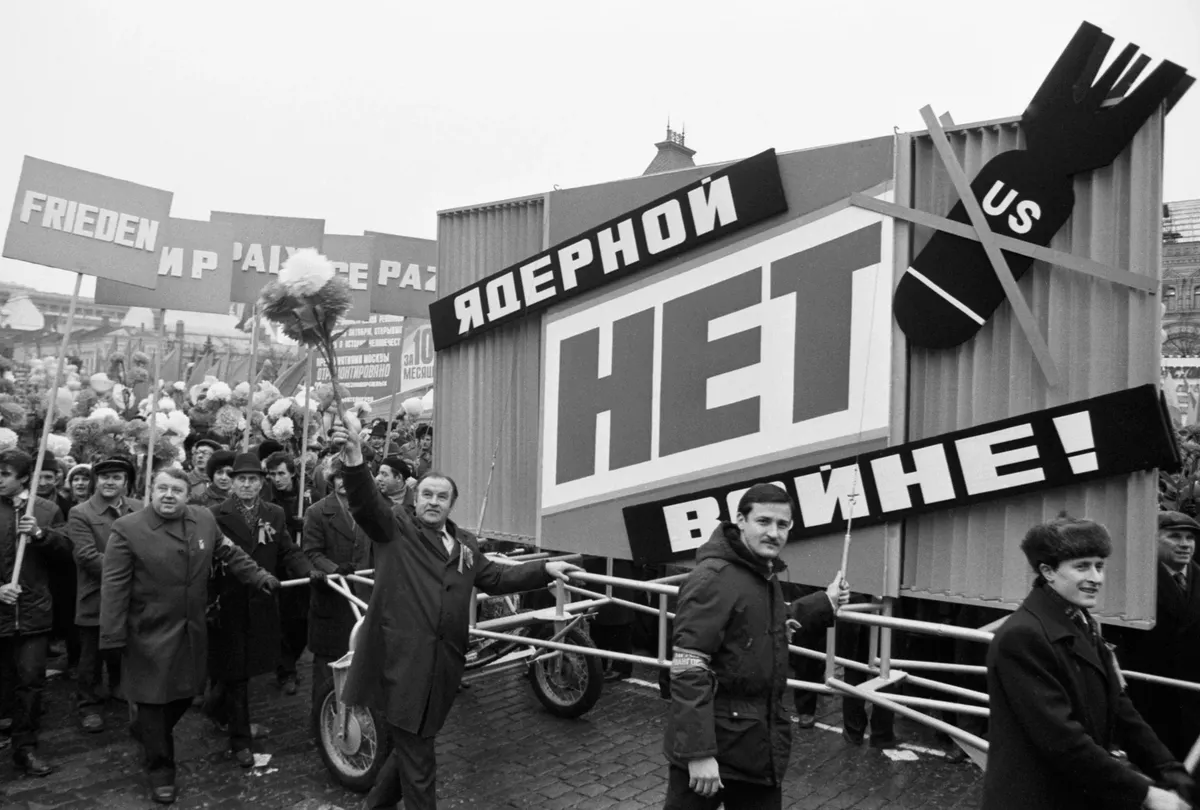
Indeed, Russia has made clear that it sides with Hamas in its conflict with Israel. (True, Russia has not yet broken off visa-free relations with Israel.) Russia is strengthening ties with Iran, which is shelling Israel, which the United States has pledged to protect. The US Navy forces concentrated in the region are ready to strike Iran. The Iranian proxies, the Houthis, have already been attacked by the Americans, the British, and the Israelis. In short, there is enough fire in the region, but for Russians this is something distant.
Much more widespread (27%) was the answer about the danger that Russia will be drawn into a war in Europe with the participation of the United States, Germany, England, etc. It would seem clear: this is the main danger for us. However
While “war in Europe” was considered a danger by just over a quarter of those surveyed, “world war, global war” was considered the main threat by 44%.
Let us think: if all the options proposed in this survey were purely hypothetical, invented by sociologists “out of the blue”, the resulting differences in the frequency of answers would also be understandable: the Far East is far away, the Middle East is also not very close, and Europe is nearby, so the answers about danger There are more wars in Europe. It would also be understandable why there are even more answers about the World War. A war in Europe is terrible, but geographically it is limited to one continent, and a world war, which will cover the entire globe, is therefore more terrible.
But a military confrontation in Europe and with the participation of Russia - unlike the other three - is not an “imaginary” option. It has been going on for three years now and the participation of the USA, Germany and other European countries in it is more than noticeable. Isn't this the most important and real danger?
It turns out no. Why?
Of course, all respondents remember and know about this operation, in which Russia is participating. However, and this has had to be noted more than once, military actions in the form in which they are present in the mass consciousness (and this is precisely what the survey results show) are not war.
Not only does everything not have the scale and significance that is attached to a “real war”, but for the majority - those who are not personally in contact with the North Military District in one way or another - it does not even have the status of reality that a “real war” has. It was not us who came up with the analogy: the attitude towards it is similar to the attitude towards wars in computer games. Therefore, the “game” danger of a world war is, of course, higher than a local war.
And therefore, “danger”, the word with which any of the answer options begins, is not mortal danger.
This is exactly what was asked in the second question: IF RUSSIA FINDS UP INTO A BIG WAR, HOW WILL IT END? Survey participants were offered the following answer options:
SURVEY
Will end in victory for Russia
It will drag on for a long time, no one will be able to gain the upper hand.
Will end in Russia's defeat
Will end in universal destruction
The option of Russia being defeated by the Russians was almost never mentioned when answering interviewers (1%). This, people think, is not only impossible to say, but even to think.
Almost 20% chose the option of a protracted war, and almost 30% among young people. This answer only seems realistic, but in reality it means that the world war is presented as a local, sluggish conflict, only a very large one. History says that this is not how world wars go.
Let us pay special attention to the answer option that states that a “big war” with Russia’s participation will end in “general destruction” (28%). This is the nuclear apocalypse, nuclear winter, the end of human history. Here are the answers of those who took our questions seriously. It’s not for nothing that most of the respondents here are people with higher education, people who are critical.
In short, this answer is the answer of a concerned segment of the population. There are many of them, but still they are in the minority. And the majority gives an answer filled with healthy optimism and joyful patriotism: no matter what war Russia is drawn into, even a global one, it will all end in a “victory for Russia.” Among pensioners and housewives, the share of those who believe in Russia's inevitable victory in the world war is even higher than the share of those who fear a world war.
The instrument for artificially planting such views is television. The survey shows that
Among those who have the greatest confidence in TV, more than half are confident in the “victory of Russia.” This is more than among those focused on any other sources of information.
Why is it necessary to reorient the population away from the previous idea, which is already several decades old, that there will be no winners in such a war? Probably, these settings are convenient for politicians who want to frighten others with a nuclear war, but so that their own people are not afraid of it.
Alexey Levinson, Svetlana Koroleva
footnote
- Let us note in passing that, despite the confrontation between the Russian Federation and the United States, there are similarities in some opinions of their residents. Levada Center and the Chicago Council of Global Affairs asked the same questions to their audiences about the conflict between Israel and Hamas in the fall. It turned out that Hamas’s actions were considered unjustified by 40% in the Russian Federation and 67% in the United States, and much less justified - 18% in the Russian Federation and 3% in the United States. At the same time, in Russia 57%, and in the United States 56% do not take any side in the conflict.