
Translated material
France in political crisis: vote of no confidence sends Barnier's government to resign
What will happen next to Macron and who could become the new prime minister
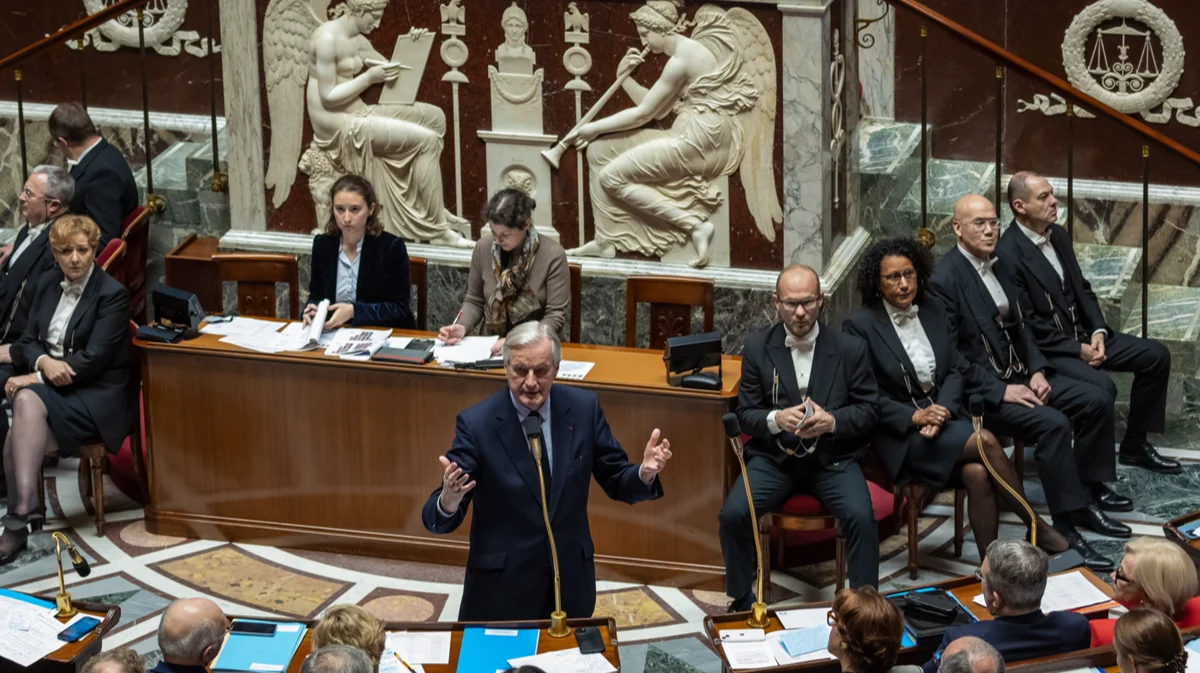
French Prime Minister Michel Barnier during the weekly question session for the government at the National Assembly, Paris, France, December 3, 2024. Photo: Christophe Petit Tesson / EPA-EFE
The French National Assembly dismissed the government for the first time in 60 years through a vote of no confidence. The reason was the controversy surrounding the budget, which was not liked by both far-left and far-right deputies. Now President Emmanuel Macron will have to appoint a new prime minister to replace Michel Barnier, who served for only three months.
“New Europe”, together with political commentator Sergei Mikhailov, tells what is happening in France.
Vote of no confidence
On December 4, the French National Assembly supported a vote of no confidence in the government of Prime Minister Michel Barnier, which automatically leads to his resignation. The issue was put to a vote by deputies of the left-wing coalition “New Popular Front” and representatives of the right-wing party “National Rally”. To make the decision, 289 votes were required, and 331 deputies supported it.
Barnier, 73, became France's shortest-serving prime minister, serving for just three months. He and his cabinet are expected to serve until a new prime minister is appointed. President Emmanuel Macron could spend up to 50 days on this process, as he did after the July elections.
This is the first time in more than 60 years that the French government has resigned following a parliamentary vote of no confidence. The last time this happened was in 1962, when the cabinet of Georges Pompidou was dismissed. At the same time, the vote itself on the issue of confidence in the government has taken place more than 130 times since 1958.
Reasons
Barnier's government tried to pass a social security budget bill using Article 49.3 of the Constitution. It allows laws to be passed bypassing parliament if the government survives a vote of no confidence. However, the prime minister's actions caused discontent among both the far left and the far right, which led to a unification of their votes against the government.
Initially, Barnier tried to come to an agreement with the parliamentary parties: he proposed compromises on issues of spending and taxes, counting on the support of the majority of deputies when voting for the budget. However, he was unable to get the required number of votes.
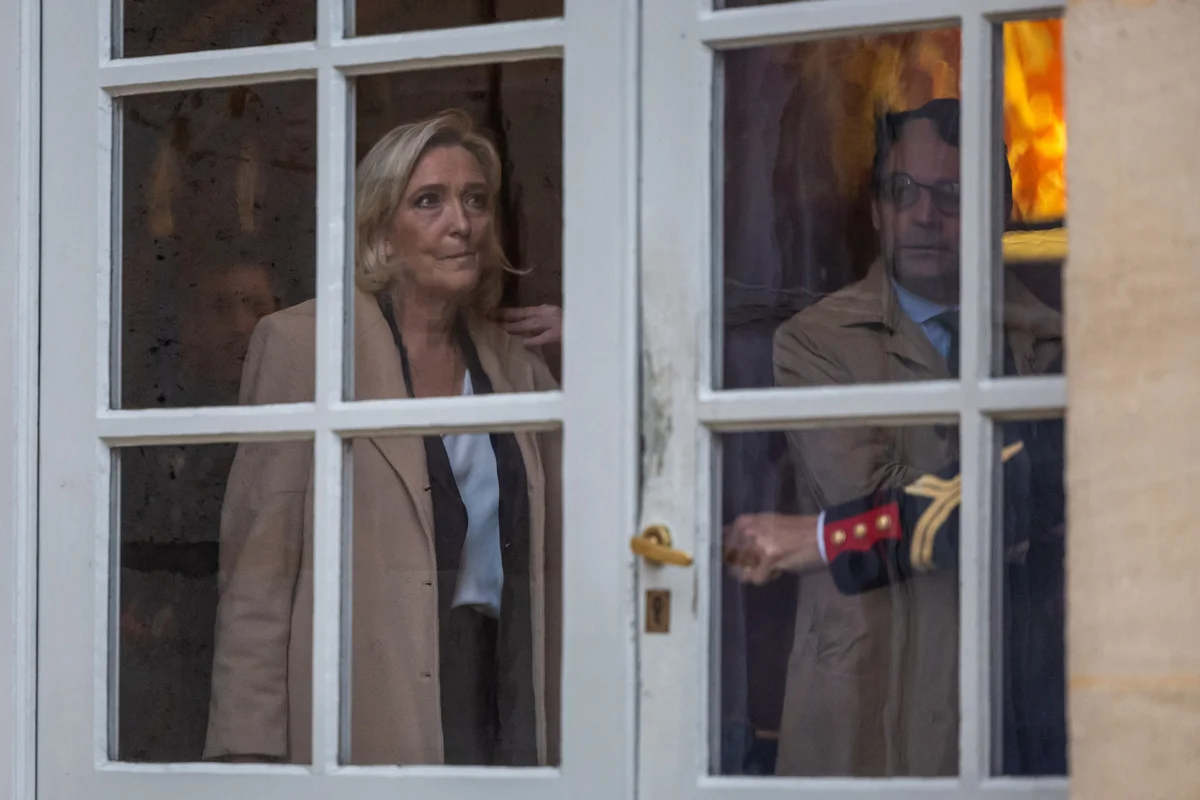
At the same time, the crisis in the country began after the summer elections, when three blocs were formed in the National Assembly, which “are unable to agree on anything among themselves, do not like each other very much, and at the same time no one has a majority in order to form a government " After this, Macron decided to appoint Barnier as a representative of the center-right party, hoping that he could rely on their support and form a majority. In this picture, the voices of Marine Le Pen's far-right National Rally party would be neutral and would not prevent the government from acting.
“At first it was like that, when the first vote of no confidence passed. But then Le Pen began a trial, as a result of which she could lose the right to stand as a candidate in elections; the court decision will be in March. Apparently, now she will force events in order to achieve early presidential elections. Or maybe she was just very offended by everyone in the world,” suggests political observer Sergei Mikhailov.
The EU believes that Le Pen and her colleagues used European Parliament funds for fictitious assistants who were involved in personal matters: for example, a politician’s bodyguard was registered as a parliament employee. The investigation involves 24 deputies accused of embezzlement of 6.8 million euros. In case of a guilty verdict, Le Pen and her colleagues could receive fines of up to 1 million euros, suspended or real prison terms.
As for the French budget itself, which has caused so much controversy, Mikhailov calls it simply “unsuccessful.” At the same time, according to him, it is difficult to imagine who would have done it better under such conditions. In the left bloc, deputies immediately said that they would vote for a vote of no confidence always and in all circumstances. Both they and the far right initially went to the elections with rejection of Macron’s policies:
“They were in radical opposition to everything Macron does. Now it’s quite difficult for them to explain to voters why they will support Macron’s government.
In addition, according to Mikhailov, France has a huge budget deficit this year, almost 6%. Barnier planned to get an additional 60 billion dollars in the following way: 40 billion from savings and 20 billion from additional income.
“Naturally, no one likes either savings or taxes. There was bargaining with Le Pen on these points. Barnier conceded. Indeed, the situation is very difficult. But if they wish, opposition parties can find any number of shortcomings in the budget. The left will say that we should raise taxes on the rich, not cut social benefits. And the right will say that it’s the other way around,” the expert emphasizes.
As a result, Le Pen called the government’s proposed budget “bad, unfair and cruel.” The head of the leftist party “Unbowed France” Jean-Luc Mélenchon said that the government had lost democratic legitimacy. Barnier himself believes that his resignation will not solve the country's financial problems. He emphasized that the measures taken were difficult but necessary.
What's next?
French President Emmanuel Macron promised to promptly appoint a new head of government. He definitely has several candidates in stock: Barnier’s rivals in the fight for the position of prime minister in August-September 2024.
“Macron thought for a very long time when choosing Barnier as a candidate. Many names appeared, some were immediately rejected by Marine Le Pen. Barnier’s candidacy appeared as a compromise between Macron and his bloc, within which there is also no unity, and the National Rally. Most likely, the same candidates will appear now,” explains Mikhailov.
He assumes that the names of Defense Minister Sebastian Lecornu and ex-presidential candidate Francois Bayrou will be heard. Moreover, the latter is closer to the left than Lecornu, who comes from the Republican Party. According to Mikhailov, the problem with the current casting is that Macron cannot go far from his close circle when choosing. He must, according to his own ideas, choose a prime minister who will not question the results of the president’s activities, in particular, the pension reform.
“The left bloc is temporarily demanding the abolition of raising the retirement age, and Marine Le Pen too. Therefore, some candidate will again appear, somewhat similar to Barnier, who will also have to negotiate again with Le Pen. A series of resignations is also possible until July, when a new dissolution of the National Assembly will take place with new elections. Until July, apparently, France will have to live in a situation of very great uncertainty,” the political observer suggests.
It is very difficult to imagine exactly how events will develop. Voters will probably not like the way the deputies behave. Mikhailov believes that the vote of no confidence and other decisions of deputies are reminiscent of the Fourth Republic ( the period of French history from 1946 to 1958 - Ed. ), “when everyone fought for their party interests, and as a result the country plunged into crisis.”
He suggests that some political forces may have the idea of being more responsible. For example, the idea of signing a non-consent agreement for a vote of no confidence is already being discussed on the sidelines. In this regard, those deputies who, despite disagreements among themselves, gravitate towards moderate positions, will be able to agree to this.
As for the lives of French citizens, they will be able to find their pros and cons here. If the new budget is not agreed upon, then the document of the previous year will be taken for granted - “without the amendments that were provided for the 2025 budget”:
— There will be no new taxes, but there will be no indexation of the tax threshold in accordance with the level of inflation. This happens every year; French people earning below a certain threshold do not pay income tax. Since it will remain the same until 2024, there will be some French people who will fall under the tax threshold this time.
At the same time, Macron himself, unlike the prime minister and deputies, need not worry about his post. Despite Mélenchon and Le Pen calling for his resignation and early elections, the president has no intention of leaving. The head of state himself said that he plans to remain in office until the end of his term in 2027.
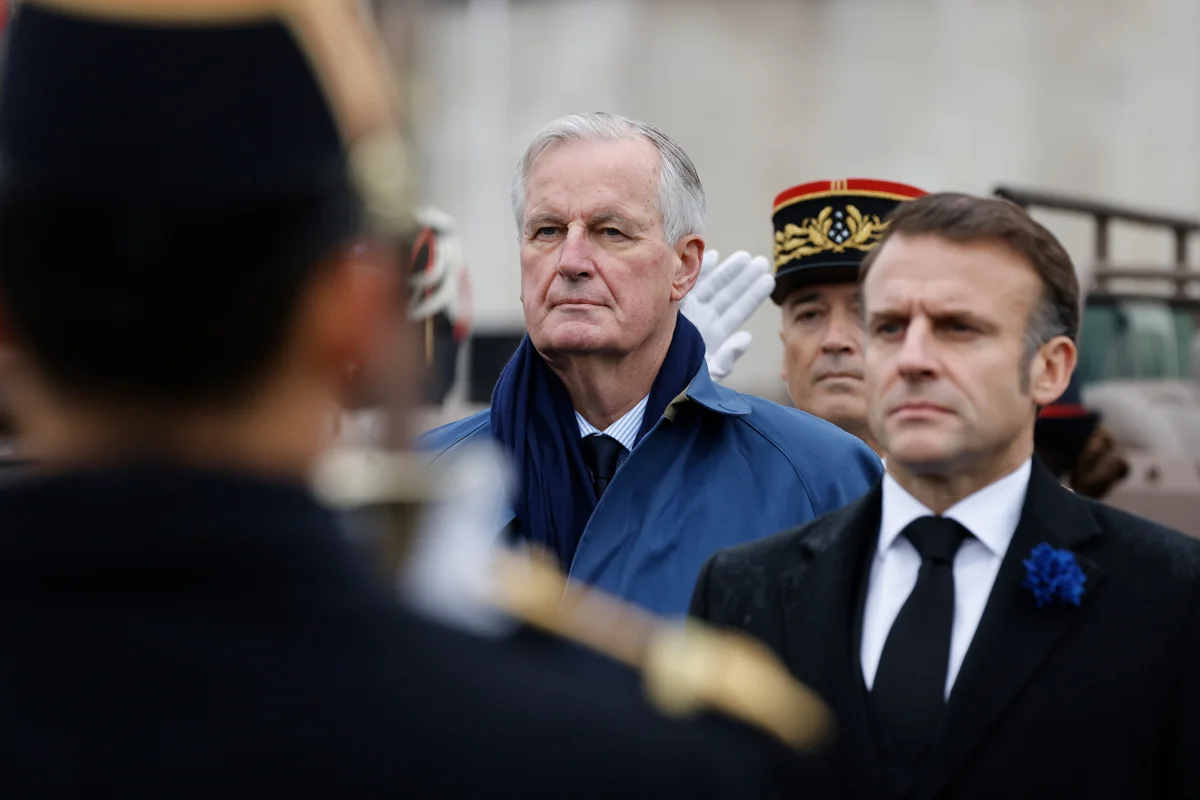
“There has been an acute crisis for almost six months. In addition, Macron did not have an absolute majority in the National Assembly after the 2022 elections. It is very difficult for him to be involved in domestic politics. His own rating is around 20% now, very low. Therefore, Macron will try to maneuver; He has few resources for this, but he will probably hold out until 2027 and the next elections,” Mikhailov believes.
If Macron remains in office, then the foreign policy course that the president is shaping, including support for Ukraine, will not be threatened, the interlocutor of “New Europe” emphasizes. At the same time, France's position in Europe is weakening, and its influence on the situation will not be as significant as it could be.