Translated material
"Bet on the less dangerous son of a bitch"
Whose side should we take in Syria—dictator Assad or the jihadist rebels? Discussing with Israeli analyst Dmitry Dubov
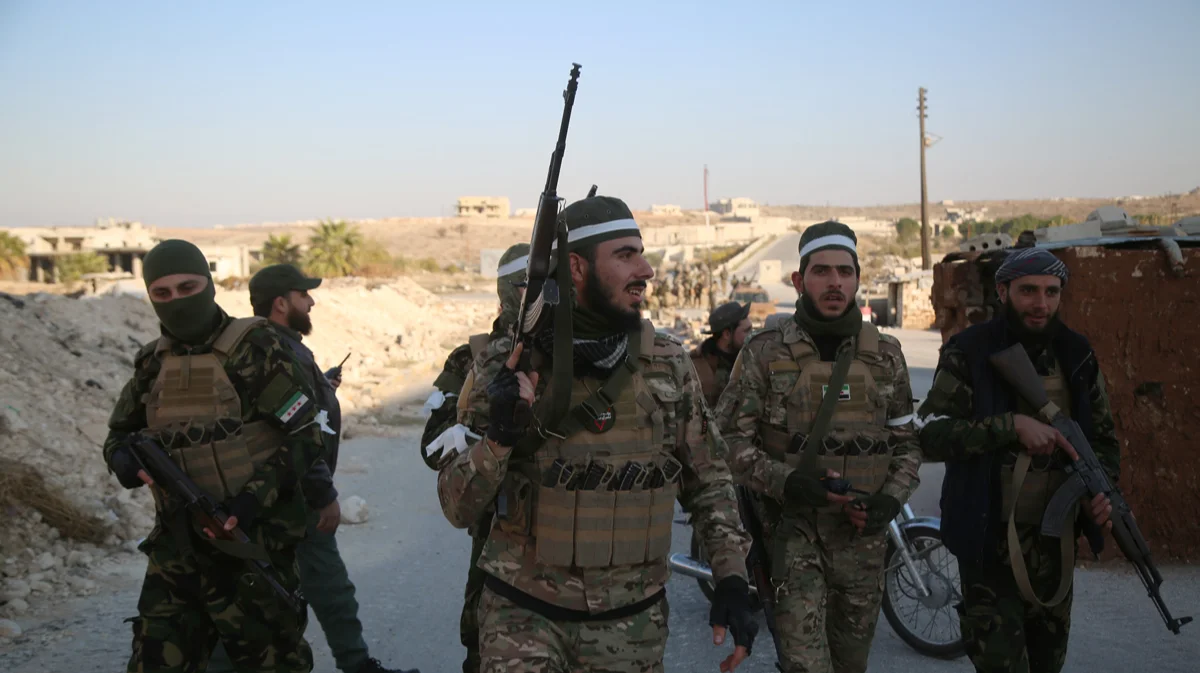
Militants patrol the streets after taking control of the city of Maarat al-Numan, Syria, November 30, 2024. Photo: Bilal Al Hammoud / EPA-EFE
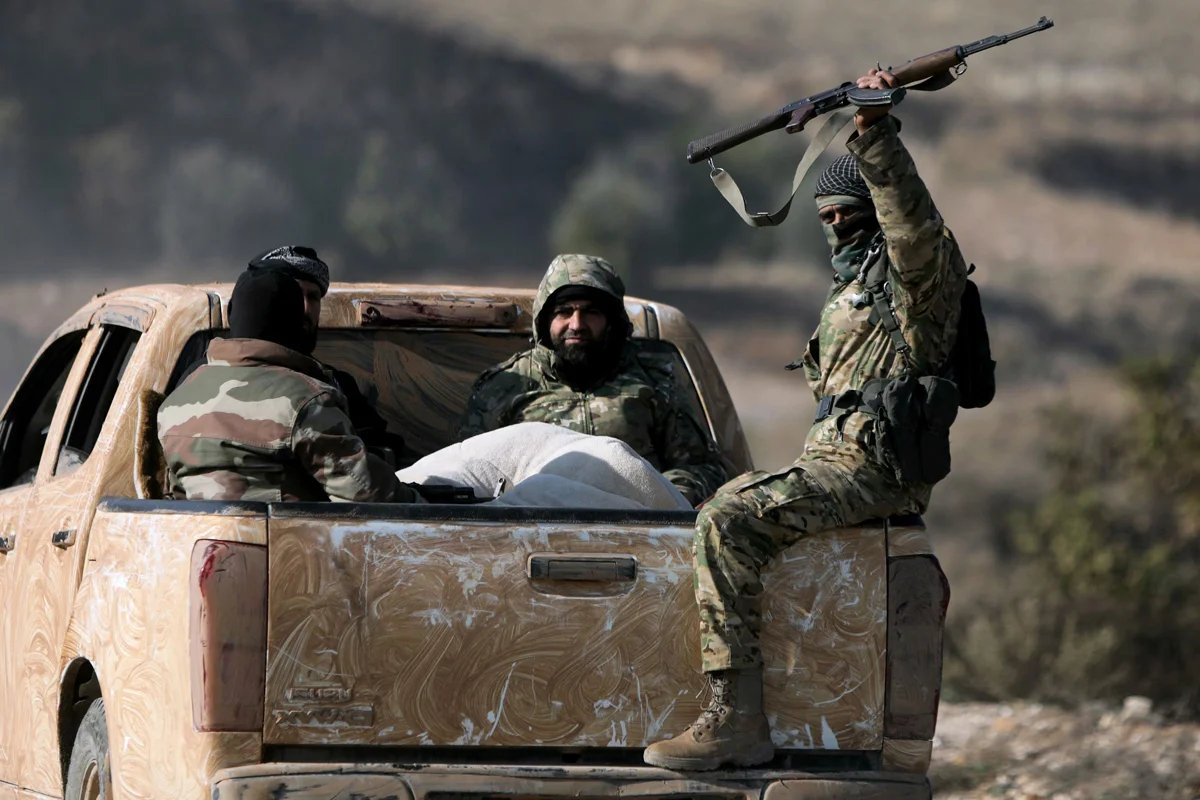
In Syria, militants of the Hayat Tahrir al-Sham group, with support from Turkey, occupied the provinces of Idlib and Aleppo and reached Hama, a city halfway to Damascus. They are sometimes called rebels, sometimes the opposition, but in fact they are the remnants of al-Qaeda and Jabhat al-Nusra, which once broke away from it - terrorists from terrorists. They are opposed by a few forces controlled by President Bashar al-Assad. They were aided by Hezbollah and Russia during the civil war that began in 2011, but both now have their own problems. Information has emerged that the Russian fleet is hastily leaving Syria, and Assad himself has even more hastily flown to Moscow with his family. Either ask for help, or for permanent residence. This is officially denied in Russia; New Europe sources also consider this unlikely. What could be the situation in Syria now and what will it affect? - says Israeli journalist and military analyst Dmitry Dubov.
— Dmitry, is it possible to already talk about overthrowing the regime of Bashar al-Assad?
“I think it’s too early to talk about this.” That is, it is clear that the pace of the rebels’ advance is impressive, but Assad was already in such a situation during the civil war in Syria, he came to Moscow, and then they also said that the history of his regime was over. But then he managed to consolidate his forces and repel the rebel advance. I think he probably expects to do this now.
Indeed, Assad was taken by surprise against the backdrop of events in the region, against the backdrop of Israel’s war in Lebanon, against the backdrop of Hezbollah, which was greatly weakened after this war. And no one could have expected something like this to happen. In this sense, Erdogan, of course, took advantage of the situation very well. And the pace of the rebel advance, as I said, is impressive. But Assad is not a person who will easily give up power. He is, of course, not a fanatic; he will not sit in a besieged palace while Islamist militants storm it. But he won’t give up everything at the moment while the situation can still be saved. There are a lot of rumors: that he himself ran away, and that he sent his family away. He may have sent his family, that’s logical. But it seems to me that this story is still far from over.
- If not in 2011, then certainly since 2015, Assad had an assistant - Russia. Now he is virtually deprived of such help.
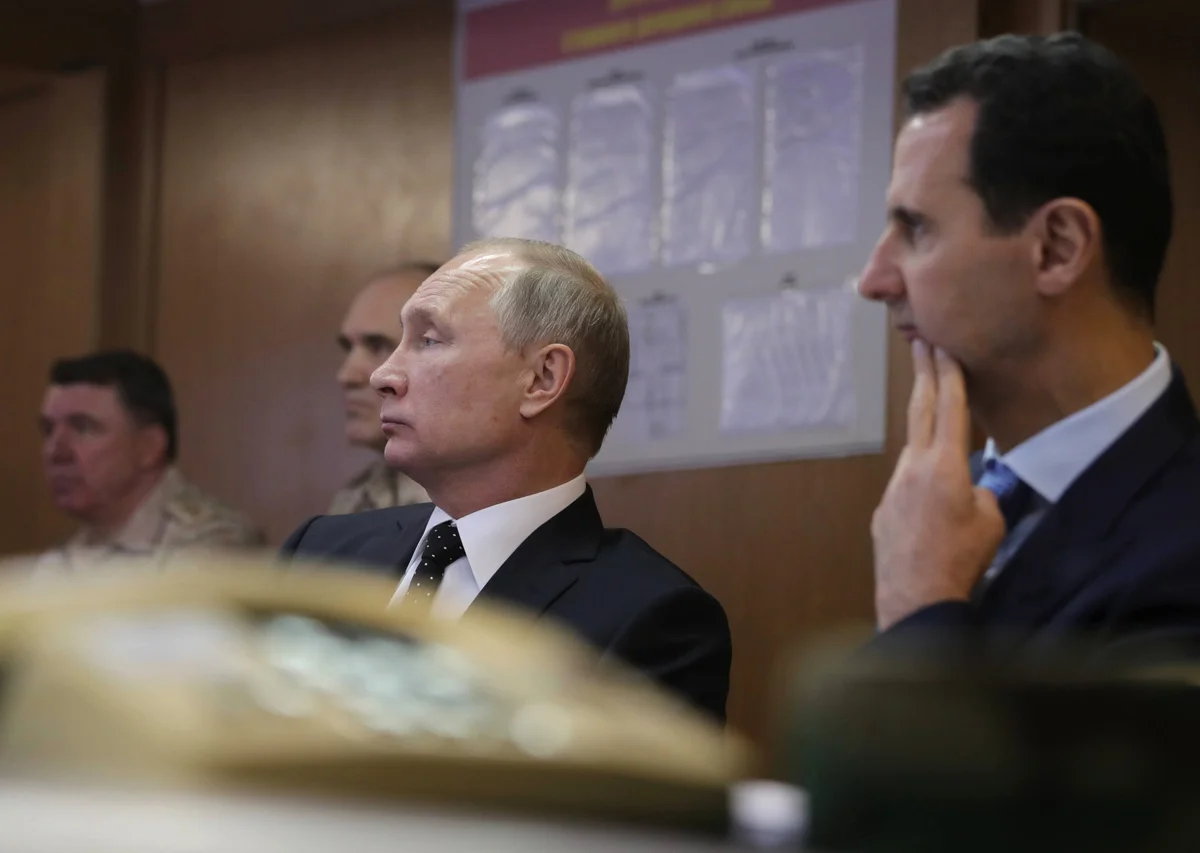
— Russia’s help was indeed a very strong factor. Essentially, Assad sold away most of Syria's independence in exchange for Russian support. He is still counting on Russia’s support, but the question here is probably for Vladimir Putin to what extent he is able to provide such support.
- The feeling is that it’s not very good.
- This is a dilemma. And it must be considered together with all the pros and cons that Assad is now weighing. But the Syrian army still exists, and it has some aircraft. The Russian presence in Syria has not yet been curtailed. And if the rebels really approach the Khmeimim airbase, for example, and the naval base in Tartus, which remain with Russia, then Putin will not just hand over his assets in Syria, despite the situation in Ukraine. Moreover, Putin’s situation is now, unfortunately, improving.
It seems to me that if Assad is counting on something, it is Putin’s imperialism. Syria is important enough for Putin not to give up his position there. But staying in Syria if the regime is headed not by Assad, his loyal vassal, but by some poorly calculated and reckless thug Erdogan, is a completely different situation. It seems to me that at some stage, based on this, Russia should still help Syria.
— After 2015, Assad showed himself not as a “loyal vassal” of Putin, but as an ungrateful person. He spoke out quite brazenly towards Russia.
- I don’t agree with you. Here in the Middle East, everyone loves duality. When an Arab politician says some words, they can sound as beautiful or harsh, belligerent, whatever you want. But behind any words there is always a plurality of meanings. On the contrary, it may be a veiled request for support. This whole oriental style allows you to say one thing and do another. We in Israel see this all the time, when Jordan, for example, allows itself more than harsh rhetoric, but everyone understands that the words are spoken so that the Jordanian street can hear them.
As for Syria, there is a “war of the toad and the viper.” There are no good options here. But there is an important point: any kind of stability and calculability of the Assad regime against the background of jihadists and Erdogan is an advantage. I myself don’t believe that I’m saying this now, because we understand perfectly well that Assad himself is a threat. Not so much Assad, but Iran, Hezbollah, Russia behind him - this whole “salad”. But this situation is stable and calculable.
And if jihadists come to power in Syria, nothing can be calculated. This is understood both here in Israel and in Moscow.
— You uttered the word “rebels” a couple of times in relation to the advancing forces in Syria, and this is a rather positive description. But at the same time you immediately call them jihadists. Who are these people for you?
— Cross out what I said about “rebels.” Of course, this is a bunch of terrorists. These are people who were in the terrorist group Jabhat al-Nusra.
- Which at one time broke away from Al-Qaeda.
- That's right. It was the Syrian branch of al-Qaeda. A rabble who came from nowhere enters there, they were scraped together from al-Qaeda, ISIS and all that. The very name of the group “Hayat Tahrir al-Sham” translates as “Movement for the Liberation of the Levant,” that is, not only Syria.
— Actually, Sham, or the Levant, is Syria plus Lebanon, and at the same time Jordan, and Egypt, and, for a moment, Israel.
— That is, the very name of the movement contains the intention to carry out a liberation campaign far beyond the borders of Syria. And we are seeing these jihadists tearing down more than just Syrian flags. They, of course, say that the campaign against Jerusalem is not going through Syria, but I have a question: then through what? I don’t have the feeling that they are going to limit themselves to Syria alone.
Another important aspect is that Assad may well still have remnants of strategic and even chemical weapons. And here I return again to the question of the calculation of those who will be in power in Syria. We know that in our region there are players who possess “semi-conventional” weapons, in particular chemical weapons, but there are certain “red lines” that prevent these weapons from being used. This is the same calculation. But here the characters are completely disconnected, they simply don’t have any “red lines”. And this is the danger.
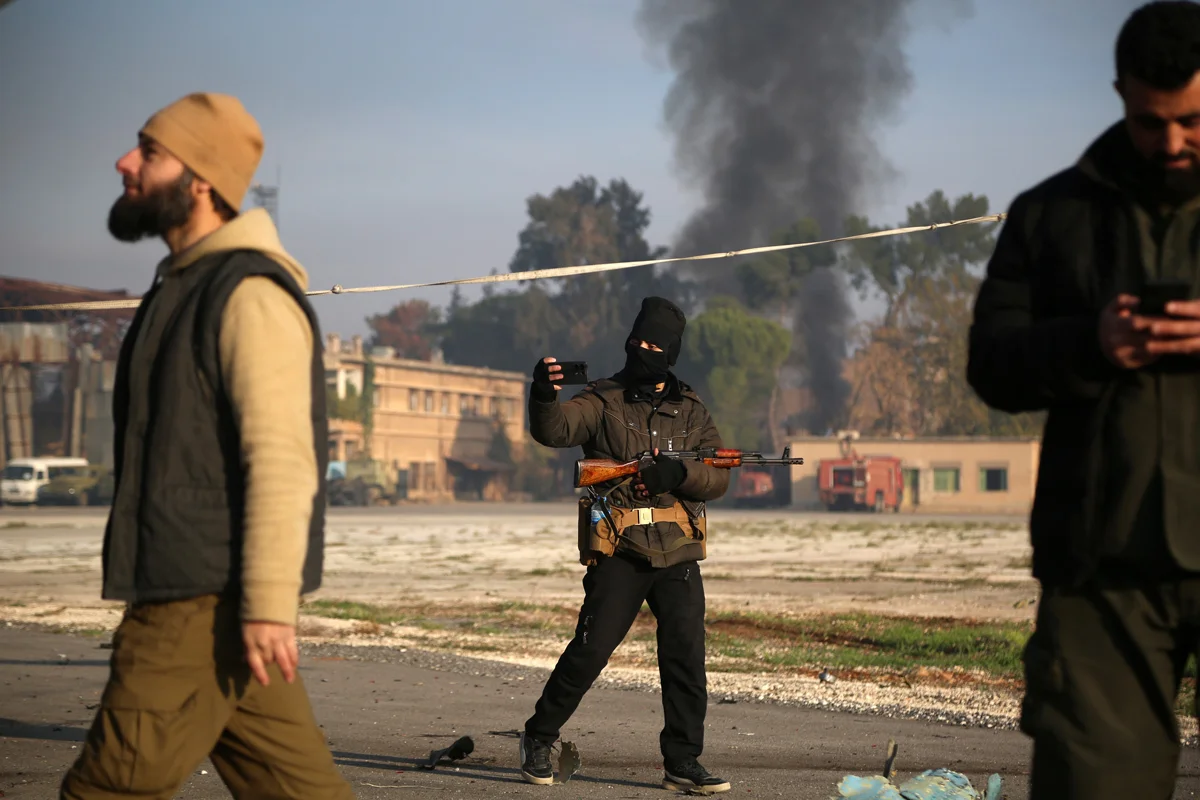
“There was information that jihadists had already seized factories in Syria where chemical weapons were produced.
— There is a lot of information noise and fog here. But I can assure you that the moment such information is confirmed...
-...Israeli intelligence will react?
- Not only. There will be complete synchronization of the actions of Israel and America. These are truly objects of increased attention. At one time, the Liechtenstein Air Force, as we say, according to foreign media reports, already bombed a nuclear reactor in Syria. And I am one hundred percent sure that in such a scenario they will appear there again.
—Whose side will these forces be on? And in general, which of the world players is on whose side in this “toad-viper” conflict? It turns out that Russia, which supports Assad, is on the side of good?
“The fact of the matter is that we very easily fall into this trap of dichotomy. For some reason, we still divide the world into black and white, evil and good. And here different forces are intertwined into a ball, they sting each other, bite each other, but they are equally “evil”. And Russia here is on the side of its own interests.
- One way or another, either one side or the other will win. And the remaining players can support either one side or the other. The situation is similar to what happened, say, in Libya, where there was a terrible dictator on one side and Islamist thugs on the other. Who should still be supported in Syria?
- There is a third option. Countries located on the perimeter of Syria and concerned about their security can simply kill everyone.
“Then this is even more the case for Libya, which has turned into a bloody mess because the government has been torn apart by variegated tribes.”
“And this is the problem that now needs to be solved: what to do about it.” If you are asking me, I am an Israeli, so I can answer only one thing for sure: Israel is looking at these showdowns from its bell tower. We ask ourselves the main question: which of these players poses the greatest threat to us? With whom can we exist within the framework of some established rules, and who is simply unpredictable? If we, roughly speaking, destroy the jihadists, this does not mean that we are helping Assad. We defend our own interests.
If Assad crosses the “red line,” we will kill him with the same determination with which we can fight against the jihadists, if it comes to that. That is, there is no clear occupied side.
By the way, the timing for this offensive was very well chosen. In the United States, power is actually in a state of transit. Biden, if we take his entire four-year tenure, showed himself rather weakly in the Middle East; just remember how the United States left Afghanistan. It’s not the fact that they left there, but precisely how they did it. In general, in the Middle East they really don’t like the weak. And even if it is a strong America that has shown weakness, it will be taken advantage of. Let me remind you of the story of the Iranian revolution of 1979, when Americans were taken hostage. Iran still remembers this as their great victory.
- I'll ask differently. Can global players, the US, Israel, Russia and others stand together on Assad's side against the jihadists? Can Assad expect consolidated support?
- I think not. Such a union is impossible. This is another Krylov fable: a swan, a crayfish and a pike will pull the cart in different directions. Everyone will act in their own interests. But it is possible that interests will coincide.
“That’s what I’m asking.” It is not necessary for everyone to act together; it is enough if the efforts are directed in one direction?
— Interests may coincide, but this consideration is also somewhat strained.
- Why?
— Because we must first figure out who has what interests. Israel's interest is clear: we need predictability. Ideally, we would like our neighbors to have democracy, but we understand the region in which we live. Therefore, we initially tend to bet on people who understand the situation and follow the established rules. It's still an enemy, but easier to fight. When the enemy is unpredictable, we don't know what to do. They can smoke a hookah and attack Israel simply because they are jihadists and they want to die. This means for us constant combat readiness at the level of ten out of ten. And this is bad, it is a constant stress on the entire system.
Russia's interest is to demonstrate its presence. Why? You should ask Putin about this. The interest of the United States is for everything to be quiet, because why do they need war when they can do business, especially under Trump. And if this requires eliminating the entire unpleasant history with the jihadists, everyone will act as they see fit based on their own paradigm.
— To what extent are these “rebels” jihadists? The Hayat Tahrir al-Sham movement declares that they want to carry out Syrianization, they are creating civil administrations, and claim that they are committed to cooperation with humanitarian organizations. Maybe they have been civilized for a long time, but out of inertia they continue to be called terrorists?
“I don’t believe in the cultivation of terror, and this is certainly terror.” A person who wears ISIS or Al-Qaeda stripes cannot a priori be cultural. I think this is just an attempt to pose as a more or less sane force. But I was in the Gaza Strip when Jewish settlements were being withdrawn from there, and I can speak based on this experience. When Hamas came there, it also talked about itself as a civil force, and, by the way, the majority of Palestinians voted for it in the elections.
“And Hamas also proclaimed a lot of humanitarian and social initiatives.
- And what happened then? Then Fatah members in Gaza were thrown alive, blindfolded, from high-rise buildings. And a total Islamist regime was established there with the complete enslavement of people. It's one big prison because Hamas has turned it into their prison. So there are no and never are “good terrorists.” And all the promises of these people to establish a civil administration, carry out humanitarian projects, cooperate - this is all a piece of paper, it will last at best for several weeks or months. Ultimately, they all return to their base - Islamist terror.
If we talk about Syrianization, then let’s remember that the Assad regime is Alawites, and they rule the Sunni majority in Syria.
The regime of total Islam in Syria will more closely resemble Afghanistan under the Taliban than Saudi Arabia under Mohammed bin Salman.
— The same thing happened with Hezbollah, which started with social projects.
“And the Yemeni Houthis started with education and humanitarian activities. All of them very quickly slide into military models and become an army. So you shouldn’t expect anything good or even pragmatic there.
— What’s next for Bashar al-Assad, what are your predictions?
— Good question... Stability largely depends on the fate of Assad. That is, the fate of Assad and stability in Syria in this case, to my regret, are synonymous. A lot will depend on his ability to finally repel the jihadists. Well, since he cannot do this on his own, he counts on help.
The Saudi press wrote about some incredibly fantastic story: as if Assad, in desperation, through Jordan, requested Israeli help, promising in response to remove the influence of Iran. I don’t believe it one bit, although it certainly sounds beautiful. Perhaps the information appeared to illustrate the degree of despair of Assad, who does not know who to turn to today. All of his main allies and partners are now very battered. Hezbollah was the same military force that once defended Assad, but then it was gaining military experience, and now it is busy with something else.
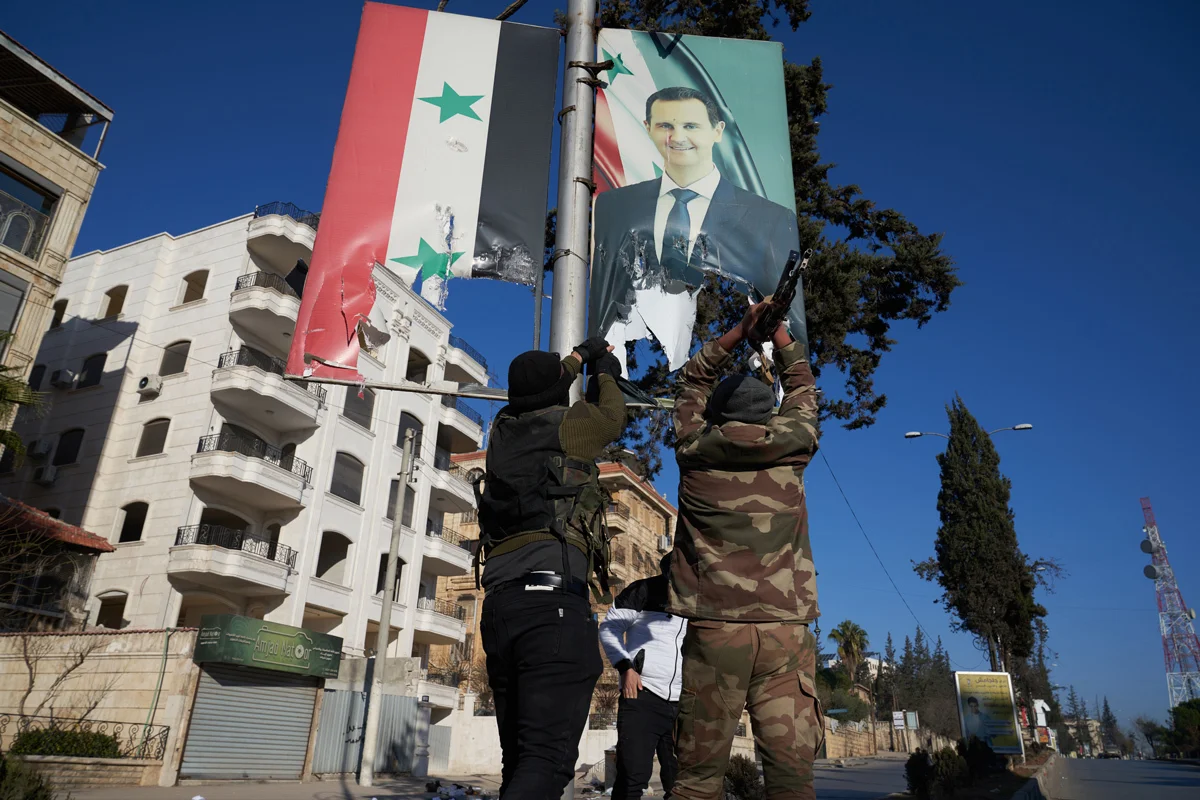
“And there’s not much left of her.”
— I wouldn’t say so, but, of course, there is less left than there was before the attack on Israel. Precisely from the point of view of military potential. It is the world's largest non-governmental army, but today only about half of it remains. In this sense, Assad is in an even more difficult situation than in 2011. But I can’t predict what will happen to him, I don’t know how to predict the future. I can only say that his choice is simple: either fight, and the outcome of the battle should be determined relatively soon, or really pack his things for Moscow.
— The American Air Force bombed Deir ez-Zor, and this area was still considered a zone of influence of the “Syrian opposition.” Does this mean that the US has already acted against the “rebels”?
“We cannot now draw any clear conclusions based on what is happening. This is a very heavily mixed “salad”. Based on the strategic vision, I am inclined to believe that the United States, Israel and Russia, each defending its own interests, may situationally find themselves on the same side of the barricades, but this is very conditional. They will not have a common goal. Another thing is that the actions will apparently be directed against jihadists. In any case, this assumption is logical.
Although there is also a question here. When an Iranian convoy going to the aid of Assad is bombed, what is it? It would be logical to assume: go and fight the jihadists, and then we’ll see. But this convoy is also perceived as a threat, because no one wants Iran’s influence to spread. After all, this is a golden opportunity for Iran to recover from the fiasco in Israel and extend its influence to Syria. Then the Islamic Revolutionary Guard Corps will appear on our borders. This is a very bad scenario. Therefore, bombing of Iraqi and Shiite militias that are sent to help Assad is possible. This just seems illogical, but here everything is not simple, ordinary logical circuits do not always work.
— There are several examples similar to Syria in the Middle East. For example, Egypt, where the United States, guided by the idea of supporting democracy, sided with the Muslim Brotherhood. Or Iraq and Libya: helping to overthrow a terrible but secular regime, the United States ended up on the side of the Islamists. Why did the West constantly make this choice?
— Because the pendulum of American history, as Schlesinger wrote, swings from messianic presidents to pragmatic presidents and even isolationists. As for the Middle East policy of President Barack Obama or President Joe Biden, I think it has been a complete fiasco. It is impossible to try Western-style democracy on the situation, for example, in Egypt. If we strive for democracy today, for example, in Jordan, we will lead this country to total chaos, to the collapse of the entire system of this very fragile state.
Not all values work the same in the East and in the West. Support in Egypt for President Mohamed Morsi, Libya with its oil potential - this was a complete fiasco for Obama, who, when taking such a step, remained captive of his own patterns and illusions, but did not calculate the situation. Yes, indeed, the Hosni Mubarak regime was corrupt. Yes, indeed, the “Egyptian street” was dissatisfied with him. And Palestinians once told me that at one time they voted not so much for Hamas as against the corrupt regime.
In the Middle East, people very often follow the lead of populists, who, as a rule, also have radical religious overtones. Simply because they promise a better life. This is exactly what happened in Egypt.
If we talk about Iraq, this is also a US fiasco. Because as a result, the Shiization of Iraq and the spread of Iranian influence to a country that was once at war with Iran became possible. Iraq after Saddam Hussein is, of course, a zone of direct interests of Iran. Reuters reported that over the past year, Shiite militias in Iraq and Iran have earned about a billion dollars from illegal fuel oil exports. With the connivance of the Iraqi Prime Minister, who is considered a man of Iranian influence.
That is, we understand that there are two evils here. On the one hand, these are Islamists who oppose the regime, and therefore seem to reflect the will of the people. In fact, they reflect not the will of the people, but their frustration. On the other hand, these are either corrupt regimes or the same Iran, which has so far been spreading influence in the Middle East at a gigantic pace.
There is no good choice here, so everyone has to think based only on their own interests and decide who is better - the Islamist Morsi or the hardened Hosni Mubarak. Here we have to rely on “a son of a bitch, but our son of a bitch.” Or at least a less dangerous son of a bitch.
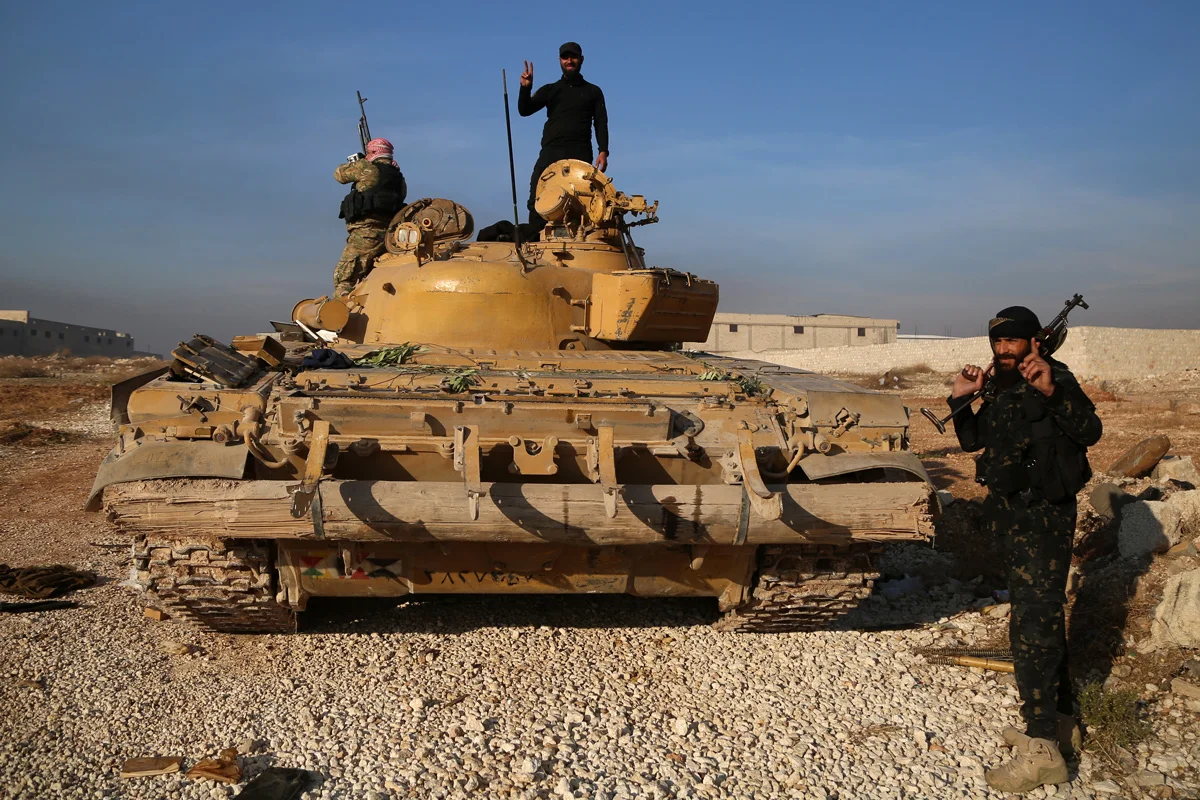
— Orientalists often explained previous decisions of American presidents by the fact that the United States has very poor expertise on the Middle East.
- That's exactly how it is.
— Do you see any signs that this examination has improved?
— Expertise is a structure. This is an extensive network of think tanks, some influencers, this is the work of the State Department, and so on. I agree that Middle East expertise in the United States has been lame, and Donald Trump, in his four years as president, has not, it seems to me, been very concerned about this. His first tenure was accompanied by scandals in everything related to personnel appointments at the highest level. Therefore, it seems to me that Trump did not have normal expertise on the Middle East, and still does not. Although this is a painstaking task, the results of such work may not be immediately visible.
What remains? A president who makes decisions in accordance with what he sees, what people from his inner circle advise him, the main thing is how he is inclined: messianic or more pragmatic. In this sense, Trump, with all his extravagance, unpredictability, and discomfort of his presence, has so far behaved, at least in relation to Israel, quite positively.
— What can you say about Russian expertise on the Middle East? Is it better than the American one or worse?
- She’s not there either. Expertise presupposes independence of judgment and objectivity, the desire to look at a problem from all sides. Today in Russia, as we understand, all this does not exist. It seems to me that even in the Soviet Union the examination was at a higher level. The Soviet Union could support Nasser, for example, and many players in the Middle East took advantage of his predictability, maneuvering between the USSR and the United States. Today Russia thinks only about its own greatness, but it is not clear how it interprets it. This does not imply expertise as such, because “experts” proceed from the principle “everyone should sit and everyone should be afraid.”
— We see the results of the West’s mistakes in Libya. What will be the cost of a mistake if it is made in relation to Syria?
— We must take into account what Syria has now. If these are indeed arsenals that can be used as weapons of mass destruction, then the price tag is, of course, insanely high. In any case, turning Syria into a second Libya from the point of view of the lawlessness of militant groups will not add stability to the region, to put it mildly. Crazy people can afford anything. They can, for example, launch an S-200 missile at a civilian aircraft.
“Or they could shoot down a civilian Boeing with a missile from a Buk.” Monkeys with grenades are the same everywhere.
- That's what I'm talking about. And go look for them later. I'll give you an example. The day after the Hamas attack, October 8, Hezbollah was not the only one to join the war. We suddenly remembered the existence of such a group as the Yemeni Houthis, and about such a place on the map as the Bab al-Mandeb Strait. And now it turns out that every dry cargo ship must go through Africa, all this is longer, more expensive and unsafe. Now there is a ceasefire between Israel and Lebanon. The Hamas story in Gaza will end sooner or later. But no one has any guarantees that some European cargo ship will not be hit in the Bab el-Mandeb Strait. This is the genie out of the bottle. These are mujahideen in slippers and with ballistic missiles. They were taught to press buttons, and the whole world froze because no one understood what to do with it.
The Suez Canal has become useless, the Red Sea has turned into a lake, and the Egyptian economy is simply losing everything. This kind of unpredictability is the main danger in the situation with Syria.
— What do you think world players interested in the region should do now? What actions of the USA, Israel, Russia would you call reasonable?
— You are asking a question in the context of cooperation between global players.
- No, without cooperation. Or let's take Russia out of the equation.
— I myself would be interested to know the answer to your question. Let's watch. I am not sure that in the current reality, as during the Gulf War, the United States will be able to easily create an international coalition. It seems to me that this is a much more difficult task.
- But how exactly do you imagine a “good” option? Support Assad? Put in his place someone very democratic, who will fall down in the first elections?
- I don’t have an answer to this question. But of two identical evils, Assad still has one advantage: calculability, consistency, and willingness to play by the rules. We know what the rules are. We know what rules he will break. We can calculate this. Therefore, we can plan our actions. If the jihadists come, it will be chaos. And chaos never led to anything good. This can only give rise to a new regime of conditional Syrian Taliban. Only Afghanistan is rich in opium, and Syria has some deposits, so the situation will be even more complicated. But if you drive me into a corner, forcing me to choose one of two evils... This, of course, will be strange to hear from an Israeli, but I definitely don’t want to see jihadists.