Translated material
Christmas with horn and gingerbread
At an annual festival in Borkum, Germany, men dressed in sheep's clothing beat women outside. Recently, journalists talked about this tradition, which caused a scandal throughout Germany
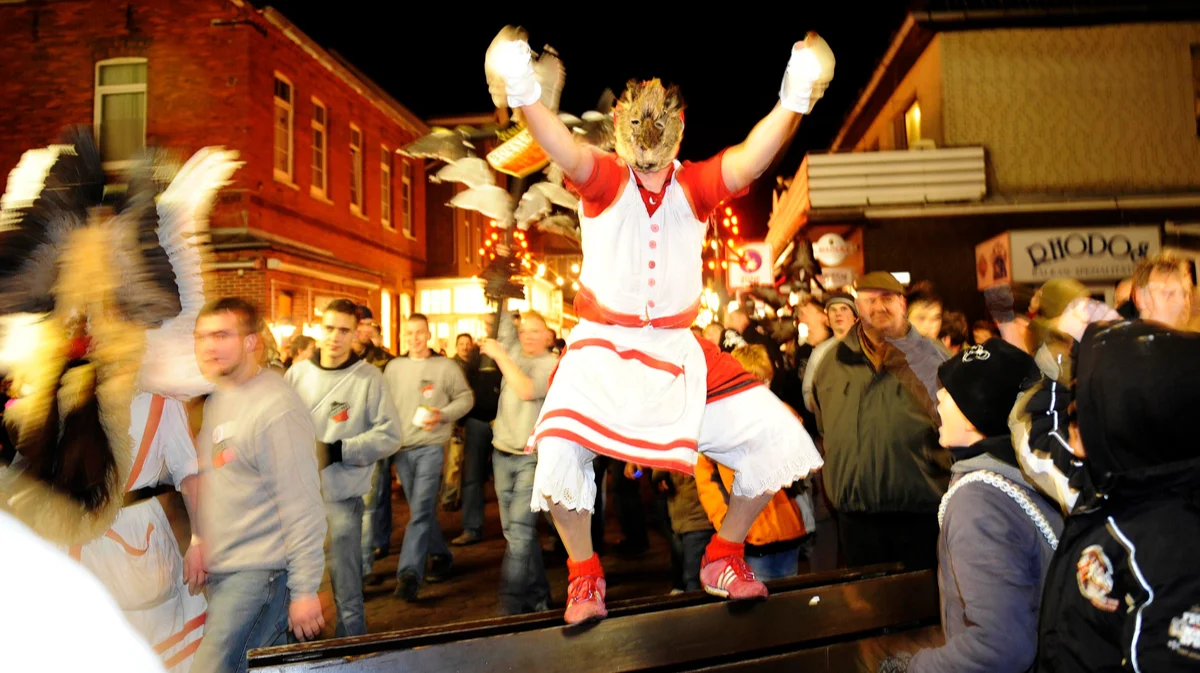
Vifke dancing in the crowd - a man in women's clothing, 2008. Photo: David Hecker/ddp/Vida Press
The celebration of St. Nicholas Day on the small German island of Borkum in the North Sea caused a scandal. Journalists from STRG_F and the Panorama publication made a film about how every December 5th, as part of the holiday tradition, men beat women with a cow's horn. Local authorities hid what was happening from mainland Germany and the rest of the world, trying to keep everything that happened on the streets on the night of December 5-6 a secret from any visitors.
Novaya Gazeta Europe looked into what German journalists said in their film about Borkum, why the cruel tradition has survived to this day, and what will happen to it after the scandal breaks out.
Borkum is a German resort town on a small island of the same name on the border of Germany and the Netherlands. Tourists from all over Germany come here in the summer to sunbathe on the beaches, and by the autumn months they return to the mainland, leaving the city in the care of its 5 thousand inhabitants.
The holiday of St. Nicholas Day occupies a special place in the culture of Borkum. On the fifth day of December, the islanders have fun, sing songs and hold their own small parades. Already during the day, the Klaasoms begin to appear on the streets - this is the name of six men dressed in traditional clothes and wearing masks made of sheep skins. They are accompanied by a man in women's clothing named Vifke. But the main actions of the Klaasoms take place after dark.
“Hunting for women with cow horns,” this is what STRG_F journalists called their film , who filmed what was happening on December 5 in Borkum in the evening and at night. The film was published on the YouTube channel STRG_F, collected more than a million views and caused a considerable scandal in both the German and international press.
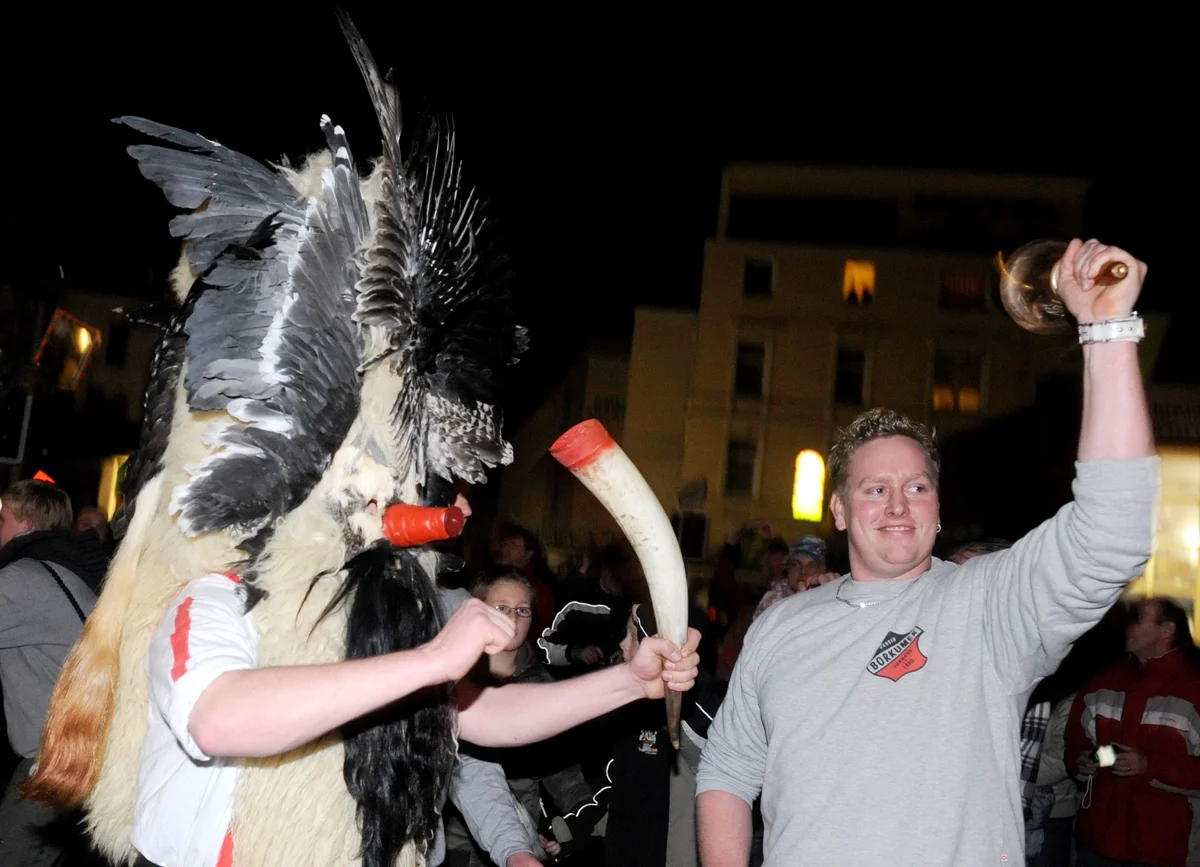
The film's title refers to a local tradition practiced by residents as part of the December 5th celebration.
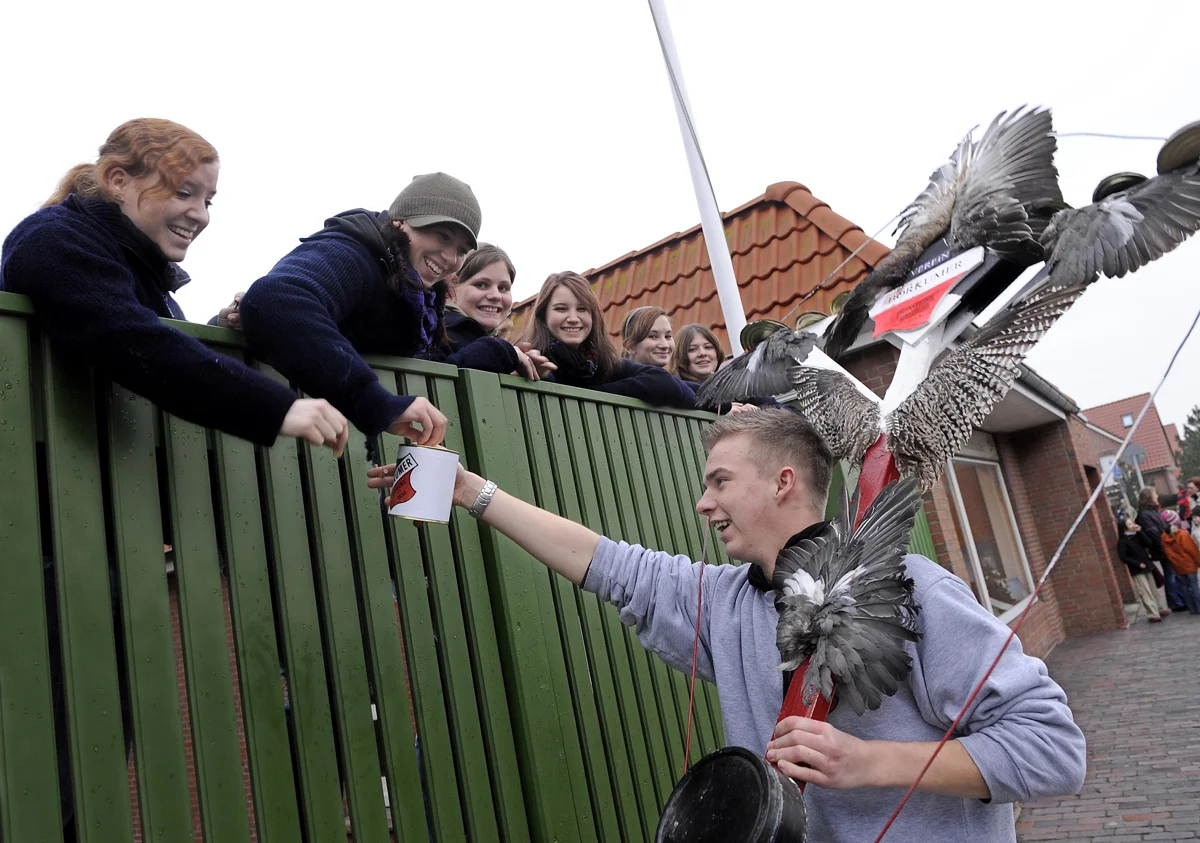
The Klaasoms, taking other men as their assistants—they are called “beaters”—after sunset, catch women in the streets and beat them on the buttocks and thighs with a horn. Journalists describe that after the evening and night attacks, some girls developed bruises and hematomas.
Gingerbread cookies are given to beaten women as compensation.
Men's holiday
The very tradition of St. Nicholas Day in Borkum, as in mainland Germany, is closely connected with Christmas and Santa Claus (he is St. Nicholas). According to legend, on this day children leave clean shoes at the door, in which Santa puts sweets. However, the hairy devil Krampus also walks next to St. Nicholas, annoying children who behaved badly in the past year. The Klaasoms wandering around Borkum are referred to Krampus. The celebration is organized by a local men's club, which includes many residents. Only men born on the island can join the club after they turn 16 years old.
The history of the holiday with the beating goes back about two hundred years. In particular, STRG_F journalists show in their film archival videos from the end of the last century, where children play Klaasom and hit their female peers with a horn. In 1987, journalists already tried to film the violence taking place at the festival, but the locals showed aggression and disrupted the filming.
During the filming of the film, the authors also conducted a survey on the streets of Borkum, and one of the women, who was also a victim of attacks on St. Nicholas Day, said that the rules of the holiday are completely controlled by the male population of the island.

These rules are really set by the men's club, and their key content boils down to the fact that women cannot go out anywhere after sunset on December 5 and still remain unbeaten. The men in the journalists' film talk about the same thing.
“You can’t say, ‘I’m not from here. I don't want to participate. I don’t want to get hit,” says one former member of the Men’s Club.
Supporters of the holiday tradition say that since the rules of the holiday are publicly announced and known to all local residents, this ensures that all women on the streets of Borkum on the evening of December 5 agree to be hit with a cow's horn. At the same time, in the film, men say that attacks on women are “not cruel at all.”
Without noticing the problem
The release of the film caused a stir and caused a great discussion in German society itself: to what extent can traditions remain in their original form if they violate today's social norms?
Over the course of several months of filming, journalists tried to obtain clarification from representatives of the official authorities on the island and the men's club itself, but were refused everywhere.
“In order for Klaasom to remain the most important public holiday that shapes the identity of the residents of Borkum, the level of awareness about it must be low. Please be respectful and don’t talk about it,” are the club’s rules regarding the nightly adventures of local residents.
Borkum culturologist Andrea Ackermann emphasizes that it is no longer possible to know for certain the social origins of the tradition of beating women on this holiday. However, she rejects the popular theory that this was supposedly due to the fact that in ancient times there were many whalers on the island, who, returning home from a long hunting season, were supposed to “reestablish dominance” over women.
In the film STRG_F, an anonymous ex-member of the men's club says that women who are dissatisfied with the ritual are pressured: they are told that they “don’t honor traditions.” However, after the scandal that erupted last week, local authorities and residents began to speak more carefully about the island's tradition.
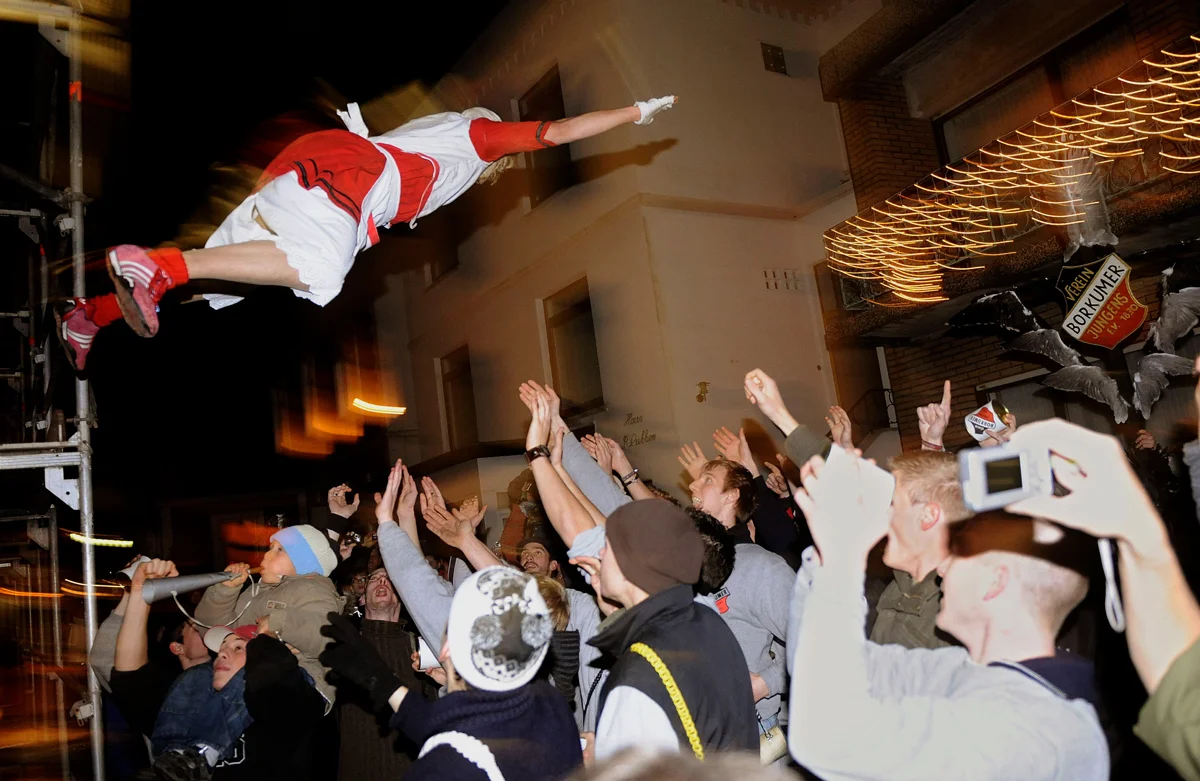
Organizers of the men's club reported that beatings had been part of the festival "in the past", but "have hardly occurred in recent years". The statement was accompanied by words that in the future attacks on women would be abandoned, but at a city meeting, club representative Maximilian Rau still stated the need to protect the Borkum tradition from outside pressure.
There were defenders outside the men's club.
The mayor of the island, Jürgen Ackermann, states that the published film is biased and presents a distorted picture of local customs. According to him, this position is “shared by many residents of the island.” On the home page of the local newspaper Borkum Zeitung you can also see an article with the headline “Borkum expresses solidarity with Klaasom.”
In addition, the editors issued a statement in which they said that none of the victims of the night attacks had contacted them.
In addition to this, after publications in the German and international press, a demonstration was held in Borkum by the women themselves to preserve the festival in its original form. About 150–200 participants came to it.
One of the main arguments of the defenders of the holiday tradition was the nature of life on the island, divorced from mainland Germany. Many of the locals do not want outside interference. At a town meeting with residents, the authorities emphasized that they may not have been able to grasp the sentiments of the youth of Borkum, who do not support such traditions.
In response to public criticism, the authorities stated that they had not received any complaints of violence from women from Borkum over the past five years. After the release of the film, local police announced their desire to completely prevent violence at the upcoming holiday. In addition, security forces asked women to write statements if they were forcibly beaten. “Whoever has become a victim should not be afraid,” the police spokesman emphasized.