
Translated material
Google now lives in the multiverse. No, this is not a collaboration with Marvel.
The company is simply confident that its new quantum processor carries out calculations in parallel worlds (we’ll tell you everything now)
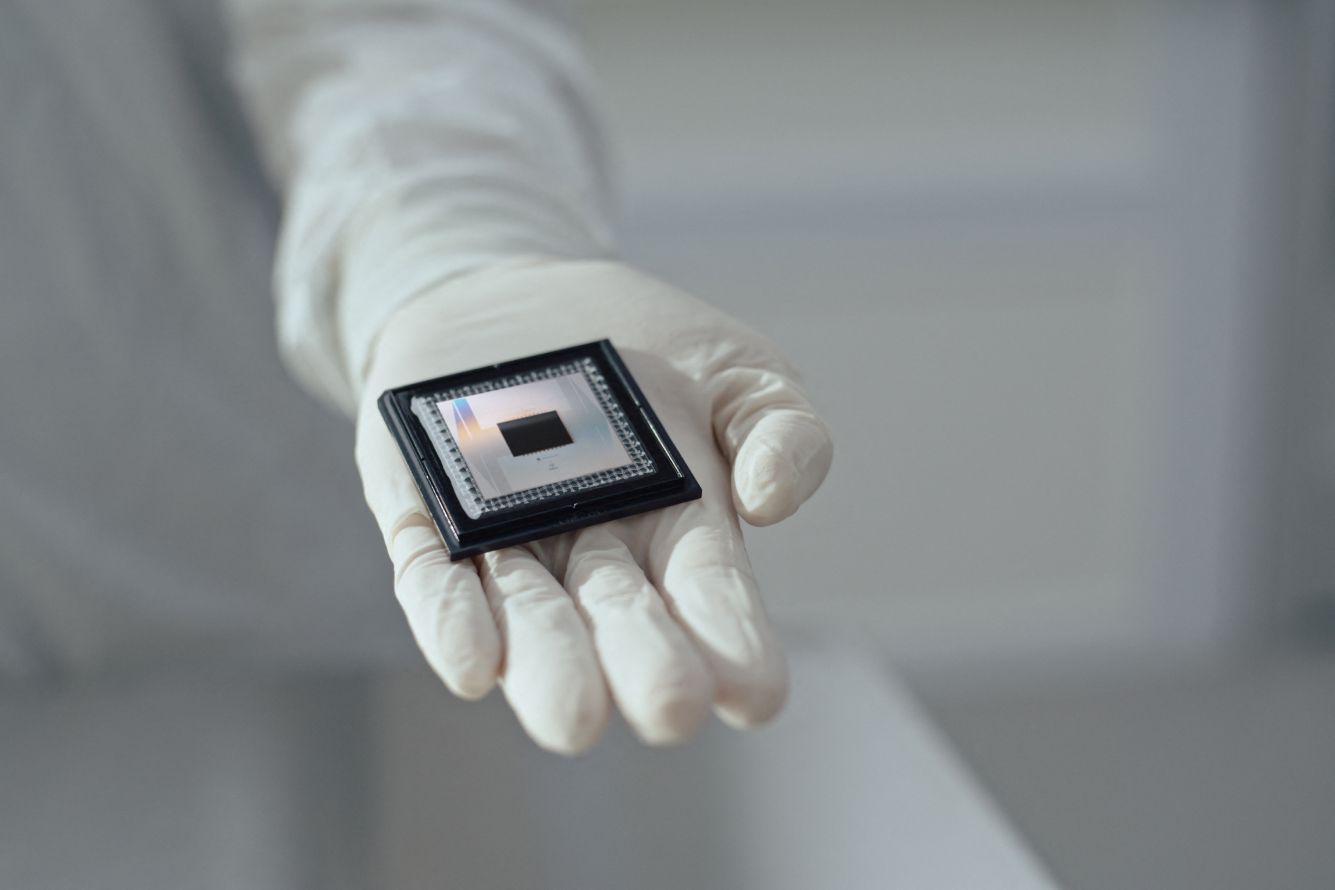
Google has unveiled a new quantum processor called Willow . The founder and head of the Google Quantum AI laboratory, Hartmut Neven, claims that the chip significantly exceeds the performance of both modern supercomputers and other quantum processors.
According to Google, the 105- qubit Willow processor completed a standard benchmark calculation in less than five minutes. One of the fastest supercomputers in the world at the moment—in the text the developers refer to Frontier —it would take 10 septillion years (that is, 10 to the 25th power) to solve such a problem. As the developers note, this significantly exceeds the age of the Universe.
Hartmut Neven emphasizes that this number exceeds all known time scales in physics. According to the head of the laboratory, this “confirms the idea that quantum computing occurs in many parallel universes,” and also corresponds to the multiverse hypothesis put forward by British physicist David Deutch in his book “The Structure of Reality: The Science of Parallel Universes.”
To evaluate performance, Google used the Random Circuit Sampling (RCS) benchmark, which shows how well a quantum computer copes with tasks that conventional computing systems cannot do. This test was developed by the company itself to demonstrate quantum supremacy. It does not specify how Willow works with fundamental problems in the field of quantum computing, for example, with Shor's algorithm .
In RCS, a quantum circuit is generated from a random set of logic operations, which is then run on a quantum computer. The circuits are designed to make their behavior difficult to simulate on a regular computer. If the calculation results are close or coincide with the results of classical modeling, then the task is considered completed. If a quantum computer performs the RCS test faster than a classical computer, then it is considered to have achieved quantum supremacy.
However, Willow's main advantage is not performance. The developers claim that they have been able to reduce the error rate as they scale up using more qubits. Google emphasizes that scientists have been trying to solve this problem for almost 30 years.
Errors in quantum computing occur for several reasons. For example, due to external factors, this is the so-called “noise” (which includes, for example, electromagnetic radiation), which can affect the accuracy of calculations. Or decoherence, that is, a violation of the consistency of oscillatory or wave processes in time. The Quantum Error Correction (QEC) technique is designed to correct such errors.
Google developers note that generally, the more qubits used, the more errors will occur. In this case, the system will be more like the classical one. In the case of the Willow chip, the developers managed to achieve an exponential reduction in error rates. They said they tested different arrays of physical qubits, gradually scaling up the grid of encoded qubits, and were able to cut the error rate in half each time. Google claims that this is the first system that has demonstrated performance below the threshold values.
The increase in the number of errors when scaling the system is considered a serious obstacle to the creation of a full-fledged quantum computer. Its main power in this case is of secondary importance. 105 qubits is not a record for a quantum chip. For example, IBM created a 1000-qubit chip in 2023. However, then the developers themselves admitted that they wanted to focus on developing smaller chips in order to reduce the number of errors.
“We focus on quality, not just quantity, because simply producing more qubits will not help if they are not of high enough quality,” said Hartmut Neven. According to him, Willow demonstrates best-in-class performance on two system tests - RCS and QEC.
This opens up new possibilities for developers who now hope to perform their first practical calculation. If successful, Google will be able to perform real, commercially valuable tasks while possessing computing power that is inaccessible to classical computers.
“My colleagues sometimes ask me why I left the rapidly developing field of AI and focused on quantum computing,” says Hartmut Neven. “My answer is that both will offer the most revolutionary technologies of our time, but advanced AI will benefit greatly from access to quantum computing.”
The head of Google Quantum AI is confident that the joint development of quantum computing and artificial intelligence will open up new opportunities for further research in various fields. For example, scientists will be able to develop new drugs or design more efficient batteries for electric cars. In addition, quantum computing will help accelerate progress in the field of nuclear fusion and alternative energy in general.
The Willow chip is not yet capable of this. But its appearance at Google is called the most important step towards quantum processors starting to bring practical benefits.
Mikhail Gerasimov