
Translated material
Possessed by chaos
Why is the world covered wave after wave by something that can only destroy, but is not even capable of preserving?
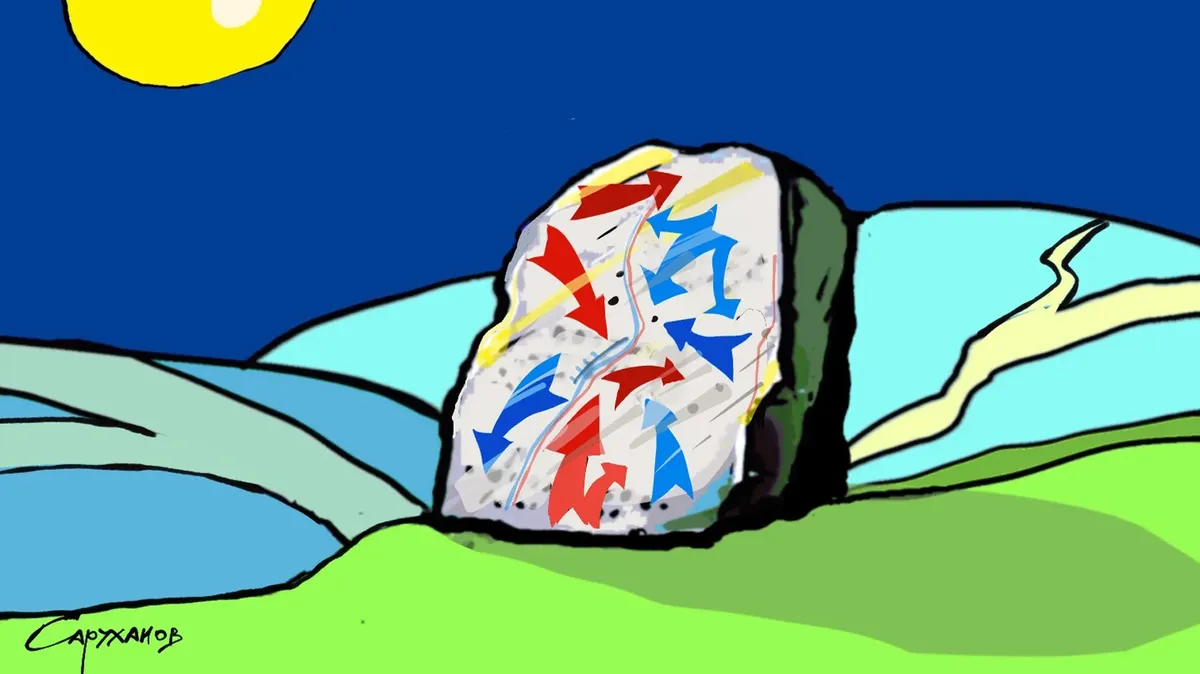
Petr Sarukhanov / Novaya Gazeta
In a general sense, the known order of culture collapses. But chaos does not appear out of nowhere. It probably appears where in individuals, who are the bearers of the order of culture, their subjectivity is disrupted and degraded. In other words, chaos reacts to a crisis of internal ideas and beliefs. And in today’s times - with their postmodernism, technological hedonism and realpolitik - you won’t have to look for signs of such a crisis for long.
What is “healthy” subjectivity from a philosophical point of view? As an option, the ability to independently relate to abstract, abstract ideas and transform them into internal ideas of one’s human self. With the subsequent priority of these internal ideas over external, objective circumstances of life, as well as over desires and feelings associated with everything external and objective. In the ancient tradition this was called the power of mind over matter. In Christianity - the power of “spiritual food” over “carnal food”.
If we are faced with a person’s inability or refusal to independently obtain “spiritual food” for himself, then we call this weak or infantile subjectivity.
If we see that external circumstances decisively dominate a person’s inner world, then we call this suppressed or repressed subjectivity.
If the will to possess something external penetrates so deeply inside a person that it replaces everything and displaces the very possibility of turning to abstract ideas and values, then we call this distorted or sick subjectivity. And such a person reminds us of a possessed person.
When all of the above does not just concern an individual, but covers the widest strata of society, penetrates into state doctrines and turns into permanent content of politics, this state of affairs should be called nothing less than a time of chaos.
***
Infantile subjectivity. Yes, people use ideas, but more like flags in a parade. Their ideas are always recognizable and presented in a convincing form, like advertising slogans or labels. Their ideas are prestigious. But they don't bleed from the inside. And an idea, when it actually gets inside the human “I,” always bleeds. People tend to keep themselves away from blood, although they talk a lot about it.
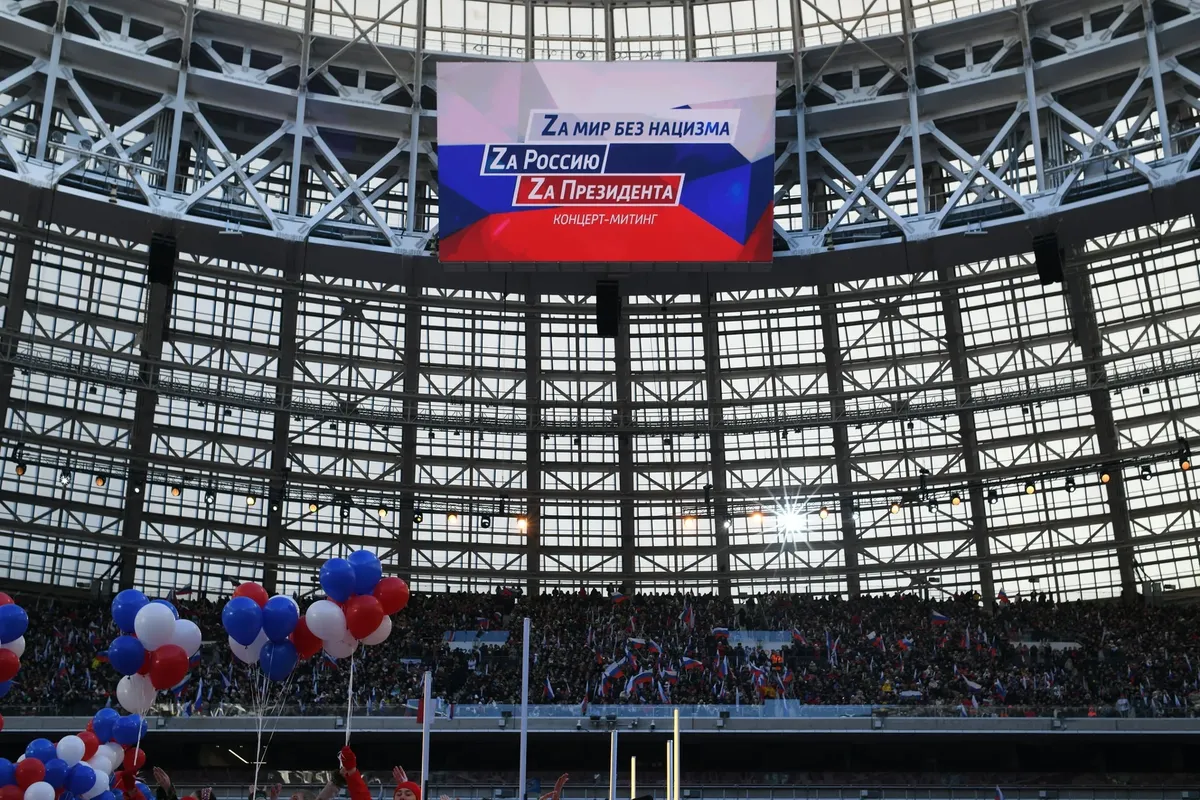
In non-peaceful times, it is quite understandable that the idea of peace will occupy a central place in political discourse. Democrats and liberals, activists from leading universities in America and Europe, UN officials, left-wing humanists and, in general, those public figures whose progressiveness was beyond doubt write on their parade flags: “Peace! Only peace, at any cost! Lay down your weapons! But they offer this to those who took up weapons against their own will, who, in fact, can survive only as long as they hold these weapons in their hands. However, peace advocates do not make much distinction between the hunter and his prey.
If the victim does not allow himself to be killed immediately, he is no longer a victim, he becomes equal to the hunter. The resistant victim is an oxymoron for peace advocates, a logical anomaly.
This is infuriating. The victim, according to their logic, must certainly be unhappy, and ultimately dead. In this case, they are always ready to mourn her and give her funeral speech.
“Only peace, at any cost,” these democrats and liberals repeat day after day. And they don’t want to know what price might be behind the word “peace.” Behind the idea of "peace". But they probably don't want to think about the price. They wish that wherever they appear, people will respectfully say: “Look, here come the truly adamant humanists!” But they really don’t like the question of how to achieve this peace. “Isn’t what we are calling enough already? But what about the practical side, what can we know about this? Our mission is to speak the word “peace.” What could be more grandiose?
This is infantile subjectivity. And Professor Nietzsche would probably have added this: “And pathetic self-satisfaction.” Chaos feels at home among such things. As the devil, famously performed by Al Pacino, says: “Vanity is my favorite vice!” And at this point the Rolling Stones song Paint It, Black starts playing.

***
Suppressed subjectivity. There is no doubt that a very large number of people by default consider themselves progressives, supporters of freedom and certainly not supporters of violence. There are few who will say that they do not agree with the principles of the Sermon on the Mount. However, it is a completely different matter when circumstances require not just silence, but at least voicing your convictions out loud. Pronunciations that are not even public, even if only private (even to oneself count). And current circumstances require this every day and extremely persistently. Historical events do everything to ensure that man's views about violence and freedom come to the surface. If only because both violence and lack of freedom are increasing every day. It's time to account for your own beliefs.
But it is also known that
to think and act in accordance with oneself, or, according to the classics, according to Kant, “to use one’s own reason,” requires courage. Subjectivity requires courage.
And this is where the problem happened. Under the influence of circumstances, people began to correct themselves en masse. Do not strengthen yourself against violence and lack of freedom. On the contrary, they began to apply something like an explanatory logic to them. And the word “logic” for a modern person is approximately the same as the word “fate” for a person in ancient times. Simply put, something undeniable. Something that makes no sense to resist. A person is designed in such a way that if the thought of resistance no longer comes to him, then he calms down.
Probably, the central explanatory and reassuring slogan for many was the famous “not everything is so simple.” Yes, freedom is better than lack of freedom, but let's remember our traditions, the faith of our ancestors. But not everything is clear there. Yes, the victim was attacked, but let's look at the historical roots of the incident. And there, too, not everything is clear. Yes, I feel sorry for the victim, but didn’t she herself behave in such a way as to become a victim? And in general, doesn’t she derive many benefits and bonuses from this sacrifice of hers? This is definitely all very ambiguous!
The result of such self-corrections is a fairly rapid disintegration of a person’s subjective beliefs. In their place comes cognitive, axiological and generally existential chaos, built on a constant change of frames of perception, on the manipulation of emotional stereotypes and object images. In general, pure chaos.

***
Distorted subjectivity. A person, in fact, becomes a person when he discovers the world of ideas, the world of abstract, invisible, but intelligible essences, accessible, in the words of Plato, “only to the helmsman of the soul - reason.” In this, man is radically different from all other known living beings.
The world of ideas is mastered by a person and becomes an internal guide, a criterion of self-knowledge and dignity. The entire evolution of man is nothing more than the result of such development. And subjectivity is an image of oneself, seen through the prism of the world of ideas. If you remove the ideal prism, a person will fall apart into many incoherent and conflicting fragments. Or there will be only one hungry and never satisfied narcissistic ego.
It is obvious that people have varying degrees of ability to connect with ideas. Contrary to the famous thesis of John Locke that we all appear in this world in a state of tabula rasa, a “blank slate”, on which time and experience then leave their marks, direct vision tells us that people are initially unequal in their inclinations, abilities and inclinations. And therefore, communication with ideas is not given to everyone equally well and freely. In principle, very few people are good at it.
However, there are many people, although not too inclined to philosophy and abstract contemplation, who are quite ready from time to time to look towards the world of ideas, understand its significance and experience from this an inspiring feeling of meaningfulness in their lives. Let's say this as an example: in order to understand and admire music, it is not at all necessary to be able to compose or perform it. True, on their own initiative, people so rarely turn towards the ideal that after a while it could be completely forgotten by them. Then there is fragmentation of identity and the dissolution of the human “I” in the endless worries and needs of the everyday, and in addition, general suspicion and competition without any ethics. The result is a return to a primitive, wild state of minds and feelings and, as Thomas Hobbes said, Bellum omnium contra omnes, “a war of all against all.”
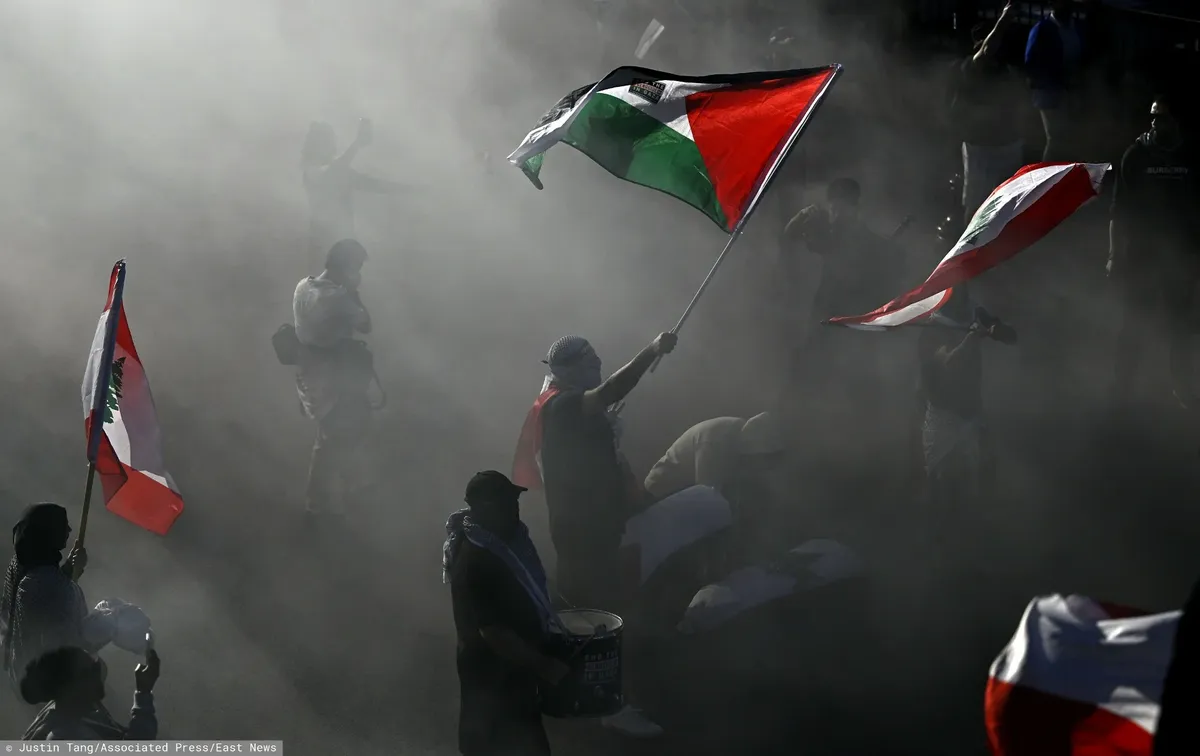
This is where culture and politics come to the rescue. Both have a direct and active impact on individuals, and if the cultural and political elites themselves are oriented towards something ideal, very wide social strata turn in the same direction. If we completely generalize and put forward an assumption with which ideas culture and politics can be primarily associated, the ancient authority of Plato comes to the rescue, and then culture is directed towards the “idea of the beautiful”, and politics - towards the “idea of the just”. We can only add that in times when society is dominated by one or another form of despotic power, both culture and politics can give direction towards the “idea of freedom.”
This is how the adaptation of the ideal for the world of people occurs, and in the process this world begins to call itself a civilization.
But the exact opposite can also happen. The political elite can be made up of people who are not ideal-oriented. Moreover, they categorically do not understand the ideal. They don’t understand and don’t accept it, they consider it something unnecessary and annoying. Beautiful, fair, free - what does this mean? As a rule, these are those who are completely absorbed in their particular narcissistic self-affirmation and desire only one thing - the maximum possible recognition. In the future - absolute recognition.
However, such people are not at all averse to using ideal shells and wrapping completely less than ideal things in them. Actually, not things, but some abstract ideas. These ideas are presented as real ideas, and “national unity”, “genuine national interest”, “state interest”, “special path” are put on the agenda. The situation gets worse when the cultural elite gets involved in the process of forming and promoting new “ideas”.
If everything works out, then the recognition and power of these people, this elite, grows incredibly. For they become the central point around which such things are centered and defined. “Unity”, “genuine interest”, “national identity”. This is a substitution, but most people easily follow it, because in reality there are few who have an established connection with the real world of ideas. The consequences of the substitution are catastrophic. When a nation or a state (and usually both at the same time) is made the central “idea”, which is ordered to be looked at with awe, love and horror, this means the end or at least the temporary collapse of civilization. This is called totalitarianism. And behind its merciless set of rules and prohibitions there is not a special kind of “new order”, but the most complete, unalloyed chaos. The condition of the subject under such circumstances is characterized as sick. And probably not curable in all cases.
***
Naturally, the question arises: what should a person do to resist chaos and reduce the power to reduce it? One thing you can do for sure is to develop in yourself the art of distinguishing real ideas from their similarities. And do this while at least being in the very core of chaos.
But then there is another question: yes, it is necessary to invest in the individual and his philosophical consciousness, but are there some objective social patterns, political triggers that can change the state of affairs and stand in the way of chaos? Obviously, many expected this at first, when the “idea of a special path” suddenly turned into direct violence and rejection of civilization. Now, the people will quickly get tired and become indignant. Now, no one wants to go and die for a “special path.” Now, wives and mothers will say an unequivocal “no” to the generals. But none of this happened. Society, for the most part, did not doubt anything and adapted to the new realities before our eyes. There was also no split within the political elites. No front was formed. And no one, even for purely pragmatic reasons, showed dissatisfaction. In general, none of the expectations - or even more so the predictions of social science experts - came true.
It turns out that only the subject remains. Only his “I”, his beliefs and his readiness. And words that confirm beliefs. And chance, a completely irrational chance, which cannot be predicted, but which, precisely in times of chaos, suddenly brings hope for the restoration of order. "God Ex Machina" Personal readiness and “God ex machina.”
No matter how much the civilized consciousness would like it, relying on “objective laws of history” does not make much sense now. The constructions of Hegel and Marx do not work now.
But, awakened by chaos, constructions of a completely different order begin to work. Those where fate, fate, no longer exist on the edge of the historical stage, but occupy central places on it, receive leading roles. The atmosphere begins to resemble either chapters from the Old Testament, or a medieval epic, or scenes from The Matrix. One thing is certain: these are interesting times.