
Translated material
How we haven’t become anyone yet, but maybe we will
About confusion, trying to build a new life, identity crisis and helping those who are even worse off
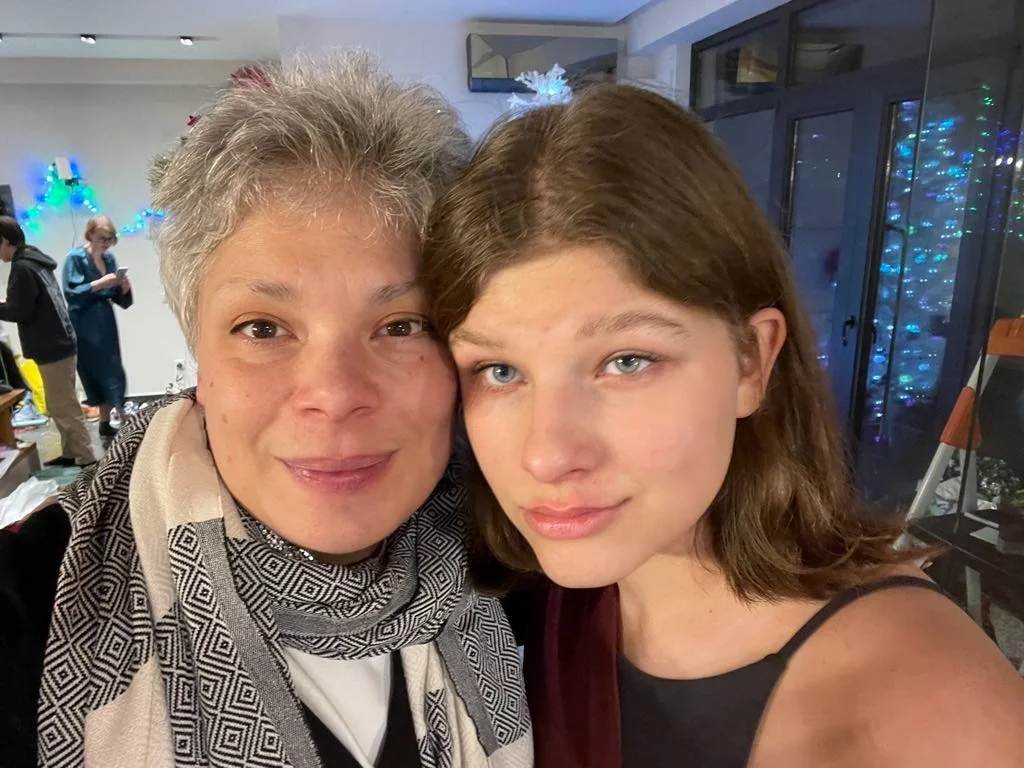
Anna Kachurovskaya
Russian journalist, communications specialist. She worked in the publications “Kommersant”, “Snob”, as well as in management positions in the field of communications. Lives in Yerevan.
I have been living in Armenia with children and a dog since September 7, 2022. We left before the first mobilization, that is, before everyone arrived. What is also important is that we then left with unique opportunities. While still in Russia, immediately after the events of February 2024, after the outbreak of hostilities, I found a job in Armenia, rented an apartment in Yerevan in the summer, agreed on a school for my daughter, brought along friends from those who were still choosing where to go, and As a result, we moved to everything ready-made.
But the most important thing is that I moved almost immediately after a year of difficult treatment for breast cancer. Emigration after this ordeal seems a logical development. And as a survivor, I seemed to have boundless gratitude and unconditional acceptance of life. And at first it was like that.
But after 2 years of emigration, it suddenly turned out that the same never-worn “white coat” fit into the only suitcase that came with me. And in this “coat” you still seem to know how to do everything correctly quickly in order to improve the life around you, and at the same time become back to yourself - smart, necessary, generous: what we were like in another life. But that's not true. But now it’s slowly coming:
We were not expected, we are not gingerbread cookies - and our added value is very conditional.
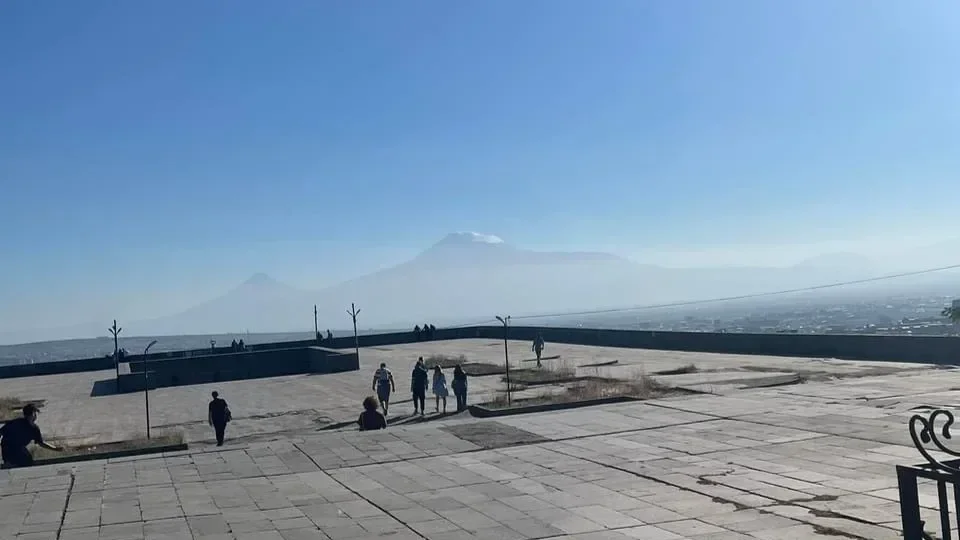
Expectations
As soon as we bought a potato peeler, pillows, mastered the route to the shops, fell in love with plums and the weather, joined useful and not so Russian-Armenian chats, and naively thought that now we’ll figure out how [partial] mobilization was announced in Russia. According to the Armenian migration service, after the announcement of partial mobilization in Russia on September 21, 2022, more than 60,000 Russians arrived here. In total, about 780,000 entries from Russia have been registered in Armenia since February 2022, mostly people arrived after September.
It felt like Russian guys from 18 to 50 years old were everywhere. They slept on benches, walked around with backpacks in confusion, asking where they could eat, find housing, and whether they would beat them, to speak in Russian. My friends and I endlessly looked for housing for those whom we could not shelter ourselves, because all our sofas and sofas were already occupied. Later, my children and I tried to count how many people were living in our apartment at that moment, and we got confused: either 10, or 15, God knows.
As a rule, the guys stayed for two or three days, quickly found something for themselves either in Yerevan, or in the surrounding area, or moved on - some to Georgia, some to Europe. The flow of completely lost men continued for more than a month. At some point, my friends and I, from those who arrived earlier, decided that this was impossible, and we needed to invite whoever we were scattering around the city for a big house party. About 30 handsome and educated young men came. And we are 5 middle-aged girls. Powerful experience. The men, after three stacks of mulberries, gathered into groups and immediately began to tell under what circumstances they crossed the border. It was obvious that people had experienced real trauma.
Men of completely different ages, experience and education - as one spoke about fear, endless humiliation and their guilt for leaving their families. Mostly the men were taken out by mothers and girls.
One boy was kidnapped by his mother from a military train. I don't know what's wrong with this boy now.
Many who came to us then, after six months or a year of living in Armenia, could not stand it and returned to Russia. This is despite the fact that, perhaps more than the Armenians, no one sympathized with the fleeing Russians. However, apartment prices have soared. Local students were evicted from their apartments in order to rent them to Russians at a higher price. In a moment of acute horror, we somehow incredibly managed to do our jobs and help those who could not cope. It seemed that we were creating a diaspora field - a field about support, acceptance and participation. And also a field where our humanitarian knowledge and skills can be in demand.
To understand the size of our diaspora group, I went to meetings with new arrivals and got to know each other. As a rule, young people under 40 years old, mostly IT. We were united by two things.
First: we left because <…..>.
Second: almost all of them have parents who remain in Russia.
It was impossible to have complex conversations, and talking for a long time about what documents someone had (these conversations are still relevant two years later) quickly became boring. We are connected by confusion and the desire to build a life in new circumstances in another country, which, as it turned out, we understood poorly. For example, what is Nagorno-Karabakh for Armenia...
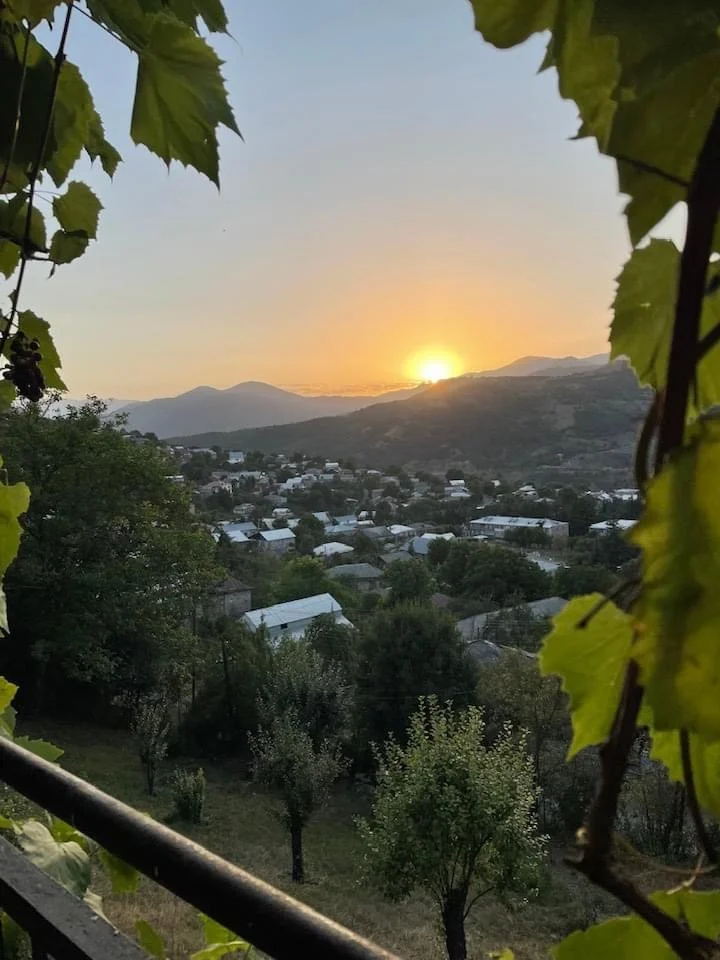
Reality
On December 12, 2022, Azerbaijan blocked the only road connecting Armenia with Nagorno-Karabakh, where 120 thousand people lived. The blockade, as we now know, ended with war and the transfer of territories to Azerbaijan. Two years ago it seemed unthinkable that you could take 120 thousand people hostage and the whole world wouldn’t care.
Then the understanding came, I think, among many who found themselves on the territory of Armenia, that the strength for creation and development comes from knowing where you live and the confidence of what will happen to you next. None of us have either one or the other.
I wrote down for myself about what was happening to people inside Artsakh. It so happened that the day before the blockade I was in Nagorno-Karabakh and met many people - and realized that I did not understand at all what kind of world I lived in and whether humanitarian values remained at all. And what is civilization in principle? I think it made a powerful impression on us who arrived. Even for those who arrived under extremely favorable conditions, for example, if someone was transported by international employers. Recently, while on such an international job, two relocated young guys committed suicide. Those who remained were assigned a psychologist. A version of why young and sought-after specialists committed suicide: they could not cope with loneliness. It turns out that they had nowhere to go and no one to talk to, although many nice establishments opened here, made by Russians for everyone (including themselves). But it doesn’t work like that, if you’re already lost, then the devil knows how to find yourself back and with whom.
My new Armenian friends, who, fortunately, appeared immediately, guided by their vast historical experience of refugee, warned: do not sit among your own, in the diaspora - make new us. I listened to them.
On the first emigration New Year, after the blockade of Nagorno-Karabakh, I went with local volunteers to distant villages of Armenia to distribute gifts from the Armenian diaspora. The villages were located near the Azerbaijani border. The residents there do not speak Russian. My task as a volunteer was to create a festive atmosphere - in short, to decorate the Christmas tree and smile. Which is what I did in quiet awesomeness. The poverty is prohibitive, the children are beautiful and their terribly touching parents confessed their love in all languages and quietly asked me - apparently because I am not of Armenian appearance: “Wars chka?” (“there is no war?”). In the sense that I, a Russian volunteer, with a snowflake in my teeth, probably think and know everything about the geopolitical situation. I then bleated, of course, that there would be no war (why did I decide that?).
The war was swift, senseless and terrible. Its result was the exodus of the inhabitants of Nagorno-Karabakh. It was absolutely something biblical and scary. 120 thousand people in cars, buses, with children and sick elderly people left for Armenia one day. Caravans of pain and tears.
To put it mildly, the Armenian government was not ready for such a turn, and volunteers got involved in saving people. Detachments of doctors from Armenians and Russians were organized at the border, and the most necessary things were distributed to people. I personally participated in all this and watched how the Russian diaspora in Dilijan rallied. This is a small town in Armenia halfway to Georgia; mostly IT workers and their families moved there. They organized the most efficient telegram groups for help, and any issue was resolved instantly. The Russians found premises for clothing distribution points, collected it themselves, distributed it themselves, chipped in and bought everything they needed. The local population watched this activity with surprise - and not immediately, but they also got involved. One of the local taxi drivers asked me: “I didn’t understand, were you all friends? Where did they teach you this?” I think we have been taught by the last 10 years in Russia, during which charity and volunteering have become a familiar and even, to some extent, obligatory part of everyday life.
In the first days, our help was received with surprise and gratitude, but for a long time I began to feel that our activity was becoming tiring. For example, the locals brought me to an abandoned school where people with disabilities were accommodated. There was no water, heating, there was not even money for food. I collected some funds from friends, bought bags of cereals, potatoes and whatever else was needed according to the list. But I still had to write letters to the official authorities, and at this stage I was very delicately told that now we are on our own. They sent two delicious gats.
No offense, but I very accurately felt where we belong: we don’t belong. It seems like we are no longer guests, but we are not allowed into the kitchen yet. This is generally true.
Many who helped then moved on, some returned. The most striking thing for me is that in private conversations with “mainland” Armenians there are more complaints against the families who fled from Nagorno-Karabakh than against Azerbaijan - it is obvious that we also do not understand anything about their relations.
What will happen
At the moment my local work is over. Therefore, the question of the future, or rather, tomorrow, is nervous, but you can understand without embellishment what is happening. For the first time in twenty-five years of my very successful and meaningful career, I don’t know who I will be. All my peacetime expertise in the development of cultural institutions seems irrelevant when wars are raging around me. But deep down, I understand that the professional ability to put a person’s life above any system and circumstances is important and in demand right now. Especially when you can catch yourself making mistakes.
The adrenaline is over, now we need to do everything slowly, very carefully and again. To forget that we understand and know something. And since I now closely monitor everything so as not to sit in that stupid “white coat,” I fed part of this text into the AI and asked it to create three scenarios for Russian emigrants in Armenia: the first is fairy-tale, the second is dystopian, and the third - realistic. It seems to me that all three options best describe the possible outcome.
- Fairy tale
Five years have passed and we have finally become something. No, not Armenians or Russians - we have become people of the world, a connecting link between cultures and peoples.
We are no longer refugees or emigrants. We are a bridge between peoples, living proof that love and mutual understanding are stronger than borders and political differences. And now we know exactly who we are: we are people who were able to turn tragedy into triumph of the human spirit.
- Dystopia
Five years have passed. We are still here in Armenia, but now we are called “ghosts”. We are not citizens, not refugees - just shadows wandering the streets of Yerevan. Our children forgot the Russian language, but never became one of their Armenian peers. They are a lost generation, stuck between two worlds.
Sometimes we gather in dilapidated cafes that were once opened by our compatriots. We drink cheap wine and remember our past life. But more and more often these meetings end in quarrels and tears. We have lost ourselves, our identity, our future. We are nobody and nowhere. And, it seems, forever.
- Reality
Almost two years have passed. Life in Armenia has changed, just as we ourselves have changed. We are still here, but we are no longer the confused refugees we were in the beginning.
We have become people who have found the strength to start life again. We are not Armenians and are no longer quite Russian. We are a new community, born at the crossroads of cultures and historical events.
There are many unknowns ahead. But we have learned to live with this uncertainty. We are no longer waiting for “this will all be over and we will be back.” We build life here and now. And perhaps this is precisely our main achievement over these two years.
You can't say more precisely.
The editors of Novaya Gazeta are preparing the entire report for release. It can be pre-ordered through our partners’ telegram store.