
Translated material
The death factory is closing
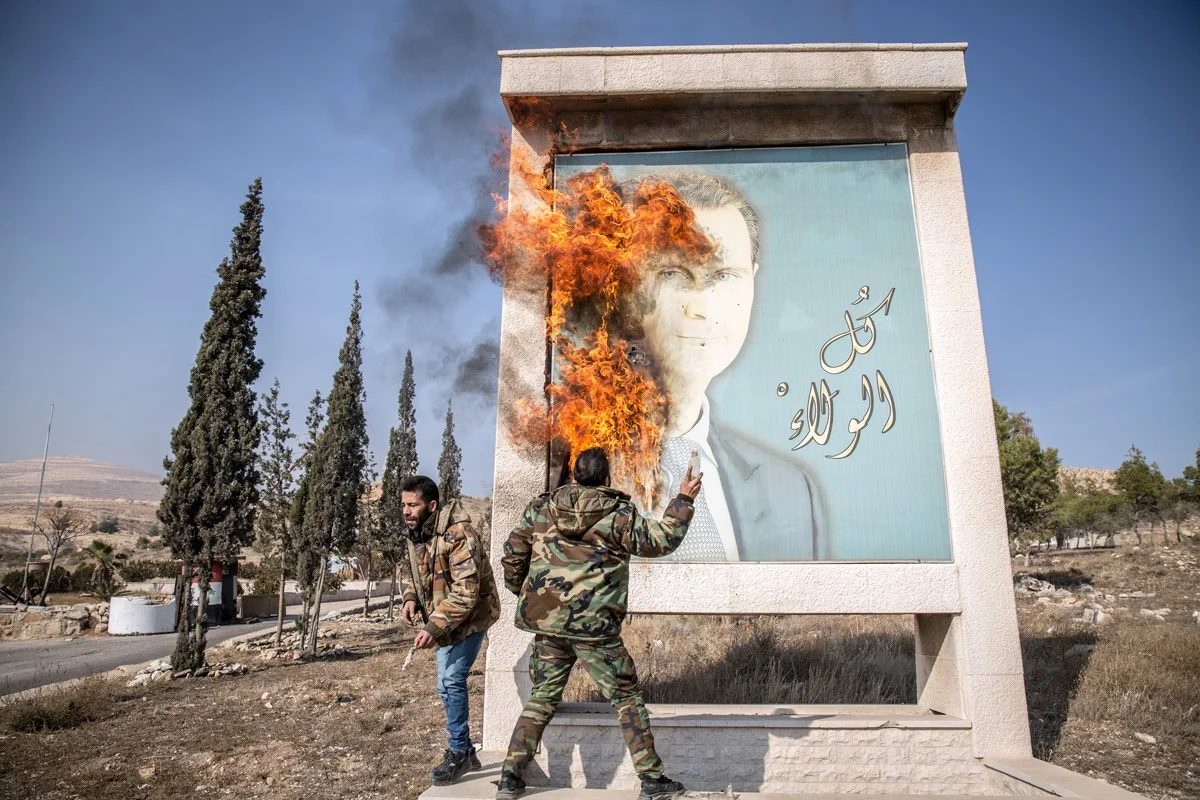
The defeat of the Assad regime in Syria coincided with a widespread demand for peace in the region. But who will be responsible for the blood shed?
After the start of the war, I worked a lot in Syria, filming for television companies such as CNN, ABC, Wise-News and others. It was a very sad work, primarily because it boiled down to describing the tragedy of the Syrian people - without the possibility of any solution to the problem. One by one, together with the Free Syrian Army, a stronghold of the secular opposition, we left the cities, recording endless interviews with refugees who, along with small children in inflatable boats, tried to escape the war by sea. And in the morning their corpses washed ashore.
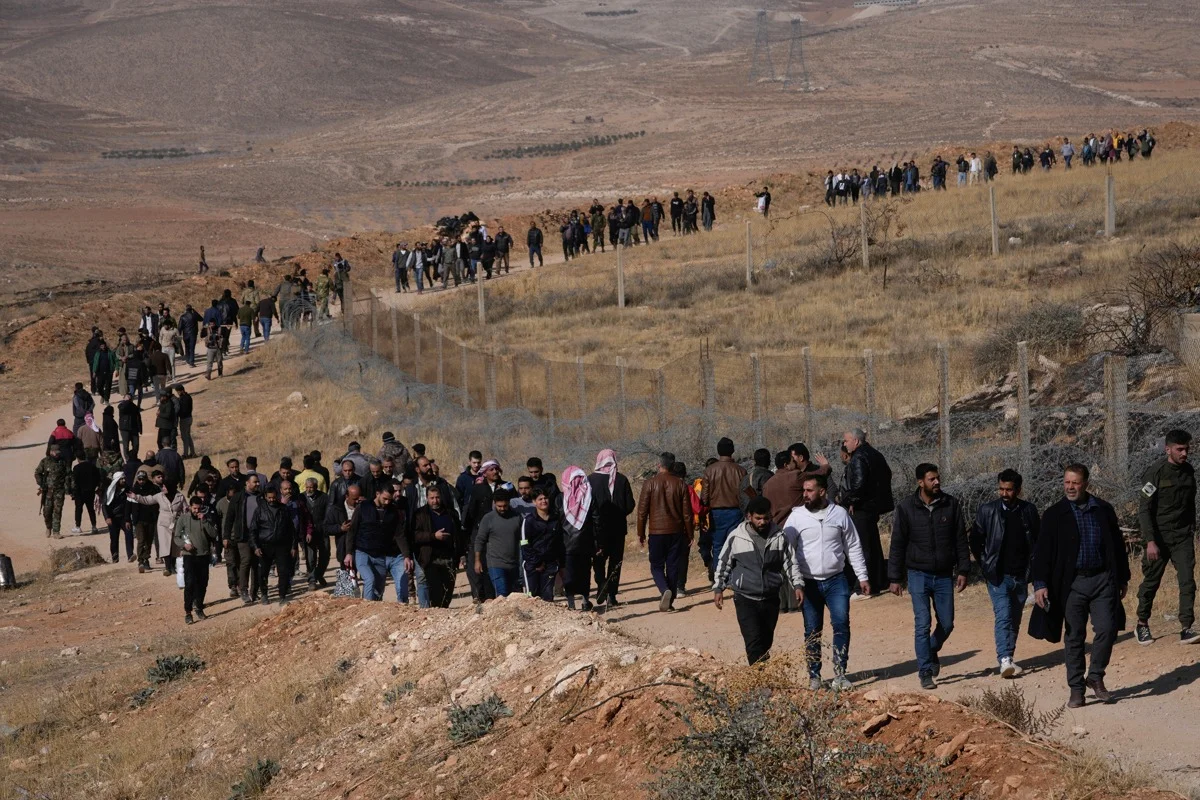
Last Sunday, my friend Ahmad called me, who had returned to his native Syria from Turkey. “This is the greatest day in the history of Syria,” he told me and sent me a video from the border crossing point, where for the first time in many years there were queues of people wanting to enter Syria rather than leave it.
And I realized that all our work was not in vain. That this was the most important work of my life. An unbearable life in a refugee camp or death in a stormy sea - this is the choice that Assad offered his people. And today, when there are queues at the border checkpoints between Syria and Turkey, Syria and Lebanon, the whole world sees who is the real patriot in Syria: Assad, who appointed himself as such, or the people whom he called microbes who fled the country.
Caesar's Archive
Although in reality the Syrians, of course, had the opportunity to remain in the country. Well, as an “opportunity”... I remember an elderly Syrian woman, Maryam Hallak. She spoke excellent English, was a very erudite woman, and was the director of a school in Damascus. One day, after the start of the war, representatives of the military police came to their home and took away her son Aykham. The formal reason is to check for involvement in the opposition. And that’s it - Maryam didn’t see her son again. Month after month she visited the authorities, but no one told her anything concrete about the fate of her son. Then she left Syria and was accepted by Germany.
I think that it was not just ignorance about the fate of her son that was the most terrible torture for Maryam all these years, but just the opposite - knowledge. Knowledge of what Assad's prisons were like.
In Turkey, I met with another Assad prisoner, who, with a bribe, managed to free himself from the worst Syrian prison - Sednaya - his name was Munir Fakir. He founded an association of former prisoners and relatives of missing people. Munir described the prison where he spent two years as a “death factory.” He told how in overcrowded cells people died in the summer - from dysentery, and in the winter - from hypothermia, how guards beat to death a man who did not get up too quickly when the chief entered the cell.
And the cases of release from these prisons were never a happy accident or simply a consequence of corruption: this is how the Assadites ensured the dissemination of information about what was happening in the prisons. So that people are afraid and silent.
...By the way, the school director Maryam later found her son. Or rather, she found a photograph of his dead body. In 2015, in the so-called “Caesar archive”, published by the international human rights organization Human Rights Watch*. It was an archive of 50,000 photographs of dead prisoners taken by a prison medical examiner between 2011 and 2013, at the very beginning of the Syrian civil war. In 2014, Ayham decided to flee, taking with him irrefutable evidence of the regime's atrocities. The defector was given the pseudonym Caesar, and it was thanks to him that tens of thousands of Syrian mothers learned about the fate of their children.
But there were also those who remained in the dark all these years. And today the world media publishes touching footage of the release of prisoners whom their relatives had considered dead for many years. These people will become for the whole world, including Russia, conductors of terrible knowledge about what was happening inside Syria all these nearly 14 years while Bashar al-Assad was establishing “control over the country” and “constitutional order.” The world community has a consensus on what to do with such knowledge; there have already been precedents.
And this is the least the world can do for the Syrians.
Mission accomplished
On Monday I called Dr. Qassem Al Zein from Quseir. In 2012, the car our film crew was traveling in ran over a mine, and Dr. Kasem saved me then. Since then we have kept in touch. Since 2017, Dr. Kasem has been living in Germany, and I wanted to find out from him what the sentiments are among the Syrians there in connection with the events in Syria.
Many European states are now announcing they will be suspending their refugee applications, and people are worried. And they can be understood. Yes, Assad is no longer a threat. But how safe is it to return to the rule of Islamists, who until recently associated themselves with Al-Qaeda (the organization is recognized as terrorist and banned in Russia)? Many of the “European” Syrians lived under ISIS (the organization is recognized as terrorist and is banned in Russia). And this is not an experience that you want to repeat.
However, the very first interview given to the American CNN channel by the leader of Hayat Tahrir al-Sham, a terrorist and banned organization recognized in Russia, Abu Muhammad al-Julani, leaves room for hope. Yes, he says, they started out as al-Qaeda, but the world has changed, the demand has changed. Every person goes through different stages in their life. A person in his twenties is not at all the same as he is in his thirties or forties. Al-Julani believes that a person who stubbornly follows principles without flexibility cannot be a successful leader.
In previous years, al-Julani said that after the victory of his group in Syria there would be no place for Christians and Alawites, but now he claims that no one has the right to destroy any ethnic group, and demands that they be judged not by words, but by deeds. At least publicly.
I think al-Julani and other representatives of the victorious opposition (including its Islamist wing) understand perfectly well that the world will not tolerate a second ISIS. And Türkiye, which is the main sponsor of this event to overthrow Assad and is fed up with refugees, will not tolerate even more.
The only way for the Syrian opposition now is to build normal relations with the environment and with the rest of the world.
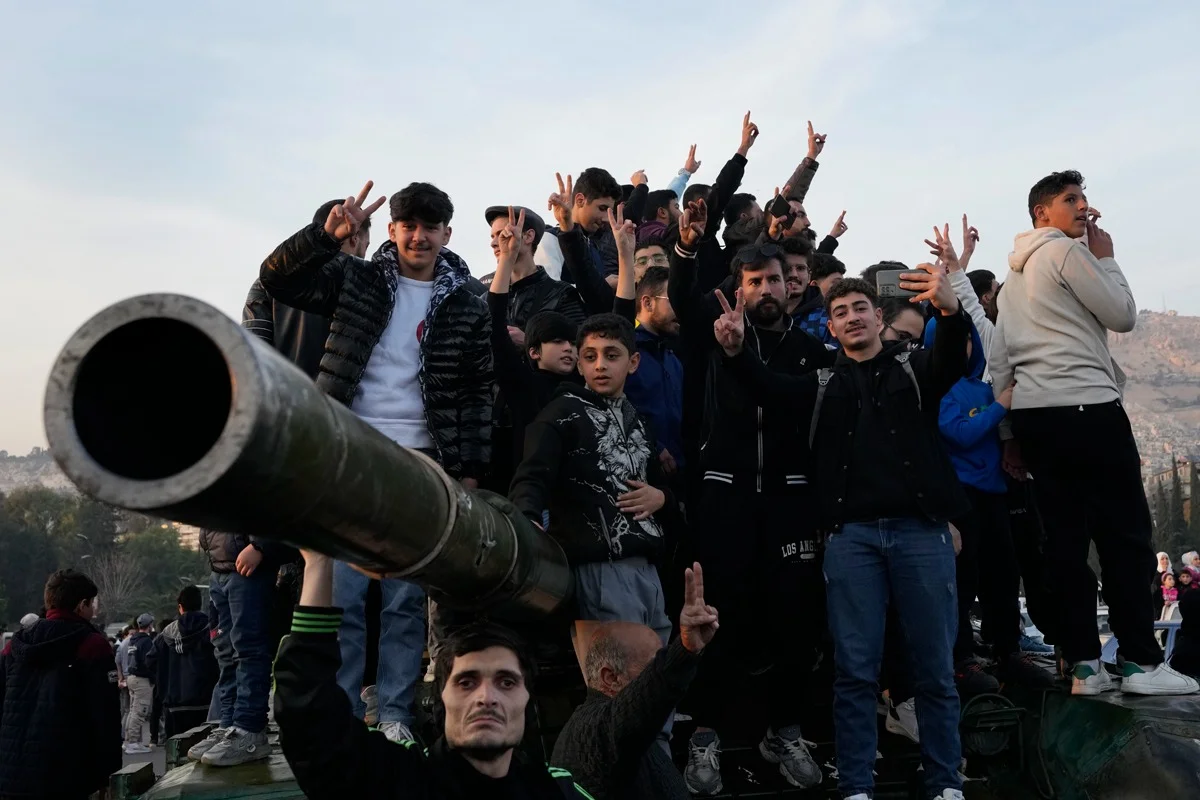
By “rest of the world” we should also mean Russia, which has a lot to lose in Syria. Let’s even leave aside for now the position of the strongest world power with a claim to dominance in the Middle East region, but it’s trivial: what will happen to the bases of Tartus and Latakia, where a lot of money has been poured in? What will happen to the Russian military personnel who remained at strongholds inside the country because no one expected such a rapid offensive by the opposition?
In the short term, I think Russia will not have any problems - if the Taliban** are recognized as adequate partners in the international arena, then the Syrian opposition certainly has no less chance.
Look at how the rhetoric of propaganda channels is changing, and from denouncing “the terrorists who captured Damascus,” they are moving on to saying that Russia has fulfilled its obligations to the Syrian people. However, what's next? After all, the same Khmeimim airbase in Syria is the most important center of Russian military operations in the Middle East and North Africa, including in Libya.
A friend of mine, a colonel in the Syrian National Army (formerly FSA), told me that for now the opposition had provided security guarantees to Russian troops in Syria, but added: “We have not forgotten how many times Russia has used its veto at the UN to help Assad, especially after he used chemical weapons against his people. We still remember how Russia <…> ( the expressed judgment cannot be published due to the requirements of Russian legislation. - Ed. ). But now we need to restore our statehood. But we need to wait for now with the Russian question.”
Nobody wants war
And yet: despite the unpleasant aftertaste of Islamist rhetoric from some representatives of the victorious opposition coalition, it is worth recognizing that for many Syrians, the long-awaited peace looks possible for the first time - even if it will be convenient only for the Syrians themselves, and not for those who want to help from the outside. By the way, this applies not only to Syria, but to citizens of other countries in the region, who have also suffered a lot in recent years. We are talking, of course, about Iran and Lebanon.
The victorious Syrian opposition directly says something that was recently unthinkable for Syria, which is formally at war with Israel:
Israel is not our enemy, the enemy is Assad, Iran and Hezbollah.
But in Iran itself, at the last elections, Masoud Pezeshkian became president, who built his election rhetoric around the message “I will provide Iran with peace, the lifting of sanctions and prosperity.” And: “Iran does not want war with Israel.” How could one imagine such a thing just recently? After all, the entire spiritual leadership of the country, all its military leaders for many years built their policy around the thesis of the need to destroy Israel as a state. It’s very simple: Israel has recently greatly thinned out Iran’s militant elite, and without this whip, it turns out, it’s not so easy to explain to the country that war is better than peace.
The same thing happened with Hezbollah, which is nothing more than an Iranian tentacle in Lebanon, in the Israeli border area. After a series of sophisticated, skillful Israeli special operations against Hezbollah leaders, it essentially lost not only its field commanders, but also its political elite and strategic weapons.
With the fall of the Assad regime, Hezbollah will also face logistical problems: Iran will no longer be able to supply it with weapons through Syria. Hezbollah no longer has the personnel or resources to operate as before and no longer poses a serious threat in the region. To survive, the group will have to rely on local resources and allies, which means encapsulating itself exclusively as a political force.
Ultimately, lasting peace will depend on the willingness of the new leaders of the various groups to negotiate and work together. And if, thanks to this, a moderate president is finally elected in Lebanon, this will mean, firstly, a way out of the protracted political crisis, and secondly, the possible restoration of diplomatic relations with Israel.
Shadi Safar