
Translated material
I don't understand you in Russian
Migrant children are prohibited from studying. Why deputies vote this way is understandable, but what do those who rejoice want to achieve?
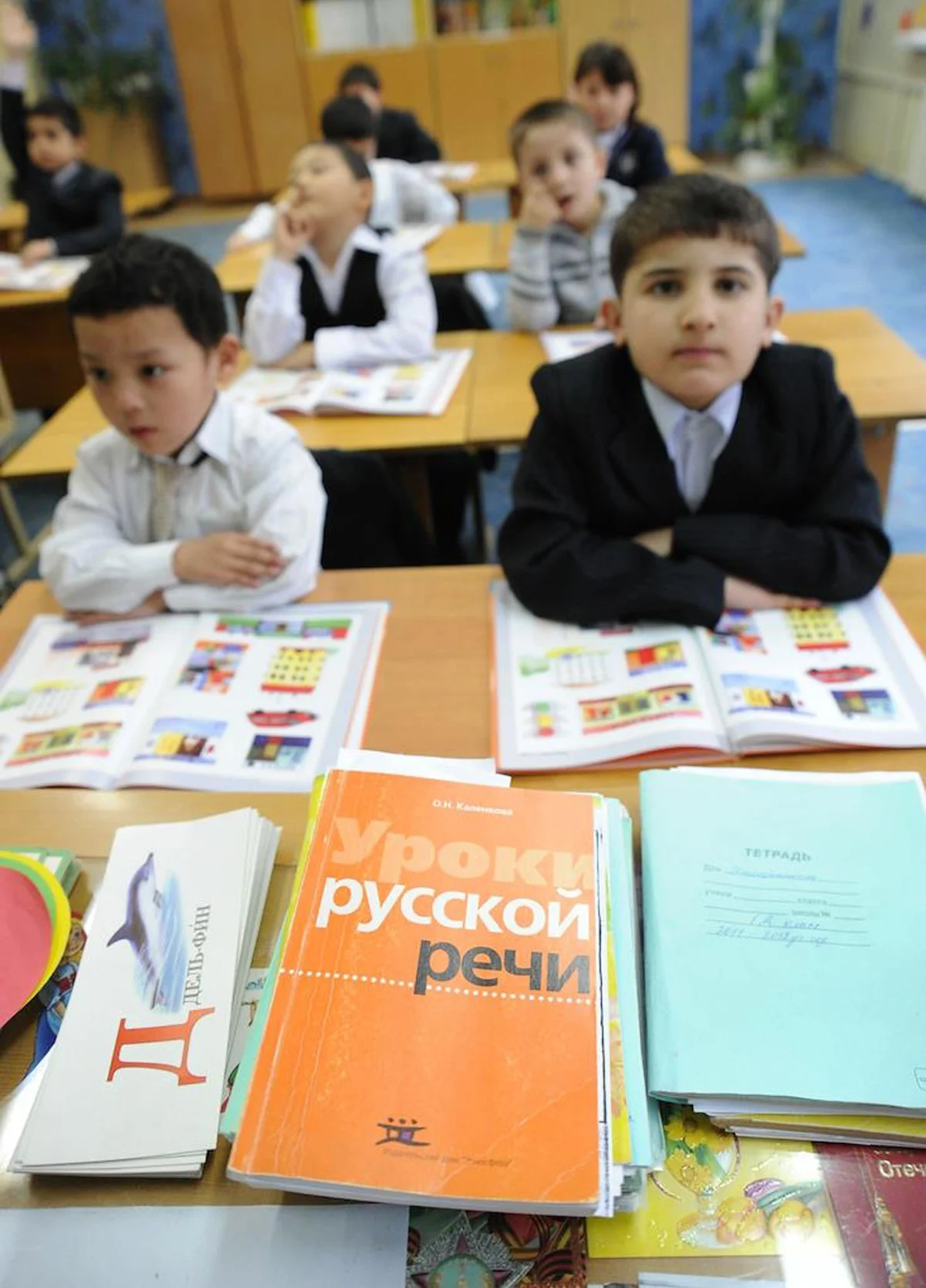
Migrant children will not be admitted to school without a Russian language test. The first reading of the bill has passed, and the rest will pass as well. There are no misfires in this matter. There was intrigue, because the scoreboard showed that 409 deputies were for, one deputy was against! Who is this non-trivial deputy? Regardless of what is voted on, any dissenting elected representative of the people is already exclusive. Because the “for” button on parliamentary seats is worn down to holes, and the “against” button shines like new and is rarely useful, and for some it is not useful at all. But the Duma website ruined the intrigue. The unknown frontier disappeared - everyone was in favor in the first reading.
An attentive reader, sensing irony in the author’s voice, can ask me with the same irony: are you “against” yourself, or what? Don’t you know how “delighted” parents are when they bring their children to class when it turns out that somewhere in a residential area of Moscow the most popular name among first-graders is Musa or Akhmed, and the minority are Russian-speaking children? The children of migrants understand each other very well and feel comfortable in this class, but the locals feel like outcasts.
Yes, I know about this, I will answer the invisible reader. Yes, I think this is a problem. Moreover, I think the whole migration situation is a big problem because it creates conflict. And we can talk about tolerance, that there are no bad nations, but only bad people - but this will not dissolve the conflict. And in general, as a person living next to a “rubber” apartment in which dozens of faces flash by, most of whom can only say “hello,” I experience, let’s say, mixed, contradictory feelings from interethnic communication.
But does the ban adopted by the authorities help correct the situation?
Before we try to answer this question, remember that the country actually has a Constitution. Which gives everyone the right to equal access to education is Article 43. And the education law in Article 5 guaranteed education for foreign children, regardless of language proficiency.
However, we understand that there is a law, and there is the “will of the people,” and these migrants “got it.” Therefore, everything that is adopted against migrants will receive the approval not only of deputies, senators and the president, but also of many citizens themselves. There is no doubt about it. But a ban is always a simple answer to a complex question.
Okay, so a migrant came here with a child. An adult himself doesn’t speak Russian very well, and a child even more so. Where and how can a child learn our language? Logically, school is the place where they learn. Coming to it, even a Russian boy or Russian girl is not yet required to read and write in their native language. Although, of course, they can talk. But “they will teach you at school anyway” - this is how many parents argue. By the way, I also went to first grade in a Soviet school, not knowing how to read. And indeed, they taught. And they even taught me how to write, as you can see.
But the complexity is also understandable. The school has a program. How will a teacher convey this program to a child who does not understand what he is being told? How to teach children in one class, some of whom quickly grasp the material, while others do not grasp the material at all? Deputy Yarovaya, who has already become a household name, says that ignorance of the Russian language is “the basis for conflict”, which can become “a source of interethnic hatred.” And school is not a place for such conflicts. School is definitely not the place. What is this place?
Another simple question: where will the children go who are not accepted into school because they don’t know the language? Will they learn it somewhere? Or will they learn it on the street?
What will they do? Hanging around doing nothing? Thousands of children who do not speak the language, who are not doing anything useful - how will they spend their leisure time? They will become older - by a year, two, three. Aren't you afraid that these young foreigners will become part of teenage gangs, for example? Unadapted, unsocialized - they will not have another road.
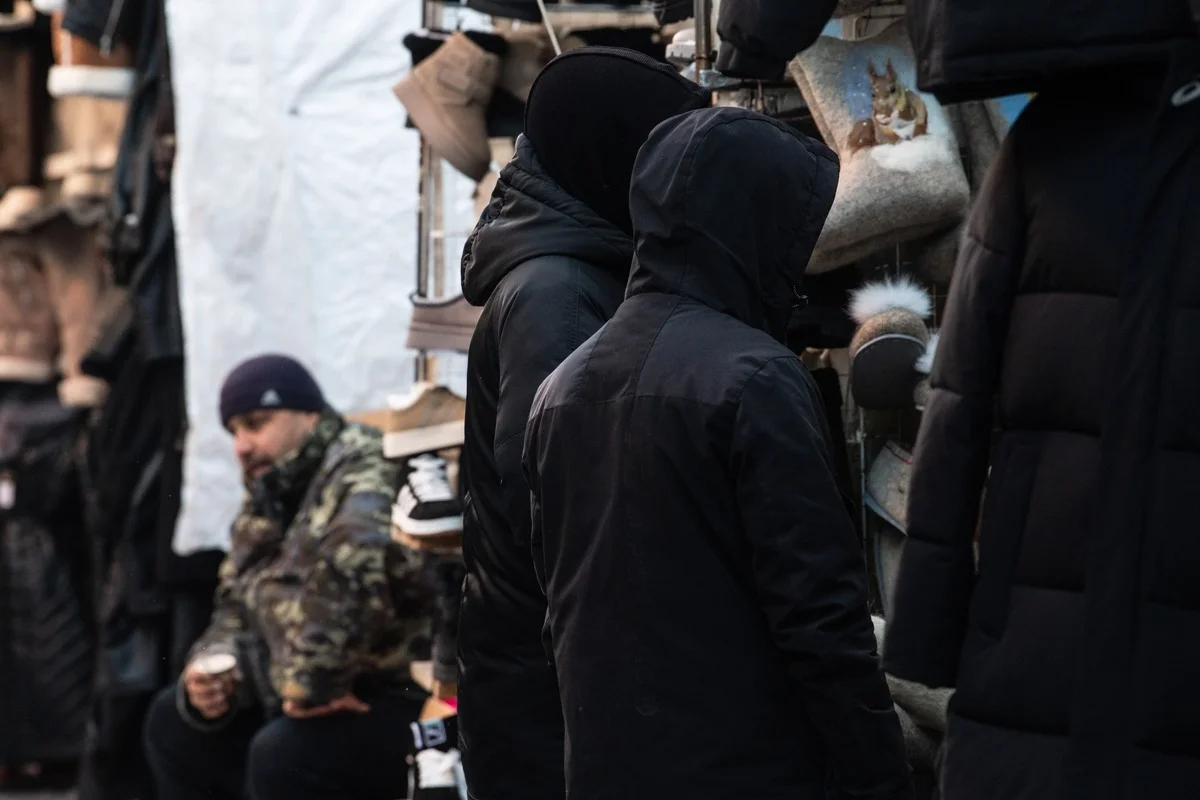
I know what they will answer me. There’s no point in coming here with families! Let the families be in their homeland, and let the migrants come for the duration of their work contract. You've done your job, go home. This idea has already been proposed in the Duma, but it has not been brought into law—yet. Well, let's consider this option.
Hundreds of thousands of men come to Russia, left without families and without women. Young people, mostly. Healthy - as a rule. With all the natural needs of young and healthy men? Who was afraid to go outside because our girls were being attacked there? Who spoke about violence? Will there be more or less of it after such bans?
Let's be completely honest.
The law banning the admission of children without knowledge of Russian to school is not so much against children as against migrants as such. He is not rational, but emotional. We want to make their life as inconvenient as possible, that's all.
At the same time, two strong feelings fight within us. Hostility towards foreigners - but at the same time the desire to use them in dirty work, perceiving them as servants or even as legalized slaves. After all, illegal immigrants do not appear on their own, but because they are beneficial to those who hire them. Those without rights can be paid less, and they have no protection.
But ask the people now in the referendum: are you in favor of not allowing migrants in at all? — after all, the Russians will vote “yes”! Without asking yourself the question: who will work? It is great that there is almost no unemployment in the country. But this also means a shortage in the labor market in almost all sectors. And when the men also went to the Northern Military District, where they simply pay more, then in some areas the shortage of workers became critical. Not to mention the fact that, despite all the struggle for fertility, the population decline is only growing.
And then deputy Nilov comes to the podium:
“The times of Ivan the Terrible - the population of Russia was up to 10 million, nothing, they managed. Peter's times - 15 million, 1812 - 40 million population of Russia, and nothing, they reached Paris. Great Patriotic War, 1941 - 110 million population of the Russian Federation. Therefore, we can cope without migrants, especially those who do not want to know the language, culture and come here to establish their own rules.”
We will not explain obvious things to the deputy. That 10 million in the time of Ivan the Terrible is not the same as 10 million today. And in the time of Napoleon there were less than a billion people on earth. So the then 40 million would be like the current 320! But the escapade about the Great Patriotic War is especially interesting. What does Nilov mean? That the RSFSR fought the Nazis alone? And those 110 million defeated him? Did the Russian Federation alone also lose 27.4 million people?
But the message is the same - we will defeat everyone, we will handle everything ourselves! So why haven't they managed it until now? Did the migrants interfere? So there are fewer and fewer of them - didn’t you know? More people are leaving than coming. But Russia is not the only and no longer the most attractive place to make money. And we have a small population for such a huge territory. A population that is both aging and dying out. A population that is physically unable to satisfy the grandiose ambitions of the state. A population stricken by alcoholism, drug addiction and simply suffering from ordinary diseases that underdeveloped free medicine cannot overcome.
Migrants are somehow closing this hole. Good or bad, they close it. We fight with them and make the indigenous population happy with the fight. Which with such an attitude will soon be left without a “servant”. And it turns out that there are no simple answers to simple questions.
Therefore, it is understandable why deputies vote this way. But at the same time, I don’t understand what we want to achieve in the end. I don't understand Russian.