
Translated material
Oh, Scholz, are you Merz?
After a vote of no confidence in the chancellor, the change of power in the key EU country - Germany - will take place almost synchronously with the United States
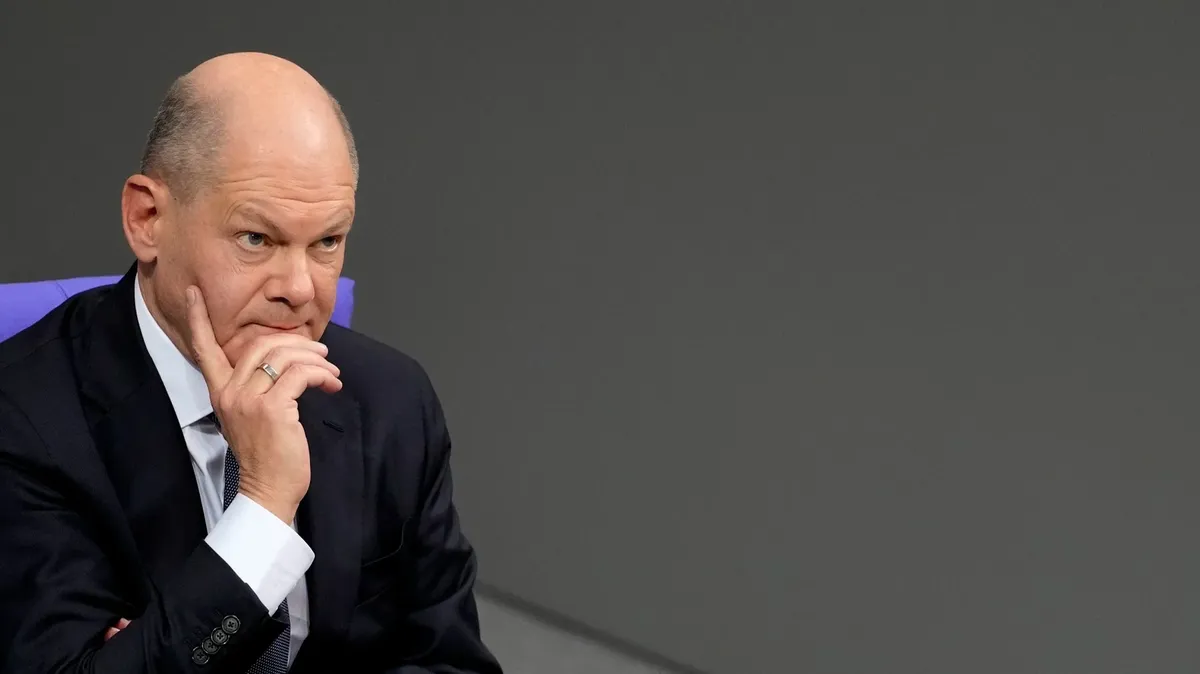
German Chancellor Olaf Scholz during a debate in the Bundestag on a vote of no confidence, December 16, 2024. Photo: AP / TASS
The Bundestag, as expected, accepted the proposal of German Chancellor Olaf Scholz on December 16 and passed a vote of no confidence in him personally and his government, thereby opening the way to early elections to be held on February 23.
Thus, at the beginning of the year there will be a changing of the guard at the top of power not only in the United States, but also in Germany, which remains the most powerful economy in Europe, one of the pillars and driving forces of the European Union. Both replacements promise to be significant against the backdrop of continued turbulence and multifaceted uncertainty in the world.
Ironically, despite all the dissimilarity of government institutions and political procedures, the change of power in Berlin and Washington occurs almost simultaneously. As we have already described in Novaya Gazeta, in Germany this is a consequence of a protracted political crisis, which led to the collapse of a rather loose government coalition.
In turn, it matured for a long time against the backdrop of progressive economic stagnation and the crisis of industry, especially the automotive industry. Obvious reasons include the burden of supporting Ukraine and disagreements over the forms and means of this support, as well as public debate over immigration.
Chancellor Scholz fired Finance Minister Christian Lindner on the evening of November 6. He heads the liberal Free Democratic Party (FDP), which, together with Scholz’s Social Democrats (SPD) and the Greens, was part of the ruling “traffic light” (“red-yellow-green”) government coalition.
The coalition was formed through a compromise between disparate parties in more prosperous times, in 2021, when the consequences of the covid pandemic were just beginning to manifest themselves, Russia had not yet begun its military operation in Ukraine, and cheap Russian oil and gas provided the German economy in sufficient quantities.
Over the past three years, this coalition trio of parties has constantly been in conflict with each other - after all, they adhere to different ideologies. Their reign was marred by partisan infighting and inconsistency. At the time of the creation of the coalition government, it was a “marriage of convenience.” Many believed that the alliance between these parties would be sustainable in a country that wanted to turn the page on the Angela Merkel era.
In the new conditions and with tightly strained relations within the cabinet, any reason was enough for the cohabitation to end prematurely. And they became a dispute about increasing the state budget due to further growth of debt. Social Democrat Scholz insisted on increasing the debt to fulfill domestic social obligations and help Kyiv with money. Market leader Lindner proposed reducing social projects and payments, and providing Ukraine with more decisive military support.
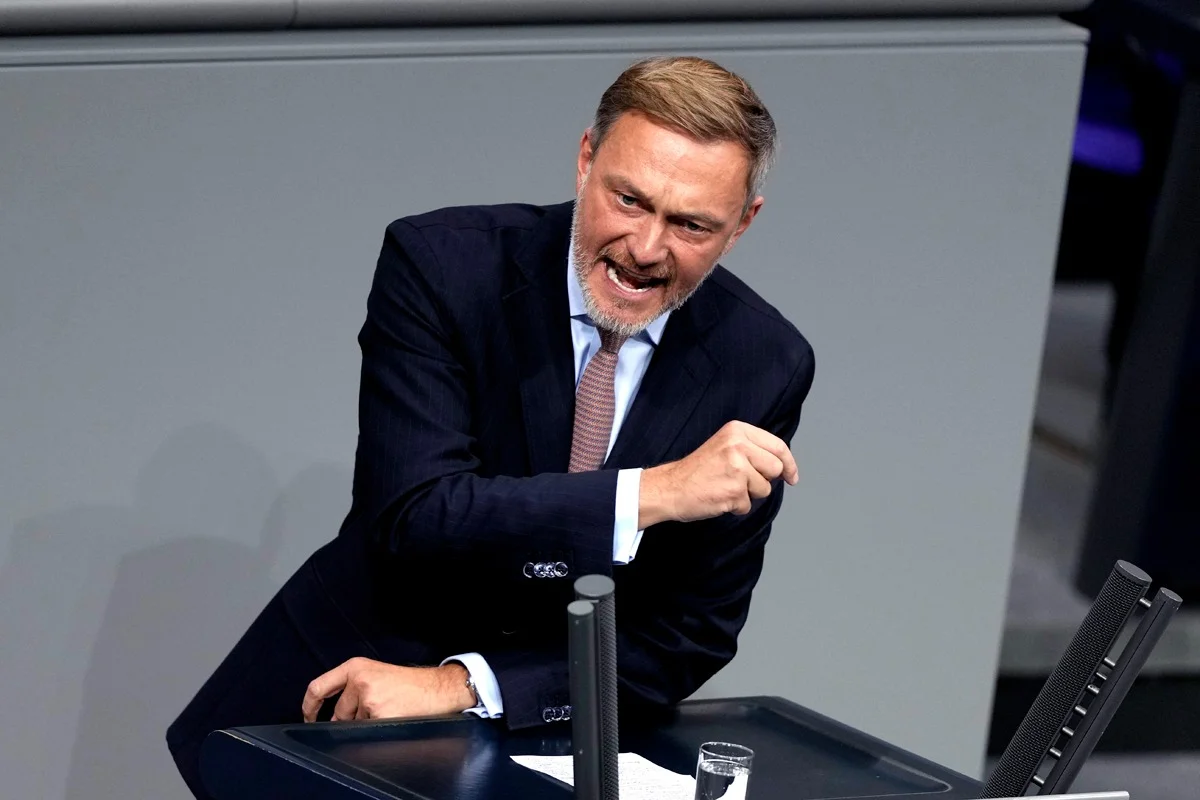
The liberals pointedly did not want to associate themselves with the wasteful promises of the socialists and the “greens”. They called for radical fiscal and economic reforms. It was obvious that the coalition partners would never accept Lindner's demands. He refused Scholz’s proposal to turn off the “debt brake” built into the German constitution, which prevents taking out additional loans. Such an emergency decision requires a majority in the Bundestag, which the government no longer has since November.
The Chancellor accused the “fiscal hawk” of “abuse of trust”, of unilaterally abandoning the hard-won budget agreement, and of leaving a hole of almost 10 billion euros in the German budget for next year. Liberal ministers left the cabinet. The minority government, in which the Social Democrats and the Greens remained, continued to be headed by Scholz. But the question was how long could the fragile alliance between the SPD and the Greens last. He did not have sufficient support in parliament to advance any significant initiatives. The government could not even pass a temporary budget.
Government crises sometimes happen in democracies, and it's not the end of the world. There are constitutional mechanisms to get out of them. There is one in Germany too. First, Chancellor Scholz had to put the question of confidence in his government to a vote in the Bundestag. If there is no majority (and it certainly was not expected), then President Frank-Walter Steinmeier will dissolve the Bundestag within three weeks. Then, within 60 days, early federal elections should take place.
German political scientists call such votes of confidence fictitious because their goal is to formally open the way to new elections. Everyone agreed with this scenario, but sharp disagreements arose over the timing.
Chancellor Scholz announced that he would hold a vote of confidence on January 15th. Then elections would not take place until the end of March and Germany would have a full-fledged government by next summer.
The leader of the opposition center-right bloc CDU/CSU and the most likely contender for the chancellorship, Friedrich Merz, accused the current head of the cabinet of irresponsibility.
They say that the deadlock situation cannot be prolonged for several months; the country needs a capable government, especially in such difficult domestic and foreign political conditions. Who will come here with investments given such uncertainty? He called for a vote to be scheduled as early as November to force elections on January 19. But according to the constitution, only the current Chancellor Scholz, and no one else, has the right to set the date for the vote of confidence. Such a provision in the basic law of Germany exists as insurance in case of political chaos, similar to that which contributed to the Nazis coming to power in 1933.
In the end, not without pressure from within Germany and, probably, from the European Union, a compromise was reached: a vote on December 16, elections on February 23.
In addition to the long-established leader of the Christian Democratic opposition, Merz, Scholz again put forward his candidacy for a new term, as well as one of the co-chairs of the Greens, Vice-Chancellor Habeck. Lindner's liberals also do not lose hope of entering the government if they manage to overcome the 5% parliamentary threshold. They are not very popular, but they are influential because they represent business circles.
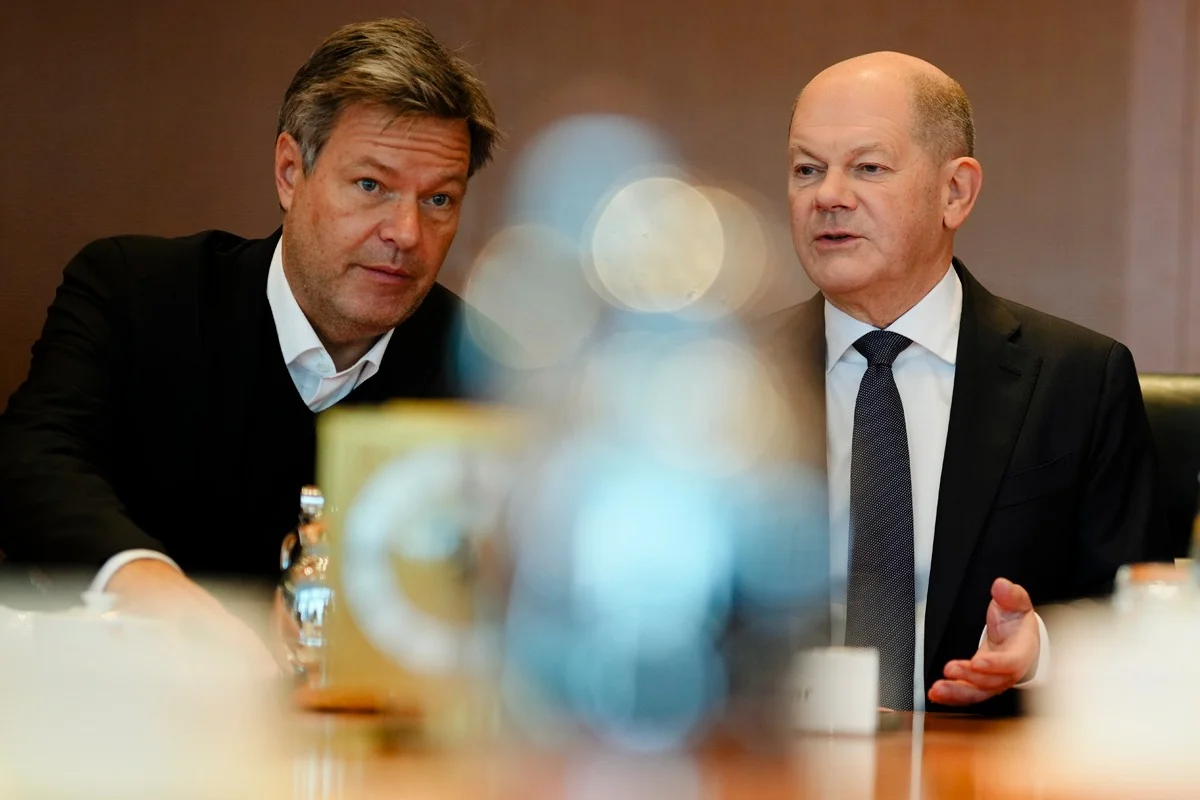
Chancellor Scholz began his new election campaign on November 30th. His positions are weak, but he still has a theoretical chance to win. Speaking as a representative of the SPD, he opted for stability. If Germany makes a wrong turn now, it will have serious consequences, the chancellor assures.
And it emphasizes that security, cohesion, prosperity and jobs are at stake. The SPD stands for decent pensions, affordable housing, healthcare and social assistance. The vast majority of Germans want security, stability, cohesion, reliability, a sense of proportion and prudence. Accordingly, in foreign policy, Germany should not be drawn into hostilities in Ukraine and is doing the right thing in not supplying Taurus missiles to Kyiv. But it is and will remain Europe's largest donor of aid to Ukraine.
As part of the election campaign, Scholz even made a tentative conciliatory call to Putin, urging him to negotiate with Kiev on a just peace in Ukraine. I doubt it would have helped much.
Merz, on the contrary, proposes a radical change of course. The current government, in his opinion, has led to the isolation of Germany in the Western world and to the loss of its leadership position in the EU. According to him, at summits in Brussels, the chancellor “either sits silently for hours or edifyingly explains the structure of the world.” As a result, over the past three years, the German government has not come up with a single initiative in areas such as migration or economic policy that could be the subject of discussion.
How he explains indifference to European politics Scholz’s refusal to go to a prestigious party in Paris for the opening of Notre Dame Cathedral, restored after a fire. There, for example, Emmanuel Macron brought together Donald Trump and Vladimir Zelensky for a meeting. Or consider Macron's recent visit to Poland, where the two NATO allies discussed policy towards Ukraine. The Federal Chancellor of Germany was not there either.
To be fair, it should be noted that Macron’s activity does not indicate a stronger position for Paris. France and Germany, which for many years were the driving forces of European integration, are now weak and isolated. While Germany's governing coalition has died, the French president is dealing with a paralyzed parliament and threats from the far right. He just had to part with the minority government, which received no fictitious vote of no confidence, and form a new one, no more reliable.
The EU is trying to organize itself in the field of defense against the backdrop of a military conflagration on its eastern borders and the unclear prospect of reducing US military involvement in the Old Continent. A Trump victory will embolden Europe's right-wing populists, who will feel immune to criticism and will happily exercise veto power in the EU and NATO. Orbán in Hungary and Fico in Slovakia are already doing this. Meloni also felt her international political weight in Italy.
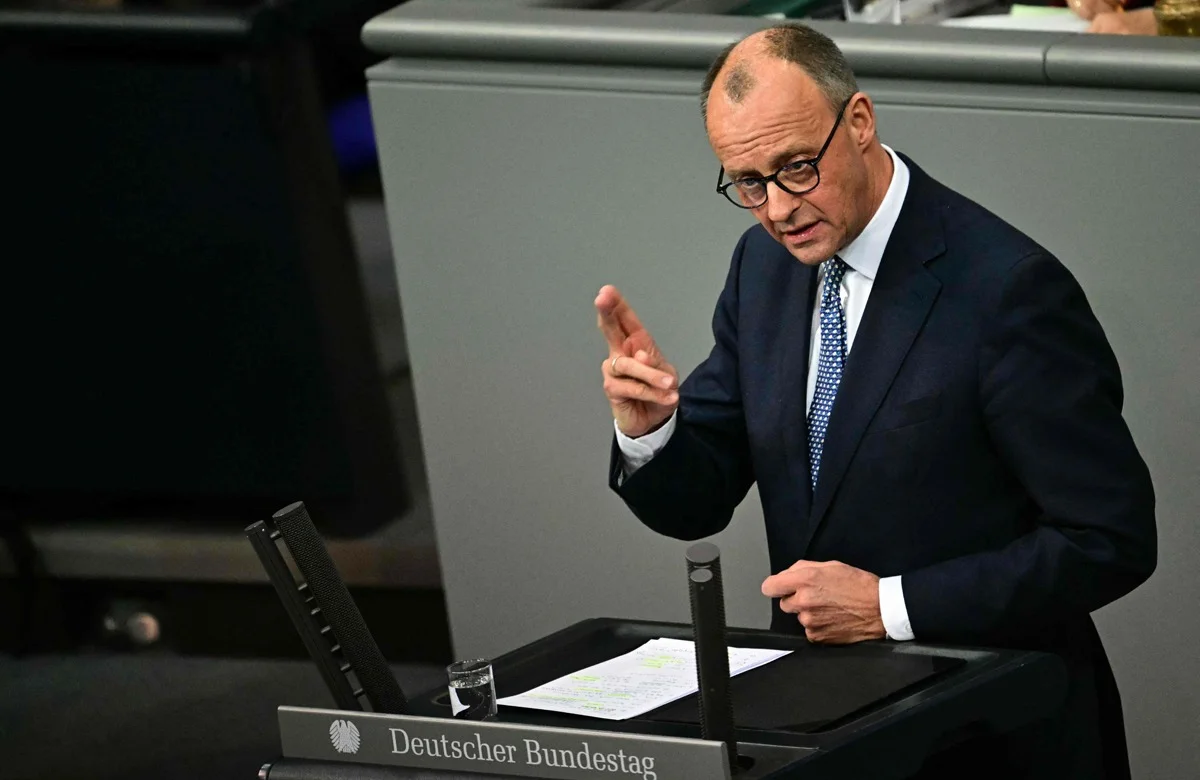
Returning to Germany. Friedrich Merz's conservative bloc is clearly leading in opinion polls. If no surprises happen, Merz is the future chancellor. Merz is a step to the right compared to Merkel, who was a member of the same party. Merz's goal is to close Germany's borders more tightly to asylum seekers. Even contrary to modern ideas about humanitarian norms. He does not trust traditional media and prefers his account in X, where he exposes “criminal migrants” and gender-inclusive rhetoric. He is not a big supporter of the green deal and loves powerful German cars. Firmly believes in "pure" capitalism as an efficient economic system. All this makes him similar to Trump. But unlike the elected American president, when it comes to Ukraine, Merz is pro-Ukrainian radical, has long criticized Scholz’s cautious policies and promises to give Kyiv more modern weapons and money.
It is likely that none of the parties will emerge from the elections as an absolute winner and again coalition allies will be needed with whom the program must be coordinated and compromises must be achieved.
Even today's favorites, the CDU/CSU, may not have enough votes to form a government alone. Even if they take as partners the FDP liberals, whose entry into parliament is in doubt. Political scientists predict a “grand coalition” of Christian Democrats with the Social Democrats as junior partners, as was the case under Merkel. If the CDU/CSU and the SPD do not get enough votes to form a majority, Merz will have no choice but to invite the Greens. This will lead to another tripartite coalition of ideologically dissimilar comrades. And therefore vulnerable in moments of crisis. The less likely scenario of an SPD victory with Chancellor Scholz promises an even more complex configuration.
Political scientists are politically correct and hesitant to bet on the victory or significant success of the far right or the far left. But in vain. The recent trend of strengthening populists may go over the edge. The third highest-rated party (after the CDU/CSU bloc and the SPD) is now the far-right Alternative for Germany (AfD). However, she does not shake hands because of the neo-Nazi “darling”, and everyone else refuses to cooperate with her. But there is also the far left “Sara Wagenknecht Bloc” (BSB), which, if necessary and desired, can be taken into a coalition.
The upcoming elections in Germany promise to be no less exciting than in the United States.