
Translated material
Another deuce
Poor behavior, Or violence as another staple of Russian education
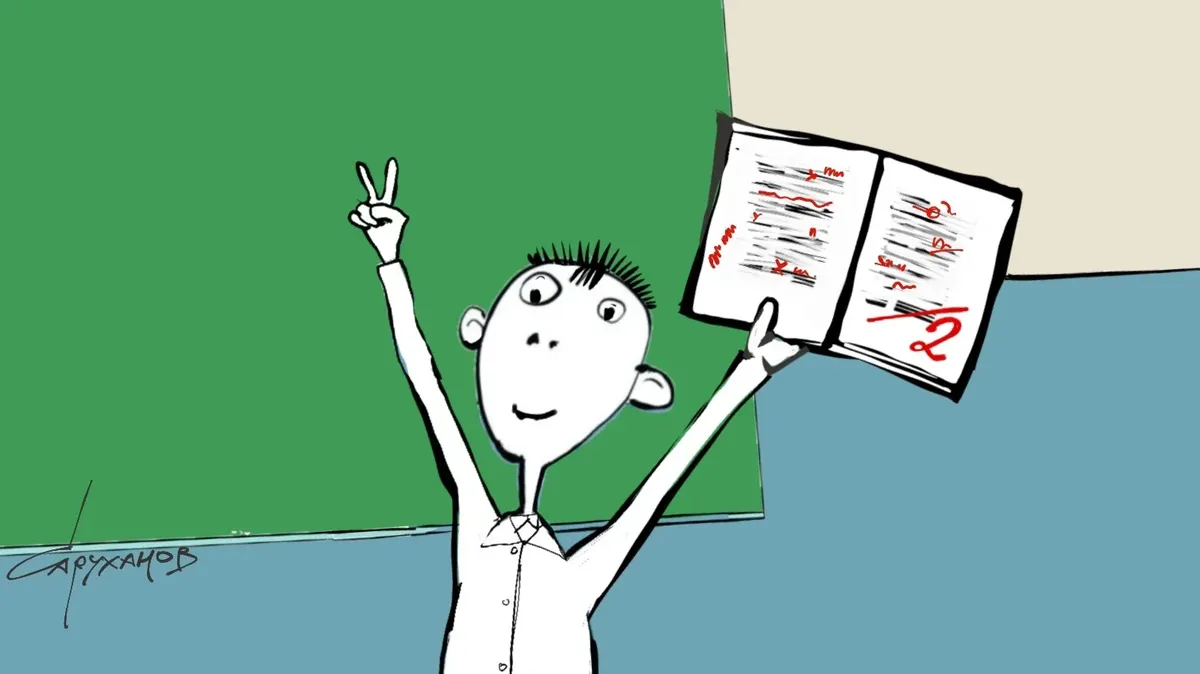
Drawing: Pyotr Sarukhanov / Novaya Gazeta
Vladimir Putin, at a meeting of the Human Rights Council, learned that schoolchildren are no longer given marks for behavior, was surprised and suggested giving them. In March of this year, the head of the Human Rights Council, Valery Fadeev, already made this proposal. Why is this issue so concerning to the Russian authorities and those who should protect human rights?
Simple solution
Conversations about the fact that Russian teachers are defenseless in front of schoolchildren have been going on for several years. And the violence of children towards teachers - as well as the violence of teachers towards children - in domestic schools does not seem to be decreasing. Any search engine, whenever you try (I sometimes have to track it at work), will easily find the latest, from a couple of hours to a month or two, news about how “a student hit a teacher” or “a teacher hit a student” - for example, here and here . But all the talk about systemic solutions in the field of school discipline has not gone beyond discussions in professional communities for many years.
Meanwhile, teachers loudly demand protection from students who bully them, and society as a whole agrees that children should be given some kind of boundaries.
The Human Rights Council a year ago, in December 2023, received instructions from President Vladimir Putin to develop measures to protect the teacher. At the same time, amendments were made to the Education Law to legislate the right of teachers to respect for their human dignity, protection from personal insult and physical and mental violence.
It would seem that this is where we should turn around. The HRC received carte blanche: there is wide scope for discussing such sensitive issues as discipline in the classroom, training teachers in non-violent ways to restore it, and working with problem families. It is possible to develop algorithms for the correct response to crisis situations at school (the teacher, even if the student is acting up, should not resort to hand-to-hand combat). It is possible to extend the experience of organizations that have long been good at working with difficult teenagers throughout the country. You never know what you can remember, discuss and implement if you have a presidential order, an expert community and at least a little ability to Google and analyze.
But the best thing the Human Rights Council has come up with this year to protect teachers is to bring back behavioral grades to schools. This idea was immediately criticized in society and in the media. Here’s how Valery Fadeev responded to criticism in August of this year: “We are asked how behavior will be graded at school? 5-4-3-2? No, just “unsatisfactory.” There are questions about the criteria.
And you try to go, for example, into the office of the editor-in-chief, spit chewed paper at him and swear at him. And what will happen to you? Why can this be done in relation to a teacher?
Teachers are different, we are all not angels, there is bias. The decision on “failure” must be made by the teachers’ council. The two can be corrected. This is an educational process. We are accused of kicking children out of school. We are not sadists, but one scoundrel can spoil the atmosphere in the school and he needs to be punished.”
Positive remoralization
“Punish” is the main word here. It was “punish”, as if this “scoundrel” was already an adult, mature and incorrigible, and not try to somehow influence him, they used to say “re-educate”, now they prefer to talk about positive socialization. Although I like the term invented by the Strugatsky brothers: remoralization. I remember Edik Amperyan tried to develop a remoralizer with him.
Working with children with problem behavior is very difficult. Specialists are needed, but they are few.
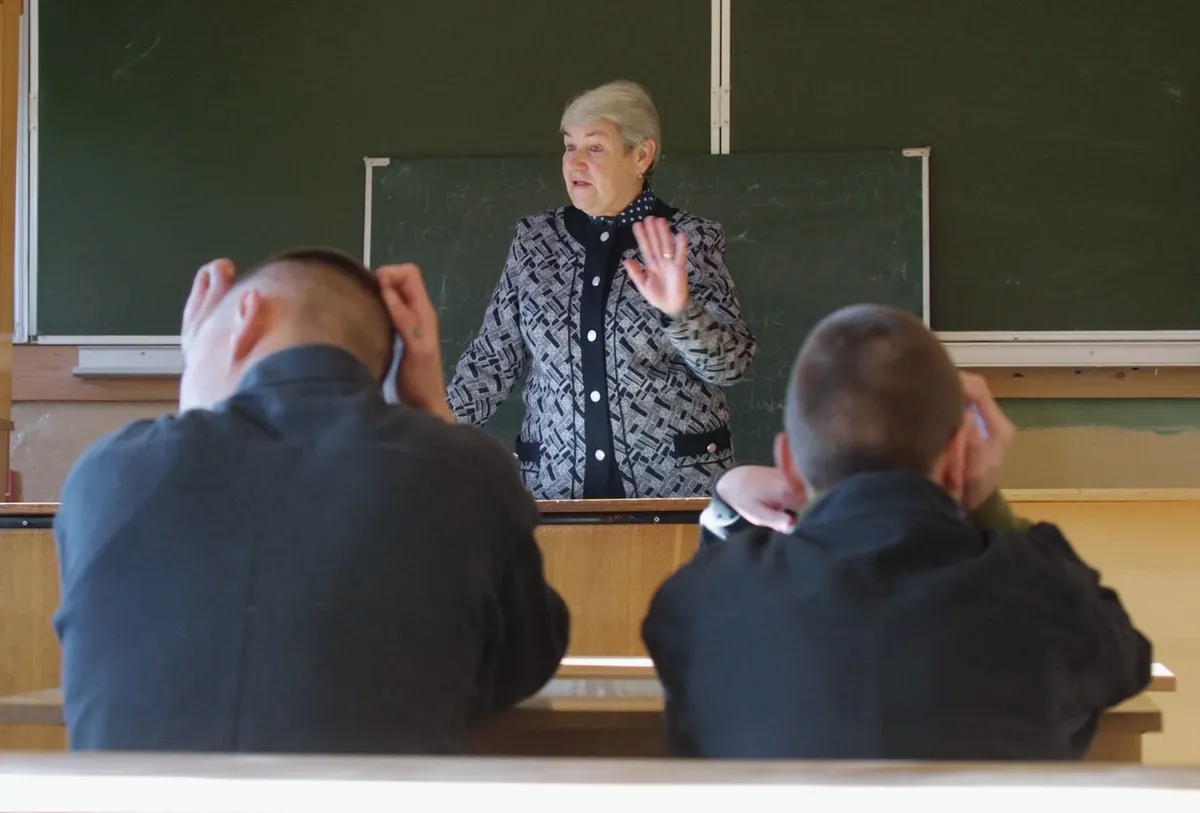
Few places teach future teachers how to work with difficult behavior—and most don’t even know how to work with it. The only way a teacher can counter violence from a child is violence -
and he is prohibited from showing violence towards a child by the same paragraph 3 of Article 43 of the Education Law, which since last year has prohibited offending not only a child, but also a teacher. And if the teacher does not know how to do otherwise, he feels defenseless, helpless, powerless in the face of the young scoundrel.
This is not to say that nothing at all was done on a national scale. For example, there are free courses from the “I am a Teacher” project - on working with conflicts and bullying and on working with difficult behavior. There are scientifically based recommendations from the Shalash Foundation for teachers. There are good books, for example, by psychologist Svetlana Krivtsova, “Teacher and Problems of Discipline.” There are advanced training courses dedicated to the problems of the discipline. But on the scale of a huge country, all this is a drop in the ocean of relationships built on violence, on “I am stronger, and you will obey me.” Violence in interpersonal relationships may be one of the bonds on which our entire society in general, and the school in particular, rests.
Solving the problem of bad behavior in school with punishment is solving the problem of violence with violence. Punishment does not help in any way, except for one thing: the child may temporarily stop heaving in fear of punishment - well, until he grows up and becomes stronger. Or until he unites with a group of others like him.
Naturally, in a society that grew up in a culture of violence, virtually no post-perestroika attempts to introduce school councils with the participation of students, school honor courts, conflict commissions, reconciliation services, and school ombudsmen took root. The idea of introducing tolerance to those who are not like everyone else did not take root (even the word itself became dirty and expelled from the school dictionary). But education has triumphantly returned to school practice - but not the education of the ability to exist peacefully in a team, as one might think, and do something good together - but ideological, military-patriotic education.
Why?
Naturally, introducing assessments for behavior is much easier than understanding the causes of problem behavior in schoolchildren and teaching teachers to respond to it adequately and professionally. It seems that measures have been taken, and the president’s instructions have been fulfilled, and nothing special needs to be done.
But no one really understands why these assessments are needed and what will depend on them. For example, in June, Minister of Education Sergei Kravtsov at a meeting of the Human Rights Council said: “In general, we are not against the introduction of assessments for behavior, <...> the criteria for this assessment, who will issue it and what consequences this assessment has, need to be understood.” .
In August, Valery Fadeev complained that the proposals of the Human Rights Council related to the introduction of assessments for behavior were stuck in the authorities: “Several departments responded to us in the spirit that it is impossible to implement the proposal because it does not comply with the law. But we sent proposals just to change the law. The situation now is like this, this is about the issue of bureaucracy. But the president's order must be carried out. If you don't like our suggestions, give us yours. Let me remind you that at a recent large meeting of our working group on education, the Minister of Education of the Russian Federation Sergei Kravtsov supported this proposal. There is understanding. But we are in a phase of bureaucratic work.”
Fadeev’s logic is simple: if our proposals contradict the law, the law must be changed.
At a meeting on December 10, these valuable proposals were again discussed, this time with the president. It was then that he was surprised that they didn’t give grades for behavior in schools - although they hadn’t been given for about thirty years. But, as it turned out, he also does not understand why these assessments are needed: “But if the assessment for behavior is returned, then it needs to influence something... It must be equivalent to other assessments... I agree that this needs to be done with specialists , discuss with the parent community and make an informed decision.”
Background
Behavioral assessments (and assessments in general) originally appeared in schools to replace corporal punishment. The five-point system was first officially established by the Ministry of Public Education in 1837 and was in effect until 1918, when the People's Commissar of Education Anatoly Lunacharsky signed a decree “On the abolition of grades” and prohibited “the use of a point system for assessing the cognition and behavior of students in all cases of school practice without exception.” " Detailed characteristics were written about the students and they were given only one of two grades - “success” and “failure”. This system turned out to be ineffective. In 1933, a verbal assessment system appeared (“unsatisfactory”, “satisfactory”, “good” and “very good”), and in 1935 a joint resolution of the Council of People’s Commissars and the Central Committee of the All-Union Communist Party of Bolsheviks restored the five-point system, with each number corresponding to a verbal definition:
"1) very bad,
2) bad,
3) mediocre,
4) good
5) excellent."
Behavior was then included in the certificate last in the list of school subjects and was assessed on the same scale.
In 1944, a resolution of the Council of People's Commissars eliminated the verbal designations of grades and left only numbers from 1 to 5. The decree of the Minister of Education Vladimir Potemkin “On the introduction of a digital five-point system for assessing the performance and behavior of students in primary, seven-year and secondary schools” spelled out the rules for assigning grades based on behavior: a five was given for “impeccable behavior,” a four for “noticeable violation,” and a three for “serious violation.”
A bad grade was given at the same time as expulsion from school. A certificate was generally issued only for excellent behavior.
In 1970, the Minister of Education Mikhail Prokofiev, in the “Instructions on grading the behavior of secondary school students,” introduced verbal designations for behavior assessments: “exemplary,” “satisfactory,” and “unsatisfactory.”
Resolution of the Council of Ministers of the USSR dated September 8, 1970 No. 749 “On the Charter of a secondary school” states this: “Students of graduating classes who have an annual unsatisfactory assessment of behavior are not allowed to take exams; they receive a certificate stating that they have attended the course secondary school".
A little personal
Those adults who managed to study in a Soviet school still remember this system well. Some people think it is absolutely correct: there was discipline then. Others remember that a teacher’s behavior grade could be reduced not only for some kind of violation of discipline, but also, for example, for trying to argue with the teacher over a bad grade given in the magazine not for knowledge, but for appearance: too long hair, earrings in the ears, a blue suit that was just allowed in the country instead of a dress with an apron. Unfortunately, I personally remember such cases - and “you won’t get a certificate, you’ll leave school with a certificate” was always the teacher’s final argument in them.
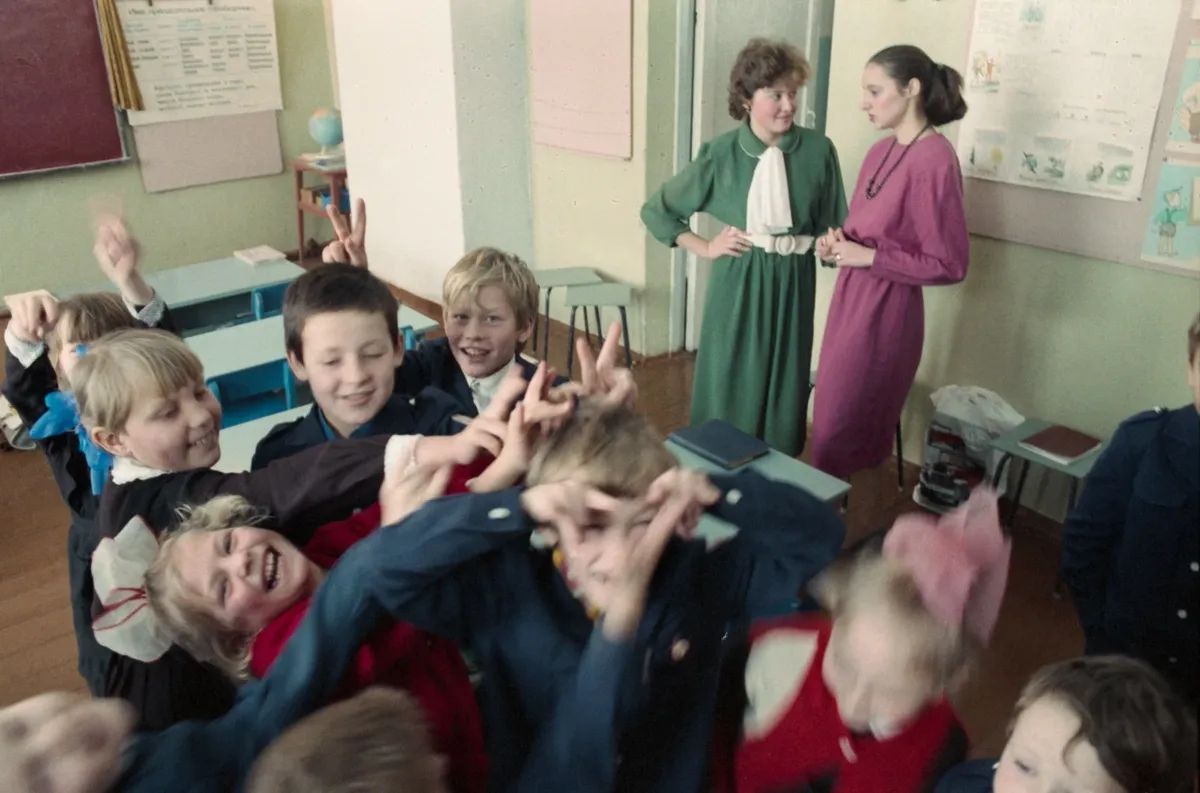
I remember how, due to a conflict with the principal, several eighth-graders, including me, almost left school with the notorious “certificate.” The conflict, fortunately, was resolved differently, but at that time I had no idea where I could go to study and work in my incomplete 15 years without a certificate of completion of the eighth grade. It is not very clear even now where such dispossessed people can go if the state decides to repeat the Soviet experience, in which the “certificate” was almost the equivalent of the pre-revolutionary “wolf ticket”.
Fortunately, in March 1989, letter No. 10135/25 of the Ministry of Public Education of the RSFSR abolished the behavior grading system that had become meaningless.
On the one hand, in the 1990–2000s the school tried to humanize itself. On the other hand, to relieve yourself of any concern about upbringing. I remember at one school, where I gave a lecture about hyperactive children, I said that sometimes it is necessary to stop the lesson and sort out a conflict that has broken out between children. “Colleague,” two middle-aged teachers told me displeasedly, “you are confusing education and upbringing. Our task is to provide subject knowledge, let parents educate at home.” I just think that
Teaching children to resolve conflicts peacefully, and to express their complaints against elders in words, and not to throw a cake in the teacher’s face , is precisely the task of the school, but parents at home can cope with ideology quite well.
And another task of the school is to teach the teacher what to do and who to turn to for help if the class is acting up in class. Otherwise, by the time you reach high school, no amount of “bad” behavior will help. It is unlikely that he would have been able to do anything to help that middle-aged physics teacher in Volgodonsk, who was bullied by ninth-graders last October, and the boy who stood up for her complained to the school administration and was beaten for this by those same ninth-graders.
But the current school, unfortunately, has decided to return to the Soviet model - instead of trying to find something modern, at least somewhat based not even on scientific research of deviant behavior, but at least on common sense.
Where will they go?
Simple common sense says that children and teenagers misbehave for a reason. These reasons are not only the “permissiveness” that is talked about every time the issue is discussed. The reasons can be much more complex: for example, domestic violence, family socio-economic disadvantage, parental alcoholism, childhood trauma, mental disorders in the child, unfavorable social environment... Which of these can be treated with a bad behavior?
The idea of treating problems with punishment is not new: both from teachers and simply from concerned fellow citizens, we constantly hear calls to restore the right to expel from school up to 15 years of age, to put D marks on a certificate or not to issue a certificate for bad behavior, to give grades for behavior, and to they certainly “influenced something.” As we can see, the idea of behavioral assessment is also popular at the level of the country’s leadership. The State Duma is also ready to take measures. LDPR deputies are already promising to prepare a corresponding draft. As party representative Vladimir Sipyagin told Rossiyskaya Gazeta: “If a student is a hooligan, annoying not only classmates, but also teachers, why not give him a low grade for behavior so that parents will pay attention to their child.”
But in order for parents to pay attention to the child, there is a direct connection between parents and teachers: you can write to parents, even call them, there are school meetings and parent days.
In addition, parents do not have a remote control button for their child: some problems appear only at school, only when surrounded by other children, only with a specific teacher, and they need to be solved there, on the spot, and not by parental shouting, belting or lectures at home (parents in Most of them also grew up in a culture of violence, it is difficult to expect other reactions). By the way, judging by surveys, 57% of Russians believe that behavioral assessment is necessary. But 53% of her supporters would prefer that she did not influence anything, but was exhibited only for the information of parents.
Finally, those who rely on the magical educational power of a D in a certificate, expulsion from school, bad behavior and a “certificate” do not really understand the simple and clear relationship between school and social maladaptation. We are pushing a minor “scoundrel” out of school - where? He has no profession, and few people are eager to hire him. Poor behavior and the lack of a certificate block his path to further education - which means they simply marginalize an already not very prosperous teenager. The problem of difficult behavior is not solved, it is simply taken out of school and onto the street, where a minor, left out of work - without school, without work, without the attention of adults - is left to his own devices. Punishing people by depriving them of some rights and opportunities without creating a clear, socially acceptable alternative is a simple and bad solution.
If the state regularly takes such simple and understandable measures to protect teachers (another such measure is the ban on admitting migrant children who have not passed the Russian language exam to school), one can only guess how soon the whole society will have to protect itself from grown-up children, who in their time pushed out of school.