
Translated material
“After October 7, journalism died for me”
The Telegraph published a study according to which the world media in 97% of articles about victims in the Gaza Strip quote only Hamas data. "New Europe" talked to the author of the project
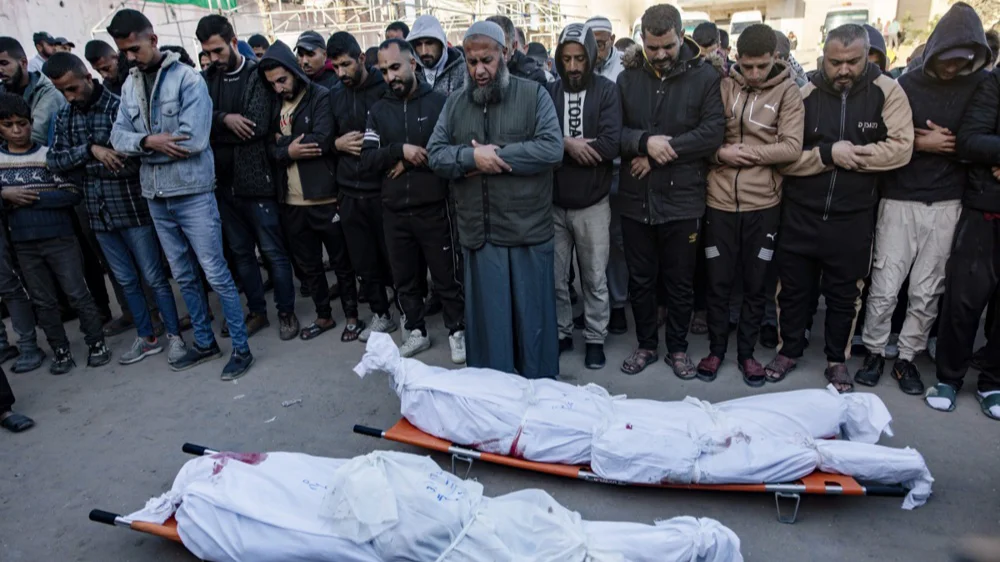
Palestinians pray in front of the bodies of their relatives. Photo: Haitham Imad/EPA-EFE
The Telegraph published the results of a study that revealed systematic bias in the coverage of the conflict in the Gaza Strip by the world's leading media. The analysis showed that 97% of publications by such authoritative publications as the BBC, CNN, The New York Times, The Washington Post, The Guardian and others are based solely on data on victims provided by the Gaza Ministry of Health, controlled by Hamas. At the same time, information from the Israeli side, including data on killed combatants, is practically ignored.
The study was conducted by the Fifty Global group, which brought together about 50 volunteers from around the world. It was headed by a repatriate from Russia, the creator of the popular “Pumpkin Latte” community on Facebook, Tatyana Glezer. The volunteers were supported by the Israeli International Institute of Social and Legal Studies (IISLS), also created by repatriates of different years. The second part of the study - about the unreliability of Hamas data - was carried out by the British organization Henry Jackson Society (HJS). Novaya Gazeta Europe contacted the author and initiator of the project, Tatyana Glezer, and learned from her more about the goals and results of the work.
Key findings of the study
From February to May 2024, the researchers examined 1,378 articles from major global media (BBC, CNN, The New York Times, The Washington Post, The Guardian, Associated Press, Reuters and the Australian Broadcasting Corporation (ABC)), in which casualties in the Gaza Strip were mentioned.
Key results:
98% of publications refer to data provided by Hamas militants (recognized as a terrorist organization in Israel, the USA, Canada, Japan, and the European Union).
Only 3% of all publications contain data from the Israeli army.
In 19% of publications, Hamas data is provided without specifying the source - as an established fact.
Only 1% of sources admit that Hamas data cannot be verified.
Only 5% of the media studied cited figures published by the Israeli authorities.
Israeli data is questioned in 50% of publications where it appears.
“These findings suggest a significant imbalance in the presentation and examination of sources, which may affect public perception,” the report said.
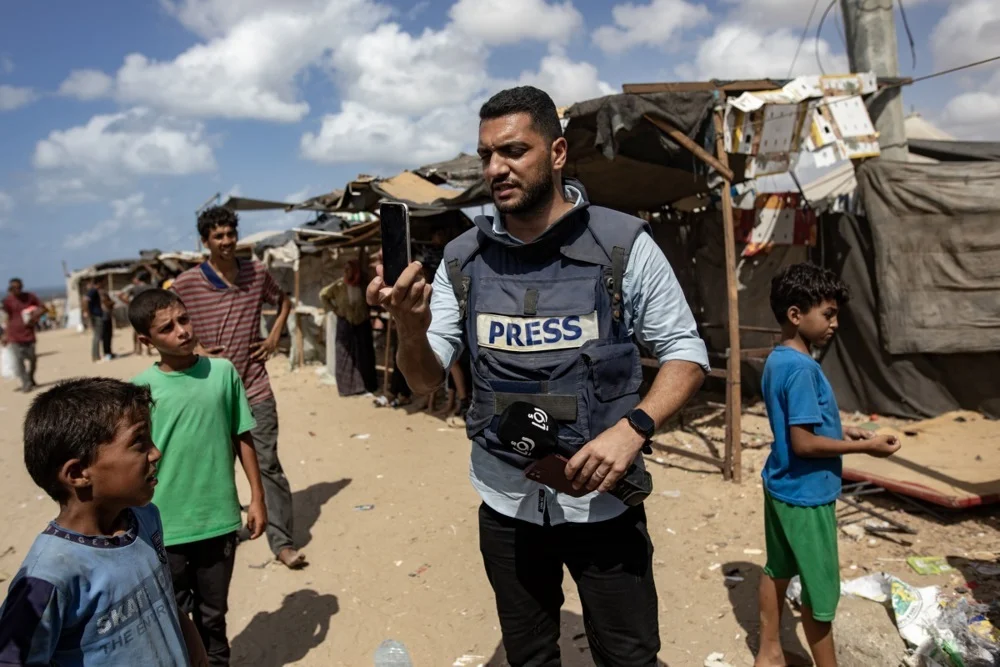
As researchers note, the media almost never indicate that militants are among the victims in the Gaza Strip. At the same time, the authors of the report draw attention to the fact that Hamas does not distinguish between combatants and civilians in its reports. According to the militant-controlled Ministry of Health, more than 44 thousand residents of the sector were killed during the war. The Israel Defense Forces (IDF) reports only militant deaths, with more than 17,000 Hamas members killed in the Strip as of August.
The author of the HJS study, Andrew Fox, writes that the Gaza Ministry of Health reports do not contain information about deaths not related to the war. At the same time, the report's authors indicate that about 5,000 cases of natural deaths that would have occurred without the war could have been added to the list of victims. Referring to ministry documents,
The researchers report several specific cases where death tolls included cancer patients who later appeared on the lists of those still receiving treatment in the hospital.
Fox also points out other inconsistencies in the reports from Gaza: repeated cases in which dead persons with male names (such as Mohammed) were listed as women and adults as children (for example, Fox writes, a man aged 22 was listed as a four-year-old, and a 31-year-old is like a baby). “Such distortions exaggerate the number of child victims, which has an emotional impact and is strongly emphasized in global reports,” the report’s author adds.
A separate block in the report is devoted to methods for preventing bias during analysis. The authors emphasize that all selected citations underwent additional checks, and the research team consists of volunteers who are located in different geographical locations, are not affiliated with any organization and work without monetary compensation. “In principle, we did not apply for grants or receive private donations,” Glezer clarified.
Tatyana Glezer
author of the study
— Tatyana, please tell us how the Fifty Global group appeared and how the idea of conducting the research came about?
“The idea came to me after the events of October 7, when I was reading the world’s leading media. In the run-up to the war with Ukraine, I read CNN, thinking they gave a good picture of what was happening on both sides. When October 7th happened, I saw that their articles did not have the same impartiality that I expected to see. I started analyzing other publications and discovered the same problem.
At first I didn't know what to do with it. But later I realized that this was a suitable topic for research that would be as transparent as possible and devoid of different interpretations. There are a lot of studies, but not every one of them is credible due to subjective interpretations. Here was a chance to conduct an analysis based purely on mathematical data: see how many times journalists clarify whether militants were among the casualties when they quote the total death toll in Gaza, and count the sources they cite.
I discussed the idea with my classmate and friend Vitya Vakhshtain, as well as other colleagues. Everyone supported the project. In February, I posted on Facebook about looking for volunteers. We started with a pilot study: we analyzed a total of 200 materials from five media outlets to test the hypothesis. The results showed that the work was promising, and we expanded the sample to 1,378 sources by adding two news agencies, Reuters and the Associated Press. Later, Australian volunteers joined us and suggested we include ABC.
We began to cooperate with the International Institute of Social and Legal Studies because Vakhstein worked there. There are many other wonderful people in the institute’s team: lawyer Alex Zernopolsky, Vadim Klyuvgant, Mark Novikov, Elena Zelentsova and others.
In September we began collaborating with the British Henry Jackson Society in an attempt to attract the attention of English-language media. This turned out to be difficult: we were unable to make our way as a new organization to be heard.
Many publications were initially interested in our research, but then discovered that they themselves had made similar distortions of information. At least that's what our intermediaries told us,
who helped with promotion.
In the end, it was a great match with HJS because they did work that perfectly complements ours. They analyzed why Hamas's numbers could not be reliable. They somehow managed to obtain materials from the Gaza Ministry of Health and analyze the documents. For example, they found that Hamas attributed natural population decline to its casualties. Or that dead men are recorded as women and children.
HJS show how the figures were formed, and we show how they were replicated by the media without citing data from the Israeli side. Only 2% of articles mentioned the impossibility of verifying Hamas data, while Israeli data was called into question in half of the cases where it appeared.
— Why did this question become so important to you?
“My motive was personal, but this did not in any way affect the quality of the research. Our study has a whole section dedicated to how we avoided bias. We did not include in the analysis cases that can be interpreted in two ways: for example, emotional statements by journalists in which they indicated numbers. We simply decided not to touch them, so as not to create grounds for bias.
I decided to do this because it seemed to me that something very strange was happening. After October 7, journalism actually died for me, because only a few tried to maintain neutrality and understood responsibility for all the data they provide. Moreover, many journalists did this [publishing data from only one side] not because they do not like Israel, but simply because they do not have any criteria. I would like to further explore journalistic ethics in reporting on military conflicts in general, not just in Israel. Because it feels like it exists only formally. Here, of course, the question of freedom of speech arises, that a journalist can write what he wants, but at the same time there must be an understanding of responsibility for the data that is provided as facts. I think that if I saw the same systematic violation outside of Israel, I might be just as interested.
—Are you not accused of bias? They say you just recently moved from Russia and are defending Israel.
— I haven’t heard it yet, but there will probably be such comments. I am also the creator of the “Pumpkin Latte” community on Facebook and over the past almost two years I have become accustomed to such accusations. I don't think they deserve a response because it's nothing more than a personal grudge.
— What do you expect from the study? Are you hoping for a media reaction?
“Ideally, we expect at least that it will become much more difficult for these media to distort data as before. And I am very glad that the numbers and graphs that my colleagues and I saw are now being seen by those journalists whom we have been trying to reach all this time. I don't know if they will conclude, but judging by other studies that have already been done to the BBC, it will be more difficult for them to do what they did. They will have to react somehow.
— How, in your opinion, can the media better cover conflicts, given the difficulty of obtaining reliable information?
— A journalist, of course, should be interested in where the numbers come from. But this is not even a question of reliability. A journalist should, in my opinion, understand that there are two sides to a military conflict, and both of them need to be presented. Fine,
Even if Hamas’ numbers are fake, even if the IDF, relatively speaking, doesn’t know how to count the militants, the journalist must provide data from both sides, and then people can draw their own conclusions.
A journalist should write that data cannot be verified when this is true. There must be a neutral presentation and the principle of neutrality in reporting statistics must be respected. There are many different genres where a journalist can express his personal opinion, but if he is covering news, there, in my opinion, there should be clear standards at the editorial policy level that speak of neutrality.
Reaction
The head of the Palestine Mission in the UK, Hussam Zomlot, called the researchers' findings a "morally and professionally disgusting" way to defend Israel's actions in Gaza.
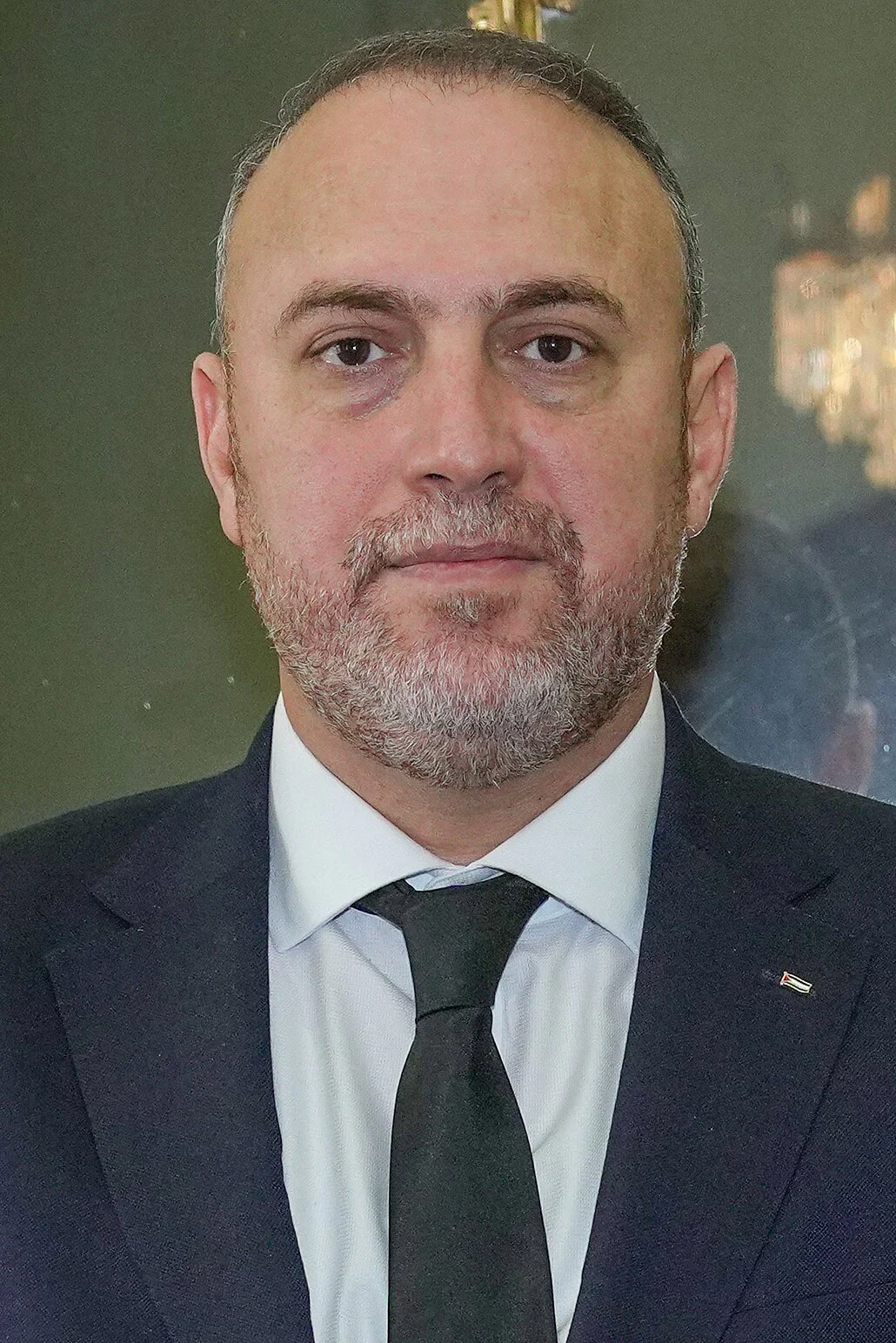
“Numerous international organizations and UN agencies, including WHO, have not only confirmed these figures, but also indicated that they are grossly underestimated. Because we don’t know how many people are still buried under the rubble or killed indirectly as a result of Israeli attacks on the health sector, undermining all medical services, famine and the total destruction of infrastructure, leaving 1.9 million people homeless,” he commented.
The BBC said: “It is difficult to accurately report the death toll in Gaza because Israel does not allow international journalists into the area. BBC News is clear and transparent, citing available sources and indicating that they are controlled by Hamas. In addition, we use a number of sources to understand the impact of the war in Israel and Gaza on civilians, including the Israel Defense Forces, the Ministry of Health in Gaza and the UN.”