
Translated material
Escape from Prison
The fairy tale about animals “Pets”, written by Zhenya Berkovich in a pre-trial detention center, is a much-needed book today about injustice and hope for the best.
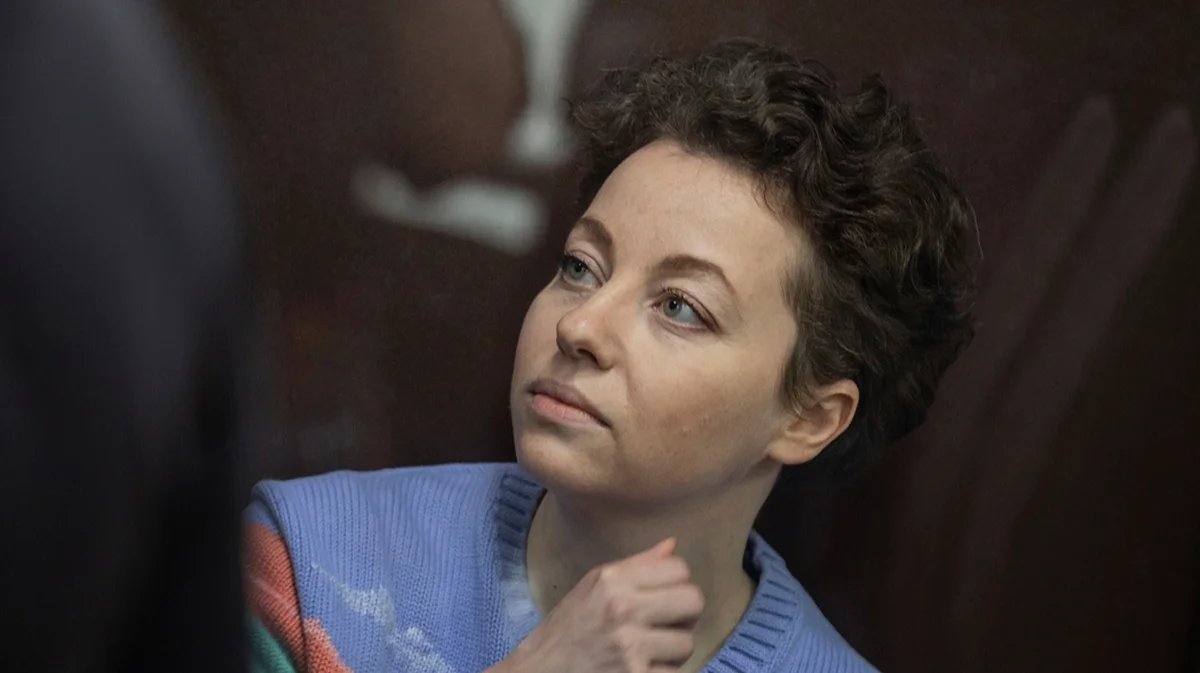
Zhenya Berkovich in court. Photo: Alexandra Astakhova / Mediazona
The Russian Federation hates all living things.
Forests are being destroyed in Karelia and Siberia. In Russian regions, stray dogs are being killed en masse, including bypassing the legal procedure. Sewage water is poured into Lake Baikal, but no one is building treatment facilities. The main environmental organizations in the country are banned, and environmental activists are repressed . Animals listed in the Red Book are killed instead of being saved.
This list can be continued endlessly. After a full-scale invasion of Ukraine, Russia began the mass destruction of not only people, but also animals. This background permeates Zhenya Berkovich’s book “Pets,” in which animals become not only characters, but also a mirror of human cruelty and senseless violence.
You may ask: Why would I read about this in a book review? And in general, what does Zhenya Berkovich have to do with environmental disasters in Russia? After all, right now the case of director and playwright Svetlana Petriychuk is undergoing an appeal, the hearings of which serve as another example of the slow decay of the judicial system. Animals have nothing to do with it here.
But Berkovich herself draws a parallel between the situation of political prisoners and humiliated animals in a book addressed to teenagers, but also speaking to adults.
Now Berkovich is serving time in a women's colony - possibly in Mozhaisk. While the case about the play “Finist Yasny Falcon” was going on, she was in pre-trial detention center No. 6 in Moscow. She wrote “Pets” about him.
The Scottish cat Shanya ends up in Prison - a special place where animals live (Inhabitants) and people are kept (Pets). Shanya was not there for any misdemeanor: in Prison she is looking for her owner - the wife of a businessman, arrested on a trumped-up case. Her search is helped by other inhabitants of Prison: the Cat in the Paddock, the crow Ircha, a cat with many children named Fleabag, as well as rats, guard dogs, cockroaches and other representatives of the fauna, whose destinies are intertwined with the destinies of the people held there.

Describing life in a pre-trial detention center through the eyes of animals is an unexpected technique for Russian prison prose, perhaps one of the main literary genres of recent years. In most of these texts, the author's personal experience takes center stage. For example, the style can be laconic and concise, as in Riot Days by Maria Alekhina, or poetic, as in “I wish ashes for my home” by Daria Serenko. But the focus always remains on the “prisoner self.” The exception is Oleg Navalny’s “3.5,” where Chewbacca from the Millennium Falcon ends up in Russia and goes through a stage in a colony. But with Navalny it’s more of a comedic release, while with Berkovich animals play a central role.
The animals in Pets are not just characters, they are symbols of silent sacrifice. Their pain reflects the state of modern Russia, where the weak and defenseless are subject to violence. They often cannot defend themselves, write a petition or speak in court, and they receive less attention from the media.
It is this defenselessness that makes animals the perfect mirror of human cruelty. In this regard, Berkovich's book goes beyond mere allegory and becomes a manifesto against injustice.
The people in Pets are bumbling and annoying characters at best:
“Seconds were counting. These are people. If they pick something up, they won’t put it back, even if it doesn’t belong to them at all. People can only lose, spoil, or, at best, sell. Who can you sell an already lost and damaged cat to?”
Berkovich's view of animals on humanity is openly sarcastic:
“They can’t...
“They can,” the rat spoke quietly, but it was a very scary “quiet.” - They can. And if they can, they will definitely do it. These are people: that’s what makes us different from them. We kill when necessary, and they kill when possible. And remember, son, if people say that they are planning to kill someone, you must always believe it. That's the one thing they usually keep their word on."
This sarcasm highlights the loss of humanity both in the pre-trial detention center and in the outside world. Even the guard dogs decide to leave their owners because they see that there is no difference between the guards and the prisoners: both groups suffer, it’s just that one receives some kind of satisfaction from the torment of the other. And what can we talk about when in the book cockroaches turn out to be better than people.
Although there is a place for good. Employees of the Federal Penitentiary Service are trying to shelter a lost cat, and the heroine, placed in a punishment cell, feeds the cat that has clung to her. The darkness in the pre-trial detention center is thick, but light is visible in it, forgive the pathos.
The view of the “I-prisoner” in “Pets”, as in other representatives of prison prose, is also there, it’s just detached. The deputy warden of the prison is scratched by a crow - and the guards begin to persecute him. Lawyers are not allowed into Prison - and now the rat has to eat the confession that the decoy cellmates slipped to the victim of tyranny. The tired Muz-TV is playing on TV, and the yard is a concrete box, where you can’t really walk. A fairy tale is a fairy tale, and Berkovich shows the prison realities with utmost honesty.
Despite its heavy subject matter, Pets is a book with good-natured irony. Social commentary is woven into a comic tale here. Berkovich can break the fourth wall and suddenly remind his daughters that they need to read books (“Pets” is addressed specifically to them).
The watchdog is given “bribes” in the form of sausage and cookies. The unlucky crow Ircha takes all words literally, and instead of looking for activated carbon for the sick Pet, she tries to light a fire to get charcoal. The arrogant cockroaches are given the names Silantiev and Polishchuk (this is the name of the expert “destructologist” and investigator in the “theater case”).
A policeman does a good deed, but the author immediately stipulates that he is writing a fairy tale, which means that the security officer can be normal.
And the message of this unique book is good: there is always hope for a happy outcome, even when things seem completely irreparable. To defeat evil, you need to overcome differences and do something together. This, of course, will not help overcome all difficulties, but it will increase the chances that justice will be restored. One can only marvel at the strength of spirit that allowed the director from the pre-trial detention center, and then from the colony, to speak with a story not about despair, but about hope. If any books today deserve to be called necessary, then “Pets” is just a very necessary book. In a sense, it is a pity that this book exists: after all, if Berkovich had not ended up in prison, she could have written not one, but two or three and any number of other wonderful books.
And yet it’s good that even in isolation the director found the strength to write it, which means that she did not lose hope. We shouldn't lose it either.