
Translated material
The second "Trojan horse" of the European Union
The Prime Minister of Slovakia came to Putin to discuss the transit of Russian gas. What else could they talk about and what did Fico really want to show with this visit?
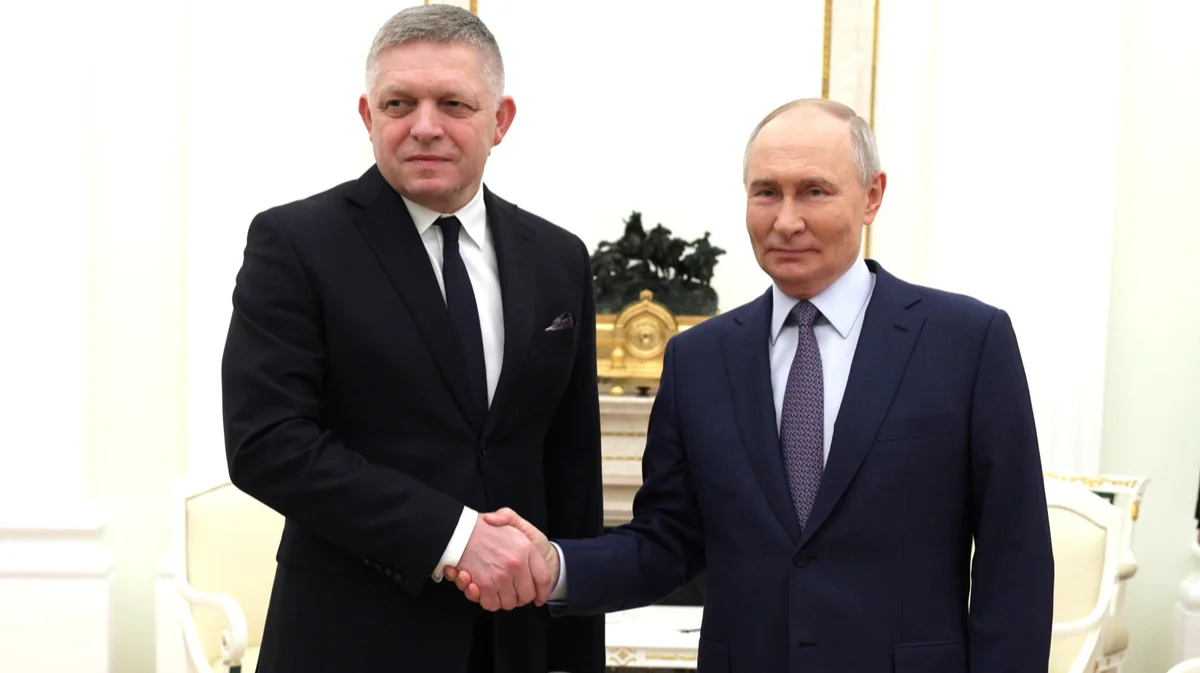
Robert Fico and Vladimir Putin at a meeting in the Kremlin, Moscow, December 22, 2024. Photo: Artyom Geodakyan / TASS / Kremlin
Slovak Prime Minister Robert Fico visited Moscow and met with Vladimir Putin to discuss the transit of Russian gas through the Druzhba gas pipeline passing through Ukraine. Kyiv has repeatedly stated that supplies through it will be stopped in early January.
However, the gas problem is not so acute that the Slovak authorities need to fly to Moscow for negotiations, notes Slovak political scientist Grigory Mesezhnikov. According to him, this is a formal justification for the visit and Fico came to the Kremlin primarily to once again demonstrate his commitment to Putin and show himself as a “defender” of the national interests of Slovakia. “New Europe” spoke with a political scientist and found out what else the parties could talk about during the visit.
Fico in the Kremlin: official versions
Prime Minister of Slovakia Robert Fico visited Moscow and met with Vladimir Putin. According to the Slovak politician, they discussed the war in Ukraine and “the possibilities of ending it as soon as possible,” as well as the transit of Russian gas.
Slovakia is one of the few EU countries that continues to buy Russian gas through the Druzhba gas pipeline through Ukraine, thanks to Gazprom's contract with Ukraine's Naftogaz, which expires at the end of 2024. Kiev previously stated that transit would be stopped on December 31.
According to Fico, Ukrainian President Vladimir Zelensky told him on December 19 that Kyiv is against “any transit of gas through Ukraine” to the territory of Slovakia.
“This attitude causes financial harm to Slovakia and jeopardizes the production of electricity at nuclear power plants in Slovakia, which is unacceptable,”
— Fico wrote on Facebook.
The Slovak Prime Minister added that Putin “confirmed Russia’s readiness to continue gas supplies to the West and Slovakia,” but due to Zelensky’s position, this will be “almost impossible” from January 1, 2025.
The Kremlin confirmed that Putin and Fico discussed bilateral relations and energy issues during the negotiations: “There was a fairly detailed conversation. You have heard statements from the Ukrainian side and are aware of the position of European countries that continue to buy Russian gas and consider this necessary for the normal functioning of their economies. <…> We were able to exchange opinions on Ukrainian affairs,” said Putin’s press secretary Dmitry Peskov.
Fico became the third leader of an EU member state to come to Moscow after the start of the war in Ukraine. In July 2024, Hungarian Prime Minister Viktor Orban met with Putin, and in April 2022, Austrian Chancellor Karl Nehammer spoke with him in Russia.
“There was no need to fly to Moscow to solve the gas supply problem”
The issue of Russian gas supplies is a formal justification for Fico’s visit to Russia, says Grigory Mesezhnikov, a Slovak political scientist and president of the Institute of Public Problems. According to him, Fico made this visit partly for his “home” audience: it is important for him to show himself as a defender of the national and economic interests of Slovakia:
“However, the possibility of using this visit to solve the gas problem is very low. And in general, it is exaggerated, because Slovakia is not so dependent on Russian gas supplies. The country has sufficient reserves and diversification opportunities. And if we talk about a specific decision, then this needs to be discussed with the Ukrainian side,” the political scientist added in a conversation with New Europe.
The previous Slovak government took various steps to prevent the gas crisis: for example, the gas transport system of Slovakia was merged with the gas transport system of Poland, Meseznikov recalls.
— Theoretically, there is already a possibility to replace part of Russian gas. Of course, this will entail an increase in prices for purchased gas, but we are talking about amounts that can be paid, and this is not something that could plunge Slovakia into an Arctic winter. Therefore, the real problem is not as acute as the Slovak authorities are presenting it now. To do this, there was no need to fly to Moscow,” the political scientist emphasizes.
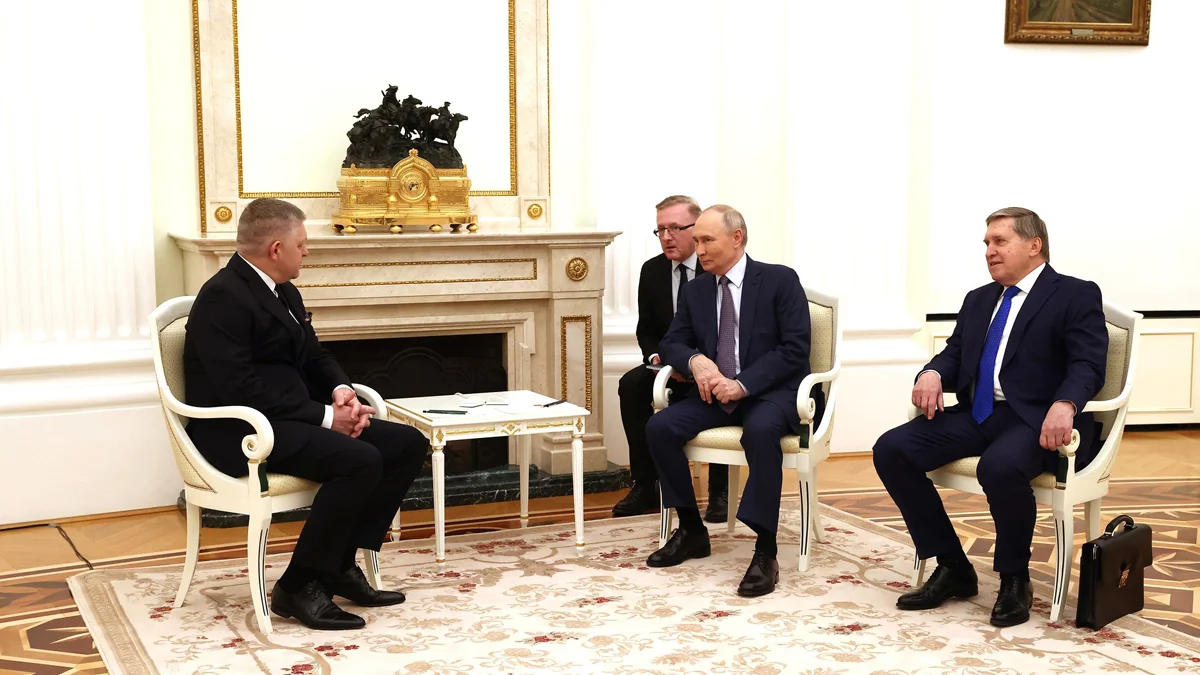
Among other things, on December 20, after the EU summit in Brussels, Fico stated that due to Vladimir Zelensky’s decision to stop the transit of Russian gas and oil to Europe from the beginning of next year, Slovakia faces a crisis, and a conflict has arisen between them. Fico could have agreed to this confrontation on purpose in order to later justify his urgent visit to Russia, Mesezhnikov continues:
“That’s why Fico and Putin could discuss anything they wanted. But Fico’s positions are known: for example, the Prime Minister of Slovakia is against the West supplying weapons to Ukraine, he accuses Kyiv of starting a war.
The position of Russia is closer to him and he demands peace only from Ukraine - he does not demand anything from Putin. And I am absolutely sure that during the meeting with Putin he did not express any complaints against Russia,
- said the political scientist.
Fico had been talking for a long time about how he wanted to go to Russia; He also participated in the talk show of the TV presenter of the Russia-1 channel Olga Skabeeva and more than once stated that he would like to go to Moscow to celebrate the 80th anniversary of the Victory.
Robert Fico is becoming the second “Trojan horse” in the European Union, along with Hungarian Prime Minister Viktor Orban, Mesezhnikov notes in a conversation with New Europe. Therefore, Fico now speaks out much more openly, as he feels “the support of a friend,” the political scientist continues.
“And for Orban this is also a beneficial situation: he is no longer alone, we can push through some decisions together and block sanctions. That is, Fico is a pro-Russian politician and, in fact, doesn’t even hide it anymore. Now Fico has taken the moment to once again show his sympathies to Putin,” Mesezhnikov concluded.