
Translated material
"There's still blood on him." Former police colonel killed a journalist
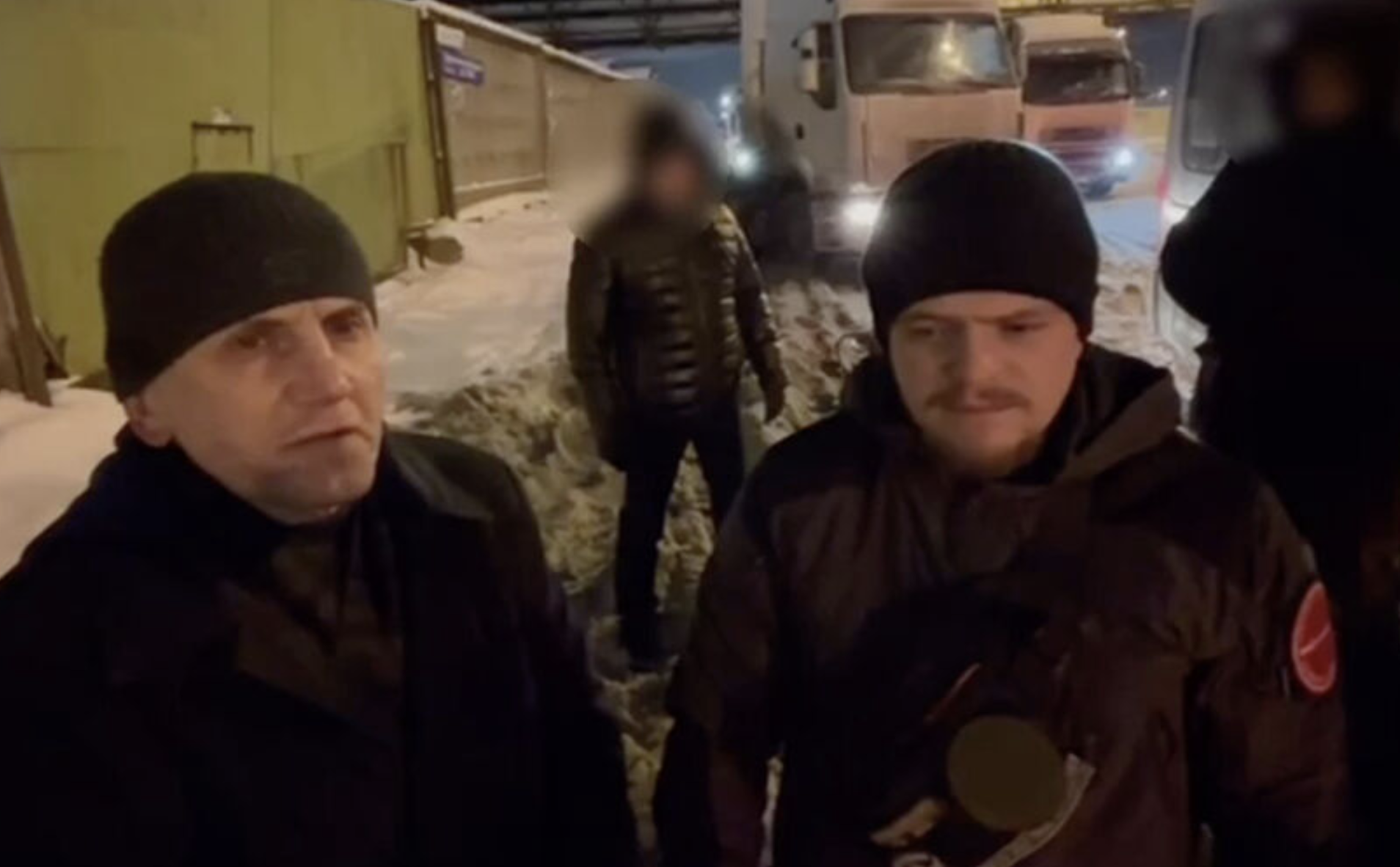
20 years ago, journalist Maxim Maximov was killed in St. Petersburg. Six months later, his colleagues were able to solve his murder, but they were unable to imprison the culprit, Colonel Mikhail Smirnov. All this time, Smirnov continued to serve in the police, then in the police, and then quietly retired and headed the security service of one of the St. Petersburg enterprises. And only 20 years later, the killer unexpectedly confessed and indicated the place where the corpse was buried.
On December 25, in the village of Beloostrov near St. Petersburg, in the place indicated by Smirnov, the remains of Maxim Maximov were found. The Investigative Committee of the Russian Federation reported this.
“To verify the information received, investigators organized the necessary measures in the village of Beloostrov, where, according to Smirnov’s testimony, the body of the murdered man was buried. For several days, work was carried out to search for the burial site, and as a result, they were able to find remains that coincide with the description given by the person involved in the criminal case,” the Investigative Committee said in a statement.
Maxim Maximov was a famous St. Petersburg journalist in the late 1990s and early 2000s. On the wave of perestroika - correspondent for the culture department in Smena. In the mid-90s, he worked on criminal chronicles in the investigation department with Andrei Konstantinov. Then he went to the Agency for Investigative Journalism (AZHUR), created by Konstantinov, a holding company that included Fontanka, Your Privy Councilor, and 47news. At the beginning of the 2000s, he was a special correspondent for the magazine Gorod, which was part of AZHUR.
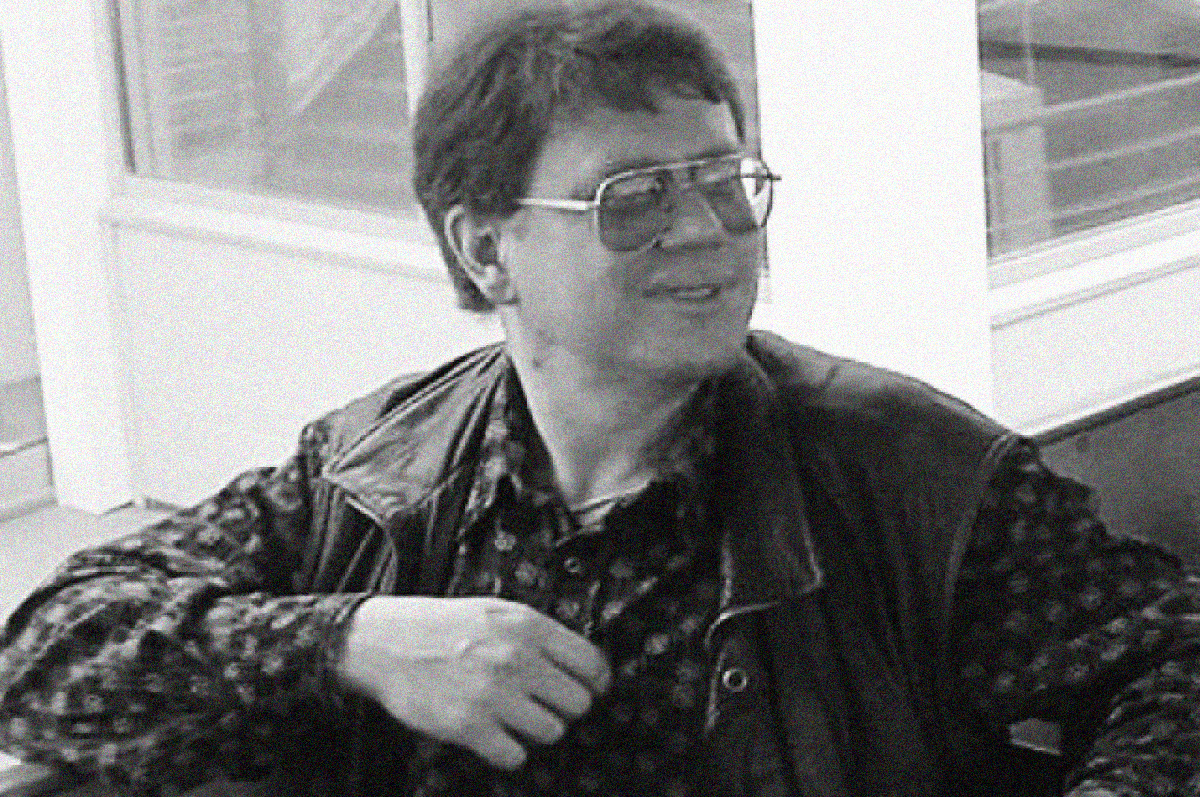
In Gorod, Maksimov often wrote on criminal topics: about “black realtors”, the redistribution of spheres of influence between St. Petersburg organized crime groups, about high-profile trials, and conducted his own investigations. His latest publications were devoted to the murder of State Duma deputy and leader of the Democratic Russia party Galina Starovoitova, who was shot on November 20, 1998 in the entrance of her own house.
"We strained everyone. We didn't find anything."
Maksimov disappeared on June 29, 2004, but his colleagues noticed his disappearance a week later: he had a free schedule and did not have to come to the editorial office. But there was no such thing as a journalist turning off his mobile phone for so long. As soon as they realized that he was missing, they immediately began to look for him.
There were no signs of a break-in in Maksimov’s apartment; everything was in its place. Only the journalist's car was missing. Maksimov’s colleagues at AJUR, through their connections in the police, were able to obtain the mobile journalist’s billing and found out that he was supposed to meet with an FSB officer, and then with the editor-in-chief of the publication “Russian Joker” Andrei Isaev. The latter stated that Maksimov did not come to the meeting.
AJUR journalists, according to one of their employees in those years, “dug the earth with their noses.”
– We involved all the cops we knew, bandits, and officials. They strained everyone to work. The cops really tried their best back then. A month later they found a Maksimov Ford near the “St. Petersburg” ( hotel – note ). And they went around all the surrounding apartments, bars, offices to understand who he could be meeting here. They didn’t find anything,” the source told Sever.Realii. “At first we thought that he was killed because of Starovoitova, but the case was already in court. It didn't make sense.
“I remember that they immediately started looking for him. Everyone was shocked. [Evgeniy] Vyshenkov was able to restore everything in less than a year [approximate course of events. Maksimov was a friend of him and [Alexander] Gorshkov, and they immediately suspected Smirnov of murder. There was no doubt that it was Smirnov. They even tried to find the body, but never found it,” says journalist Sergei Kovalchenko, who worked at Fontanka in those years.
Journalists searched for their missing colleague for several months, but by mid-autumn their investigation had reached a dead end. The then head of the investigation department of AZHUR, Lev Godovannik, wrote in his book about the murder of a colleague that, having tried everything, they decided to start all over again. It turned out that the only thing the journalists knew for sure was that Maksimov did not return from the meeting with Andrei Isaev.
Isaev has already given evidence to criminal investigation officers and talked with Maksimov’s colleagues. And at first no one suspected any inaccuracies in Isaev’s version.
But this time, AZHUR ordered billing for Isaev’s phone, from which he called Maksimov. “The result was shocking: the subscriber was registered in the MegaFon network on June 21, 2004, in the period from June 21 to June 29, the subscriber contacted Maxim 13 times, of which five were on the day of his disappearance. THE SUBSCRIBER DID NOT CONNECT WITH ANYONE ELSE DURING THE SPECIFIED PERIOD. We could not interpret this other than preparation for a crime. We could not prove that this is nothing more than a coincidence, too,” wrote the former head of the investigation department.
Isaev was a frequent visitor to the criminal chronicles of St. Petersburg as a victim of officials who extorted bribes from him. And such cases were led by the deputy head of the 7th department of the Main Directorate of the Ministry of Internal Affairs, Mikhail Smirnov.
Lev Godovannik only then remembered the “Smirnov” file, which the missing Maksimov gave him for safekeeping a couple of months before the murder. It contained a dossier on Mikhail Smirnov, who fabricated a bribe case against the deputy head of Pulkovo customs, Evgeniy Fedorov, and while the customs officer was under arrest, seized and sold his Mercedes for $5,000.
Fedorov sued Smirnov over the missing Mercedes. Godovannik then told Maksimov that he was ready to publish this story only after the trials were over and there was a final decision. Maksimov decided to give the text to MK in St. Petersburg so that it would come out early. It was because of this small material that Smirnov decided to kill Maximov. Smirnov was waiting for a promotion at that time, and the journalist’s note could have placed him on the appointment. Smirnov learned that Maksimov was “digging” under him from the journalist himself.
A few months after Maksimov’s murder, his friend Georgy Arefyev released the text “The case of the sold Mercedes” in memory of the journalist. Smirnov then also refused to comment on MK.
No body - no business
Vyshenkov went to see Andrei Isaev again, and he admitted that, at Smirnov’s request, he lured the journalist into a sauna on Furshtatskaya Street. The owner of the sauna stated on record that on that day he rented it out to police officers - Lieutenant Colonel Smirnov and his colleague Major Lev Pyatov. Also, besides them, there were two drug-addicted police agents there. One of them died shortly after the murder, and the second testified against Smirnov and Pyatov that they killed the journalist and then buried the corpse in the region.
Since no one knew the exact place where exactly Smirnov and Pyatov buried Maksimov’s body, AZHUR journalists literally dug up several square kilometers themselves in search of Maksimov. The Investigative Committee also carried out searches, but the body was never found.
Since “no body, no case,” Smirnov and Pyatov could not be charged with the murder of Maksimov. The testimony of accomplices, who directly pointed to the police, did not help either. Smirnov and Pyatov themselves refused to testify.
Smirnov and Pyatov were only charged with official forgery and falsification of evidence because of the very Mercedes case that Maksimov wanted to write about. True, the jury eventually acquitted the policemen, and they were reinstated in service. In 2011, Smirnov calmly passed recertification and became a police officer.
"He wants to go to SVO"
Mikhail Smirnov rose to the rank of police colonel, quietly retired and in recent years worked as the head of the security service at one of the St. Petersburg enterprises.
The fact that he will nevertheless appear in court for the murder of Maksimov is rather a big coincidence, his colleagues believe.
Almost 20 years later, Smirnov was arrested on charges of bombing a businessman in 1998. According to investigators, Smirnov, on instructions from one of the groups of a certain Novikov, who was the godfather of a policeman and at that time shared the assets of the St. Petersburg port with competitors, blew up the car of a St. Petersburg businessman.
The policeman and his two assistants dressed in the uniform of traffic police officers and stopped the car with the general director of the Baltic Ship Mechanical Plant Igor Malkin, crime boss Vladimir Serikov and driver Mikhail Petukhov.
Smirnov and his accomplices casually “checked” the documents and released him. A minute later, an explosive device, which was planted in the car during the “check,” went off in the car. As a result of the explosion, Petukhov died, and Malkin and Serikov were taken to intensive care.
According to a Sever.Realiya source close to the investigation, Smirnov realized that he still had to go to jail for that murder, which is why he now admits everything.
– The corpse of the [1998] explosion has been proven, he [Smirnov] understands this. He faces a decent sentence, and he wants to go to the North Military District (that’s what the Russian authorities and media call the war in Ukraine. - SR) . He will return clean, but what if during this time the investigation digs up something else on him? And then in a new circle... He has already given a confession against Maksimov, but there is still blood on him, he takes it too, to clean it up,” says a source close to the investigation.
“I could not convince Maksimov that I was not involved in the fact that I was provoking bribes... and the thought came to me: “I’ll kill!” Smirnov told the investigators. And he explained in detail how he planned the murder: his agent Isaev lured Maksimov to house 26 on Furshtatskaya Street, where two criminals were waiting for Maxim - the actual agent Meliksetov, Meshcherov and the MVD operative Pyatov.
“When Maksimov appeared, Meliksetov immediately hit him on the head from behind with a pipe, and I grabbed Maksimov and threw a rope around his neck. ... Meliksetov began kicking Maksimov in the head. ... Meliksetov thought that Maksimov had woken up. ... His face turned into mush. ... They threw a rope over the wall bars and hung Maksimov. ... They threw a plastic bag over his head, since his face was disfigured,” said Smirnov.
Meliksetov died from drugs, agent Isaev is barely alive after four strokes, Meshcherov and former employee Pyatov are witnesses. They didn’t kill, but the statute of limitations for concealment has passed and passed,” say the colleagues of the murdered journalist.
Meanwhile, Mikhail Smirnov confessed to another murder. This was reported by the regional department of the Investigative Committee. Smirnov spoke about how in 2001 he dealt with a mediator in a bribery case. According to the investigation, the ex-policeman was supposed to detain a local administration official while receiving a bribe. Smirnov’s intermediary was supposed to give him the money. However, he secretly warned the administration employee that it was not worth taking the money. Smirnov found out about this and decided to kill the intermediary. He took him into the forest in a car and shot him. Smirnov hid the body under the trash and left.
Punishment for treason
After confessing to Maksimov, Mikhail Smirnov confessed to the murder of his informant.
In 2001, police lieutenant colonel Smirnov decided to provoke the assistant to the head of the Koltush settlement, Eduard Chirko, into accepting a bribe, and then expose him for this. For this purpose, a legend was invented - a certain German company wants to sell a batch of computers at bargain prices. Smirnov’s agent Alekseev had to convince Chirko to buy computers at the administration’s expense, then sell them at real prices, and keep the difference for himself. But for this the official had to pay a bribe.
However, agent Alekseev told Chirko about the plans of his handler from the Ministry of Internal Affairs and a few days later he was found dead. According to Chirko, Alekseev was more afraid of the employees of the Koltushi administration than of Smirnov.
True, this still did not save the officials from Koltushi. Smirnov used Major Lev Pyatov instead of Alekseev. The same one who is a witness in the Maksimov murder case. Pyatov, according to Chirko, literally handed him and his colleague money, and after that they were arrested. Eduard Chirko served two years, but was later acquitted.
The case of the murder of agent Alekseev remained unsolved all these years until Mikhail Smirnov confessed. According to him, having learned about Alekseev’s betrayal, he went with him out of town and in a deserted place in the Vsevolozhsk region shot the agent with a TT pistol.
“I decided to kill Alekseev for betraying the interests of the service. I sentenced Alekseev to capital punishment for treason,” said Mikhail Smirnov himself.